Ørsted and Equinor Sue Challenging U.S. Stop-Work Orders for Offshore Wind Farms
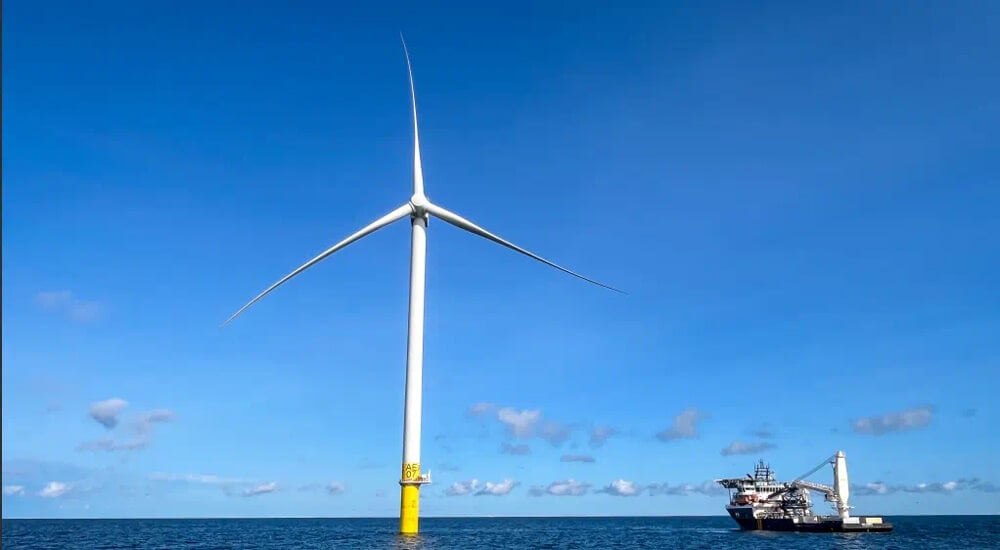
Two more offshore wind farms filed suits against the Trump administration after they were ordered in late December to stop work due to “national security” concerns. Danish offshore wind energy developer Ørsted amended its existing complaint in U.S. District Court to challenge the Trump administration’s stop-work order on the nearly completed Revolution Wind project, while Norwegian company Equinor filed a civil suit on January 2 for the Empire Wind project. Both companies said they would file motions for a preliminary injunction against the Department of the Interior’s Bureau of Ocean Energy Management (BOEM), which issued the stop-work order on December 22.
Both companies assert that the suspension order “violates applicable laws,” and say it is causing “substantial harm” to their projects and companies. They are following Dominion Energy, which filed suit last week to challenge the stop-work order for its Coastal Virginia Offshore Wind. BOEM, at the direction of the Secretary of the Interior, Doug Burgum, issued the stop-work order for these projects, as well as Avangrid’s Vineyard Wind 1, and Sunrise Wind, which is also being developed by Ørsted.
The Trump administration asserted that new data showed the potential for radar interference and clutter from the turbine blades and towers. At the beginning of the week, the court hearing the Dominion Energy case ordered the Department of the Interior to provide the confidential study, which it says is the basis for the order, but refused to issue a temporary restraining order for Dominion Energy. The court converted the case to a motion for a preliminary injunction, which will be heard in January.
Each of the companies contends in their legal action that the projects spent years in permitting and engaged in years-long consultation with the U.S. Department of Defense [War] Military Aviation and Installation Assurance Clearinghouse to address potential impacts to national security and defense capabilities. The companies have indicated that they were willing to work constructively with the administration for a durable resolution of any concerns.
Revolution Wind told the court that it is in advanced stages of construction, now approximately 87 percent complete. The project they report has spent and committed billions of dollars, noting that it was expected to start generating power as early as January and would be completed in 2026. Similarly, Dominion Energy says Coastal Virginia was nearing its first power while Equinor reports Empire Wind is more than 60 percent complete. Equinor says it has invested over $4 billion, of which $2.7 billion has been drawn under the project financing. Empire Wind is also investing in the redevelopment of the South Brooklyn Marine Terminal.
For Ørsted, this is the second time in months that Revolution Wind is being forced to seek court interventions owing to the administration’s efforts to stop the project that is located approximately 15 miles south of Rhode Island and 32 miles southeast of Connecticut, with power contracts with both states. In August last year, BOEM ordered the developer to halt ongoing activities to allow time for it to address what it said were concerns that had arisen about the permitted process. The company, however, got a reprieve a month later after a federal court in D.C. ruled in its favor, allowing construction to resume.
In its amended complaint, Revolution Wind highlights that it is in the final stages of construction with all offshore foundations, its export cabling, two offshore substations, and 58 of 65 wind turbines already installed. The wind farm, which has a capacity to generate 704 MW, is contracted to deliver electricity to Rhode Island (400 MW) and Connecticut (304 MW).
While Ørsted has opted to sue BOEM over the order on Revolution Wind, the developer is evaluating options on Sunrise Wind, a separate project that it wholly owns. When it received approvals in June 2024, Sunrise Wind was touted as the largest offshore wind project in New York with a capacity of 924 MW, enough to power nearly 600,000 homes. Located about 30 miles east of Montauk and featuring 84 large turbines, the project was expected to be operational in 2027.?Ørsted highlighted that among the options being evaluated are engagement with relevant agencies and stakeholders and legal proceedings.
By AFP
January 2, 2026

US President Donald Trump has long complained that wind turbines ruin views and his administration has moved to halt their construction - Copyright AFP Punit PARANJPE

Danish offshore wind energy firm Orsted said Friday its US joint venture had filed a lawsuit challenging the suspension of the lease for its nearly-completed project off the coast of New England.
The US Interior Department on December 22 said it had paused leases for all five of the country’s offshore wind projects under construction, citing unspecified national security risks and casting new doubt over the future of an industry detested by President Donald Trump.
Orsted has a 50 percent stake in the Revolution Wind project alongside a renewables infrastructure developer that is part of the BlackRock investment group.
The park of 65 turbines off the coast of Rhode Island is 87 percent complete and had been set to go online this year and provide power for more than 350,000 homes, according to Orsted.
“While Revolution Wind continues to seek to work constructively with the Administration and other stakeholders towards an expeditious and durable resolution of this matter, it believes that the lease suspension order violates applicable law,” Orsted said in a statement.
The Revolution Wind project faces substantial harm from a continuation of the lease suspension order, it said, and noted an earlier suspension of the project by the Trump administration in August was overturned by the courts.
“As a result, litigation is a necessary step to protect the rights of the project,” it added.
The move by the Interior Department came only weeks after a judge ruled that a blanket ban on new offshore permits — signed by Trump on his first day in office in January — was illegal.
The Interior Department did not specify what the risks were, but it noted that the Department of Energy had also previously identified potential issues related to radar interference.
Orsted said that Revolution Wind secured all required federal and state permits in 2023 following extensive reviews that lasted years, which included consultations with the US military.
“Those consultations resul
ted in a fully executed formal agreement between the Department of War, the Department of the Air Force, and Revolution Wind outlining mitigation measures” to be undertaken as part of the project, Orsted said.
Trump has long complained that wind turbines ruin views and are expensive.
In addition to his order attempting to ban new wind farm permits, Trump’s administration has also moved to block all federal loans for wind energy.
January 2, 2026
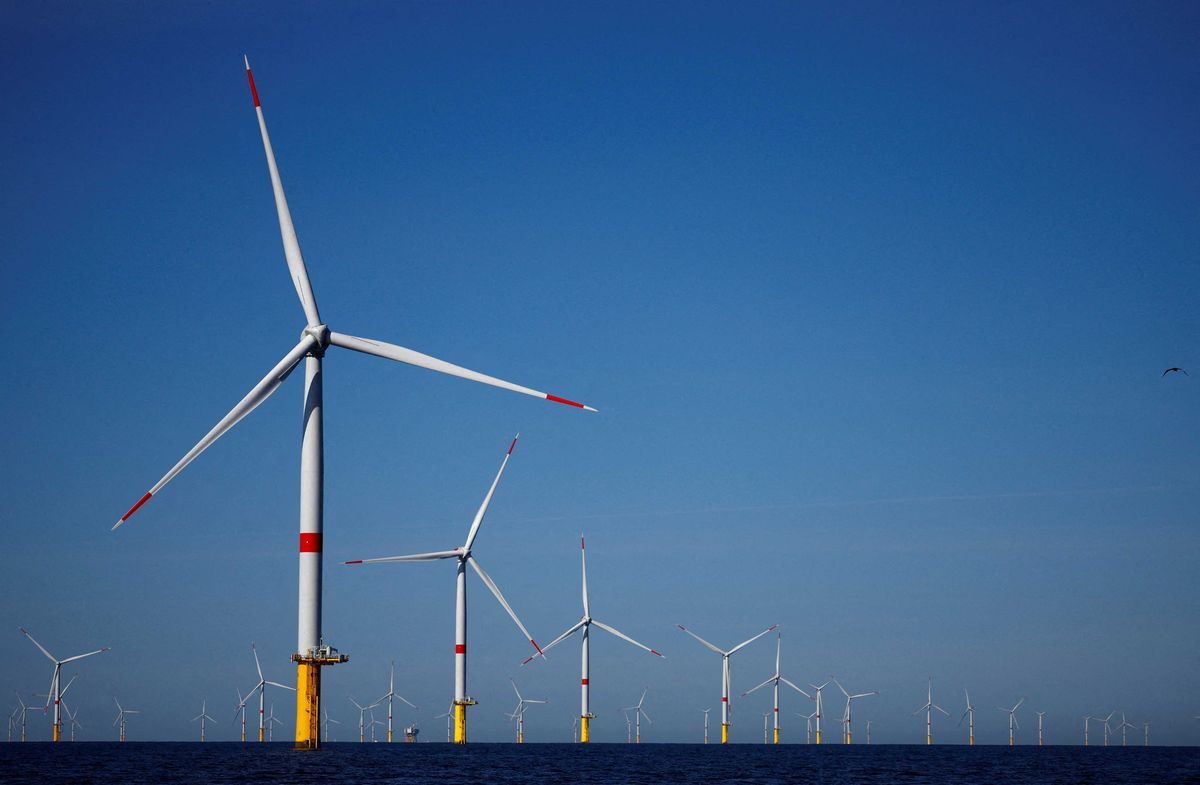
Developers behind two of the five offshore wind projects recently targeted by the Trump administration took action in federal court this week, seeking preliminary injunctions that would enable construction to continue while the legal battles play out.
Empire Offshore Wind LLC filed a civil lawsuit in the US District Court for the District of Columbia on Friday, challenging the Department of the Interior’s (DOI) December 22 stop-work order, which the company argued is “unlawful and threatens the progress of ongoing work with significant implications for the project” off the coast of New York.
“Empire Wind is more than 60% complete and represents a significant investment in U.S. energy infrastructure, jobs, and supply chains,” the company highlighted. “The project’s construction phase alone has put nearly 4,000 people to work, both within the lease area and through the revitalization of the South Brooklyn Marine Terminal.”
The filing came just a day after a similar one in the same court on Thursday from the joint venture between Skyborn Renewables and the Danish company Ørsted, which is developing Revolution Wind off Rhode Island and Connecticut. That project is approximately 87% complete and was expected to begin generating power as soon as this month.
“Sunrise Wind LLC, a separate project and wholly owned subsidiary of Ørsted that also received a lease suspension order on December 22, continues to evaluate all options to resolve the matter, including engagement with relevant agencies and stakeholders and considering legal proceedings,” the Danish firm said. That project is also off New York.
As the New York Times noted Friday: “At stake overall is about $25 billion of investment in the five wind farms. The projects were expected to create 10,000 jobs and to power more than 2.5 million homes and businesses.”
The other two projects targeted by the Trump administration over alleged national security concerns are Vineyard Wind 1 off Massachusetts and Coastal Virginia Offshore Wind. The developer of the latter, Dominion Energy, launched a legal challenge in federal court in Virginia the day after the DOI’s lease suspension order, and a hearing is scheduled for this month.
“Delaying the project will lead to increased costs for customers and threaten long-term grid reliability,” Dominion spokesperson Jeremy Slayton told NC Newsline on Tuesday. “Given the project’s critical importance, we have a responsibility to pursue every available avenue to deliver the project as quickly and at the lowest cost possible on behalf of our customers and the stability of the overall grid.”
President Donald Trump’s public opposition to offshore wind energy dates back to before his first term as president, when he unsuccessfully fought against the Aberdeen Bay Wind Farm near his golf course in Scotland. Since entering US politics, the Republican has taken money from and served the interests of fossil fuel giants while waging war on renewable power projects and lying about the climate emergency.
As the Times detailed:
Mr. Trump has falsely claimed that wind farms kill whales (scientists have said there is no evidence to support that) and that turbines “litter” the country and are like “garbage in a field”...
This week President Trump posted on social media a photo of a bird beneath a windmill and suggested it was a bald eagle killed in the United States by a wind turbine. “Windmills are killing all of our beautiful Bald Eagles,” the president wrote. It was also posted by the White House and the Department of Energy.
The post turned out to be a 2017 image from Israel, and the animal was likely a kestrel. On Friday Mr. Trump posted on Truth Social again, this time an image of birds flying around a wind turbine, that read, “Killing birds by the millions!”
While the DOI did not respond to the newspaper’s request for comment, and the department referred the Hill to its December statement citing radar interference concerns, White House spokesperson Taylor Rogers told NC Newsline earlier this week that Trump has made clear that he believes wind energy is “the scam of the century.”
“For years, Americans have been forced to pay billions more for the least reliable source of energy,” Rogers said. “The Trump administration has paused the construction of all large-scale offshore wind projects because our number one priority is to put America First and protect the national security of the American people.”
Meanwhile, climate campaigners and elected Democrats have blasted the Trump administration’s attacks on the five offshore projects, warning of the economic and planetary consequences. Democratic senators have also halted permitting reform talks over the president’s “reckless and vindictive assault” on wind power.
Additionally, as Common Dreams reported Monday, the watchdog group Public Employees for Environmental Responsibility warned congressional committees that the DOI orders are “not legally defensible” and raise “significant” questions about conflicts of interest involving a top department official’s investments in fossil gas.