Wednesday, January 28, 2026

Minneapolis’s 2020 Uprising Laid an Abolitionist Groundwork for ICE Resistance

The George Floyd uprising laid foundations for the politicized networks of care that are organizing against ICE now.
January 23, 2026
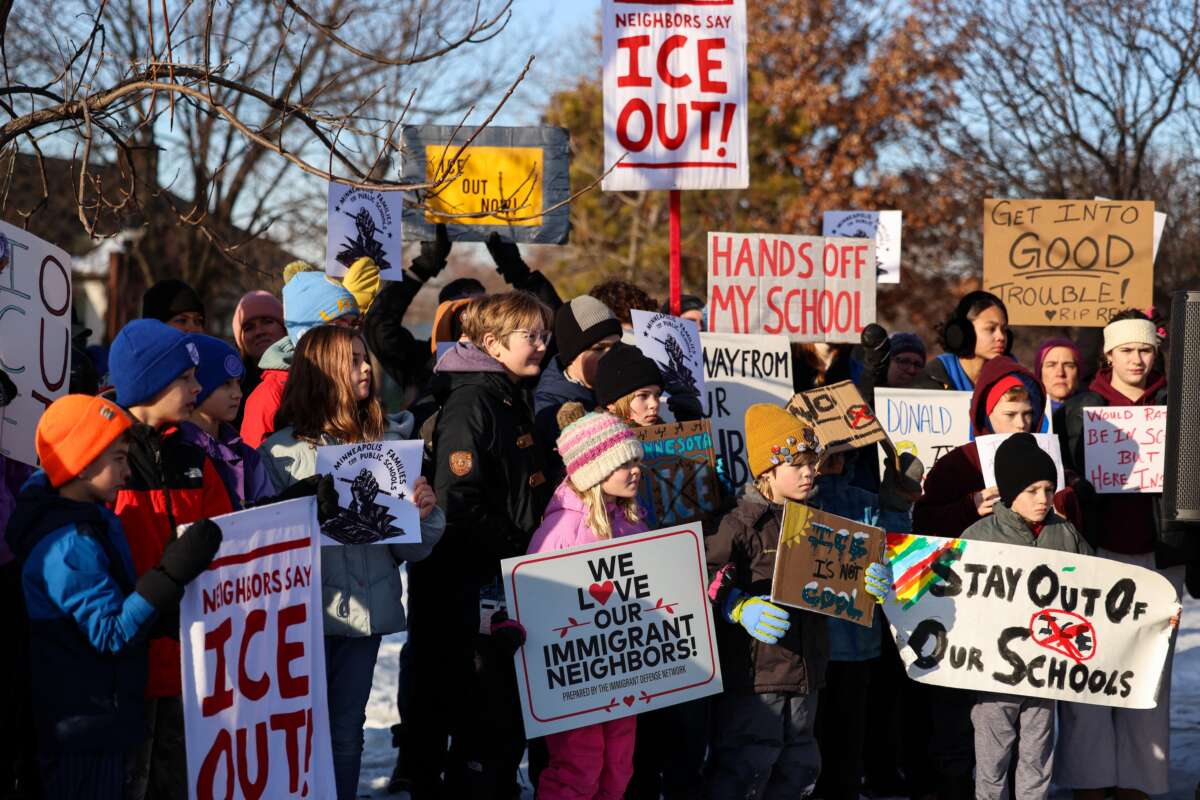
People pause for a minute of silence during a press conference organized by the group "Minneapolis Families for Public Schools," in Minneapolis, Minnesota, on January 9, 2026.CHARLY TRIBALLEAU / AFP via Getty Images

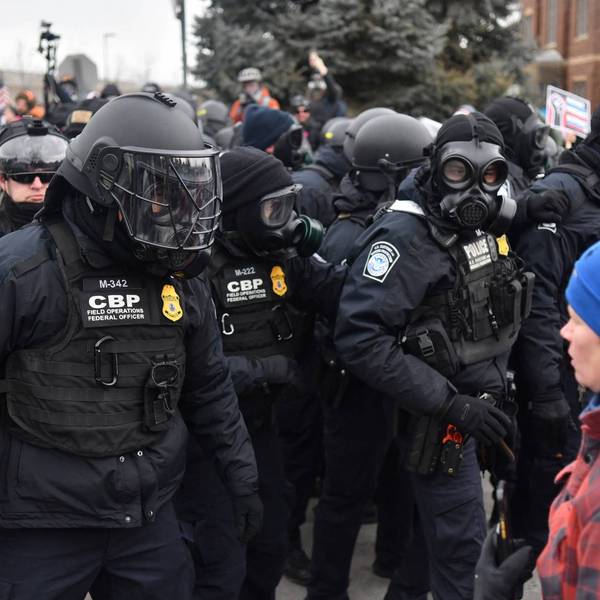
Organizers in Minneapolis are in a whirlwind right now. We are facing what appears to be — so far — the biggest deployment of Immigration and Customs Enforcement (ICE) cops in one city in the agency’s existence. The brutality and ubiquity of the agents have become central features of the city’s life, as have the massive networks of resistance and protection being built in opposition to them. The work here is incredibly urgent, and it is full of grief, connection, fear, and possibilities.

Many people stepping up to oppose ICE and protect their neighbors weren’t previously connected with each other; many are new to organizing or new to this kind of organizing. People have different politics. Some have undefined politics. Some interpret how to act with aligned politics in completely different ways. At its core, all of the anti-ICE work that both established and emerging formations in Minneapolis are doing is an attempt at community safety, at taking care of our neighbors and ourselves. What kind of world that attempt envisions — what the horizon we can see before us looks like — is worth taking a moment to think about.

We move in the direction that our steps take us. On its face, this is an obvious statement, but in our movements, it can be very easy to lose track of whether a step is moving us all toward greater justice or is, in fact, reinforcing systems that need to be destroyed. Many of our steps right now (forging stronger communities of care, opposing state violence, rejecting colonial borders) are intrinsically oriented toward liberation, but we still need to pause when possible to ground ourselves in the world we are trying to build. Doing so can help us ensure we follow our liberatory orientation more boldly.

Abolition provides a horizon that can orient people both in how to respond to each other with care, and in how to collectively respond to state violence with integrity.
Building a Collective Response

In response to the Trump administration’s federal policing escalation in Minneapolis — and across the Twin Cities — residents have organized at a monumental scale. Community members in Minneapolis have built a vast rapid response network; patrols near schools, churches, mosques, immigrant-owned businesses, and even vulnerable intersections; witness and response to ICE presence wherever else it occurs; large-scale food and supply deliveries; an infrastructure of safer transportation; and care webs for loved ones who are left behind after ICE abductions. Many of these systems sprung to life along the paths laid down by the 2020 uprising after the police-perpetrated killing of George Floyd.
We Can Honor Renee Nicole Good’s Life by Abolishing Death-Making Institutions
Those of us who see ourselves in Renee Good can take this moment to deepen our solidarities with all who are policed. By Holly Krig , Truthout January 13, 2026


During the onset of the COVID-19 pandemic, and the uprising that followed when several grocery stores were destroyed, Minneapolis learned to organize food delivery and other forms of care for people who couldn’t access them, and that work is relevant again. Neighborhoods dusted off dormant Signal groups, and community members are reaching out to collaborate with people they first connected with in 2020 over joint demonstrating and safety planning. One noteworthy mark of continuity is the Sanctuary Supply Depot, which emerged to care for encampment residents after they were evicted from a vacant hotel that volunteers called the Minneapolis Sanctuary. They have continued encampment supply distribution through years of Minneapolis Police Department harassment, and through the current escalation of immigration policing.

The collective enemy we are protecting our neighbors from is state violence.

Lessons of 2020 are now being expanded upon. While building rapid response practices, community members are also attempting to train and be trained, make connections with other organizations and cities, and provide support for each other’s material and emotional needs. Groups are absorbing (while trying to practice both safety and hospitality) a vast number of people — across all the city’s neighborhoods — who were previously not connected to each other, and maybe not involved with organizing at all.

Like a lot of organizing, and particularly similar organizing in other cities like Chicago, our efforts don’t always succeed. We can’t always keep our neighbors from being abducted, or from the other kinds of violence ICE cops bring with them. As Kelly Hayes wrote, sometimes we arrive too late, or can do little but witness excruciating moments of violence — against community observers like Renee Nicole Good, as well as against those the observers have gathered to protect.

Reflecting on those moments, Hayes wrote: “A lot of people are looking to Chicago right now, because the work we’re doing — the work you’re doing, if you’re wearing a whistle, protesting in the streets, practicing mutual aid, or responding to ICE alerts — is helping people around the U.S. imagine a meaningful response to the threats they face. People who feel frozen or stuck, or who have no idea how they would respond to such an onslaught, are getting a sense of what they’re made of.”

Our collective organizing matters, whether or not we are ultimately able to reverse ICE’s massive escalation. Minneapolis is providing a meaningful response to the current wave of authoritarian violence, and we are all being shaped by that response. The massive infrastructure of mutual aid that is operating in Minneapolis is by its nature politicized. The collective enemy we are protecting our neighbors from is state violence, and state surveillance of our networks is a constant threat that even the newest volunteer must reckon with. The waves that follow ours will be shaped by the work we’re doing, and what everyone can learn from it.

Every day, we help get kids to and from their schools when their parents can’t safely leave home.

And sometimes we do foil an abduction or a deportation. Every day, we help get kids to and from their schools when their parents can’t safely leave home. We ensure that people can worship in their mosques and churches with less fear. We network and fundraise to sustain workers and immigrant-run businesses when their workplaces are not safe or have lost their customer base. Each person protected from state violence or given tools to heal from it is a sacred victory and a piece of the world we want to build together. By protecting our neighbors from ICE, we are practicing abolition, even if some of our fellow practitioners might balk at that description.

In addition to the material impacts of the mutual aid and safety work community members are doing, this moment has brought policy opportunities. Organizations, local and national, are demanding that Congress defund ICE and that the officer who killed Renee Good be fired. Even feckless politicians have felt pressure to demand that ICE leave Minnesota. It is a moment of opportunity to multiply the scale of the abolition we’re practicing and protect many more people from this type of terror and violence.

This, too, resonates with the 2020 uprising. As Mariame Kaba said: “People in moments of whirlwind look for stuff. Your job, if you’re a consistent organizer who’s consistently organizing across time, is to make sure that one of the things people pick up can be your thing.”
Earlier Organizing That Led Us Here

Abolitionists in Minneapolis, often in the direct lineage of Kaba’s work, knew a moment like this was coming. We have learned how systems of criminalization intersect and reinforce each other. We prepared for this moment, learning from the response of other cities to ICE and from abolitionist organizing in our own city.

Before, during, and after the 2020 uprising, local organizations like Reclaim the Block and Black Visions put forth the demand to defund the Minneapolis Police Department — to fund communities, not cops — building on the local work of MPD 150 and the lineage of other cities like Chicago. In 2020, organizers explicitly linked that demand to the community care networks that were emerging as existing systems failed us.

By protecting our neighbors from ICE, we are practicing abolition.

Other organizations, too, like MIRAC and Unidos, prepared for this moment, training individuals and groups in ICE watch tactics. They learned from practices that had emerged in Chicago, Los Angeles, and North Carolina. That work, as Mariame Kaba recently wrote, connects to a lineage of watching cops: “Los Angeles activists in the mid-60s, for example, launched ‘Community Alert Patrols’ — volunteers in cars who followed the LAPD in Black neighborhoods to observe and take photographs. Just as ICE agents hate being filmed today, so the LAPD loathed the patrols and saw them as radical and dangerous precisely because they were effective in discouraging brutality and false charges.”

While explicitly abolitionist organizing doesn’t have the prominence that it did in the 2020 uprising, that organizing has directly influenced current responses, from the community support work to the shared language of protest to the policy response that people assume is possible. Organizers can bring defund and abolish demands to movement spaces and policy makers with a prominent reference point. And they are. Nationwide January polling showed that 46 percent of respondents support abolishing ICE, an explicitly abolitionist policy demand, up sharply from 27 percent last July and higher than the percentage who currently don’t favor abolishing ICE, 43 percent. Democratic proposals to fund increased training for ICE cops have been widely dismissed as counterproductive, informed by the increased conversations about abolition since 2020.
Grounding Ourselves in Abolitionist Visions

Abolition is a practice. When we do any of this collective work, we are trying to put our politics into practice. When we instead find ourselves tempted to practice surveillance of our neighbors or punitive responses to each other’s attempts, or to allow feelings to birth carceral policy, abolition gives us the clarity to reorient ourselves.

How can we ground our work in abolition in a way that radiates outward, that extends the care we are building for immigrant families to all our neighbors, with no exceptions?

We can reorient ourselves because, while it is a practice, abolition is also a horizon. Abolition shows us the kind of world we want to live in. It is one without imprisonment, policing, or surveillance — by city, state, or federal cops or by cops in our hearts — no matter what kind of cops we’re struggling against in the moment.

The horizon of abolition can also help us navigate complex conversations as we work with our communities on this inherently anti-carceral project. How can we ground our work in abolition in a way that radiates outward, that extends the care we are building for immigrant families to all our neighbors, with no exceptions? How can this work strengthen and mutually reinforce our efforts to support our criminalized and incarcerated neighbors, our poor neighbors, and our houseless neighbors?

With abolition’s vision, we can evaluate whether our practices will lead toward a world with more or less policing, surveillance, and imprisonment. When policies are proposed, by elected officials or by movements, we can evaluate those as well. If we enact those policies, if we take those steps, if we practice those things more, will we be emptying cages or filling them?


This article is licensed under Creative Commons (CC BY-NC-ND 4.0), and you are free to share and republish under the terms of the license.


Jonathan Stegall
Jonathan Stegall is a designer, and a faith-rooted organizer and abolitionist in Minneapolis.


Anne Kosseff-Jones
Anne Kosseff-Jones is an editor, writer, and organizer in Minneapolis.
With Donroe Doctrine, Trump Threatens to Export His Brand of Authoritarianism


International solidarity, not liberal imperialism, is the only way to stop Trump’s global class war.'

January 24, 2026

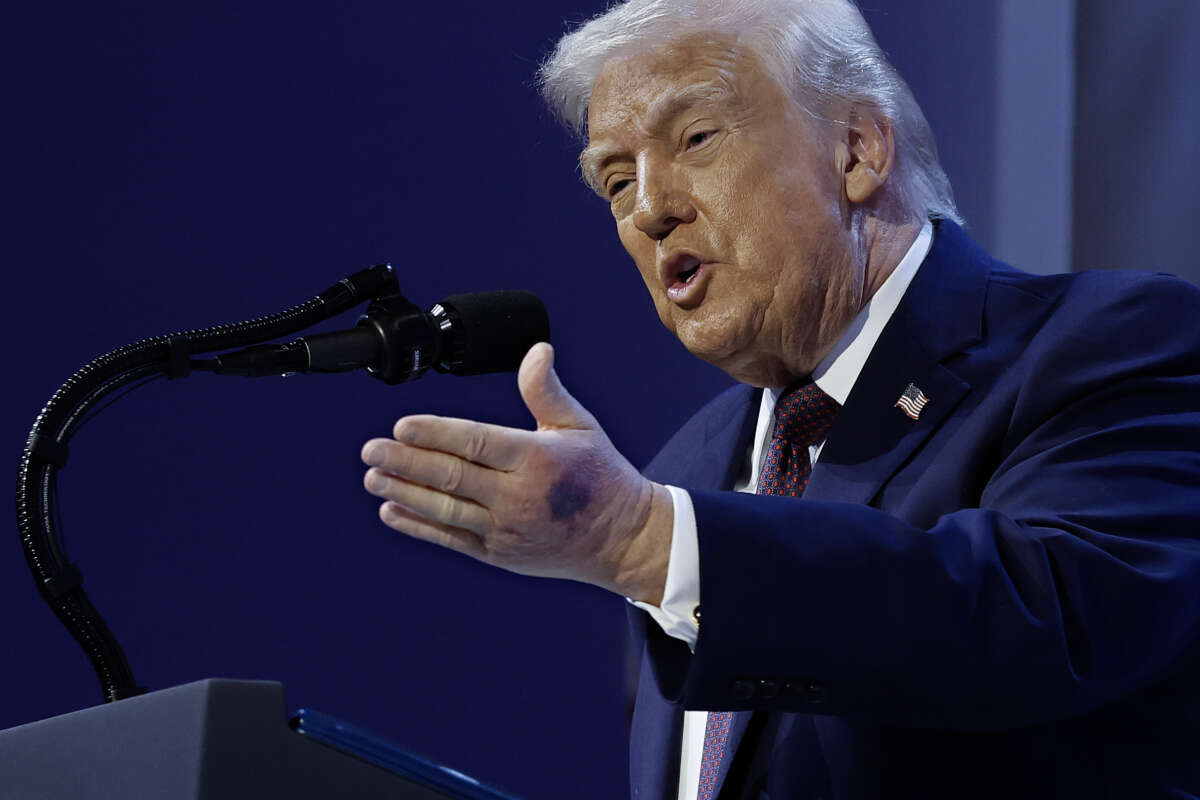
Donald Trump speaks during a signing ceremony for the “Board of Peace” at the World Economic Forum (WEF) on January 22, 2026, in Davos,
  Somodevilla / Getty Images

President Donald Trump’s National Security Strategy (NSS) is the crudest articulation yet of his authoritarian nationalist project. It promises to smash the so-called rules-based international order Washington has superintended since the end of the Cold War. The U.S., of course, repeatedly violated that order’s stated principles, like sovereignty and self-determination, most recently with the Biden administration’s support for Israel’s genocidal war in Gaza.

Despite its hypocrisy, the U.S. had attempted to integrate the world’s states into multilateral economic and political institutions, forge alliances to deter, contain, or overthrow its rivals, and police countries and regions torn apart by its program of free trade globalization. Trump claims that such liberal imperialism overextended the U.S., caused its relative decline, and enabled the rise of its competitors, especially China. His Secretary of State, Marco Rubio, declared, “The postwar global order is not just obsolete, it is now a weapon being used against us.”

To restore U.S. power, Trump’s NSS announces a new Trump Corollary to the Monroe Doctrine, a so-called Donroe Doctrine. Instead of global hegemony, it aims to carve out an exclusive U.S. sphere of influence in the Western Hemisphere, install pliant regimes, plunder their resources, and wield state power against migrants. The strategy as a whole has already born bitter fruit; Trump’s ICE agents killed immigrant solidarity activist Renee Good, his special forces carried out a coup in Venezuela, and his administration threatens to annex Greenland. His strategy will bring not “peace through strength,” but class war, brutal scapegoating of the oppressed, and imperial rivalry over the division of global capitalism.

The Return of Great Power Conflict

Trump’s strategy is a response to today’s asymmetric multipolar order. While the U.S. remains the dominant imperialist power, it faces a global imperial rival in China, an outsized regional power in Russia, and a host of lesser ones like Iran and Brazil. The U.S., China, and Russia have become more assertive of their interests, spurring military aggression as each stakes claims in their regions.

Russia invaded Ukraine to rebuild its former empire and challenge NATO’s hegemony in Europe. China has projected its power in the Asia-Pacific region, threatening Taiwan and clashing with, among others, Japan, the Philippines, and, behind them all, the U.S. Washington backed Israel to crush Hamas and destroy Iran’s so-called axis of resistance to reassert U.S. dominance over Middle East’s strategic energy reserves, which China relies on to fuel its economy.

In response to these developments, Washington abandoned its grand strategy of superintending global capitalism to confront its great power rivals. The Obama administration started this shift with its Pivot to Asia to contain China and plan to reset relations with Russia, but those both failed. In his first term, Trump introduced a new strategy of illiberal hegemony focused on great power competition with China and Russia, but his regime’s incompetence and divisions prevented its implementation, leaving the U.S. weaker, its allies alienated, and rivals emboldened.

The Biden administration tried to refurbish U.S. imperialism, rebuild Washington’s alliances, and defend the so-called rules-based international order. Biden exploited Russia’s invasion of Ukraine to rally its allies together against both Moscow and Beijing. But he undermined this project with his support for Israel’s genocidal war on Gaza, which enabled China and Russia to expose Washington’s hypocrisy.

Trump’s Authoritarian Nationalism

Trump’s new Donroe Doctrine decisively breaks with the grand strategy the U.S. has pursued since the end of the World War II. It retreats from the pursuit of global hegemony to restore U.S. power within its borders, claim exclusive hegemony over the Western Hemisphere, and establish “a balance of power” against its imperial rivals. At home, the Trump administration aims to rebuild U.S. domestic manufacturing, particularly in high tech and AI, through a program of protectionist tariffs, tax cuts, incentives for corporate investment, and deregulation. To divide and conquer working class resistance, it scapegoats oppressed groups, in particular migrants. Underscoring its determination to split the multiracial, multinational working class, the NSS declares the “era of mass migration is over.”

Abroad, its main goal is to establish neocolonial dominance in the Western Hemisphere. To enforce this naked imperialist goal, it plans to boost the Pentagon budget, if Trump is to be believed, to $1.5 trillion, which would be used to build a high tech military and shield North America with a new “Golden Dome” capable of intercepting nuclear missiles, giving the U.S. the ability to start a nuclear war without fear of retribution. That will enflame the ongoing nuclear arms race between the U.S., China, and Russia. At the same time, Trump demands that U.S. allies shoulder the burden of their own defense, compelling them to raise military spending, setting off regional arms races.

The NSS adopts transactional relations with both allies and rivals, and at least rhetorically deescalates conflict with China and Russia, apparently accepting their hegemony over their own spheres of influence.

Trump promises this strategy will end forever wars and secure peace. The NSS even claims he’s already ended eight conflicts and intends to conclude another in Ukraine. That is simply false; the ceasefires he’s brokered are either a sham like the one in Gaza, where Israel continues its bombing and siege, or he had little to nothing to do with them like the one between India and Pakistan.

Moreover, Trump’s actual policies prove that he’s an old-fashioned warmonger. He backed Israel’s genocide, bombed Iran’s nuclear facilities, ordered an airstrike on a village in Nigeria on Christmas, and staged a coup in Venezuela to seize control of the country’s oil. And his new strategy will enflame more imperial conflict with China and Russia over the division of the world into spheres of influence. Remember, the last epoch of great powers fighting to establish empires led directly to World War I and World War II.

Shouting and Wielding a Big Stick

The NSS prioritizes the Western Hemisphere, Asia, and Europe, while downplaying the Middle East and, in keeping with Trump’s anti-Black racism, almost entirely ignores Africa. In the Western Hemisphere, it invokes as its precedent Theodore Roosevelt’s Corollary to the Monroe Doctrine, which the “Rough Rider” used to justify gunboat diplomacy, coups, and occupations throughout Latin American and the Caribbean in the early 20th century. Trump’s Donroe Doctrine pledges to bolster Washington’s allies, replace antagonists with quisling regimes, and claim exclusive access to their markets and resources, especially fossil fuels and rare earths.

While the NSS never names its rivals in the region, except with euphemisms like “Non-Hemispheric competitors,” its main one is obviously China. Beijing has established itself as a key economic power in the region; it invests huge sums of money through its Belt and Road Initiative (BRI), imports raw materials from a variety of countries, and exports finished products back to them. In the process, China has established alliances with countries like Brazil, which is part of the BRICS alliance, as well as Venezuela, which it depended on before Trump’s coup for 4 percent of its oil.

In response to China’s encroachment in Washington’s backyard, Trump has pressured states to exclude China and its companies. In one example, he forced Panama to leave the Belt and Road Initiative and is demanding that it end its contract with the Hong Kong-based Hutchison Ports, which operates terminals near the Panama Canal. In another, he seized six tankers and cut off Venezuela’s oil exports to China after overthrowing Maduro.

Unsurprisingly, Beijing has objected to Trump’s attempt to squeeze it out of the Western Hemisphere. Foreign ministry spokesperson Mao Ning denounced Trump’s abduction of Maduro, saying, “The US’ brazen use of force against Venezuela and its demand that the country dispose of its oil resources under an ‘America First’ principle constitute [a] typical act of bullying, seriously violate international law, gravely infringe upon Venezuela’s sovereignty, and severely harm the rights of the Venezuelan people. China strongly condemns such actions. I would like to stress that the legitimate rights and interests of China and other countries in Venezuela must be protected.”

Trump’s threat to seize Greenland has further enflamed rivalries not only with China and Russia, but also NATO countries. These states are engaged in a scramble for the Arctic’s territory, military basing rights, shipping lanes, and natural resources. Already, Denmark, which rules over Greenland, has declared that U.S. seizure of the island would spell the end of NATO. In an unprecedented development, several NATO members have deployed troops in Greenland in support of Denmark against the U.S. Russia has also objected to Trump threat to seize the island and police the Arctic.

Imperial Conflict in the Asia-Pacific

In the Asia-Pacific, Trump’s NSS sustains Washington’s commitment to containing China, but it downplays their conflict, holding out hope for commercial deals to rebalance their trade relations, a dramatic climbdown for an administration that had previously launched an all-out trade war with Beijing. China forced Trump to back down. It cut off its exports of rare earth minerals, which are essential for the U.S. automobile and defense industry, and stopped its imports of soybeans from U.S. agribusinesses, a crucial electoral constituency for the GOP.

Facing economic and electoral disaster, Trump chickened out, lowered tariffs on China from 100 percent to 30 percent, still a record high but with countless carveouts and loopholes. For its part, China opposes tariffs and wants free trade to secure markets for its massive export industry. At this point, Trump is trying to avoid a fall out with China in the run up to April’s trade talks in Beijing. Treasury Secretary Scott Bessent reportedly intervened in the drafting of the NSS to mute criticisms of China, overriding hawks like Elbridge Colby and Marco Rubio.

Nevertheless, the Trump administration realizes that China is Washington’s main imperial rival. For now, it wants to cut a trade deal, while it overcomes its vulnerabilities, especially its inability to independently extract and process rare earths. To address this, the administration has bought stakes in mining companies while U.S. lawmakers consider investing billions in new processing plants. Once the U.S. finds a way either to manufacture rare earths on its own or to access them through secure supply chains, it will be in a stronger position to confront China.

For now, the NSS upholds current U.S. policy, pledging to maintain its military in the region, support its allies, and cut trade deals with them, while pressuring them all to increase their defense spending. It maintains strategic ambiguity as to whether it would defend Taiwan in the event of a Chinese invasion but the administration has committed to selling Taiwan arms to defend itself. That puts it at odds with China’s assertion of imperial power in the Asia Pacific.

In response, Beijing is trying to overcome its dependence on the U.S. and Taiwan for its high end computer chips, plowing money into its own manufacturing system. It even opted to reject the use of Nvidia’s second most advanced chips, pushing its companies to use domestically produced ones instead. It is also diversifying its exports market in Asia, Europe, Latin America, and Africa to make up for those lost in the U.S. because of Trump’s tariffs.

To enforce its economic power, Beijing increased its defense spending by 7.2 percent in 2025 to over $318 billion and has escalated its military exercises around Taiwan and throughout the region. That has in turn further fueled the regional arms race, making war between it and various powers like the Philippines in the South China Sea and Japan in the East China Sea more likely and potentially deadly.

Backing Europe’s Far Right and Placating Russian Imperialism


While Trump’s strategy seemingly upholds the status quo in Asia, it smashes it in Europe. The NSS criticizes the EU for its allegedly lax immigration policies that supposedly compromise its white, Christian identity. This is all nonsense. EU member countries, whether ruled by the establishment or the right, have increasingly blocked, detained, jailed, and deported migrants.

Trump’s NSS also denounces the EU’s regulations, which restricts U.S. multinationals’ operations on the continent. He is pressuring it to gut its Digital Markets Act and Digital Services Act, which The American Prospect reports, “require tech companies to take down illegal content on their platforms, restrict the transfer of user data to multiple platforms run by the same companies, refrain from ‘steering’ users toward their own products, and allow for fair competition in app stores and interoperable social media sites.” One of Trump’s on-and-off allies, Elon Musk, called for the abolition of the EU after X was hit with a $140 million fine for violating its digital rules.

The NSS also references the EU’s establishment parties’ refusal to enter into coalition governments with the right and their censorship of hate speech, while calling on Europe to pursue “strategic stability” with Russia.

To secure this rapprochement with Moscow, Trump is trying to force Ukraine into a land for peace deal that rewards Russia’s colonial aggression. He’s willing to concede Moscow a sphere of influence in its former empire in exchange for lucrative deals for minerals, natural gas, and oil in both Ukraine and Russia, perhaps under the illusion that he can pry Moscow away from Beijing. That’s why Putin’s spokesperson praised the NSS as “consistent with our vision” and “gratifying.”

At the same time, Trump’s demand that Washington’s NATO allies shoulder their own security burden will force them into an arms race with Russia. Already, in response to pressure from Trump, NATO members have agreed to increase their military budgets to 5 percent of GDP, while they are imposing austerity, making their working classes pay for the new militarism.

Fantasies of Peace in the Middle East

In contrast to the Western Hemisphere, Asia Pacific, and Europe, the NSS gives little attention to the Middle East, which has been main focus of U.S. imperialism since 9/11. The administration hopes to capitalize on Israel’s genocide in Gaza, decimation of Iran’s so-called axis of resistance, and Washington and Tel Aviv’s destruction of Tehran’s nuclear program. It wants to push countries to join the Abraham Accords, normalize their relations with Israel, cut commercial deals, and thereby bring stability to the region.

In reality, Israel is a pariah state, and the Middle East remains an explosive tinder box of conflicts within and between its countries. The region’s rulers preside over the same deep class inequalities and national oppressions that provoked the Arab Uprisings in 2011 and will set off more waves of revolt for democracy, justice, and equality. Moreover, imperial rivalries, especially between the U.S. and China, will persist as they angle for access to the Middle East resources, markets, and growing finance capital.

The current uprising in Iran against economic inequality and skyrocketing inflation is a taste of the class and social struggles to come. The U.S. and Israel have tried to exploit this revolt for their own purposes, threatening military action against Tehran. Trump has also announced 25 percent tariffs on any country that trades with Iran, including China, India, and the United Arab Emirates. A spokesperson for Beijing responded, saying, “China firmly ‍opposes ⁠any illicit ⁠unilateral sanctions and long-arm jurisdiction and will take all necessary measures to safeguard its legitimate rights and interests.” This conflict threatens to disrupt Trump’s attempt to calm relations with Beijing before their trade talks. Thus, contrary to Trump’s wishful thinking, the U.S. will remain preoccupied with the Middle East and North Africa.

Liberal Imperialism Offers No Solution

Trump has shattered the old rules-based order and opened a new epoch of great power rivalry for the division of the world and its states into neocolonial spheres of influence. In this titanic conflict, deputy chief of staff, Stephen Miller argues, the U.S. will operate with the assumption that “we live in a world … that is governed by strength, that is governed by force, that is governed by power. These are the iron laws of the world since the beginning of time.” In this situation, as Thucydides put it, “the strong do what they can and the weak suffer what they must.”

Washington’s foreign policy establishment and the Democratic Party have denounced Trump’s Donroe Doctrine, arguing that it will compromise Washington’s ability to contain China and Russia. They hope to resurrect Joe Biden’s strategy — implement a new industrial policy, enact neoliberal deregulation to restore abundance, and rebuild alliances to assert their collective global hegemony. But, under Biden, that program did not restore manufacturing, failed to improve the lives of working class and oppressed people, and led not to peace but continued imperial rivalry between the U.S., China, and Russia as well as genocidal war in Gaza.

The left must oppose both Trump’s authoritarian nationalism and the Democrats’ liberal imperialism and fight for international solidarity from below against all imperialist states. We in the U.S. have to oppose our own government, which remains the most powerful and deadly force in the world. Our responsibility is to organize a movement against the two sides of Trump’s authoritarian nationalism, his war at home against migrants and his war abroad from his coup in Venezuela to his threats against Colombia, Cuba, and Greenland. In doing so we can build multiracial, multinational working-class struggle — like the general strike in Minneapolis — that has the power to stop Trump in his tracks.

At the same time, we should extend our solidarity to the struggles of workers and oppressed people in countries such as China, Russia, and Iran. Such solidarity must include support for all oppressed nations’ right to self-determination, regardless of which imperialist power rules over them. That means championing struggles for liberation from Palestine to Puerto Rico, Ukraine, and Taiwan.

In such struggles from below against imperialism, exploitation, and oppression a new international left can be forged that offers an alternative to the right and the capitalist establishment. Their system offers nothing but crisis, militarism, and war. Now more than ever, we need to start building a fight for a world that puts people and the planet first.


This article is licensed under Creative Commons (CC BY-NC-ND 4.0), and you are free to share and republish under the terms of the license.

Ashley Smith is a socialist writer and activist in Burlington, Vermont. He has written in numerous publications including Truthout, The International Socialist Review, Socialist Worker, ZNet, Jacobin, New Politics, and many other online and print publications. He is currently working on a book for Haymarket Books entitled Socialism and Anti-Imperialism
.
Resisting the Empire Next Door, Protests in Mexico Grow

After US intervention in Venezuela, Trump’s threats against cartels may be seen as paving the way for actions in Mexico.

Published
January 24, 2026

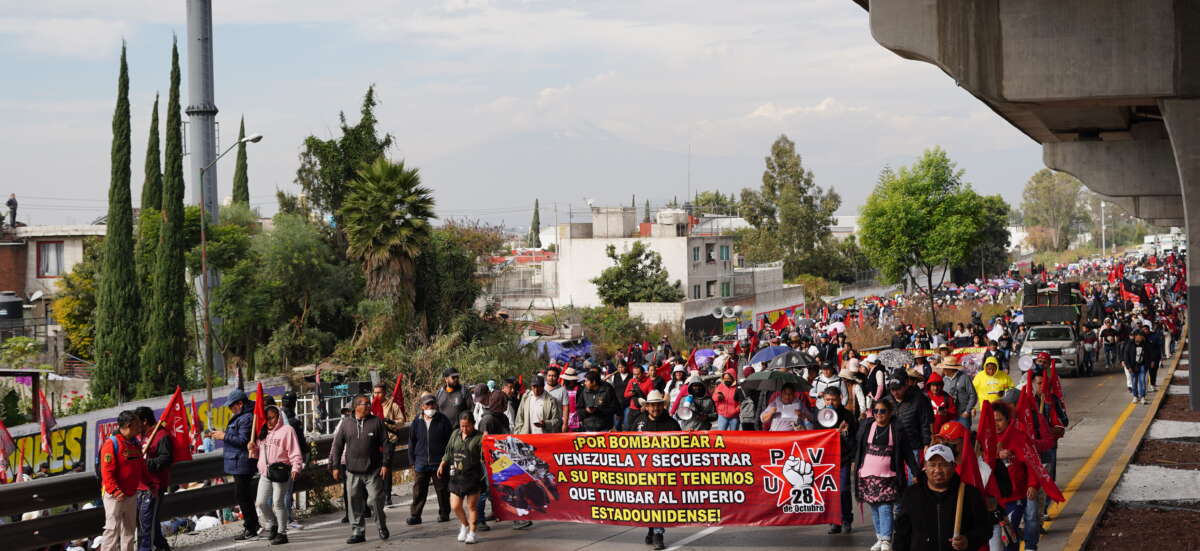
Tens of thousands of people in Puebla's anti-imperialist front marched and closed the main highway through the city, which goes to Mexico City, on January 21, 2026.
Tamara Pearson


Support justice-driven, accurate and transparent news — make a quick donation to Truthout today!

An anti-imperialist movement is building in Mexico, where the U.S. invasion of Venezuela has been seen as an act of intimidation for all of Latin America. Protests are swelling in response to this latest blow after decades of political and economic subjugation by its neighbor to the north.

Across the country, larger-than-usual marches on January 3 and 10 condemned the U.S. attacks on Venezuela. The marches included some pro-Morena groups (the governing party) as well as students, workers, farmers, and Indigenous groups that are critical of Morena.

condemned the U.S. intervention in Venezuela, calling for anti-imperialist action around the continent, as “Latin American sovereignty is at stake.” The Zapatistas also released a statement, supported by around 170 organizations in Mexico, in solidarity with the Venezuelan people and denouncing “big capital’s wars of conquest.”

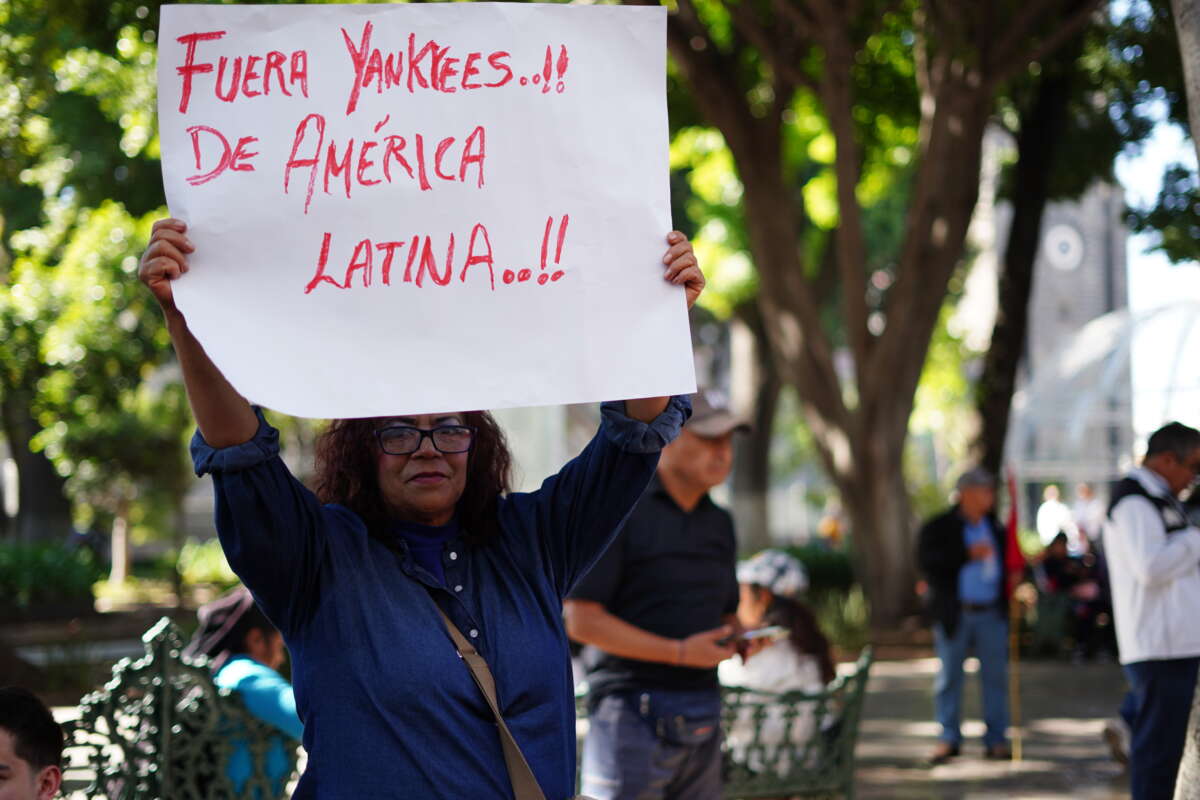
In Mexico City, unions, environmentalists, feminists, sexual diversity activists, students, movements for housing rights, and anti-racists chanted “Yankees out of Latin America” and held banners that read “Down with the Monroe Doctrine.”

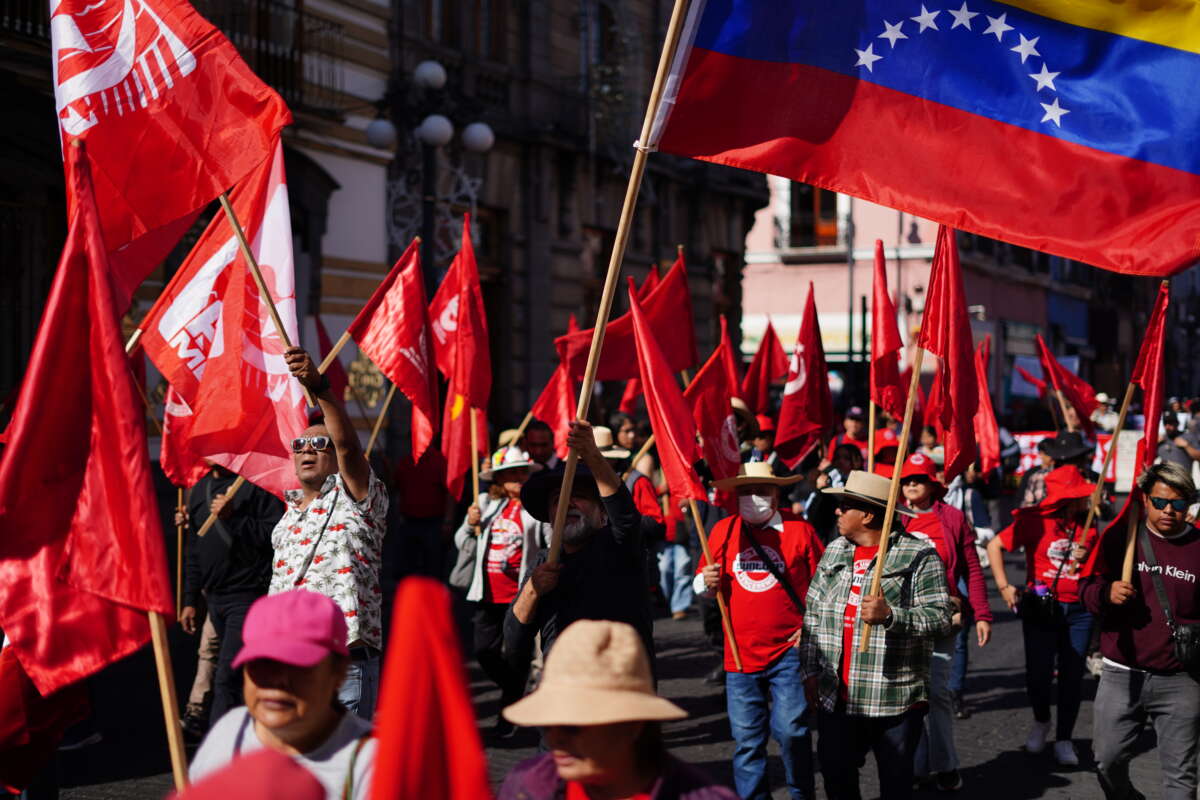
Here in Puebla, thousands of street vendors, small farmers, university workers, students, solidarity groups, and revolutionary organizations chanted, “We don’t want to be a colony.” The local anti-imperialist front was created on January 12.


It’s not freedom, it’s colonial imperialism’ reads this placard at a Venezuela solidarity march in Puebla, January 10.Tamara Pearson

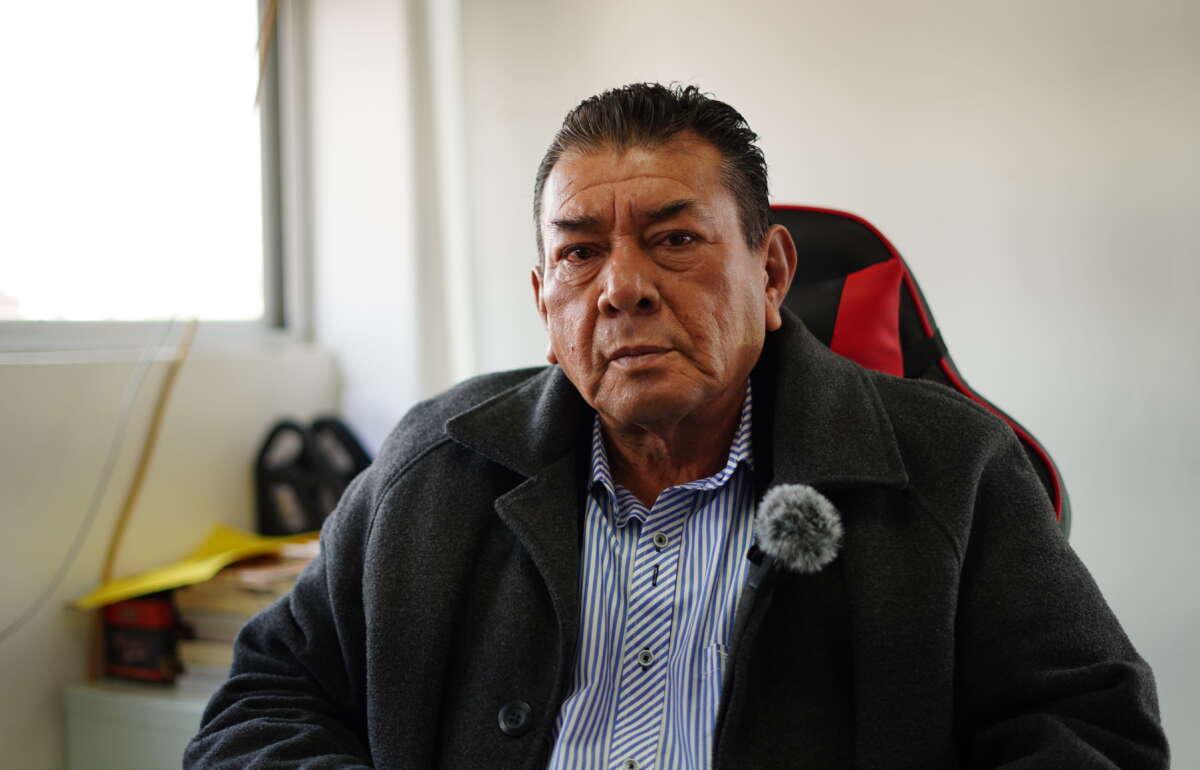
“The day the U.S. bombed Venezuela, we mobilized in Puebla … and we condemned the aggression and denounced that this would be the start of something bigger,” Rubén Sarabia Sánchez, known as Simitrio, tells Truthout. The founder and general advisor of the UPVA 28 de Octubre, which organizes thousands of market and street vendors in Puebla, he has been a political prisoner twice and his daughter was murdered in 2017 as part of the repression of the group.

The front also called for another protest on January 21. That day, some 10,000 people shut down a major highway and marched along it for six kilometers (3.7 miles). “We’re not heard unless the circulation of goods are affected,” Simitrio said.


Unions, environmentalists, feminists, sexual diversity activists, students, movements for housing rights, and anti-racists chanted “Yankees out of Latin America”

Other fronts have been formed around the country, including in Guanajuato, where civil society groups are calling for the withdrawal of all U.S. troops from Latin America. In Sinaloa, the new front has held protests in Culiacán, rejecting the U.S. attacks on Venezuela and defending self-determination throughout the continent.

“The sentiment in the marches has been ‘if it happens to them, it could happen to us.’ It seems like the U.S. president has no limits now,” Axel Hernández tells Truthout. He is part of the Journalism Cooperative in Mexico City, which has been documenting police abuse at protests and observing movements against gentrification, for water rights, and against the upcoming World Cup to be held in Mexico City, among other venues.

“With the supposed ceasefire in Gaza, the mobilizations for Palestine became smaller, but now we are seeing huge numbers of people coming into the street, for some of the biggest mobilizations in the past year … including unions, housing organizations, and even some members of Morena, and some of its leaders like the writer Paco Ignacio Taibo,” Hernández said. Formal political parties like Morena, PRI, PAN, etc. aren’t typically welcome in most mobilizations, such as demonstrations for women’s rights or for the forcibly disappeared.

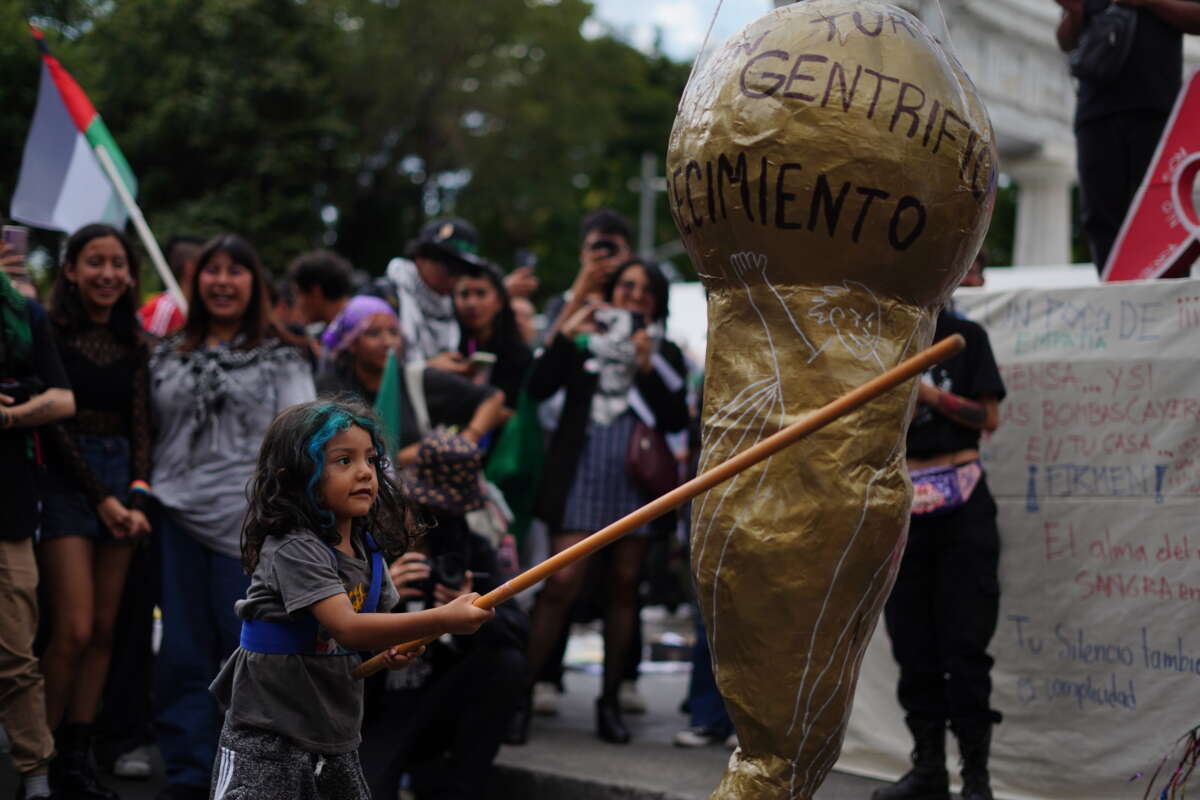
A child hits a piñata of a World Cup trophy during an anti-gentrification protest in Mexico City.Tamara Pearson

Mexico’s National Education Workers Union (CNTE), with an estimated 350,000 members, condemned the attack on Venezuela, saying it confirmed Trump’s “monopolizing ambitions towards Latin America” and his “determination to use his military power for the capitalist interests of his empire.” Rural Indigenous organizations also released statements of solidarity, noting “Trump thinks the whole world is his village … but we understand that it is the people’s time … to wake and unite more.”

At the same time, a few right-wing figures in the country celebrated the attacks on Venezuela, with billionaire and media mogul Ricardo Salinas Pliego calling it a “victory” and source of “hope” for Mexico.


“The day the U.S. bombed Venezuela, we mobilized in Puebla … and we condemned the aggression and denounced that this would be the start of something bigger.”

President Donald Trump’s direct threats and attacks against Mexico and Latin America have continued since the U.S. kidnapping of Venezuelan President Nicolas Maduro, with the U.S. selling stolen Venezuelan oil on January 14. The next day, The New York Times reported that the U.S. was intensifying pressure on Mexico to allow U.S. military forces into its territory, allegedly to dismantle fentanyl labs. Trump has also said the U.S. could strike land targets to combat cartels in Mexico. Then, on January 16, the Federal Aviation Administration issued a 60-day-long warning urging airlines to “exercise caution” over Mexico, Central America, Ecuador, and Colombia due to “military activities.”

“January 3 was a bigger blow in a war that has been going on for many years,” Miguel Guerra Castillo, an organizer of a new anti-imperialist front in Puebla and national leader of the Popular Socialist Party of Mexico, told Truthout. “But it was a warning and Mexicans are realizing this threat affects us.”

People wave a Venezuelan flag at the anti-imperialist march in Puebla, January 10.
Tamara Pearson


U.S. Pressures Mexico With Calls for Boots on the Ground

While Trump paved the way for military intervention in Venezuela by first bombing boats in the Caribbean under the pretext that they were supposedly trafficking drugs, his threats against cartels may also be laying the groundwork for actions in Mexico. Many U.S. companies depend on Mexico for nearshoring, low-paid labor, and access to land, water, and energy that is cheaper than in the U.S. Trump “wants to take control of” Mexico’s petroleum, water, and lithium, said Simitrio.

Trump designated six Mexican cartels as foreign terrorist organizations in February 2025. Nearly a year later, on January 7, 2026, he called for a US$1.5 trillion military budget for 2027, up from $901 billion for this year. The next day, he suggested that the U.S. military could launch land strikes on drug cartels in Mexico. “We’ve knocked out 97 percent of the drugs coming in by water. And we are going to start now hitting land, with regard to the cartels,” Trump said, adding, “The cartels are running Mexico, it’s very sad to watch and see what’s happened to that country.”

Anti-imperialist organizers in Mexico see Trump’s statements as a cover for U.S. imperialism.

“Drug trafficking is the pretext, the reality is that they want to impose their policies of domination on Mexico,” said Guerra.

Simitrio agreed. “Yes, it’s a pretext, a construct created by the United States to justify aggression whenever they want something.”

Rubén Sarabia Sánchez, known as Simitrio, founder and general advisor of the UPVA, on October 28.Tamara Pearson

Mexico has already lived through a U.S.-led so-called “War on Drugs,” with disastrous consequences for the country. In 2006, then-president Felipe Calderón launched a military offensive against cartels, heavily supported by U.S. funding and strategy through the Merida Initiative. Conflict and violence between security forces and armed groups led to more violence, and organized crime groups bloomed, growing from just a handful in 2006 to reportedly over 400 by 2021, “many of them with ties to the U.S,” Business Insider noted. Further, the vast majority of cartels’ guns come from the U.S. now. From 2006 to 2020, there were over 250,000 narco-related deaths in Mexico — with homicides in Mexico tripling in the first six years of the “War on Drugs.”

On January 14, three U.S. congresspeople introduced the No Unauthorized War in Mexico Act to prohibit taxpayer funds being used for military invasion of Mexico. However, its passage is unlikely, as a resolution to limit the future use of U.S. military force in Venezuela has already failed

.
Tens of thousands of people in Puebla’s anti-imperialist front marched and closed the main highway through the city, which goes to Mexico City, on January 21, 2026.Tamara Pearson


Bilateral “Collaboration” Amid Fear and Intimidation

The attack on Venezuela demonstrated that the U.S. under Trump is ready for escalation. The attack “was also to plant fear, to demobilize us,” said Guerra, “It’s an intolerable pressure, that we can’t ignore or assume nothing will happen. Nor should we see it as a done deal. The United States has global military supremacy. It is the international police, and with the latest policies, they have declared themselves the owners of the Americas.”


“The U.S. has never stopped attacking our continent — with weapons or economically, it’s always there, protecting its economic and geopolitical interests.”

Nearby, Cubans are also anxious, as Trump has said Venezuelan oil supplies — a lifeline to the country — will be cut. The U.S. is saying Cuba has to make a deal before it’s “too late,” but Cuba is refusing.

“The threats regarding supplies have people worried, but at the same time, they’re used to it … from friends, I’m getting angry resignation. More worrying, is the idea of military intervention, though many don’t think that is likely, since Cuba doesn’t have oil or key resources. But with Trump, anything is possible,” Catriona Goss told Truthout from Havana.

Mexican President Claudia Sheinbaum has offered to mediate dialogue between the U.S. and Cuba, and this month she has consistently responded to Trump’s pressure on Mexico with rhetoric about “coordination” and “cooperation.” She has also stressed the Mexican government’s “positive results” in capturing key criminal leaders and destroying drug laboratories. However, if drugs are just a pretext, as was the case in Venezuela (Trump has only talked about and sold oil since the intervention), then such “collaboration” by Mexico will have its limits.

A person speaks out against U.S. intervention in Venezuela and Latin America, at a march in Puebla, January 10.Tamara Pearson

Just over the past year, the U.S. has canceled CBP One appointments and left thousands of migrants and refugees stranded in Mexico. Mexico has sent troops to its north and south borders to appease U.S. anti-migrant policies, and the U.S. has forced Mexico to continue to “cooperate” via tariffs as threats or punishments.

Mexican officials have reported that in every call between Trump and Sheinbaum, the U.S. president has raised the specter of troop deployment. As a result, the government is reassessing its assumptions that obedient economic and security policies are sufficient to protect Mexico from unilateral U.S. action.

“The U.S. has never stopped attacking our continent — with weapons or economically, it’s always there, protecting its economic and geopolitical interests,” said Hernández.

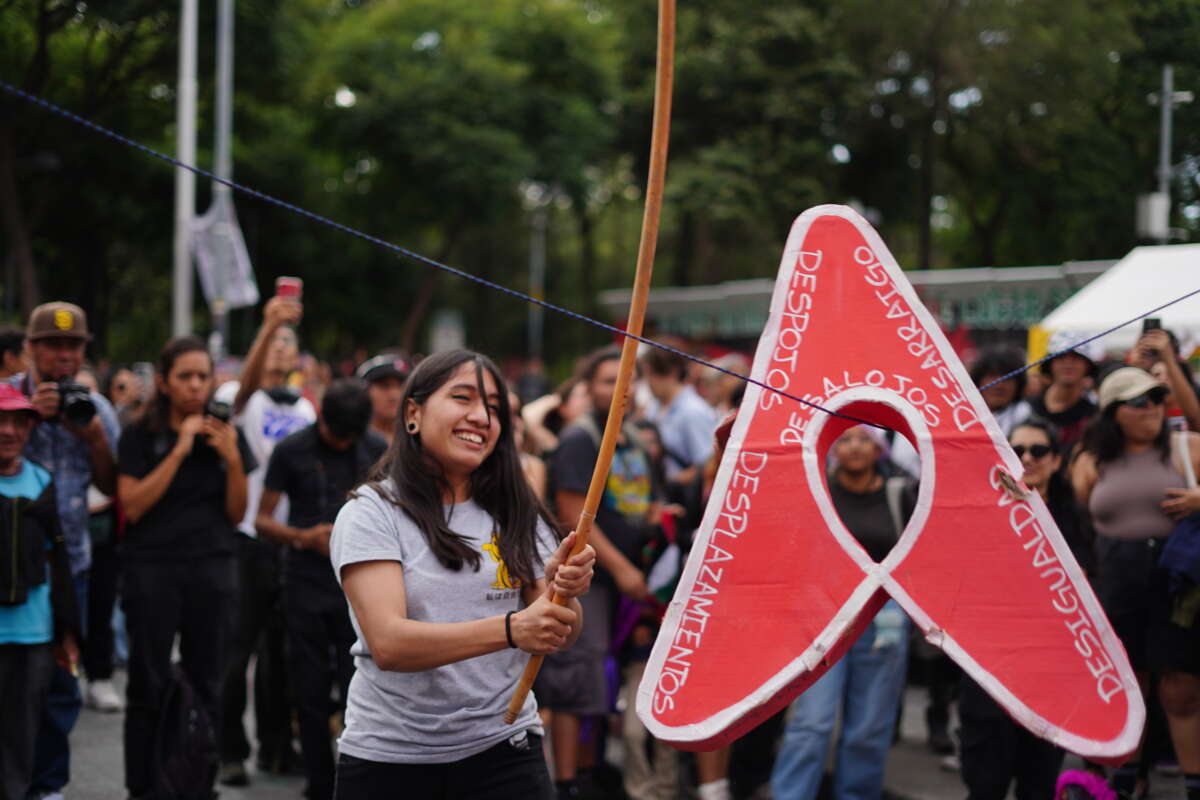
Protesters in Mexico City denouncing gentrification take turns to hit an AirBnb piñata that is covered in words like ‘displacement,’ and ‘inequality.’Tamara Pearson


Transnationals Are Prioritized as Trade Talks Approach

Sheinbaum and Trump also disagree on the United States–Mexico–Canada Agreement (USMCA) — the new version of NAFTA that went into effect in 2020 — which is due for review in July. Trump said on January 14 that the USMCA is “irrelevant” without any “real benefits,” while Sheinbaum believes it is important, given the highly integrated economies between the three participating countries. But while major automakers have said they depend on it, Mexican people and the environment do not benefit in the long term. The USMCA promotes extractivism and mining and protects transnational miners over Indigenous communities’ rights and the Mexican environment. It also permits extreme wage inequality between U.S. and Mexican workers who are doing exactly the same work for the same company.


“United States imperialism is in our veins — it’s not just this external thing where they crush and pressure you from the outside, it’s also within the economy.”

Trump is only against the USMCA because he wants to be able to use tariffs to extort, Simitrio explained. The agreement includes a no-tariffs policy for products that meet certain requirements and are largely made in North America.

“I don’t think there is real sovereignty here, because economic interests take precedence. The law, or the Mexican state, always come down in favor of transnational companies,” Hernández said, agreeing with Estrada that, “Everything changed with NAFTA, now the USMCA. I was born after NAFTA, but all the uncles and parents always talk about how things were different before it.”

NAFTA opened Mexico up much more to imports and exports, and U.S. multinationals quickly set up hundreds of factories to exploit Mexican labor and resources. NAFTA provisions forced Mexico to tolerate most pollution and environmental consequences of these factories, as the government could be sued if environmental regulations negatively impacted transnationals’ profits. NAFTA reorganized Mexico’s economy, replacing local products and food traditions with U.S. products, and millions lost their jobs and land.

As a continuation of this approach, under USMCA, U.S. corn exports to Mexico (where Indigenous people created modern corn) are protected, Mexico can’t ban genetically modified crops from the U.S., and private pharmaceutical corporations are prioritized over public health

.
‘Yankees out of Latin America’ reads this placard at the anti-imperialist march in Puebla, January 10.Tamara Pearson

“United States imperialism is in our veins — it’s not just this external thing where they crush and pressure you from the outside, it’s also within the economy,” said Simitrio. He believes the Mexican government uses sovereignty as a “disguise for subordination to the United States,” and describes how transnationals are often the main beneficiaries of fuel, energy, and other resources, even when petroleum is extracted and managed by a state company.

Coca-Cola for example, uses 419.7 million cubic meters of water a year, leaving many Chiapas residents without water, and private car manufacturing has increased its energy consumption (provided by the publicly-owned CFE) by 75 percent over the past decade.

The three countries in USMCA will also host the World Cup in June and July this year. The event is bringing other issues to the forefront, Hernández said, as the Mexican government is spending a lot of money and time on tourism, while urgent social issues are sidelined.


“The U.S. is present everywhere in Mexico, it owns half the country, it is meddling in everything.”

“Processes of colonization that have been denounced and protested for a while are more visible now,” he said, referring to displacement of Indigenous and other local communities and the diversion of resources for gentrification, multinational construction, and transnationals like FIFA and Airbnb. Protesters argue that the proliferation of Airbnb and other types of gentrification are increasing the rent of locals and leading to mass evictions by landlords, while legislation fails to protect renters and Mexico City has an agreement with Airbnb to promote tourism.

Protesters outside the U.S. embassy on January 18 called for a boycott of U.S. chains like Walmart and McDonald’s because they “finance wars” and for a boycott of the World Cup because the government is prioritizing it and the needs of tourists over the needs and demands of movements.

“Younger people in Mexico haven’t known any life other than being under the thumb of an empire,” Juan Francisco Estrada García tells Truthout. He is a university professor and general secretary of SUNTUAP, the University of Puebla Workers’ Union that was a key convener of the recent anti-imperialist marches in Puebla.

“What happened (in Venezuela) is a continuation of history, of the U.S. tradition of ruling over the governors — imposing its will through local leaders,” said Estrada. “It’s a system that was established a very long time ago. The U.S. is present everywhere in Mexico, it owns half the country, it is meddling in everything.”


This article is licensed under Creative Commons (CC BY-NC-ND 4.0), and you are free to share and republish under the terms of the license.


Tamara Pearson is an Australian-Mexican journalist, editor, activist and literary fiction author. Her latest novel is, The Eyes of the Earth, and she writes the Global South newsletter, Excluded Headlines.
MAGA evangelicals’ 'religious freedom' claims are falling apart


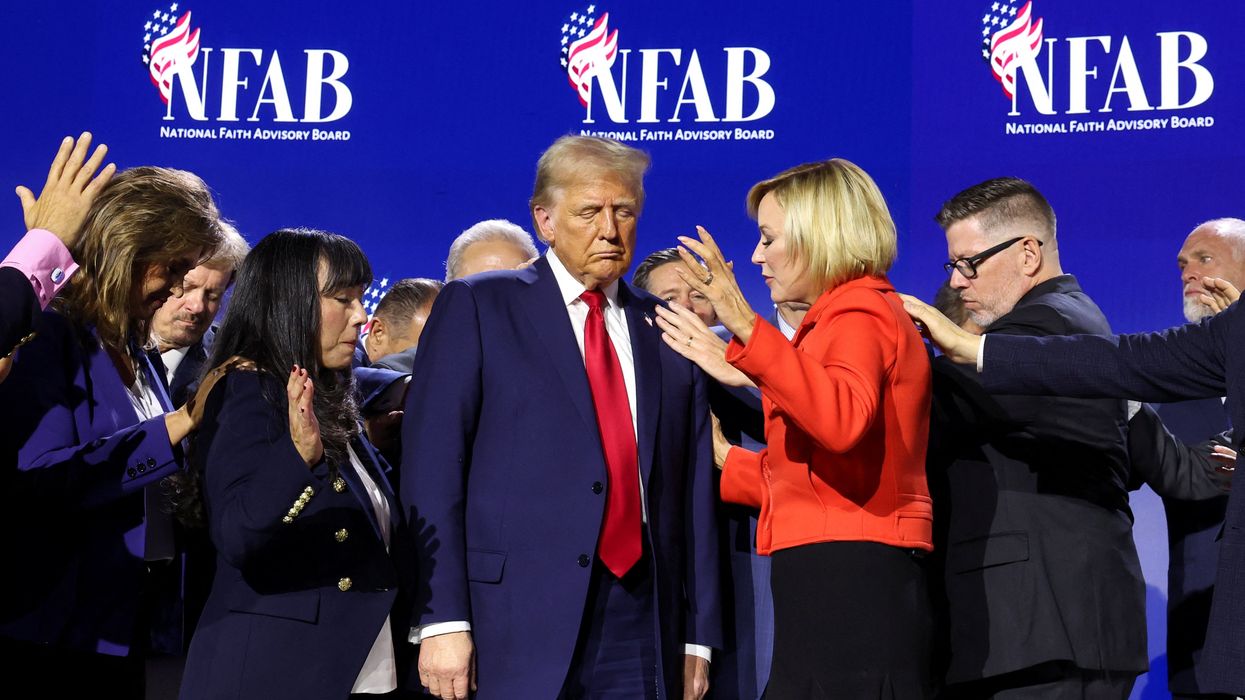
People stretch their hands towards Donald Trump as they pray, on the day Trump participates in in a moderated Q&A; with Pastor Paula White, at the National Faith Advisory Summit, in Powder Springs, Georgia, U.S., October 28, 2024. REUTERS/Brendan McDermid
January 26, 2026 
ALTERNET


Roughly two and one-half weeks after the fatal January 7 shooting of motorist Renee Nicole Good by a U.S. Immigration and Enforcement (ICE) agent, yet another Minneapolis resident was fatally shot during a protest in the city: 37-year-old nurse Alex Pretti, who worked in an internal care unit in a Veterans Affairs (VA) hospital. Homeland Security Secretary Kristi Noem and White House adviser Stephen Miller are claiming that Pretti was shot by U.S. Border Patrol agents in self-defense, noting that he was carrying a concealed weapon. But critics of President Donald Trump's ICE raids in Minneapolis are countering Pretti never pointed the gun at Border Patrol agents and that he was shot after being forced onto the ground and disarmed.

In an article published on Monday, January 26 — two days after Pretti's death — Salon's Amanda Marcotte offers a blistering critique of the response that far-right white evangelicals have had to the unrest in Minneapolis.

"The Christian Right will never turn down an opportunity to make false accusations of religious persecution," Marcotte argues. "These days, they're especially eager to play the victim. Doing so allows them to distract from the ugly reality that they, in voting for Donald Trump, have helped to unleash in Minnesota: A woman killed in front of her wife, children ripped from their parents, a baby nearly killed by Immigration and Customs Enforcement agents firing tear gas at a family driving home from a basketball game. On Saturday, there was another unjustifiable shooting. Video appears to show 37-year-old Alex Jeffrey Pretti, an intensive-care unit nurse at a Veterans Affairs hospital, helping a woman to her feet when Border Patrol agents swarm and pepper-spray him — and then shoot him in the head."

Marcotte adds, "All this, though, apparently pales in comparison to a more serious form of oppression: right-wing Christians being told it's immoral to support a brutal, racist assault on their neighbors."

The Salon journalist is referring to a Sunday, January 18 protest in which activists disrupted a service at the evangelical Cities Church in St. Paul, Minnesota because one of the pastors, David Easterwood, is an ICE field director in the area. MAGA Republicans, from Noem to U.S. Attorney General Pam Bondi, described that disruption as an attack on religious freedom — an argument Marcotte considers disingenuous.


Tim Whitaker, a former Christian nationalist, told Salon, "Cities Church is part of the Southern Baptist Convention, which was founded in 1845 over the right to own slaves. This church should be disrupted. As far as I'm concerned, Jesus would've been right with those protesters…. (Cities Church) is home to a pastor that works for a federal agency kidnapping brown-skinned immigrants and killing unarmed citizens."

Marcotte notes that one of the protesters arrested during the January 18 protest at Cities Church is herself an ordained Christian minister.

"Unfortunately, the right's histrionic language about 'religious freedom' has cowed many centrists and even liberals into thinking the protesters who interrupted a single church service are in the wrong," Marcotte writes. "Instead, they should be applauded as following the tradition of Jesus himself confronting the moneychangers in the temple."

Religious freedom means the right to worship as you see fit. By the same token, it also allows everyone else the right to question what churches are teaching — especially when they impact people and communities outside the church doors."

Marcotte adds, "In an era when Christian churches are condoning outright evil actions such as ICE’s deadly rampage through Minnesota, it’s more important than ever to not allow this dishonest definition of 'religious freedom' browbeat the rest of us into silence over spiritual oppression."

Amanda Marcotte's full article for Salon is available at this link.


Watchdog: Sure Looks Like Trump Uses App That Auto-Deletes Messages to Chat With World Leaders

“President Trump has repeatedly made clear his contempt for laws governing presidential transparency and proper recordkeeping.”


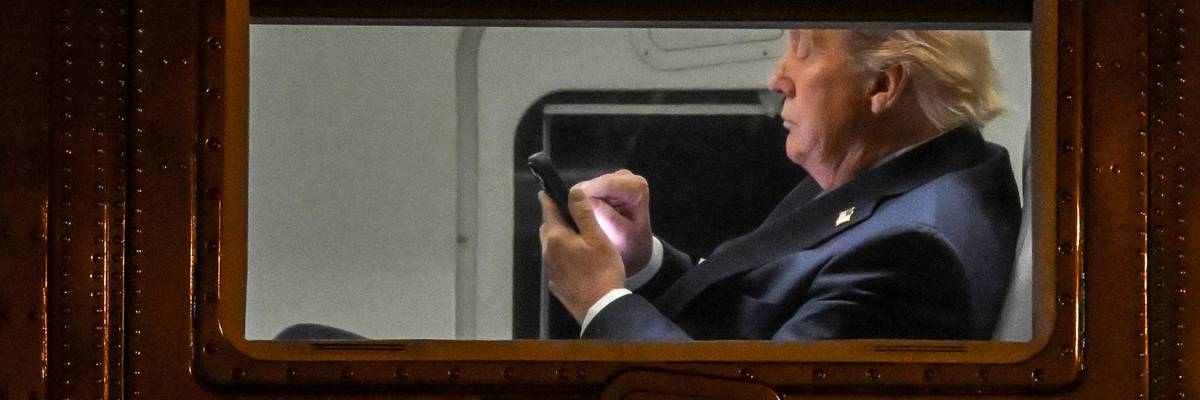
US President Donald Trump uses a cellphone aboard Marine One before it departs Leesburg Executive Airport in Leesburg, Virginia, on April 24, 2025.
(Photo by Alex Wroblewski/AFP)


Stephen Prager
Jan 27, 2026
COMMON DREAMS


A watchdog group is raising concerns that President Donald Trump may have violated federal recordkeeping laws by using an auto-deleting message application to text world leaders.

On Tuesday, the group American Oversight sent a letter to White House Counsel David Warrington asking for information about whether the president is taking all the required steps to comply with the Presidential Records Act, which requires the preservation of all presidential records—including digital correspondence—during official duties.
RECOMMENDED...


Report Details Trump’s Rapid Escalation Toward Authoritarianism in First Year of Second Term


‘Pretty Suspicious!’ Was Trump Insider Behind Winning Polymarket Bet on Maduro Kidnapping?

The group highlighted two posts Trump made on Truth Social last Tuesday in which appeared to reveal that he was using Signal or another similar messaging app to discuss world affairs with world leaders.

The first screenshot shows a message from French President Emmanuel Macron, who discussed plans to meet with Trump about his proposal to take over Greenland and meetings with other foreign diplomats.

The second was sent from NATO Secretary General Mark Rutte, who told Trump he’d use his “media engagements” in Davos to “highlight” Trump’s work in Ukraine and Gaza, and expressed an interest in “finding a way forward on Greenland.”

While some European diplomats found it troubling that any intimate communication they have with Trump could be exposed to the world on a whim, American Oversight said it also raised concerns about the preservation of records.

Trump has a long history of flouting rules surrounding the proper storage of documents. The group pointed out that during his first term, the president would often rip up notes, memos, and documents after reading them and at least twice reportedly attempted to flush them down the toilet.

More recently, he was indicted for improperly stashing away classified documents at his personal residence at Mar-a-Lago after leaving the White House and showing them to people without security clearances.

The second Trump White House has already been involved in a scandal surrounding their use of deleting message apps when a journalist was accidentally invited into a private Signal chat last year, which contained the administration’s plans for an imminent strike on Yemen. The messages in that chat were reportedly set to delete after one week, before later being changed to four, which would have also violated the Presidential Records Act.

“President Trump has repeatedly made clear his contempt for laws governing presidential transparency and proper recordkeeping,” said American Oversight executive director Chioma Chukwu. “The Presidential Records Act exists to ensure transparency of presidential decisions and safeguard the historical record for the American people.”

“Given President Trump’s well-documented history of mishandling sensitive information and presidential records,” he added, “the White House must assure the public that these communications are secure and being preserved and protected in full compliance with the law.”

The group has requested that the White House counsel disclose any other messages Trump may have sent using auto-deleting apps and ensure that any messages sent through mobile messaging programs are properly preserved.
Trump Labor Department Takes a Page From Hitler’s Playbook

This fascist propaganda dishonors the government agency whose charge is to support the workers of this country. It has no business deifying any President, particularly one already drunk with power.


A detail of an image issued by the US Dept of Labor, featuring stylize pictures of Trump reminiscent of Nazi propaganda.
(Image: US Dept of Labor)


Michael Felsen
Jan 27, 2026
Common Dreams

Something is rotten in the Department of Labor. I’m not talking about the recent news that Secretary of Labor Chavez-DeRemer is being investigated about claims she used taxpayer money for personal trips disguised as business-related. Or that she allegedly engaged in an improper tryst with a subordinate.

If true, these are serious issues that call for appropriate responses. But, from my perspective as an attorney who committed a 39-year career to a government agency I continue to care deeply about, they pale in comparison to something that’s out in the open, carefully curated for all to see: the Department’s latest social media campaign.


47 Ways Trump Has ‘Made Life Less Affordable’ in Second Term


Just take a look at the past few weeks’ postings on the Labor Department’s Facebook or X accounts. One might ordinarily expect to find content that reflects the Department’s worthy mission of lifting up all workers in the United States, regardless of race, religion, or national origin. That might include reminders about employers’ responsibilities under wage and workplace safety laws Congress enacted over the past several decades, or maybe spotlight a series of particularly impactful enforcement actions that vindicated workers’ rights.

Don’t hold your breath. Instead, watching a jarring graphic with a dystopian soundtrack, you’ll be instructed to “Remember who you are, American.” Those words are placed below the header, “One Homeland. One People. One Heritage”—a slogan promptly recognized by visitors to the Facebook site as a haunting echo of the 1930’s Nazi propaganda poster featuring Adolf Hitler and the slogan “One People, One Nation, One Leader.”


That’s only one of a steady drumbeat of similar phrases, like “Faith in God. Law and Order. Pride in Our Homeland…central tenets of the American Way of Life.” We learn that “[u]nder President Trump, the globalist dominance of our government is over,” and that a year ago “our country was dead.” Now, however, we’re “the hottest country anywhere in the world because we finally have a President who puts America first.”


We’re instructed not to “believe the fake news lies.” Multiple entries feature paintings and posters depicting 1940’s-era churchgoers and families with beatifically smiling children, all white. And most prolifically, we’re treated to one hero-like depiction of Donald Trump after another, mostly in bold silhouette, with captions like “Americans First,” “NEVER SURRENDER,” “Second to None,” “Trust the Plan, Trust Trump,” “PATRIOTS IN CONTROL,” and “One of One.” We learn that “No President has cared more about hardworking Americans than President Trump.”

There’s so much wrong with all this it makes the head spin. Most blatant is the unmistakable resemblance to the style and messaging of the Nazi propaganda machine. As described by the US Holocaust Memorial Museum, during the Third Reich “public adulation for Adolf Hitler was an ever present feature in the public square of German life.” Hitler was portrayed “as the living embodiment of the German nation,” radiating strength as the savior of a beaten-down German nation, and idolized as a “gifted statesman who brought stability, created jobs, and restored German greatness.” Take a look at the Labor Department’s Facebook page and see if that description resonates.

Add to that: the posts’ repeated targeting of undefined “globalists”—a recognized “dog whistle” for racist, anti-Semitic and anti-government conspiracy theorists—as the shadowy characters responsible for our country’s woes, not unlike Nazi propaganda demonizing Jews and other “outsiders”; the Christian imagery and language, smearing the line that separates church and state, and implicitly, if not explicitly, promoting white Christian Nationalism; the full-on outrageous assertion made on X, just days after the killing of Renee Good by an ICE agent, that “Mass Deportations are Improving Americans’ Quality of Life.”

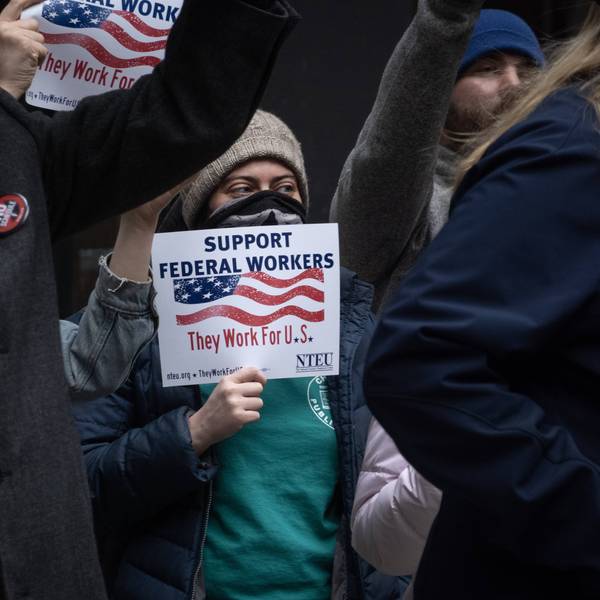
Appalling as all this is, maybe we shouldn’t be surprised. Substantively, in addition to the countless other ways Trump’s presidency has been a disaster for this country, he has been no friend to US workers—undermining their wages and economic security, weakening job creation, and assaulting their rights to organize. Federal worker ranks have been terrorized and dissembled by DOGE, and soon tens of thousands will be judged not by merit alone but by their loyalty to Trump. Religious prayer services have been introduced at the agency’s headquarters. Labor Department employees are demoralized. And for months, an enormous banner with Trump’s face has been hanging off the front of the Francis Perkins Building, sternly looking down at the passersby below.

Still, the Facebook/X campaign brings the Department to a new low. It dishonors the government agency whose charge is to support the workers of this country. It has no business deifying any President, particularly one already drunk with power. Nor should it be promoting a white, Christian nationalist vision for this country, that was built by immigrants -- people of all colors, places of origin, and beliefs. As a Labor Department veteran, I’m ashamed. And as a first generation son of Jewish refugees who lived through the horrors of Nazi Germany, I’m aghast, at seeing history rhyme, if not repeat.

This poem no one should have to recite to their grandchildren.

Our work is licensed under Creative Commons (CC BY-NC-ND 3.0). Feel free to republish and share widely.


Michael Felsen
Michael Felsen concluded a 39-year career as an attorney with the U.S. Department of Labor in 2018, serving as New England Regional Solicitor from 2010-2018. He currently writes and consults on labor issues, and serves as an adviser to several worker-related nonprofits.
Full Bio >
THEY WERE FISHING BOATS!
Trinidadians Sue US for Caribbean Boat Bombing That Killed Relatives ‘In Cold Blood’

“People may not simply be gunned down by the government, and the Trump administration’s claims to the contrary risk making America a pariah state,” said one attorney in the case.


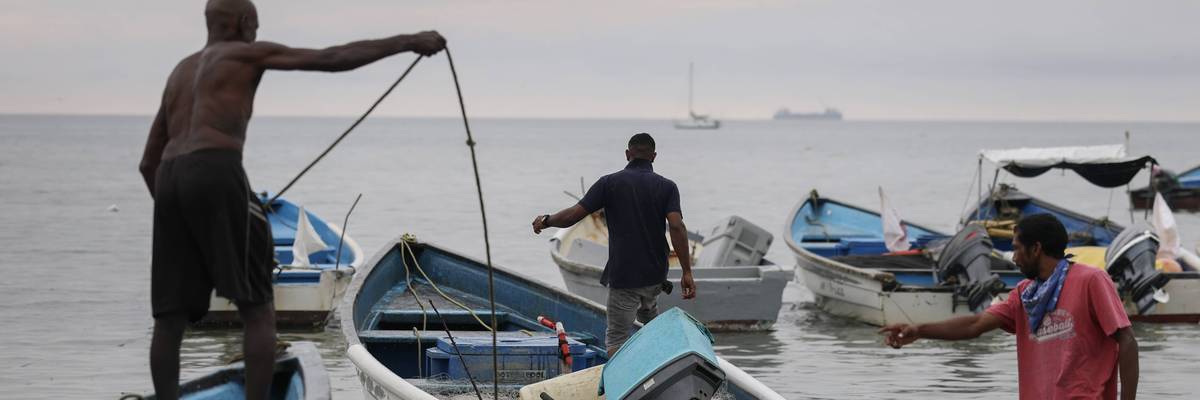
Fishermen are seen workig in this photo taken on November 4, 2025 in Port of Spain, Trinidad and Tobago.
(Photo by Joe Raedle/Getty Images)

Brett Wilkins
Jan 27, 2026
COMMON DREAMS

Relatives of two Trinidadian men killed during the Trump administration’s internationally condemned bombing spree against boats allegedly transporting drugs in the Caribbean Sea filed a wrongful death lawsuit Tuesday against the United States.

Chad Joseph, 26, and Rishi Samaroo, 41, were killed in one of the at least 36 strikes the Trump administration has launched against civilian boats in the southern Caribbean and eastern Pacific Ocean since last September. According to the lawsuit and the Trump administration’s own figures, at least 125 people have been killed in such strikes, which are part of the broader US military aggression targeting Venezuela.


83% of Americans Want Trump Admin to End Secrecy Behind Lethal, Extrajudicial Boat Strikes


Trump Ends 2025 by Bombing More Boats, Bringing Death Toll to at Least 115

The lawsuit was filed in the US District Court for the District of Massachusetts by lawyers from the ACLU, the ACLU of Massachusetts, the Center for Constitutional Rights (CCR), and Professor Jonathan Hafetz of Seton Hall Law School on behalf of Joseph’s mother Lenora Burnley and Samaroo’s sister Sallycar Korasingh. The complaint alleges that the US violated the Death on the High Seas Act, which allows relatives to sue for wrongful deaths at sea, and the Alien Tort Statute, which empowers foreign citizens to seek legal redress in US federal courts.

According to the lawsuit:
On October 14, 2025, the United States government authorized and launched a missile strike against a boat carrying six people traveling from Venezuela to Trinidad. The strike killed all six, including Chad Joseph and Rishi Samaroo, two Trinidadian nationals who had been fishing in waters off the Venezuelan coast and working on farms in Venezuela, and who were returning to their homes in Las Cuevas, in nearby Trinidad and Tobago.

The October 14 attack was part of an unprecedented and manifestly unlawful US military campaign of lethal strikes against small boats in the Caribbean and eastern Pacific Ocean... The United States has not conducted these strikes pursuant to any congressional authorization. Instead, the government has acted unilaterally. And Trump administration officials, including President Donald J. Trump and Secretary of Defense Pete Hegseth have publicized videos of the boat strikes, boasting about and celebrating their own role in killing defenseless people.

“These premeditated and intentional killings lack any plausible legal justification,” the lawsuit asserts. “Thus, they were simply murders, ordered by individuals at the highest levels of government and obeyed by military officers in the chain of command.”

Burnley said in a statement announcing the lawsuit: “Chad was a loving and caring son who was always there for me, for his wife and children, and for our whole family. I miss him terribly. We all do.”

“We know this lawsuit won’t bring Chad back to us, but we’re trusting God to carry us through this, and we hope that speaking out will help get us some truth and closure,” she added.

Korasingh said, “Rishi used to call our family almost every day, and then one day he disappeared, and we never heard from him again.”

“Rishi was a hardworking man who paid his debt to society and was just trying to get back on his feet again and to make a decent living in Venezuela to help provide for his family,” she added, referring to her brother’s imprisonment for taking part in the 2009 murder of a street vendor. “If the US government believed Rishi had done anything wrong, it should have arrested, charged, and detained him, not murdered him. They must be held accountable.”

Trump officials have offered very little concrete evidence to support their claims that the targeted vessels were smuggling drugs. Critics allege that’s why attorneys at the US Department of Defense reportedly inquired about whether two survivors of an October bombing in the Caribbean could be sent to the notorious Terrorism Confinement Center (CECOT) maximum security prison in El Salvador, which has been described by rights groups as a “legal black hole.”

The survivors were ultimately returned to their home countries of Colombia and Ecuador. Some observers said their repatriation showed the Trump administration knew that trying the survivors in US courts would compel officials to explain their dubious legal justification for the attacks, which many experts say are illegal.

Trump officials also considered sending boat strike survivors to the military prison at Guantánamo Bay, Cuba, but that would allow their lawyers to sue for habeas corpus—a right granted by the US Supreme Court in its 2008 Boumediene v. Bush decision during the era of extrajudicial imprisonment and torture of terrorism suspects, as well as innocent men and boys, at the facility. The Trump administration has even revived the term “unlawful enemy combatant”—which was used by the Bush administration to categorize people caught up in the War on Terror in a way that skirts the law—to classify boat strike survivors.

The Trinidadian and Tobagonian government has also been criticized for hosting joint military exercises with the United States in the Caribbean Sea amid Trump’s boat-bombing campaign.

ACLU senior counsel Brett Max Kaufman said Tuesday that “the Trump administration’s boat strikes are the heinous acts of people who claim they can abuse their power with impunity around the world.”

“In seeking justice for the senseless killing of their loved ones, our clients are bravely demanding accountability for their devastating losses and standing up against the administration’s assault on the rule of law,” he added.

CCR legal director Baher Azmy argued that “these are lawless killings in cold blood; killings for sport and killings for theater, which is why we need a court of law to proclaim what is true and constrain what is lawless.”

“This is a critical step in ensuring accountability, while the individuals responsible may ultimately be answerable criminally for murder and war crimes,” Azmy added.

Hafetz said that “using military force to kill Chad and Rishi violates the most elementary principles of international law.”

“People may not simply be gunned down by the government,” he stressed, “and the Trump administration’s claims to the contrary risk making America a pariah state.”

Jessie Rossman, legal director at the ACLU of Massachusetts, contended that Trump’s “lethal boat strikes violate our collective understanding of right and wrong.”

“Rishi and Chad wanted only to get home safely to their loved ones; the unconscionable attack on their boat prevented them from doing so,” Rossman added. “It is imperative that we hold this administration accountable, both for their families and for the rule of law itself.”