It’s possible that I shall make an ass of myself. But in that case one can always get out of it with a little dialectic. I have, of course, so worded my proposition as to be right either way (K.Marx, Letter to F.Engels on the Indian Mutiny)
Friday, January 30, 2026
Diplomacy, Law, and Nonviolent Power
Resist and Build Alternatives to the Trump Regime Now: Part 2
This is the second of four TFF-created idea portfolios designed to curb the global reach of the United States and, in both the short and long term, help catalyse a worldwide nonviolent resistance to what many observers describe as the Trump administration’s uniquely confrontational, destructive and world-threatening policies.
These portfolios outline what governments and citizens across the world can do through dynamic diplomacy, creative initiatives, and strictly nonviolent means.
It seems painfully clear to me that the current political dynamics in Washington increasingly resemble the most dangerous pattern that ended in 1945 and was supposed to never happen again.
If that assessment holds, then passivity is no longer an option. A coordinated, global, nonviolent mobilisation is essential — not least because nonviolence is the one type of power and language a heavily militarised superpower is least prepared to counter.
All power rests on others accepting and carrying out its orders. Even the strongest leader in the world cannot round up criminals or fight wars with his own hands. Power is always dependent – dependent on someone who finds it legitimate, and do the dirty job on the strongman’s order. If young people were not brainwashed to accept warfare, there would be no wars. This is why nonviolence can be extremely effective and make an overarmed country look morally weak. That’s what Gandhi taught the world when using this theory to rid India not of the British as people but of the British Empire’s dominance structure.
If politicians will not do any of the proposals below – and similar ones – it is a citizens duty to puch them to take concrete step and not just talk.
A. Diplomatic Downgrading and Political Signalling
Diplomatic withdrawal is the fastest, safest way to communicate that the relationship is no longer “business as usual.”
Immediate Measures (within a week)
Recall ambassadors from Washington A peaceful but unmistakable alarm bell signalling a breakdown in trust.
Downgrade relations to chargé d’affaires level A visible step that reduces political prestige without escalating conflict.
Suspend bilateral strategic dialogues Energy, security, and trade talks are paused to signal deep concern.
Coordinated walkouts in NATO, UN, OECD – and No more invitations to world Economic Forum A symbolic but powerful way to delegitimise unilateral behaviour.
Longer-Term Measures
Lawful Order Contact Group A coalition of states committed to international law, excluding the U.S. if necessary.
Block U.S. candidates for leadership roles A peaceful way to limit influence in multilateral institutions.
Refuse joint communiqués Ensures the U.S. cannot claim consensus where none exists.
Public archive of violations A permanent record documenting breaches of international law.
Begin re-orienting the foreign policy everywhere European and other countries step by step reduce their blind following of the US and open up, big and small, to the rest of the world and to the emerging multipolar world – also to reduce their own crisis, the day the US Empire is finally gone.
B. International Law, Treaties & Normative Pressure
The law is the world’s nonviolent weapon; using it consistently can delegitimise unlawful behaviour.
Immediate Measures (within a week)
Invoke UN Charter mechanisms Emergency UNGA sessions under “Uniting for Peace.”
File formal diplomatic protests Citing specific treaty violations and Arctic governance norms.
Request an ICJ advisory opinion Clarifying Greenland’s status under international law.
Elevate Indigenous Greenlandic voices Ensuring those most affected speak in UN and Arctic forums.
Refuse to join Trump’s “Peace” Board Saying no to his bizarre idea of replacing the UN with an institution run by himself and a successor appointed by him. This board has nothing to do with peace and everything to do with Trump.
Raise the option of impeaching Trump worldwide His violations of international law and legimising domestic state violence justifies such a move.
Longer-Term Measures
New Arctic demilitarization treaty A structural safeguard against unilateral military moves and enable peaceful cooperation and sustainable development.
Strengthen UNDRIP-based protections Embedding Greenlandic self-determination in international law. (United Nations Declaration on the Rights of Indigenous Peoples = UNDRIP.
National laws against recognizing forced territorial changesanywhere A legal firewall against coercive annexation.
Global legal coalition A network of states defending small nations against big power arrogance and militarist interventionism.
C. Military & Security Rebalancing (Nonviolent)
Security cooperation is voluntary; suspending it is a peaceful but powerful signal of disapproval.
Immediate Measures (within a week)
Suspend all joint military exercises A nonviolent way to say: “We no longer trust your judgment.”
Freeze NATO modernization projects involving U.S. leadership A pause that signals strategic recalibration.
Restrict U.S. military overflight permissions Territorial access is a privilege, not a right.
Limit U.S. naval port calls A peaceful but visible reduction in military cooperation.
Launch national reviews of U.S. base agreements A legal and political reassessment of foreign military presence.
Cancel the policy of wasting 5% of GDP on weapons It was a US demand and there is no reason to adhere to it now. Back to decent threat analysis and dialogue with Russia and others.
Longer-Term Measures
Demand transparency on U.S. nuclear deployments and raise the issue of the U.S. withdrawal from Europe A peaceful tool that exposes imbalances of power. Long-range goal: A European Nuclear Weapons Free Zone and common security to Russia, including a mutual Non-Aggression Pact.
Require U.S. forces to pay full environmental and infrastructure costs A fairness measure that reduces dependency.
Develop European strategic autonomy Building civilian and political capacity to act without U.S. leadership.
Stop military cooperation with the US, first on smaller weapons, and then on the successively larger projects. European components should not sit in US systems that threaten and bomb around the world. The Military-Industrial-Media-Academic Complex, MIMAC, must be undermined, slowly but surely.
Build defensive defence, early warning, conflict resolution and common security – a kind of European UN Time to scrap deterrence, armament and nukes, all American inventions now outdated as NATO is in existential crisis as a non-peacemaking and offensive nuclear-based alliance.
European Arctic Security Framework A regional approach independent of great-power rivalry. Common security, coexistence and sustainable development – see forthcoming constructive proposal.
All Nordic countries refuse to host US military bases, personnel and weapons. Sweden and Finland start an investigation of strategies for leaving NATO and gaining a new neutrality with common Nordic security. Hosting the US makes the hosting nations complicit in US crimes around the world and increases the risk of being dragged into US conflicts instead of creating true security.
Parliamentary resolutions condemning attempts to alter Greenland’s statusand other US steps, including Gaza and Venezuela A democratic chorus of disapproval.
European Parliament warning on Arctic sovereignty A unified political signal from the continent: Don’t touch or we will isolate you even more.
Public diplomacy campaign Explaining why Greenland matters to global order in contrast to Trump’s personal grabbing it.
Longer-Term Measures
Rename public spaces after Greenlandic leaders. Change street and square names if American. Symbolic act of both solidarity and refusal of support.
Awards for defenders of international law& peace Elevating voices that resist coercion. Developing alternatives to the corrupt Nobel “Peace” Prize.
Global narrative coalition A long-term effort to frame Arctic stewardship as a globally shared responsibility.
Part 2 Summary
Diplomacy and international law offer powerful nonviolent tools that can be deployed within hours. Immediate actions send shock signals – “we find the Trump Regime’s behaviour offensive and unacceptable.” Long-term measures reshape the political environment and reinforce a lawful, cooperative world order. Nonviolence will prove much more effective than military means for combating the US Empire.
Another 1,000 word piece in the local weekly newspaper is yet another dust-up of the fascist policies of Trump, but also his deep bigotry, racism, misogyny
by Paul Haeder / January 29th, 2026
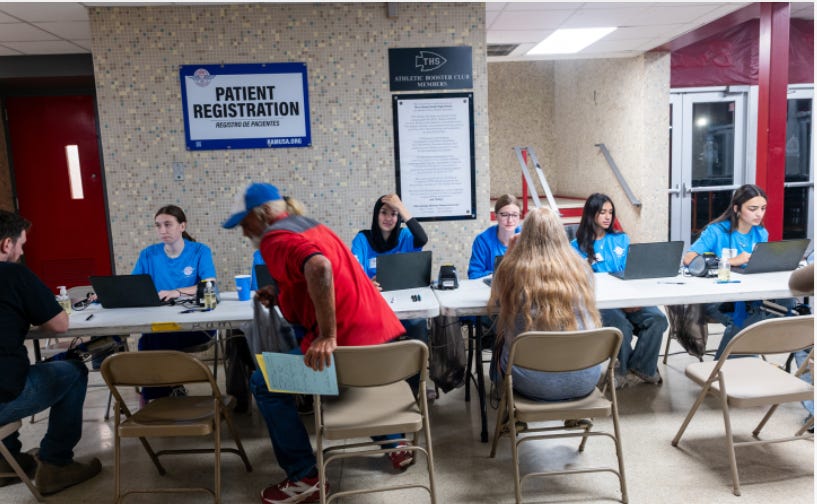
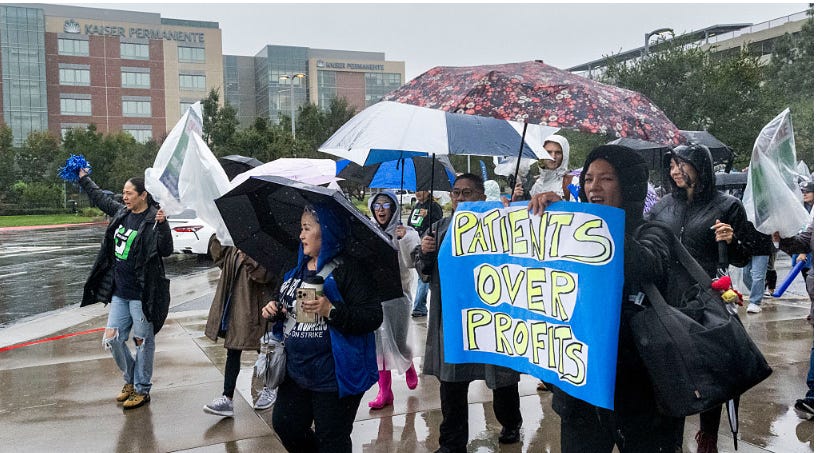
Forget about why I was at Samaritan-Corvallis’s ICU. The day before New Year’s, I had to undergo surgery THEN because of our failed health insurance mafia system. Samaritan Health Plan ended Dec. 31 at midnight.
While there, I gobbled up narratives of the people there: those doing the minute-to-minute care, and those doing the surgery.
Was I amazed at how professional the CNAs and custodial staff were? Was I impressed with the neurodiverse nursing staff and the compassion and the hard work and extended hours put in as healers?
Was I blown away by the dedicated training the PAs and MDs embodied?
Here I was, the day before that cretin in the White House went onto TV and blathered about how “awesome” and “well-planned” a kidnapping of a president and his wife was, while, darn, that same guy has a history of attacking the very people working on me and attempting to save others about to die.
That punk Trump, who has called people retarded. Donny, who, while pigging out on McDonald’s, jokes about “fat, ugly women,” and worse. The Racist in Chief who attacks all people from the Global South.
There were plenty of people attending the sick and the dying our War Criminal hates: single mothers, LGBTQ, men and women from African countries. There were West Asians with head coverings. Pudgy folk, overweight, lots of tattoos and plenty of skinny young men with purple or green colored hair.
Trump hates them all.
In light of that, let’s get back to our Banana Republic. Billions of tax monies for ICE and Mafia-style raids, kidnapping presidents or murdering them too, but what about those Level One Trauma Centers in this shining country?
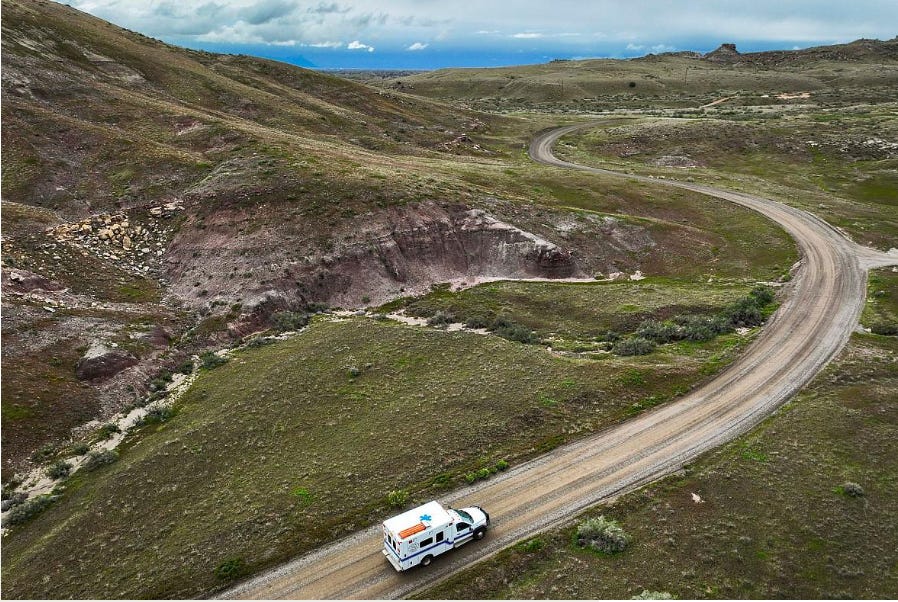
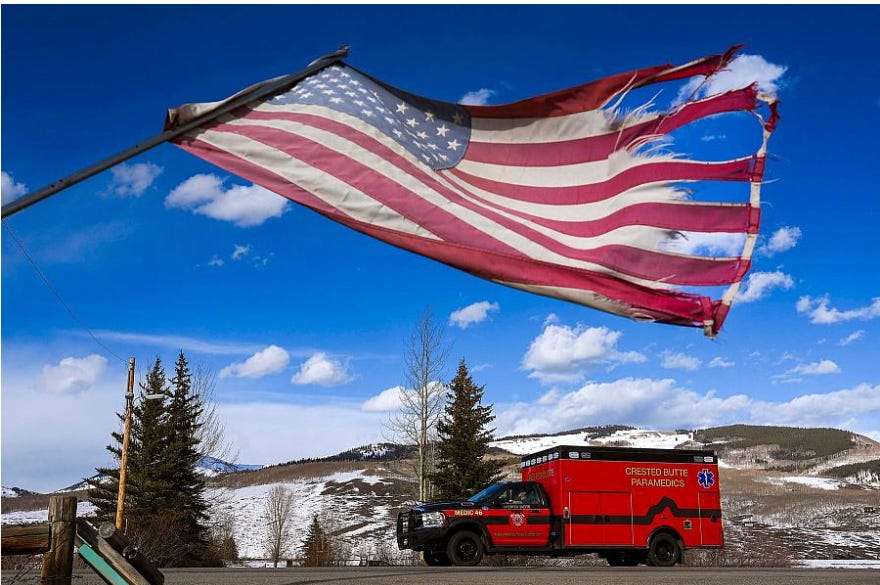
We have a few of them, and there won’t be any more built, adding to the number of underserved sick, injured, and wounded who never make it to a level one trauma hospital. You like illegal raids with helicopters? Expect to shell out tens of thousands of dollars for helo flights from some backwoods town to a decent hospital.
New Year’s Eve through Jan. 4, I was with hard-working food service folks, always with a smile. I received words of encouragement from all staff as I walked ICU and PCU corridors. I heard funny, amazing stories from these open-hearted men and women who have come from around the country and world to serve.
I was with professionals hated by our undereducated and IQ-challenged Donald. He is laughing at them while putting up more hurdles to pay off medical college debt. Our Don, who attacks nurses as “not professionals.”
This is so apropos now from DH Lawrence: “America is neither free nor brave, but a land of tight, iron-clanking little wills, everybody trying to put it over everybody else, and a land of men absolutely devoid of the real courage of trust, trust in life’s sacred spontaneity. They can’t trust life until they can control it.” (1923)
I know the value of Venezuela, in the scheme of things.
Maduro did not come from Venezuela’s traditional political elite. He began his political life as a bus driver in Caracas and a trade union organizer in the city’s transport system. In the 1980s, he helped form an unofficial union for Metro workers, an experience that grounded his politics in the daily struggles of working people rather than in electoral maneuvering or elite sponsorship.
Maduro was elected to the National Assembly in 2000 and later served as its president. He went on to become foreign minister, where he played a central role in building alliances against U.S. domination, particularly through regional integration projects and closer ties with Cuba and other countries resisting Washington’s dictates. In 2012, Chávez appointed him vice president and publicly identified him as his political successor.
When Chávez died in March 2013, Maduro stepped into leadership during a moment of profound uncertainty. The special presidential election that followed was closely contested, but Maduro won. His opponent, Henrique Capriles Radonski, came from one of Venezuela’s wealthiest families and was backed openly by domestic capital and the U.S. government. The election result was never accepted by Washington, which had already begun treating Maduro’s presidency as illegitimate from its first day.
Nah, no one I talked with at Samaritan could discuss anything deep about Venezuela, and so I was deemed the professor during those few days there. I did riff with highly-educated medical professionals about one crisis after another in our for-profit medicine racket. We discussed the impending violent takeover of THEIR jobs through Artificial Intelligence.
The older nurses and staff are greatly concerned for the younger ones coming in as millions of good jobs will be sucked away through the neuroperverse world of Tech Terrorists like Ellison, Brin, Altman, Dell, Karp, Zuckerberg.
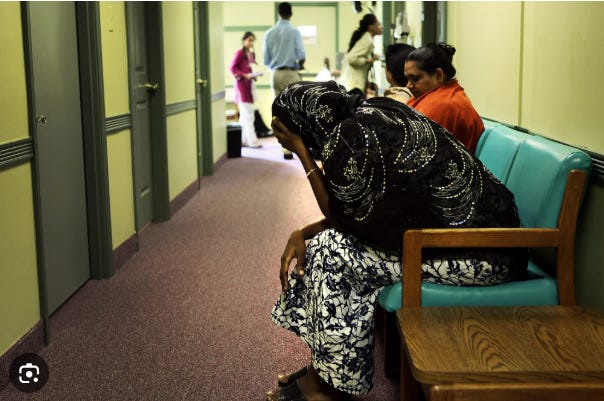
I’ve written about America’s significant shortage and unequal distribution of Level I trauma centers, especially in rural areas, the West, and underserved urban communities. Think of the term “trauma deserts” where patients lack timely access to the highest level of critical injury care, leading to worse outcomes and preventable deaths, largely due to high costs, poor reimbursement, and financial pressures causing closures.
This is all occurring while steroid-induced Delta Force hitmen are saluted with crocodile tears, and trillions of bucks are funneled into the racket that is war. These medical miracle workers talked openly, honored me, going from me to one fellow who was vegetative after an auto accident.
This is a microcosm of two types of humans. Yet, Lawrence was correct …
“[I]n America Democracy was always something anti-life. The greatest democrats, like Abraham Lincoln, had always a sacrificial, self-murdering note in their voices. American Democracy was a form of self-murder, always. Or of murdering somebody else… The love, the democracy, the floundering into lust, is a sort of by-play. The essential American soul is hard, isolate, stoic, and a killer. It has never yet melted.”
Defines Trump and Company to a tee.
*****
Moving onward in a larger venue: Trauma Care deserts!
Primary care is facing existential challenges — from lower relative investment compared to specialty care to clinician burnout — which are particularly acute in rural communities.1 For the more than 60 million people, or one in five Americans, who live in rural areas, strengthening primary care requires rural-specific solutions.2
Rural clinician shortages, limited broadband internet, and a lack of public transportation in rural areas make it difficult for patients to get health care, either in person or virtually.3 These access challenges are associated with poor health outcomes, low uptake of preventive services, and overreliance on costly emergency department visits for nonurgent health needs.4
Nearly half of rural residents are uninsured or insured by public payers.
Throwing money at these Gestapo, while …
FACT: 30 million Americans live in “trauma deserts,” with 31% of rural residents lacking access to a Level I or II trauma center within one hour, leading to higher mortality rates for severe injuries. Rural areas face severe limitations, including long transport times (often over 2 hours), fewer specialists, and reliance on volunteer emergency medical services.
But we got money for this?
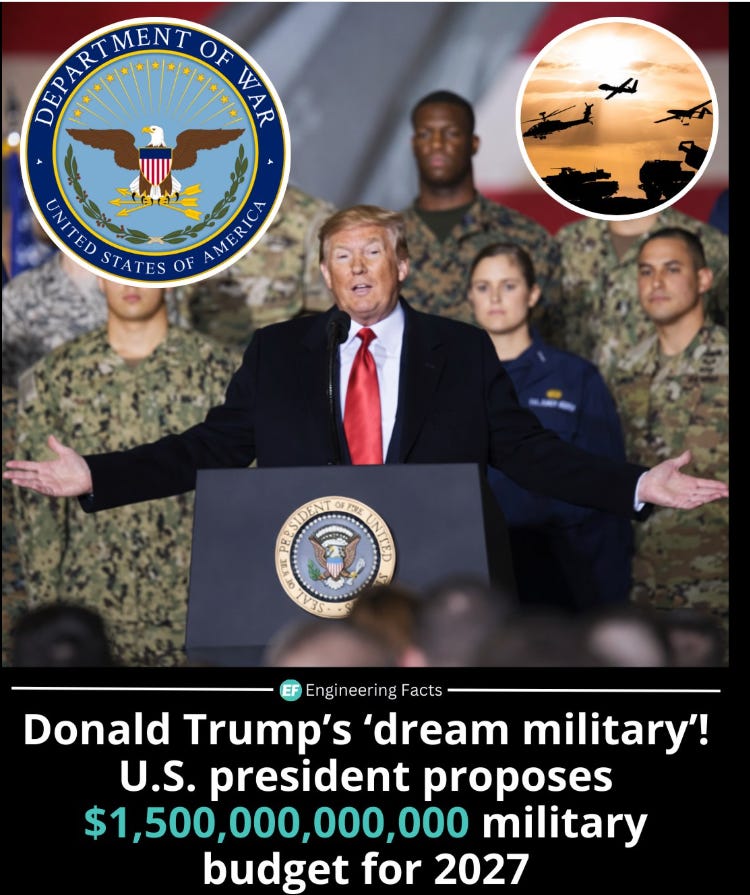
Fiscal Year 2027, an astounding number that would be 50% higher than current levels, a jump not seen since the mobilization for World War II.
The president justified his call for an enormous plus-up for the Pentagon as follows:
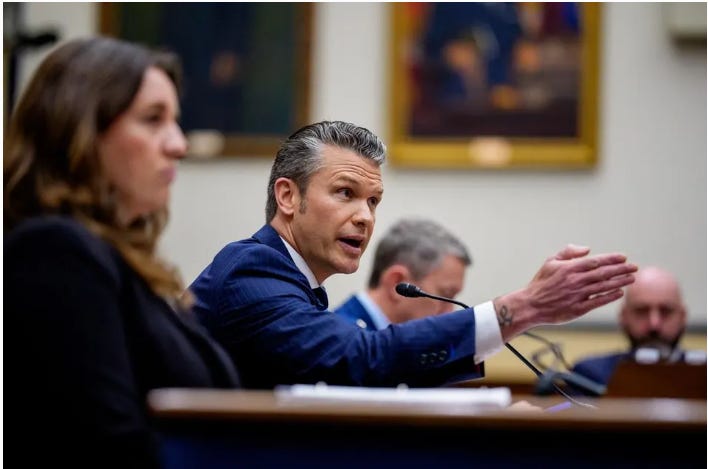
“After long and difficult negotiations with Senators, Congressmen, Secretaries, and other Political Representatives, I have determined that, for the Good of our Country, especially in these very troubled and dangerous times, our Military Budget for the year 2027 should not be $1 Trillion Dollars, but rather $1.5 Trillion Dollars. This will allow us to build the ‘Dream Military’ that we have long been entitled to and, more importantly, that will keep us SAFE and SECURE, regardless of foe.”
Each year, medical researchers estimate tens of thousands of Americans bleed to death despite having injuries they could have survived, a reality that trauma physicians have decried as a health crisis. Traumatic injury is the top killer of children and adults under the age of 45, claiming the life of an American about every 3½ minutes. Yet medical specialists argue it receives little federal funding for research that could help improve outcomes compared with other leading causes of death.
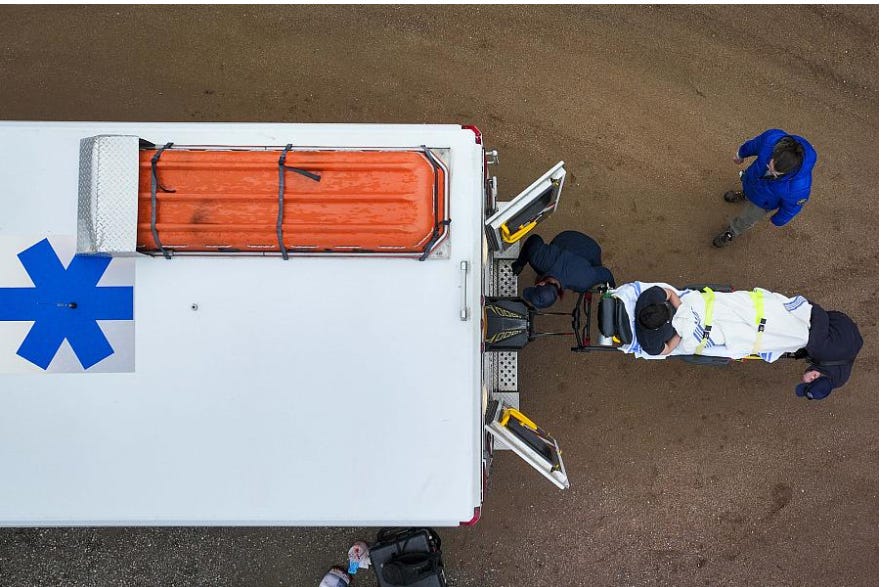
Nationwide, paramedics often lack the tools they need to treat severe internal bleeding, and patients have sporadic access to lifesaving interventions like blood transfusions before arriving at a hospital. Injured patients routinely bleed out before reaching a doctor, despite scientific advances that make blood transfusions on ambulances possible.
For decades, trauma specialists posited that seriously wounded patients should be treated at an equipped hospital within the “golden hour” immediately following their injuries. More recent research from the past several years suggests the critical window is closer to a half-hour for severely bleeding patients, whose risk of dying grows with each minute they don’t receive blood and other crucial treatments.
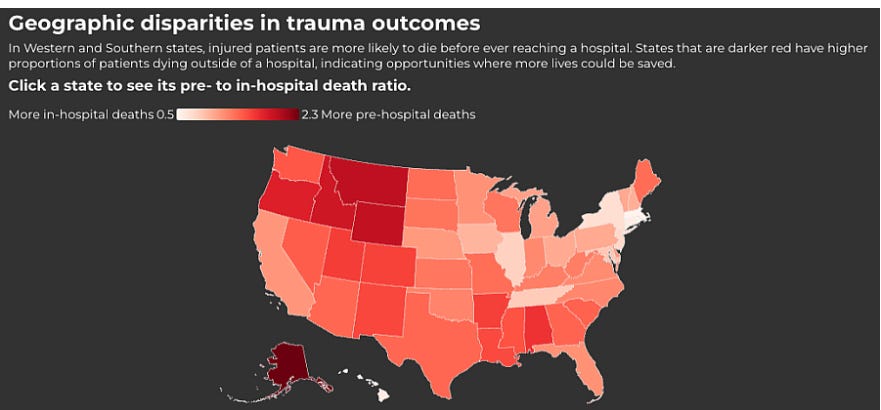
Above-average proportions of people dying of their injuries before they reach a hospital indicate more lives could potentially be saved, researchers say.
The News’ analysis found trauma care in the U.S. is starkly inequitable, in that where you live can determine whether you survive. Nationwide, there is unequal access to emergency medical services and trauma hospitals equipped to treat the most severe injuries. The problem is most severe in the more rural West and South.
An estimated quarter of all Americans live further than a 30-minute drive from Level I or II trauma centers, which provide the highest level of care to injured patients. In rural areas, the risk of death is greater due to longer response and transport times, research shows.
Western states, with their vast expanses and rugged terrain, are far less equipped to treat critically injured patients than densely populated regions like the East Coast. In the region that includes Alaska, Idaho, Oregon and Washington, about 63% of trauma victims die before reaching a hospital compared with about 41% in the best-performing region, covering Connecticut, Massachusetts, Maine, New Hampshire, Rhode Island and Vermont.
Many states in the West — Wyoming, Montana, South Dakota, Idaho and Alaska — have no Level I trauma centers. Washington, Oregon and Utah have just one or two of these specialized hospitals each, according to data from the American Trauma Society, for a combined population of more than 15 million people.
Residents of Western states must travel significantly farther to high-level trauma centers. People in Montana, North Dakota, South Dakota, Wyoming, Utah and Colorado are, on average, roughly 5.3 times farther from trauma hospitals than people in New York or New Jersey, a News analysis of census data shows.
Parts of the South performed worse compared with the coasts. Texas had the 17th-worst rate of prehospital deaths, and huge swaths of the state lack timely access to high-level trauma centers.
Yet, we have this going with the pedophile and his backers: Trump says projected White House ballroom cost doubled to $400 million for 90,000-square-foot build.
Trump’s announcement came after the president ridiculed the rising costs of other projects such as Barack Obama’s presidential library and the Federal Reserve headquarters.
THese cunt won’t build hospitals, but ballrooms for sure.Tech companies and their executives make up approximately a quarter of the donor list, many of whom hold significant federal contracts.
Amazon: A major federal cloud contractor.
Apple: Led by CEO Tim Cook, who has maintained a close relationship with the administration.
Google (Alphabet): Contributed $22 million as part of a legal settlement over a YouTube ban.
Meta Platforms: Parent company of Facebook and Instagram; active in AI policy.
Microsoft: Key partner in federal AI and cybersecurity initiatives.
Micron Technology: U.S.-based chip manufacturer.
Palantir Technologies: Co-founded by Peter Thiel; provides data analytics for federal agencies.
HP Inc.: Longtime supplier of hardware to the U.S. military.
Cryptocurrency Leaders (”Crypto Bros”)
The administration’s pro-crypto stance is reflected in the heavy involvement of digital asset firms and billionaires.
Coinbase: The largest U.S. crypto exchange, led by Brian Armstrong.
Ripple: Blockchain payments network; its CEO has supported the administration’s digital asset policies.
Tether America: Issuer of the widely used USDT stablecoin.
Cameron Winklevoss & Tyler Winklevoss: Founders of the Gemini exchange and prominent Bitcoin advocates.
Charles and Marissa Cascarilla: Charles is the co-founder of Paxos, a blockchain infrastructure firm.
Trump Administration & Government Officials
Several donors currently serve in the administration or have been nominated for high-level diplomatic posts.
The Lutnick Family: Led by Commerce Secretary Howard Lutnick, who previously headed Cantor Fitzgerald.
Kelly Loeffler and Jeff Sprecher: Loeffler heads the Small Business Administration; Sprecher is the CEO of Intercontinental Exchange and chair of the NYSE.
Benjamin Leon Jr.: A Miami healthcare entrepreneur and nominee for U.S. Ambassador to Spain.
Finance, Energy & Industrial Titans
Stephen A. Schwarzman: CEO of the private equity firm Blackstone.
Harold Hamm: Billionaire oil tycoon and founder of Continental Resources.
Caterpillar Inc.: Symbolic of the administration’s “Made in America” focus.
Union Pacific Railroad: Currently seeking major rail merger approvals.
NextEra Energy: A leading renewable energy utility.
Lockheed Martin: Defense contractor that contributed over $10 million.
Booz Allen Hamilton: Major defense and national security contractor.
Philanthropy & Individual Donors
Adelson Family Foundation: Run by Miriam Adelson, a prominent GOP megadonor and owner of the Dallas Mavericks.
Betty Wold Johnson Foundation: Philanthropic arm of the family of New York Jets owner Woody Johnson.
The Laura & Isaac Perlmutter Foundation: Isaac Perlmutter is the former CEO of Marvel Entertainment.
J. Pepe and Emilia Fanjul: Florida-based sugar barons and longtime supporters.
Edward and Shari Glazer: Co-owners of the Tampa Bay Buccaneers and Manchester United.
Stefan E. Brodie: Biotech entrepreneur.
Konstantin Sokolov: Private equity investor focused on energy and infrastructure.
Paolo Tiramani: CEO of Boxabl, a modular construction company.
Additional Corporate Donors
Comcast Corp.: Parent company of NBCUniversal.
Altria Group & Reynolds American: Major tobacco industry players.
Hard Rock International: Owned by the Seminole Tribe; its chairman has deep ties to the Trump Organization.
T-Mobile: Telecommunications giant.
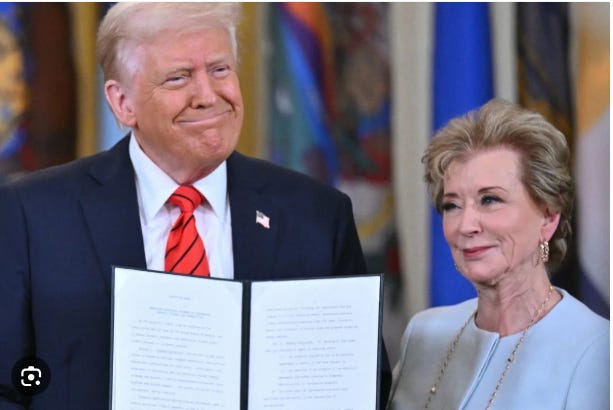
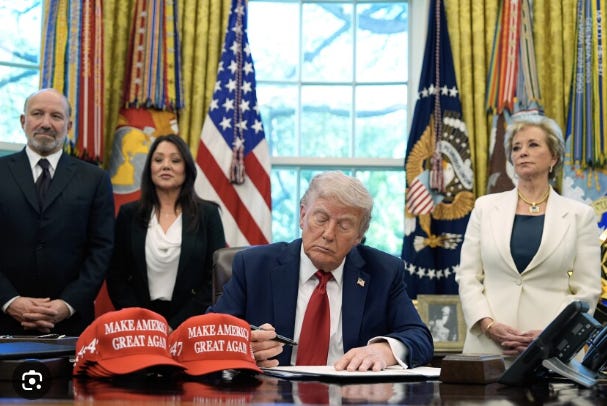
Trump hates WOMEN: The Trump administration’s One Big Beautiful Bill Act will place limits on federal loans for “non-professional” graduate degrees, with both nursing and social work included in the categorization.
After being signed into law in July, the bill finished the negotiated rulemaking process on Nov. 6 and will allow public comment before it takes effect in July 2026, according to the Association of American Universities.
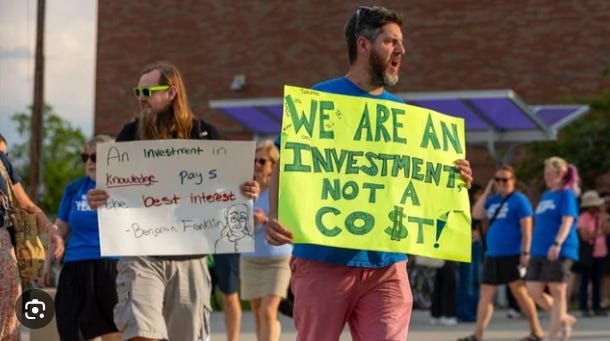
“These loan limits will help drive down the cost of graduate programs and reduce the debt students have to take out,” the U.S. Department of Education (ED) wrote in an email to The Phoenix, referencing a general press release.
The definition of a “professional degree” is used by the ED to indicate which programs qualify for higher loan limits, not to judge the value and importance of certain graduate programs, according to the ED.
Provost and Chief Academic Officer Douglas Woods said he considers this predicted effect to be an “odd market argument.”
“This change would be hard to see because how much a university charges for a program is based on how expensive it is to train students in that program,” Woods said. “Nursing and social work are very hands-on, training intensive programs.”
Since universities are unable to decrease the costs of their programs, it may result in financial issues for current and future students, according to Woods.
“This proposal will potentially make it more difficult for students to enroll and stay in those programs,” Woods said.
“Non-professional” degrees are now capped at a $100,000 loan limit, while those considered to be “professional” will have a $200,000 loan limit, according to the ED.
This federal change raises the question of where students in “non-professional” areas of study will obtain the money to spend on graduate degrees, Dean of the Marcella Niehoff School of Nursing Lorna Finnegan said.
A federal move to downgrade nursing degrees shows women’s expertise is still treated as expendable.
But the social and public health consequences are far more chilling.
Primary care: Nurse practitioners are the backbone of primary care delivery in rural and low-income communities. Without them, chronic diseases—from diabetes to hypertension—go unmanaged.
Mental health: Advanced practice nurses provide mental health services in schools, rural communities, clinics and community centers amid a national mental health crisis.
Oral health: APRNs catch systemic disease through oral assessments, especially where dental care is scarce.
Education: If graduate nursing becomes financially out of reach, nursing schools will lose the faculty who train the next generation. The shortage—already severe—will harden into permanence.
More than 91,000 qualified applicants were turned away from nursing programs last year due to lack of faculty and resources. This policy virtually guarantees that number will rise.
Paul Haeder has been a teacher, social worker, newspaperman, environmental activist, and marginalized muckraker, union organizer. Paul's book, Reimagining Sanity: Voices Beyond the Echo Chamber (2016), looks at 10 years (now going on 17 years) of his writing at Dissident Voice. Read his musings at LA Progressive. Read (purchase) his short story collection, Wide Open Eyes: Surfacing from Vietnam now out, published by Cirque Journal. Here's his Amazon page with more published work Amazon. Read other articles by Paul, or visit Paul's website.