I have now been here a week and I think that I have absorbed enough to attempt a little analysis, as opposed to the simple impressions I gave shortly after arrival.
Those impressions remain valid however: this is not a repressive state. I was on the Randy Credico show live on WBAI New York on Friday, and by chance my friend, the renowned FBI whistleblower Colleen Rowley was also on, from Minnesota (where I have stayed with Colleen and her husband in their home).
I was explaining that, in a week of going all round Caracas, I had yet to see a checkpoint, that nobody had at any stage asked me who I am, what I was doing or prevented me from going anywhere, and that the shops, bars and restaurants are all functioning normally.
Colleen reported from Minneapolis that there were checkpoints everywhere, that the streets are full of heavily armed men, that people are frequently stopped, questioned, asked to produce documents, and diverted, and that many shops bars and restaurants are closed because the staff are afraid to venture out into the streets. Colleen is heavily involved in detainee support and in getting supplies to people sheltering in their homes.
Remind me again, which of us is in a supposed dictatorship?
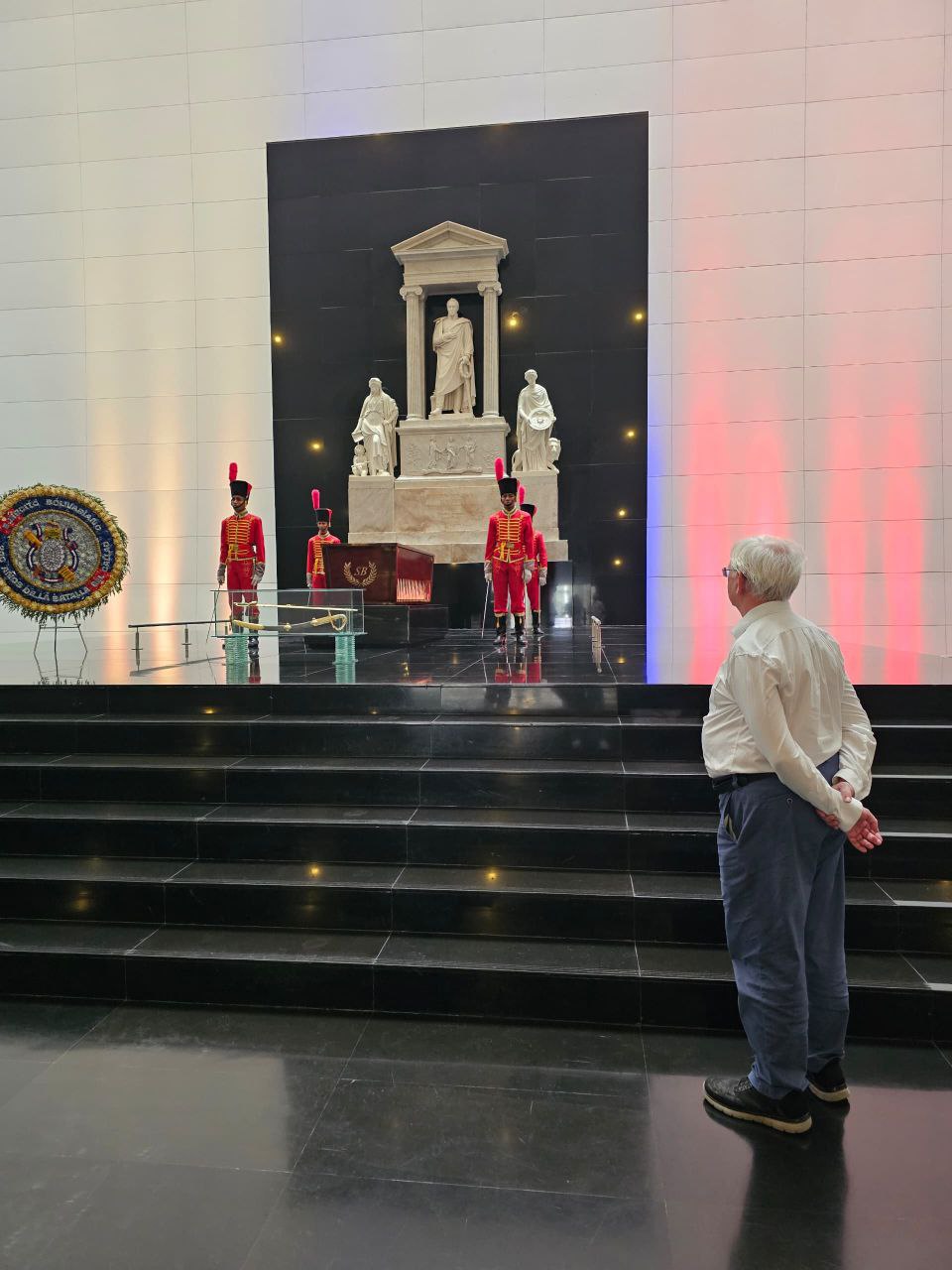
I want to tell you a couple of things to help explain Venezuela. I visited the mausoleum of Simon Bolivar, a genuinely heroic man. He has now been removed from the main Venezuelan Pantheon into a connected dedicated modern mausoleum. The Pantheon itself contains the remains of many of the heroes of the Venezuelan War of Independence, and monuments to all of them.
The Venezuelan War of Independence was, of course, in many respects similar to the United States war given the same name. It was a war between colonial elites and their metropolitan masters. Unlike the founders of the USA, Bolivar himself was genuinely opposed to slavery, but that was not true of many of his key allies.
So the Pantheon as originally conceived in the late 19th century was inhabited by the remains and memories almost entirely of those heroic people of Spanish descent who fought against the colonial control of Spain. This is the great founding ideal of Venezuela.
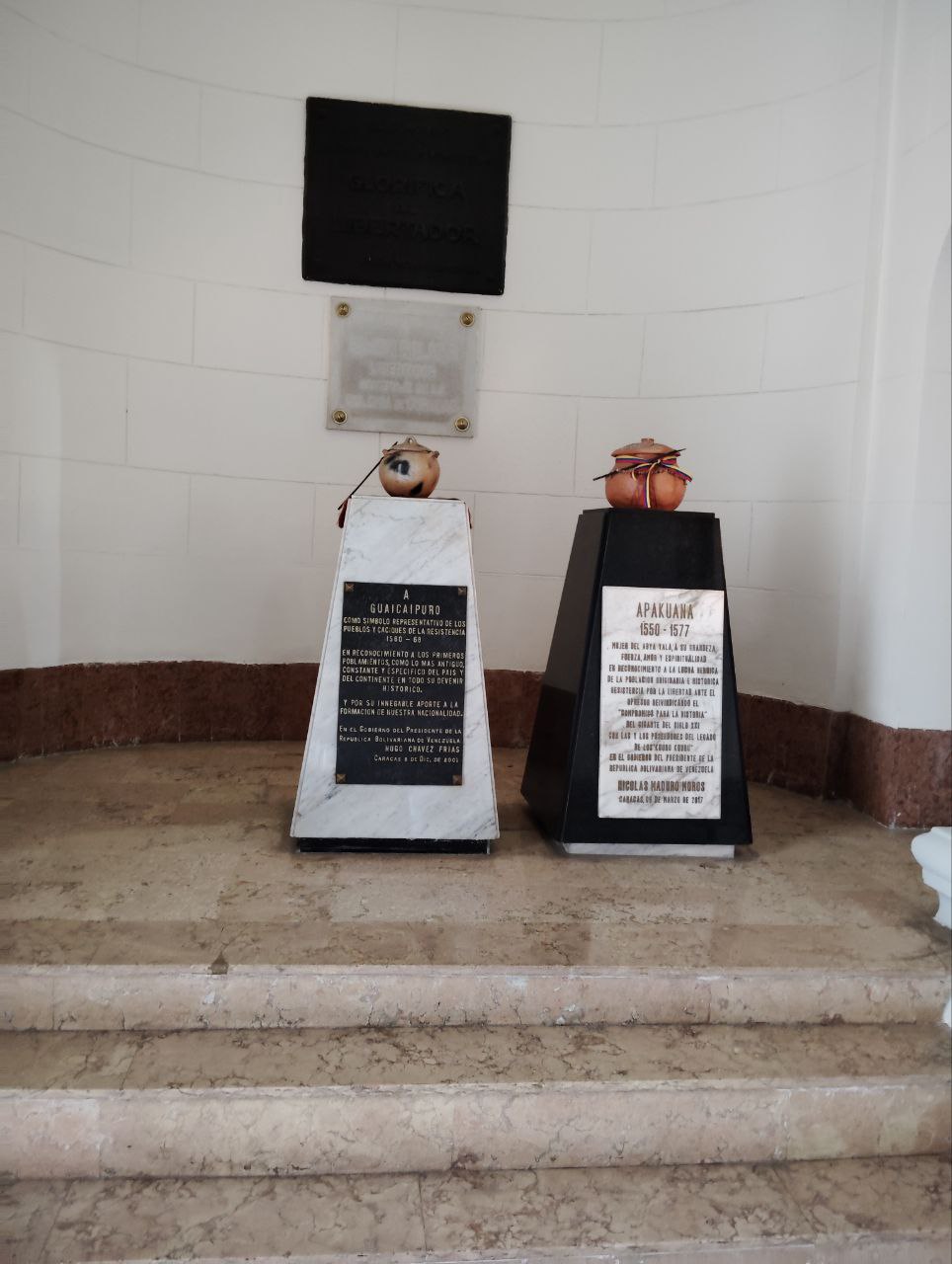
When Chavez and Maduro came to power, they made a very important change. They added a monument to the liberated slaves who had fought against the Spanish. Then Chavez and Maduro each added an extra monument: to leaders of the Native Americans who had fought against Spanish invasion in the first place.
This caused outrage among right wingers furious that the purity of the Pantheon, the great focus of Venezuelan nationalism, was being desecrated for what they viewed as political purposes. Which brings me to what I think is a fundamental observation. Politics in Venezuela are basically racial.
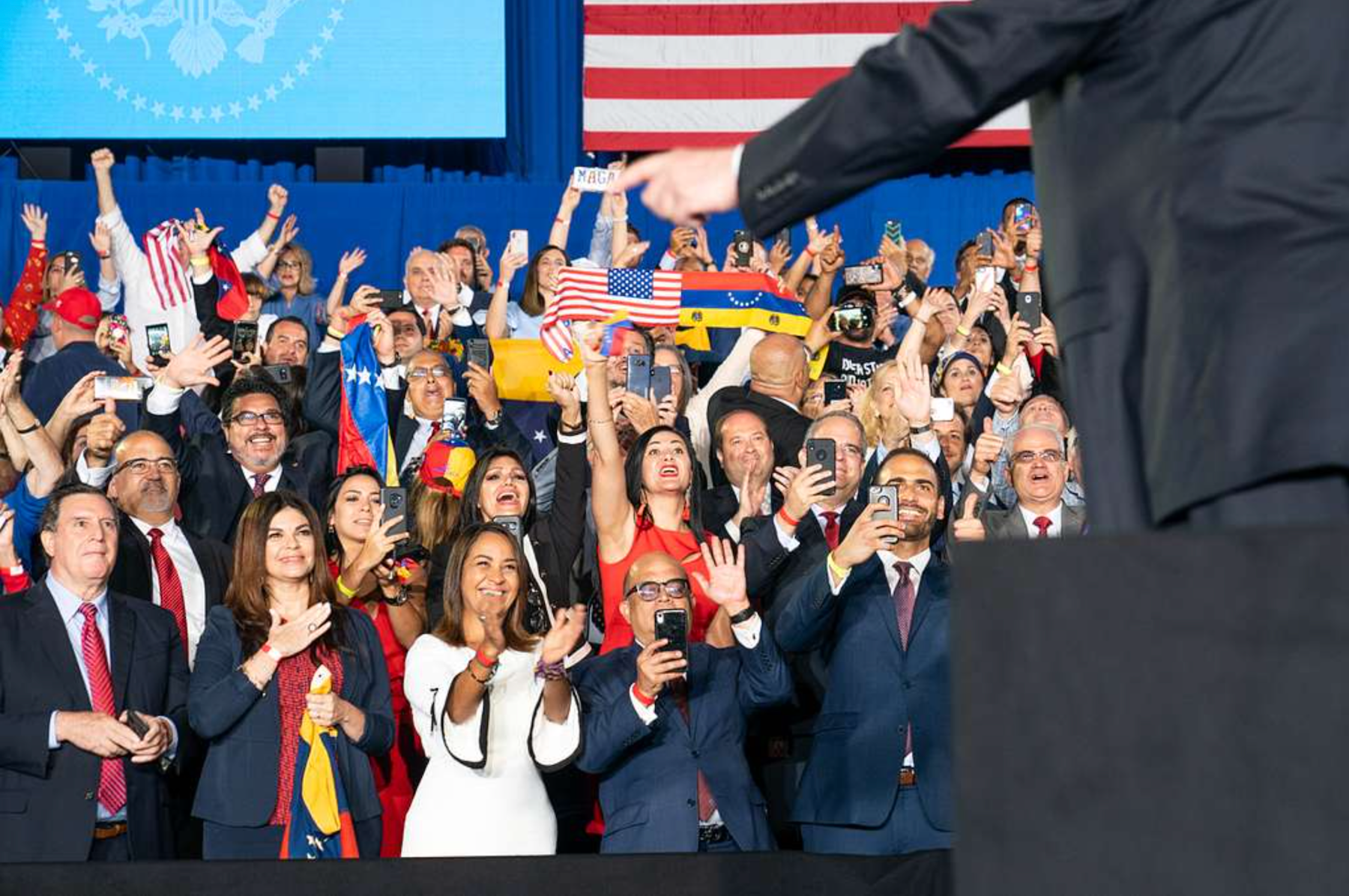
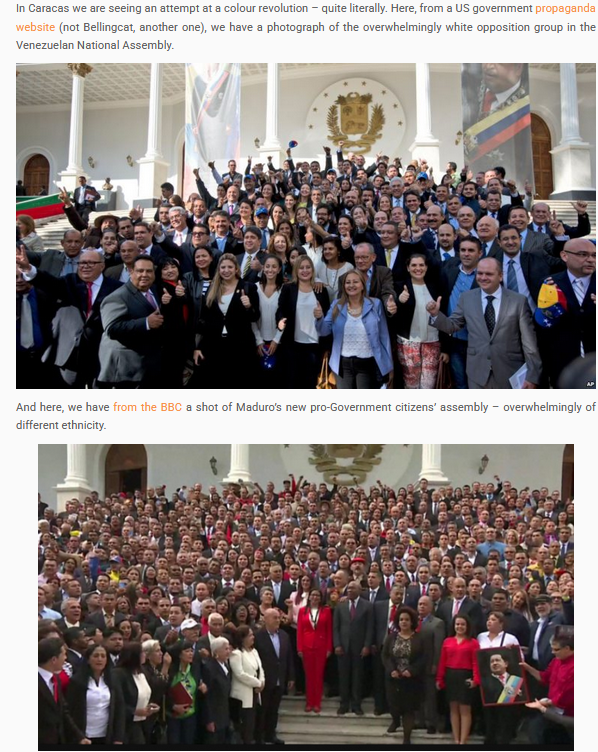
I am treading on eggshells here, but in 2019 I published this post noticing the contrast between opposition and government group photos. The leadership of the right wing are basically whiter. That is simply who they are.
Of course the divide is not absolute, and individual exceptions exist. But it is there. Politics in Venezuela are strongly class based, and in this post-colonial society it is difficult to disentangle race from class.
What the opposition want is simply to turn back the clock and restore economic apartheid in Venezuela. I had a very interesting talk with Ricardo Vaz of Venezuela Analysis. He explained how Chavez’s revolutionary policies had brought people into political discourse who had always been ignored in what was historically an extremely unequal society:
“The rulers, now the opposition, suddenly found that their cook, their cleaner, their driver and even their gardener were learning to read and write and starting to get political ideas. They did not like this at all”.
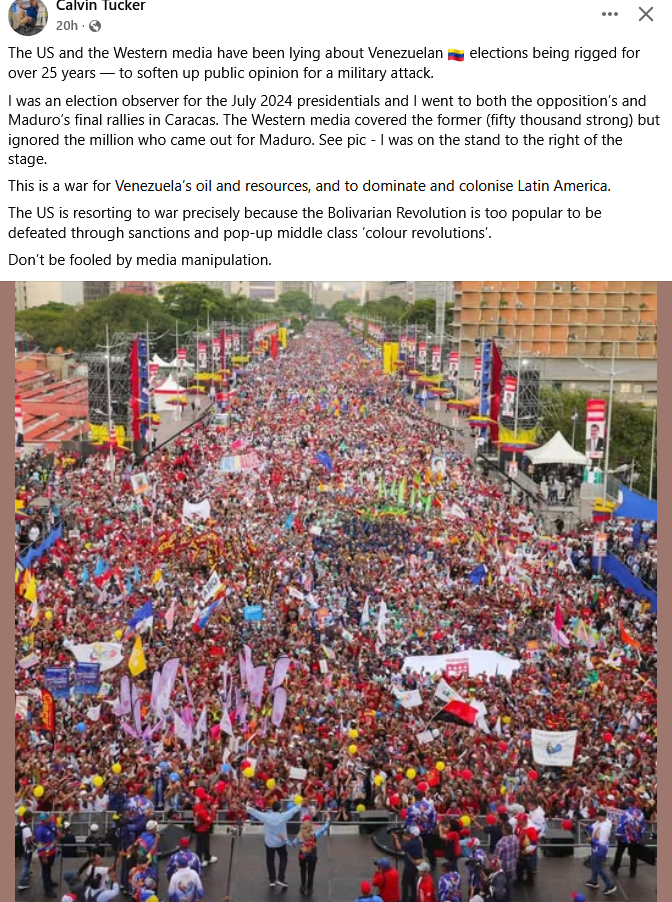
They still don’t like that. It is not possible for me here now to capture what happened exactly in the 2024 elections. Plainly the opposition performed relatively well, though I do not in the least believe they got 68% of the result. Maduro’s closing rally had 1 million people while the opposition’s had 50,000.
For the government to remain in power against the will of 68% of the population would require a degree of state repression which simply does not exist here. There is very little surveillance compared to Western states, let alone to acknowledged dictatorships. There are no politicised police or militias in the streets. There are no restrictions on people moving around and mingling.
Machado has discredited herself, as effectively as she has discredited the Nobel peace prize. Giving the prize to Trump made her look foolish and suppliant, and praising the bombing of her own country which killed fellow citizens has really not gone down well at all, even with opposition supporters.
But even that has not harmed her nearly as much as her remark to the Nobel Peace Prize Committee that 60% of Venezuelans are involved in narcotics or prostitution. This is not quite what she said, but it is near enough and it really annoyed people here:
We have the Colombian guerrilla, the drug cartels that have taken over 60% of our populations, and not only involving drug trafficking, but in human trafficking, in networks of prostitution. So this has turned Venezuela into the criminal hub of the Americas…
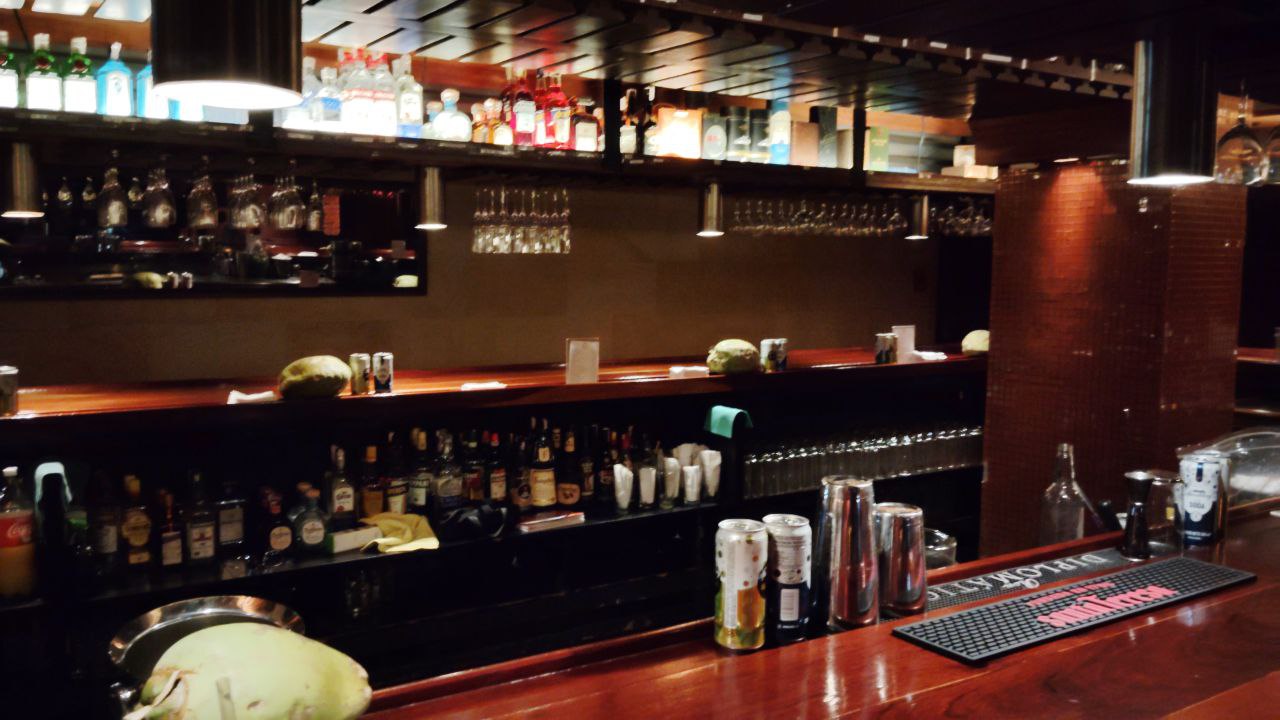
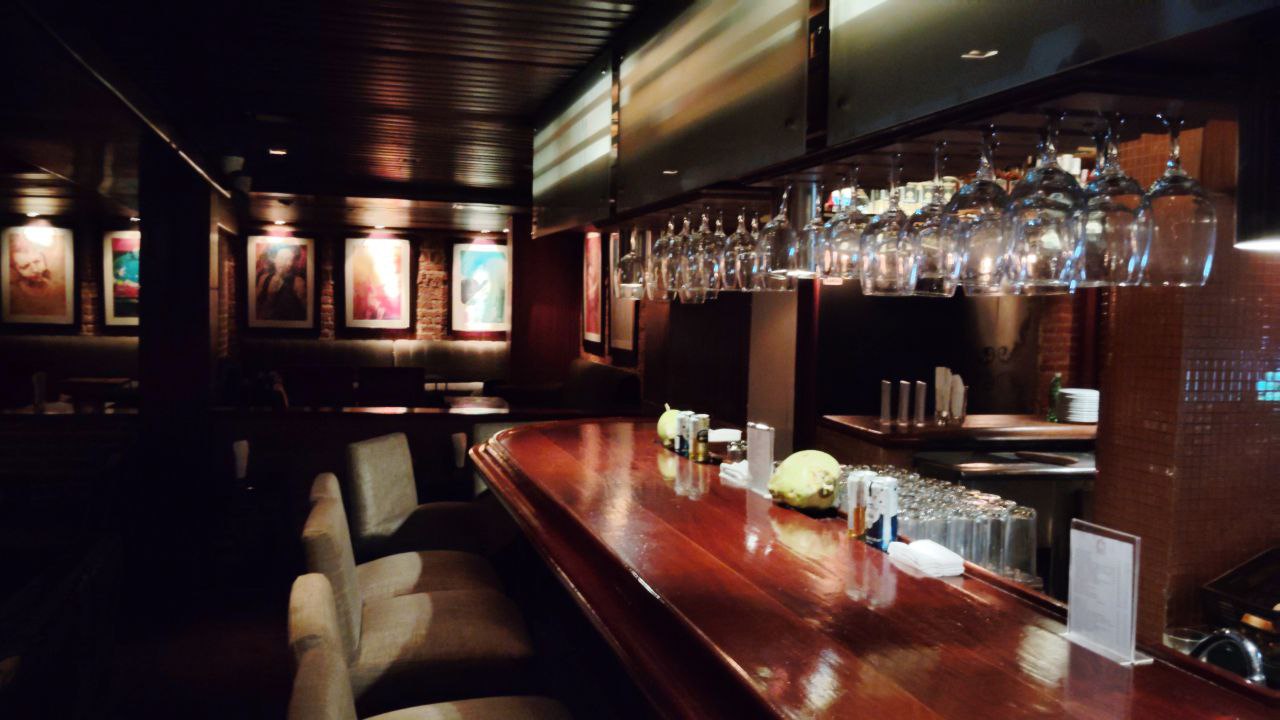
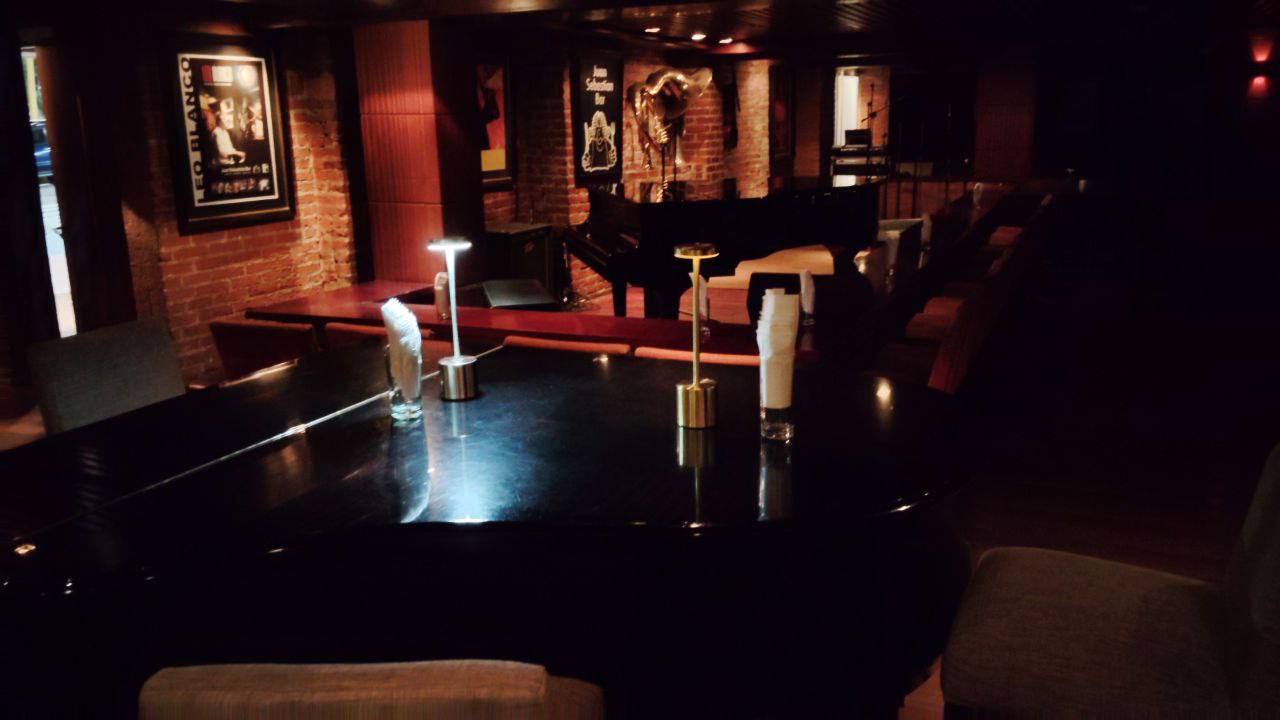
Which takes me back to personal impressions. I have, as those who follow me would expect, assiduously been checking out the bars of Caracas. I have found some very beautiful ones – Juan Sebastian Bar is one of the most lovely bars that I have ever seen. A piece of stunning interior design. I took these photos before it opened one evening. It serves mojitos even better than you can get in Havana.
That is not a mirror, those are two grand pianos!
The point is that not in my hotel, not in any bar, not on any street, have I seen a single person who appeared to be operating as a sex worker. Not one – and I might perhaps be viewed as a pretty archetypal target. Similarly I have not seen any sign at all of narcotics abuse. In two days in Salisbury investigating the Skripal hoax I was shocked by how many obvious drug addicts we saw on the streets. There is nothing of the kind in Caracas.
While I appreciate that the allegation is that Venezuela exports narcotics rather than consumes them, you always get clusters of addiction around production points and transit nodes. I just see no evidence that the common tropes about Venezuela and Venezuelans are true: and I am a trained and seasoned observer.
Sanctions against Venezuela did not start after the disputed 2024 election; they have been applied by the Western powers more or less since the very start of Chavez’s socialist experiment. The repression of socialism in Latin America has been US policy for a century, and the more Chavez succeeded the more the West sought to suppress it. France refused to provide spares for the Mirage jets of the Venezuelan air force, and equally refused to supply spare parts for the trains of the Metro service.
The gold and foreign currency reserves abroad of the government of Venezuela have simply been stolen by foreign governments, and the blocking of Venezuela from the Swift bank transfer system for a while caused havoc. It has however spurred BRICS to develop an alternative, not fully adopted, not finished but working in Venezuela, which accounts for the full stocks in the shops and ultimately might represent a significant moment in international economics.
Slowly, unwillingly, the Socialist Party under Maduro has been forced precisely by the crippling effect of sanctions to allow more space for the private sector and move from a fully socialist to a more social democratic model – though to describe the reforms under Maduro as “neoliberal” is ridiculous. It may theoretically be possible to build socialism in one country, but if the major economic powers join forces to destroy you, it becomes very difficult indeed.
A dangerously simplistic narrative about what has happened in Venezuela has taken hold in the West, fuelled by Trump, CIA and Machado/Miami sources.
On this reading, Acting President Delcy Rodríguez is in collusion with Trump, betrayed Maduro and stood down defences on the night of his kidnap, and is now instituting neoliberal policies, including a new petroleum law which states only the USA may ship Venezuelan oil and that payments for it will go exclusively through the US in Qatar.
In fact this is not true at all. Venezuela’s new petroleum legislation contains no provisions banning oil exports to China or Russia and no provision for payments to be routed through the USA. The new petroleum law is in fact legislation which sets out a new commercial basis for the operation of the Venezuelan petroleum sector on the same kind of concession, licensing and royalty basis as pertains in almost every other oil producer.
The key point is that the legislation was drafted under Maduro, with extensive consultation and debate. It came for its first reading to the Assembly literally the day after Maduro was kidnapped. That was already scheduled, not a result of the kidnapping. The notion that Maduro opposed the legislation and Rodríguez had to get rid of him to get it through is patent nonsense.
The legislation is unrelated to the United States’ current hijack of the sale of Venezuelan oil. This is proceeding through simple piracy. Trump decreed that only two companies, Vitol and Trafigura, would be allowed to load Venezuelan oil, and those companies would pay for the oil to the United States, into a special account held in Qatar under Trump’s name.
This new scheme has been enforced by simple piracy. Any tankers carrying oil not owned by Vitol and Trafigura from Venezuela have been illegally seized at sea by the US Navy, sometimes assisted by the UK government. The United States has been claiming that Venezuela agrees to this arrangement. That is not true. Or it is true in the sense that a hostage held at gunpoint agrees to stay put, rather than get a bullet through the skull.
The Venezuelan government simply has no physical ability to prevent the United States Navy from seizing oil tankers.
Nor is it true that the Venezuelan government gave the United States information on non-Vitol and -Trafigura tankers and requested their interception. Obviously the United States could get the information on “rogue” tankers from Vitol and Trafigura.
Trafigura have featured in my writing for decades as the archetypal extremely corrupt Western corporation. Their record for deliberate pollution and corruption in Africa is appalling, including in Angola and Ivory Coast. They have frequently been involved in CIA schemes for regime change.
How Vitol and Trafigura came to be the beneficiaries of a duopoly, and what backhanders that may have involved, is another question. In fact this is the one area of domestic pressure that has forced a step back from Trump, and last Friday it was announced that the arrangement will be expanded to include more companies.
It is worth noting that the system has not just been invented for Venezuela. It is almost identical to the system imposed on Iraq after its destruction by the United States and its allies, with payments for Iraqi oil made to the USA and a percentage of them returned to the Iraqi government.
The difference is that the Iraqi revenues were paid to the US Treasury, whereas the Venezuelan funds are going to a Qatar account under Trump’s personal control, removed from the reach of Congress. At its most charitable reading, it gives him a massive slush fund to pursue policy outside the United States legal framework. It is like Iran-Contra on a massive scale.
To reiterate: none of this sales arrangement has been agreed by Rodríguez and none of it is contained in the new Venezuelan hydrocarbon legislation on concessions and royalties. There are two separate things being widely conflated.
The line that Delcy Rodríguez agrees both to the kidnap of Nicolás Maduro and his wife Cilia, and to the hijacking of Venezuelan oil sales and revenues, has been deliberately spread by the US and its acolytes, despite Delcy Rodríguez’s furious denials.
If Rodríguez really was Trump’s placed woman, then boasting about it would fatally undermine her within Venezuela and bring about her downfall – which obviously would be entirely counterproductive were there any truth in the claim.
So why is this rumour being spread? Well the obvious reason is precisely to undermine Rodríguez and destabilise the government of Venezuela.
But perhaps a more important factor is Trump’s obsessive need to claim victory. He gathered a massive military force off the coast of Venezuela, and stood in danger of mockery as the Grand Old Duke of York if he simply sailed it away again.
The seizure of Maduro has in fact changed nothing in policy terms within Venezuela, but it has provided a spectacular operation for Trump to claim as a victory. In truth, as a demonstration of the capabilities of the United States’ offensive military technology, it was indeed technically impressive.
For the removal of Maduro to be portrayed as a triumph, Trump has to claim that Rodríguez is solidly pro-USA, even though this is plainly not true. It is merely a part of the parade of triumph that is an essential component both of Trump’s ego and of the bombastic Trump method.
What now happens to Maduro and Cilia is, on this reading, not really relevant. The entirely false narrative of the non-existent Cartel de los Soles has already been abandoned as part of the prosecution. In the USA’s misnamed “justice” system, they have a variety of witness accusations from diverse figures prepared to sign nonsense against Maduro as part of a plea bargain agreement. These include rococo Trump-pleasing standouts such as testimony that Maduro was involved in fixing the 2020 US Presidential election on behalf of Biden.
My prediction is that Trump will “pardon” Maduro before the prosecution gets too silly, and present that as another part of his triumph. But who can predict a madman?
That is precisely the conundrum now facing Delcy Rodríguez. She is dealing with two imponderable equations.
The first was already difficult enough. Historians and ideologues will debate for centuries whether Chavismo could have succeeded economically with its full-on socialist programme, had the Western world not determined to destroy it with crippling sanctions.
What is I think beyond dispute is that the sanctions were so crippling that they caused considerable public hardship, and massive inflation. At the same time, the very fact that Venezuela is not highly dictatorial and both Chavez and Maduro broadly allowed debate, free opposition political parties and media, and the operation of Western-funded NGOs, meant that the Venezuelan population were continually bombarded with Western propaganda which blamed the problems caused by sanctions on the Bolivarian Revolution.
This eroded support for the socialist project, which though still intact, has crumbled at the edges. The Bolivarian government has been obliged to try to mitigate the effects of the sanctions which stole the government’s own capital, and to seek the removal of some sanctions, by the opening up of more space for capitalist investment and operation in the economy, notably but by no means only in the oil sector.
In other words the government has been forced to concede some ground to the West by inching along the spectrum from socialist to social democratic, while attempting to maintain the massive social gains of the Chavez revolution.
This is an exercise in which Nicolás Maduro himself was fully engaged. I believe that both Maduro and Rodríguez have the intention of inching back from social democracy towards socialism over time, once pressures have eased. Theirs is a game of strategy, not of tactics.
To this already extremely sensitive calculation is added the extraordinary factor of Trump. His willingness to simply kill innocent people, to shatter international law, and to impose his will by exploiting massive United States military advantage over a small country, changed all the rules of the game.
The pressure to make changes faster to appease somebody who is plainly mentally unstable, the difficulty of understanding his limits and true goals, is an excruciating experience when the lives and deaths of Venezuelans are in your hands. Trump’s incredible bombast, his wild claims that Venezuelan land and oil is stolen from the USA, are not contained within the realm of normal diplomatic negotiation.
Delcy Rodríguez is not so much walking a tightrope, as navigating an Indiana Jones tunnel full of traps.
One thing that Trump has in fact got right is his contention that Machado does not have the public support to rule. This seems to me indisputable, and an attempt to impose her would result in civil war. This of course in itself undermines the contention that Machado’s team massively won the 2024 election.
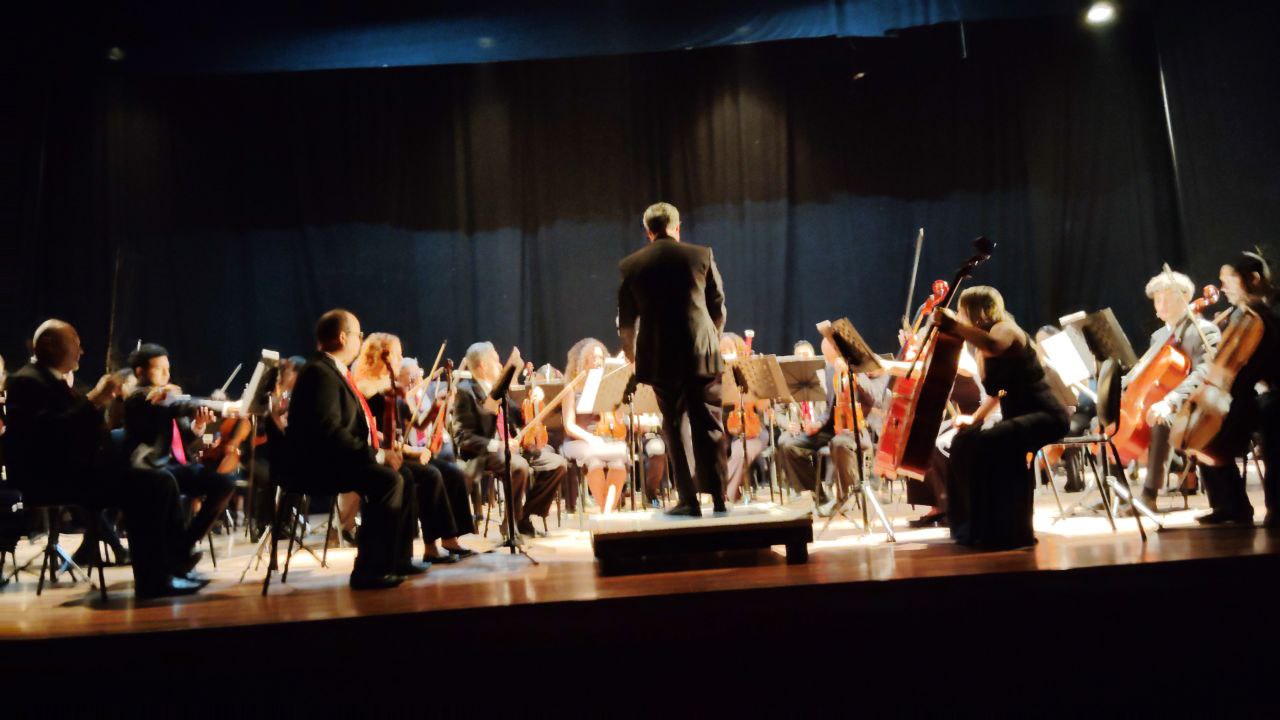
Meanwhile life in Venezuela goes on for ordinary people. I had the great pleasure to attend a concert by the National Symphony Orchestra on Sunday. It was very accomplished, and the auditorium was full. The programme was entirely of Venezuelan composers, and I had never heard any of the music before. The opening symphonic poem by Juan Bautista Plaza would stand alongside the European repertoire without blushing.
I make no apologies for bringing little slices of ordinary life to you, because the picture we have been given of Venezuela is so strangely and massively distorted, it requires multiple points of correction.
Chavez instituted a programme of musical education for working-class children that became the envy of the classical music world, known simply as La Sistema. Much more heart-rending examples of Western sanctions might be found, involving medical provision. But as an example of the cruel absurdity of the sanctions regime, the youth orchestra of Venezuela has difficulties getting hold of simple consumables – strings, reeds, plectra – because of sanctions.
In bringing violin strings to a child I should be committing a crime in the United States of America. Let that be a testament to the absurdity of using sanctions to crush human spirit.
I am very aware I have not left Caracas yet and of the limitations of my experience so far. But I am already struck by the great advantage of being here over commentators in the West who I see daily, even when well-intentioned, getting it all wrong. The mainstream media of course produce a fake narrative entirely as a matter of policy.
I am delighted to say that today our new videographer and editor are starting and we will be able to bring you video content. I also hope today to conclude rent of an office/studio space.
We now have a Venezuela reporting crowdfunder. I have simply edited the Lebanese GoFundMe crowdfunder, because that took many weeks to be approved and I don’t want to go through all that again. So its starting baseline is the £35,000 we raised and spent in Lebanon.
I do very much appreciate that I have been simultaneously crowdfunding to fight the UK government in the Scottish courts over the proscription of Palestine Action. We fight forces that have unlimited funds. We can only succeed if we spread the load. 98% of those who read my articles never contribute financially. This would be a good moment to change that. It is just the simple baseline subscriptions to my blog that have got me to Venezuela, and that remains the foundation for all my work.
Anybody is welcome to republish and reuse, including in translation.
Because some people wish an alternative to PayPal, I have set up new methods of subscription payment including a Patreon account and a Substack account if you wish to subscribe that way. The content will be the same as you get on this blog. Substack has the advantage of overcoming social media suppression by emailing you direct every time I post. You can if you wish subscribe free to Substack and use the email notifications as a trigger to come for this blog and read the articles for free. I am determined to maintain free access for those who cannot afford a subscription.
Subscriptions to keep this blog going are gratefully received.