Thursday, February 12, 2026

IMPERIALISM BY ANY OTHER NAME

China's Belt and Road Initiative Boomed in 2025
Arkadivna / istock
Arkadivna / iStock

Published Feb 8, 2026 10:32 PM by The Maritime Executive


[By Tom Baxter]

Last year, Chinese companies’ “engagement” in 150 countries involved in the Belt and Road Initiative (BRI) reached its highest level since the BRI was launched 12 years ago.

The value of construction deals involving Chinese companies reached USD 128 billion, up 81% on 2024. While investments totalled USD 85 billion, up 62%.

The unprecedented boom has been revealed by annual data from the Griffith Asia Institute, an Australian think-tank, and the Green Finance and Development Center, a think-tank hosted in Fudan University, Shanghai.

“I did not foresee last year that 2025 would be such a strong year [for BRI engagement],” said report author Christoph Nedopil Wang during an online launch.

“Engagement” refers to both investments by Chinese companies, implying an ownership stake in a project, and the value of construction contracts awarded to them for engineering services.

The striking upsurge comes after years of government-directed messaging, and analyst predictions, that the initiative would focus more on “small and beautiful” projects, rather than the mega projects pursued in its early years.

“Small yet beautiful should be seen as a bygone,” Nedopil Wang said, noting both the total value of construction and investment deals, and the growth in average project value.

Last year also saw notable shifts in the targets for Chinese companies’ activities around the world. Their engagement in renewable-energy projects grew in 2025 but not as rapidly as in oil and gas projects, which will concern many.

Rapid growth in engagement in mining, and in the technology and manufacturing sector, demonstrates the evolution of the BRI since it began in 2013.

Finally, Africa became the top destination for Chinese companies’ overseas engagement.

The end of ‘small and beautiful’?

Last year saw a marked rebound in the size of projects. The average value of investments reached USD 939 million, up from USD 672 million in 2024 and three times higher than deal sizes five years ago, during the BRI’s Covid contraction. The average value of construction deals reached USD 964 million, up from USD 496 million the previous year.

Nedopil Wang says this indicates the end of “small and beautiful” BRI projects, a term promoted by the Chinese government in response to financial headwinds and the environmental and social problems which arose in the first five years of the initiative.

Chinese government discourse has certainly not dropped the emphasis, however. On 27 January, People’s Daily, the official newspaper of the Communist Party of China, stated that “more than 700 aid projects, including … small and beautiful livelihood projects” were delivered overseas in 2025.

Booming renewables – and fossil fuels

Energy was once again the top sector for engagement in Belt and Road countries, accounting for about 43% of the total. Total engagement in energy sectors reached USD 93.9 billion, the highest ever recorded.

However, while just a few years ago renewable-energy projects accounted for nearly half of total energy projects overseas, in 2025 renewables made up just 21%, while fossil fuels accounted for over 75%.

Nedopil Wang sees risks in the boom in oil and gas engagement.

“I see a rapid rise of oil and gas engagement as an environmental risk due to the associated climate emissions. They also become an economic risk under declining fossil-fuel-demand scenarios driven by electrification of mobility and scaling of green electricity,” which would lead to lower oil and gas demand, respectively, he told Dialogue Earth.

The dominance of oil and gas projects also implies an emphasis on energy extraction, rather than generation. According to the report’s breakdown, the value of investments and contracts in extractive projects amounted to USD 51.4 billion, while generation accounted for USD 25.8 billion.

That said, Chinese companies’ engagement in oil and gas projects is primarily via construction contracts rather than equity ownership. This may minimize some of the economic risks Nedopil Wang identifies.

When it comes to renewable projects, while these make up a smaller proportion of total energy engagement in 2025, they have seen a marked increase in real terms. Last year saw engagement worth USD 21.4 billion, up from USD 12.3 billion in 2024.

“2025 was both the greenest and the brownest year” for the BRI, Nedopil Wang said during the report launch.

Renewables, by their nature, also contribute to generation rather than extraction. Last year saw projects worth 23.8 GW of solar, wind and hydro generation capacity, compared to around 15 GW in 2024.

“I do not immediately read the surge as a return to fossil-fuel expansion,” notes Fikayo Akeredolu, senior research associate in climate policy and justice at the University of Bristol. She points out that while oil and gas projects accounted for a large proportion of the value of construction contracts in 2025, foreign direct investment from China is supporting renewables. Meanwhile, at least in Africa, lending from China’s government-backed policy banks is backing power-transmission projects. The lending data comes from the recently updated Chinese Loans to Africa database, published by the Boston University Global Development Policy Center.

“[We see] a segmentation of instruments, rather than a reversal of China’s energy-transition stance,” Akeredolu says.

Moving up value chains

Another key sector of growth in 2025 was technology and manufacturing, referring to both traditional manufacturing activities and high-tech areas such as solar PV and batteries. Its growth demonstrates the evolution of the BRI over the last 12 years, from a focus on infrastructure to an increasing interest in developing manufacturing bases overseas.

The sector saw 27% year-on-year growth in engagement and has been growing steadily since 2023. Engagement in green tech like solar PV and batteries dropped slightly compared to 2024, however.

“The growing role of tech and manufacturing highlights China’s growing ability to build and manage factories (and in particular high-tech-related factories) across the world,” Nedopil Wang told Dialogue Earth. “While the original BRI engagement was concentrated in infrastructure, the new BRI is seeing the expansion of China’s manufacturing base to overseas markets.”

Metals and mining also saw strong engagement in 2025, a record high of USD 32.6 billion. This was dominated by construction contracts for two mega projects in aluminium and steel in Kazakhstan, worth USD 19.5 billion together. However, other regions also saw major deals, the African continent in particular.

Interestingly, data from the report shows a higher proportion of engagement in processing rather than extractive mining facilities. Processing of mined minerals and metals is seen by many resource-rich countries as a key strategy for moving up value chains, particularly in green technologies. For now, however, it is unclear if the data represents a trend or simply a one-off.

In contrast, transportation infrastructure is in decline, with only USD 13.3 billion, the least since the BRI began life being touted primarily as a global connectivity project.

Nedopil Wang suggests this may be connected to problems securing finance for traditional infrastructure projects, including the fall in lending from China’s development finance banks.

Africa rising

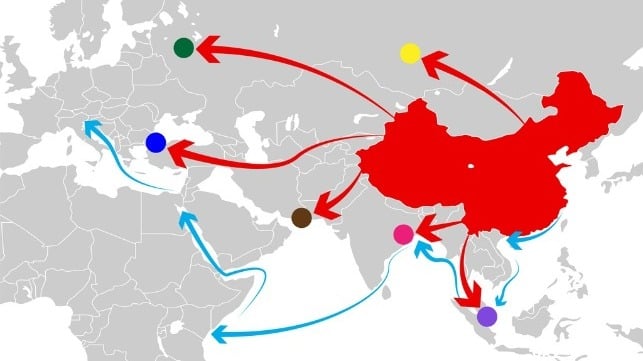
In 2025, the largest market for Chinese companies’ engagements along the BRI was Africa. Belt and Road partners on the continent saw USD 61.2 billion worth of engagement, a 283% expansion compared to 2024, according to the report. The majority of that engagement was in the form of construction contracts, rather than investment.

Nedopil Wang indicates this may have to do with Chinese companies seeking ways to avoid US tariffs.

Akeredolu from the University of Bristol points to “Africa’s growing role in resource security amid global supply-chain fragmentation” as another reason shaping the boom in Chinese engagement in African economies.

“Whether this is good news for African governments depends on bargaining power,” says Akeredolu. “Where states can secure local content, downstream value addition, or revenue-sharing, opportunities exist. Where engagement is limited to turnkey construction without equity or technology transfer, the developmental upside is thinner.”

Tom Baxter is project manager for Dialogue Earth’s global China and learning programme, based in London. He joined the organisation in 2018 and was based in Beijing until 2022. 

This article appears courtesy of Dialogue Earth and may be found in its original form here

The opinions expressed herein are the author's and not necessarily those of The Maritime Executive.


 

Samsung Heavy Industries Cancels Tanker Linked to Sanctioned Manager

Samsung shipbuilding
Samsung Heavy Industries reports the tanker order was canceled when the owner did not make the final payment and the second order could change (SHI file photo)

Published Feb 9, 2026 5:56 PM by The Maritime Executive


According to a stock exchange filing, Korea’s Samsung Heavy Industries canceled the delivery of the first of two crude oil tankers just as the vessel was due to be delivered. It cites the “shipowner’s financial difficulties,” warning that the second vessel could also be revised, while the speculation is that these tankers were ordered as part of a network linked to shipping Iranian and Russian oil.

The contract was reported in June 2023, and, in the style of the South Korean shipbuilders, it was only referred to as an order by “Oceanic region shipowners.” It was valued at approximately $170 million for the two tankers to be delivered by the end of February 2026. 

“The shipowner failed to pay the final installment for one of the two crude oil carriers,” Samsung Heavy Industries writes in the filing. “We have exercised our contractual right to cancel the contract.” It also warns, “The delivery date of Vessel No. 2. May change depending on the shipowner’s circumstances.”

Since the order was placed, there has been speculation in the industry linking the tankers to UAE-based vessel management firm Teodor Shipping or possibly one of its subsidiaries, such as Marshall Islands-based shipping company Cora Lines. The details of the order were never publicly disclosed, and Samsung Heavy Industries has repeatedly denied that it was working with a sanctioned entity. 

The United States in June 2025 linked Teodor to “part of the vast shipping empire” controlled by Mohammad Hossein Shamkhani, the son of Ali Shamkhani, a top political advisor to the Supreme Leader of Iran. The U.S. Treasury Department asserted that Hossein “leveraged corruption through his father’s political influence at the highest levels of the Iranian regime to build and operate a massive fleet of tankers and containerships.” It said the network transports oil and petroleum products from Iran and Russia, as well as other cargo, to buyers around the world, generating tens of billions of dollars in profit. 

Treasury reported it was listing 115 entities in June 2025 tied to the network. Concurrently, the U.S. Department of State designated 20 entities and identified 10 vessels as blocked property. The actions included Theodor, Cora, and many other companies, which appeared to go underground or be disbanded after the action.

Samsung Heavy Industries made no connection between the orders and the network, only citing the failure of the buyer to make the latest payments on its contract. It reports that the first vessel was canceled and the contract was recast at a value of approximately $78 million. The contract is still dated for completion at the end of this month.

The shipbuilder writes that it expects to cover the shipbuilding costs with the advancements already received. It also intends to sell the tanker, which is speculated to be a Suezmax vessel, to further cover the construction cost.

It is not the first time that sanctions were thought to impact the shipbuilders orderbooks. After the Russian invasion of Ukraine and the sanctions were imposed, Daewoo Shipbuilding and Marine Engineering backed out on contracts with a Russian shipowner, citing a failure of the shipowner, which was believed to be Sovcomflot, to make installment payments for the contracts. Samsung found itself in a similar situation for its orders with Russia’s Zvezda shipbuilding complex for the LNG carriers. Samsung Heavy Industries said it would cancel the orders but later accused Zvezda of breaching the contract and said it would sue for compensation.
 

Reducing Plastic Waste: Three Ways to Replace Disposable With Reusable

Source: The Revelator

The global annual production of plastics rose to 400 million metric tons in 2022 and is projected to double by 2050 (a metric ton is 1,000 kilograms or about 2,200 pounds. As of 2015 some 6,300 million metric tons of plastic had become waste. About 9% of it was recycled, 12% incinerated, and 79% ended up in landfills or the natural environment — rates that haven’t gotten much better in the ensuing decade. Current trends suggest that by 2050, we will put roughly 12,000 million metric tons of plastic waste in landfills or the environment.

Clearly the problem of plastic pollution in land and marine environments isn’t going away. This series looks at some approaches to dealing with it, such as efforts to replace disposable plastic items with reusables.

Order take-out and most likely your meal comes in plastic containers inside plastic bags with a set of plastic utensils — each item designed to be used just once. That beer you grab at a concert or basketball game is served in a plastic cup meant to be thrown away when empty. And at most stores, your purchases are tossed into a single-use plastic bag.

Replacing these disposable items with reusable ones could help address plastic pollution by reducing the amount of waste generated.

But what are the best ways to accomplish that? Should the responsibility — or the opportunity — to use less plastic come from individuals, large suppliers, or the government?

To help settle these questions, we looked at some organizations and businesses working to cut back on our addiction to disposable plastic.

Retooling Large and Small Systems

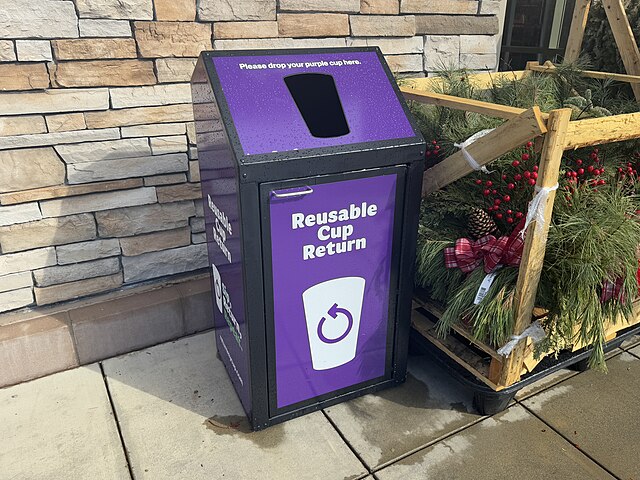
Events like concerts, festivals, football games, and conventions use tens of millions of disposable cups. An average-sized stadium will go through 5.4 million of them every year,  according to Upstream, a nongovernmental organization supporting reuse efforts.

To break this endless chain of disposability, venues and events could turn to companies that deliver, pick up, wash, and return reusables. Most of these are made from polypropylene, a nontoxic plastic polymer that is tough, lightweight, heat-resistant, and does not absorb water.

Trial runs of reusable cups at major venues have been promising. A four-day After two 2024 concerts at the Los Angeles Crypto.com Arena kept 23,000 single-use cups out of the trash, the venue made the switch for good, r.World reports. As of Dec. 31, 2025, the company’s reusable service had diverted more than 23 million single-use items from landfills.

Other sports venues, events, and teams currently working to switch to reuseable cups include the Los Angeles Coliseum, Red Rocks Amphitheater, Kansas City Chiefs and Arrowhead Stadium, Portland Trail Blazers, and Charlotte Hornets.

Another recent initiative — Protect Where We Play, launched by the Ocean Conservancy and Green Operations & Advanced Leadership — has provided reusables for several events, including two June 2025 Coldplay concerts in Las Vegas; a September Lumineers performance in Savannah, Georgia; and two October Billie Eilish concerts in Belmont Park, New York. The program plans new 2026 tour stops and hopes to replace a total of 1 million single-use cups with reusables managed by Bold Reuse.

Jenna DiPaolo, chief brand and communications officer for Ocean Conservancy, says the effort was inspired by data showing that the easiest initial action people can take is one related to the ocean (where much plastic waste ends up), plus evidence that many people don’t take action because no one they trust has asked them to do something specific.

“Protect Where We Play leverages the people that Americans trust most — athletes and entertainers — and shows them how easy it can be to take an action,” she says. A key to the effort is showing venues the value of switching to reusables.

“We’re banking on folks to make the right decision when we provide the data,” DiPaolo says.

Bold Reuse is analyzing how many times the products can be reused, says marketing manager Mya Manibusan (existing assessments suggest 300). She said the company had kept 6 million single-use items out of landfills before the end of 2025.

Cups are just part of the issue, though. Every year people in the United States use 1 trillion disposable food service products, Upstream reports, including cups, containers, bags, and utensils. The organization estimates that 840 billion of these items could be replaced by reuse services.

A reusable dishware program called Re:Dish — which serves public school and company cafeterias and events across communities in New York, Boston, and Philadelphia — has kept about 7 million products out of landfills to date.

“Fundamentally, we are an industrial washing operation that also has a line of reusable dishware,” says CEO and founder Caroline Vanderlip. “At the institutional level, most companies, schools, and other operations don’t have the labor, resources, or space to make reusable work. We’re an outsourced solution that provides the full gamut or just whatever pieces you need.”

At end of life, items are taken to a materials recovery facility to be packaged and resold.

“Our mantra is ‘never landfill’, which is really important to us,” Vanderlip says. “We don’t have enough landfill space in this country — and more importantly, plastic takes centuries to deteriorate.”

Switching to reusables at a more local level can make a difference, too. Brothers Kevin and Harrison Kay founded containers for food delivery services in the Washington, DC area.

During the COVID pandemic, they ordered take out a lot (as a lot of us did) and became frustrated with the volume of single-use containers.

“We started brainstorming a solution that would not only work in our lives but be scalable and help solve the problem for other people,” Kevin says. The idea of a shared network of reusable containers was born.

Restaurants that buy the reusable containers are listed on To Go Green’s online ordering platform. When individuals order through the platform, the restaurant places the order in those reusable containers, which customers return for washing along with the restaurant’s in-house dishes.

“We’ve been in business about a year and have 17 restaurant partners and around 700 reusable container uses so far,” Kevin says. “The biggest challenge now is visibility and customer awareness, since we are relatively new. We’ve had tremendous positive feedback from customers, but a lot of people don’t know about us yet.”

Increasing awareness is their biggest challenge.

“Ordering takeout and delivery has become very popular but spreading the word that reusable containers are an option is a hurdle,” Kevin says. The brothers are working on integrating with a third-party delivery app and other ordering channels to increase their reach.

Returning the containers can be cumbersome, Harrison says, so they offer an at-home return service integrated with Uber Direct.

“On a broader note, there are a lot of challenges to scaling up, but if big players in the food delivery field buy into these kinds of services, they can become much more mainstream. We think reuse has to be the future. The current culture of throwing things away is not sustainable.”

Making Reuse the Law

Globally people use 5 trillion plastic bags a year, or 160,000 per second. Americans use on average 365 per person per year. Most marine litter is plastic bags (an estimated 300 million end up in the Atlantic Ocean alone annually) and they cause a lot of damage, killing marine life through ingestion or entanglement, releasing toxic chemicals into the water, and negatively affecting tourism.

Cities, states, and countries have started to regulate their way out of the single-use plastic bag problem. Complete bans prohibit any sort of single-use plastic bag at store checkouts, while partial bans limit bags under a certain millimeter in thickness but allow thicker bags that hold up for multiple uses. Fee policies require customers to pay some amount for a bag, typically 5 to 25 cents.

Research shows that bans work. One study analyzed crowdsourced data from more than 45,067 U.S. shoreline cleanups and 611 local and state-level plastic bag regulations enacted between 2017 and 2023, finding that regulations reduced the proportion of plastic bags by 25 to 47%.

“What we see in places with policies is a decrease in plastic bags as a share of total items collected,” says Anna Papp, co-author and post-doctoral associate at MIT.  “It’s important to emphasize that it is a relative decrease. Overall, bags are increasing in all areas. The policies are just slowing down the problem, not eliminating it. And we don’t find that these policies lead to reduction in other plastic items.”

Future laws and regulations could help address other single-use items.

Taking Individual Action

Each of us individually can help reduce single-use plastic waste. For example, we can advocate for adoption of reusable services in the places we work and play and take advantage of services like To Go Green where available.

“If you live in a city with a reuse provider, you can encourage more stadiums, venues, festivals to make the switch,” Manibusan says.

Individuals can join Protect Where We Play’s Team Ocean and receive information about scientifically vetted actions to take.

In addition, with research showing that people underestimate how much plastic they throw away, everyone can simply pay more attention to how much single-use plastic waste we generate.

One study found that households in the UK on average tossed 23 plastic items per person per week, considerably more than 45% of participants expected. The researchers found a direct link between how often people shopped online and how surprised they were at their waste levels. They suggest that online retailers clearly show packaging impacts at the point of purchase and provide reuse or refill alternatives.

Taking an action is not as hard as people think, says Manibusan, and every reuse prevents waste.

“Single use was built for convenience,” she says. “Reuse is built for the future.”Email

Melissa Gaskill is a freelance science writer based in Austin whose work has appeared in Scientific American, Mental Floss, Newsweek, Alert Diver and many other publications. She is the co-author of A Worldwide Travel Guide to Sea Turtles and author of Pandas to Penguins: Ethical Encounters with Animals at Risk.

Workers and Working Time in Germany in 2026

Source: Originally published by Z. Feel free to share widely.

Recently, the staunchly anti-communist supporter of neoliberalism, ex-BlackRock hedge fund manager and now Germany’s chancellor, Friedrich Merz, told Germans to work more – that is what Germany needs. But rather than being aligned with most Germans, conservative Merz seems to be off the mark.

Meanwhile, the hard-working businessman Merz — who last took the rubbish out on 12 March 1997 — is calling on what Max Weber described as the Protestant Work Ethic, or more simply: “work makes life sweet,”as the petty-bourgeois saying goes.

“Work until you drop” – that’s probably what neoliberal politicians think but never say. A good example is the almost permanently right-wing populist boss of Bavaria, Markus Söder, who believes “it makes sense to work longer” – work until you drop, once again. It is claimed to be an interesting symbiosis between capital and conservatism.

Shortly afterwards, Söder cranked it up by calling for an extra hour of work per week, claiming that overtime is a solution to Germany’s economic problems.

At the same time, the conservative CDU’s neoliberal wing wants to restrict the right to part-time work, arguing that if you can work more, you should work more.

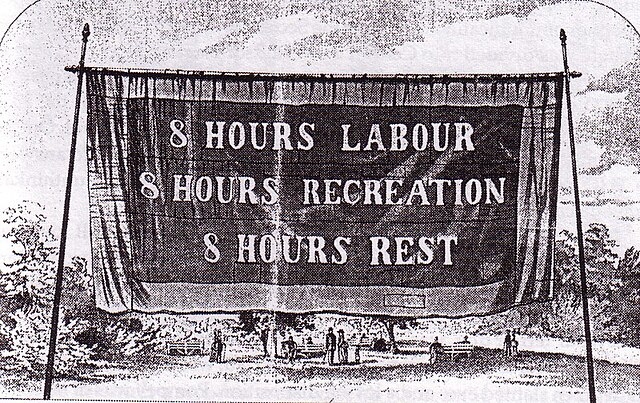
Meanwhile, the facts are these: Germany’s Working Time Act already provides for a maximum weekly working time of 48 hours over six days. However, the current coalition government of the social-democratic SPD and the conservative CDU wants to abolish the eight-hour day in favour of a maximum weekly working time.

According to Germany’s statistical office, the average weekly working time in 2024 was 34.3 hours, while recent surveys on work in Germany show that full-time work remains the most popular form of employment. In other words, Marx is still right: workers need to sell their labour power. Millionaires like Friedrich Merz do not — they are chancellor because they want power.

Surveys also show that a large majority of workers reject a weekly working time of up to 48 hours. A recent survey by Germany’s Internationale Hochschule (IU) found that 73.5 percent stated that a 48-hour week would have a “negative” or “very negative” impact on their lives.

Among the reasons cited were too little time for family and friends, sports or hobbies, as well as health concerns of a physical or psychological nature. At the same time, the IU survey showed that full-time work best fits people’s life situations.

This is followed by a four-day week with 32 hours at full pay (33.9 percent). A classic part-time model with less than 35 hours per week was preferred by 18.5 percent.

The most common working model in the survey was 35 – 40 hours per week (44.7 percent), followed by a four-day week with 32 hours (32 percent), and part-time work under 35 hours (18.5 percent).

The findings show that what the population wants and thinks is decoupled from the wishes of German capital and conservatives. It is hardly surprising how far the basic mood of the population diverges from business interests and conservative politics.

In other words, there is strong rejection of a 48-hour week and broad support for the eight-hour day or less. Simply saying that people have to work more is ultimately short-sighted.

Many people think it’s acceptable to work 40 hours. At the same time, they say: “that’s all you can do, because you can’t reconcile longer working hours with your life.”

In addition, as long as there is no comprehensive childcare and the care crisis – aged care, nursing, and so on — remains unresolved, many things simply do not work.

On the upside, there are many good reasons to reduce long working hours. In the much-discussed shortage of skilled workers, labour is entering what some have called a “golden age.” Companies are desperately searching for qualified personnel, and some are increasingly willing to let workers dictate conditions — including working time.

Unfortunately for the advocates of longer hours, there is much that speaks against increasing working time. Reducing working hours could represent an important step towards a more humane world of work. After all, paid work – under capitalism, under an abusive boss, or both — is not a pleasant experience for many.

Beyond this, collective bargaining gives workers the option to choose between higher earnings and more time off. The majority choose time. This is shown by a new study from the Economic and Social Science Institute (WSI).

Workers in companies with stressful working environments or little room to reconcile work and family life are particularly likely to opt for this – in plain terms: get out as early as possible.

More time can be better than more money. This is how the majority of workers see it. Collective agreements that allow a choice between more free time and higher wages reflect this reality.

According to a joint study by the University of Bielefeld (IAB) and the WSI in 2022, significantly more than half of all workers opted for more time instead of additional money.

In concrete terms, 59 percent chose exclusively more time, 6 percent a combination of time and money, and only 35 percent opted exclusively for more money.

Unsurprisingly, women – especially those with children under the age of 14 – were far more likely to reduce working hours. A predictable 79 percent of this group did so.

Interestingly, the motivations hardly differ by gender. For both women and men, “more time for the family” ranked second. The most common reason was “more time for hobbies, friends and myself.”

Whether workers opt for more free time is also closely linked to corporate culture. Where full-time work is the rigid norm, only 54 percent take advantage of the option to reduce working hours in exchange for lower pay.

The fear of wage and career disadvantages due to shorter working hours is particularly strong where traditional ideas of “standard” working time prevail.

Overall, more time off matters more to many workers than higher wages. This highlights how great the need for time relief really is. The currently discussed deregulation [better: pro-business re-regulation] – driven by corporate Germany and conservative politics – directly contradicts workers’ needs.

In a 2025 survey, almost three-quarters of workers feared negative consequences for their health, work-life balance and everyday organisation if working days of more than ten hours were introduced — as planned by the capital-conservative push for deregulation. Women were even more likely than men to expect negative effects.

In other words, Germany urgently needs social progress on working time. By contrast, the planned sharp increase in working hours is not only an attack on the eight-hour day but would also make it harder for women to work at all. Put plainly: two old men – Merz and Söder – are set to make women’s lives harder.

Contrary to these attacks, many full-time workers want shorter hours. More free time may not boost the much-celebrated GDP, but it is invaluable for people. What good is it if your gravestone reads: “He worked long hours but never saw his daughter grow up,” or “She contributed to GDP but didn’t know who her son really was”?

Despite workers’ wishes, conservative (Merz) and reactionary (Söder) politicians — supported by neoliberal economists, the willing executioners of capitalism — demand longer working hours. They do so in stark contrast to people’s needs.

Merz argues that people must work more to preserve the “prosperity of this country” — code for protecting corporate profits. That workers want the opposite is shown by a SOEP survey from Germany’s Institute for Employment Research, which found that prosperity for workers means having sufficient time beyond employment and self-determination over working hours.

It remains essential that people can spend time together – on weekends, for example – and that work is not intensified to the point where life outside of work is written off due to exhaustion.

Most workers want more time beyond the job. Given increasing work intensity, a general reduction in working hours – towards a healthy full-time of 30 hours per week– is appropriate.

GDP is used – and abused – as a central metric in a so-called debate where corporate media, conservatives and lobbyists disguised as “economic experts” play ping-pong with one another. GDP is based on the neoliberal hallucination of eternal growth and says nothing about who actually benefits — namely, that the rich keep getting richer.

Since reunification in 1990, Germany’s GDP has risen sharply, despite recent dips. The political priority of the neoliberal-business-conservative bloc remains growth — not climate protection.

For the profit-maximisers of neoliberal capitalism, this is why more work is demanded. Growth benefits the rich disproportionately. As Warren Buffett famously admitted:

There’s class warfare, all right,

but it’s my class, the rich class,

that’s making war — and we’re winning.

Ideologically, rising GDP is equated with prosperity. But GDP says nothing about wealth distribution or “time prosperity” (what German unions call Zeitwohlstand) – self-determined time beyond paid labour.

Meanwhile, productivity stagnates and health insurance data document the harmful effects of work. This is sidelined. Instead, corporate media amplify claims from neoliberal businessmen and conservative politicians that Germans are working too little. This is media capitalism at work.

There is no clear measure of what “too little” even means. The debate has long ceased to be about meeting human needs — housing, food, culture, leisure — and has become solely about making more money from money.

According to neoliberal ideology , there is never enough. Even when people are well supplied and leisure increases, capitalism demands more growth.

If studies don’t support political goals, facts are freely invented. Corporate media eagerly spread narratives that discredit any opposition — especially opposition to capitalism. Communist parties have been finished off, social-democratic parties are next on the list.

Prosperity, we are told, requires greed. The message is always TINA – there is no alternative – even in the midst of climate collapse.

Meanwhile, 61 percent of workers fear burnout. Being unemployed is awful, but working too much – or under the wrong conditions – is also destructive. Worse still: many workers remain poor despite full-time work – the precariat.

More than 800,000 workers earn wages too low to live on. For millions, the bitter reality remains: from dishwasher to dishwasher.

It is no secret that the neoliberal growth mantra of higher, faster, more leads not to shared prosperity but to over-exploitation of people and planet. Instead of being strapped to this wheel of illusion, workers need two things:

  1. A fundamentally different economy for planet Earth.
  2. New concepts of work and prosperity beyond neoliberal constraints.

The reasons to abandon growth fetishism are many — personally and socially. The next time corporate captains crack the whip and tell us to row, the answer should be simple: row yourself. In other words, some row the boat while others sit on the upper deck. See: metropolis.

Given the choice, workers overwhelmingly prefer more time over more money. Collective agreements must guarantee that choice.

This also suggests that trade unions can – and should – continue reducing working hours without wage losses. It is imperative to resist the planned erosion of leisure time pushed by corporate Germany and its conservative political enforcers – the willing executioners of neoliberal capitalism.Email

avatar

Thomas Klikauer has over 800 publications (including 12 books) and writes regularly for BraveNewEurope (Western Europe), the Barricades (Eastern Europe), Buzzflash (USA), Counterpunch (USA), Countercurrents (India), Tikkun (USA), and ZNet (USA). One of his books is on Managerialism (2013).