SPACE/COSMOS
Europe's quick-fit spacesuit to be tested aboard ISS by France's Adenot
A prototype European space suit designed to be slipped on in under two minutes is set for testing aboard the International Space Station, where French astronaut Sophie Adenot, now in orbit for her first long-duration mission, will try it out in microgravity.
Issued on: 16/02/2026 - RFI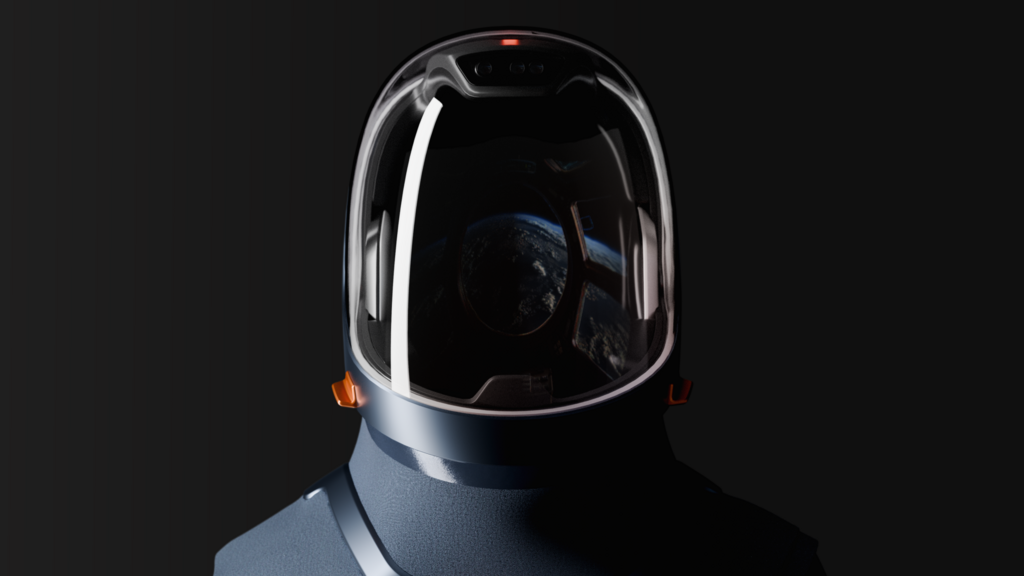
The prototype, known as the EuroSuit, is designed to protect astronauts inside spacecraft while making suits faster and easier to put on.
The project brings together the French National Centre for Space Studies (CNES), start-up Spartan Space, the space medicine institute Medes and sporting goods company Decathlon, which developed the textile and ergonomic elements.
Adenot reached the ISS on Saturday after a roughly 34-hour journey from Cape Canaveral in Florida aboard a SpaceX spacecraft. The capsule docked with the station, orbits about 400 kilometres above Earth, at 9:15pm Paris time.
“I am proud to bring France and Europe along on this incredible adventure that transcends borders. Count on me to share every step with you and bring a sparkle to the eyes of the French people,” Adenot said shortly afterwards.
Meet French astronaut Sophie Adenot
Two-minute challenge
The 43-year-old – the second French woman to reach space – will test the EuroSuit prototype in microgravity by putting it on alone against the clock in less than 120 seconds.
She will then handle small objects while wearing it, use a touchscreen tablet to assess grip and dexterity, then remove the suit before providing feedback.
Adenot did not wear the EuroSuit for launch because SpaceX provides the suit astronauts wear for take-off. Instead, the prototype will be tested in microgravity aboard the station during the mission.
The CNES is coordinating the microgravity testing for the European Space Agency (ESA) and Spartan Space is leading the work as prime contractor, while Medes is developing real-time monitoring equipment.
Alongside the suit work, Adenot will also test a system that uses artificial intelligence and augmented reality to help astronauts carry out their own medical ultrasounds.

From sportswear to spacesuits
For Decathlon, founded in 1976 and based in Villeneuve-d’Ascq in northern France, the project marks a step beyond sports and leisure equipment into astronaut clothing.
The company was a partner of the Paris Olympic Games, but this time it is working on equipment with far tighter technical constraints.
The teams focused in particular on helmets adapted to each astronaut’s body shape and on ways to adjust the suit’s length to match the way the human body stretches in microgravity.
“About 40 people worked on it,” Sébastien Haquet, head of Decathlon’s advanced innovation division and the project lead, told RFI.
“Engineers, designers, textile specialists, 3D printing experts and mechanical engineers. Passion took hold of everyone. When the project arrived on our desks, it was quite easy to recruit people. We even had to select a ‘dream team’.”
The partnership took shape from the end of 2023, Haquet said, when Spartan Space approached Decathlon. They then spent 2024 learning how to work together with CNES before moving into a more intensive design phase.
“From the end of January 2025, we launched a creative sprint, brought the talent together around a table and started designing. We are taking on space standards. We met that challenge by designing a suit in 10 months,” Haquet said.
He added that ESA does not have a design charter for astronaut suits, only a graphic charter, and that defining the aesthetic spirit of the suit was part of Decathlon’s mandate.
ESA is also working with Pierre Cardin on other projects, and NASA is working with Prada.
“It’s interesting to see Decathlon measure itself against long-established luxury brands, when it comes to the strength of its in-house designers,” Haquet said.

Under the suit, Adenot will wear a base layer described as a kind of “layer zero” pyjama made with a seamless process, using a single thread knitted from trousers to top. “You don’t give off any sweat smell with this garment as it absorbs them,” Haquet said.
Being able to suit up independently and shape a suit in under two minutes “does not exist today in the space sector”, he added. “Our suit isn’t yet functional.”
The wider question is how far ESA wants to go on autonomous human spaceflight.
“By relying on the exceptional expertise of our partners, we are preparing them, when the time comes, to provide this type of suit,” said Sébastien Barde, deputy head of human spaceflight exploration at CNES.
A joint statement from the project partners said the aim is “to imagine the protective and comfort equipment for the European astronauts of tomorrow”.
The suit is designed to improve comfort and speed, and above all to protect the astronaut during “critical phases”. Ground tests are planned through next year and for now the goal is to validate the design and ergonomics.
This article has been adapted from the original version in French by Igor Gauquelin
Mars’ “young” volcanoes were more complex than scientists once thought
Geological Society of America
image:
Visualization of the studied volcanic system (Pavonis fissure). Image courtesy Bartosz Pieterek.
view moreCredit: Image courtesy Bartosz Pieterek.
Contributed by Kea Giles, Managing Editor, Geology
Boulder, Colo., USA: What appears to be a single volcanic eruption is often the result of complex processes operating deep beneath the surface, where magma moves, evolves, and changes over long periods of time. To fully understand how volcanoes work, scientists study the volcanic products that erupt at the surface, which can reveal the hidden magmatic systems feeding volcanic activity.
New research published recently in Geology shows that this complexity also applies to Mars. Recent high-resolution morphological observations and mineral analyses provided from orbit revealed that some of the planet’s youngest volcanic systems experienced a far more intricate eruptive history than scientists once thought. Rather than forming during single, short-lived eruptions, these volcanoes were shaped by long-lasting and evolving magma systems beneath the martian surface.
An international research team, including scientists from Adam Mickiewicz University in Poznań, the School of Earth, Environment and Sustainability (SEES) at the University of Iowa, and the Lancaster Environment Centre, investigated a long-lived volcanic system located south of Pavonis Mons—one of Mars’ largest volcanoes. By combining detailed surface mapping with orbital mineral data, the team reconstructed the volcanic and magmatic evolution of this system in unprecedented detail.
“Our results show that even during Mars’ most recent volcanic period, magma systems beneath the surface remained active and complex,” says Bartosz Pieterek of Adam Mickiewicz University. “The volcano did not erupt just once—it evolved over time as conditions in the subsurface changed.”
The study shows that volcanic system developed through multiple eruptive phases, transitioning from early fissure-fed lava emplacement to later point-source activity that produced cone-forming vent. Although these lava flows appear different on the surface, they were supplied by the same underlying magma system. Each eruptive phase preserved a distinct mineral signature, allowing scientists to trace how the magma changed through time.
“These mineral differences tell us that the magma itself was evolving,” Pieterek explains. “This likely reflects changes in how deep the magma originated and how long it was stored beneath the surface before erupting.”
Because direct sampling of Martian volcanoes is currently not possible, studies like this provide rare insight into the structure and evolution of the planet’s interior. The findings highlight how powerful orbital observations can be in revealing the hidden complexity of volcanic systems—on Mars and on other rocky planets.
CITATION: Pieterek, B., et al., 2026, Spectral evidence for magmatic differentiation within a martian plumbing system, https://doi.org/10.1130/G53969.1
About the Geological Society of America
The Geological Society of America (GSA) is a global professional society with more than 18,000 members across over 100 countries. As a leading voice for the geosciences, GSA advances the understanding of Earth's dynamic processes and fosters collaboration among scientists, educators, and policymakers. GSA publishes Geology, the top-ranked “geology” journal, along with a diverse portfolio of scholarly journals, books, and conference proceedings—several of which rank among Amazon’s top 100 best-selling geology titles.
# # #
Journal
Geology
Article Title
Spectral evidence for magmatic differentiation within a Martian plumbing system
Chinese scientists develop distributed intercity quantum sensor network to expand dark matter research
Chinese Academy of Sciences Headquarters
image:
Constraints on axion dark matter by distributed intercity quantum sensors
view moreCredit: Image by USTC
Ordinary visible matter accounts for only about 4.9 percent of the universe, while dark matter makes up about 26.8 percent. Axions are hypothetical, extremely light particles—with field-like properties—that may help us understand dark matter. Researchers speculate that axion fields formed topological defects during phase transitions in the early universe. In turn, these defects are expected to interact with nuclear spins and induce signals as the Earth crosses them. Detecting these signals could thus be key to understanding dark matter; however, such signals are extremely weak and of short duration.
In order to identify such signals, researchers from the University of Science and Technology of China (USTC) of the Chinese Academy of Sciences and their collaborators developed the first intercity nuclear-spin-based quantum sensor network, thereby experimentally exceeding astrophysical observation constraints on dark matter associated with axion topological defects. The study was published in Nature on January 28.
In this experiment, the researchers developed a nuclear-spin quantum precision measurement that "stores" microsecond-scale axion-induced signals in a long-lived nuclear-spin coherent state, enabling a readout signal on the scale of minutes. Based on a self-developed quantum spin amplification technique, they enhanced the weak dark-matter signal by at least 100-fold and increased the sensitivity of spin rotation to about 1 μrad, about four orders of magnitude higher than previous techniques.
Furthermore, the researchers created the first intercity nuclear-spin based quantum sensor network to discriminate dark matter signals. This network consisted of five nuclear-spin quantum sensors geographically distributed across Hefei and Hangzhou with a baseline distance of approximately 320 km, which were synchronized using Global Positioning System (GPS) time.
Although no statistically significant topological-defect-crossing event was recorded during two months of observation, the researchers set the most stringent constraints on axion–nucleon coupling across an axion mass range from 10 peV to 0.2 μeV, achieving 4.1 × 10¹⁰ GeV at 84 peV.
This study provides the first laboratory experiment to exceed astrophysical constraints on axion topological-defect dark matter, opening up the possibility of examining unexplored parameter space. It provides a new way to probe topological-defect dark matter as well as a new direction for searches on broad beyond-Standard Model physics such as axion stars and axion strings.
Journal
Nature
Article Title
Constraints on axion dark matter by distributed intercity quantum sensors
Scientists capture the clearest view yet of a star collapsing into a black hole
In 2014, a NASA telescope observed as the infrared light emitted by a massive star in the Andromeda galaxy gradually grew brighter. The star glowed more intensely with infrared light for around three years before fading dramatically and disappearing, leaving behind a shell of dust. Although a telescope captured the phenomenon at the time, it took years for scientists to notice it.
Now, a research team led by Kishalay De, a Columbia astronomy professor, has an explanation of what they saw: It was a star collapsing and giving birth to a black hole—an event that astronomers have anticipated for decades, but have had limited convincing observational evidence for. The findings were published today in the journal Science.
The star appears to have undergone direct collapse, turning into a black hole without first exploding and becoming a supernova, long-believed to be a common way for stars to become black holes.
“This has probably been the most surprising discovery of my life,” De said. “The evidence of the disappearance of the star was lying in public archival data and nobody noticed for years until we picked it out.”
The star, a massive, hydrogen-depleted supergiant, named M31-2014-DS1, was in the Andromeda galaxy, which is the closest major galaxy to the Milky Way, and about 2.5 million light years from earth. When newly formed, the star was around 13 times the weight of the sun. At the time of its death, it was close to five times the mass of the sun., having shed most of its mass via powerful winds during its life.
“The dramatic and sustained fading of this star is very unusual, and suggests a supernova failed to occur, leading to the collapse of the star’s core directly into a black hole,” De said.
“Stars with this mass have long been assumed to always explode as supernovae,” De said. "The fact that it didn’t suggests that stars with the same mass may or may not successfully explode, possibly due to how gravity, gas pressure, and powerful shock waves interact in chaotic ways with each other inside the dying star.”
The manner in which the star turned into a black hole suggests that at the end of its life, its inner core was not pushed out in a normal supernova explosion and instead underwent a complete inward collapse.
The process of direct collapse may have been seen once before, in around 2010, in the galaxy NGC 6946, which is about 10 times further away than this star. But its exact nature has been unclear and debated, because it was 100 times fainter and there was not as high quality data about it.
“We've known that black holes must come from stars. With these two new events, we're getting to watch it happen, and are learning a huge amount about how that process works along the way,” said Morgan MacLeod, a lecturer on astronomy at Harvard, who was De’s co-author on the paper.
Black holes were first theorized more than 50 years ago, and today we know of dozens in our own galaxy and hundreds of such sources detected from gravitational wave observations in the distant universe. However, scientists still do not have any clear consensus on what stars turn into black holes and how that process plays out. This discovery provides the clearest insights into this and indicates that this kind of stellar collapse may happen more often than scientists had thought.
The team discovered the star by analyzing archival data from NASA’s NEOWISE mission. They used a prediction from the 1970s that theorized that when a star underwent direct collapse, it would leave behind a faint infrared glow caused by the dying gasp of the star shedding its outer layers and becoming enshrouded in dust.
They conducted the largest study of variable infrared sources ever done, tracking every star in the Milky Way and other local galaxies to look for these events, and eventually came across M31-2014-DS1. Further analysis showed that the star fit their predictions perfectly.
“Unlike finding supernovae which is easy because the supernova outshines its entire galaxy for a few weeks, finding individual stars that disappear without producing an explosion is remarkably difficult,” De said.
“It comes as a shock to know that a massive star basically disappeared (and died) without an explosion and nobody noticed it for more than five years,” De said. “It really impacts our understanding of the inventory of massive stellar deaths in the universe. It says that these things may be quietly happening out there and easily going unnoticed.”
Journal
Science
Method of Research
Observational study
Article Title
Disappearance of a massive star in the Andromeda Galaxy due to formation of a black hole
Article Publication Date
12-Feb-2026
New method could reveal hidden supermassive black hole binaries
University of Oxford
image:
Gravitationally lensed starlight (orange) by a supermassive black hole binary. The Einstein ring is shown in blue. Image credit: Image created by Hanxi Wang.
view moreCredit: Hanxi Wang
Researchers at Oxford University and the Max Planck Institute for Gravitational Physics (Albert Einstein Institute) are proposing a new way to observe tightly bound supermassive black hole binaries. Formed naturally when galaxies merge, only widely separated systems have confidently been observed to date. In a paper published today in Physical Review Letters, the researchers suggest hunting down the hidden systems by searching for repeating flashes of light from individual stars lying behind the black holes as they are temporarily magnified by gravitational lensing as the binary orbits.
Supermassive black holes reside at the centres of most galaxies. When two galaxies collide and merge, their central black holes eventually form a bound pair, known as a supermassive black hole binary. These systems play a crucial role in galaxy evolution and are among the most powerful sources of gravitational waves in the Universe. While future space-based gravitational-wave observatories will be able to probe such binaries directly, researchers are now showing that they may already be detectable using existing and upcoming electromagnetic surveys.
‘Supermassive black holes act as natural telescopes,’ said Dr Miguel Zumalacárregui from the Max Planck Institute for Gravitational Physics. ‘Because of their enormous mass and compact size, they strongly bend passing light. Starlight from the same host galaxy can be focused into extraordinarily bright images, a phenomenon known as gravitational lensing.’
For a single supermassive black hole, extreme lensing occurs only when a star lies almost exactly along the line of sight. In contrast, a supermassive black hole binary acts as a pair of lenses. This produces a diamond-shaped structure, known as a caustic curve, along which stars can experience dramatic magnification. In theory, the magnification becomes infinite for a point-like source; in practice, it is limited by the finite size of the star.
‘The chances of starlight being hugely amplified increase enormously for a binary compared to a single black hole,’ said Professor Bence Kocsis from the University of Oxford’s Department of Physics and a co-author of the study.
A further key difference is that black hole binaries are not static. The pair orbits under gravity, and according to Einstein’s theory of general relativity, the system slowly loses energy by emitting gravitational waves. As a result, the binary separation shrinks over time and the orbit gradually speeds up.
Graduate student Hanxi Wang is in Professor Kocsis’ group and led the study: ‘As the binary moves, the caustic curve rotates and changes shape, sweeping across a large volume of stars behind it. If a bright star lies within this region, it can produce an extraordinarily bright flash each time the caustic passes over it. This leads to repeating bursts of starlight, which provide a clear and distinctive signature of a supermassive black hole binary.’
The researchers show that the timing and brightness of these bursts are not random. As the binary inspirals, gravitational-wave emission subtly alters the caustic structure, imprinting a characteristic modulation in both the frequency and peak brightness of the flashes. By measuring these patterns, astronomers could infer key properties of the underlying black hole binary, including its masses and orbital evolution.
With powerful wide-field surveys coming online such as the Vera C Rubin Observatory and the Nancy Grace Roman Space Telescope, researchers are optimistic that such repeating lensing bursts could be observed in coming years.
‘The prospect of identifying inspiraling supermassive black hole binaries years before future space-based gravitational wave detectors come online is extremely exciting,’ concludes Professor Kocsis. ‘It opens the door to true multi-messenger studies of black holes, allowing us to test gravity and black hole physics in entirely new ways.’
Notes to editors:
For media enquiries and interview requests, contact Hanxi Wang hanxi.wang@physics.ox.ac.uk
The study ‘Black holes as telescopes: Discovering supermassive binaries through quasi-periodic lensed starlight’ has been published today (12 February) in Physical Review Letters
DOI: 10.1103/1sfl-87t4
About the University of Oxford
Oxford University has been placed number 1 in the Times Higher Education World University Rankings for the tenth year running, and number 3 in the QS World Rankings 2024. At the heart of this success are the twin-pillars of our ground-breaking research and innovation and our distinctive educational offer.
Oxford is world-famous for research and teaching excellence and home to some of the most talented people from across the globe. Our work helps the lives of millions, solving real-world problems through a huge network of partnerships and collaborations. The breadth and interdisciplinary nature of our research alongside our personalised approach to teaching sparks imaginative and inventive insights and solutions.
Through its research commercialisation arm, Oxford University Innovation, Oxford is the highest university patent filer in the UK and is ranked first in the UK for university spinouts, having created more than 300 new companies since 1988. Over a third of these companies have been created in the past five years. The university is a catalyst for prosperity in Oxfordshire and the United Kingdom, contributing around £16.9 billion to the UK economy in 2021/22, and supports more than 90,400 full time jobs.
Journal
Physical Review Letters
Article Title
Black holes as telescopes: Discovering supermassive binaries through quasi-periodic lensed starlight
Article Publication Date
12-Feb-2026
VLITE marks 11 years of listening to a changing radio sky
image:
The Very Large Array Low-band Ionosphere and Transient Experiment (VLITE) team, Namir Kassim, left, Emil Polisensky, Simona Giacintucci, Joe Helmboldt and Tracy Clarke, pose for a group photo at the U.S. Naval Research Laboratory in Washington, Feb. 10, 2026. VLITE is marking its 11th year of operation, recording the low-frequency radio sky across an entire solar cycle and providing Naval Research Laboratory scientists with long-term ionospheric data. (U.S. Navy photo by Sarah Peterson)
view moreCredit: Sarah Peterson
For 11 years, the VLA Low-band Ionosphere and Transient Experiment, known as VLITE, has quietly recorded the low-frequency radio sky every time the National Science Foundation’s Very Large Array (VLA) observes.
A collaboration between the U.S. Naval Research Laboratory (NRL) and the National Radio Astronomy Observatory (NRAO), VLITE operates alongside the VLA without interrupting its primary science mission. While astronomers study distant galaxies and black holes, VLITE collects a parallel stream of low-frequency data, building one of the most extensive continuous records of the dynamic radio sky.
The data has practical implications. Variations in space weather can affect satellite communications, GPS, radar and long-distance radio systems.
Originally conceived as an opportunistic add-on, VLITE has become a sustained observing program with both scientific and operational value.
“VLITE was designed to take advantage of opportunity,” said Tracy Clarke, Ph.D., an NRL research astronomer and VLITE lead. “We thought it might last a few years, but eleven years later it’s still ongoing. The longer it ran the more valuable it became. Time reveals scientific discoveries that you can’t anticipate.”
Monitoring the Ionosphere Across a Solar Cycle
Because VLITE observes at low radio frequencies, its signals are shaped both by distant astrophysical sources and by Earth’s ionosphere, the charged upper atmosphere that affects radio propagation.
Over 11 years, VLITE has recorded data spanning an entire solar cycle, capturing periods of both high and low solar activity.
“There are disturbances that occur when the sun is quiet and others that occur when it’s active,” said Joe Helmboldt, Ph.D., an ionospheric scientist in NRL’s Remote Sensing Division. “If you want reliable statistics, you have to observe across that full range of conditions.”
That extended coverage has enabled researchers to move beyond isolated case studies.
“We’ve gone from studying single events to identifying the physical processes that generate those disturbances,” Helmboldt said. “Short-term experiments show what’s happening at a moment in time. VLITE shows how the ionosphere behaves over years.”
Precision Sources and Navigation Potential
VLITE also monitors millisecond pulsars, rapidly rotating neutron stars that emit extremely stable radio pulses.
“Millisecond pulsars are among the most precise natural timing sources known,” said Emil Polisensky, NRL Ph.D., who supports VLITE’s transient detection and cataloging efforts. “Long-term monitoring helps us better understand their stability and potential applications.”
Because some pulsars are more stable than atomic clocks, they can serve as natural navigation beacons.
“You can use them analogously to GPS satellites,” Polisensky said. “In principle, a spacecraft could navigate around Earth, the Moon or even deeper into the solar system using pulsars.”
As the number of VLITE antennas expands from 18 to 23 by the end of this year, the system’s sensitivity will increase, improving its ability to detect rare and faint objects.
“Greater sensitivity means we can find more exotic sources,” Polisensky said.
Turning Signals into Science
Each time VLITE collects data, Wendy Peters’ computer code goes to work. She is an NRL data processing and imaging pipeline developer. The custom code she developed automatically processes incoming signals, calibrates them, and prepares them for archiving.
Within about 48 hours, the data are stored and made available to researchers at a pace that requires constant monitoring as observations continue around the clock.
“The system doesn’t stop,” Peters said. “As new data comes in, the code has to keep up processing, organizing, and ensuring everything is accessible and reliable.”
Over 11 years, that steady flow has grown into a vast, searchable archive, sustained through continuous refinement and disciplined software engineering.
A Model of Efficient Collaboration
VLITE operates through a long-running partnership between NRL and NRAO. While the VLA conducts its primary observations, VLITE collects low-frequency data simultaneously, an approach known as commensal observing.
“The beauty of commensal observing is efficiency,” Clarke said. “We’re expanding scientific return from existing infrastructure. We’ve maintained it and invested in it. The VLITE approach is being evaluated internationally as a framework for similar systems.”
Over more than a decade, VLITE has accumulated tens of thousands of hours of observing time and repeatedly imaged nearly the entire sky visible to the VLA. The resulting archive includes millions of processed data products that support studies of astrophysical transients, ionospheric structure and celestial reference frame source stability.
Training the Next Generation
VLITE has also provided research opportunities for students, including a Naval Research Enterprise Internship Program participant who contributed to the discovery of a millisecond pulsar.
“As a scientist, you want to pass on what you’ve learned,” Peters said. “Helping students experience discovery firsthand is one of the most rewarding parts of this work.”
Students working with VLITE gain experience analyzing large datasets, writing code and conducting original research.
Looking Ahead
The VLITE team is now developing polarization imaging capabilities, which would enhance detection of certain transient events and pulsars.
“There are many transient phenomena that are highly polarized,” Polisensky said. “Polarization imaging would make searching for new millisecond pulsars significantly more effective.”
VLITE demonstrates how sustained engineering and collaboration can expand scientific insight without competing for observing time.
“We’ve built something that continues to deliver value year after year,” Helmboldt said. “That consistency is what makes it powerful.”
After 11 years VLITE continues to listen, capturing a dynamic universe in motion and reinforcing the value of long-term vision, sustained collaboration and quiet innovation.
“We’ve got a small team, but they are a remarkable group of people that have been able to make this a success.” said Clarke, “I’m really proud of that.”
About the U.S. Naval Research Laboratory
NRL is a scientific and engineering command dedicated to research that drives innovative advances for the U.S. Navy and Marine Corps from the seafloor to space and in the information domain. NRL, located in Washington, D.C. with major field sites in Stennis Space Center, Mississippi; Key West, Florida; Monterey, California, and employs approximately 3,000 civilian scientists, engineers and support personnel.
NRL offers several mechanisms for collaborating with the broader scientific community, within and outside of the Federal government. These include Cooperative Research and Development Agreements (CRADAs), LP-CRADAs, Educational Partnership Agreements, agreements under the authority of 10 USC 4892, licensing agreements, FAR contracts, and other applicable agreements.
For more information, contact NRL Corporate Communications at NRLPAO@us.navy.mil.
Method of Research
Observational study
Two component self-interacting dark matter model explains both dwarf galaxy cores and strong gravitational lensing puzzles
image:
Projected dark matter density distribution and the induced strong lensing critical curves in a two-component self-interacting dark matter model.
view moreCredit: ©Science China Press
Dark matter is one of the most important and most mysterious questions in modern astronomy. Although dark matter cannot be seen or touched, it profoundly influences the formation and evolution of galaxies through gravity. For a long time, scientists have widely adopted the “cold dark matter” model to describe how cosmic structures form. However, as observational precision has improved, a number of small-scale phenomena have emerged that do not fully align with the predictions of this classical framework.
For example, in some dwarf galaxies, dark matter appears unusually “diffuse,” with a relatively low central density. In contrast, observations of strong gravitational lensing have revealed extremely dense dark matter substructures whose compactness far exceeds what traditional models would predict. These two types of phenomena have long coexisted, yet they are difficult to explain with a single physical mechanism.
Recently, a new study by physicists from Purple Mountain Observatory, CAS, has offered an intriguing answer: dark matter may not be a single component, but instead consist of particles with different masses.
The researchers propose a “two-component self-interacting dark matter” model. In this scenario, dark matter includes at least two types of particles—one heavier and one lighter—which interact not only through gravity but can also undergo direct collisions. It is this additional interaction that gives rise to a process known as “mass segregation.”
Put simply, over time, heavier dark matter particles tend to sink toward the centers of galaxies, while lighter particles preferentially diffuse outward. This process is analogous to what happens in star clusters, where massive stars migrate inward and low-mass stars move to larger radii.
Using high-resolution numerical simulations and detailed theoretical modeling, the research team found that this mass-segregation effect can naturally reproduce a wide range of observational results. In dwarf galaxies, it leads to dark-matter cores with low central densities, consistent with the latest observations of galaxy clustering. In more complex and denser environments, some dark matter halos gradually become more compact, forming high-density structures capable of producing strong gravitational lensing effects. More importantly, the model can significantly enhance the probability of small-scale gravitational lensing. Mass segregation increases the concentration of dark matter in key regions, making dark-matter substructures more effective at “magnifying” the light from background galaxies. This helps alleviate the long-standing problem that observations seem to show too many small-scale strong lensing events.
The researchers emphasize that their work suggests several seemingly contradicting small-scale cosmological anomalies may, in fact, point to the same conclusion: the internal properties of dark matter are richer and more complex than previously assumed.
As future astronomical surveys and gravitational lensing observations reach ever higher precision, scientists may be able to use these “cosmic magnifying glasses” to further test whether dark matter is truly composed of multiple components. Perhaps in the not-too-distant future, our understanding of dark matter will undergo a pivotal transformation.
This study represents the second work by the Purple Mountain Observatory research team on two-component self-interacting dark matter and was recently published in Science Bulletin. In an earlier study, the team systematically investigated the impact of mass segregation on the diversity of core density distributions in dwarf galaxies, with the results published in Physical Review D. The authors of the paper include: Daneng Yang, Yi-Zhong Fan, Siyuan Hou, and Yue-Lin Sming Tsai.
Purple Mountain Observatory of the Chinese Academy of Sciences is one of China’s leading institutions for dark matter research. It undertakes national research missions in the field of indirect dark matter detection based on the DAMPE (Wukong) satellite and has long been engaged in astrophysics and cosmology research, with significant impact in areas such as dark matter and galaxy evolution.
Journal
Science Bulletin
