Wednesday, February 25, 2026


Europe’s climate policy turning into lobbyists’ playground, watchdog says
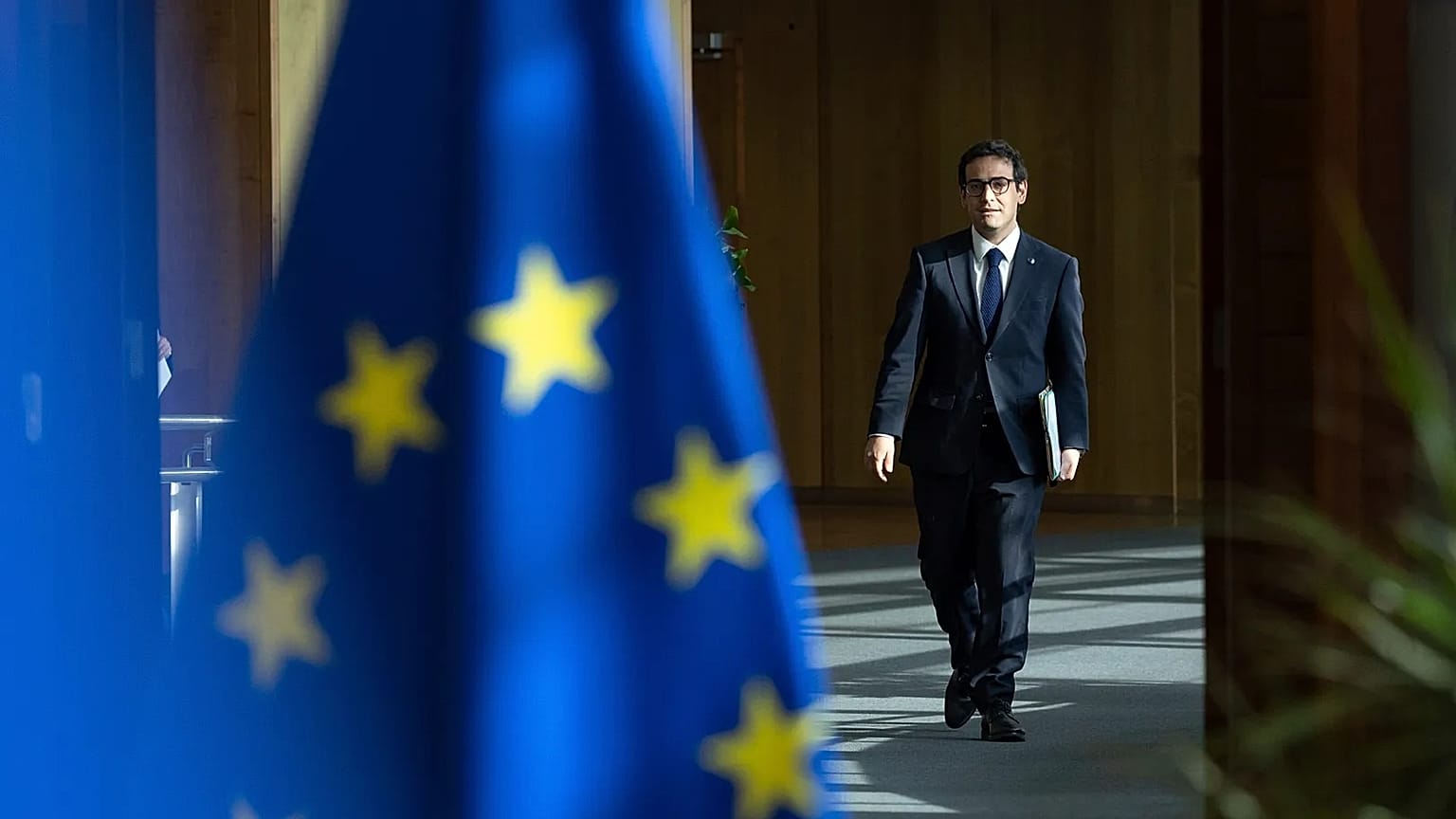
European Commissioner for Industrial Strategy Stephane Séjourné arrives for the weekly EU College of Commissioners meeting at EU headquarters in Brussels, May 2025.
Copyright AP Photo / Omar Havana

By Marta Pacheco
Published on 

New research reveals that the EU’s Clean Industrial Deal has been transformed into a corporate-driven policy project dominated by heavy industry lobbying, resulting in a shift away from real decarbonisation toward deregulation and weakened climate rules.

The European Union's flagship initiative to cut pollution from heavy industry has hit its first birthday, but a new watchdog study claims the bloc's ambition has caved in to the biggest polluters with more than 750 meetings between lobbyists and EU officials registered in just 12 months.

The investigation by the Corporate Europe Observatory (CEO), covering the period from 26 February 2025 until 3 February 2026, shows that the EU's Clean Industrial Deal has been captured by heavy industry lobbying and reshaped into a subsidy machine for Europe’s biggest polluters.

The research couldn't be more timely, as corporate intervention in EU policymaking has already achieved tangible results. CO2 emissions requirements for cars and vans have been watered down and a ban on combustion engines has been delayed.

Environmental obligations have also been softened, and the EU's carbon border tax has been simplified and diluted, with further changes likely. The same goes for the bloc's headline climate policy, the EU carbon market, which is slated for review by the summer and already under attack by the industry.

"A year later, it is clearer than ever that in reality it is more of a Dirty Industrial Deal," reads the CEO's research. "It is championing the weakening of regulations (known as ‘simplification’) that protect the public and the environment, while creating a myriad of less than ‘simple’ mechanisms to throw money at some of the EU’s most polluting companies."

Séjourné and Hoekstra held most meetings

More than three lobbying meetings a day took place across 16 European Commission departments, the research reveals, with 90% involving corporate interests and only 8% involving civil society.

The most lobbied power centre was the office of Industrial Market Commissioner Stéphane Séjourné, with 131 meetings in a year, followed by the office of Climate Action Commissioner Wopke Hoekstra, with 60 meetings.

By contrast, the Commissioner for a Clean and Competitive Transition, Teresa Ribera, barely features, with only 20 meetings – a stark contrast with Séjourné, who, together with her, is responsible for delivering the bloc's effort to restore Europe's industry to the global forefront in the face of fierce competition from China and the United States.

The CEO's investigation is based on public records, yet the Brussels-based watchdog noted that these figures are "merely the tip of the iceberg," as lower-level staff, who are often the target of lobbying operations, are not obliged to disclose their meetings.

"That’s particularly worrying, given how aggressively business has been lobbying to weaken protections for workers and the environment, and is sidelining those who are supposed to defend those interests," CEO writes, adding the findings reflect the broader "pro-business bias that has been baked" into this Commission.

Brussels-based trade associations representing the metals and mining sector, the steel industry, nuclear energy and car giants dominate the meetings with EU officials, CEO research reveals.

Leading the charge is the steel lobby, on behalf of Europe's industrial giants ThyssenKrupp and ArcelorMittal, with trade association EUROFER topping the list with 39 meetings. Next in the ranking is the French multinational electric utility and nuclear giant Électricité de France (EDF).

And despite ranking only third, organisations from the automotive sector had the biggest lobbying firepower, employing 190 lobbyists and declaring a combined yearly lobbying budget of almost €15 million.

National politics shaping EU policies

The findings reveal that corporate influence in Brussels goes beyond corporate capture and instead amounts to strategic national industrial power politics, with France winning the race.

"The Clean Industrial Deal, and in particular its crowning jewel, the Industrial Accelerator Act, has mirrored a distinctly French economic doctrine," CEO researcher and campaigner Pascoe Sabido told Euronews: "state-backed heavy industry, deregulation in the name of “competitiveness”, and public finance used as an industrial weapon. Séjourné, with substantial industry support, has succeeded in scaling this up to the European level."

The French nuclear giant EDF has been one of the most active lobbyists shaping the bloc's industrial deal, with 12 meetings.

Marcin Korolec, Director at the Green Economy Institute and former Polish climate Minister, said industrial policy is "clearly top-tier" in the EU.

"Leaders are actively courting business and positioning themselves as part of the solution. Strong focus on ultra-short-term instruments in order to step up the pace," Krolec said, noting the "clear differences" at national level.

"France is pushing the EU debt as an investment booster, and Germany is focusing on red tape and the Emissions Trading System (the EU's carbon market). A clear absence of Poland and the entire Central and Eastern Europe region could make the choice prevailing or at least add a new perspective," said Korolec.

"This matters for shaping the narrative ahead of the EU's multi-annual budget for 2028–2034 and public procurement framework revision,” the Polish national added.


'Groundbreaking' model can calculate true impact of climate change and it’s bad news for Europe

A woman holds an umbrella to shelter from the sun, as she walks on the south bank of river Thames, in London, Monday, July 18, 2022.
Copyright Copyright 2022 The Associated Press. All rights reserved


By Liam Gilliver
Published on 

Researchers have created a new mathematical solution to analyse how emission-intensive actors are responsible for increasing climate damage.

A “groundbreaking” study has lifted the lid on just how much human-made climate change is impacting extreme weather across Europe.

Climate researcher Gottfried Kirchengast and his team at the University of Graz in Austria have developed a new method for computing the hazards from extreme events such as heat waves, floods and droughts.

Using a new mathematical solution, the model can be used to compute the frequency, duration, intensity, spatial extent and other variables of extreme events. This allows researchers to analyse the extent to which emission-intensive actors such as states or companies are responsible for increasing climate damages and risks.

“If suitable long-term climate data are available, the development of climate hazard metrics for extremes of interest can be tracked year by year and decade by decade – in European countries and any other region worldwide,” says Kirchengast.

How climate change is baking Europe

Researchers used the new method to investigate changes in extreme heat events in Austria and across Europe, using datasets of daily maximum temperatures from 1961 to 2024.

The threshold for “extreme” was taken as the temperature at each location that exceeded the daily values in the period from 1961 to 1990 by one per cent. For Austria, this was 30°C, in southern Spain it was over 35°C and in Finland it was around 25°C.

The study, published in the journal Weather and Climate Extremes, found that the total extremity of heat in Austria and most regions of Central and Southern Europe has increased about tenfold in the current climate period from 2010-2024 compared to 1961-1990

“This massive increase in the total extremity metric goes far beyond its natural variability and shows the influence of human-made climate change with a clarity that even I as a climate researcher have never seen before,” says Kirchengast.

The cost of extreme weather

Thousands of deaths across Europe last summer were attributed to extreme heat, as temperatures soared to 40℃ across large parts of the continent and pushed several countries into drought.

Researchers at Imperial College London and the London School of Hygiene & Tropical Medicine looked at 854 European cities and found that climate change was responsible for 68 per cent of the 24,400 estimated heat deaths during this period, having raised temperatures by up to 3.6°C.

2025’s extreme summer weather also sparked short-term economic losses of at least €43 billion, with total costs slated to hit a staggering €126 billion by 2029.

A study published back in September, led by Dr Sehrish Usman at the University of Mannheim in collaboration with European Central Bank (ECB) economists, found that heatwaves, droughts and floods affected a quarter of all EU regions during the 2025 summer.

The immediate losses amount to 0.26 per cent of the EU’s economic output in 2024, but the study’s authors stress that these estimates are likely conservative as they don’t include compound impacts when extreme events occur simultaneously, such as heatwaves and droughts.

 

‘Everyone should buckle up’: Scientists change El Nino labelling to keep up with temperature spike

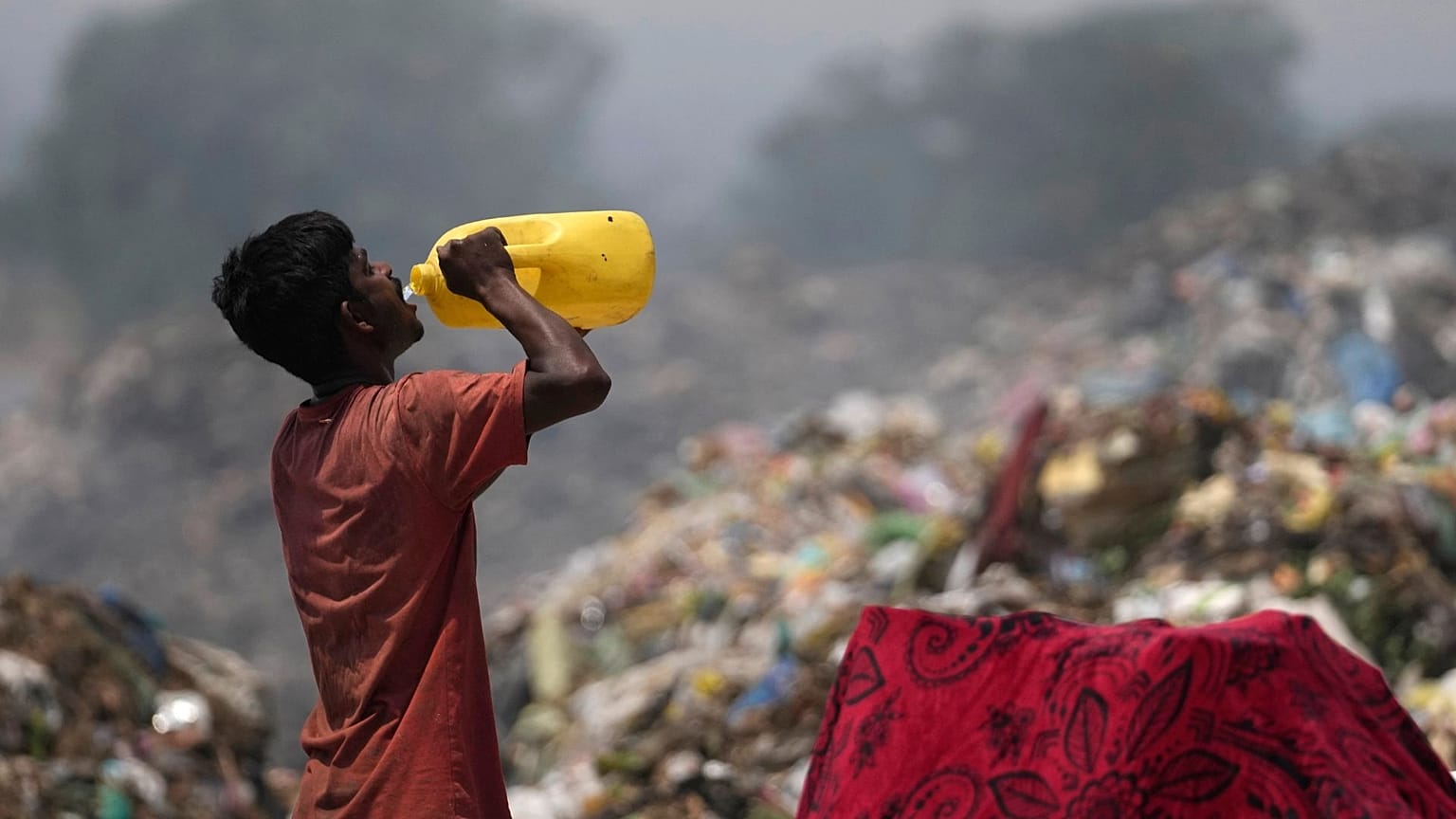
FILE - A waste picker drinks water while working during a heat wave at a garbage dump on the outskirts of Jammu, India, Wednesday, June 19, 2024.
Copyright AP Photo/Channi Anand, File

By Seth Borenstein with AP
Published on 

Scientists have had to update how they label El Nino and La Nina because of rapid weather changes caused by global warming.

The natural El Nino cycle, which warps weather worldwide, is both adding to and shaped by a warming world, meteorologists say.

A new study calculates that an unusual recent twist in the warming and cooling cycle that includes El Nino and its counterpart La Nina can help explain the scientific mystery of why Earth's already rising temperature spiked to a new level over the past three years.

Separately, scientists have had to update how they label El Nino and La Nina because of rapid weather changes caused by global warming. Increasingly hot waters globally have caused the US National Oceanic and Atmospheric Administration this month to alter how it calculates when the weather pattern has flipped into a new cycle. It's likely to mean that more events will be considered La Nina and fewer qualify as an El Nino for warming tropical waters.

Earth's average monthly temperature took a noticeable jump up from the long-term upward trend connected to human-caused climate change in early 2023, and that increase continued through 2025. Scientists have many theories about what's happening, including an acceleration of greenhouse gas warming, a reduction in particle pollution from ships, an underwater volcano eruption and increased solar output.

In a new study in Nature Geoscience this month, Japanese researchers look at how the difference in energy coming to and leaving the planet – called Earth's energy imbalance – increased in 2022. An increased imbalance, or more trapped heat, then leads to warmer temperatures, scientists say. The researchers calculate that about three-quarters of the change in Earth's energy imbalance can be attributed to the combination of long-term human-caused climate change and a shift from a three-year cooling La Nina cycle to a warm El Nino one.

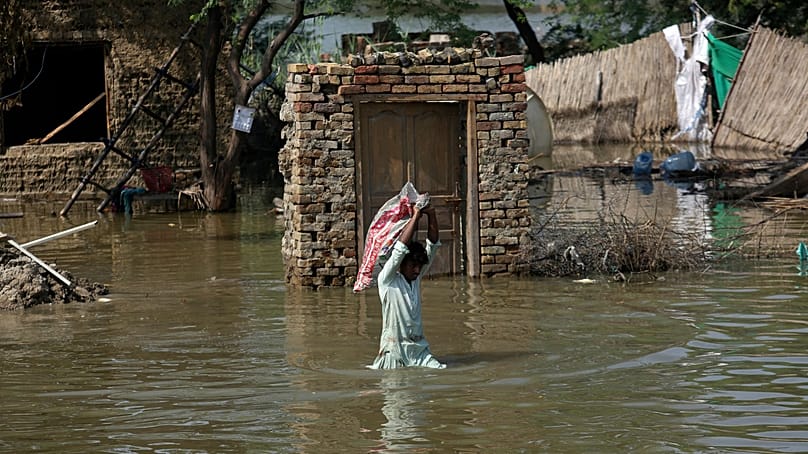
A man carries usable belongings salvaged from his flood-hit home across a flooded area in Shikarpur district of Sindh province, of Pakistan, Wednesday, Aug. 31, 2022. AP Photo/Fareed Khan, File

What's El Nino vs La Nina

El Nino is a cyclical and natural warming of patches of the equatorial Pacific that then alters the world's weather patterns, while La Nina is marked by cooler than average waters.

Both shift precipitation and temperature patterns, but in different ways. El Ninos tend to increase global temperatures and La Ninas depress the long-term rise.

La Ninas tend to cause more damage in the United States because of increased hurricane activity and drought, studies have shown.

Why weather cycles switch from warm to cool

From 2020 to 2023, Earth had an unusual 'triple dip' La Nina without an El Nino in between. In a La Nina, warm water sticks to a deeper depth, resulting in a cooler surface. And that reduces how much energy goes out into space, says study co-author Yu Kosaka, a climate scientist at the University of Tokyo.

She compares it to what happens when people have fevers.

“If our body's temperature is high then it tends to emit its energy out, and the Earth has the same situation happening. And as the temperatures increase, it acts to emit more energy outward. And for three-year La Nina, it’s opposite,” Kosaka says.

So more energy – which becomes heat – is trapped on Earth, she says. La Ninas more typically correspond to a one- or two-year buildup of extra energy imbalance, but this time it was longer so the difference was more noticeable and included hotter temperatures, Kosaka says.

“When there is a transition from La Nina to El Nino, it's like the lid is popped off,” releasing the heat, explains former NOAA meteorologist Tom Di Liberto, who's now with Climate Central.

About 23 per cent of the energy imbalance driving the recent higher temperatures comes from this unusually long La Nina pattern, with slightly more than half coming from gases from the burning of coal, oil and gas, the study authors say. The rest can be other factors.

Scientist Jennifer Francis of the Woodwell Climate Research Center, which wasn't involved in the study, says the research makes sense and explains an increase in energy imbalance that some scientists were attributing to accelerated warming.

Changing how El Ninos and La Ninas are labelled

For 75 years when meteorologists calculated El Ninos and La Ninas, it was based on the difference in temperature in three tropical Pacific regions compared to normal. An El Nino was 0.5 degrees Celsius warmer than normal and La Nina was cooler than normal by the same amount.

The trouble in a warming world is what's considered normal keeps shifting.

Until now, NOAA used the 30-year average as normal. It updated the 30-year average every decade, which is how often it updates most climate and weather measurements. Then the water warmed so much for El Ninos and La Ninas that NOAA updated its definition of normal every five years, but that wasn't enough either, says Nat Johnson, a meteorologist at NOAA's Geophysical Fluid Dynamics Lab.

So NOAA came up with an El Nino index that's relative, starting this month. This new index compares temperatures to the rest of Earth's tropics. Recently that difference between the old and new methods has been as much as half a degree Celsius, and “that's enough to have an impact,” Johnson says.

That's because what really matters with El Ninos and La Ninas is the way the waters interact with the atmosphere. And recently the interactions didn't match the old labelling, but they do match the new method, Johnson says.

This will likely mean a few more La Ninas and fewer El Ninos than in the old system, Johnson says.

Here comes another El Nino

NOAA's forecast is for an El Nino to develop later this year in the late summer or autumn. If it comes early enough, it could dampen Atlantic hurricane activity. But it would also mean warmer global temperatures in 2027.

“When El Nino develops, we’re likely to set a new global temperature record,” Woodwell's Francis says in an email. “'Normal' was left in the dust decades ago. And with this much heat in the system, everyone should buckle up for the extreme weather it will fuel.”


Is social media addictive by design and can you beat the algorithm?

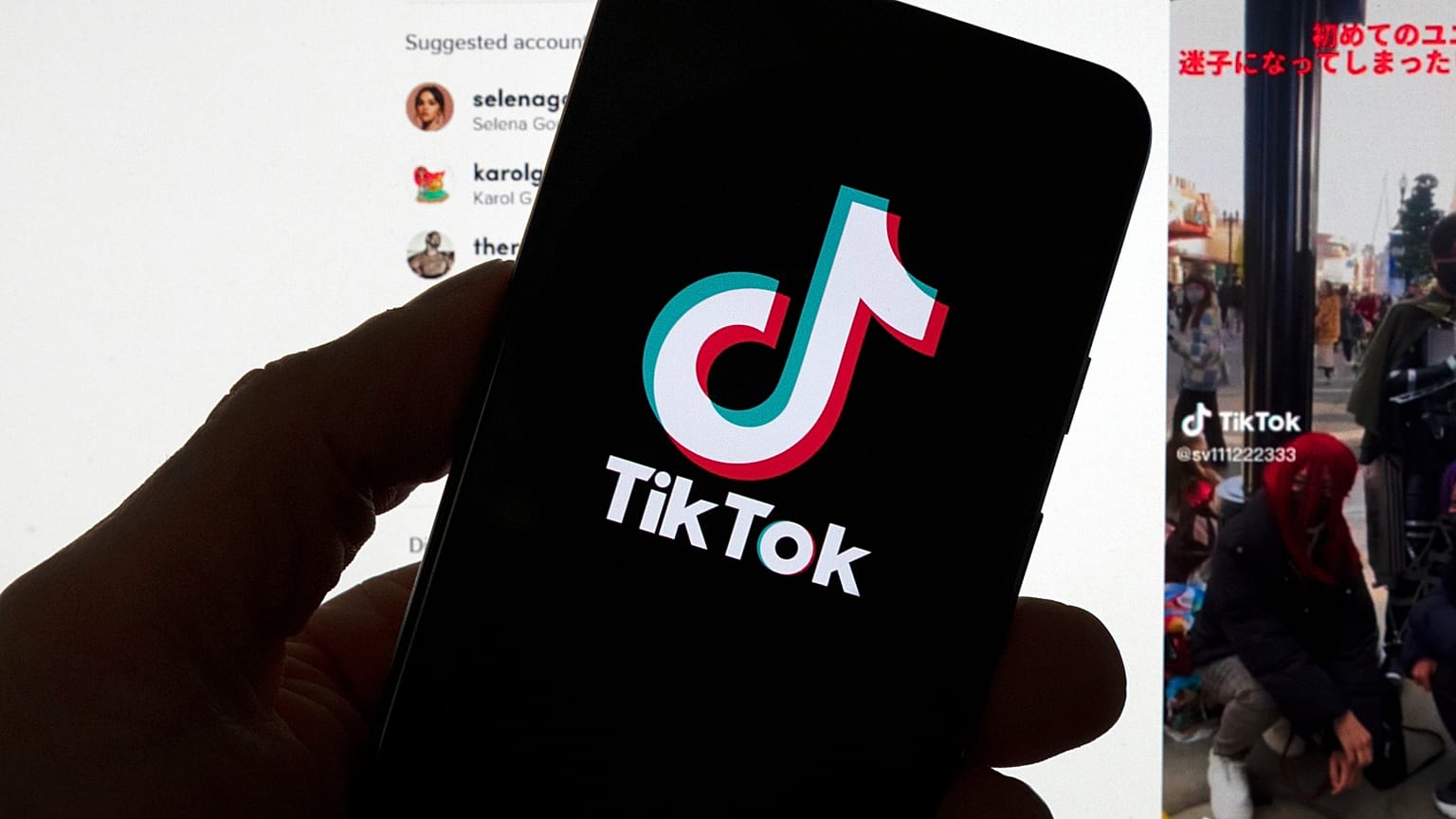
FILE - The TikTok logo is seen on a mobile phone in front of a computer screen which displays the TikTok home screen, Saturday, March 18, 2023, in Boston
Copyright AP Photo/Michael Dwyer, File


By Anna Desmarais
Published on 


Social media features such as infinite scroll and personalised feeds can drive compulsive use. Experts argue that Big Tech should change its business models for meaningful change.

A recent European Commission ruling that TikTok’s “addictive design” breaches EU law has reignited the debate over whether social media is truly addictive.

Infinite scroll, autoplay, notifications, and a personalised feed were flagged by the Commission as potentially harmful to users’ mental and physical well-being.

Across the Atlantic, a California social media “addiction” trial is evaluating similar claims against Google and Meta platforms.

The plaintiff, known as KGM, and her lawyers argue that apps such as Instagram are deliberately engineered to keep young users hooked.

Are these platforms designed to be addictive, and if so, what can be done to beat them?

Is social media addictive?

Social media platforms work similarly to slot machines as they deliver unpredictable rewards, offer rapid feedback, such as comments and likes, said Natasha Schull, associate professor of media, culture and communication at New York University.

Design features on social media platforms, such as the “like” button, “For You” pages that recommend new content and “infinite scroll,” where the feed never ends, can also lead to compulsive use of the platforms, said Christian Montag, professor of cognitive and brain sciences at the University of Macau in China.

“Getting a like feels good,” Montag told Euronews Next. “Then they want to feel good again, so they post something again, [which] can lead to habit formation.”

TikTok adds autoplay and short-form videos into the mix, which creates an even faster reward cycle.

“The human brain responds strongly to novelty, and here something new is happening all 15 seconds,” Montag said. “So even if the current video snippet is not great, I’m always already in the expectation mode that the next one at least could be.”

The European Commission warned in its decision that users can slip into “autopilot mode,” on platforms like TikTok, where they passively consume content rather than actively engaging with it, said Daria Kuss, programme leader at Nottingham Trent University in the United Kingdom.

This type of social media consumption has been linked with “poorer mental health, including addiction, upward social comparison, fear of missing out, social isolation and loneliness,” Kuss said.

TikTok rejected the Commission’s characterisation of its platform as addictive, calling its findings “categorically false.” The company said it offers screen time controls and other tools for people to regulate how much time they spend online.

Change the business model, change the behaviour

Experts argue that social media companies measure success as the amount of time spent on the device, which then drives advertising revenue. Both Montag and Schull said that the model inherently rewards maximising engagement.

“If you ask [social media companies], are you intentionally designing to addict people, they’d say absolutely not, we’re intentionally designing to optimise engagement,” Schull said, noting that the companies likely did not design their products to create addictions.

Montag and Schull suggest that platforms shift to subscription models. If users paid a small fee, platforms would no longer depend on advertising and personal data tracking for profit, which means some of those features could be removed.

Montag’s research found that people are not willing to pay for social media subscriptions because they are not used to the idea. However, once his participants learned how that model could reduce screen time or hire fact-checkers to fight misinformation, he said they were more likely to pay.

Another possibility is directing public funding that goes to legacy media organisations to also fund alternative platforms, Montag added.

Some public bodies have already tried that. In 2022, the European Data Protection Supervisor (EDPS) launched EU Voice and EU Video, two European social media channels for EU institutions. The platforms shut down in 2024 due to a lack of funding.

The Public Spaces Incubator, a working group of public broadcasters from Belgium, Germany, Switzerland, the United States, Canada, and Australia, said they developed over 100 prototypes to improve online conversation.

One example from Canada’s Broadcasting Corporation (CBC) shows a “public square view,” embedded in a live video feed. The feature allows users to watch together and comment in real time, offering more nuanced opinion options such as “respectfully disagree,” “made me think,” or “changed my mind.” It is immediately unclear which tools, if any, have been deployed or whether they could replace social media.

Schull said that meaningful change for the Big Tech social media platforms may only come through legal action.

“If you'reyoure a designer and you'reyoure working for a company, your purpose is to increase engagement … and the only way I think that that is going to be stopped is if there are just cold and hard limits put on it, limits on time and access and age,” she said.

Are there alternatives?

The Fediverse, a decentralised social media network where independent platforms connect users without adverts, tracking or data sharing, offers alternatives to Big Tech’s platforms.

These sites include Mastodon, a replacement for X (formerly Twitter), Pixelfed, an Instagram-like picture-sharing app, and PeerTube, a video app similar to YouTube.

As of 24 February, there are 15 million accounts in the Fediverse, with 66 percent of them on the social media platform Mastodon.

Mastodon gained in popularity when billionaire Elon Musk acquired Twitter, now X, in 2022. However, Montag notes the difficulty for more responsible social media companies.

“[I think it] will be a pretty hard task, to be honest, to come up with platforms which are convenient on the one hand, but not overdoing it in terms of user engagement and prolonging online times,” Montag continued.

How to limit doomscrolling

Social media users can also reduce compulsive scrolling themselves.

Schull recommends making it as hard as possible to access social media sites. One strategy is to move apps into a folder labelled “social media” on the last page of their smartphone’s screen, so it is harder to get to. She also advised setting screen time limits on phones.

And you could also consider deleting social media apps from smartphones altogether, Kuss and Montag recommended. If users want to go on social media, a better way would be to access the sites from a desktop computer, Montag added, so it is less convenient.

“I'm not saying don't use social media at all, but don't have it accessible all the time, [because] that can reduce the online time,” Montag said, noting that people should disable notifications for the apps they want to keep on their phone.

Montag also suggested that users swap their phones for analogue technology when possible, such as using a manual alarm clock or a wristwatch to check the time instead.

If all else fails, hiding the phone from a user’s direct eyesight in “everyday situations,” can also help, Kuss said.

Still, both Montag and Schull said responsibilityshouldn’t be on the consumer to self-regulate, but on the platforms to change.


Are ‘microwave safe’ labels misleading? New report exposes health and environmental harms

Your microwave meal could contain a 'cocktail' of chemicals.
Copyright Canva

By Angela Symons
Published on 

Microwave meals are convenient – but a new report reveals just how much they could be harming our health and the planet.

Microwave meals are a convenience that’s hard to resist on a busy day. But they could be quietly wreaking havoc on our health and environment, a new report warns.

The paper by Greenpeace International analyses 24 recent scientific studies on the hidden health risks of plastic-packaged ready meals.

It paints a grim picture: hundreds of thousands of tiny plastic particles leaching into our food along with hazardous chemicals that could have far-reaching health impacts.

“People think they’re making a harmless choice when they buy and heat a meal packaged in plastic,” says Graham Forbes, global plastics campaign lead from Greenpeace USA.

“In reality, we are being exposed to a cocktail of microplastics and hazardous chemicals that should never be in or near our food.”

And the contamination doesn't stop in our bodies. Plastic food trays and films pollute across their entire lifecycle – from fossil fuel extraction to energy-intensive manufacturing and eventual disposal.

When the time comes to throw these single-use plastics away, their multilayer materials make them tricky to recycle. As they break down into micro- and nanoplastics, these tiny fragments accumulate in soil, rivers and oceans, harming animals and re-entering our food system.

Even when they do make it into the circular economy, plastics degrade in quality and can re-release hazardous additives into new products.

Are plastic ready meals safe to heat and eat?

Convenience food items marked ‘microwave safe’ may be giving false reassurance to consumers, the report warns.

The label, the authors argue, generally refers to the structural stability of the container – not whether it releases microplastics or chemical additives into food.

One study found 326,000 to 534,000 micro- and nanoplastic particles leaching into food simulants after just five minutes of microwave heating. Nanoplastics are small enough to potentially enter organs and the bloodstream.

Plastics are also known to contain more than 4,200 hazardous chemicals. Most of these are not regulated in food packaging and some are linked to cancer, infertility, hormone disruption and metabolic disease, the report notes.

At least 1,396 food contact plastic chemicals have been detected in human bodies, with growing evidence linking exposure to neurodevelopmental disorders, cardiovascular disease, obesity and type 2 diabetes

Higher temperatures, longer heating times, worn containers and fatty foods – which absorb more chemicals – significantly increase the amount of plastic particles and additives that leach into meals, according to the report.

Regulatory guidance on microplastics released from food packaging is insufficient globally, the report states, adding that industry denial has contributed to regulatory delays.

In the European Union, for example, food contact plastics are regulated based on ‘migration limits’ for known chemical substances, based on advice from the European Food Safety Authority, but there are currently no specific thresholds for microplastic particles.

Plastic pollution is growing, fast

Global plastic production is set to more than double by 2050, and plastic packaging is a huge part of the picture. It currently accounts for 36 per cent of all plastics, analysis by the International Energy Agency shows.

Already worth over €160 billion, plastic-packaged ready meals are set to grow in value to almost €300 billion in 2034 as consumers continue to chase convenience, research by global consulting firm Towards FnB found.

In 2024, 71 million tonnes of ready meals were produced globally, averaging 12.6 kg per person, according to market research published by Statista.

Greenpeace argues that food-contact plastics should fall under stricter global controls in the forthcoming UN Global Plastics Treaty, including phase-outs of hazardous additives rather than relying on downstream recycling.

“The risk is clear, the stakes are high and the time to act is now,” says Forbes.


Is this the future of train travel? Robot dogs and drones take over a metro station in China


By Theo Farrant & AP
Published on 

China's first full-space "robot cluster" is designed to support staff, speed up important train inspections, and make metro travel safer.

During one of the busiest travel periods of the year, commuters in Hefei, in a city in east China's Anhui Province, were greeted not just by trains, but by robots.

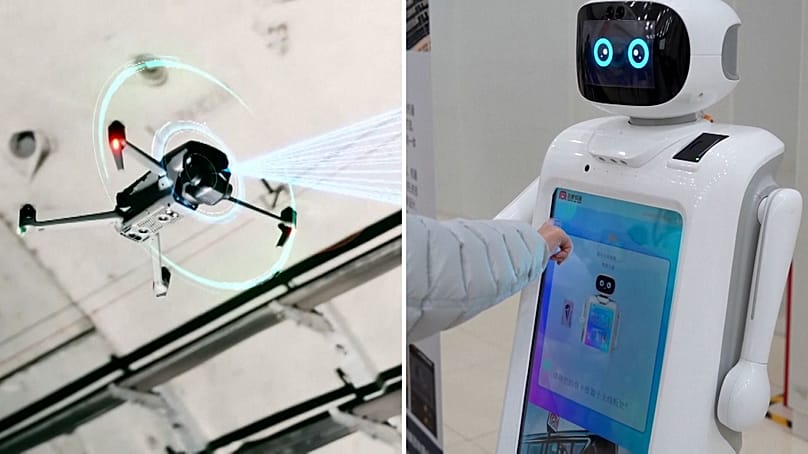
Humanoid assistants, four-legged inspection dogs and drones patrolled metro stations and tunnels, helping passengers with directions, checking infrastructure, and scanning for faults.

It’s China’s first full-space "robot cluster" for rail transit, deployed during the Spring Festival travel rush.

“The full-space robot intelligent dispatching platform mainly operates in three areas: intelligent service within stations, vehicle inspection, and tunnel inspection,” said Dai Rong, the director of the Science and Education Center at Hefei Rail Transit.

"We hope it can assist human staff, improve our work efficiency, and reduce work intensity to empower Hefei's rail transit operations through technology."

Robots on the platform and under the trains

At several stations, humanoid robots guided passengers with directions and transfer inquiries, while robot dogs patrolled platforms for safety.

Underneath the trains, autonomous inspection robots navigated 1.5-metre-deep maintenance trenches, scanning wheels, bolts and other components with high-definition cameras and ultrasonic sensors.

Any cracks or loose parts were flagged immediately, speeding up checks that would normally take hours.

A humanoid robot and a drone assisting at a metro station in Hefei, Japan. Credit: CNS

"In the future, we aim to build this platform using large AI model technologies to provide these robot dogs and drones with a better central 'brain' for control," said Luo Lei, a senior supervisor at the Science and Education Center. "This will enable them to identify and respond to various abnormal situations more accurately."

The technology does raise the question: just how much can these machines do, will human input still be needed in the future, and should other cities elsewhere be paying attention?

While the Hefei system is designed to assist humans rather than replace them, its capabilities hint at the growing role AI and robotics could play in public transport, infrastructure monitoring, and urban safety in the years to come.