Wednesday, February 25, 2026


Fixing U.S. Maritime Starts With the Navy
At the heart of the GAO's criticisms of the Navy's shipbuilding practices is that it finds the Navy a "poor steward of taxpayer money."

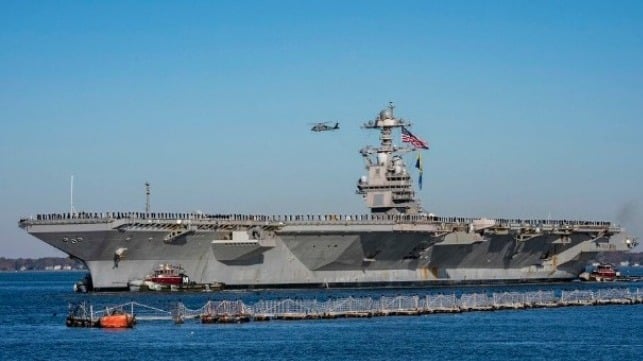
USS Ford
USN file image

Published Feb 22, 2026 5:32 PM by G. Allen Brooks

(Article originally published in Nov/Dec 2025 edition.)


The U.S. faces national security issues that President Donald Trump has acknowledged and is addressing.

The solution begins by revitalizing the U.S. maritime industry to both address the Navy's shortcomings and enhance the country's global shipping presence. The steps are multifaceted. We must rebuild our shipbuilding industry. New yards are needed. Existing yards must be upgraded, and operating efficiency must be improved. We need more skilled shipyard workers and more mariners to sail our ships.

In concept, these steps appear simple, but in reality they're challenging and will require time and money, both of which are in short supply.

In recent years, concern has grown over China's Navy having more ships than the U.S. Navy, even though our firepower is substantially greater. However, military experts note that the firepower gap is narrowing. No one knows the actual Chinese numbers, but for decades its large fleet has been primarily focused on coastal defense with significant numbers of smaller, faster, but less powerful vessels. Now, its fleet is expanding with larger, more powerful ships to protect China's global ambitions, assets and energy vulnerabilities.

The Trump Administration is considering an overhaul of the Navy's fleet. To counter China's growing global presence, the U.S. Navy is planning to create a fleet of diverse vessels and capabilities and more strategic firepower. Rather than back a specific target fleet size, the Administration is focusing on a range of 280-300 ships with a large number of unmanned vessels, referred to as "robotic and autonomous systems," to enhance the fleet's fighting capabilities. This fleet would essentially have a barbell shape with large ships at one end and small ships and unmanned vessels at the other end.

RETHINKING PROCUREMENT

Defense Secretary Pete Hegseth unveiled a new approach to military hardware purchases aimed at addressing the shortage of missiles and ammunition as well as the long, often-delayed delivery times of strategic weapons, including warships. The purchasing system overhaul is a dramatic rethinking of procurement processes.

Hegseth says the Pentagon has identified overregulation, diffused accountability and insufficient competition as weaknesses in the existing procurement process. The Pentagon aims to make a faster, more flexible system the norm, enabling the private sector to contribute to solving military problems. A challenge the Pentagon faces is overcoming the shrinking share of government spending going to our military at a time of increased geopolitical risks.

The decision to reduce defense spending in the mid-1990s, following the collapse of the Soviet Union, led defense contractors to consolidate, cut capital investments and focus on developing new and glamorous weapon systems. What happened on the supplier side was aided by failures within the military's procurement process.

The Navy has been criticized for its ship management failures. The most recent evaluation was presented in a March 2025 report from the Government Accountability Office (GAO) to Congress titled "NAVY SHIPBUILDING - Enduring Challenges Call for Systemic Change." The conclusions were devastating. The first paragraph in the summary highlights the Navy's record of problems:

Although maritime threats have been growing, the Navy has not increased its fleet size as planned over the past 20 years. Over this period, GAO has found that the Navy's shipbuilding acquisition practices consistently resulted in cost growth, delivery delays, and ships that do not perform as expected. For example, GAO identified schedule risks in 2024 for the Constellation class frigate program. Counter to leading ship design practices, construction for the lead ship started before the ship design work was complete, and delivery is expected to be delayed by at least 3 years.

The Constellation class frigate was to replace the seriously flawed Littoral Combat Ship platform, which was designed as a low-cost, flexible and modular answer to the Navy's modern warfighting needs. Instead, the program led to delays, cost overruns and malfunctioning ships, many of which have been repurposed or retired. A ProPublica investigation put the lifetime cost of the failure at $100 billion.

Testifying before the Senate's Subcommittee on Seapower, a GAO official noted that "the Navy has no more ships today than when it released its first 30-year shipbuilding plan in 2003." This has occurred despite a near-doubling of the Navy's shipbuilding budget in inflation-adjusted terms over the past two decades.

Such problems are not unusual, as the GAO report noted.

It pointed to its seven-year-old report on Navy shipbuilding, covering the period from 2008 to 2015. The report found that Navy ships cost billions more and take years longer to build than planned. Furthermore, they often fell short of quality and performance expectations. The GAO also noted that it had provided 90 recommendations to improve the shipbuilding process, but the Navy has addressed only 30 of them.

Resolving the Navy's problems will take a willingness and openness to change current practices. Demanding specifications that cannot be delivered at present is not a recipe for success. Fortunately, it appears that Hegseth is willing to address these shortcomings.

REVAMPING THE FLEET

The new fleet being discussed by White House and Navy officials would include a number of large warships carrying more long-range missiles as well as smaller ships such as corvettes, which are smaller than frigates. Today's 287-ship fleet is mostly destroyers, cruisers, aircraft carriers, amphibious ships and submarines.

Current and former officials involved in the fleet revamp discussions are considering ships that are more heavily armored, weighing 15,000-20,000 tons, and capable of carrying more powerful weapons, possibly including hypersonic missiles, in larger numbers than are currently carried on destroyers and cruisers. Ships in the current Navy vary in weight with aircraft carriers weighing over 110,000 tons and amphibious assault ships weighing over 40,000 tons. Many destroyers and cruisers fall within the 10,000-14,000 ton range while submarines typically weigh between 9,500 and 14,000 tons. Some specialty support vessels can weigh 15,000+ tons.

A plan to build new warships capable of carrying more and longer-range missiles is a recognition that China has an extensive anti-missile network and that the Pacific Ocean is a larger body of water with many scattered potential flashpoints that require a U.S. response. Maintaining a manned fleet comparable to today's helps address one concern – recruiting and retaining officers and sailors.

However, implementing such a massive overhaul of today's Navy must address existing challenges such as our lack of modern, efficient shipyard capacity to construct and maintain new naval vessels and our lack of a skilled shipyard workforce.

PARTNERING WITH SOUTH KOREA

Recent news about the shipbuilding relationship between South Korea and the U.S. suggests the Trump Administration may be making headway in its maritime revitalization effort.

Last year, South Korea's Hanwha Group purchased Philly Shipyard for $100 million, promising to invest upwards of $5 billion to improve and expand operations. The deal has led to joint U.S.-Korean projects including the repair of U.S. warships, the design of Navy supply ships and assisting American firms in expanding capacity, training shipyard workers and improving production efficiencies.

The Administration is also endorsing the construction in the Philly Shipyard of a nuclear submarine destined for South Korea. The idea is controversial, given the extent to which the U.S. controls its nuclear technology, and raises questions about the shipyard's preparedness for such a project.

However, the Hanwha U.S. shipping subsidiary earlier placed an order for 12 tankers and LNG carriers, the largest order in decades. The first ship is targeted for delivery in 2028. The new ships will significantly expand the U.S.-flag fleet, which currently consists of 188 vessels.

Philly Shipyard has delivered one ship a year recently, equivalent to the weekly output from Hanwha's Korean yards. The plan for the American shipyard is to boost production to 20 vessels a year. It will require expanding the shipyard's physical capacity while adding additional component manufacturing sites and significantly expanding its labor force.

Philly Shipyard has an apprentice program, which is also being expanded. Hundreds of people are applying for the company's 24 available openings in each class. Currently, the program adds more than 120 apprentices each year with plans to increase that to 500 annually.

FOCAL POINT

At the heart of the GAO's criticisms of the Navy's shipbuilding practices is that it finds the Navy a "poor steward of taxpayer money."

In an era when the U.S. government continually runs budget deficits and adds to the nation's debt, such performance cannot be tolerated. Furthermore, our primary adversary, China, is continuing to expand its naval fleet and upgrade its capabilities.

These trends are a threat to our national security. We expect shipbuilding and the maritime industry to be by necessity a focal point for the remainder of the Trump Administration. Correcting the Navy's problems is a good place to start.

The opinions expressed herein are the author's and not necessarily those of The Maritime Executive.


U.S. Hospital Ship Gets Under Way After Trump Greenland Announcement


USNS Mercy is due for a yard period in Portland and appears headed for a Panama Canal transit

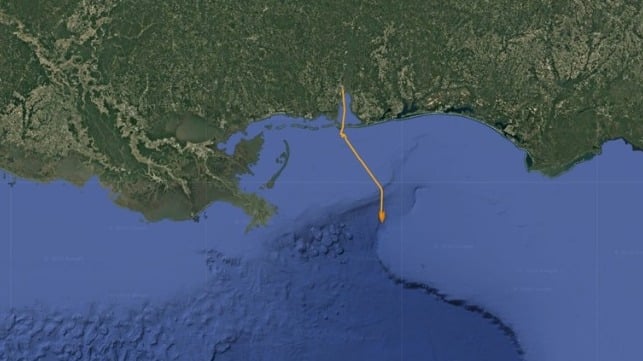
USNS Mercy headed southbound towards the Yucatan Channel, February 24 (Pole Star Global)

Published Feb 24, 2026 7:51 PM by The Maritime Executive

Three days after President Donald Trump declared that he had ordered a hospital ship to Greenland, the hospital ship USNS Mercy has departed a shipyard in Mobile, Alabama and gotten under way. Her next scheduled port call is at the Vigor shipyard in Portland, Oregon, where she is due to start a six-month drydocking on March 20. 

At Mercy's sea speed, it would take her more than 20 days of continuous sailing to reach Oregon, plus additional time spent transiting the Panama Canal. Departing today, she would arrive just in time to begin her drydocking period, which the Department of Defense paid $89 million to arrange.

If started on schedule, Mercy's yard period would run through September 20. The drydocking builds upon previous emergent repair work performed at Alabama Shipyard in Mobile; the ship has not yet completed the usual deep maintenance and inspections that would be done in a five-year drydocking. Sister ship USNS Comfort has just started a yard period at Alabama Shipyard and is said to be unavailable. 

Mercy's movements have been closely watched since Saturday, when President Donald Trump announced that his administration would "send a great hospital boat to Greenland to take care of the many people who are sick, and not being taken care of there." At the time, he said that the "boat" was on its way, and he shared an illustration of USNS Mercy. As of Monday, defense officials told the Wall Street Journal that no orders for Mercy's deployment had yet been received. 

The origins of President Trump's claimed Greenland mission are unclear. Danish and Greenlandic officials have rejected Trump's announcement and have said that the hospital ship is not needed in Greenland. As a Danish territory, Greenland offers free health care and prescription medications to all its citizens, along with free emergency care for visitors; in Alabama, the location from which USNS Mercy has just departed, an estimated eight percent of the population lacks health insurance coverage.

One unusual origin story for the proposed Greenland mission has emerged. A Greenlandic construction worker who has previously organized events for the Trump family in Nuuk, 52-year-old Jørgen Boassen, told the Wall Street Journal that he had mentioned a need for better free health care to Louisiana Governor and White House Greenland envoy Jeff Landry. Boassen met with Landry during a cultural exchange to Louisiana, and brought up the health care topic. Landry confirmed that he later relayed the request to Trump, who announced the hospital ship mission several hours later. (Boassen told the Journal that he had not had a hospital ship in mind.)

Trump has repeatedly expressed a desire to annex Greenland, sparking disagreement with Denmark. The U.S. enjoys unfettered treaty access to the island for defense purposes, but Trump asserts that it is necessary for strategic purposes for the U.S. to "own" the island.


U.S. Seizes Third Runaway Sanctioned Tanker in the Indian Ocean

tanker boarding by US forces
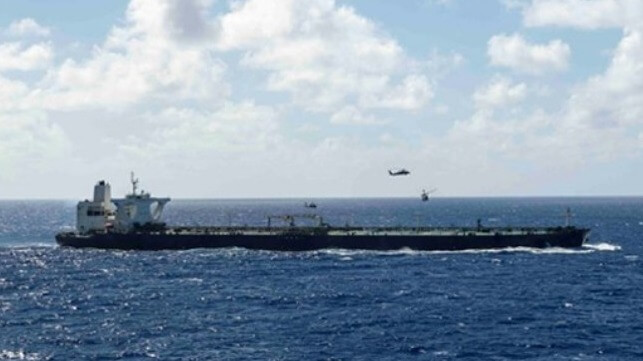
The tanker Bertha was boarded by U.S. forces in the Indian Ocean as the third runaway tanker from Venezuela (US Department of War)

Published Feb 24, 2026 10:46 AM by The Maritime Executive


The Pentagon confirmed that U.S. forces interdicted a third runaway tanker, named Bertha, while it was sailing in the Indian Ocean on February 24. It followed the previous seizures of the Aquila II and the Veronica III, also in the Indian Ocean, as part of a group of tankers that had fled Venezuela, likely bound for China with Venezuelan crude.

“From the Caribbean to the Indian Ocean, we tracked it and stopped it,” the posting on social media said. “International waters are not a refuge for sanctioned actors. By land, air, or sea, our forces will find you and deliver justice,” posted the Pentagon.

It cites the tanker for violating the “quarantine of sanctioned vessels in the Caribbean.” The tanker, however, was sanctioned by the United States in 2024 for its involvement with the Iranian oil trade. The Treasury Department cited the Bertha, which has also operated under the alias of Monica S, along with two other tankers managed by Shanghai Legendary Ship Management Company Limited. It said the Bertha had been involved in the Iranian oil exports since at least 2022.


The 305,442-dwt vessel departed Venezuela in early January carrying a reported 1.9 million barrels of heavy crude. The interdiction came as "a right-of-visit, maritime interdiction, and boarding," the statement said, happening in the Indian Ocean off the Maldives “without incident,” according to the Pentagon. TankerTrackers.com had pointed out more than a week ago, when the Veronica III was stopped, that the Bertha, which it says uses the zombie name Ekta, was the last of the runaway tankers that the U.S. had not yet interdicted.

Reuters is highlighting that the U.S. has stopped a total of 10 tankers since December and the start of the efforts against Venezuela. At least two of them have been released, while the Marinera (Bella 1) was tracked into the Atlantic, seized, and taken to Scotland. The U.S. recently indicted the captain of that tanker on charges related to sailing under a false flag and disobeying U.S. Coast Guard orders.

The tanker seized today has a long history and reports of false flag operations. It was built in 2004 and has been sailing as the Bertha since 2024. When the U.S. sanctioned the vessel, it was listed as registered in the Cook Islands, and reports today are still saying Cook Islands. Maritime Cook Islands (MCI), the Cook Islands Ships Registry, issued a statement in January clarifying that it had canceled the ship’s registry on November 25, 2024. It said the vessel had entered its registry in March 2024 and highlighted that the registry was canceled before the U.S. sanctions.

The Bertha is listed in Equasis as falsely claiming Curacao as its current flag. Lloyd’s Register withdrew its class in December 2024, while the databases list its last known port state inspection as April 2024.


'I'm very concerned': Marco Rubio triggers alarms of 'war' from intel lawmakers

Nicole Charky-Chami
February 24, 2026 
RAW STORY


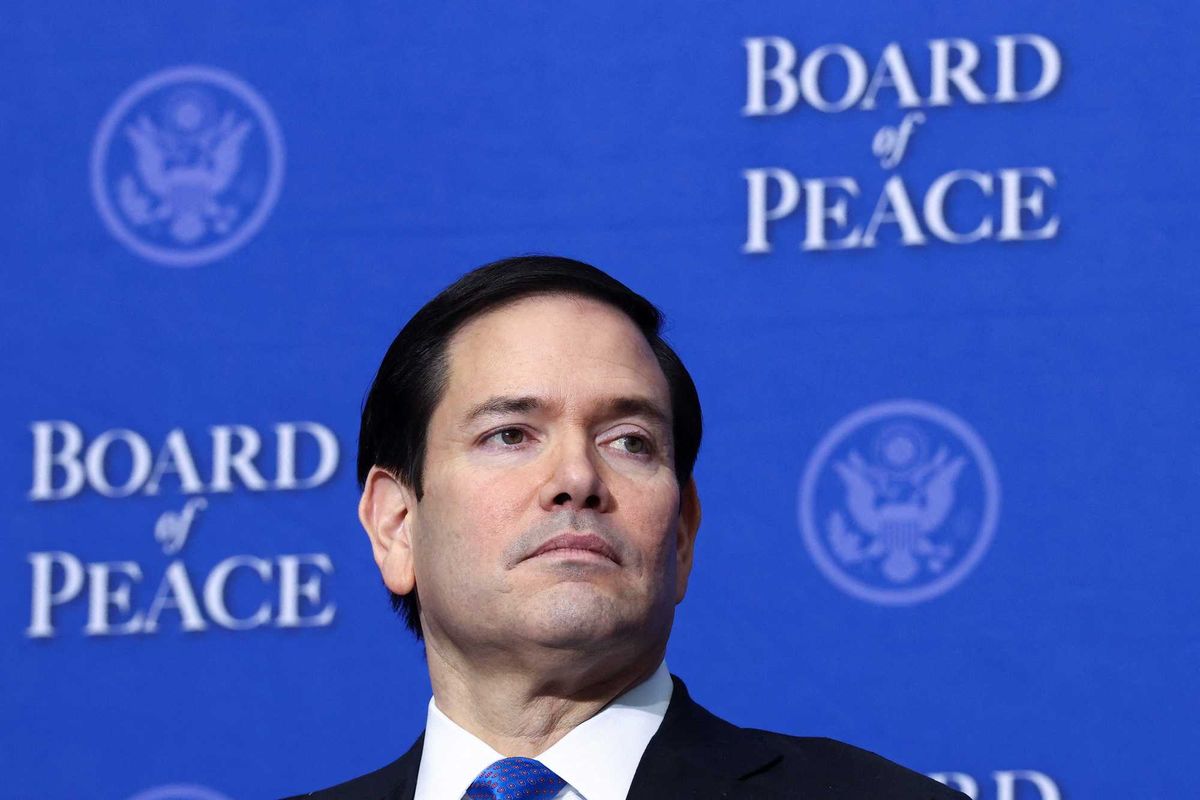
Secretary of State Marco Rubio listens as U.S President Donald Trump (not pictured) speaks at the inaugural Board of Peace meeting at the U.S. Institute of Peace in Washington, D.C. on Feb. 19, 2026. REUTERS/Kevin Lamarque


Secretary of State Marco Rubio held an unusual briefing on Tuesday that raised concerns among intel lawmakers over whether the U.S. may launch military attacks on Iran.

Rubio's private meeting was held virtually just hours before President Donald Trump's State of the Union address and included both Senate and House lawmakers, including high-ranking members of the House and Senate Intelligence Committees, Politico reported. The move has raised questions over the Trump administration's decision to take military action in the Middle East.

Rep. Jim Himes (D-CT) expressed alarm over Rubio's comments.

"Rep. Jim Himes, top Intel Committee Dem, on Trump and Iran: 'I'm very concerned. Wars in the Middle East don't go well for presidents, for the country, and we have not heard articulated a single good reason for why now is the moment to launch yet another war in the Middle East,'" Sahil Kapur, senior national political reporter for NBC News, wrote on X.

House Minority Leader Hakeem Jeffries (D-NY) shared his apprehension about Trump's previous statements on Iran and what could happen next. Last year Trump had claimed that U.S. military strikes in Iran had dismantled the country's nuclear program.

"What happened to Iran's nuclear program being 'completely and totally obliterated'?... Donald Trump's words, not our words. Clearly he was lying to the American people or he's lying right now," Jeffries said in an interview with reporters that was shared by journalist Aaron Rupar on X.

Iran Motivates Trump's Opposition to Transfer of Diego Garcia

B-2
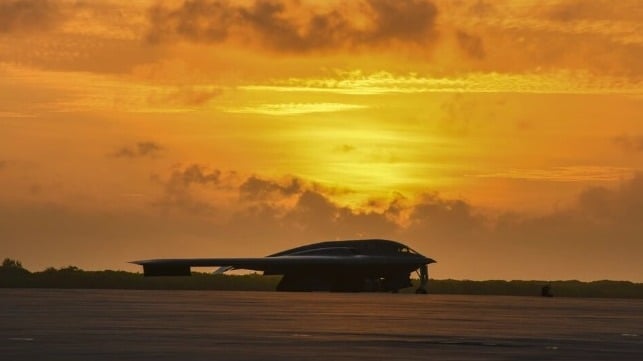
A B-2 on the tarmac at Diego Garcia (USAF file image)

Published Feb 24, 2026 9:31 PM by The Maritime Executive


In a further twist to the Diego Garcia saga, Trump has issued a clear and unambiguous statement on the United States’ attitude towards the proposed Mauritius-United Kingdom sovereignty transfer deal over the British Indian Ocean Territories (BIOT), and the US Naval Support Facility on Diego Garcia in particular.

In a recent post, President Trump says it would be a surrender to Chinese interests to transfer BIOT to Mauritius, which would not be able to fend off Chinese pressure to compromise the continued operations of the Diego Garcia base. He makes the point that there is no decision in international law which requires the United Kingdom to give the archipelago to Mauritius, only pressure from what he describes as ‘woke’ internationalist interests. He urged the United Kingdom at this late stage to drop the deal. Karoline Leavitt, the White House press secretary, has confirmed that the post represents official US policy.

In his post, President Trump also referenced the critical strategic value of the US base on Diego Garcia, saying that ‘Should Iran decide not to make a deal, it may be necessary for the United States to use Diego Garcia, and the airfield located in Fairford, in order to eradicate a potential attack by a highly unstable and dangerous regime – an attack that would potentially be made on the United Kingdom, as well as other friendly countries.” President Trump has therefore linked the status of Diego Garcia with British authorization for the use of its bases in any potential attack on Iran.

The character of US force deployments into the Middle East has changed dramatically in recent days, switching from a ‘defend and respond’ character to preparedness to carry first strikes if negotiations with the Iranians fail to produce results.

A US delegation has been in Port Louis, the capital of Mauritius, to discuss the deal. They may be able to provide reassurance to Prime Minister Navin Ramgoolam, whose government is facing difficulties over corruption allegations, that Mauritius will not lose out financially if the deal is scrapped and modifications are made to current arrangements instead.

The UK government at the same time is having to deal with the arrival on the Île de Coin, the main island in the BIOT atoll of Peros Banhos, of Misley Mandarin, First Minister-elect of the BIOT, and his father Michel. The Chagossian returnees were issued with a notice to leave the island by the BIOT police shortly after landing.

The British government has a delicate political decision to make this week on whether to pursue the expulsion of the pair, given that Michel was born on Île de Coin. Under the terms of the present deal, Michel would see the place of his birth transferred to Mauritius without consultation or his consent. The deportation order was issued on the authority of Nishi Dholakia, the British Commissioner for BIOT.

In the latest developments, a court has permitted the re-settlers to remain on Île de Coin pending a hearing challenging the expulsion order. In the meantime, they are cleaning up the abandoned church and attempting to make other buildings habitable. The UK government has not timetabled a return of the enabling legislation to the House of Lords, and has confirmed that they are ‘thinking again’ about the legislation.

There is some speculation in the United Kingdom that President Trump’s change of heart over Diego Garcia has been prompted by British Prime Minister Sir Kier Starmer’s refusal to give permission for airstrikes on Iran to be mounted from British bases – until there have been substantive discussions on the rationale behind any such attack and what the post-action plan might be. In the meantime, the First Minister elect of the Chagos Islands, Misley Mandarin, currently still in residence on Île de Coin, has given full permission for President Trump to use Diego Garcia in any such attack.


Report: Iran Nears Deal to Buy Supersonic Antiship Missiles From China

A test launch of the YJ-12 supersonic antiship missile (PLA Navy)

Published Feb 24, 2026 10:52 PM by The Maritime Executive


Iran may be closing on a deal to buy supersonic antiship missiles from China, which would complicate planning for the U.S. Navy in waters of the Persian Gulf, Strait of Hormuz and Gulf of Oman. 

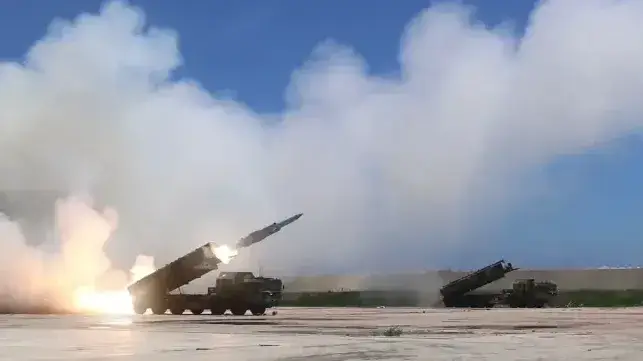
According to Reuters, the Iranian government is close to a purchase of the Chinese CM-302 missile system, based on China's YJ-12. While not the most modern type in the swiftly-evolving Chinese inventory, it is considered a capable antiship cruise missile. The CM-302 is the export variant of the design, and has a warhead payload of up to 550 pounds and a range of about 150 nutical miles. The original version can attain speeds somewhere in excess of Mach 2, potentially as high as Mach 4. The YJ-12 has reportedly been deployed in shore-battery configuration at China's giant bases in the Spratly Islands. Pakistan's navy currently fields the ship-launched export variant of the missile. 

The missile's high speed in the terminal phase reduces the amount of time that the target vessel has to react and defend itself. It is expected that in Chinese service, the YJ-12 would be air-launched in large volleys for a saturation effect, but even one supersonic YJ-12 missile - programmed to conduct spiral evasive maneuvers as it closes in - would pose a stress test for an advanced warship's defenses. 

Six Iranian government officials confirmed the talks to Reuters, and said that negotiations have been under way for the past two years. 

"It’s a complete gamechanger if Iran has supersonic capability to attack ships in the area," Iran expert Danny Citrinowicz of Israel’s Institute for National Security Studies told New York Post. "These missiles are very difficult to intercept."

Other possible elements of the deal could include man-portable surface to air missiles (MANPADS), a threat to low-flying aircraft and helicopters. Per the report, the negotiations could extend to anti-ballistic missile systems or antisatellite missiles - some of the most technically-advanced weapons on earth. Approval of such a transfer would signify a high level of trust in Iran's ability to keep the technology secret. 

No word of the deal's completion has emerged yet; even if terms are agreed, it would take time for China to deliver the equipment and provide the adequate training to enable its use. The U.S. is already gearing up for potential military action in Iran, and discussions of a possible limited strike have been widely reported. 

Separately, Iran has reportedly signed a deal with Russia for the transfer of $590 million worth of man-portable antiaircraft missiles, according to the Financial Times. The arrangement covers 500 launch units and 2,500 missiles for the Verba MANPADS system, a modern guided missile launcher weighing just 38 pounds. Iran's weapons exports to Russia - like long-range attack drones used against Ukraine - may cover the cost of the transaction. For Navy aviators, Verba would be an unwelcome nuisance at altitudes up to 15,000 feet, the highest altitude lock range of any known MANPADS device. It is designed to be resistant to modern infrared countermeasures. 


Student protests spread across Tehran universities for fourth consecutive day in Iran

Student protests spread across Tehran universities for fourth consecutive day in Iran
Students are seen fighting those loyal to the clerical system at universities across Tehran. / CC: Social media Telegram
By bnm Tehran bureau February 24, 2026

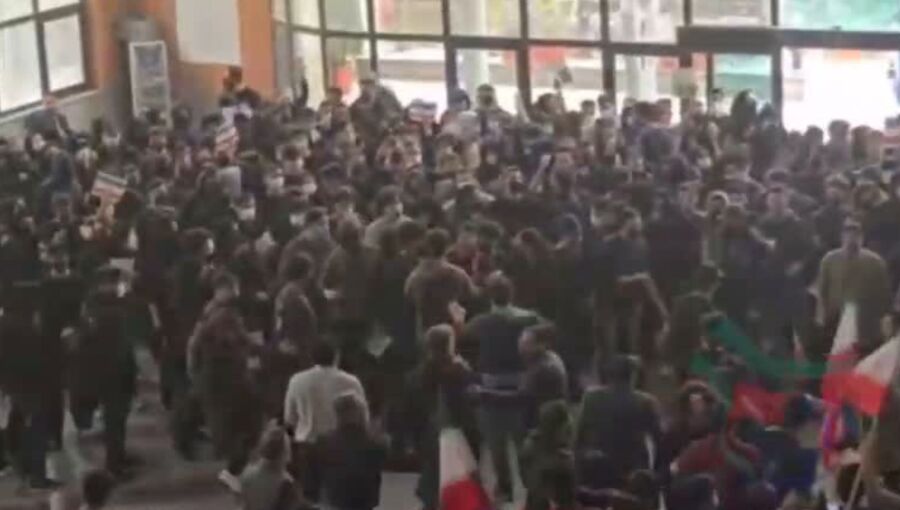
Student protests continued across Tehran's universities for a fourth consecutive day on February 24, with demonstrations reported at more than ten institutions as Basij militia members deployed on campuses to contain the unrest, according to student Telegram channels.

Al-Zahra University saw a sit-in begin on February 24, with the United Students Telegram channel reporting that "suppressors and Basijis are present to prevent the sit-in."

At Khajeh Nasir University's Vanak campus, Basij forces fired tear gas and pepper spray to disperse students, with protesters chanting slogans against the Revolutionary Guards.

Demonstrations were also reported at Sharif University, Shahid Beheshti University, Iran University of Science and Technology, Soure University, and the faculties of social sciences and arts in Tehran. Chants included "Woman, Life, Freedom," "Death to the dictator," and "Political prisoners must be freed."

Over the preceding three days, major universities in Tehran, Isfahan University of Technology, and Ferdowsi University in Mashhad had all seen large-scale protests directed against Supreme Leader Ayatollah Ali Khamenei.

Amirkabir University of Technology in Tehran has warned it will move swiftly to discipline students involved in recent campus unrest, as protests at Iranian universities entered a fourth consecutive day on February 24.

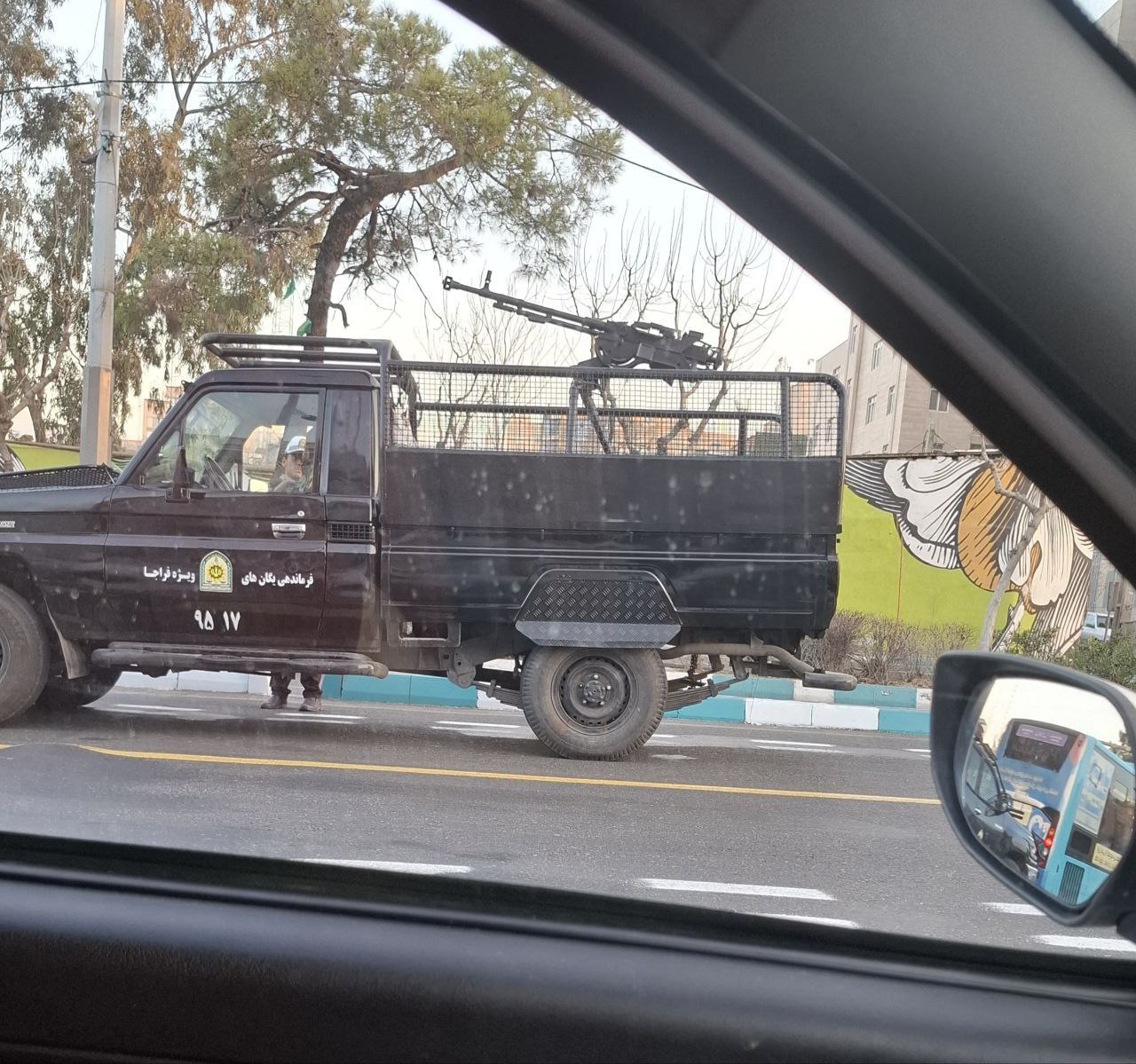
Armed police have also been recorded with machine guns outside university complexes in recent hours, according to social media posts shared with IntelliNews. 

In a statement published by 19 Dey newspaper, the university said cases against students "from all factions" would be reviewed without leniency, condemning what it described as stone-throwing, property destruction, and disrespect for national symbols.

The announcement came as protests spread across at least ten Iranian universities, including the University of Tehran, Sharif University of Technology, Isfahan University of Technology and Ferdowsi University in Mashhad.

Students dressed in black gathered to mourn those killed during a government crackdown in January 2026, which Iran's authorities say left more than 3,000 dead.

Rights groups, including the US-based Human Rights Activists News Agency, put the toll at upwards of 7,000, according to its latest figures on February 24, significantly higher than the government death toll.

At Amirkabir University, clashes broke out between anti-government students and pro-regime Basij members on February 22, with verified social media footage showing scuffles between the two groups.

A student group said on Telegram that protesters had chanted "our target is the entire system," while others were insulting the yellow flags of the Basij and Hezbollah flown by those loyal to the system. 

Updated 11:20 GMT/UTC

Iranian Students Face Down Security Forces On Fourth Day Of Nationwide Campus Protests – OpEd


February 25, 2026 
By Mahmoud Hakamian


On February 24, 2026, the student-led uprising across Iranian universities entered its fourth consecutive day. Despite heavy militarization and violent suppression tactics by the state, major academic institutions in Tehran—including Tehran University, Beheshti (Melli), Sharif, Khajeh Nasir, Iran University of Science and Technology (IUST), and Science and Culture—remained active sites of protest. The demonstrations also expanded beyond the capital, with students at Isfahan University of Technology, as well as Sajjad and Shandiz universities in Mashhad, holding anti-regime rallies.


Direct Confrontation and Student Defiance

The regime’s response to the renewed campus unrest has been marked by physical violence and heightened surveillance, which students have met with direct resistance. At Khajeh Nasir University in Tehran, security forces assaulted students at their dormitories in an attempt to disperse their gathering, but the students fought back and maintained their rally. At Isfahan University of Technology, the state deployed drones over the campus to identify and intimidate protesters.

In Tehran, the confrontations escalated into severe physical clashes. At Beheshti University, intense altercations broke out between students and the regime’s Basij and security agents. During the rally, students torched a photograph of Supreme Leader Ali Khamenei while chanting, “This is the year of blood, Seyyed Ali will be overthrown!” and “Basij, IRGC, to us you are ISIS.” Meanwhile, at Tehran Art University, female students chanted, “Freedom, freedom, freedom!” At IUST, plainclothes campus security were seen noting the names of students wearing black mourning attire, while police forces stationed themselves outside the university gates.

Uncompromising Demands

The chants echoing across the campuses demonstrate a clear rejection of the theocratic state in its entirety. At Sharif University, where students successfully resisted attacks by Basij agents, the crowd chanted, “This is the last message, our target is the entire regime!” At both the University of Science and Culture in Tehran and Shandiz University in Mashhad, students repeated the slogan, “Students will die but won’t give in to disgrace!” Demonstrators at Beheshti University made their stance on the ruling establishment clear, chanting, “We will not have a country as long as the mullahs are in power!”
The State’s Panic and Threats of Escalation

The persistence of the students has prompted public alarm from the regime’s judicial authorities. On February 24, the regime’s Attorney General, Mohammad Movahedi Azad, called for a swift security and law enforcement crackdown on the universities. Blaming the unrest on “enemies” attempting to inflame the domestic atmosphere, he ordered responsible agencies to “swiftly identify the related agents and take decisive and legal action against them,” warning that the authorities “must not allow such actions to continue.”

The current campus strikes are deeply intertwined with the nationwide uprising that erupted on December 28, 2025. Sparked initially by a strike among Tehran bazaar merchants over severe economic crises, the movement quickly evolved into explicit demands for the regime’s overthrow. The state responded with a brutal crackdown, cutting off communications and killing thousands of civilians, including children.

Instead of pacifying the public, this systemic slaughter has fueled the students’ resolve. For four days, students have gathered to commemorate the martyrs of the January protests, explicitly rejecting any form of tyranny. As demonstrated during the earlier days of this campus revolt, students have forcefully expelled monarchist provocateurs from their ranks, declaring they will not accept dictatorships of either “turbans” or “boots” and demanding “Neither Shah nor Mullah.” By returning to the campuses to face down the regime’s security forces, the students are demonstrating that the blood spilled by the regime has only solidified the Iranian people’s demand for a free, democratic, and secular republic.

Mahmoud Hakamian writes for The People’s Mojahedin Organization of Iran (PMOI), also known as Mujahedin-e-Khalgh (MEK)


Iran: Tsunami Of Arbitrary Arrests, Enforced Disappearances, HRW Says

February 25, 2026 
By Eurasia Review


Iran’s authorities have waged a brutal campaign to terrorize the population through mass arbitrary detentions, torture, and enforced disappearances in the aftermath countrywide massacres of protesters and bystanders by security forces on January 8 and 9, 2026, Human Rights Watch said Tuesday.

Evidence examined by Human Rights Watch shows that senior officials, Iran’s security and intelligence agencies including the police, known as FARAJA, the Islamic Revolutionary Guards Corp (IRGC) and its intelligence organization, the Ministry of Intelligence, and prosecutorial and judicial officials have orchestrated a coordinated, brutal mass clampdown to quash further dissent and conceal their atrocities. In addition to mass arrests, they have held detainees in incommunicado detention including in unofficial facilities, broadcast hundreds of coerced “confessions,” including by children, and carried out large-scale enforced disappearances while imposing severe restrictions resembling martial law in many cities.

“As a whole nation remains in shock, horror, and grief, and families still search for their loved ones in the aftermath of the massacres of January 8 and 9, authorities continue to terrorize the population. Arrests continue and detainees face torture, coerced “confessions,” and secret, summary, and arbitrary executions,” said Bahar Saba, senior Iran researcher at Human Rights Watch. “Given the immense dangers those detained and forcibly disappeared face, international monitors should immediately be given unhindered access to all detention facilities and prisons.”

A prisoner whose voice recording was received by Human Rights Watch stressed the importance of maintaining international scrutiny, saying, “Do not forget the detainees… Be our voice, if you do not raise your voice, they will eliminate us all.”

Those forcibly disappeared include individuals arrested and may include cases of people who participated in the protests but never returned home. Some families have received calls informing them that their loved ones had been killed but have not had the bodies of their loved ones returned, or received any information about them despite repeated inquiries.

A January 26 statement by the IRGC’s Intelligence Organization indicated that at least 11,000 people had been summoned by intelligence and security forces as of that date. According to judiciary’s spokesperson, 10,538 individuals had been referred for prosecution and 8,843 indictments were issued by February 17.

Human Rights Watch spoke with 23 people both inside and outside Iran, including detained protesters; relatives of people killed, detained, and/or forcibly disappeared; people participating in protests; lawyers; human rights defenders; medical professionals; and journalists. Sources provided information about the situation in areas across the country, including the provinces of Alborz, Eastern Azerbaijan, Fars, Golestan, Hormozgan, Ilam, Kermanshah, Khouzestan, Kurdistan, Lorestan, Mazandaran, Razavi Khorasan, and Tehran.


Human Rights Watch also analyzed videos of security forces violently arresting protesters and their heavy presence on the streets after the mass killings, including 139 videos of forced “confessions” broadcast by the state broadcaster—Islamic Republic of Iran Broadcasting (IRIB)—and state-affiliated media as of February 6. Human Rights Watch also reviewed official statements, reports, and publications by independent media and human rights organizations.

Authorities have repeatedly vowed “speedy trials” and a “harsh response” without “any leniency,” while labelling protesters “criminals,” “enemies of God,” and “terrorists.” On February 3, a criminal court in Qom sentenced 19-year-old wrestling champion, Saleh Mohammadi, to death for alleged involvement in the death of a member of the security forces. Mohammadi was convicted after summary proceedings that did not even last a month and relied on forced “confessions” that he said were extracted under torture. The court has ruled that Mohammadi’s execution should be carried out in public.

On February 19, Amnesty International reported that children were also among 30 people facing the death penalty whose cases were documented by the organization. In a measure reminiscent of sham trials broadcast in 2022 that resulted in arbitrary executions of several men, IRIB started broadcasting segments of trial proceedings, including against two children, for alleged offences in connection with the protests.

The exact number of those arrested since the start of the protests remains unknown, but human rights groups have reported the figures to be in the tens of thousands. As of February 13, the Volunteer Committee to Follow-Up on the Situation of Detainees, a network of activists outside Iran, had published the names and details of over 2,800 people arrested.

Those interviewed said that prosecutors and prison officials have systematically denied detainees access to their families and lawyers and refuse to provide information about detainees’ fate and whereabouts, thus subjecting them to enforced disappearance. Enforced disappearances are grave crimes under international law and are considered ongoing so long as the authorities refuse to acknowledge the fate or whereabouts of those disappeared.

A human rights defender who has spoken to several detainees’ relatives in the provinces of Ilam and Kermanshah said that officials responded to families’ requests with insults and profanities. Verified videos posted online and verified by Human Rights Watch show scores of concerned families gathering outside prisons, prosecutors’ offices, and police stations in search of their loved ones.

Human Rights Watch has also documented cases of torture and other ill-treatment, including severe beatings with batons; kicks and punches; sexual and gender-based violence; food deprivation; and psychological torture, such as threats of execution, and denial of medical care to those injured. These cases, which can also amount to serious international crimes, are believed to be a fraction of the true scale of gross detention violations given that many people remain in incommunicado detention.

Iran’s authorities have imposed and maintained a heavy military presence applying severe restrictions against the population across numerous cities in the aftermath of the massacres. Several witnesses described measures resembling curfews and martial law, including checkpoints across cities and intra-city roads and armed agents routinely stopping vehicles and searching cars and passengers’ mobile phones. These descriptions were corroborated in videos verified by Human Rights Watch.


Security and intelligence forces have continued to carry out arrests of real and perceived dissidents. Those targeted include protesters, lawyers, medical professionals, human rights defenders, students, schoolchildren, athletes, journalists, political activists, environmentalists, and members of ethnic and religious minorities including Baha’is.

Since the start of the protests, the IRIB and media outlets affiliated with the IRGC have broadcast hundreds of protesters’ coerced “confessions.” They further heighten fears that people whose forced “confessions” have been aired will face the death penalty, and arbitrary executions.

Coerced television “confessions” violate the absolute prohibition of torture and other ill-treatment, the rights to presumption of innocence, and to a fair trial. The Islamic Republic has a long history of using coerced “confessions” to quash dissent and in cases leading to death sentences and arbitrary executions after grossly unfair trials.

Fears of a wave of death sentences and arbitrary, summary, and secret executions are growing in light of official statements and the execution spreeof recent years. Since the start of the protests, officials have vilified protesters, repeatedly referring to them as “criminals”, and mohareb, an individual “waging war against God,” which is a capital offense.

UN member states should demand that Iran’s authorities immediately release all those arbitrarily detained, disclose the fate and whereabouts of people forcibly disappeared, halt any planned executions, and allow independent international bodies, such as the UN Fact-Finding Mission on Iran, unhindered country access, including to prisons and detention facilities, hospitals, morgues, and cemeteries.

Governments with embassies in Iran should send high level observers to all capital trial proceedings and urgently request to visit to all sections of detention facilities.

“Systematic impunity has enabled Iranian authorities to repeatedly commit crimes under international law,” Saba said. “Other countries’ judicial authorities should initiate criminal investigations of international crimes under the principle of universal jurisdiction and in accordance with national laws, with a view to prosecute those suspected of criminal responsibility.”
Mass Arbitrary and Violent Arrests, Unlawful Detentions

Officials and state-affiliated media in Iran have stated that authorities have arrested thousands of people across the country, but independent rights organizations have reported that there have been tens of thousands of arrests.

Several sources who had spoken to people in prisons across the country said that authorities had emptied prison wards to hold detainees together and in isolation from other prisoners, in an apparent attempt to stop the flow of information.


Protest detainees are also held in unofficial detention facilities run by security and intelligence bodies, and other unregistered and secret locations, placing them at heightened risk of torture and arbitrary, summary, and secret executions. Iranian authorities have a track record of using secret, unofficial, and makeshift detention facilities, in particular during protest crackdowns, to hold detainees without registration.

Security forces have continued to arrest protesters on the streets, at checkpoints, and in home raids. A spokesperson for the Volunteer Committee to Follow-Up on the Situation of Detainees told Human Rights Watch that many people were arrested at home, days after they had participated in protests.

In one case, based on credible information received, Revolutionary Guard forces conducted an early morning raid on the house of Milad Ebrahimi, an injured protester in Kamyaran, Kurdistan and arrested him on February 1. The source said Ebrahimi sustained a gunshot wound during the protests but did not seek medical care at a hospital fearing arrest. Security forces also arrested his brother, Hamed Ebrahimi, for objecting to the arrest.

Witness statements and state media reports indicate that security forces have used video footage from CCTV cameras, and drones to identify those participating in protests.

Relatives of detainees and lawyers interviewed said that the authorities prohibited access to lawyers during the investigation phase, consistent with authorities’ decades-long pattern of denying detainees access to legal representation, including independent lawyers of their choice.

Under Note to Article 48 of the Code of Criminal Procedure, individuals charged with certain offenses, including national security offenses, are denied the right to access an independent lawyer of their own choosing. Only lawyers approved by the head of the judiciary can be appointed to defend them. The UN Fact-Finding Mission on Iran and human rights organizations have documented a pattern of complicity by many judiciary-approved lawyers in grave human rights violations. As a result, families and detainees have said they do not trust them.

“Detainees have no access to lawyers,” a lawyer said. “Families do not want to retain Article 48 lawyers. Independent lawyers who go to officials to take on protest detainees’ cases are told by the authorities, ‘Are you an Article 48 lawyer? No? Then leave, you cannot take the case.’”

In practice, even in cases with judiciary-approved lawyers, detainees are denied access to legal counsel during the investigation phase including during interrogations.

Witnesses said that, consistent with their track record, authorities have also harassed families of detainees, warning them not to speak up or publicize the situation of their loved ones.
Incommunicado Detention; Enforced Disappearances

The authorities have held those arrested during and after the protests in incommunicado detention. In many cases those detained are forcibly disappeared, as authorities have refused to provide families with any information about their fate and whereabouts.


In one case, authorities arrested Youresh Mehrali Beiglou, an Azerbaijani Turk activist, on January 4 in or around Tabriz, East Azerbaijan province, after releasing a video in which he spoke about the protests. After the arrest and for a period of over a month, he was allowed to make only one brief phone call to his family, and they were denied information about his whereabouts.

Another Azerbaijani Turk activist, Ali Babai, was arrested on January 14. Other than one brief phone call informing his family that he was in an intelligence ministry detention facility, the authorities have denied his relatives information about his fate and whereabouts.

In Karaj, Alborz province, security forces raided Jahangir Kazemi’s home on January 14 and arrested him. His family received two brief phone calls from Kazemi, who is reportedly held in solitary confinement, but has been denied visits and information about his situation. Kazemi’s wife, Fatemeh Golmohammadi, was arrested on January 27. The couple, who have young children, have been denied access to a lawyer.

A relative of a detainee in a northern province, described the response of prosecution officials to detainees’ families:

“When we ask officials at the prosecutor’s office [about our loved one], they tell us, ‘They are criminals, if they weren’t, we would not have arrested them,’ “When we ask what their crime is, they respond, ‘You yourselves know better.’”

Families have been gathering outside prisons, police stations, and prosecutors and governors’ offices. Human Rights Watch has reviewed four videos showing such gatherings.

Researchers geolocated videos showing these scenes outside the county courthouse in Karaj, Alborz province, Qazvin Central Prison, Qazvin province, and outside the governor’s office in Yasuj, Kohgiluyeh, and Boyer-Ahmad province.

Verified videos analyzed by Human Rights Watch from the provinces of Alborz, Esfahan, Lorestan, and Razavi Khorasan corroborated these accounts. Collectively, the videos show large numbers of armed security forces patrolling cities on foot or in vehicles, including trucks mounted with heavy machine guns, discharging weapons and using megaphones to order people to stay indoors.

In one video published online on January 29, and reported to have been recorded outside a police station in Kerman, concerned families are seen speaking to an official from behind a closed door, repeatedly saying that their loved ones are missing. One man is heard saying, “Why is there no one to answer us… my child has disappeared for 24 hours, but no one answers… is there not a manager, a supervisor, someone to step outside? So many people are here worried for their children.”