Saturday, March 07, 2026

A war neglected by the world — Afghanistan and Pakistan
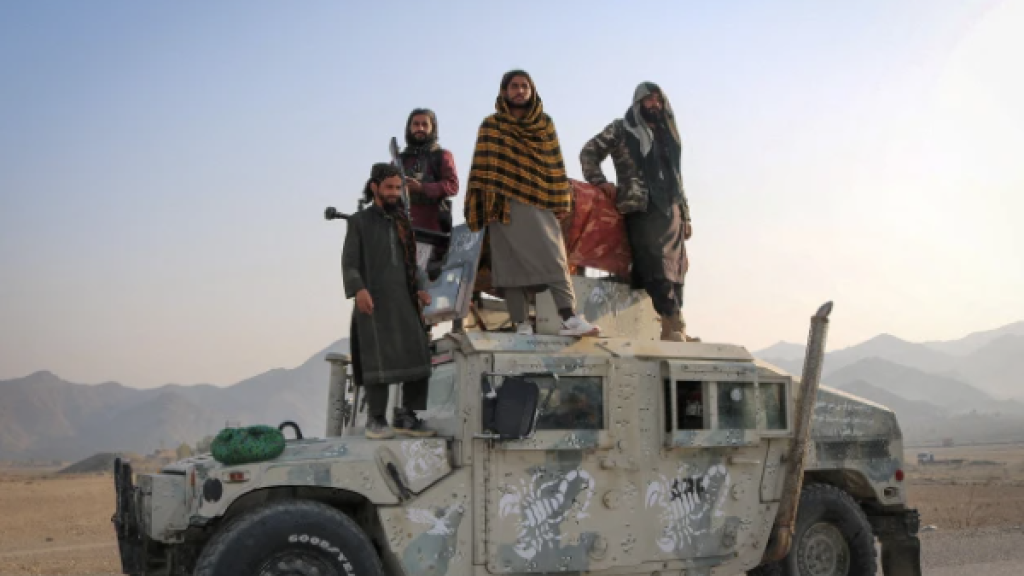

Taliban soldiers pose as they stand on a Humvee in Afghanistan’s Nangarhar province, which shares a border with Pakistan on February 28, 2026.

First published at Europe Solidaire Sans Frontières.

The recent war between Afghanistan and Pakistan has been overshadowed by the attack on Iran by U.S. and Israeli imperialism. Yet the Afghan-Pakistan war, which began 21-22 February 2026 has resulted in heavy causalities on both sides. It was launched by the Pakistan Air Force airstrikes on Eastern Afghanistan (Nangarhar, Paktika, and Khost provinces).

The right-wing Pakistan Government of Mian Shahaz Sharif described these strikes as a response to consistent militant attacks inside Pakistan. He called them “targeted” on the camps of the Tehrik-i-Taliban Pakistan (TTP) and Islamic State — Khorasan Province.

On 26 February 2026, the Afghan Taliban government launched retaliatory attacks beginning with massive border clashes. Pakistan then launched a military campaign called “Operation Ghazab Lil Haq.” Pakistan’s defense minister announced the countries were in “open war” after several days of fighting. Airstrikes and artillery exchanges reportedly hit areas including Kabul, Kandahar, and Paktia. As of 5th March 2026, heavy shelling continued along the disputed Durand Line border between the two countries.

While both sides claim heavy military losses, actual numbers are disputed. Yet civilians are the main causalities as in any war, and tens of thousands of people are displaced near the border.

Despite’s Trump initially describing the Pakistani Air Force attack on different districts of Afghanistan as “good”, the coordinated attack on Iran by the United States and Zionist Israel has shifted world attention and Trump has also forgotten to comment on this war.

How has religious fanaticism spread in Afghanistan and Pakistan?

With complete silence by all the main imperialist countries toward this escalating war between Afghanistan and Pakistan, the role of U.S. imperialism in promoting religious fundamentalism in Afghanistan during the 1980s has been forgotten. Yet to understand the present war we must revisit the past.

A radical Afghan military officers’ group led by Noor Mohammed Tarakai was able to bring down the corrupt Daud government in 1978. A year later, the Soviet Union sent forces to shore up the new government.

This triggered Washington to work with the Saudi Kingdom to pour modern weapons and unleash massive economic support to the religious fanatic groups interested in bringing down the regime. Along with its support to these reactionary forces, U.S. foreign policy felt no shame in siding with the Zia Ul Haq military dictatorship in Pakistan. This despite the regime’s having just hanged deposed Prime Minister Zulfiqar Ali Bhutto in April 1979 on a false accusation of murder.

For over 10 years after the suspicious death of dictator Zia Ul Haq in an airplane accident, U.S. imperialism supported religious fanaticism in both countries. This meant support to the Pakistani governments led by Benazir Bhutto and Mian Nawaz Sharif, while aiding the Mujahidin in Afghanistan to come into power in 1992.

The Taliban used Pakistan to educate and train itself before being able to take over Kabul in 1996.

The Pakistan ruling elite welcomed Taliban government and gave an impression that this was their act. The Taliban’s first actions on assuming governmental power were the public hanging of Najib Ullah (who had remained in the UN headquarters in Kabul after being deposed in 1992) and the banning of girls’ education.

However, after 9/11, NATO forces led by the United States overthrew the Taliban. Despite the Taliban’s control over less than half of the country, toppling the regime and occupying the country was Washington’s demand, while other options were available for removing Taliban from power. By installing a pseudo-civilian government, the NATO occupation of Afghanistan led to the spread of religious fundamentalism in Pakistan.

In Pakistan General Musharaf had overthrown the Mian Nawaz Sharif right-wing government in 1999. The Khaiber PukhtonKhwa province, bordering Afghanistan, was led by the religious fanatic MMA [Islamic coalition ed] government, which provided support to the Taliban fleeing to Pakistan in the aftermath of the NATO attack. They encouraged the setting up of thousands of Madrassas, since 1980 which enabled the Taliban to capture real street power.

Following the withdrawal of U.S.-led forces on August 15, 2021, the Taliban returned to power. Despite vague promises, they established an all-male government led by Supreme Leader Mullah Hibatullah Akhundzada. This “second time” regime, following their 1996–2001 rule, prioritizes Taliban interpretation of strict Sharia laws.

The Indian connection

As of early 2026, the relationship between the Taliban government in Afghanistan and Indian right-wing government of Modi instituted a pragmatic relationship. While India does not formally recognize the Taliban regime, it upgraded its technical presence in Kabul to a full embassy and is actively engaging to protect its strategic, economic, and security interests in the region.

This relationship was created in response to the changing geopolitics of the South Asian region. Following the India-Pakistan four-day war in May 2025, U.S. imperialism lowered its relationship with India, apparently because Trump was annoyed at Modi’s refusal to stop the war. Although Pakistan had received and spent US$45 billion from China for developing the China-Pakistan Economic Corridor (CPEC), Trump was favored by military generals and civilian government of Shahbaz Sharif over China.

The Trump card

Trump, to ensure that Pakistan was on his side before attacking Iran in June 2025, invited and warmly welcomed to the White House field marshal Asim Munir, anointing him as his “more favored general”. Days later, the U.S. Air Force and Navy attacked three nuclear facilities in Iran as part of its Twelve-Day War, carried out under the code name Operation Midnight Hammer. President Trump said the strikes “completely and totally obliterated” Iran’s key nuclear enrichment facilities. Despite this claim, Trump has again attacked Iran with the same excuse this February.

Meanwhile, Indian imperialism responded to the deepening U.S.-Pakistan relationship by providing more support to the Taliban. This resulted in more attacks inside Pakistan during the last six months,

The war

Pakistan’s launching a full-fledged attack on the Taliban-led government is related to escalating terrorist activities in KP province. It is estimated that almost 30% of the Khaiber Pakhtunkhawa (KP) province is effectively controlled by Tehreek Taliban Pakistan (TTP) at least at night, with full support from the Taliban in Afghanistan.

In January 2026, Pakistan recorded 87 militant attacks nationwide, 38 of them in KP, the highest among provinces. According to statistics released by the Islamabad-based think tank Pakistan Institute for Conflict and Security Studies (PICSS), combat-related deaths in January 2026 rose by 43% compared to December 2025. A total of 361 people were killed during the month.

In February 2026, there were major terrorist attacks in Khaiber Pakhtunkhwa Province. In a 6 February 2026 suicidal attack on an Islamabad Mosque, 40 were killed and more than 170 injured. The Islamic State–Khorasan (IS-K) targeted the Shia Mosque during Friday prayers.

In another major attack on 16 February 2026 at Bajaur district in Khyber Pakhtunkhwa, 11 security personnel plus one child) were killed. The TTP claimed responsibility for bombing and shooting what were merciless and unrelenting attacks on mosques and markets. They were daring enough to take on hard targets, including army bases and airports, and shameless enough to take on soft ones, such as schools and shrines. They decapitated Pakistani police officers and soldiers, then uploaded videos to social media for the world to see.

The growing influence and persistent terrorist attacks are becoming a challenge to the Pakistani state. Between 2018-2022, Pakistan Prime Minister Imran Khan from the Tahreek Insaf (PTI), promoted negotiations with religious fanatics as a way to counter their influence. While he was in office, 12 hard-core members of the TTP were released from custody. In fact, Pakistan has previously negotiated at least a half-dozen “peace deals” with the TTP. These negotiations have reinforced the influence of religious fanatics, turning Pakistan into another Afghanistan.

As Ashan Butt, Associate Professor at George Mason University, wrote in Aljazeera on 27 Oct 2021:

The TTP’s desire is to overthrow, violently or otherwise, the Pakistani state and impose their interpretation of Sharia throughout the country. There is no offering short of this, no concession or act of generosity, that Islamabad will be able to buy TTP forbearance with.

In fact, all a peace deal will do — all it has ever done, when it comes to the TTP — is allowing it to regroup, reorganise, rearm, and bolster its capacity for death and destruction.

Imran Khan was the avatar for a deeply sympathetic position towards the Taliban. Not for nothing did he earn the moniker ‘Taliban Khan’.

Negotiation with religious fanatics is never an option for peace. Imran Khan, now imprisoned on corruption charges, later revealed that he had invited 5000 Taliban to Pakistan in the name of rehabilitation. After his government lost a vote of no confidence, the Taliban terrorist activities grew to a record level in all parts of Pakistan. Still till the present day, the PTI government in KP province continues to promote negotiations with fanatics.

Over 50,000 Pakistanis have been killed by terrorist attacks by the Taliban in Pakistan over the past 20 years.

After a series of disappointing performances by consecutive civilian governments since the departure of General Musharaf’s dictatorship in 2008, the overall Pakistani political landscape has moved further right. This is very favorable constituency for promotion of religious fundamentalist groups and ideology.

The civilian governments, instead of learning lessons, promote one or another other religious groups, only turning against them on another occasion. Then they attempt to rid the country of these state-sponsored religious fanatics by banning, jailing and killing them.

None of these religious fanatic organizations are Indigenous to Pakistan.

Despite these experiences, the military-dominated civilian governments never sever their relationship with those ideologies or develop effective strategies to counter them. Yet the military remains the de facto power broker, forging and dissolving alliances and governments, however best suited its interests. As a result, of Pakistan’s 29 Prime Ministers since independence in 1947, none has completed a full five-year term.

Military operations have never been a real solution to end the domination of religious fanaticism.

Military operations by Pakistan army

Pakistani forces have conducted at least 10 major military operations, along with numerous smaller operations, since 2001:

  1. Operation Enduring Freedom (2001–2002),
  2. Operation Al Mizan (2002–2006),
  3. Operation Zalzala (2008),
  4. Operations Sher Dil, Rah-e-Haq,
  5. Rah-e-Rast (2007–2009),
  6. Rah-e-Nijat (2009–2010),
  7. Operation Zarb-e-Azb (2014–2016): Launched in June 2014 in North Waziristan after the Karachi airport attack, this massive, sustained offensive aimed to dismantle the TTP and allied foreign fighters, displacing hundreds of thousands,
  8. Operation Radd-ul-Fasaad (2017–Present): A nationwide, broad-spectrum operation launched to eliminate the “residual/latent threat” of terrorism, combining military action with intelligence-based operations (IBOs),
  9. Operation Azm-e-Istehkam (Announced 2024): A proposed, highly contentious, and, in some accounts, unlaunched operation aimed at curbing the resurgence of militants in the frontier regions,
  10. Recent Kinetic Actions (2025):

None has resulted in the elimination of fanaticism, on the contrary more fanatic groups emerged.

The military has continued targeting militant hideouts in mountainous regions near the Afghan border, often using helicopters and, according to recent reports, initiating “open war” against the TTP due to increased insurgency.

Pakistan has two religious states on its borders: Iran and Afghanistan, but while the Taliban is always seeking to expand their religious revolution to Pakistan, Iran has never done so because of minority Shia community. The presence of these two states with religious extremist in power is another favorable objective realty for the spread of religious fundamentalist ideas.

After failing to curb the consistent rise of religious fanatic groups, a war has been started but it cannot lead to a permanent solution for either Afghanistan or Pakistan.

There will be more bloodshed despite a possible ceasefire between the two.

We cannot support this war. The bombing of Afghanistan or terrorism in Pakistan will not bring peace. Instead, we demand war and terrorist activities by the Taliban must stop immediately.

Neither Pakistan nor any other nation should recognise the Taliban government as the legitimate Afghan government. Trade must be restored with Afghanistan through the traders’ community independently of Afghan government.

Pakistani government must change its policies towards the fanatic religious groups. They must sever their state links to help them. There should be no state subsidies and no discriminatory laws against any religion or religious minority.

Further, the government must separate itself from the U.S. Trump administration. There should be no Pakistani representation on Trump’s so-called Board of Peace and a withdrawal of nominating Trump for the Noble Peace Prize.

These transitional measures cannot be expected of the present government of Pakistan, which has broken all records of sycophancy in support of Trump.

We must build our own political power independent of these capitalist and feudal led parties. That would be a permanent solution to the rise of religious fundamentalism — and a road towards Socialism.

Farooq Tariq is President Haqooq Khalq Party Pakistan, member global council Fight Inequality Alliance and executive committee member Asian Peoples Movement on Debt and Development (APMDD).


Afghanistan–Pakistan war, militarism and a left response to the regional crisis
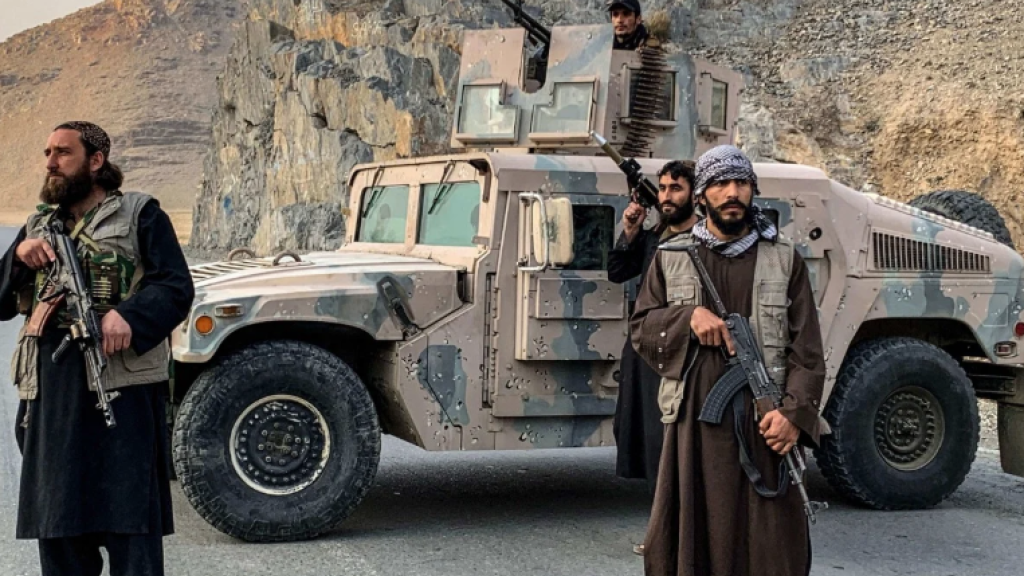
Taliban

A version of this was first published at Alternative Viewpoint.

As cross-border strikes intensify and Pakistan’s defence minister declares “open war” against the Afghan Taliban government, the long arc of Islamabad’s Afghanistan policy appears under severe strain. Is this merely another episode in a volatile frontier relationship — or the blowback of decades of militarised strategy and proxy politics?

In this conversation, Pakistani left activist, academic and journalist Farooq Sulehria examines the crisis through a structural lens: the legacy of “strategic depth,” the Frankenstein logic of jihadist patronage, the ideological character of the Taliban regime, and the dangers of campism within sections of the left. Rejecting both state militarism and theocratic authoritarianism, Sulehria argues that the current confrontation reflects a deeper crisis of the regional order — one whose costs will be borne overwhelmingly by working people on both sides of the Durand Line.

Pakistan’s defence minister has declared “open war” on the Afghan Taliban government. Is this escalation a tactical rupture or does it mark the exhaustion of Pakistan’s long-standing Afghanistan doctrine?

It is neither a tactical rupture nor the exhaustion of Pakistan’s “strategic depth” policy. Instead, the recent declaration of war by defence minister Khawaja Asif reflects Islamabad’s frustration over the ongoing conflict.

Prior to declaring war, Pakistan would have made preparations. It was only after exhausting other alternatives that Pakistan ultimately designated the Taliban regime — which they had assisted in establishing — as an adversary. Ironically, Asif expressed gratitude to Allah Almighty on his X account when the Taliban defeated the US and regained control of Kabul.

Border clashes between the two countries have escalated into Pakistani attacks on Kabul and other towns since October. Qatar, Turkey and China have facilitated 65 rounds of talks between Kabul and Islamabad since then. However, the Movement of Pakistani Taliban/Tehrik-e-Taliban Pakistan (TTP) has intensified its terrorist activities in Pakistan, having been provided safe havens in Afghanistan by the Taliban regime.

The dispute between Kabul and Islamabad arises from the TTP’s presence in Afghanistan. The TTP is targeting military and police forces in addition to civilians. Last year, nearly 1000 terror attacks were reported, the majority claimed by the TTP.

Since October, Pakistan has closed its border and halted trade with Afghanistan. As a landlocked country, Afghanistan relies on Pakistan for trade with India and has a significant dependence on Pakistani imports, particularly wheat, vegetables and medicines.

In the Balochistan province, nationalists have intensified their militant activities, occasionally attracting global attention. Pakistan accuses India of supporting these Baloch separatists. Furthermore, the Taliban regime has established relations with New Delhi, much to Islamabad’s frustration, to counter Pakistani pressure.

Domestically, Pakistan has justified the existence of safe havens for the Afghan Taliban in the aftermath of 9/11 under the concept of strategic depth. This concept suggests using Afghanistan as Pakistan’s “friendly backyard,” in the event of a conflict with the significantly larger India.

The concept of “strategic depth” has influenced Islamabad’s policy for decades. Has this doctrine now collapsed, and if so, what might take its place?

On the contrary, mainstream media commentators viewed as unofficial spokespersons of the Pakistani establishment have been talking of regime change in Kabul. At this stage, it is difficult to substantiate whether Islamabad is planning regime change in Kabul, especially given the lack of concrete evidence. However, such thinking cannot be ruled out.

Islamabad has been exploring the possibility of a coup or regime change that would benefit Pakistan. While such a coup or regime change would not solve Pakistan’s problems, such wild ideas reflect Islamabad’s obsession with strategic depth.

One may dismiss regime change as a conspiracy theory or conjectural fantasy, but the escalation to rein in the Taliban regime mirrors Islamabad’s desperation to pursue the idiomatic strategic depth.

Islamabad portrays the crisis as being centred on TTP sanctuaries in Afghanistan. To what degree is this conflict a result of Pakistan’s historical engagement in proxy warfare and its support for militant groups?

This is a classic example of Frankenstein’s monster or the sorcerer’s apprentice, as expressed in the German idiom.

Pakistan is both the origins and a fertile breeding ground for Islamic fundamentalism. Since the so-called “Afghan Jihad”, which was derisively termed the “Dollar Jihad” by domestic critics, Pakistan has fostered the Jihad industry.

Initially, the objective was to support the Afghan Mujahideen against the Soviet occupation; later, it was directed against India. The state’s classification of some Taliban members as “good” and others as “bad” indicates that its policy remains unchanged.

At the same time, how should we assess the Taliban regime’s responsibility? Has Kabul failed — or refused — to restrain cross-border militancy for ideological or strategic reasons?

Yes, the Afghan regime appears to have done little to rein in the TTP. Commentators have noted the regime’s inability to exert control over this group. There are ideological reasons for such an outcome as well as practical considerations and geopolitical calculations. The Taliban regime has adeptly and strategically utilised the TTP, to garner support from New Delhi.

Should the current confrontation be viewed primarily as a clash between two regimes driven by security concerns, both influenced by decades of conflict, or as merely a straightforward instance of aggression and retaliation?

Neither side appears willing to pursue diplomatic avenues.

This raises questions about the nature of the Taliban regime, which has implemented policies akin to women’s apartheid and has effectively introduced slavery, demonstrating a lack of belief in contemporary diplomatic practices and norms.

The Taliban has a limited social base and maintains control through fear and intimidation. Their support primarily derives from extremist religious factions within the country.

Meanwhile, the military, which governs the Islamic Republic of Pakistan, approaches every issue through a lens of securitisation.

Since returning to power in 2021, the Taliban have struggled with economic collapse, diplomatic isolation and internal factional tensions. How do these pressures shape their stance toward Pakistan?

As soon as they recaptured Kabul, they rebelled against Pakistan. It appears they recognised that Pakistan lacked the economic and diplomatic influence needed to provide the Taliban regime with legitimacy and stability.

They sought to establish relations with China, Russia, Turkey and the Gulf states, along with India, to Pakistan’s frustration. Islamabad was excluded from these developments.

Notably, immediately after the Taliban solidified their rule, second-tier officials began issuing statements critical of Pakistan. My Afghan comrades interpret these statements as attempts to garner social support within Afghanistan, where Pakistan is widely unpopular.

From a left perspective, how should one characterise the Taliban regime today: as a nationalist-Islamist formation seeking sovereignty or as a fundamentally reactionary project whose regional behaviour reflects its ideological core?

Unfortunately, there has been a tendency to characterise the Afghan Taliban as a form of nationalists. Tariq Ali’s work, The Forty-Year War in Afghanistan: A Chronicle Foretold, exemplifies this view, as he seeks to portray the Taliban as Islamo-nationalists. Such perspectives reveal a profound misunderstanding of the Taliban movement, which represents one of the most extreme manifestations of Islamic fundamentalism.

Nationalism emphasises the concepts of nation and national identity, language, history and culture. In contrast, Islamic fundamentalism prioritises Sharia, aiming to return to a perceived Muslim (Arab) past, in which the nation is regarded as a fifth column that threatens to divide the Ummah. Culture is perceived as an impurity, with cultural practices such as music and dance deemed sinful under Sharia law.

Interestingly, some leftist perspectives have absurdly characterised the Taliban as an expression of class struggle. During the war against Iraq, the Ayatollahs in Iran incorporated and subsumed nationalism into their Sharia project. Similarly, in their conflict with Pakistan, the Taliban regime references the nation alongside religion. However, this does not fundamentally alter their character.

In my opinion, attempts to frame the Taliban as nationalists or as subalterns involved in class struggle were early indicators of campism emerging in the aftermath of 9/11.

The Taliban claims that it defends Afghan sovereignty against violations by Pakistan. How does one critically engage that claim without romanticising a deeply authoritarian regime?

The Taliban regime is framing the Pakistani attacks as a violation of sovereignty. However, Pakistan is framing the TTP safe havens and their infiltration as a violation of sovereignty. It is a clash of barbarisms. Neither side can claim any moral superiority.

From one viewpoint, the monster had legitimate grievances against Herr Frankenstein. From another viewpoint, one may express sympathy for Victor Frankenstein. Tragically, innocent civilians will bear the consequences.

Since 1979, Afghans have continued living under hellish conditions. People in Pakistan, particularly in the bordering Khyber Pakhtunkhwa province, have suffered greatly since 9/11. Thousands of lives have been claimed through senseless violence by the Taliban, military operations conducted by the Pakistani state, and endless tribal and sectarian disputes triggered by this conflict.

We should avoid reducing it to an Af-Pak affair, however. Western imperialism is the original sinner here.

Regional powers — China, Iran, Russia, and Gulf states — have moved quickly to call for de-escalation. What does this episode reveal about the fragility of the wider regional order?

A couple of days after Pakistan’s declaration of war, the US-Israel attack on Iran and the ensuing situation have overshadowed the Af-Pak conflict.

This conflict is not only regional, but underscores the growing number of nation-state wars. The United Nations has been rendered obsolete. No matter how hypocritical and problematic the global liberal order was, the Trumpist alternative is proving even more dangerous.

Incidentally, Trump has praised the Pakistani attack on Afghanistan.

Both Pakistan and Afghanistan are grappling with severe economic crises. How does the militarised escalation relate to the realities of class — including unemployment, displacement, and refugees — on both sides of the Durand Line?

Indeed, this situation will disproportionately impact the working classes. Life is set to become even more arduous. The continuing conflict in West Asia will exacerbate their suffering.

In a conflict between a militarised post-colonial state and a theocratic regime, what principle should the left adopt? How can it oppose both militarism and religious authoritarianism without sliding into geopolitical campism?

To defeat the Taliban, Pakistan must adopt a secular approach. This is a fundamental precondition. The Taliban regime should not be recognised. Nevertheless, it is crucial to express solidarity with the Afghan people, particularly Afghan women.

The Af-Pak conflict has fostered chauvinism on both sides, which undermines working-class solidarity. The left should not align itself with either Islamabad or Kabul.

We oppose the war and demand justice and democracy, as well as an end to the apartheid faced by women in Afghanistan. We must hold both the Taliban and their imperial or regional backers accountable for their war crimes, just as we did with their predecessors, the Mujahideen.

Ironically, I have observed social media posts from some Pakistanis, including self-proclaimed leftists, who support the Pakistani invasion, citing the Taliban’s barbaric and fundamentalist nature as justification. This mindset can be described as “internal Orientalism”, rooted in Pakistani chauvinism to frame this conflict within the narrative of a Clash of Civilisations.

Does this crisis create an opening to rethink security-state politics across the region and is there any realistic space today for cross-border progressive solidarity between Pakistani and Afghan civil society forces?

Rather than focusing solely on an Af-Pak cross-border solidarity initiative, I propose a broader South Asia-wide project. We can realistically rely primarily on the diasporic Afghan progressives, given the severe repression of Afghanistan's civil society.

In Pakistan, progressive voices are marginalised. However, we urgently need such a project. By extending our efforts to encompass South Asia, we can strengthen and consolidate these initiatives. The newspaper I co-edit, Daily Jeddojehad (Struggle), will be taking some modest initial steps in this direction.


Seoul Watches THAAD Leave and Counts the Cost


by  | Mar 6, 2026 | 

Washington is reportedly moving missile defense platforms from South Korea to support the Israeli/US attack on Iran. As it does, Seoul is counting the increasing costs of the alliance.

First, there is the obvious and headline grabbing financial costs. The United States has progressively sought greater burden-sharing from partners, including higher host-nation support payments, expanded defense procurement, larger contributions to joint military infrastructure – and confusing, dynamic and legally questionable tariff induced investments. These demands are routinely accompanied by racketeer-like intimidation that can hardly be called diplomacy.

Second, there is the strategic cost. Being a front line pivot state in an emerging Cold War puts South Korea back to where it was in 1950. Facing China as a U.S. alliance partner for most states involves the potential of economic retaliation or entanglement in distant conflicts. On the front line it also means direct engagement.

These two costs crash together in discussions on moving missile defense platforms. The U.S. is moving Terminal High Altitude Area Defense (THAAD) batteries from South Korea to the Middle East. In South Korea, THAAD is a sore spot.

In 2016, largely at the request of the U.S, Seoul deployed THAAD batteries across South Korea. China reacted with coercive measures, imposing major economic costs. Informal economic coercion impacted tourism, retail, including consumer products and cosmetics, and cultural exports – some of the strongest performers in the China market. China accounted for over 25% of South Korea’s exports. Annoying a customer of that size produces significant multi-billion-dollar economic losses.

For many, THAAD came at a greater impact because while framed as a response to Pyongyang’s missiles, the system’s powerful radar integrated South Korea into the wider U.S. missile defense network to monitor Chinese missile activity. In this sense, THAAD served broader U.S. efforts to constrain China, served only a limited and peripheral purpose vis-a-vis North Korea, and openly invited political and economic costs. Opponents at the time argued it was a means to correct South Korea’s increasing coziness with China. And now, after all that – THAAD is being removed.

Lastly, on top of the pointlessness and profound human impact spread across news screens on a nightly basis,  Washington is pulling down the tent pole on the global economy.

South Korea depends on the Middle East for around seventy percent of its crude oil imports. Over the last ten years, the alliance cost South Korea its imports of Iranian and then Russian energy. The cost of the alliance keeps increasing. Sooner or later, the cost will be too much.

An international relations professor once told me that for every problem in the field, there is either a Star Trek or Star Wars corollary. Undoubtedly, for most South Koreans the scene that would most come to mind at the moment is from the original Star Wars series – the Empire Strikes Back.

As Darth Vader imposes ever more conditions, his junior partner, Lando Calrissian, breathes to the side: “this deal is getting worse all the time.” Soon after, and in spectacular form, Lando joins the rebellion.

South Korea is still far from joining the rebellion. Some supporters will never give up on the U.S.

Conservative think tanks in South Korea churn out as many publications on reforming and strengthening the alliance as their counterparts in the U.S. The political economy of academic life means that there’s always someone ready to go on a junket and write a paper on how helpful a stronger alliance will be. Of course, this kind of support is strongest just before it collapses.

A more meaningful question that should be debated is whether there are actually any alternatives.

South Korea’s options are in no way simple or without cost. The three broad long-term strategic options of pacifism (securing at any cost a final end to hostilities on the Korean Peninsula), acquiescence (accepting China’s role in maintaining peace within the region) or armed independence (securing an independent nuclear weapons and defense capacity) all come at a huge financial, political and arguably sovereign cost.

Yet, at some point of time in the future, one of these alternatives or some mix of them, will approach the increasing cost of sustaining the U.S. alliance.

Middle powers in a changing world order need to be dynamic. Historically, the last states holding  the apron strings of a declining power lay on the floor for the longest.  The cost of THAAD and now its removal in the midst of a momentous strategic blunder is forcing Seoul to not only count the increasing costs of the alliance but to also think about the alternatives.

Jeffrey Robertson previously worked for the Australian Government in the fields of foreign policy and diplomacy with a focus on East Asia. He now writes from the other side of the line – as an academic, consultant, and sometimes spy fiction ghostwriter. He writes and updates research at https://junotane.com.

Trying to Dig Deeper

Or 21st Century Common Sense, Part 4


A huge problem, up there at the top of the list, is that the history of efforts over the last many centuries to create truly just and democratic societies, run by organized people, not oligarchs, has at best yielded mixed results since the Russian Revolution of 1917.

These words were part of the first column of this series of my Future Hope columns, planned to be at least 10 of them. I’m calling this series “21st Century Common Sense.”

So what is my “common sense” about why the world is in the state it’s in?

-One very big reason is the fact that revolutions trying to bring into being much more egalitarian and just societies, societies improving the lives and gaining power over decision-making for working-class and low-income people, took place in countries, Russia and China in particular, which had just a small amount of industry and not much of an urban working class. They were overwhelmingly peasant-based societies. This meant there were limitations, both economically and as far as the experience of organization on the part of regular people, that led to very real distortions and much worse, when it came to how society was reorganized after the overthrow of the ruling powers by revolutionary organizations.

-Another very real reason has been the problem of male dominance, leadership of organizations avowedly about positive social change to benefit working-class people dominated by backwards and oppressive cultural practices where men are assumed to be the “natural” leaders.

Because of the impact, staying power and growth of the late 1960’s women’s movement growing, in large part, out of the civil rights movement of the 50s and 60s, there has been not just a growth in various sectors of US society in the percentage of women in leadership but also a growth in an understanding of more and more men that this is good and right.

-Another reason is a similar process when it comes to the issue of racism. The victories of the civil rights/Black Freedom movement back then had lasting impacts in so many ways. Not only did it change racist US laws in 1964, 1965 and beyond, it undoubtedly inspired many other movements—Indigenous, Mexicans/Chicanos, Puerto Ricans, other Latinos/as/e, Asian Americans, lgbtq+ people, progressive trade unionism, immigrant rights, disability rights, student rights, family farmers, environmental and climate protection, for peace with justice, liberation theology and more.

At first, the proliferation of these movements led to overall movement difficulties. Which issue–class, race, gender or something else–was the most important, or the most strategic when it came to changing human society? There was competition over material resources to support all the different organizations which grew out of this new political milieu, a continuing issue.

Over time, over the past decades, I see positive changes as far as these and other challenges. There is, overall, a definite understanding on the part of many millions of us, the many millions of activists and organizers who are at work in our own particular vineyards, whether it be by geography, by issue, by specific tactics, or something else—there is an understanding that we absolutely must and are finding ways to join our struggles, all of which ultimately have a common enemy: the billionaire/multi-multi-millionaire class which literally dominates not just US society but much of the world.

But these difficulties in uniting aren’t the only reasons why the Trumpfascists are now in the positions of power they are.

US society is in need of a lot of change, but it is a fact that, so far, those in positions of governmental power, whether it be in the White House, in Congress, in state legislatures or in cities/towns/townships/villages, are chosen through a process of elections. This dynamic is deeply rooted among the U.S. American people. Yes, big corporate money has much influence, particularly at higher levels, and yes, there are various ways the US electoral system can become much more democratic, like through ranked choice, proportional representation and public financing of elections, but the key point in the context of this column is that social change movements, sooner or later, must contend within the electoral system for power.

Individual progressives and progressive organizations in the past and still today have fallen prey to one of two very real mistakes in working to win the votes of the masses of people who, through their voting, do actually decide who wins. One mistake is for candidates for office to articulate our approach to issues, create a platform, which does not take into account where the people we are trying to influence are as far as their consciousness on issues or in the language they can relate to, and as a result we can come across as too narrow, too dogmatic, not flexible enough, too ultra-left, etc. The other mistake is the opposite: to be TOO flexible, not firm enough on basic principles, too willing to bend too far toward one or another of the corporate class’s positions on issues, understanding that they are not monolithic but in general are primarily looking out for their own power and wealth.

“Purist” politics and “opportunistic” politics: these are two huge mistakes made in the past which have narrowed progressive possibilities for electoral and other victories.

How can we make progress on these weaknesses? The first step is to identify them as very real problems and to then talk about them, interact about them, to at least minimize these errors happening, moving toward their becoming, over time, mistakes that we have pretty much transcended.

Paulo Freire, in his must-read book, Pedagogy of the Oppressed, has some very relevant input on the “how” question:

The correct method for a revolutionary leadership to employ in the task of liberation is, therefore, not ‘libertarian propaganda.’ … The correct method lies in dialogue. The conviction of the oppressed that they must fight for their liberation is not a gift bestowed by the revolutionary leadership, but the result of their own conscientizacao [consciousness raising]… Dialogue cannot exist, however, in the absence of a profound love for the world and for people. Love is at the same time the foundation of dialogue and dialogue itself. Because love is an act of courage, not of fear, love is commitment to others… In dialogical theory, at no stage can revolutionary action forgo communion with the people, really human, empathetic, loving, communicative and humble, in order to be liberating.1

Wise words grounded in experience and commitment. Thank you, Paulo Freire.

ENDNOTE:

  • 1
    Paulo Freire, 1970, Pedagogy of the Oppressed, p. 53-54, 77-78 and 171.
Ted Glick has been a progressive activist and organizer since 1968. He is the author of the recently published books, Burglar for Peace and 21st Century Revolution, both available at https://pmpress.org. Read other articles by Ted, or visit Ted's website.

 AUSTRALIA


Security Threats to Anthony Albanese


Inflated Calamities


With the ruling classes shown to be fickle, contemptible and unreliable in fulfilling their obligations to society, much of this confirmed by the release of the Jeffrey Epstein files by the United States Department of Justice, politicians really ought to get their act together. If there are threats to their welfare, why not tell the public of such facts? Is it sufficient to merely say that a threat to the safety of a politician manifested only to then build a fortress and moat around it, imprisoned till careful, managed release?

On February 24, the Australian Prime Minister Anthony Albanese supposedly had what was uniformly described by the press as a “security threat’. The media hacks were at first keen to spread the word that something had happened (a dark “security threat” menaced the leader), but nothing more. This threat was significant enough to warrant the PM being whisked away from The Lodge at around 6 pm to a “secure location” for several hours while police conducted a search. Given that the PM’s residence in Canberra is a highly secure location to begin with, this should have gotten tongues wagging. If not The Lodge, then where?

Some detail was eventually supplied: the evacuation had been made because of a bomb threat. Later the next day, an offering of crumbs was made: the bomb threat had been, according to the national broadcaster the ABC, “linked to performances in Australia by a classical Chinese dance and music group that is banned in China.” Coupled with the Chinese Falun Gong spiritual movement, the Shen Yun group had been falsely told in an email that nitro-glycerine explosives had been positioned around The Lodge and would be detonated if Shen Yun dared proceed. “If you insist on proceeding with the performance,” warned the threatening email, “then the Prime Minister’s Lodge will be blown to ruins and blood will flow like a river.” Had this been true, the incompetence of Australia’s security and police forces would have been confirmed beyond all doubt. Slips are known, and another would not be remarkable.

A spokeswoman for the Australian Federal Police was businesslike in revealing that police had responded to the incident at the due hour, conducted a search, and found nothing troublingly suspicious. “There is no current threat to the community or public safety. Further information will be provided at an appropriate time.”

Finance Minister Katy Gallagher was given the task of saying little, something which she performed with hideous facility. What seemed to escape from her bare bone remarks made to the ABC was that the nature of the incident had been “extraordinary” and seemingly political. “We’ve seen in other countries there is political violence and threats against politicians, but here in Australia, we’re lucky to be able to get around and mix with the community and operate safely. But this is just another reminder that there are threats out there and where there are threats, the police will take them seriously.”

Gallagher also reiterated a theme that has turned members of the Albanese government into cooks minding a stew on the verge of boiling. “The Prime Minister has been saying it for months, but we need to take the temperature down.” Furthermore, how much better it would be “if people could disagree without issuing a death threat or threatening someone’s life at work”.

Opposition leader Angus Taylor was also skimpy with details, expressing his pleasure at the PM’s safety, and declaring that, “Threats against any parliamentarian are utterly abhorrent especially in a country built on expressing our differences through debate.”

Threats to politicians are not matters to be dismissed lightly. The AFP received 951 reports of threatening, harassing, nuisance and offensive communications to parliamentarians in the last financial year. Some 21 individuals have been charged since September by the AFP’s National Security Investigations (NSI) teams. But matters of degree are also important. Australia is a country virtually unblemished by extravagantly bloody political assassinations, though occasional attempts to blot the record have taken place. A proportionate appraisal of each threat and context is indispensable. The bomb threat as an absurd prank of niggling nastiness, and the bomb threat from an individual or entity with means, motive and opportunity are different things. The media stable, in amplifying threats that might otherwise be contained, create a false sense of insecurity that can only serve the needs of the national security state. Far from lowering the temperature, the dial is increased.

Australia’s Director-General of Security, Mike Burgess, exemplifies the point in saying that, “The aggrieved, the opportunistic and the cunning […] are ripping our social fabric.” The AFP Commissioner Krissy Barrett adds to the sense of emergency by saying that “current and emerging groups […] are eroding our country’s social fabric by advocating hatred, fear and humiliation”. We are left taking the undetailed words of the press, spokespeople and politicians at face value in terms of how catastrophically effective such forces are.

Fostering trust, reticence and transparency should be encouraged, maturity treasured. This is too much to expect from governments that wallow in the murkiness of secrecy and the mist produced by disturbing whispers. This merely serves to give credence to opponents keen to run on a more populist ticket. A lesson could be learned from Canberra’s allies across the Pacific in one respect. In the United States, material on failed assassinations or threats to the political representatives is easier to come by. Details about blundering shooters, axe-wielding freaks and paranoid avengers are quick into circulation. But Australia was a country born in penal servitude and reared on astounding levels of bureaucratic and political secrecy that would make some authoritarian regimes envious. A security threat often remains just that, a threat to be exploited and drawn upon for current needs.

Binoy Kampmark was a Commonwealth Scholar at Selwyn College, Cambridge. He lectures at RMIT University, Melbourne. Email: bkampmark@gmail.comRead other articles by Binoy.

Are US Pacific Bases Just Chinese Hostages?

Americans will not risk the incineration of Los Angeles for the rubble of Guam. Iran's attacks on US bases in the Middle East are a warning.


Thanks to China’s rare earth restrictions, the US cannot replace the high-technology weapons it is using in Ukraine and the Middle East. Washington just announced that it cannot defend any of its allies in the area apart from Israel, yet will still exhaust its defensive missile inventory within a week. – Godfree.

In the annals of military history, bases have often been the linchpins of empire, the forward redoubts from which great powers projected force and deterred foes. Yet in our era of hypersonic missiles and precision-guided swarms, one must ask: have these bastions become mere hostages?

The United States’ network of 92 installations encircling China—Guam, Kadena in Okinawa, Yokosuka in Japan—stand as testaments to Cold War strategy, but historical precedent and immutable strategic principles suggest they are now liabilities, vulnerable pawns in a game where Beijing holds the initiative: the American public, ever pragmatic in its isolationism, will not trade the incineration of Los Angeles for the rubble of Guam. Nor should it.

Pearl of the Pacific

Consider the lessons of the Second World War, that cataclysmic forge of modern strategy. In December 1941, Japan’s audacious strike on Pearl Harbor demonstrated the peril of fixed naval bases in an age of carrier aviation. The US Pacific Fleet, moored in neat rows, was decimated not because of tactical ineptitude but because bases are inherently static targets, ripe for pre-emptive annihilation (the US Navy’s main Middle East base at Erbil was annihilated by Iran yesterday).

Inverted calculus of deterrence

Fast forward to the missile age and China’s DF-21D ‘carrier killer’ and DF-26 ‘Guam killer’ ballistic missiles echo this logic. These weapons, capable of Mach 10 speeds and mid-course manoeuvres, render runways and fuel depots at Kadena or Andersen Air Force Base on Guam as exposed as those battleships at Pearl. Historical analogy is stark: just as Britain’s Singapore naval base, the “Gibraltar of the East,” fell to Japanese land assault in 1942 despite its vaunted guns, so too could US Pacific outposts succumb to a barrage of saturation strikes, without a single Chinese boot on the ground.

Strategic principles from Clausewitz to John Mearsheimer reinforce this vulnerability. War is politics by other means, and in the nuclear shadow, escalation ladders are perilously steep. The US bases serve as tripwires, ostensibly deterring Chinese aggression through their presence. But in truth, they invert the calculus of deterrence. During the Cuban Missile Crisis of 1962, Kennedy’s blockade and the removal of Soviet missiles from America’s doorstep underscored a fundamental truth: proximity breeds intolerable risk. Khrushchev backed down not from abstract moral suasion but from the spectre of mutual annihilation.

Today, China’s A2/AD (anti-access/area denial) strategy turns the tables. Beijing’s missile forces, numbering in the thousands, can overwhelm defences like Patriot batteries or Aegis systems in hours. A strike on Guam—2,000 miles from California—might flatten runways and sink docked vessels, but it stops short of a homeland attack.

Would Washington really retaliate with strikes on the Chinese mainland, risking hypersonic reprisals against San Diego or Seattle? A precedent from the Cold War’s proxy wars—Korea in 1950, where MacArthur’s push to the Yalu invited Chinese intervention without nuclear exchange—suggests restraint. The US did not escalate to atomic weapons despite battlefield reverses; public opinion, scarred by Hiroshima’s legacy, recoiled at the thought.

Asymmetrical interests

The asymmetry of interests, moreover, amplifies this hostage dynamic. For China, Taiwan and the South China Sea are core national imperatives, a vital artery worth existential risk. For America, these are peripheral commitments, alliances forged in the anti-communist fervour of the 1950s but now strained by domestic priorities.

Historical echoes abound, even on the field of battle: in Vietnam, US forward bases like Da Nang became magnets for enemy fire, sapping morale without decisive advantage. The Tet Offensive of 1968 exposed the folly of fixed positions in guerrilla warfare; missiles merely accelerate this lesson. China’s hypersonics, with their ability to evade radar and strike with pinpoint accuracy, make any base a de facto hostage. Destroying Kadena might cost the US air superiority in a Taiwan strait crisis, but retaliating could invite a cascade: first conventional counterstrikes, then cyber assaults, and finally the nuclear threshold. As in the Falklands War of 1982, where Britain’s distant outpost compelled a risky expedition, the already-overstretched USA would face a similar dilemma—but with adversaries wielding far deadlier tools.

Coaling stations?

Strategic thinkers like Alfred Thayer Mahan, author of The Influence of Sea Power upon History, 1660–1783, analyzing the importance of naval power in the rise of the British Empire, once extolled bases as coaling stations for naval dominance, but that era has passed. The missile revolution, birthed in the V-2 rockets of Peenemünde and matured in ICBM silos, demands mobility over fixity. Submarines, stealth bombers, and drone swarms—dispersed, elusive—offer true power projection without the vulnerability of concrete revetments.

Win without fighting?

China’s doctrine, informed by Sun Tzu’s emphasis on indirect approach, exploits this. By holding US outposts at risk, Beijing deters without firing, much as the Royal Navy’s Grand Fleet deterred the Kaiser’s High Seas Fleet in World War I through mere existence, and Jutland showed how fleeting such equilibria can be.

The political dimension cannot be ignored. Strategic principle dictates that deterrents must be believable; hostages undermine this, inviting tests of will that favor the resolute. China and the Chinese people are resolute while America’s war-weary electorate is beginning to resemble Britain’s interwar aversion to continental entanglements. Public polls amid rising Sino-American tensions show scant appetite for sacrificing metropolises for atolls. The destruction of Guam—home to 170,000 souls, many American citizens—would evoke outrage, but not the Pearl Harbor resolve of 1941. Instead, it might fracture alliances: Japan, hosting Kadena, could sue for neutrality, recalling Italy’s waverings in 1914.

Shields or shackles?

Rome, bled by falling conscription rates and rising insurgencies, gradually abandoned frontier forts and garrisons, as have all empires. In the missile age, US bases around China are not shields but shackles, confining American power to vulnerable points while Beijing’s mobile arsenal grows. Washington must either sue for peace with China or invest in agile forces, strengthen alliances through shared technology rather than shared targets, and recognize that true security lies in domestic depth, not peripheral perimeters. Risk Los Angeles for Guam? No rational strategist, steeped in the bloody lessons of the past, would countenance it. The Pacific’s vastness once favored the bold; now, it demands the wise.

Godfree Roberts wrote Why China Leads the World: Talent at the Top, Data in the Middle, Democracy at the Bottom. He also publishes the excellent newsletter, Here Comes China -- available by subscription. Read other articles by Godfree.

The Voice of a Six-Year-Old Palestinian Girl Pierces the Soul


The film "The voice of Hind Rajab"


On 29 January 2024, six-year-old Hind Rajab is trapped in a car in Northern Gaza with 355 bullets in it, and the bodies of her aunt, uncle and four cousins.

The haunting recordings of the child’s voice pleading to be rescued are the subject of a film made by Tunisian director Kaouther Ben Hania.

The recordings were made by the Red Crescent emergency call centre in Ramallah, in the occupied West Bank, whose volunteers poured their hearts into maintaining the connection with the little girl whilst their colleague desperately tried to assemble a rescue team.

The cast of the film embody the group of Red Crescent volunteers trained to take emergency calls, their boss, whose job it is to coordinate rescue teams, and a supervisor/counsellor for the call takers, who steps in to support them when, for example, someone dies on the line whilst asking to be rescued.

The volunteers first priority is to try to ascertain the full name of the frightened child, her whereabouts, who she is with, their relationship to her, and their medical status, and whether she is under fire. From then on, their job becomes increasingly demanding as they seek to maintain contact and somehow reassure her. This process lasts an agonising four hours, during which the volunteers take turns in keeping the child calm, whilst their own tempers occasionally fray at the lack of progress in the rescue operation, and disputes break out.

For, although an ambulance has been located just 8 minutes away from the child’s location, the procedure of authorisation from the Israeli army is convoluted. Contact has first to be made with the Red Cross in Geneva, who then request an allocated route from an agency in Israel, who subsequently liaise with the Israeli army, and, in time, an allocated route is fed back through the same labyrinthine chain of intermediaries. After an allocated route is finally given, the Red Crescent must still wait for the “green light” via the same circuitous mechanism in order to proceed.

When finally both an allocated route and the “green light” are given, the atmosphere is charged with hope as an ambulance draws ever closer to the child’s location and reports having sight of the damaged car, when suddenly all goes silent. Both the car and the ambulance had been blown up. Israeli tanks are equipped with infra-red sensors that detect life through heat. Dead bodies don’t issue heat. They knew there was still life in the bullet-riven car.

It takes 12 days for both the Red Crescent and Hind’s mother to find out that she and the paramedics are dead, and to be able to visit the location of the wrecked car and ambulance.

The intense violence permeating the background of the film is the silent type, the systemic violence of the Israeli army whose methods, according to the actor Amer Hlehel who plays the rescue coordinator, are designed to make the Palestinians break under frustration and desperation and start fighting one another.

We have seen how the degree of cruelty of the Israeli army has deepened as the war on Gaza has extended. This is because perpetrators of cruelty resort to ever more extreme acts of violence in order to silence the nagging fear that builds inside them.

The film is neither a documentary nor a narrative. It is the opening of a window of access into the offices of the Red Crescent in Ramallah, that places us on the line with a child pleading to be rescued.

There are no reconstructed scenes of bloodied or mutilated bodies. No images of bombed out buildings. It is not a film about numbers of dead and injured. It is a film about feeling, about meaning, about empathy and goodness in extreme conditions. And, in a time of mass indoctrination and numbed senses, it is testimony of enduring humanity.

At the British Film Institute where the film was screened on 21 February to a packed audience, the director Kaouther Ben Hania and three of the main actors spoke of the making of the film. Ben Hania said she thought very carefully about how to craft the film in the most unadulterated and respectful way. How to avoid making a spectacle from a tragedy, while preserving the story’s impact. She worked closely with Hind’s family, as the cast worked with the volunteers of the Red Crescent. The result is a work of art brought to us by the exceptional sensitivity and awareness of Ben Hania.

Actress Saja Kilani who plays Rana, the volunteer who spends most time on the line with Hind, explained that the cast chose not to hear the recordings during preparation for the film. So when shooting began, their responses to Hind’s voice were raw, and their tear-stained faces entirely real. She also explained that, as the film was shot chronologically, the cast’s emotions built as the story unfolded.

Actress Clara Khoury who plays Nisreen, the extraordinarily calming councillor, explained that, although the cast portrayed only a few hours out of the lives of the people they played, they built up relationships with them over time, in order to understand every detail of their personalities to be able to give a faithful representation of those hours.

Following the film’s September world premiere at the Venice Film Festival, where it won the grand jury prize, it received a 23-minute standing ovation.

But awards aside, what no-one who sees the film will be able to forget are the words reiterated by the six-year-old Hind throughout the long hours of communications with the Red Crescent volunteers: “Come and get me. Please come and get me!”

Serena Wylde a prolific writer on topics that relate to Palestine and beyond. Read other articles by Serena.