Friday, February 28, 2025

The US Supreme Court Just Made It Easier For The Government To Violate Your Rights—Without Paying The Price – OpEd


February 28, 2025 
By The Rutherford Institute Newsroom

The U.S. Supreme Court has essentially handed the government a free pass to violate the Constitution—without paying the price. The 7-2 decision in Lackey v. Stinnie could gut civil rights enforcement and leave victims without access to justice.

In reversing the Fourth Circuit Court of Appeals’ ruling, the Supreme Court majority has chosen to overlook the lower court’s warning that failing to require the government to pay plaintiffs’ attorneys’ fees when a case becomes moot after a plaintiff wins a preliminary injunction to protect their constitutional rights could allow the government “to game the system.” In a blistering dissent that echoed amicus arguments put forth by a broad coalition of civil liberties organizations that includes The Rutherford Institute, Justices Jackson and Sotomayor pointed out that the majority’s ruling “ignores Con­gress’s clear intent to expand access to justice.” The dissent predicted that the ruling will result in “absurdities,” and “facilitates the strategic mooting of cases by [the government] to avoid paying at­torney’s fees.” The net result, cautioned the dissent, “will be less civil rights enforcement in the long run.”

“If the government is allowed to avoid the financial liabilities associated with violating the Constitution, then the government will violate the Constitution for as long as it can get away with it,” said constitutional attorney John W. Whitehead, president of The Rutherford Institute and author of Battlefield America: The War on the American People. “Such a practice cripples the ability of the citizenry, especially the poor and vulnerable, to effectively seek protection from the courts and hold the government accountable.”

Damian Stinnie was among more than 900,000 people who had their driver’s licenses automatically suspended by the Virginia Department of Motor Vehicles (DMV) under a state law that penalized drivers for failing to pay court fines and costs which often have nothing to do with road safety or driving infractions. In July 2016, a lawsuit was filed against the DMV, alleging that the automatic suspensions violated the Fourteenth Amendment’s guarantees of due process and equal protection. The lawsuit alleged that “hundreds of thousands of people have lost their licenses simply because they are too poor to pay, effectively depriving them of reliable, lawful transportation necessary to get to and from work, take children to school, keep medical appointments, care for ill or disabled family members, or, paradoxically, to meet their financial obligations to the courts.” For instance, one of the plaintiffs was a 24-year-old man with lymphoma who became homeless after failing to pay about $1,000 in traffic fines.

A federal district court granted the plaintiffs’ request for a preliminary injunction to temporarily end the “unconstitutional scheme” by prohibiting the DMV from suspending driver’s licenses for unpaid court costs. The DMV, seeing the writing on the wall,” made a “robust effort to stiff the plaintiffs with re­spect to attorney’s fees” by asking to postpone the trial to allow the Virginia legislature to change the law, thereby mooting and ending the case. The DMV then insisted that since the issue was resolved through legislation rather than a final court-ruling, the government could not be required to pay the plaintiffs’ attorneys for their time working on the case. The Fourth Circuit ruled against the government, concurring with every other of the ten circuits which have addressed the issue. Nevertheless, the Supreme Court reversed in favor of the government.

The amicus brief in Lackey v. Stinnie is available at www.rutherford.org. Andrew J. Pincus and Jonathan D. Stahl of Mayer Brown LLP helped advance the arguments in the brief.


The Rutherford Institute—nonpartisan, apolitical and committed to the principles enshrined in the Constitution and Bill of Rights—is working tirelessly to reshape the government from the bottom up into one that respects freedom, recognizes our worth as human beings, resists corruption, and abides by the rule of law. The Rutherford Institute was Founded in 1982 by constitutional attorney and author John W. Whitehead.
Siberian River Diversion May Finally Happen Because Experts Say Russia Needs It Even More Than Central Asia Does – OpEd


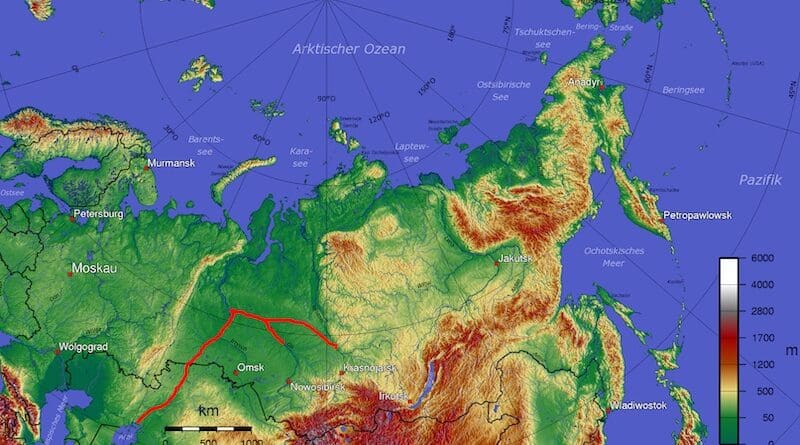
The layout of one of the past main proposed water transfer routes (via a Yenisei–Ob canal, down the Ob, up the Irtysh and Ishim, and then via a canal to the Aral Sea basin). The plan would involve other canals (not shown) to take the water further south. 
Credit: Wikipedia Commons

February 28, 2025 
By Paul Goble

For more than a century, Russians have talked about the possibility of diverting water from Siberia’s rivers to Central Asia to save the Aral Sea and help Central Asia overcome its water shortages; but these plans have been shot down in Moscow not only because they cost so much but also because they harmed Russia in various other ways.

But now two Moscow experts on hydrology argue that three developments have changed the situation and that as a result Russia would benefit far more than Central Asia. As a result, there is now a far better chance that the Russian government will back Siberian river diversion (ng.ru/nauka/2025-02-25/9_9200_system.html).

According to Mikhail Zelikhanov and Stanislav Stepanov of the Russian Academy Sciences, the three developments that have shifted the balance in favor of going ahead with this project are the following:First, global warming has increased the amount of water in Siberian rivers to the point that they flood Russian cities on a regular basis. The costs of repairing such disasters are so large than they make the costs of Siberian river diversion seem relatively small.
Second, Russian technology has advanced to the point that any water shifted from Siberia to Central Asia could go through pipelines rather than via canals, thus limiting the amount lost by filtration and evaporation to the point that the costs of the project are much reduced.
And third, in the wake of the redivision of the world following Putin’s expanded attack on Ukraine and the ensuing Western sanctions means that Moscow would benefit by creating a network of pipelines to carry water to Central Asia, China and other countries, not only financially but in terms of influence and getting investment from them.

These arguments are likely to be far more compelling that those advocates of this project have made in the past, although it is certain that many ecological activists and budget hawks will continue to oppose the measure. And in any case, its construction would take at a minimum several years.

But the appearance of the article by Zelikhanov and Stepanov is a reminder that the idea of Sbierian River Diversion is anything but dead, despite the veto the Gorbachev government imposed on it more than three decades ago. (For background on support for it since that time, see windowoneurasia2.blogspot.com/2024/07/only-revival-of-siberian-river.html.)


Paul Goble is a longtime specialist on ethnic and religious questions in Eurasia. Most recently, he was director of research and publications at the Azerbaijan Diplomatic Academy. Earlier, he served as vice dean for the social sciences and humanities at Audentes University in Tallinn and a senior research associate at the EuroCollege of the University of Tartu in Estonia. He has served in various capacities in the U.S. State Department, the Central Intelligence Agency and the International Broadcasting Bureau as well as at the Voice of America and Radio Free Europe/Radio Liberty and at the Carnegie Endowment for International Peace. Mr. Goble maintains the Window on Eurasia blog and can be contacted directly at paul.goble@gmail.com .

Pakistan Losing Khyber Pakhtunkhwa: TTP Resurgence And The Taliban’s Revenge – Analysis


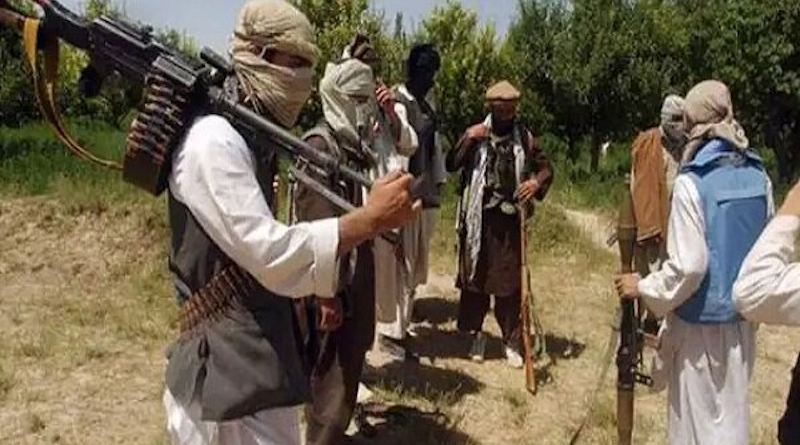
 Members of Pakistan Taliban 'Tehreek-e-Taliban Pakistan'. Photo Credit: Tehran Times

By 

Pakistan’s long history of supporting jihadist groups as strategic assets has come full circle. The country is gradually losing its Khyber Pakhtunkhwa province to terrorism. 


The number of attacks on by the Tehrik-i-Taliban Pakistan (TTP) has more than tripled between 2021 and 2024, according to the Jihad and Terrorism Threat Monitor. 

While Islamabad has sought to externalise blame, particularly towards Afghanistan and India, the reality is that TTP’s rise, fragmentation, and resurgence are primarily consequences of Pakistan’s own policies. From fostering militant proxies to botched counterterrorism efforts and failed negotiations, Islamabad’s miscalculations have enabled TTP to evolve into one of the country’s gravest security threats.

The Origins: Pakistan’s Hand in TTP’s Creation

TTP did not emerge in a vacuum. It was the inevitable result of Pakistan’s decades-long policy of nurturing jihadist groups, particularly the Afghan Taliban, to serve its geopolitical objectives in Afghanistan and Indian-administered Kashmir. Many of the militants who later formed TTP were trained in Pakistan’s religious seminaries and fought alongside the Afghan Taliban in the 1990s. Following the U.S. invasion of Afghanistan in 2001, Pakistan’s Federally Administered Tribal Areas (FATA) became a sanctuary for Al-Qaeda, Afghan Taliban leaders, and their Pakistani jihadist allies.

The turning point came when Islamabad, under U.S. pressure, launched military operations in ex-FATA, disrupting this safe haven but alienating the very tribal networks it had long relied on. These operations were executed with heavy-handed tactics, displacing thousands and creating a deep sense of betrayal among Pashtun tribes. By 2007, TTP had officially formed under Baitullah Mehsud, uniting disparate militant factions against the Pakistani state—a direct consequence of Islamabad’s earlier tolerance of jihadist networks and its subsequent crackdown on them.

Failed Counterterrorism: A Cycle of Blunders

Pakistan’s counterterrorism efforts against TTP have been defined by inconsistency and short-sightedness. While major military operations like Zarb-e-Azb (2014) and Radd-ul-Fasaad (2017) significantly weakened TTP, they failed to eliminate the group entirely. Instead, TTP’s leadership and fighters found sanctuary across the Durand Line, where they regrouped under Afghan Taliban patronage. Islamabad’s reluctance to sever ties with the Afghan Taliban, even as they harbored TTP militants, reflects Pakistan’s strategic contradictions.

Furthermore, Pakistan’s reliance on brute force, including indiscriminate airstrikes and mass detentions, has deepened local grievances in ex-FATA and Khyber Pakhtunkhwa (KP). The region remains politically and economically marginalised even after its merger with KP in 2018. The Pakistani military’s continued presence and allegations of human rights abuses, including extrajudicial killings, have fueled resentment, providing TTP with fertile ground for recruitment.

The Taliban Factor: Pakistan’s Strategic Misfire

Islamabad’s support for the Afghan Taliban was premised on the expectation that a Taliban-led Afghanistan would curb TTP’s activities. This assumption proved disastrously flawed. When the Taliban seized Kabul in August 2021, they not only refused to act against TTP but also released hundreds of its operatives from Afghan prisons, further emboldening the group.

Despite Pakistan’s repeated requests, the Taliban have shown little inclination to rein in TTP, underscoring the limits of Islamabad’s influence. The Taliban’s ideological affinity with TTP and their unwillingness to recognise the Durand Line as a formal border only complicate Pakistan’s position. In reality, the Taliban’s victory reinvigorated TTP, inspiring a surge in terrorist attacks in Pakistan, which rose dramatically from an average of 14.5 attacks per month in 2020 to 45.8 in 2022.

Negotiating with Terror: Islamabad’s Strategic Folly

Pakistan’s repeated attempts to negotiate with TTP have only strengthened the group. Since 2004, Islamabad has signed at least nine peace agreements with TTP, each time granting the militants greater legitimacy and space to regroup. The latest round of negotiations in 2021—brokered by the Afghan Taliban—saw Pakistan release over 100 TTP prisoners in exchange for a short-lived ceasefire. TTP predictably violated the truce, resuming attacks and making unrealistic demands, including the imposition of Sharia law and the reversal of ex-FATA’s merger with KP.

By engaging in negotiations, Pakistan not only legitimised TTP but also revealed its own strategic weakness. The failure to impose clear red lines in talks further emboldened the group, signaling that Pakistan lacked the resolve for decisive action.

The Road Ahead: Reckoning with Past Mistakes

Pakistan’s TTP problem is not an external conspiracy; it is the product of decades of flawed policies. The state’s longstanding tolerance for jihadist groups, its failure to integrate ex-FATA, and its misplaced faith in the Afghan Taliban have all contributed to TTP’s resurgence.

If Pakistan is to defeat TTP, it must first abandon its selective approach to militancy. The state can no longer differentiate between “good” and “bad” jihadists. This means severing all ties with groups like the Afghan Taliban and taking decisive military and political action to neutralise TTP. Additionally, addressing governance failures in ex-FATA and KP—through legal reforms, economic development, and genuine political inclusion—is critical to undercutting TTP’s recruitment base.

For too long, Pakistan has sown the seeds of its own insurgency. If Islamabad continues to avoid reckoning with its past mistakes, the cycle of militancy will only persist, threatening the country’s internal stability for years to come.


Aritra Banerjee is a Defence, Foreign Affairs & Aerospace Journalist, Co-Author of the book 'The Indian Navy @75: Reminiscing the Voyage' and was the Co-Founder of Mission Victory India (MVI), a new-age military reforms think-tank. He has worked in TV, Print and Digital media, and has been a columnist writing on strategic affairs for national and international publications. His reporting career has seen him covering major Security and Aviation events in Europe and travelling across Kashmir conflict zones. Twitter: @Aritrabanned

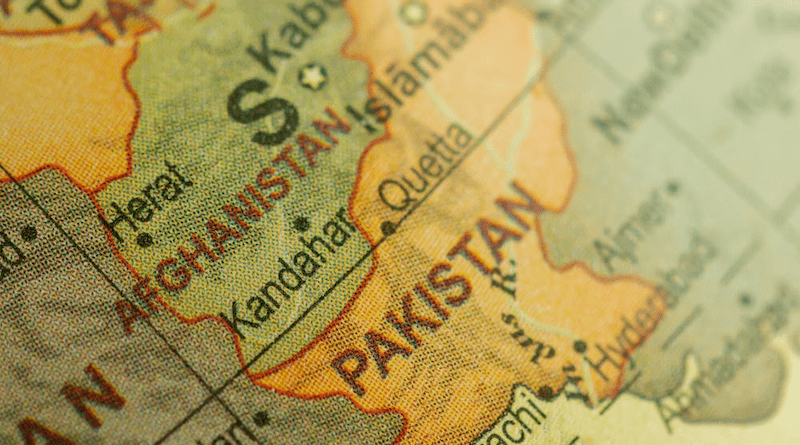
 pakistan map location

Strategic Choices Of Pakistan Amid US And Chinese Investments – Analysis


By  and 

Pakistan is walking a tightrope in its geopolitical and geo-economic orientations compounded by regional security issues and internal rifts hindering its capacity to respond decisively. Trump’s resurgence and enduring ascent of China is shaping a decisive global order to tip the balance towards either coexistence or strategic competition. Pakistan must safeguard its national interests through pragmatic balancing without extreme alignments in this shifting landscape. Given the substantial US and Chinese investments in Pakistan___each advancing its regional interests___Pakistan’s ability to hedge strategically will determine its success in leveraging opportunities and mitigating risks. 


Since independence, the Pakistan-US relationship has mainly been transactional, driven by Washington’s strategic interests, whether countering the Soviets in 1989, security concerns after 9/11, or stabilizing Afghanistan until 2021. When the interest was served, aid often declined. In contrast, Pakistan’s relations with China have remained steady since 1951. The Karakoram Highway marked the beginning of significant Chinese investment, leading to long-term partnerships in energy, mining, and strategic infrastructure like Gwadar Port. CPEC, being a $62 billion flagship project, puts Pakistan at a pivotal position in China’s BRI strategy. 

Keeping these relations as a pre-requisite, this insight analyzes the US and China’s comparative investment strategies in Pakistan, emphasizing the need for Pakistan to recalibrate its foreign policy to safeguard its national interests by balancing its relations with these global powers.

The US investment strategies, initially in the form of aid, follow a predictable script contingent upon its regional strategic interests. Over the years, the US has invested in areas like energy, defence, economy, health, education, etc. Graph I shows that being a Western ally in the Cold War gambit, Pakistan received nearly $2 billion of substantial military aid from 1953 to 1961. The aid was suspended during the Indo-Pakistan war of 1965 and 1971 and further deteriorated after Pakistan’s nuclear ambitions in 1979. The 1980s Afghan war reignited the Pakistan-US strategic alliance, which took another nosedive after the Soviet troops withdrew from Afghanistan. 

However, the alliance peaked after 9/11, with a surge in aid distinct from private investments, where Pakistan received approximately $7.89 billion in the “Coalition Support Fund”. The Kerry-Lugar-Berman Bill (2009) allocated $7.5 billion for development from 2010 to 2014.  In 2017, the U.S. government, through the Pakistan Private Investment Initiative (PPII), invested over 7.5 billion PKR in Pakistan’s small and medium-sized enterprises (SMEs). The initiative leverages local expertise via the Abraaj Pakistan Fund, the Pakistan Catalyst Fund, and the Baltoro Growth Fund, each receiving 2,496 million PKR from USAID, amounting to a total of 15.6 billion PKR, including their own investments. 

The US-China rivalry and the US withdrawal from Afghanistan in 2021 marked a shift in Pakistan-US relations, narrowing aid from $2 billion annually to eventually complete suspension. Private investment dropped to a mere $1.5 billion. Currently, US interests in Pakistan focus on counterterrorism, governance reforms, and conditional aid, shaped by the US-China impasse and concerns over regional radicalization threatening Pakistan’s internal security. 


Despite periodic sanctions, including the latest on ballistic missile technology in December 2024, Pakistan-US relations have persisted. However, the US-India partnership, marked by $20 million in defence deals, reflects Washington’s broader strategy to counterbalance China in Asia. Spanning over 7 decades, Pak-China relations, as described by President Xi as “Iron Brothers”, have stood the test of time. In Pakistan, significant Chinese investment started in 2015, and since then, it has emerged as the largest investor in Pakistan, accounting for 30% of total FDI. In FY2024, the investment stood at $ 224.81 million. China’s approach in Pakistan can be characterized by its pilot project, CPEC, which is a US$ 62 billion venture that builds infrastructure, energy projects, industrial units, and Special Economic Zones (SEZs). The purpose is to connect the deep-sea ports of Pakistan with the Chinese Xinjiang province and overland routes. 

Over the past decade, USD 44,370 million have been invested in 26 schemes, and 66 more projects worth USD 36.9 billion are in the pipeline. Thus far, CPEC has created 200,000 jobs in Pakistan, built 809 km of road, added over 10,000 MW of electricity to the national grid, and installed 886km of power transmission lines. The First Metro line in Lahore was a substantial project under CPEC. (see sector-wise investment graph in million dollars)

In September 2024, 25 Chinese companies pledged investments in Pakistan’s textile, technology, agriculture, pharmaceuticals, logistics, medical equipment, automobile, and education sectors. Several MoUs were signed for a $10 billion Chinese investment in four major export-oriented sectors: agriculture, food, textile, and car spare parts manufacturing. A protocol was signed with a Chinese investor to cultivate peanuts across 10,000 acres in Cholistan for export. Telecommunication companies like Zong, Huawei, and Changan Plant are prominent examples of Chinese investments. General Yang Yundong showed interest in investing $1 billion in establishing a medical city in Pakistan

China’s refusal to restructure Pakistan’s energy debt, totalling $16 billion, highlights the limits of this “Iron Brothers” partnership. Furthermore, recent tensions over Gwadar Port control and Pakistan’s request for sea-based nuclear capabilities indicate strains in the relationship, compounded by China’s obligations under the Nuclear Non-Proliferation Treaty.

The graph shows the comparative net FDI by China (red) and the US (blue) over the past decade, depicting a sharp decline in Chinese investments in 2018 due to government regulations and repayment concerns. Despite notable advances, Pakistan faces hindrances on nine priority SEZs, particularly the ML-1 railway line connecting Karachi to Peshawar, which inflated the cost to 45%. The US approach remained stagnant, depicting limited strategic investments. 

A comparative analysis of US and Chinese investment strategies in Pakistan reveals diverging strategic ambitions. The US focuses on conditional aid and private sector development in non-traditional areas. Meanwhile, China’s loan-driven investments in regional connectivity and energy routes may burden Pakistan despite promising expansion.

The future prognosis vindicates that Chinese and US investments will continue to shape Pakistan’s trajectory, necessitating a foreign policy revamp from hard-core alliances to issue-based multilateralism. The US is capable of swindling Pakistan’s politics through monetary institutions. For instance, the World Bank cancelled a $500 million loan under PACE-II because Pakistan could not renegotiate its terms with power plant agreements under CPEC. Similarly, Pakistan’s lapses in security assurances of Chinese nationals have slowed down CPEC investments.China refused to reopen big deals and restructure energy debt totalling around $16 billion.

The US is a key trade partner and influential in global economic institutions. At the same time, China provides Pakistan with crucial economic infrastructure, so hedging strategically is paramount for Pakistan without disengaging with either of them.  

Pakistan must strengthen indigenous capacity building by investing in domestic industries and leveraging its mineral and cold reserves to reduce reliance on external aid. (see Graph) Pakistan must also maintain diplomatic agility to navigate the US-China rivalry without compromising its sovereignty. Utilizing the global Pakistani diaspora to enhance soft power and attract foreign direct investment is crucial to escape the vicious cycle. Pakistan needs to demonstrate tangible progress on security and economic ends to ensure viability under CPEC and continued partnership with the US. Harness soft power, leverage its diaspora, and boost indigenous capacity building to improve income and attract FDI to escape the vicious debt cycle.  

About the authors:

  • Shafaq Zernab is a Research Intern at India Study Centre, Institute of Strategic Studies Islamabad.
  • Muhammad Ahmad Khan is a Research Associate at India Study Centre, Institute of Strategic Studies Islamabad.


FacebookTwitterEmailFlipboardMastodonLinkedInShare

Shafaq Zernab

Shafaq Zernab is a Research Intern at India Study Centre, Institute of Strategic Studies Islamabad.

 pakistan flag people sun (photo supplied)

Pakistan: Decolonization, Depoliticization, And De-Radicalization As Only Path To Meaningful Education – OpEd


By 

The education system vague in Pakistan since its creation is the continuation of the British colonial education system, which stems from the English Education Act 1835, a legislative Act based on Macaulay’s minutes. According to him, English education should be imparted instead of traditional Indian learning. He believed in education for a few upper and middle-class students and wished to create a class of Indians who were Indian in color and appearance but English in taste and affiliation rather than Indian by Blood & British by Taste. He wished to create a pool of Indians through his education system, capable of serving British interests and remaining loyal to them.  


Here, I am writing only about the two key features of the Macaulay education system and its continuity in the country’s education system since its creation.

1) Focus on the English Language: The system emphasized English as the medium of instruction promoting Western literature which has proved main barrier and detrimental in acquiring education and learning outcomes, which spawned generations in the United India and now in Pakistan. Out of this system, a class grew up and has been growing since 1947 with a sense of inferiority about their own culture, language, and traditions. The net outcome of this flawed education system is the promotion of memorization, rote learning, production of zombies and parrots rather than producing critical thinking or creative minds.

2) Formation of an Educated Elite: The second most harmful intention of the Macaulay education system was to produce a small elite class that could serve in administrative roles and facilitate British governance rather than providing widespread education for the masses. It did lead to increased literacy among small segments of society and the emergence of a new educated middle class, which contributed to a disconnect from Indigenous needs, knowledge, and cultural practices, resulting in long-range destruction like the socio-cultural divide between those educated in English and those who continued to get education in government education institutions. 

What we did in Pakistan further deepened that divide by continuing and adding four types of education: English medium / Urdu medium, public /private, and Madrasah, followed by highly politicized and radicalized education systems. This system persists from 1947 to this day, contributing to socio-economic inequalities and ideological differences, which resulted in political instability, economic meltdown, and sentiments of deprivation and exclusion in the public due to the loss of their identities, indigenous languages, and literature.

In a nutshell, the adoption of the Macaulay system of education promoted a colonial mindset and created a distinct elite class Consisting of mainly civil bureaucracy, political and business classes in the country- Pakistani by blood, color, and appearance but English in taste and affiliation, to serve the political masters and protect their interests rather than delivering service to the public. They neglected the educational needs of the population at large. Such legacy continues to influence the Pakistan education system since its creation till date. 
This distinct class consisting of political elites and civil bureaucracy, with a colonial mindset, over some time, ruined all the government-run institutions, introducing bad governance, plundering the national exchequer, making properties abroad, and giving a debt-ridden economy to the country. 

Ironically, this class, occupying 80% of seats in the country’s parliament, graduated from highly expensive private education institutions like Hihyson Lahore, public school Karachi, GC college or grammar school Lahore, etc, but they are subservient to the middle-class graduate from Kakol Academy Abott Abad, a mid-level military institution. 

Results of the Flawed / Inherited Education System 

It took Pakistan 62 years to incorporate the right of free and compulsory education into its constitution with the enactment of Article 25-A in 2010, guaranteeing free and compulsory education as a fundamental right of all children and placing the responsibility of its provision on the ‘state in line with 1948, UN declaration of free and compulsory education a fundamental human right through Article 26 of the Universal Declaration of Human Rights. 

However, 13 years after its passage, this legislation remains a pipe dream for the common man and remains largely ineffective due to government inaction resultantly Over 26 million children aged five to sixteen years are still out of school, including 20 million who had never stepped inside a classroom particularly, 12.5 million Girls are out of school in the country. Those who do attend school mostly do not learn the skills required in the 21st century.

Further education has never been a priority in the corridors of power dominated by the ruling class. Therefore, Pakistan is spending- only 2% of its GDP on education, less than the regional countries, India spends 4.6 %, Bhutan 7%, and even war-torn Afghanistan spends 2.9 of its GDP, more than Pakistan. Meanwhile, Pakistan’s 220 universities’ education budget is below 2%, falling short of global Sustainable Development. 

Furthermore, the situation in Balochistan is worse than that of the other federating units. Education has never been a priority of the past and present government. The chronology of education ministers shows that the ministers in charge of education needed education themselves. Therefore, the state of education in the province is home to the worst indicators, with a whopping 81 percent of girls having failed to complete primary school; the figure for boys is 52 percent. In addition, 75 percent of girls had never set foot inside a classroom as compared to 40 percent of boys. According to a study by UNESCO, in 2022, the female literacy rate is just 36.8% in Baluchistan. 


The provincial government has turned back to meet the demand for missing facilities due to a lack of commitment and financial resources. More than 3200 schools are non-functional due to a shortage of about 2500 teachers, and the teachers already engaged in teaching have received no professional training in content knowledge and pedagogical skills because of a lack of budgetary allocation.

In terms of cost and benefit analysis, both federal and provincial governments together spend about Rs1,000 billion on education annually. That’s almost twice the cost of running the civilian federal government and by far the biggest item after defense and debt-servicing. And that’s just public-sector spending; Private spending is more than this number. And what do we get from all this money? Nothing. The nation has neither produced good leadership to lead the country on a stable and prosperous path, nor the flawed education system given brilliant scientists, economists, strategists, sociologists, or judicial minds to the nation over 77 years. 

Despite tyranny, defunding of and discrimination in the education sector, outdated curricula, and a lack of emphasis on skill and professional interdisciplinary learning, coupled with poor governance, rampant corruption, a complete disregard for merit, and a lack of accountability for outcomes, are the permanent fit falls in the system. Consequently, Pakistan’s education system and the outcomes it produces are among the worst in the world. 

This is largely due to the politicization of education and the over-inducing of ideology in the curricula during Ayub’s and Zia’s martial laws, particularly after the introduction of a Single National Curriculum by the Imran khan regime. We are inculcating in the young minds through textbooks a deliberate propagation of rigid ideologies, creating fake identities and false narratives of one nationhood, opposite to diversity and heterogeneous society. For the last seventy-seven years, we utterly failed to create a nation through textbooks based on rhetoric and teaching young minds false and fabricated history. Rather than letting children learn from our historical mistakes, we are doomed to repeat these mistakes. Consequently, the society has become fragmented, disintegrated, and more poisonous.

It seems that political parties and their governments, irrespective of military or civil, in the past and present, have much in common, they are united in quite a lot, including their efforts to assert control over the education system. The most recent example is the Sindh government passing a law that would allow bureaucrats — in addition to academics — to be appointed vice-chancellors (VCs) of universities. Similarly, in Khyber Pashtoonkhawa, the government also took advantage of its numbers in the assembly and amended the law to give the chief minister the power to appoint VCs. Baluchistan government has already done it in the same way. The Punjab government is planning to flex its muscles similarly and centralize the education sector, making the chief minister and ministers the head of the syndicates governing higher education institutes and removing the VCs from the chairmanship. 

This inherited and deficient education system is a major reason for substandard human capital in the country, which is the biggest impediment to the country’s political stability, social and judicial harmony, and economic progress. Although these issues have been well-known and recognized by the country’s so-called leadership for decades, unfortunately, the ruling elite class has not been serious about addressing these structural weaknesses in the governance and management of flawed Macaulay’s education system, which has resulted in the death of (DEI), diversity, equity and inclusiveness in the country’s overall governance system.

What to Do for Meaningful Changes in the Education Sector 

Our inherited flawed colonial education system needs decolonization on war putting. It requires complete overhauling by introducing drastic structural reforms at the policy level. Pakistan needs a rational, inclusive, harmonious SES (Single Education System) rather than an irrational, exclusive, and radical SNC ( Single National Curriculum).

It can be done by taking extraordinary measures coupled with an increase in the allocation of up to 4% of GDP recommended by UNESCO. Indigenous rational policymaking would entail a stable, long-term vision for education. It could be designed and developed in consultation with those who are highly professional and directly involved in the field of education with complete consent of all federating units in line with the 18th Amendment. 
The drastic structural reforms include Decolonisation, Depoliticisation, and de-radicalization of education both at federal and provincial levels, coupled with the Establishment of independent Provincial education commissions free from political interference in all four provinces in line With the 18th Amendment.

Reform At the policy level includes! Introduction of IT, AI, a departure from blackboards to keyboards, Teachers training and capacity building of management cadre, Indigenous and consensus-based Curriculum reforms, ending language tyranny of English as a medium of instruction and introduction of Indigenous languages as medium of instruction at least to secondary level, adoption of best international practices from primary to a higher level and linking of higher education with the market. Regulation and monitoring of the private education sector. Provision of missing facilities, Establishment of new and up-gradation of existing schools. Timely and merit-based recruitment of teachers against the vacant positions both at the federal and provincial levels.

To ensure inclusive and equitable quality education in the country, We should advocate for the education system to be restructured to educate and serve the common man instead of one percent of the elite class. We need schools and universities to be authentic learning and research spaces and not instruments of coercion and indoctrination or incubators of deceptive ideologies.

Last but not least, declaring an education emergency for a period of five years to shoulder the structural reforms agenda in education, implementation of the 18th amendments in its true spirit and Article 25 (A), providing free and compulsory education to all children of the age of five to sixteen years, including taking effective measures to ensure meeting the targets set by SDG 4, of Sustainable Development Goals


Sher Khan Bazai is a retired civil servant, and a former Secretary of Education in Balochistan, Pakistan. He can be reached at skbazai@hotmail.com.