No Collective Security or Decision-Making Power for New Orleans Charter School Teachers
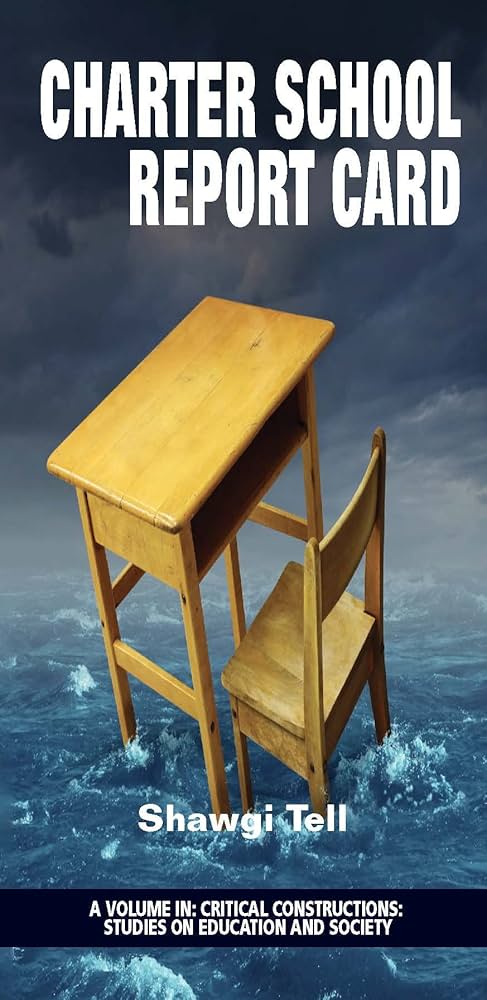 Charter schools are outsourced schools that have always opposed teachers’ unions, which is why about 90% of the nation’s roughly 8,200 charter schools have no unions. In other words, the vast majority of charter school teachers nationwide have no collective security or real decision-making power. As private employers, charter schools consider teachers “at will” employees—someone they can terminate at any time, for any reason, or no reason at all.
When teachers do strive to form a union at a charter school it is usually in secret and a long uphill battle fraught with various assaults by charter school owners, administrators, and lawyers.
Charter school teachers generally fall under the auspices of the National Labor Relations Board (NLRB), an independent federal agency established in 1935 to protect private sector workers. See here for more information about NLRB.
Unfortunately, according to The Guardian, “The number of union elections overseen by the National Labor Relations Board (NLRB) dropped 30% in 2025 after the Trump administration left the federal labor watchdog powerless…. Since the start of his second term, Trump has made unprecedented moves to freeze the board.” This has harmed private sector workers, which in turn also hurts public sector workers.
In this context, we learn from The Louisiana Weekly (February 23, 2026) that, “Nearly two years after teachers at New Orleans charter school Lycee Francais International de la Louisiane (formerly Lycee Francais de la Nouvelle-Orleans) voted overwhelmingly to unionize, a federal board has ruled that the school doesn’t have to recognize the union.” This is a big blow to teachers’ working conditions and students’ learning conditions.
In April 2025, the NLRB ruled that, “it no longer has jurisdiction over the unionization push at the school, meaning it cannot compel Lycee Francais’ administrations to negotiate with members.” While the citywide teachers’ union, United Teachers of New Orleans (UTNO), appealed the decision, the NLRB denied the appeal in January 2026.
This attack on workers’ rights was achieved through the passage of a 2024 state law (Act 172) that conveniently converts charter school teachers from “private employees of the school’s nonprofit charter operator into public employees of a government body, who therefore fall outside of the NLRB’s jurisdiction.” This is a textbook example of charter school advocates manipulating the categories “public” and “private” in self-serving ways. Charter schools are public when they want to be and private when it serves them better.
Act 172 arbitrarily renders charter schools as public schools (“political subdivisions of the state”) so that charter school teachers no longer fall under NLRB jurisdiction and find it harder to unionize and defend themselves. On paper, Act 172 capriciously makes the New Orleans charter school Lycee Francais a school “administered by individuals who are responsible to public officials or to the general electorate.”
No one should be fooled by this sleight of hand though: charter schools remain private in character and engage in profiteering regardless of whether they are considered non-profit or for-profit schools. And to be sure, charter schools are not state actors. They are not government agencies or political subdivision of the state. They are not created by the government like traditional public schools are. They are independent deregulated schools that are exempt from many laws, rules, and statutes upheld by traditional public schools. They have always by run by private operators and governed by unelected private persons. Charter schools also routinely cherry-pick students even though they are “open to all” and “tuition free.” Charter schools were conceived more than 30 years ago as schools set up outside of the traditional public school model, independent of it. This is why they are frequently referred to as “autonomous” schools. Indeed, they came into being to compete with traditional public schools, which is why they are often called “free market” schools that embrace consumerism and a fend-for-yourself culture.
It comes as no surprise that, “All of the [Lycee Francais] teachers who had originally been involved with organizing the union in 2024 have since left the school or have been fired, which some employees alleged was in retaliation for the union drive.”
Creating a union for teachers at a charter school just got much harder in New Orleans. As a result, teachers and students will remain marginalized while the private interests that operate charter schools will hold the upper hand.
To add insult to injury, it is worth noting that New Orleans became the first major city in the country to become an all-charter-school-city in 2019, which essentially means that no traditional public schools exist in the city. This mocks the whole idea of “choice” driving charter schools.
For extensive information and analysis on the many failures and scandals plaguing New Orleans charter schools over the years, see here, here, here, and here.

No comments:
Post a Comment