Thursday, December 18, 2025

GOOD RIDDANCE
Pope replaces New York's Cardinal Timothy Dolan with little-known bishop

Vatican City (AFP) – Pope Leo XIV has accepted the resignation of influential New York Archbishop Timothy Dolan, a leading figure of the US church's conservative wing, the Vatican said Thursday.


Issued on: 18/12/2025 - RFI
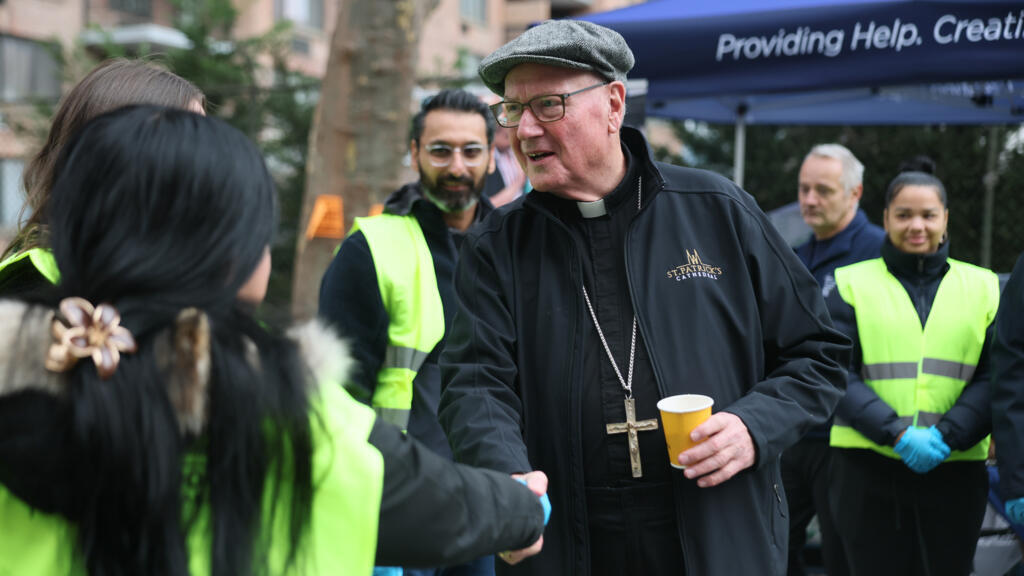
Dolan was widely regarded as being close to US President Donald Trump 
© Michael M. Santiago / GETTY IMAGES NORTH AMERICA/AFP

The first US pope replaced Dolan, who stepped down after reaching the Church's retirement age of 75, with a little-known 58-year-old bishop from Illinois, Ronald Hicks.

The appointment ends months of speculation about who Leo would pick to follow Dolan, widely regarded as being close to US President Donald Trump.

This is the most important bishop appointment Leo has made since his election to head up the world's Catholics in May and signals a desire to take a firmer stance on the US administration's decisions, particularly on human rights.


Hicks shares several similarities with Leo including solidarity with migrants, in contrast with Trump's zero-tolerance immigration policies.

He spent five years of ministry in El Salvador in Central America, while Leo spent two decades in service in Peru.


Hicks also served shortly after joining the priesthood in 1994 in several parishes in the Archdiocese of Chicago, the city where Leo was born.

Dolan, a ruddy-faced extrovert with Irish-American roots, has served in New York since 2009, tackling shrinking Church membership by reaching out to embrace the growing Hispanic population, which is predominantly Catholic.

A theological conservative fiercely opposed to abortion, he oversaw the fallout from a major sexual abuse scandal in the diocese.

Just a couple of weeks ago, the archdiocese announced the creation of a $300 million fund to compensate victims of sexual abuse who had filed complaints against the Church.

At the time, Dolan said that a "series of very difficult financial decisions" were made, including layoffs within the archdiocese and a 10-percent reduction of its operating budget.

© 2025 AFP


Bishop Hicks, Chicago ally of Pope Leo XIV, named to lead New York after Dolan era

VATICAN CITY (RNS) — The pope's choice signals continuity with his own pastoral vision — and entrusts one of the church’s most powerful dioceses to a bishop tested by declining vocations, parish closures and the fallout from clerical abuse.
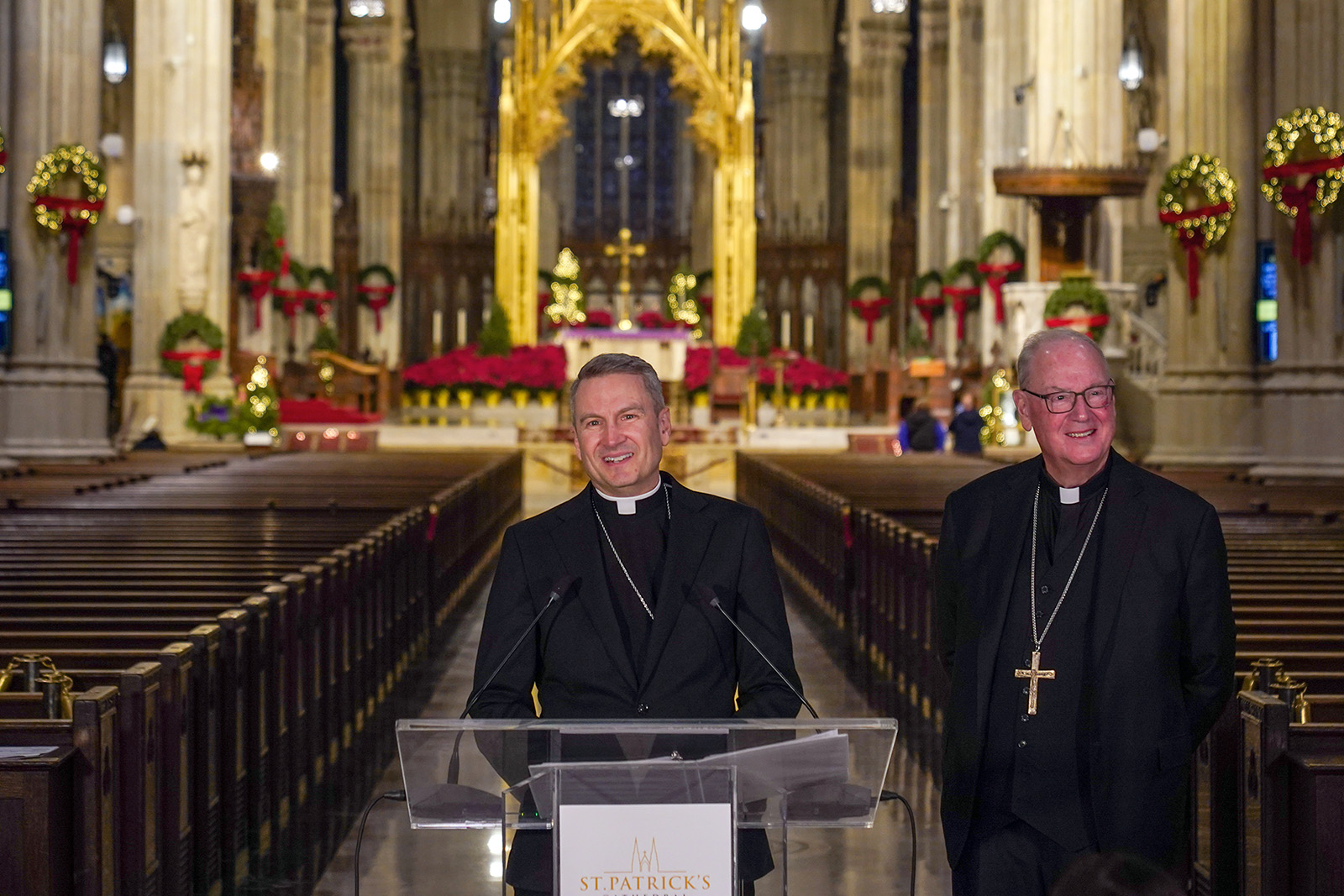

New York archbishop Timothy Dolan, right, welcomes Bishop Ronald Hicks during a news conference at St. Patrick's Cathedral, Thursday, Dec.18, 2025 in New York. (AP Photo/Ryan Murphy)


Claire Giangravé and Aleja Hertzler-McCain
December 18, 2025
RNS


VATICAN CITY (RNS) — Pope Leo XIV tapped Bishop Ronald A. Hicks of Joliet, Illinois, to lead the influential Archdiocese of New York, replacing Cardinal Timothy Dolan, who led New York’s 2.8 million Catholics for 16 years. Dolan, following Vatican rules, had tendered his resignation when he turned 75 in February.

Like Leo, Hicks, 58, is a supporter of Pope Francis’ welcoming and inclusive vision of Catholicism with an eye toward social justice. Hicks is also cut from much the same cloth as the current pope. Born in Harvey, Illinois, in 1967, Hicks grew up in South Holland, not far from the Chicago suburb where Leo was raised, and both started discerning their vocations at an early age. Leo, who previously headed the Vatican’s department for appointing bishops, has likely followed Hicks’ career closely.

Dolan, a towering figure in the U.S. church and a natural fit in New York with his bluff style, sometimes drew ire from the city’s mostly Democratic voters for his apparent support of the Trump administration.

Dolan’s “backslapping, gregarious style served him well in that role, but particularly in the Pope Francis era there were missed opportunities where he didn’t seem eager to champion the pope’s priorities,” said Christopher White, author of “Pope Leo XIV: Inside the Conclave and the Dawn of a New Papacy.”


“Hicks’ personality is different from Dolan’s,” White added. “He won’t be shy, and at the same time he will also bring a seriousness and willingness to learn that’s likely to help him on a local level that will be different from Dolan’s larger-than-life persona.”


Archbishop of New York Cardinal Timothy M. Dolan has his photograph taken with people at the 264th New York City St. Patrick’s Day Parade, March 17, 2025, in New York. (AP Photo/Adam Gray, File)

Hicks was ordained in 1994 by Chicago’s archbishop at the time, Cardinal Joseph Bernardin, with Cardinal Blase Cupich, the current head of the Chicago see, as the principal consecrator.

Hicks aknowledged the similarities between himself and Leo, in an interview earlier this year with WGN, a Chicago TV station. “We grew up literally in the same radius, in the same neighborhood together. We played in the same parks, went swimming in the same pools, liked the same pizza places to go to,” Hicks said, adding, “I mean, it’s that real.”

Their similar biographies “means that it’s personal. Leo recognizes himself in Hicks and vice versa,” said White.

Also like Leo, who spent more than a decade in Peru, Hicks has said he was inspired in his ministry by his time in Latin America, where, from 2005 to 2010, he served in El Salvador as the regional director of Nuestros Pequeños Hermanos, a nonprofit home for thousands of orphans and abandoned children.

He was awed by Latin American Catholics’ devotion to St. Oscar Romero, the archbishop of San Salvador and vocal critic of human rights violations during El Salvador’s civil war, who was assassinated while saying Mass in 1980. Francis made Romero a saint in 2018.

“The encounter of the Latin American church, where his priestly ministry was defined by standing in solidarity with the poor and marginalized, means this is in the DNA of both men, and that’s one of the essential qualities Leo — like Francis — is looking for when he’s assessing candidates for the Catholic hierarchy,” said White, a senior fellow of the Initiative on Catholic Social Thought and Public Life at Georgetown University.
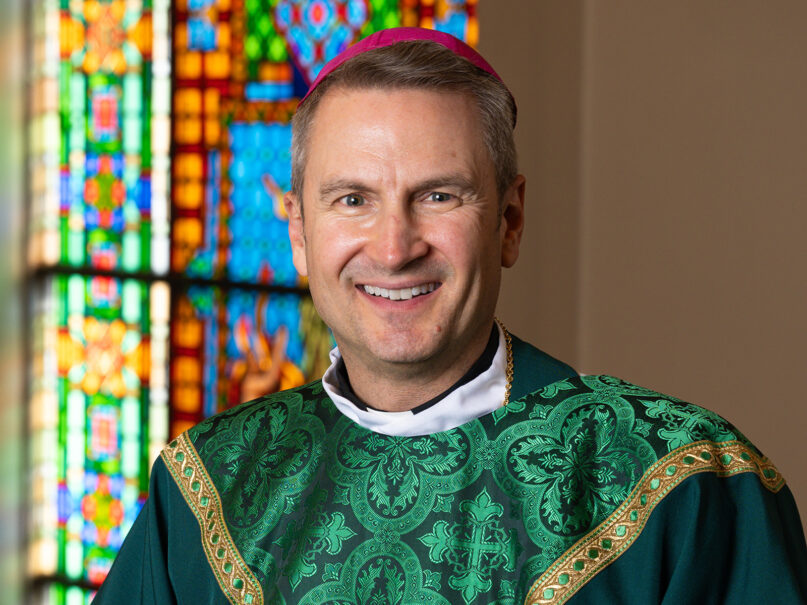


Bishop Ronald A. Hicks. (Photo courtesy Diocese of Joliet)

In 2010, Hicks was appointed dean of formation at Mundelein Seminary, at the University of St. Mary of the Lake, in Illinois. The Rev. John Kartje, who worked on his formation team before becoming rector of the seminary, heaped praise on his leadership style.

“ This is someone who is capable of administration at the highest levels, but very much has his heart and soul with the people and particularly marginalized populations,” Kartje said. Hicks later served as vicar general for the Archdiocese of Chicago, an administrative role which Kartje called “ one of the most challenging positions in any diocese.”

As dean of formation, Kartje said he found Hicks to be “ an excellent listener, but also not at all afraid to make decisions,” even as men preparing for the priesthood struggled with really challenging things.

The formation of priests became a throughline in Hicks’ career: He currently serves on the U.S. Conference of Catholic Bishops’ Committee on Clergy, Consecrated Life and Vocations, working closely with the Association for the Ongoing Formation of Priests and the National Association of Diaconate Directors.

In 2018, Hicks became an auxiliary bishop in the Archdiocese of Chicago, now led by Cupich, and Hicks’ new appointment to lead in New York has the marks of Cupich’s influence. Considered a close ally of Francis, Cupich played a key role in the conclave that elected Leo. “Hicks is of course a protégé of Cardinal Cupich,” White said, while noting that Hicks served under three Chicago archbishops — Bernardin, Cardinal Francis George and Cupich, with different priorities and personalities.

“They all clearly recognized talent in Hicks and the fact that he was able to work closely with all three of them speaks well of his ability to bridge-build with a range of backgrounds and profiles,” said White.

In a 2023 speech in Peru, Leo praised Bernardin and Cupich for their advocacy for what is now known as “the consistent ethic of life,” which put the church’s ardent opposition to abortion within a larger framework that included opposition to capital punishment and protection of the poor and displaced.

“Those who champion the right to life for the most vulnerable among us must be equally visible in supporting the quality of life of others who are vulnerable, including the elderly, children, the hungry, the homeless, and undocumented immigrants,” said Leo at the time.

Leo more recently defended Cupich when the cardinal was criticized by conservative Catholics for recognizing Democratic Sen. Dick Durbin, a supporter of abortion rights and champion for refugees and migrants, with a lifetime achievement award from the archdiocese’s Office of Human Dignity and Immigration Solidarity Ministry. Durbin later declined the award.

In September of 2020, Francis appointed Hicks to lead the Diocese of Joliet and its 520,000 Catholics.

As a diocesan bishop, Hicks has had to manage at least one case of alleged clerical sexual abuse, in which a woman claimed in 2023 to have been sexually assaulted by a priest in the diocese, according to a lawsuit she later filed in the Will County Circuit Court. The woman said the diocese did not take her claims seriously, only suspending the priest after she filed suit a year after her initial claim. In her suit, she alleges that Hicks’ office called her “a liar,” according to the Chicago Sun-Times.
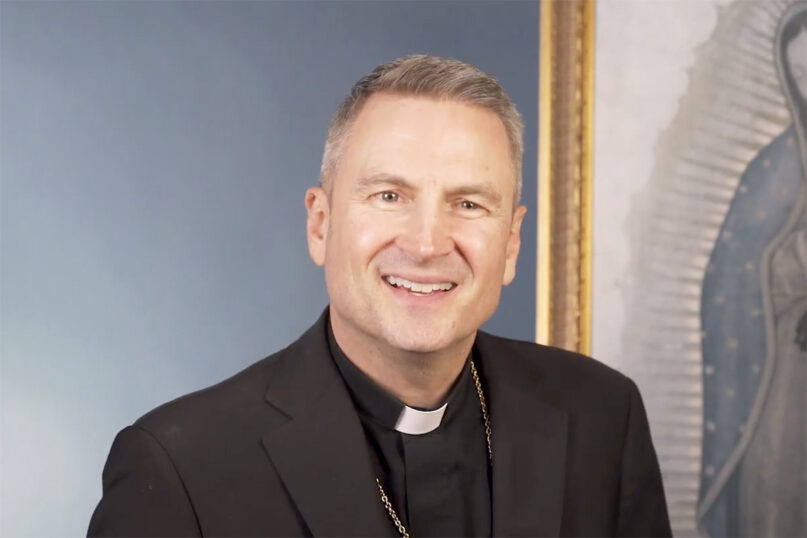

Bishop Ronald A. Hicks. (Video screen grab)

Hicks’ relative young age means he has the chance to put his imprint on one of the United States’ most powerful archdioceses over many years. New York’s archbishops have historically engaged in the city’s social and political life, and in U.S. politics more broadly. He becomes the face of Catholicism in the city just as Zohran Mamdani is about to be sworn in as its first Muslim mayor.

Becoming archbishop of New York has long meant an automatic red hat from the Vatican.

But the new assignment also comes with challenges. The New York Archdiocese, which recently agreed to mediation to settle 1,300 sex abuse claims, needs to raise $300 million to pay survivors and is in the process of selling Manhattan properties, while restructuring or closing dozens of dwindling parishes.

Over the past decade, vocations have decreased in the archdiocese, which ordained only four new priests in 2025, down from 13 in 2009. (Early reports on Dolan’s “Called by Name” initiative, launched in May, have called its results promising.)

Despite Hicks’ experience in seminary formation, he struggled to bolster vocations in Joliet. In 2020, 33 men were discerning for the priesthood, but after four years of Hicks’ leadership, the most recent count totaled 27 seminarians. While six new priests were ordained in 2020, only one transitional deacon was ordained in the diocese 2024.

Kartje told RNS that Hicks is “ an excellent supporter of vocations.” Joliet’s seminarians go to Mundelein, and Kartje said that “ for a relatively small diocese, they do quite well with vocations.”


FILE – Cardinal Timothy Dolan of New York prays at the inauguration of Donald Trump in the U.S. Capitol rotunda in Washington, D.C., on Jan. 20, 2025. (Video screen grab)

In October, Hicks issued a pastoral letter titled “MAKE,” centered on promoting conversion, confession, Communion and evangelization. In 2024, he led a structural reform that merged some of the diocese’s 100 parishes and closed nine, describing the restructuring as a proactive measure to focus the church’s efforts and to redirect financial resources to ministry instead of payroll and real estate costs. After parishioners at one church petitioned the Vatican’s dicastery for clergy, Hicks backed down and allowed it to remain open.

White described Hicks as “an affable and energetic pastor, someone with real management savvy,” which will likely prove useful in running the major archdiocese. While representing continuity with Francis’ vision for the church, Hicks is, like Leo, more favorably disposed toward the celebration of Mass in the Old Latin Rite, which Francis strongly restricted.

RELATED: Pope Leo’s first Vatican Christmas crèche carries message of peace

Dolan navigated the polarized landscape of U.S. Catholicism without tipping the balance too strongly to one side or another. He spoke out on behalf of migrants and refugees and criticized anti-immigrant policies, without mentioning President Donald Trump by name, in a July commentary in the New York Daily News. Dolan made overtures to New York’s cultural constituencies, even taking part in the 2018 Met Gala that had as its theme the “Catholic Imagination.”


But nationally, Dolan has aligned himself with conservative politicians, delivering an invocation at the 2020 Republican National Convention and accepting an appointment to Trump’s Religious Liberty Commission in May. Trump has referring to Dolan as “a king” and lobbied for him to become pope after Francis’ death. In an appearance on “Fox & Friends” earlier this year, Dolan described the late conservative speaker Charlie Kirk as a “modern-day St. Paul.”

By replacing Dolan with someone more aligned with his own vision for the church, Leo shows he is paying attention to the divisions in the U.S., seeing New York as an opportunity to unite Catholics behind the church’s traditional teachings while raising the archdiocese’s profile on social justice issues.

UN urges release of 10,000 arbitrarily detained in Eritrea

The United Nations on Monday called for the unconditional release of the estimated 10,000 people arbitrarily detained in Eritrea, including politicians, journalists and students.


Issued on: 15/12/2025 - RFI

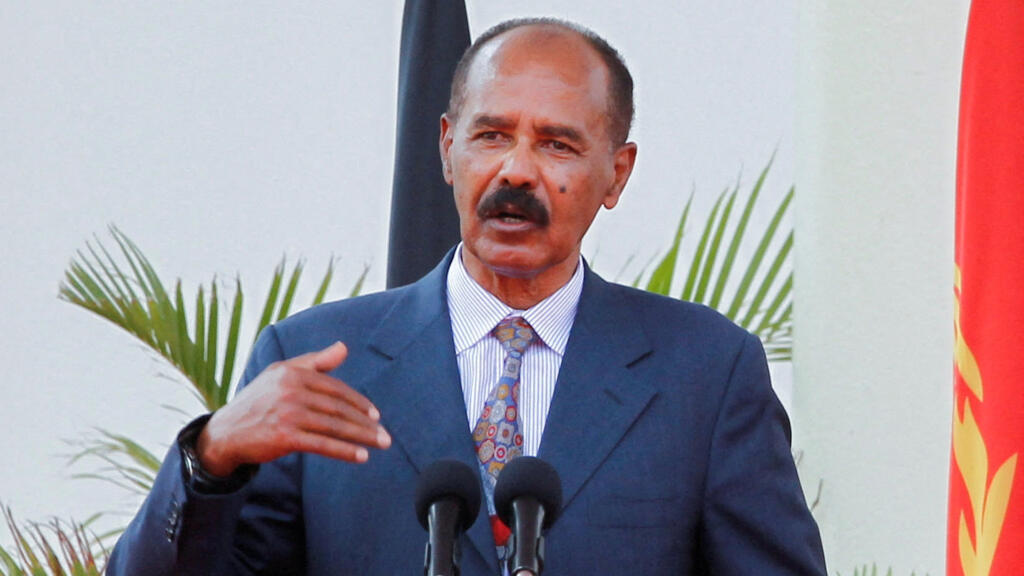
Eritrean president Isaias Afwerki addresses a joint news conference during a visit to Kenya, 9 February, 2023. REUTERS - MONICAH MWANGI


The Horn of Africa country has been ruled with an iron fist by President Isaias Afwerki, 79, since independence from Ethiopia in 1993, and ranks near the bottom of every rights indicator.

"The recent release of 13 Eritreans from nearly 18 years of arbitrary detention is an encouraging development," UN human rights office spokesman Seif Magango said in a statement.

"We call on the authorities to unconditionally release all individuals still arbitrarily detained across the country, including the G11 former senior government officials who were detained in 2001 after calling for governance reforms."

The UK-based NGO Human Rights Concern-Eritrea last week welcomed the release earlier this month of 13 people, including an ex-Olympian and former police officers, who had been imprisoned without charge, trial, or access to a lawyer.

International obligations

It said during their detention in Mai Serwa prison, near the capital Asmara, some had been confined to metal containers where temperatures fluctuated between extreme heat and bitter cold.

Dissenting voices in the country, home to around 3.5 million people, disappear into prison camps, and civilians face military conscription or forced labour.

"There are estimated to be more than 10,000 people in arbitrary detention in Eritrea, among them politicians, journalists, priests and students," said Magango.

"Our office stands ready to continue its engagement with the Eritrean authorities to ensure Eritrea fully complies with its international human rights obligations."

(with AFP)

Category ‘6’ tropical cyclone hot spots are growing


Climate change is making massive hurricanes and typhoons more likely in the western Pacific, North Atlantic and Gulf


American Geophysical Union


NEW ORLEANS — The oceanic conditions that churn up the very strongest of hurricanes and typhoons are heating up in the North Atlantic and Western Pacific, fueled by warm water that extends well below the surface. Human-caused climate change may be responsible for up to 70% of the growth of storm-brewing hotspots there, according to new research.  

These hot spots are making it more likely that stronger Category ‘6’ tropical cyclones may hit landfall in highly populated areas.  

“The hot spot regions have expanded,” said I-I Lin, a chair professor in the Department of Atmospheric Science at the National Taiwan University. 

Lin will present the findings during an oral session on tropical cyclones at AGU’s 2025 Annual Meeting in New Orleans, Louisiana, on Wednesday, 17 December. From 15-19 December, AGU25 brings together more than 20,000 scientists to discuss the latest in Earth and space science research. 

Lin has been interested in the strongest hurricanes and typhoons for more than a decade. Typhoon Haiyan—also known as Super Typhoon Yolanda—struck the Philippines at maximum intensity in November 2013, killing thousands of people. The next year, Lin and her colleagues published a paper calling for the need for creating a new category of tropical cyclones—6—for the very strongest storms like Haiyan, in the AGU journal Geophysical Research Letters.  

Category 6 tropical cyclones would include those that exceed a wind intensity of 160 knots, Lin and her colleagues argue. Previously, any storm with winds above 137 knots were considered Category 5—most official weather agencies still recognize Category 5 tropical cyclones as the strongest. But since most other categories include a window of about 20 knots, Lin said it makes sense to create a Category 6. Category 4, for example, includes storms with wind intensity of 114-137 knots.  

Some of the best-known of these storms include Hurricane Wilma in 2005, the most intense hurricane recorded in the Atlantic basin, Typhoon Haiyan and Typhoon Hagibis, which struck Tokyo in 2019. The latter was among the costliest in terms of destruction from rain and wind, Lin said, even though it had downgraded in intensity by the time it hit the Japanese capital. Finally, Hurricane Patricia, which formed in the Pacific Ocean off the coast of Mexico, was the strongest tropical cyclone ever recorded, with wind intensity of up to 185 knots—enough to make it considered a Category 7 storm, if such a thing existed, Lin said. “Patricia was the king of the world,” she added.  

Burgeoning ocean hotspots feed big storms 

Lin and her colleagues looked back at all large storms recorded in the past four decades or so, and found that these Category ‘6’ storms are increasingly common. In three decades from 1982 to 2011, there were eight tropical cyclones that had wind intensity of more than 160 knots. In the more recent decade she examined, from 2013 to 2023, there were 10 Category 6 tropical cyclones. So, of 18 Category ‘6’ cyclones that occurred the past 40 years or so, 10 of them happened in the last decade.  

Lin’s ongoing recent work, the topic of her discussion at the upcoming session in the American Geophysical Union’s 2025 Annual Meeting, reveals that most of these Category ‘6’ tropical cyclones occur in hot spots. The largest hot spot for these massive storms is in the Western Pacific east of the Philippines and Borneo, while another hot spot lies in the North Atlantic around and to the east of Cuba, Hispaniola and Florida.  

Their work also reveals that these hot spots are growing in size—the North Atlantic hot spot has expanded eastwards past the northern coast of South America and westwards into much of the Gulf, while the Western Pacific has grown as well.  

The conditions that drive Category ‘6’ storms are driven by warmer subsurface water as well as warm surface water. In other regions, big storms often churn up the ocean. As cool water is drawn into the surface, it can cool the storm itself, reducing its intensity. But since warm water is so deep in these hot spot regions, the cyclones don’t have a chance to cool as much. Just the same, Lin cautions that not every storm that arises in these hot spots will become a Category ‘6’ tropical cyclone—the atmospheric conditions have to be right as well. “The hot spots are a necessary but not sufficient condition,” she said. 

Analysis of the factors driving this expansion of deeper warm water in these hot spots has revealed that global warming and natural variability in temperature both play a role. But overall, the team estimates that human-caused climate change is responsible for about 60-70% of the increased size in these hot spots—and consequently, of Category ‘6’ tropical cyclones.  

Lin said that recognition of Category ‘6’ tropical cyclones by weather agencies could help cities plan more appropriately for the impact of coming storms—especially in hot spot areas where they are becoming more common. “We really think there is a need just to provide the public with more important information,” Lin said.  

Contributed by Joshua Rapp Learn 

Abstract information: 

A31A-06 Category ‘6’ Tropical Cyclone Hot Spots in the Warming Climate 
Wednesday, 17 December, 9:34 – 9:45 Central Time 
Room 278-279 (NOLA Convention Center) 

AGU’s Annual Meeting (#AGU25) will bring more than 20,000 Earth and space scientists to the Ernest N. Morial Convention Center in New Orleans, LA from 15-19 December. Members of the press and public information officers can request complimentary press registration for the meeting now through the end of the conference. Learn more about the press AGU25 experience in our online Press Center

AGU (www.agu.org) is a global community supporting more than half a million professionals and advocates in Earth and space sciences. Through broad and inclusive partnerships, AGU aims to advance discovery and solution science that accelerate knowledge and create solutions that are ethical, unbiased and respectful of communities and their values. Our programs include serving as a scholarly publisher, convening virtual and in-person events and providing career support. We live our values in everything we do, such as our net zero energy renovated building in Washington, D.C. and our Ethics and Equity Center, which fosters a diverse and inclusive geoscience community to ensure responsible conduct. 


Sri Lanka plans $1.6 bn in cyclone recovery

spending in 2026

Colombo (AFP) – Sri Lanka's government announced plans on Thursday for $1.6 billion in extra spending in 2026 to fund the country's recovery from Cyclone Ditwah, which killed more than 640 people.


Issued on: 18/12/2025 - RFI


The natural disaster affected 2.3 million people, more than 10 percent of Sri Lanka's population, and floods and landslides caused by the cyclone left extensive damage throughout the country.


The government convened parliament on Thursday, interrupting a month-long recess, to discuss what President Anura Kumara Dissanayake has described as the most challenging natural disaster to hit the island.

Dissanayake presented a request for an additional 500 billion rupees ($1.66 billion) for rebuilding devastated homes, roads, bridges and railways, as well as for cash handouts to help people regain lost livelihoods.

"We need to allocate an additional 500 billion rupees for disaster relief and reconstruction over and above the money allocated for government spending in calendar 2026," Dissanayake told parliament.

The national assembly, where his party holds a more than two-thirds majority, is expected to approve the mini-budget on Friday.

However, Dissanayake said the government does not intend to raise its borrowing limit to meet the additional expenditure.

He previously said he was banking heavily on foreign grants, and the finance ministry on Wednesday announced that it would call an international donor conference early next month.

The government has already asked the International Monetary Fund (IMF) for $200 million from a rapid relief fund and has secured World Bank agreement to repurpose $120 million from an ongoing project for disaster recovery spending.

On Tuesday, Sri Lanka also secured a $200 million loan from the Asian Development Bank to finance water management, the first such funding since the cyclone.

The finance ministry said the funds would be used to complete a canal network in the North-Central Province (NCP), which was among the worst affected by flooding last month.

"The objective of the project is to enhance agricultural productivity, farmer incomes and climate resilience in the NCP," the ministry said in a statement.

The World Bank has said it is in the process of assessing the damage caused by the cyclone, while Colombo has said preliminary estimates suggest it may need up to $7 billion to rebuild.

The cyclone struck as the country was emerging from its worst ever economic meltdown in 2022, when it ran out of foreign exchange reserves to pay for essential imports such as food, fuel and medicines.

Following a $2.9 billion bailout from the IMF approved in early 2023, the country's economy has stabilised.

© 2025 AFP


PSG ordered to pay former striker Mbappé €60m in unpaid salary and bonuses

A French court on Tuesday ordered European champions Paris Saint-Germain to pay their former star striker Kylian Mbappé more than €60 million in unpaid bonuses and wages, in a dispute linked to the end of his contract before his move to Real Madrid in 2024.


Issued on: 16/12/2025 - RFI

A labour tribunal told Kylian Mbappé's former club Paris Saint-Germain to pay him more than €60 million in unpaid wages and bonuses. © AP - Miguel Oses

By: Paul MyersFollow

Last month, both Mbappé and PSG launched a series of claims and counterclaims.

PSG told a labour tribunal in Paris that they wanted €180 million from Mbappé for his refusal to go to the Saudi Arabian club Al Hilal, which had offered €300 million for the forward in July 2023.

Mbappé, 26, claims PSG owe him €240 million for the reclassification of his short-term contracts into a permanent contract, and in compensation for the poor manner in which the club treated him when he said he wanted to leave as a free agent at the end of his deal.

The four-person panel rejected Mbppé's move to reclassify his fixed-term contracts as permanent contracts. They also dismissed PSG's demands for money.

Mbappé's legal team hailed the decision. "This ruling confirms that commitments made must be honoured. It restores a simple truth: even in the professional football industry, labour law applies to everyone.’

The Ligue de Football Professionnel (LFP) – which runs the top two divisions in France – ordered PSG in September 2024 to pay Mbappé €55 million in salary and bonuses he said he should have received when he quit the French capital for Real Madrid in July 2024.

PSG said they did not owe him that sum. They say that Mbappé verbally agreed to renounce the payments owed to him at the end of his contract when he was drafted back into the first team at the start of the 2023-24 season. Mbappé has rejected that claim.

He had been excluded from the squad after announcing he did not want to sign an extension and intended to see out his contract in the summer of 2024.

Mbappé was eventually reinstated after the start of the season 2023/2024 season and his goals helped new boss Luis Enrique win the treble of Ligue 1 title, French Super Cup and Coupe de France.

Mbappé joined PSG in July 2017 and seemed poised to join Madrid during the summer of 2022 as a free agent.

But French President Emmanuel Macron encouraged him to stay at PSG and Mbappé stunned the Madrid hierarchy by signing a two-year deal in May 2022 with the option of a third year.

"I'm going to remain in my hometown and do what I like doing ... playing football and winning more trophies," said Mbappé, as his contract extension was announced to PSG fans before the game against Metz at the Parc des Princes.

New kit brightens up PSG's Champions League woes and Mbappé's farewell

However, PSG failed to make inroads in the 2023/2024 Champions League and the call of Madrid resurfaced. In August 2023, Mbappé said he would not take up his contract with PSG's option of a further year and would leave as a free agent in June 2024.

Outraged, the PSG hierarchy told Enrique to head off on a pre-season tour of Japan and South Korea without their star.

During his seven years at the Parisian club, Mbappé harvested 15 medals including six Ligue 1 titles. He became PSG's record scorer with 256 goals in 308 games and was named Ligue 1 Player of the Season a record five consecutive times. He also claimed the Ligue 1 Golden Boot from 2019 to 2024.

Following Mbappé's move, Enrique retained all three domestic trophies and PSG humiliated Inter Milan 5-0 to brandish the Champions League trophy for the first time.

PSG and Enrique took team of the year and coach of the year awards respectively at the Ballon d'Or ceremony in Paris in September, with PSG striker Ousmane Dembélé winning the individual prize for his performances.
THE LAST COLONY, VIVA INDEPENDENCE

Macron to relaunch New Caledonia talks in January as Bougival agreement falters

France’s efforts to steer New Caledonia towards a new institutional settlement are entering a sensitive new phase. With the Bougival agreement facing delays, political pushback and lingering doubts over consensus, President Emmanuel Macron is seeking to relaunch talks with local leaders in the new year.


Issued on: 16/12/2025 -RFI

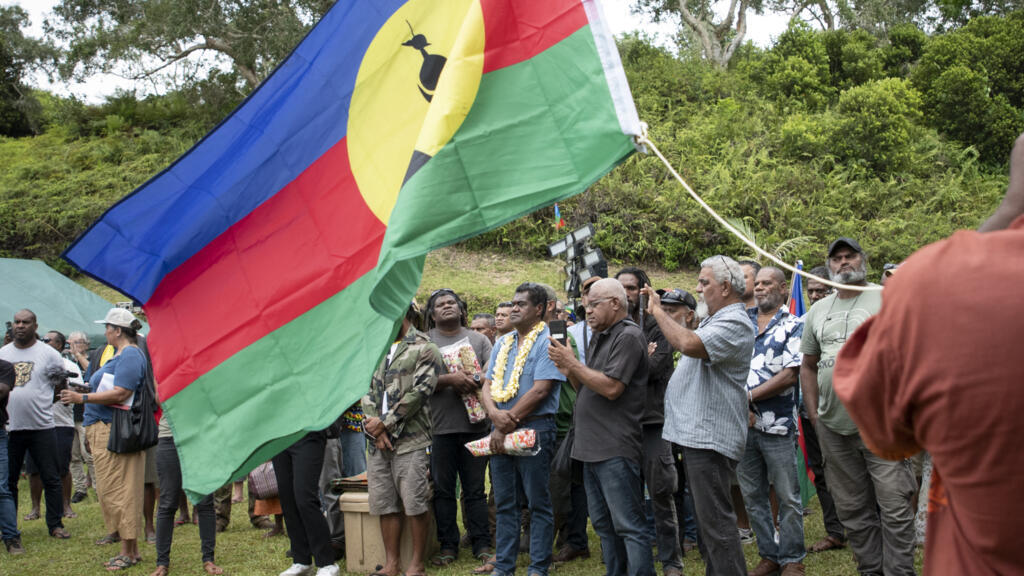
Kanak pro-independence leader Christian Tein (in C with a blue polo shirt) stands in respect as the FLNKS flag during the congress of the Kanak and Socialist National Liberation Front (FLNKS), New Caledonia's main pro-independence movement, in Ponerihouen, in the French overseas collectivity of New Caledonia, on 6 December 2025. AFP - DELPHINE MAYEUR

French President Emmanuel Macron has announced he will meet New Caledonian elected officials on 16 January in a bid to “continue the dialogue” on the Pacific archipelago’s institutional future and to “provide clarification on the Bougival agreement” signed last July.

In a letter to local elected representatives, President Macron said the meeting would build on talks held earlier this year and aim to reopen political discussion at a time when the agreement’s future looks increasingly uncertain.

“Following the discussions initiated at the Summit for the Future of New Caledonia held on 2 July at the Élysée Palace, in order to clarify the 12 July agreement, I have decided to organize a new forum for exchange to continue the dialogue,” the president wrote.

He added that this “progress report, aimed at opening up new political perspectives in which I would like you to participate,” would take place on 16 January with “New Caledonian elected officials”.

Fragile timetable and mounting scepticism

The announcement comes as momentum around the Bougival agreement appears to be faltering.

A bill to organise an early consultation of New Caledonians on the text will not, after all, be presented to the Council of Ministers on Wednesday, as had initially been planned. The government spokesperson confirmed the delay on Monday, underlining how fragile the timetable has become.

At the same time, questions remain about the precise format and objectives of the meeting proposed by the president – and about whether it could reopen hard-fought compromises.

“Everyone understands that they are going to try to get us to renegotiate, to reopen the Bougival agreement to allow the FLNKS to come forward with its demands,” said New Caledonian MP Nicolas Metzdorf on the NC La 1ère channel. He also regretted that “the fear of possible new violence in New Caledonia … is guiding political action” in Paris.

From the loyalist camp, scepticism is equally pronounced. The Loyalists – a centrist and anti-independence right-wing alliance – have reportedly “made all the concessions they could” and would refuse any attempt to call into question the political balance struck by the agreement.


Searching for consensus

Signed in July between the French government, the independence movement and the anti-independence movement, the draft Bougival agreement sets out plans for the creation of a New Caledonian state within the French Constitution.

However, the text suffered a major setback in August when it was rejected by the Kanak and Socialist National Liberation Front (FLNKS), the main pro-independence coalition.

Despite this rejection, a majority of New Caledonia’s political forces continue to support the agreement in principle.

Several of them argue, however, that amendments are necessary in order to secure the broad consensus they see as essential for the deal to be implemented.

Against this backdrop, the French government has been searching for ways to revive a stalled process in an archipelago still scarred by deadly violence in the spring of 2024. Those unrests left 14 people dead and severely weakened New Caledonia’s economy.

In that context, Overseas Minister Naïma Moutchou floated the idea of organising an “early citizen consultation” in March 2026, ahead of the adoption of the constitutional law required to bring the agreement into force. The proposal was intended to re-engage the population and restore political momentum.

Yet even this prospect has drawn reservations, including from some supporters of Bougival. The National Union for Independence (UNI) made its backing conditional on amendments to the text.

Meanwhile, the Caledonian Congress, asked for its opinion on 8 December, confirmed that the bill was deadlocked, with 19 votes in favour, 14 against and 19 abstentions.

The doubts also reached Paris by early December, when the Socialist Party urged Prime Minister Sébastien Lecornu to “suspend” the early consultation, arguing that it exposed a “lack of real consensus” around the agreement and made adoption of the bill unlikely.

(with newswires)
Farmers descend on Brussels to protest against EU Mercosur trade deal

Thousands of farmers have taken to the streets in Brussels to protest against European Union plans for a trade deal with the South American Mercosur bloc and the reform of agricultural subsidies.


Issued on: 18/12/2025 - RFI

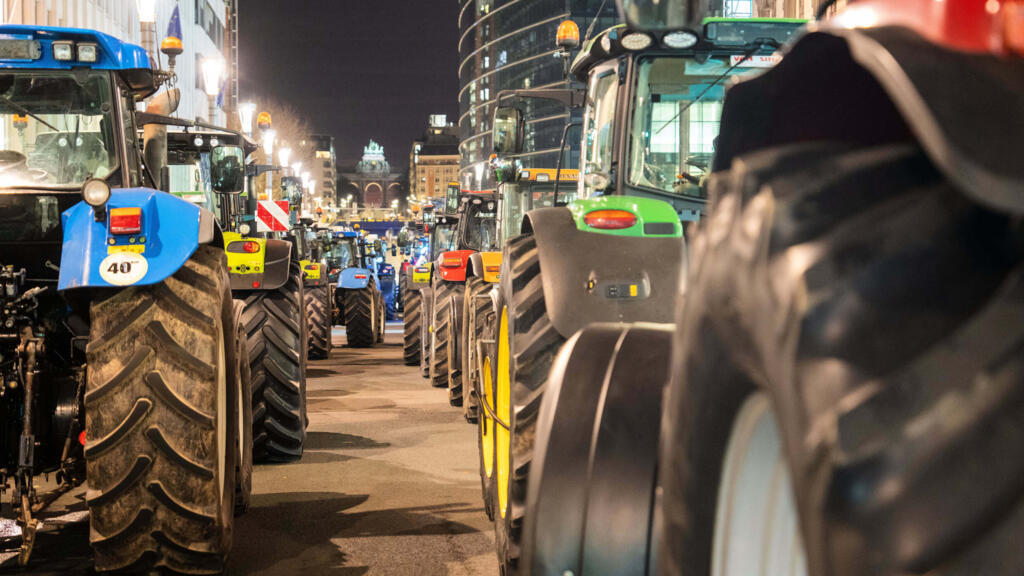
Farmers block a road with their tractors during a demonstration in Brussels, 18 December. © AP - Marius Burgelman


Hundreds of tractors began rolling into the European quarter of the EU capital on Thursday morning, ahead of a high-stakes summit among European Union leaders.

Convoys of farmers had arrived overnight, coming primarily from the Netherlands – scene of strong mobilisation among farmers in recent years – but also from Belgium and northern France.

French and Belgian farmers also began demonstrating on Wednesday around Bierset airport, near Liège – a symbolic gathering place, as the airport is a logistics hub and could be the gateway for South American agricultural imports in the future.

Farmers, particularly in France, worry that the Mercosur deal – which will be discussed at the EU leaders meeting – will see them undercut by a flow of cheaper goods from agricultural giant Brazil and its neighbours.

They also oppose plans put forward by the European Commission to overhaul the EU's farming subsidies.

'Unprecedented anger'


France's President Emmanuel Macron warned on Thursday that Paris would not support the Mercosur deal without stronger safeguards for its farmers.

"I want to tell our farmers, who have been making France's position clear all along: we consider that we are not there yet, and the deal cannot be signed [as it currently stands]', he told reporters, vowing that France would oppose any "attempt to force this through".

Is France misguided to keep rejecting the EU-Mercosur trade deal?

Belgium's Walloon Agricultural Federation (FWA) said that Brussels' plans to slash the subsidies scheme by 20 percent while pushing ahead with the Mercosur deal were "totally unacceptable".

The FWA will be among more than 40 national farming groups represented at Thursday’s demonstration. Pan-European agriculture lobby group Copa-Cogeca said it expected 10,000 people to show up.

French agricultural union Confederation Paysanne told French news agency AFP that "anger in rural areas is reaching unprecedented levels”.

'We are preparing to win a war'


For French farmers like Bertrand Chauffier, who grows sugar beets among other crops, Mercosur directly threatens the sugar industry in France.

"We said it loud and clear 18 months ago when we went out on the highways. We didn't want products that weren't produced the same way as ours. The price of sugar will be wiped out. It's unfair competition."

To make his point, he has attached a large wooden coffin to the front of his tractor, symbolising the impending demise of his business.

"We put it on hinges so it's clearly visible that it's empty," he explained to RFI. "Empty like the shopping carts of consumers if French agriculture disappears."

French lawmakers unanimously opposed to EU-Mercosur trade deal

He says the protesters will stay mobilised as long as necessary.

"We are preparing to win a war. A war is fought with well-fed men, tables, camp beds and water so that we can withstand a siege if our policies do not give us conclusive results," Chauffier said.

Adding to anger over the trade deal are problems closer to home, notably in French cattle farming. The industry has been facing an acute crisis over the past 10 days, dealing with an outbreak of nodular dermatosis – lumpy skin disease in cows – with disagreements and protests over how to handle the fallout, whether through vaccination or culling.
Calls for tougher regulations

The EU-Mercosur agreement would create the world's biggest free-trade area and help the EU to export more vehicles, machinery, wines and spirits to Latin America, at a time of global trade tensions.

But farmers say it would also facilitate the entry into Europe of beef, sugar, rice, honey and soybeans produced by their less regulated South American counterparts.

EU plans to seal the agreement by the end of this week were thrown into disarray on Wednesday after Italy joined fellow heavyweight France in seeking a delay.

Paris and Rome are calling for more robust safeguard clauses, tighter import controls and more stringent standards for Mercosur producers.

The European Commission has proposed some measures of that type, but Hugues Falys of Belgian union Fugea said farmers had "little confidence" in them.

(with newswires)

Farmers block roads in Brussels to protest EU-Mercosur free-trade deal


By Euronews
 18/12/2025


Proponents argue the agreement would provide an alternative to Beijing's export controls and Washington's tariff policies. Critics warn it would weaken environmental regulations and damage the EU's agricultural sector.

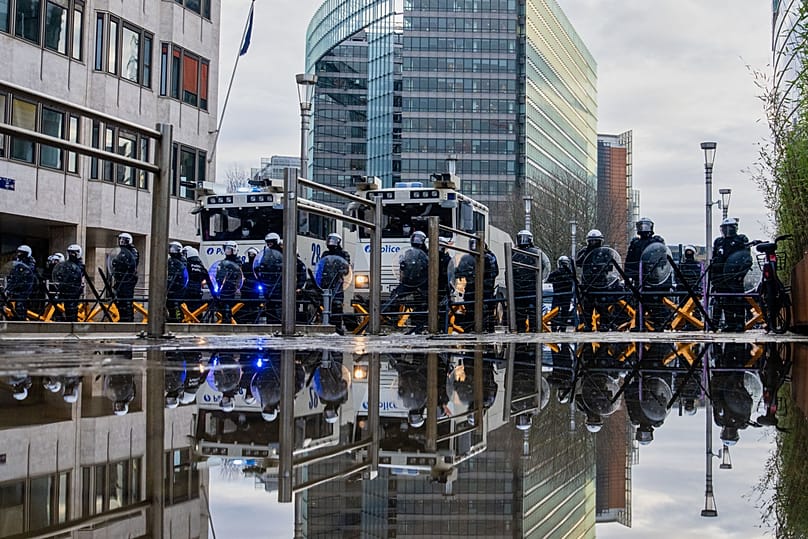
Police deployed tear gas and water cannon against thousands of farmers who converged on Brussels Thursday, blocking roads with tractors and hurling potatoes and eggs as European leaders gathered to debate a contentious trade pact with South America.

Demonstrators on tractors opposing the EU-Mercosur agreement massed near the Europa building, where leaders of the 27 EU member states met to discuss amending or postponing the trade deal, while a twin rally converged on Place Luxembourg, just steps away from the European Parliament.

The accord, which would eliminate tariffs on nearly all goods traded between the EU and five Mercosur nations — Brazil, Argentina, Uruguay, Paraguay and Bolivia — over 15 years, faces mounting resistance.

Italy signalled Wednesday it had joined French-led opposition to the transatlantic free-trade pact, after Prime Minister Giorgia Meloni told parliament that signing the agreement "would be premature" and said Italy wanted "adequate reciprocal guarantees for our agricultural sector" before approving the deal.

French President Emmanuel Macron arrived at the summit maintaining his opposition and calling for further negotiations in January. "We are not ready. It doesn't add up," he said. "This accord cannot be signed."

Macron said he had discussed delaying the agreement with counterparts from Italy, Poland, Belgium, Austria and Ireland. His government has demanded safeguards against economic disruption, increased regulations on Mercosur nations including pesticide restrictions, and enhanced inspections at EU ports.

Italy's stance gives France sufficient votes to veto European Commission President Ursula von der Leyen's planned inking of the accord on Saturday, as she requires backing from at least two-thirds of EU nations to proceed with the agreement.

"This doesn't mean that Italy intends to block or oppose (the deal), but that it intends to approve the agreement only when it includes adequate reciprocal guarantees," Meloni said.
Von der Leyen still going to Brazil?

Negotiations on the accord have stretched across 25 years. Once ratified, it would encompass a market of 780 million people and roughly a quarter of global gross domestic product.

Proponents argue the agreement would provide an alternative to Beijing's export controls and Washington's tariff policies. Critics warn it would weaken environmental regulations and damage the EU's agricultural sector.

German Chancellor Friedrich Merz said ahead of the Brussels summit that delaying or abandoning the deal would harm the EU's global standing. "If the European Union wants to remain credible in global trade policy, then decisions must be made now," he said.


Police stand behind a barrier as European farmers block a road with their tractors during a demonstration outside the EU Summit in Brussels, 18 December 2025 AP Photo
The agreement also represents strategic competition between Western nations and China over Latin America, said Agathe Demarais, a senior fellow at the European Council on Foreign Relations.

"A failure to sign the EU-Mercosur free trade agreement risks pushing Latin American economies closer to Beijing's orbit," she said.

Despite the likelihood of postponement, von der Leyen and European Council President António Costa remain scheduled to sign the deal in Brazil this weekend.

"We have to get rid of our over-dependencies, and this is only possible through a network of free-trade agreements," von der Leyen said. "It is of enormous importance that we get the green light for Mercosur."


Milei vs Lula

Political tensions within Mercosur in recent years — particularly between Argentina's libertarian President Javier Milei and Brazil's centre-left Luiz Inácio Lula da Silva — have not diminished South American leaders' commitment to sealing an alliance with Europe.

"We remain optimistic that next Saturday we will have approval from the European Union and, therefore, that we can proceed with the signing of the treaty," said Gabriel Oddone, Uruguay's economy and finance minister.

Lula has championed the agreement from South America's largest economy. As host of the upcoming summit, the Brazilian president is staking his diplomatic credibility on closing the deal ahead of next year's general elections, in which he will seek re-election.

At a cabinet meeting Wednesday, Lula expressed frustration with Italian and French opposition. He said Saturday would determine the fate of the accord.

"If we don't do it now, Brazil won't make any more agreements while I'm president," Lula said, adding that the pact would "defend multilateralism" as US President Donald Trump pursues unilateralism.

Milei, a close ideological ally of Trump, also supports the deal. "We must stop thinking of Mercosur as a shield that protects us from the world and start thinking of it as a spear that allows us to effectively penetrate global markets," he said.


Protests in Bangladesh as India cites security concerns

Dhaka (AFP) – Bangladesh police on Thursday stopped protesters from marching towards an Indian diplomatic mission, a day after India's foreign ministry conveyed its concerns over the "deteriorating" security environment in the country.


Issued on: 18/12/2025 - RFI

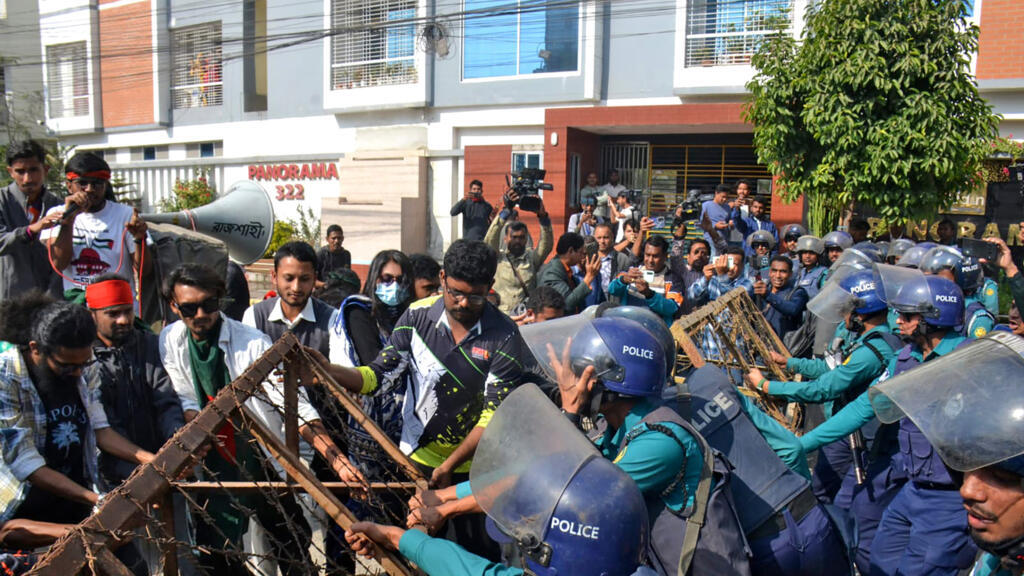
Protesters were stalled by police in Rajshahi © - / AFP

Ties between the two countries have been frosty since former prime minister Sheikh Hasina fled to India following a student-led uprising last year.

Dhaka has repeatedly asked for her extradition so that she could stand trial for her alleged crimes, with Delhi responding that it was examining the requests.

On Thursday, dozens of demonstrators began marching towards the assistant Indian high commissioner office in Rajshahi district which borders India.

Miftahul Jannat, one of the protesters, said the plan was to carry out a sit-in, demanding the "repatriation of all the killers including Sheikh Hasina".

The protest was stalled by the police, who said they "listened to their demands and promised to forward them to the authorities".

"We are not aware of any further plans (for demonstrations) and hope the issue will be resolved peacefully," Nashid Farhad, a senior officer with the Rajshahi Metropolitan Police, told AFP.

On Wednesday, a group of protesters tried to march towards the Indian High Commission in Dhaka.

India's foreign ministry on Wednesday summoned Bangladesh's top diplomat in New Delhi to convey its concerns about the actions of some "extremist elements".

In a statement, the ministry also said it expected the interim government under Muhammad Yunus to "ensure the safety of missions and posts in Bangladesh in keeping with its diplomatic obligations".

Hasina, 78, was sentenced to death in absentia by a Bangladesh court last month for crimes against humanity.

The country of 170 million people goes to the polls on February 12, with Hasina's former ruling party, the Awami League, banned from running.

© 2025 AFP
Electronic music added to French Intangible Cultural Heritage list


Copyright AP Photo

By David Mouriquand
Published on 18/12/2025 - EURONEWS

Electronic music enters France's intangible cultural heritage list, representing a first step towards the integration of French Touch into UNESCO's intangible cultural heritage.


Justice at last!

Following Berlin techno being added to the German list of intangible heritage in 2023, electronic music has finally made it onto the French Intangible Cultural Heritage list. This represents the first step towards UNESCO heritage status.

The list of intangible cultural heritage allows signatory states of the UNESCO Convention to register “practices, representations, expressions, knowledge and skills that communities recognise as part of their cultural heritage” – everything from music and craftsmanship to culinary skills, traditional games and sports.

“Electronic music has a rightful place in our national intangible heritage,” said French Culture Minister Rachida Dati on Wednesday, confirming this first step. Recently, the ministry created a label for clubs as “places of artistic expression and celebration”.

Earlier this year, French President Emmanuel Macron called for French electronic music - also referred to as French touch - to be granted UNESCO cultural heritage status.

"I love Germany - you know how pro-European I am,” said Macron. “But we don’t have to take lessons from anyone. We are the inventors of electro. We have that French touch."

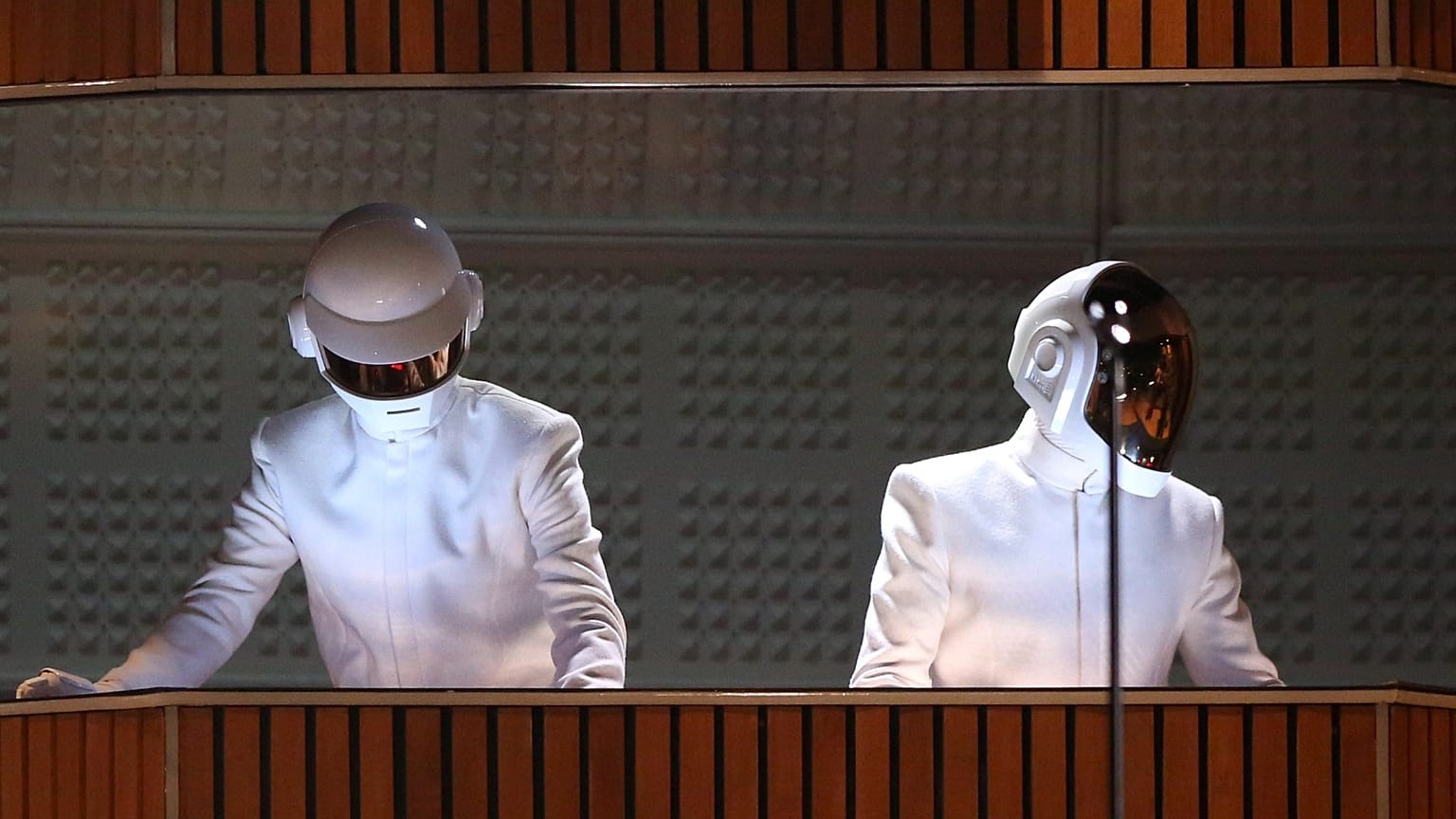
Mostly defined by its geographical situation, as opposed to adherence to a specific sound, French Touch was spearheaded by the likes of Daft Punk, Étienne de Crécy, Bob Sinclair, AIR, Cassius and many more, and has spanned various genres – from house, dance, electro, old school disco to jazz and plenty of glorious sampling.

For Tommy Vaudecrane, president of Technopol, the association for the defence and promotion of electronic music and organiser of the Paris Techno Parade since 1998, this listing is “an achievement and a historic milestone”.

“The first tears I shed for electronic music were under tear gas when it was demonised. The little tear I shed today is the joy of seeing our music finally listed as cultural heritage,” Vaudecrane told AFP.

Among the fourteen new items of French intangible heritage are Parisian haute couture, the agricultural fairs of Doubs, the Debaa of the women of Mayotte (a form of song and dance), the Chjam'è rispondi (poetic jousting in Corsica) and the Demoscene, a popular digital creation movement.
Christmas travel chaos: All the European airport strikes to expect in December


Copyright AP Photo/Alberto Pezzali

By Angela Symons
18/12/2025 
EURONEWS


Airport workers are walking out in protest of the 'Grinch-style behaviour’ of low-paying employers.


Heading home this Christmas or taking a winter holiday? Travel strikes have become a familiar part of the festive season as workers target one of the busiest periods of the year in their fight for better pay and conditions.

Some walkouts are planned months in advance, while others are announced just days or hours before. Check before you travel to avoid the chaos of last-minute changes.

With a week to go until Christmas, here’s everything you need to know about upcoming train and airport strikes in Europe this December.

If your flight or train is cancelled or delayed, you could be entitled to a new ticket or compensation. Read our guide for the full details.

Italy: Airport staff plan coordinated walkout


On 17 December, certain ground handling staff, airline crew and air traffic controllers in Italy will take part in coordinated strike action.

The four-hour walkout will include ENAV staff at Rome airport, who handle air traffic control; Assohandlers staff, who cover ground services at major Italian airports and for airlines including Ryanair, Wizz Air and easyJet; staff at ITA Airways, Italy’s national carrier; Vueling airlines staff; and ground staff for Air France and KLM companies.

It will run from 1-5 pm but could cause disruption throughout the day with flight delays and longer queue times for check-in and baggage, including at major airports in Milan, Rome, Venice, Naples and Catania.

You can find a list of guaranteed flights published by Italy’s civil aviation authority, ENAC, here.

UK: London airports face Christmas strikes


From 19 to 22 and 26 to 29 December, easyJet ground staff at London’s Luton Airport will walk out, causing potential delays with check-in and baggage handling.

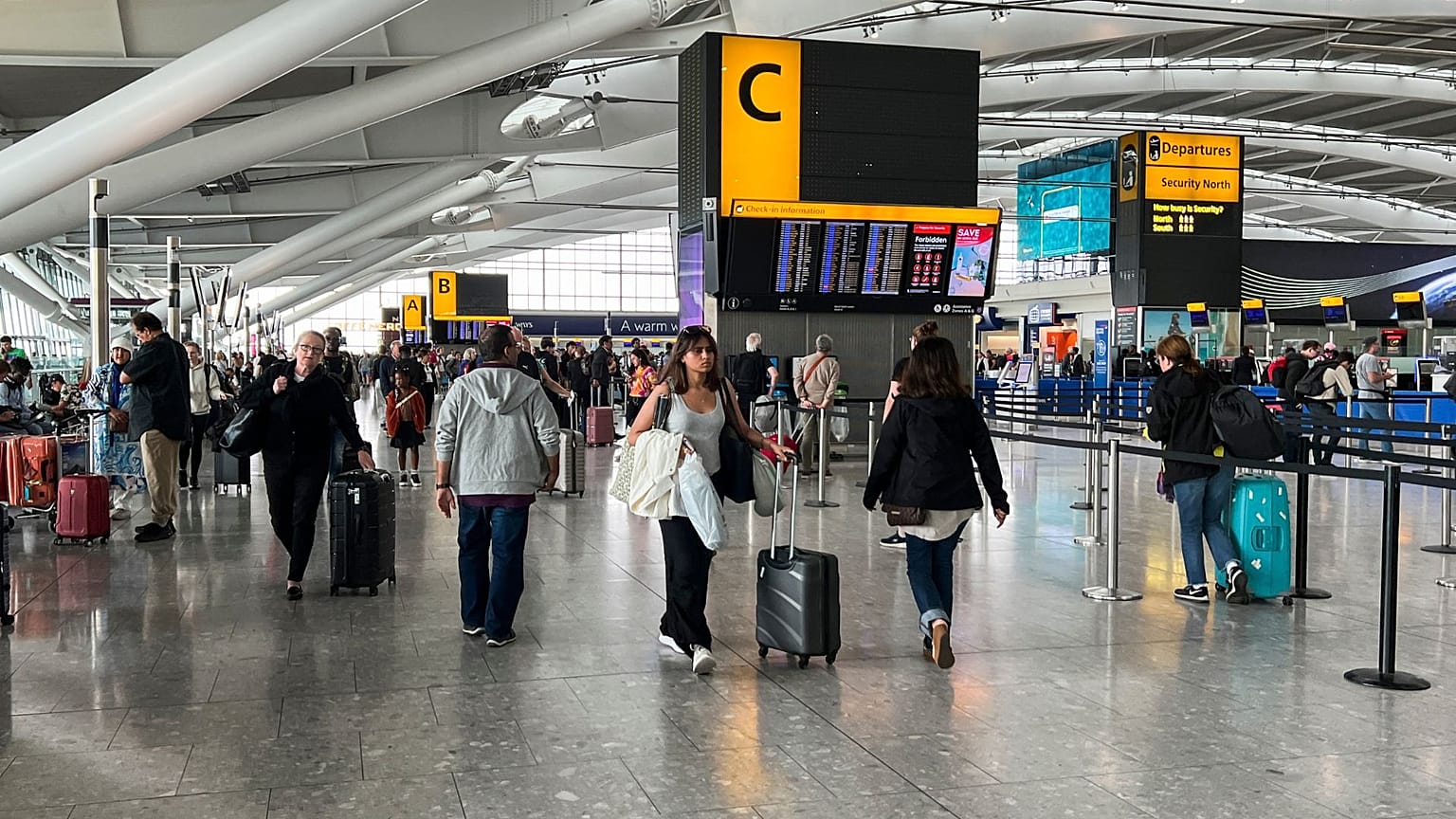
London Heathrow Airport is also bracing for Christmas travel chaos: on 22 to 24 and 26 December, Scandinavian Airlines Services (SAS) cabin crew will walk out. Flights to the airline’s main hubs like Copenhagen, Stockholm and Oslo are likely to be affected.

Workers are protesting poor pay that has reportedly forced them to rely on food banks when travelling to expensive Scandinavian hubs, according to the union Unite.

“This is real Grinch-style behaviour from SAS - it is taking advantage of the goodwill of its staff and will now be responsible for cancelled Christmas flights,” says Unite regional officer Callum Rochford.

Spain: Ongoing baggage handling strikes cause delays

Since the summer, staff working for Ryanair’s Spanish ground handling partner, Azul Handling, have been staging weekly walkouts over working conditions, bonuses and job stability.

Until 31 December, strikes will continue on Wednesdays, Fridays, Saturdays and Sundays between 5-9 am, 12-3 pm and 9 pm to midnight.

Ryanair passengers could therefore face longer queues and delays with check-in and luggage collection at the following airports: Alicante, Barcelona-El Prat, Girona, Ibiza, Lanzarote, Madrid-Barajas, Malaga, Palma de Mallorca, Santiago de Compostela, Seville, Tenerife South and Valencia.

Italy: Airport strikes in January

After airport staff across Italy staged a coordinated strike on 17 December, the country is set for more travel disruption in the new year.

On 9 January, Italian trade union CUB Transporti, which represents ground staff, has called a a four-hour strike (1-5 pm) at airports across the country, with flight delays and cancellations possible.

On the same day, Swissport Italia ground handling staff at Milan Linate airport also plan to walk out for 24 hours.

Flights to and from Verona airport on 31 January may also face disruption as ENAV air traffic control staff walk out.

You can find a list of guaranteed flights published by Italy’s civil aviation authority, ENAC, here.


Who are the Westerners sanctioned by the EU for spreading Russian propaganda?


Copyright Euronews

By Estelle Nilsson-Julien & Tamsin Paternoster
Published on 18/12/2025 -


One American and two Europeans have gained legitimacy spreading propaganda off the back of their former careers in Western police forces, military or intelligence.

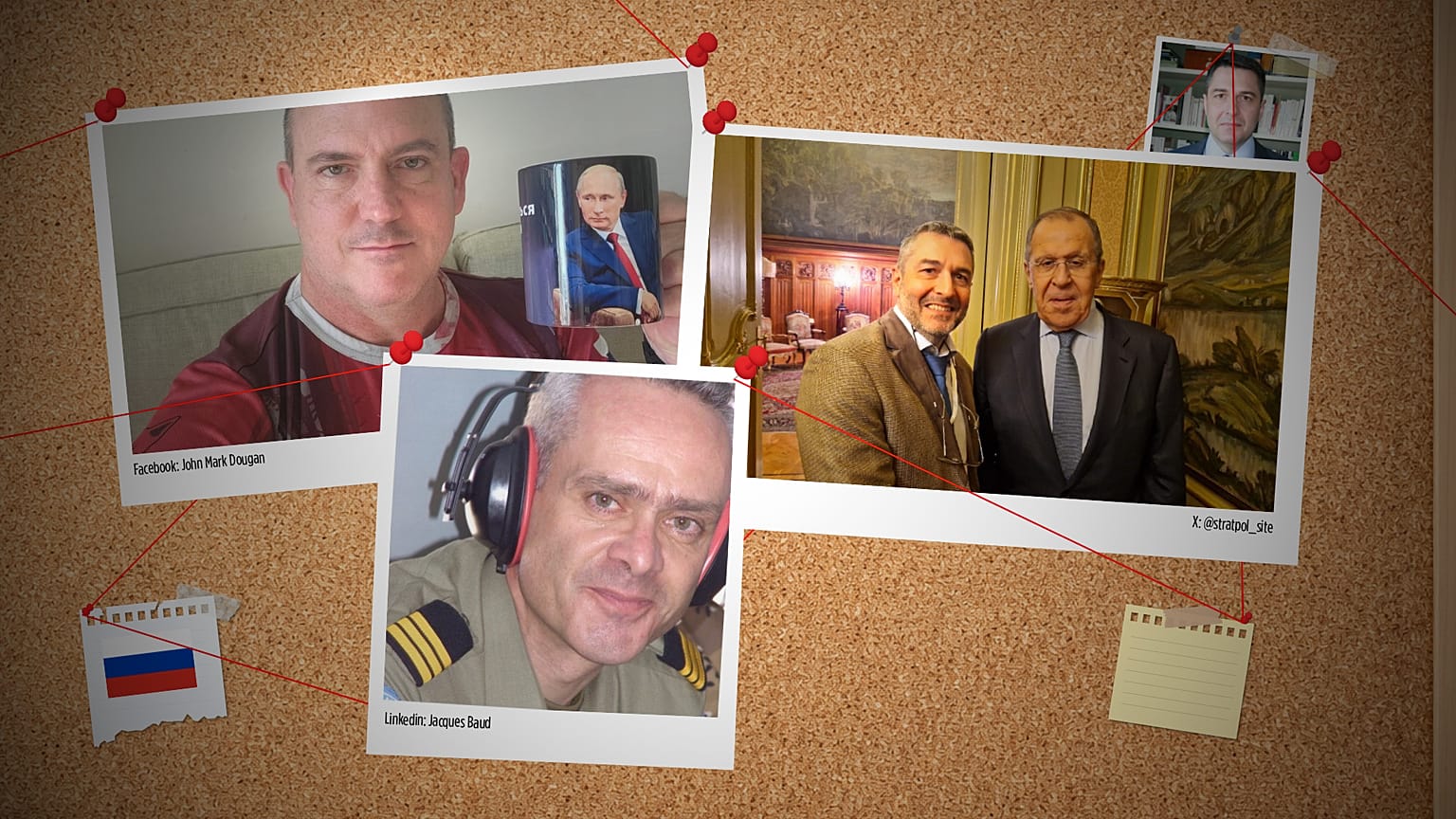
A former sheriff from Florida, a member of the French military and a Swiss intelligence officer were among 12 individuals sanctioned by the European Union on 15 December.

The measures initiated by France also led a host of Russian nationals to be sanctioned, in light of Russia's continued hybrid warfare targeting the EU's member states and its partners.

The three Westerners have used their former careers in Western police forces, military or intelligence to gain credibility, according to experts.

"Their past careers in intelligence and the military conjure up ideas of secrecy, as well as the notion of the 'deep state' for the public," Hervé Letoqueux, CEO at Check First, a company which monitors disinformation, told Euronews' fact-checking team, The Cube.

"The fact these individuals have these past professions ultimately allows them to say pretty much anything, meaning that they don't need to prove anything; it gives them a form of authority, so they can say whatever they want," added Letoqueux, who previously headed France's agen
yc for foreign digital interference, Viginu


Xavier Moreau

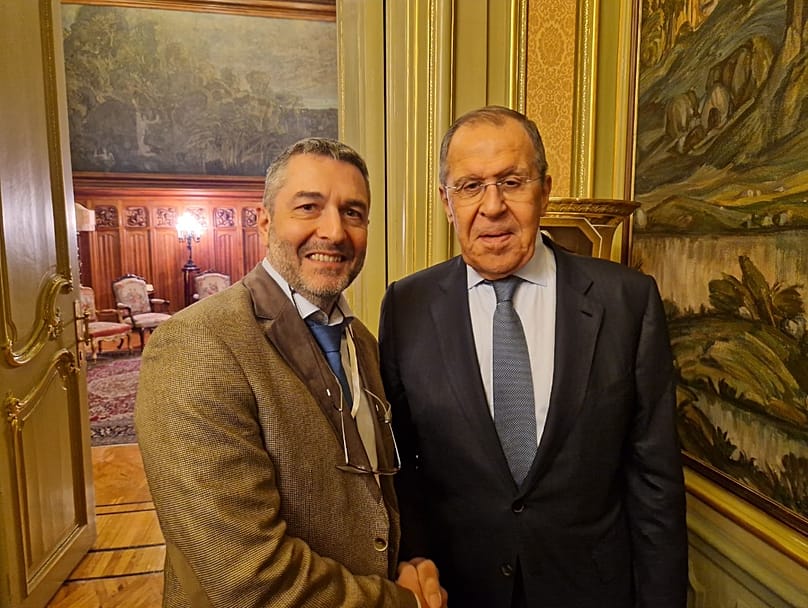
Xavier Moreau is a French-born former military officer and businessman, described as a disseminator of "Kremlin propaganda" in Europe by France's Minister of Foreign Affairs Jean-Noël Barrot.

Moreau, who acquired Russian citizenship in 2013, has lived in Russia since 2000.

He has spread a host of disproven pro-Kremlin narratives, for instance, claiming that Moscow's invasion of Ukraine was orchestrated by NATO, and that Kyiv was responsible for shooting down Malaysian Airlines Flight 17 in 2014.

In 2014, Moreau participated in Russia's so-called referendums on the annexation of Crimea and later of the Donbas region — which were not recognised by the international community — as a "foreign observer".

Xavier Moreau and Sergey Lavrov, Russian Minister of Foreign Affairs Stratpol X account

The same year, he launched his "Stratpol" website, presenting himself as a "political and strategic analysis expert". Since then, Moreau has appeared as a guest on a number of fringe far-right YouTube channels, but also on mainstream media outlets, from Sud Radio to broadcaster LCI.

Outside of the French media ecosystem, he has also been interviewed on Russian-backed Sputnik and Russia Today France.

After being banned from posting on his YouTube account in 2022, due to violating the platform's hate speech policies, Moreau became active on streaming platforms Rumble and Odysee.


Jacques Baud


Jacques Baud is the second Swiss national to be hit with sanctions related to Russian propaganda activities in recent months, after Swiss-Cameroonian influencer Nathalie Yamb was banned from entering the EU in April.

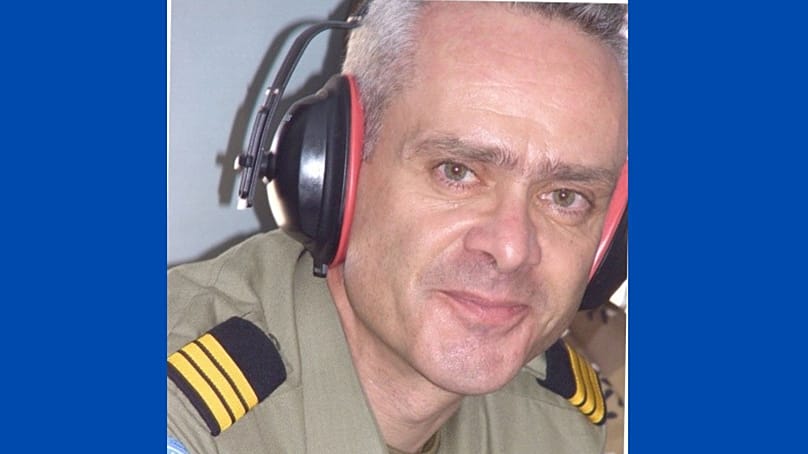
Baud, a former Swiss army colonel and strategic analyst, regularly makes appearances on pro-Russian television and radio programmes, suggesting, for example, that Ukraine had orchestrated its own invasion, as part of a plan to gain NATO membership.

"The sanctioned individuals, in a way, share a fascination with authoritarian power. Jacques Baud, for example, displayed sympathies for Bashar al-Assad, denying the abuses committed by his regime," said Letoqueux.

Jacques Baud Jacques Baud LinkedIn

According to Letoqueux, the impact of Moreau and Baud's propaganda is relatively modest, as "they target or at least seek to convince a section of the population which is already largely won over, with affiliations to conspiracy theorists and ultra-nationalists".

For Letoqueux, their media appearances can have a bigger impact, "until recently, a number of media outlets — particularly in France — were giving them airtime and allowing them to disseminate their pro-Kremlin narrative on a regular basis, reaching a segment of the population that is probably less equipped to detect these narratives.

John Mark Dougan


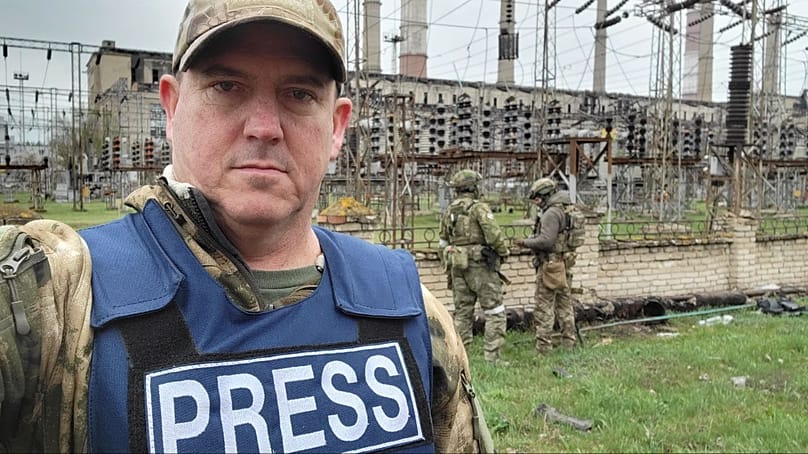
John Mark Dougan, a US citizen who worked as a former deputy sheriff in Florida and fled to Moscow in 2016, is also among those sanctioned.

Dougan has played a key role in pushing pro-Kremlin disinformation campaigns across Europe, supporting the activities of Storm-1516, a Russian propagandist operation which aims to discredit the West and Ukraine.

He has also been pushing the CopyCop network of fake news websites: online outlets which mimic the work of legitimate news organisations through videos and stories, with many produced using AI.

John Mark Dougan Telegram BadVolf

As part of this work, Dougan was suspected of operating a network of more than 100 AI websites ahead of Germany's snap federal elections in February.

According to the EU, reports from Western authorities, as well as investigative reporting has tied Dougan to Russia’s military agency, as well as the Center Geopolitical Expertise, a Moscow-based think tank, which has been linked to information and manipulation operations targeting the West and Ukraine.