Wednesday, February 18, 2026


IEA Chief Warns Fracturing Global Order Is Splintering Energy Policy

A fracturing in the “global order” is threatening the harmony in energy policies, the head of the International Energy Agency has warned.

“We see a fracturing in the global political order in general, and there are, of course, reflections of that on the energy scene. Different countries are choosing different paths in terms of energy and climate change,” Birol told the Financial Times in an interview.

 The warning follows the U.S. Environmental Protection Agency’s removal of the so-called endangerment finding, which served as the basis for climate change-focused policies passed in significant numbers during the Biden administration. The finding stipulated that carbon dioxide, methane, and four other gases were harmful to people’s health and well-being.

This was the latest move by the Trump administration to dismantle Biden’s climate regulations and legislation as it prioritises energy security—and energy dominance—over emission reduction.

Yet even the European Union, which consistently states emission reduction is still priority number-one, has been walking back some of its new regulations and commitments, under pressure from the business world, which has been bearing the cost of those commitments, alongside consumers.

The 2035 ban on internal combustion engine cars, for instance, has been renegotiated and is no longer a done deal, and now the authorities in Brussels are mulling over ways to reduce energy costs for industrial consumers in a bid to prevent the complete deindustrialization of the bloc. A revision of emission permit trading is also on the agenda, with the chemicals industry calling for an urgent revamp of the system and a cancellation of the planned phaseout of free carbon permits.

Climate change was “moving down the international policy agenda,” Birol said this week, summarizing the latest trends in energy policies. That move down the agenda has even reached China, which this year reduced subsidies for electric vehicles, which immediately affected sales, leading to a 20% monthly drop.

By Irina Slav for Oilprice.com

The Munich “Security” Conference (MSC) has Become a €20‑Million Militarist Echo Chamber

The MSC’s closed groupthink militarism offers only one prescription — more weapons — even as record military expenditures, squeezed from taxpayers in economic crisis, destroy diplomacy and drive escalation and the highest war risks in decades.

From Dialogue Forum to Militarised Ritual

For decades, the Munich Security Conference (MSC) – which opened today and runs till Sunday – was one of the few places where adversaries could meet without theatrics. Founded in 1963 as the Wehrkundetagung, it served as a discreet Cold War dialogue forum between NATO and the Warsaw Pact. Even at moments of high tension, Soviet and later Russian representatives were present, and Munich allowed uncomfortable messages to be delivered directly rather than through press releases or military manoeuvres.

That era has vanished. The MSC has become something entirely different: a €13–20 million annual gathering of a closed Western security elite, a polished meeting of governments, defence industries, major media and aligned think tanks, all wrapped in the language of dialogue but operating as a self‑reinforcing militarist echo chamber.

A €20‑Million Structure That Predetermines Its Outcome

The MSC’s financing reveals its orientation more clearly than any mission statement. Roughly €5–7 million comes from the German federal government; €6–10 million from corporate sponsors, including major defence and security companies; and €2–3 million from foundations and institutional partners.

When governments and arms‑industry actors are the primary funders, the gravitational pull inevitably shifts toward military‑centric definitions of security, technological solutions, alliance cohesion and deterrence doctrines, while peacebuilding, conflict transformation, diplomacy, mediation and non‑military approaches — which lack comparable financial backers — quietly disappear from the agenda.

In consequence, the MSC will be devoid of free thinking, alternative non-military security measures and every vision of a better world.

Speaking about the World, Not with It

The MSC’s agenda is curated by a tight circle of leadership, advisory‑council members, government partners, corporate sponsors and security‑aligned think tanks. Each layer reinforces the others, producing a remarkably coherent worldview in which the same actors define the problems, propose the solutions and moderate the discussions.

Panels are dominated by Western officials, military leaders and analysts funded by the same governments and industries that support the MSC; moderators from major Western media outlets reinforce prevailing assumptions rather than interrogating them.

The result is predictable: panels on Russia without Russians; panels on China with only one Chinese representative (its foreign minister whose different perspectives are hardly ever quoted by Western media); panels on peace without peace researchers; panels on the Global South without Global South voices.

Thanks to remarkable intellectual inbreeding, the MSC increasingly speaks about adversaries, about diplomacy, about peace — but not with the actors concerned, nor with those who work professionally on conflict resolution, least of all the UN.

This is an intentional architecture crafted by the congregation of the NATO Church, and so it is only logical that its former Secretary‑General, Jens Stoltenberg, now takes over as its presiding priest.

The Only Prescription: More Weapons

Across the MSC, the policy prescriptions are strikingly uniform: more weapons, stronger deterrence, longer‑range strike capabilities, higher military spending, deeper alliance integration.

The logic is circular: insecurity is met with more armament, which produces more insecurity, which justifies more armament. Offensive long‑range deterrence is a 100 percent predictable insecurity generator, because the opponent sees it as a threat, not reassurance – no matter your argument that you have no bad intentions.

Furthermore, the world has never spent more on weaponry than it does today, yet the objective risk of a major war is rising, not falling. Citizens facing economic crises are told to pay through their noses for “security” that demonstrably increases their risk.

In any rational forum, someone would stand up and say: Something must be wrong: let us stop and think. At Munich, no one does.

The Kabuki theatre must continue. Remember, anyone can start a fight in a bar — or a war — but it requires a few capacities to avoid war and create peaceful coexistence.

From Dialogue to Narrative Consolidation

Since the Obama-orchestrated Maidan regime-change in Kiev on 22 February 2014 and Russia’s Crimea annexation of 18 March 2014, the MSC has steadily closed the door on dialogue with Russia — a far cry from 2007 when Putin gave his now historic low-key speech in which he asked what had happened to the promises given to Gorbachev about not expanding NATO one inch.

The MSC has aligned itself fully with the strategic posture of NATO and the EU. Dialogue with adversaries has been replaced by discussions about adversaries; panels on Russia or China are framed entirely through Western threat lenses; and the conference has become a stage where governments, industries, media and aligned academics reinforce a single worldview that defines security almost exclusively in military terms and is unable to see the larger world and its opportunities.

The tragedy is not that the MSC has a perspective; the tragedy is that it has only one. And it is anything but trust, confidence, conflict-resolution and peace.

The Missing Counterpart: A Global Peace Conference

The MSC’s official prominence and media attention highlights a deeper structural absence: there is no equivalent high‑level forum for peace. No annual gathering where peace researchers, mediators, peace workers, conflict‑resolution practitioners, civil society, Global South voices, non‑aligned states and humanitarian actors and people of culture meet to explore non‑military approaches to security.

The most unrealistic and debunked assumption is that security is about arms and more arms lead to more stability, security and peace – the mantra of the NATO Church, no matter what the alliance does, including violating it own treaty 24/7 since bombing Yugoslavia in 1999.

There is no €20‑million (or cheaper) platform for diplomacy, prevention, reconciliation or structural peacebuilding; no global stage where peace is treated with the same seriousness, resources and media attention as deterrence, rearmament and unlimited militarist thinking.

The imbalance is not accidental; it reflects political priorities and the MIMAC‑shaped worldview that now dominates Western security thinking.

It is dead dangerous for you and me – in substance and because of its own self-affirming blindness.

Understanding Munich for What It Has Become

The Munich Security Conference no longer functions as a platform for dialogue between adversaries or as a space for exploring diverse approaches to security. Instead, it has become a high‑profile meeting point for a closed security groupthink — a place where elite interests converge, narratives are synchronised and the boundaries of acceptable discourse are tightly managed.

It is time understand it honestly. It is time for free media (if they still exist) to have a critical perspective. Will they, or have they been co-opted completely?

Until someone invests in a serious, well‑funded, global peace conference — something with the scale, visibility and ambition of Munich — the imbalance will remain. And so will the risks of warfare.

Perhaps it is time for BRICS, the Belt & Road Initiative, a coalition of peace-willing in cooperation with the United Nations and non-Western regions and actors — governments and citizens — to arrange a conference for true peace and human security where the military dimension has its proper — minimal — place.

We must never accept that violence becomes the first resort. It should always be the last resort after everything else has been tried and found in vain.

P.S. A conference that invites MarĂ­a Corina Machado to speak about Venezuela, Lindsey Graham to speak about Russia, Tony Blair to speak about peace, and uses only conservative Western media as moderators, documents not global security thinking but the intellectual and ethical disarmament of a declining West and – who knows? – a disintegrating EU and NATO.

Jan Oberg is a peace researcher, art photographer, and Director of The Transnational (TFF) where this article first appeared. Reach him at: oberg@transnational.orgRead other articles by Jan.


European Security Paradox and a World


Without Order


Paradox of Time and History and the Myth of New World Order

America was not the superpower and European empires were more nationalists and aggressive when the 1857 Munich Conference held its assembly. Their delusional visions and priorities fell victim to their own vices and ruins, the consequential First World War and 2nd World War. What have Europeans learned from the past to unfold a New World Order? Paranoid, suspicious of mutual interests, devoid of rational global vision of peace and co-existence, American and European leaders continue to search for glory and triumph by military supremacy to dominate the rest of the world. Men who were universally hated and feared are alive as elected leaders propelling individualistic agendas of global hegemony and occupation. Opinions and facts of life differ as time and place do in politics.

To civilized people and nations claiming to be wise and just, the 21st century political affairs are full of contrasts and contradictions in equality of human rights, national freedom, and justice. The cult is infested with moral and intellectual corruption lacking any plausible imagination for the good of humanity. Are we out of touch with historical facts and the impulse of Nature of Things to determine our common destiny as civilized people? The Munich Security Conference spells out competing interests and volatile visions of future-making. America First under President Trump is a novel strategy of unthinkable policies and practices. 

The EU and UK appear insight and place at a distant horizon.

The ethnicity of being together does not spell out cooperation and unity of purpose for how to manage the security, unproductive economy and strategic interests in the Western political sphere. Who is who? And where are the security threats coming from to cause a united front. Chinese innovation in technology and productivity dominate Western Europe and American economy. America and West Europeans are competing to agree to imaginary challenges perceived from Russia and China. The facts speak of internal gulfs within NATO and America vs. Europe. There is no insecurity except of the US’s own self-engineered false plans to invade Greenland, occupy Canada, control the Panama Canal, and extend the march to destroy Iran and the Arab Middle East. If utilitarianism was a sound societal value, France, Germany, Spain, and the UK’s leaders appear at odds to imagine the US as a reliable partner in mutual security.

The US under President Trump and its global strategic trajectory negate the universal values of friendship, equality, human rights, freedom and justice for all. Recall Hans Morganthau (Politics of Nations), called power politics a “psychological sickness.” America needs more conflicts to support its war economy, not peace with its neighbors and the Arab world. Is the New World Order a hypothetical phenomenon or a convenient reality to be imagined? How do you assess its evolving substance for the future? Who would usher the New Order or would it be a remaking of historical belligerency by despotic rulers against the people? Who will be the new kings, new emperors, and new rulers of the 21st century and beyond world? Flamboyant proclamations of an imaginary world of power defies the logic of the present time and place of order. H.G. Wells, the British author, tried to redefine “new world order” as a synonym for the establishment of a technocratic world state and of a planned economy, garnering popularity in state socialist circles. Some authoritarianism — lords, emperors and nobles — stemmed from the 16th century European Renaissance, although knowledge, science, and intellectual awakening were the products of new manifestations. The so-called Western democratic culture of superior power is shortsighted and naive. Enlightened and people-oriented leaders hold visions for change and sustainable future-making, not greed or egoistic insanity to quell law, freedom, justice and global peace. Do the Epstein files expose a wide range of corrupt Western political cultures, obscenity, abuse of innocent young women and politically charged deep rooted societal problems? Are there effective laws and systems of legal justice, better human values and moral standards to rethink and punish those responsible for the insane crimes?

Western Culture of Thinking are in Crisis

The NATO apparatus is in crisis on security, war in Ukraine, Greenland and the divide between Europe and America. The US needs a navigational change but is entrapped in chaos. After WW2, states and nations professed binding commitments to hold the Charter of the UNO and “save the succeeding generations from the scourge of war.” Not so, those pioneering the evolutionary Charter went astray to invade other nations and indulge in crimes against humanity, aggression and genocide. Historically, leaders and nations claiming to be the most powerful on earth violate the Laws of God and come closer to an end of their time and history. The Earth was meant to sustain life for all sanctity of human values and universal brotherhood. Imperialists time and again broke the covenants and victimized other nations in Asia, the Arab world and Africa. What a contrast, what a tragedy those responsible to shield global values turned out to be aggressors, hangmen and criminals under International Law.

When Western history wills, tragic history happens. Wars, colonization, aggression and military occupation are all distinct historical milestones of authoritarian leadership. Machiavelli’s Prince relives to unleash tragic tensions of time and history – the endless echo flows from the same myriad of supremacy, hatred and psychology of political maneuvering to control people and thinking minds. To wake -up informed mankind of the 21st century, and beyond you have a new World Order overshadowing all encompassed universal proclamations, charters, Magna Carta, nobility of rational thinking, collective consensus of time and history – it is a new beginning of unthinkable dark future.

Global Peace, Life and Earth are No More Sacred to be Protected

Do cultures and civilizations grow out of the moral mire of bombardment, cruelty, killing, conquest, occupation and destruction of humanity? Impostors and people of violent hidden agendas are fast moving into power politics. Life and facts make us understand of critical thinking as truth, time and space vary across human consciousness. Undeniably, America and the EU remained not just weapon suppliers but supporters of Israeli policies and practices of crimes against humanity and genocide in Palestine. They were an integral part of violations of all norms of international law and sanctity of life. Global governance is fast becoming lawless, lacking intuition of order and power in all institutions of peace and security. Insanity amassed across the US political mind to wipe out the Palestine national identity and provoke another war on Iran just like the Venezuelan war stunt. America, the EU and Israel would strive to maintain a culture of continuous war and conflict-making and conflict-keeping for their economic interests and their own survival. They have terrorized the people of Palestine and are embarking on a new war against Iran and the Arab world.

The Torah, the Bible and the Quran proclaim that God created the Heavens and the Earth as a Trust to fulfill human aspirations and to allow human generations to flourish since time immemorial. It was never meant to be bombed and destroyed by sheer ignorance and wickedness. People, you appear to be adapted to intellect, fortitude, and fortune, being a victim of ignorance, superstition, and arrogance against me, your Mother Earth. I am not a property of any nations, states, geography, or corporations, but a Divine hub of life beyond human imagination, survival, and trust. Those bombing and destroying me are mentally sick and defy the Divine Truth. Their hearts beat, and they breathe oxygen on me and exhibit petty behaviors in politics as scum floating on a torrent. Sketch out your genius: I am a living being, spinning at 1670 km per hour to orbit the Sun at 107,000 km per hour. Imagine if this spinning were to stall; what consequences could occur for all the living beings on Earth?

In every ideal, there is truth, soul, time and facts of history. We, The People, We The Humanity feel an awakening call of time and history to hold Western leaders accountable for their crimes, treachery, violation of human rights, freedom and justice as the foundation of civilized cultures, laws and sustainable future-making. All international institutions are broken and deliberately kept dysfunctional. Truth is one and unchanging, as it was centuries earlier. The emerging wars and destruction of Earth and human habitats are blatant violations of the trust between humanity and the Creator, calling for an awakening of human conscience and soul.

Mahboob A. Khawaja, PhD, specializes in international affairs-global security, peace and conflict resolution and has spent several academic years across the Russian-Ukrainian and Central Asian regions knowing the people, diverse cultures of thinking and political governance and a keen interest in Islamic-Western comparative cultures and civilizations, and author of several publications including: Global Humanity and Remaking of Peace, Security and Conflict Resolution for the 21st Century and Beyond, Barnes and Noble Press, USA, 2025  and We, The People in Search of Global Peace, Security and Conflict  Resolution. KDP-Amazon.com, 05/2025. Read other articles by Mahboob.
Canada launches huge defence plan to curb reliance on US

Ottawa formally joined the EU’s Security Action for Europe (SAFE) program — making Canada the only non-European member of the bloc’s defence financing scheme.


By AFP
February 17, 2026


Canadian Prime Minister Mark Carney launching Canada's defence industrial strategy in Montreal - Copyright AFP Robin MILLARD


Marion Thibaut with Ben Simon in Toronto

Prime Minister Mark Carney on Tuesday launched a multi-billion dollar plan to strengthen the Canadian military and rely less on the United States.

Carney’s announcement of Canada’s first defence industrial strategy built on themes he has emphasized throughout his 11-month tenure as President Donald Trump rips through traditional US alliances.

The prime minister says Canada has not done nearly enough to defend itself in an increasingly dangerous world and counting on US protection is no longer viable.

“We’ve relied too heavily on our geography and others to protect us,” Carney said.

“This has created vulnerabilities that we can no longer afford and dependencies that we can no longer sustain,” he added.

Carney has become one of the most prominent global voices criticizing Trump’s administration, notably after his speech at the World Economic Forum last month where he said Trump had triggered a “rupture” in the rules-based global order.

On Tuesday, Carney also addressed US Secretary of State Marco Rubio’s speech last week to the Munich Security Conference, highlighting what the Canadian leader sees as the widening gap between US and Canadian values.

Carney, addressing reporters after giving a speech on the defence plan, pivoted to Rubio’s speech without being asked about it. He cautioned that Trump’s top diplomat had spoken of Washington’s desire to defend “Christian nationalism.”

“Canadian nationalism is civic nationalism” and Ottawa’s mandate was to defend the rights of everyone in a vast and diverse country, Carney said.

“There is a rivalry taking place between Canadian nationalism and other forms of nationalism,” he added, speaking in French.

In Munich, Rubio said “Western Civilization” was defined by “Christian faith, culture, heritage, language, ancestry, and the sacrifices of our forefathers.”


– Never be ‘hostage’ –


Carney’s office said the defence industrial strategy amounts to a investment of “over half a trillion dollars (US$366 billion) in Canadian security, economic prosperity, and our sovereignty.”


That includes CAN$180 billion in defence procurement and CAN$290 billion in defence and security related infrastructure, Carney said.

The plan — which calls for enhanced defence capacity on land, at sea and in the air — also aims to generate 125,000 high-paying careers.

For Carney, the increasingly fragile security relationship with the United States does not mean Canada should go it alone on defence.

His government has pursued closer military ties with the European Union and, at the Munich conference, Ottawa formally joined the EU’s Security Action for Europe (SAFE) program — making Canada the only non-European member of the bloc’s defence financing scheme.

The prime minister on Tuesday also talked about hopes for new defence export opportunities in Asia, notably with South Korea.

The goal is to “be strong enough to be a partner of choice,” the prime minister said.

Canada should build “a domestic defense industrial base so we are never hostage to the decisions of others when it comes to our security,” he said.

Carney also re-emphasized the need to enforce Canadian sovereignty in the Arctic, where warming temperatures caused by climate change are thawing the ice, opening a new era of competition for critical minerals.


Carney rolls out plans to build up domestic defence sector, add 125,000 jobs

ByThe Canadian Press
Published: February 17, 2026 

Prime Minister Mark Carney makes an announcement as he visits CAE Inc., in Montreal, on Tuesday, Feb. 17, 2026. THE CANADIAN PRESS/Christinne Muschi

Canada has failed both to adequately fund its military and to build up the domestic defence industry, Prime Minister Mark Carney said Tuesday as he rolled out an ambitious new plan to grow the defence sector.

Canada’s first-ever defence industrial strategy, unveiled Tuesday by Carney in Montreal, sets new guidance on procurement and funding decisions, looks to hike Canadian firms’ share of federal defence contracts to 70 per cent and vows to add 125,000 defence sector jobs over the next decade.

“Over the last few decades, Canada has neither spent enough on defence nor invested enough in our defence industries and we have relied too heavily on our geography and other countries to protect us,” Carney said. “This has created vulnerabilities we can no longer afford and dependencies we can no longer sustain.”

The $6.6-billion plan, which bills itself as a “paradigm shift” for how government engages with industry, will prioritize building military gear domestically — especially to cover “sovereign capabilities” critical to national defence or Canada’s commitments to allies.

If Ottawa cannot build at home, it will partner with allies or buy directly from them under “strong conditions that spur reinvestment into the Canadian economy,” the strategy document says.

The strategy warns of a need to “mitigate” the risk of Canada getting locked into advanced military systems owned and controlled by foreign governments that can exert control over their intellectual property.

Christyn Cianfarani, president of the Canadian Association of Defence and Security Industries, called the introduction of the defence industrial strategy a “historic turning point.”

“For the first time, we can see a clear, accountable vision for the defence sector” that comes with specific targets to grow Canada’s sovereign industrial capabilities, she said.

The document states that Ottawa will select certain Canadian defence firms as “key strategic partners” and enter into formal partnerships with them to build “world-leading champions that can meet Canada’s needs.”

The strategy seeks to increase Canada’s defence exports by 50 per cent within a decade — just as the European Union looks to massively scale up defence spending in response to Russia’s war on Ukraine.

“We will be very deliberate and open in terms of defence and security partnerships we sign with allies throughout the world and what opportunities that opens up, and be clear about what the guardrails are around … the types of exports we would envision with those countries,” Carney said.

“We will be broadening our partnerships. We’re deepening with our closest allies.”

The document also promises a suite of policy shifts to come — such as planned legislative changes to the new Defence Investment Agency to make it an independent office.

The agency is currently housed within Public Service and Procurement with a staff compliment of just 85 people, which is set to expand to roughly 400.

But the strategy cautions that “even with more efficient defence procurement, Canadian companies will still need to engage with multiple agencies.”

Conservative Leader Pierre Poilievre dismissed the document as a “salad bowl of buzzwords” and called on Ottawa to instead cut bureaucracy and streamline its purchasing decisions.


The government pledges in the document to advance a package of reforms early this year to its industrial technological benefits policy, which sets out how procurement projects get graded in terms of how they contribute to the domestic economy.

It promises a new strategy on expanding production of critical minerals tied to defence and the creation of a new program to support domestic production of ammunition and explosives.

The strategy said by 2029, Ottawa will stand up a new plant to produce nitrocellulose, which is a propellant used in munitions.

Also on Tuesday, the government set new serviceability targets for its fleets — the percentage of military vehicles ready to be deployed.

The government set deployment-ready targets of 75 per cent for the maritime fleet, 80 per cent for land vehicles and 85 per cent for aerospace — targets that national defence officials called ambitious but achievable. According to publicly released figures from National Defence, the last reported serviceability levels were 59.6 per cent for the maritime fleet, 51 per cent for land vehicles and 42.3 per cent for aerospace.

The department cited personnel shortages, past underfunding, aging vehicles and other supply chain issues as factors affecting the availability of military platforms.

This report by The Canadian Press was first published Feb. 17, 2026.

Kyle Duggan, The Canadian Press.


Industry leaders point to potential barrier in PM Carney’s defence industrial strategy


ByGenevieve Beauchemin
February 18, 2026 

Prime Minister Mark Carney makes an announcement as he visits CAE Inc., in Montreal, on Tuesday, Feb. 17, 2026. THE CANADIAN PRESS/Christinne Muschi

MONTREAL — Workers at the Quebec-based CAE greeted Prime Minister Mark Carney on Tuesday as he officially launched Canada’s first-ever defence industrial strategy, an ambitious policy aimed at building a robust domestic industry to reduce Canada’s reliance on foreign suppliers to arm the Canadian Armed Forces.

CAE president and CEO Matthew Bromberg applauded the government’s new strategy, saying it shows the country is committed to developing a defence industrial base in this country.

“Having seen how this works in other countries around the world, having spent 25 years in aerospace and defence, I think this is the right move for Canada, for Quebec and for CAE,” said Bromberg.


Prime Minister Mark Carney tours the facilities of CAE Inc., in Montreal, on Tuesday, Feb. 17, 2026. THE CANADIAN PRESS/Christinne Muschi

About half of CAE’s contracts are now linked to the military, with 90 per cent of its flight simulators now exported around the world.

The Canadian Association of Defence and Security Industries (CADSI) says companies like CAE, as well as several smaller manufacturers, could benefit.


“It’s landmark, it’s historic, it is a very big deal for the defence industry to say that they are going to start preferencing Canadian firms in the procurement regime,” said CADSI president and CEO Christyn Cianfarani.

“They’re expecting to add 125,000 new jobs, which is basically two-and-a-half times the size of the sector: that is real growth. That is a magnitude we have not seen since basically the 1950s.”

But industry leaders warn those ambitions will not be realized if the procurement process is not streamlined. Cianfarani called it the “Achilles heel” of the strategy.

“They will have to make significant changes to the procurement system and they will have to start moving contracts. I can’t stress how much faster it needs to be than how the current system functions today,” Cianfarani said.

“If that happens, it is completely doable. If it doesn’t happen, it could undermine the entire strategy that we just heard about today.”

Prime Minister Mark Carney, flanked by Industry Minister Melanie Joly, left and Minister of National Defence David McGuinty, makes an announcement at CAE Inc., in Montreal, on Tuesday, Feb. 17, 2026. THE CANADIAN PRESS/Christinne Muschi

Carney says the centrepiece of the new approach is the Defence Investment Agency, or DIA.

“The DIA will streamline and speed procurement, will cut red tape, and it will expand domestic production,” he said.

Quebec’s Manufacturers and Exporters, or the Manufacturiers et Exportateurs du Quebec in French (MEQ), also focused on the importance of ensuring the procurement system aligns with the government’s stated priorities.


“There’s good intentions in this strategy, but I hope it works,” said MEQ president and CEO Julie White. “ And we’re going to be there to help the government make those links with the small- and medium-sized businesses.”

Prime Minister Mark Carney stands with Chief of the Defence Staff Gen. Jennie Carignan (centre left) and Minister of National Defence David McGuinty at Fort York Armoury in Toronto on Monday, June 9, 2025. THE CANADIAN PRESS/Chris Young

White also noted that there needs to be more clarity as to what the government means when it refers to Canadian manufacturers. Several military contractors are subsidiaries of foreign companies, and represent thousands of jobs in the country. Those, she says, cannot be left out of the process.

“Our goal is to revitalize our sector, put it back into shape and grow our business,” White said.

CAE, formerly Canadian Aviation Electronics, is a manufacturer of simulation technologies, and was founded by R. Patrick, an ex-Royal Canadian Air Force officer, nearly 80 years ago. The company says it has the capacity to ramp up to answer Canada’s call.

“You are standing in the single-largest facility in the world that develops and produces simulators,” said Bromberg. “We can absolutely support all the demands of Canada and the export market.”

Genevieve Beauchemin

CTV National News Quebec Bureau Chief


How Latin American countries are responding to Cuba’s oil crisis


By AFP
February 18, 2026


Communist Cuba has been grappling with a severe fuel shortage for years, which has grown more acute since Venezuela ended supplies last month under pressure from Washington

 - Copyright AFP YAMIL LAGE

Rigoberto Díaz con las oficinas de la AFP en América Latina

The US oil embargo on Cuba has drawn varied responses across Latin America, ranging from offers of aid and political support to silence about Havana’s economic crisis.

The Caribbean island, under communist rule for more than six decades, has been grappling with a severe fuel shortage for years.

But the crisis deepened last month when US President Donald Trump cut off critical supplies of Venezuelan oil to Cuba after he ousted leader Nicolas Maduro and threatened tariffs on any country that sells hydrocarbons to Havana.

Here is a look at how governments in the region have responded to Cuba’s plight.


– Offering aid –


Mexico, a long-standing ally of Cuba, has hit pause on oil shipments but is still leading the way in providing material support.

Two Mexican navy ships arrived in Havana on Thursday with 814 tons of food supplies. More than 1,500 tons of other humanitarian aid are expected to be delivered to the island, according to President Claudia Sheinbaum.

Sheinbaum’s leftist government sent oil to Cuba until early January. Some of that crude oil was part of a “humanitarian aid” scheme, the president said, adding that she halted those shipments but expressed her disagreement with Washington’s threat of tariffs.

“We will continue sending humanitarian aid, food and some other items requested by the Cuban government,” Sheinbaum said Tuesday.

Her administration also opened a collection center in Mexico City last week for aid for Cuba.

In Chile, the leftist President Gabriel Boric, who leaves office next month, announced a contribution of $1 million to Cuba — an initiative criticized by the president-elect, the far-right politician Jose Antonio Kast, who was endorsed by Trump and has been a critic of Maduro.


– Political support –


In Brazil, the government of leftist leader Luiz Inacio Lula da Silva, another important ally of Havana, criticized the US pressure on Cuba but has not announced any aid.

In 2025, Lula defended the Mais Medicos (More Doctors) program, which has brought Cuban healthcare professionals to Brazil through an agreement with the Pan American Health Organization.

The deployment of medical brigades abroad is Cuba’s main source of foreign currency, generating $7 billion in 2025, according to official figures.

In Venezuela, the interim government of Delcy Rodriguez has criticized Trump’s pressure and reiterated Caracas’s “solidarity” with the island.

Her government retains some 13,000 Cuban healthcare professionals in the country.

Venezuela and Cuba have been strong allies since the presidency of the late Hugo Chavez (1999-2013) — a relationship sustained by his successor Maduro until his January 3 capture by US special forces. Until then, Venezuela, which has the world’s largest oil reserves, was Cuba’s main supplier.

Nicaragua, Cuba’s only partner in Central America, has not announced any aid shipments but it has rejected the US sanctions.

However, the leftist government of Daniel Ortega has ended a visa waiver for Cubans in place since 2021. That waiver made it easy for islanders to leave Cuba, which in turn eased some pressure on the government, including after anti-government protests in July of that year when thousands departed.


– No help –


The leftist governments of Colombia and Uruguay have not announced any aid, although Uruguay has said it is studying the situation.

El Salvador, governed by right-wing Nayib Bukele, Washington’s closest ally in Central America, has shown no signs of support for Havana. Neither have Panama and Costa Rica, also led by right-wing governments.

Under pressure from Trump, Guatemala has just ended a 27-year agreement under which thousands of Cuban doctors worked in the country. The 412 Cuban healthcare professionals currently there will leave in the coming months.

Honduras, whose new president Nasry Asfura is a Trump ally, also plans to end the Cuban medical brigades.

In Ecuador, the government of Daniel Noboa, another close ally of the US president, has not announced any humanitarian aid programs for Cuba.

Last year at the UN, Quito abstained for the first time in more than three decades from voting in favor of lifting the trade and financial embargo that the United States has imposed on Cuba since 1962.

Amid the energy crisis, the Argentine government of right-wing Javier Milei, another supporter of Trump’s policies toward Cuba, warned its citizens to avoid traveling to the island.


Sun, sand and empty beaches: Trump oil

 squeeze chokes Cuba’s tourism


ByReuters
Published: February 18, 2026

A gas station that has run out of fuel is located near the U.S embassy, pictured in background, Havana, Cuba, Saturday, Feb. 7, 2026. (AP Photo/Ramon Espinosa)

VARADERO BEACH, Cuba -- Cuba’s Varadero peninsula is a postcard of a tropical paradise: turquoise waters, powder-white sand and palm trees.

But the resort’s beaches, once crowded with tourists enjoying the sand and sunshine, began to clear out shortly after Cuba announced on Feb. 8 it was running out of jet fuel.

And they may not be coming back anytime soon.

A Reuters survey of hotel and travel companies, airlines and on-island tourism industry workers found virtually every sector suddenly crippled by the fuel shortage. That could sound a death knell for an already hobbled industry vital to what remains of Cuba’s devastated economy.

Air Canada, WestJet and Transat - the top carriers from Canada, the largest source of visitors to Cuba - have announced they are suspending flights to Cuba. That will lead to the cancellation of as many as 1,709 flights through April, according to analytics firm Cirium, a disruption likely to slash visitor numbers by the hundreds of thousands during the peak northern hemisphere winter season.


Russia, the third-largest visitor group, plans to fly its tourists out of Cuba in the coming days and then suspend all flights until the fuel shortage eases, aviation regulator Rosaviatsia said last week.

Hotel giant NH said on Friday it had closed all of its hotels in Cuba, and Spanish hotel chain Melia, the largest in Cuba, said the same day it had closed three of its 30 Cuban hotels and had begun concentrating tourists in better-equipped hotels with higher occupancy rates.

“There is just total uncertainty,” said Alejandro Morejon, a 53-year-old tourism guide who began work in Varadero shortly after Cuba re-opened to international tourism in the 1990s. “Everything is beginning to fall apart.”

Tourism is poised to become the first major domino to fall in a U.S. push to pressure Cuba’s government into submission by blocking shipments of oil from reaching the island nation.

U.S. President Donald Trump’s administration has declared Cuba “an unusual and extraordinary threat” to U.S. national security, cutting off the flow of Venezuelan oil to the island and threatening to slap tariffs on any nation supplying Cuba with fuel.

Tourism earned the communist-run nation $1.3 billion in foreign exchange in 2024, the last time those statistics were reported in dollars, for a total of around 10% of export earnings.

Paolo Spadoni, an economist at Augusta University in Georgia who studies Cuba’s economy, said the tourism sector combined with the export of Cuban doctors and remittances are the country’s top sources of desperately needed hard currency.

All are under renewed attack by the Trump administration, whose tough sanctions had already helped prevent the island’s resort sector from fully bouncing back from the pandemic.

“The complete collapse of Cuba’s tourism sector would create an unsustainable situation for the Cuban economy and threaten its survival,” Spadoni said.

Cuba attracted just 1.8 million visitors in 2025, down from 2.2 million the prior year, and its lowest point in more than two decades.

Visitors said they were having a hard time unwinding, anxious over Cuba’s announcement just days prior that it was fast running out of jet fuel.


“We’re just winging it, trying not to stress, because we don’t want it to ruin our trip,” said Tyler LaMountaine, an Alberta-based oil and gas industry worker who had come to Cuba with his wife to escape Canada’s cold winter but worried they could end up stranded by the canceled flights. “But you get scared because everyone else is scared.”

Cuba’s communist-run government earlier in February announced a contingency plan to protect vital services like emergency care and primary education.

Top officials initially said tourism and international flights would also be unaffected, but two days later, the government notified aviation interests that the island would shortly run out fuel.

Airlines across Europe, South America, the United States, Russia and Canada have since slashed flights or been forced to change flight patterns to deal with the fuel shortfall.

Storm clouds looming

On the surface, all appears normal in Varadero, a beach resort once a favorite wintering ground of the DuPont family prior to Cuba’s 1959 revolution, but now a favorite getaway for Europeans and Canadians during the northern winter.

Until late last week, trinket shops and most restaurants remained. Beach chairs and sun umbrellas dotted the beaches, and sunburned tourists picked up shells and swam in almost perfectly transparent water.

But at least two hotels had closed on the peninsula, Reuters confirmed.

A security guard at the Domina Marina resort, a massive complex with several towers overlooking a sprawling marina built in the early 2010s, stopped a reporter from entering the hotel and said it was closed. The hotel’s local phone number was out of service.

Keeping the doors at hotels and restaurants open will become harder as the U.S. fuel siege enters its third full week, local workers said.

Jorge Fernandez, who takes tourists for tours of the peninsula in a pink 1950s-era convertible, said late last week that he had enough fuel to last him for just one more day.

“After that, it’s back home to invent something else to do,” the 53-year-old said.

“Trump and (Cuban President) Miguel Diaz-Canel need to come to some agreement because the only ones that are suffering here are the people,” Fernandez said. “The country is shutting down.”

(Reporting by Dave Sherwood in Varadero, additional reporting by Marc Frank in Havana, Allison Lampert in Montreal, and Inigo Alexander and Natalia Siniawski in Mexico City; Editing by Christian Plumb and Alistair Bell)


Report: Fuel Tanker Arrives in Cuba as Shortages Worsen

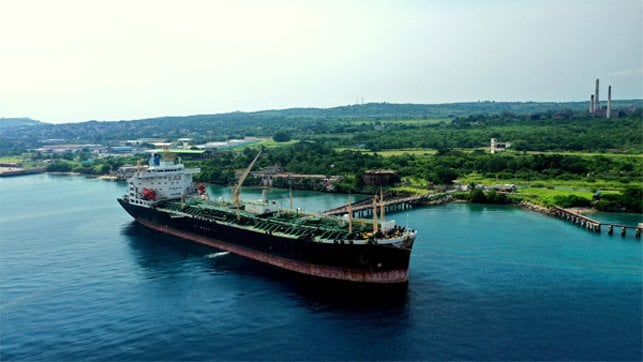
Matazan Bay Cuba
Tanker with the power plant in the background in a 2024 picture posted by Eduardo RodrĂ­guez DĂ¡vila

Published Feb 17, 2026 7:36 PM by The Maritime Executive


Media reports indicate that a Greek-owned fuel tanker was seen arriving at one of Cuba’s fuel terminals in the west of the country. The vessel has been operated dark (i.e., without its AIS signal), meaning it is unclear if it was coming from a foreign port, but the Spanish news outlet EFE believes the vessel was partially laden.

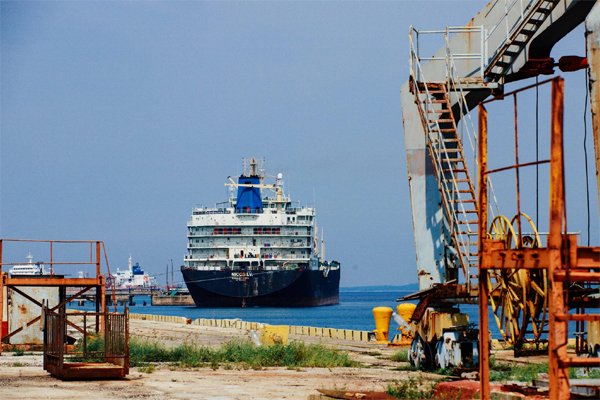
The product tanker Nicos I.V. (45,364 dwt) is Greek-owned and operated and has a history of transporting products to Cuba. Built in 2002, it is registered in St. Vincent and the Grenadines, and it is not sanctioned by the United States. The report says it has a capacity for more than 300,000 barrels, but that would only be a few days' supply for Cuba without an imposition of rationing.

The tanker was seen at the terminal in Matanzas, where EFE reports it arrived on Monday, February 16. The vessel’s AIS signal also shows it is docked in the port. Matanzas Bay, the reports say, is one of the strategic energy locations on the island and home to a thermoelectric power plant. In 2024, Eduardo RodrĂ­guez DĂ¡vila of Cuba’s Ministro del Transporte emphasized the role of the port and efforts to adapt it from the sugar trade to other vital elements of the economy.


Nicos I.V., which docked in Cuba earlier this week, is seen in 2024 photos at the same port posted by Eduardo RodrĂ­guez DĂ¡vila


If the vessel is carrying fuel, it would be the first known shipment to reach the island since the beginning of January. Another vessel, Ocean Mariner, appeared to attempt an approach to Cuba last week but made a “U” turn in the Windward Passage. Media reports suggested that a U.S. Coast Guard cutter had sailed near the vessel to discourage an attempt at reaching Cuba. The Ocean Mariner has continued to sit south of Santo Domingo, Dominican Republic, since last Friday.

The Trump administration is believed to have ordered a full embargo on fuel to Cuba to pressure the Communist government. Venezuela had been one of Cuba’s main suppliers. Media reports said the U.S. had stopped another fuel shipment in early January to Cuba. The USS Stockdale reportedly intercepted the tanker Seahorse leaving Venezuela bound for Cuba.

The U.S., however, last week permitted two Mexican ships to dock in Cuba. The ships were reported to be bringing humanitarian aid, but no fuel. Cuba thanked Mexico, and the reports said another shipment was planned.


(Video of the humanitarian aid arriving in Cuba posted by the Ministerio de EnergĂ­a y Minas de Cuba)


Russia is also reported to be closely following the situation in Cuba as stories continue of emergency efforts and rationing. A Russian airline was reported to have suspended flights due to a lack of fuel, trapping tourists on the island. Kremlin spokesperson Dmitry Peskov said Russia was discussing how it could provide aid.

Russia last sent a fuel shipment to Cuba in February 2025, according to Reuters. It was 100,000 metric tons arranged under an agreement approved by Vladimir Putin. The Russian Embassy said talks were underway for Russia to send a humanitarian aid shipment of fuel to the island.

The Economist last week said the United States was considering permitting a humanitarian shipment of gas for cooking and diesel fuel to run the water supply system in Cuba.

Some reports are suggesting the island is down to under 20 days’ supply. Further concern was raised last Friday, February 13, when the Ministerio de EnergĂ­a y Minas de Cuba reported a fire at the Ă‘ico LĂ³pez Refinery, the main facility on the island. The Ministry later said operations were not impacted and the fire had only damaged a warehouse holding unused products.


No US War on Iran: An Open Letter to the UN Security Council


The current threat of an attack by the US did not begin with any failure by Iran to negotiate. On the contrary, it began with the United States’ repudiation of negotiations that had already succeeded.


Distinguished Members of the Security Council,

The President of the United States is issuing grave threats of force against the Islamic Republic of Iran if it does not accede to US demands. His actions risk a major regional war that would be devastating. Asked if he wanted regime change, he responded that it “seems like that would be the best thing that could happen.” When asked why a second US aircraft carrier has been sent to the region, President Trump answered “in case we don’t make a deal, we’ll need it … if we need it, we’ll have it ready.”

These threats are in violation of Article 2(4) of the UN Charter, which declares that “All Members shall refrain in their international relations from the threat or use of force against the territorial integrity or political independence of any state, or in any other manner inconsistent with the Purposes of the United Nations.”

These threats come in the context of Iran’s repeated calls for negotiations. Moreover, on February 7, Iran’s Foreign Minister delivered a speech in Doha proposing comprehensive negotiations for regional peace, following a round of talks in Oman supported by the diplomacy of the Arab states and TĂ¼rkiye. Even as a second round of negotiations has been announced, the US is resorting to escalating threats of force.

The issue facing the UN Security Council in these perilous days is whether any member state, by force or threat of force, may place itself above the United Nations Charter that governs us all. At stake is the integrity of the UN-based international system.

One of the crucial roles of the Security Council is to call on member states to settle disputes by peaceful means such as negotiation, mediation, arbitration, or judicial settlement, without the threat of force or resort to force. Today, the world is in urgent need of a renewed commitment to diplomacy.

The current threat of an attack by the US did not begin with any failure by Iran to negotiate. On the contrary, it began with the United States’ repudiation of negotiations that had already succeeded.

On July 14, 2015, after years of extensive diplomacy, Iran and the P5 countries plus Germany concluded the Joint Comprehensive Plan of Action (JCPOA) to ensure that Iran’s nuclear program would remain exclusively peaceful. In return, economic sanctions on Iran were to be lifted. The JCPOA placed Iran’s nuclear activities under strict and continuous scrutiny by the International Atomic Energy Agency and thereby ended the risk of a nuclear-arms breakout by Iran, a risk that Iran had consistently denied.

On July 20, 2015, the UNSC unanimously adopted Resolution 2231. That resolution “endorses the JCPOA” and calls upon all states to take the steps “necessary to support the implementation.” It terminated previous sanctions resolutions and incorporated the JCPOA into international law. The Security Council explicitly recognized Iran’s “right to develop nuclear energy for peaceful purposes” under the Non-Proliferation Treaty and established a robust verification regime.

Yet on May 8, 2018, three years after the successful UNSC Resolution, the United States unilaterally withdrew from the JCPOA. This withdrawal was actively lobbied for by the Israeli government. Since the late 1990s, Israel’s leadership has repeatedly, falsely, and hypocritically claimed that Iran was on the verge of obtaining a nuclear weapon, even as Israel itself had secretly acquired nuclear weapons outside the Treaty on the Non-Proliferation of Nuclear Weapons and has until today refused to join the treaty and subject itself to its controls.

When President Trump unilaterally withdrew the United States from the JCPOA, the US reimposed wide-ranging sanctions in direct contradiction of Resolution 2231 and launched a campaign of economic warfare designed to cripple Iran’s economy that continues to this day.

The current threats by the US are therefore part of a long-standing pattern of feigning interest in negotiations while in fact pursuing economic warfare and military force. In June 2025, following the renewal of negotiations earlier that year, the United States and Iran entered a sixth round of talks. The US had characterized the negotiations as constructive and positive. The sixth round was set for June 15, 2025. Yet on June 13, 2025, the US supported Israel’s bombing of Iran. A week after that, the US attacked Iran under Operation Midnight Hammer.

The US assault on the UN Charter has now escalated once again to the brink of war, with US threats of force and acts of economic warfare proceeding daily. The US has been escalating its military presence near Iran and has repeatedly threatened to launch an imminent attack.

The administration has also been candid about its strategy of economic warfare. On January 20, in an interview in Davos, US Treasury Secretary Scott Bessent described how the US had deliberately engineered the collapse of the Iranian currency, a dollar shortage, and a collapse of imports, all with the goal of fomenting economic suffering and mass unrest. Bessent described the resulting unrest as “moving in a very positive way here.”

The most striking aspect of the US campaign for regime change in Iran is the repeated US insistence that Iran must negotiate. Iran has negotiated, repeatedly. The JCPOA was negotiated and ratified by the UN Security Council. Even after Iran engaged in renewed negotiations last summer, it faced large‑scale air strikes on its territory. Now, the US openly avows the policy of economic collapse and regime change.

No country is safe if the United States can make brazen threats against Iran and indeed several other states in recent weeks, including CubaDenmark, and others.

It is both sad and poignant to recall that the United Nations was the brainchild of President Franklin D. Roosevelt. He envisioned an era of great-power cooperation and multilateralism under international law as the basis of international peace and security. His wife, Eleanor Roosevelt, oversaw the drafting and adoption of the Universal Declaration of Human Rights.

The US at that time envisioned an era in which diplomacy would prosper, and a time in which law and justice rather than brute force would prevail, a time when we would honor the words of the Prophet Isaiah inscribed on the wall on First Avenue facing the United Nations: “They shall beat their swords into plowshares, and their spears into pruning hooks. Nation shall not lift up sword against nation. Neither shall they learn war any more.”

To allow the UN Charter to be ruthlessly violated, no less by its host country, is to invite the return to global war, this time in the nuclear age. In other words, it is to invite humanity’s self-destruction. On behalf of We the Peoples, the UN Security Council carries the authority and heavy responsibility to keep the peace.

Sincerely yours,

Jeffrey D. Sachs
University Professor at Columbia University

Appendix. I humbly offer below an illustrative Draft Resolution by which the UNSC could fulfill its duty in the current context.

The Security Council,

Recalling the purposes and principles of the Charter of the United Nations, in particular the obligation of all Member States to refrain from the threat or use of force against the territorial integrity or political independence of any State, as set forth in Article 2(4) of the Charter,

Reaffirming that the maintenance of international peace and security rests upon respect for international law, the authority of the Security Council, and the peaceful settlement of disputes,

Recalling its resolution 2231 (2015), adopted unanimously on 20 July 2015, by which the Security Council endorsed the Joint Comprehensive Plan of Action (JCPOA) and called upon all Member States to take actions necessary to support its implementation,

Reaffirming its commitment to the Treaty on the Non-Proliferation of Nuclear Weapons, the need for all States Party to that Treaty to comply fully with their obligations, and recalling the right of States Party, in conformity with Articles I and II of that Treaty, to develop research, production and use of nuclear energy for peaceful purposes without discrimination

Acting under the Charter of the United Nations,

  1. Calls upon all Member States to immediately and unconditionally cease all threats or uses of force and to comply fully with their obligations under Article 2(4) of the Charter of the United Nations;
  2. Acknowledges that the JCPOA constituted a valid multilateral negotiation endorsed by the Security Council, and recognizes that the abandonment of the JCPOA resulted from the unilateral withdrawal of the United States;
  3. Decides that, under its authority, the UNSC mandates all States concerned to immediately engage in negotiations to conclude a renewed comprehensive arrangement on the Iranian nuclear issue, building upon the principles of the JCPOA and fully consistent with the Treaty on the Non-Proliferation of Nuclear Weapons;
  4. Calls upon all Member States to refrain from actions that undermine diplomatic efforts, escalate tensions, or weaken the authority of the United Nations;
  5. Decides to remain actively seized of the matter.
Jeffrey D. Sachs is a world-renowned economics professor, bestselling author, innovative educator, and global leader in sustainable development. Read other articles by Jeffrey, or visit Jeffrey's website.