It’s possible that I shall make an ass of myself. But in that case one can always get out of it with a little dialectic. I have, of course, so worded my proposition as to be right either way (K.Marx, Letter to F.Engels on the Indian Mutiny)
Wednesday, February 25, 2026
Tokyo Bay’s Night Lights Reveal Hidden Boundaries Between Species
A key characteristic of modern human society is rapid urbanization, a process that can reshape natural environments and disrupt the habitats of many organisms. One widespread byproduct of urbanization is artificial light at night (ALAN), which has become one of the most pervasive human-made environmental disturbances. ALAN can affect animals by changing their physiology, behavior, and geographic distribution. In particular, it disrupts natural day–night cycles, circadian rhythms, predator–prey interactions, and reproduction across a wide range of species.
Coastal ecosystems are especially vulnerable to artificial nighttime lighting and intense human activity. Many studies have shown that crustaceans and other intertidal organisms are particularly sensitive to changes in light conditions, and that even small changes in nighttime light levels can profoundly affect their behavior and physiology. However, despite much research, exactly how ALAN-induced disturbances shape ecological and genetic patterns in closely related species remains unexplored.
To address this gap, Assistant Professor Daiki Sato from the Institute for Advanced Academic Research/Graduate School of Science, Chiba University, Japan, examined how ALAN disturbances relate to genetic and ecological differentiation in two closely related isopods,Ligia laticarpa and L. furcata, across Tokyo Bay. Isopods are a diverse family of crustaceans, including both land-dwelling and aquatic species. “The coastal isopods of the genus Ligia provide a promising case study for examining how urban lighting influences genetic patterns,” explains Dr. Sato. “They live in narrow intertidal zones, often on artificial structures such as seawalls and concrete blocks, where nighttime lighting can be intense. This makes them particularly exposed to human disturbance.” The findings of the study were published in the journal PNAS Nexus
Tokyo Bay is one of the most heavily urbanized and brightly lit coastal regions in the world, providing a natural setting to explore these effects. Dr. Sato combined genomic, environmental, and experimental approaches to examine the influence of ALAN and human activity on the genetic and ecological differentiation of these two isopod species.
Genetic analyses revealed a clear ecological boundary between the two species, consistent with patterns of urban illumination. L. laticarpa was most common along the brightly lit inner-bay shorelines, while L. furcata dominated the darker outer-bay areas. Individual genetic profiles showed no evidence of recent interbreeding between the two species, indicating that they remain genetically distinct. However, examination of genetic patterns at the population level showed signs that an additional Ligia species coexists at some inner-bay sites. The signature of genetic admixture correlated with ship-traffic density, consistent with sporadic human-mediated translocation and subsequent spread. Together, these results indicate that urban environmental gradients and transport-driven movements jointly influence coastal species distributions.
Dr. Sato also conducted statistical analyses of 28 years of environmental data, showing that nighttime light, salinity, and vegetation cover were the major factors driving this partition. Notably, laboratory tests showed that long-term ALAN exposure reduced growth and activity levels in L. furcata but had limited effects on L. laticarpa.
“Together, these findings highlight ALAN as a potent yet underappreciated driver of ecological partitioning in coastal systems, demonstrating how human disturbances shape evolutionary processes,” remarks Dr. Sato. “Rather than viewing artificial light and other anthropogenic stressors solely as degradative forces, this work shows that some species can persist, diverge, and potentially adapt within human-altered systems.”
Overall, this research, alongside previous studies, suggests that recognizing human-mediated dynamics in coastal systems can help inform more ecologically sensitive urban planning, in which factors such as lighting can be adjusted to support, rather than undermine, biodiversity.
Why Do Female Caribou Have Antlers?
File photo of the Porcupine Caribou herd foraging on vegetation. (Photo by Alexis Bonogofsky/U.S. Fish and Wildlife Service)
Biologists have long wondered why caribou are the only deer in the world in which females, like males, have antlers.
A study of shed antlers collected from calving grounds in the Arctic National Wildlife Refuge provides a new answer.
Calving grounds are areas where migratory females give birth every year and also where they shed their antlers. Researchers at the University of Cincinnati found evidence that caribou, particularly moms with newborns, gnaw on antlers that were shed years earlier to supplement their diets with crucial minerals.
The study was published in the journal Ecology and Evolution.
Associate Professor Joshua Miller and doctoral graduate Madison Gaetano at the University of Cincinnati studied antlers collected from the Arctic National Wildlife Refuge of Alaska, home to the Porcupine Caribou Herd, which is famous for its epic 1,500-mile round-trip migration.
Antlers are made of bone that grows from the top of the skull The antlers of male caribou can stretch four feet and weigh as much as 20 pounds each, although a female’s are far smaller.
In the cold and dry climate of the Arctic tundra, shed antlers can sit undisturbed for hundreds of years, providing a ready source of minerals such as calcium and phosphorus for foraging caribou at a key time of their epic migration.
Miller collected antlers and bones during scientific expeditions to the Arctic Refuge between 2010 and 2018. He used a rigid inflatable raft, setting up camps with a portable electric fence to ward off curious bears. During the expeditions, it was clear that most of the antlers had been chewed on, but which animals were doing the chewing?
Back in Miller’s lab at UC, researchers examined the tooth marks left on the antlers and bones to identify the culprits. When carnivores such as bears and wolves chew on bones, they leave distinct patterns of damage compared to animals such as lemming or caribou.
UC researchers found that caribou are the prime culprits, chewing antlers they find a little at a time starting at the tips of the tines.
The study found that 86% of the 1,567 antlers they examined showed signs of gnawing and 99% of the gnaw marks were left by caribou.
“We knew that animals gnawed on these antlers, but everyone assumed they were mostly rodents. Now we know it’s really caribou. My jaw dropped when our results started to become clear,” he said.
Researchers observed marks from rodent teeth on less than 4% of gnawed antlers. And they found no evidence of carnivore gnaw marks on antlers in the study.
Researchers also collected 224 skeletal bones from caribou, moose and musk ox in the study area. And unlike the antlers, many of the gnaw marks on these bones were from predators such as wolves and bears. Caribou gnaw marks were observed on about 12% of the sample bones while just 1% of gnaw marks were from rodents.
Patrick Druckenmiller, a professor from the University of Alaska Fairbanks and Director of the University of Alaska Museum of the North, and National Park Service program manager Eric Wald also contributed to the project. The research was supported with grants from the U.S. Fish and Wildlife Service, the National Geographic Society, the National Science Foundation, the UC Office of Research and the Animal Welfare Institute.
Biologists often point to antlers as a tool for females to defend the choicest grazing spots from other caribou or to ward off predators. But Miller said the role shed antlers play in supplementing a caribou’s diet is an overlooked benefit.
Migrating females collectively drop their antlers within days of giving birth. In this way, females carry their own nutritional supplement that becomes available where and when they need it most.
“These antlers last for centuries or longer in the Arctic and they are a source of nutrients that get revisited again and again. Given the results of our study, this is probably an important clue to a way that antlers benefit female caribou that has gone underappreciated,” he said.
Gaetano said antlers certainly could provide more than one benefit to female caribou. But female caribou are more likely to use their hooves against predators. Reindeer herders she spoke to said their go-to defense is to trample and kick.
Meanwhile, their antlers can be very small, she said, making them unlikely weapons.
“I think it’s reasonable to question how helpful they would be in fighting off a predator,” she said.
“Female caribou shed their antlers right around when they give birth,” Gaetano said. “That means they are antlerless when it would be most crucial to have antlers to defend a young calf if they were a defense mechanism.”
Eventually, over the span of centuries, the minerals from the shed antlers return to the soil where the nutrients help support sedges, grasses and lichens the caribou eat.
“They’re engineering this habitat, seeding the landscape with these super-important minerals that can be quite hard for animals to get enough of,” he said. “Phosphorus in particular is very important for new mothers trying to produce high-quality milk for feeding their young. Caribou bring literally tons of phosphorus to their calving grounds every year.”
Miller said many mammals are known to supplement their diet by gnawing bones, eating clay and salt or drinking from mineral-rich pools.
“It is fairly ubiquitous. I’ll never forget watching a kangaroo eat a dead bird in Australia,” he said. “Herbivores look for nutrients in all kinds of interesting ways.”
Blaming Beavers For Flood Damage Is Bad Policy And Bad Science
Beaver dams are critical to river health and a source of biodiversity. They create wetlands, slow water and improve water quality. They also reduce flood peaks and delay runoff.
But beaver dams are often blamed when extreme rainstorms cause flooding — especially when they fail.
This blame had serious consequences following the extraordinary rainstorms that hit Quebec’s Charlevoix region in 2005 and 2011 in the wake of Hurricanes Katrina and Irene. Flooding along the Port-au-Persil watershed caused considerable damage to a riverside inn downstream, leading its owners to successfully sue the Charlevoix-Est Regional County Municipality (RCM) both times.
The owners argued that the RCM was liable under Article 105 of Quebec’s Municipal Powers Act, which states that municipalities are responsible for keeping rivers free of obstacles — including beaver dams. The courts agreed, despite an independent, in-depth hydrology and hydraulics report presented by the defense in the second court case. The report, written by an engineer, argued that the failed beaver dams could not have reasonably been responsible for the damage.
Pascale Biron, a professor in the Department of Geography, Planning and Environment, found the decisions baffling. An expert in river management and river dynamics, she says it was impossible for a failing beaver dam on a tributary many kilometres upstream to have caused the large-scale flooding that damaged the inn.
A new study published in Earth Surface Processes and Landforms co-written by Biron and the author of the independent report explains why. It uses an updated version of the original model with the latest developments in hydraulic modelling.
“The original was really impressive work,” Biron says. “We were able to improve on it with state-of-the-art modelling tools and new data such as a LiDAR digital elevation model, which recreates the river levels during the Irene 2011 flood event.”
Dam failures had minor consequences
The results were clear. In both floods, the failed beaver dams had only a small and short-lived effect on water levels downstream.
During the 2011 flood, the dam failure raised river levels near the inn by only about 20 centimetres — and for just a few minutes. Even if the dam had remained intact, the river would still have overflowed because of the extreme rainfall, according to the researchers.
When they modelled beaver ponds containing four times the observed water volume, the flooding was still minimal. Only unrealistically high dams could have made a meaningful difference, the researchers said.
Log jams a likelier culprit
The study also found that the river’s steep slope, combined with intense rainfall, naturally created fast-moving water, capable of eroding banks and moving large logs. Fallen trees and other kinds of wood jams near bridges were likely a much bigger factor in the flooding and damage than beaver dams far upstream.
These conditions alone were enough to explain the dramatic “walls of water” cascading down the river towards the inn, as witnesses reported.
“We don’t want rivers to be canals, with the same shape and depth — we want trees and beaver dams. It would be completely counterproductive to remove them, and impossible anyway,“ Biron says.
“When we see something incorrect, scientists feel it is our duty speak out, especially when there are legal implications. The wording in Article 105 is key, so lawyers need to be involved, not just scientists.”
Hunting Pressure Is Shrinking Safe Space For Mandrills In Equatorial Guinea
Africa’s largest monkey, the mandrill, Mandrillus sphinx, is being forced out of its home within a national park due to hunting pressure, new research has revealed.
Researchers from the University of Bristol Veterinary School, in collaboration with Bristol Zoological Society and partners in Equatorial Guinea, have uncovered alarming evidence that hunting pressure is dramatically reducing the safe habitat available to mandrills inside Monte Alén National Park, one of Central Africa’s most important rainforest strongholds.
Mandrills, the world’s largest and most colourful monkey species, are listed as Vulnerable by the IUCN and face growing threats from habitat loss and hunting. Despite their crucial role as seed dispersers and indicators of forest health, the species remain poorly studied across much of their range. This new study reveals that even protected areas are failing to offer full refuge.
Using 35 camera traps deployed by Bristol Zoological Society’s Equatorial Guinea Conservation Programme, researchers monitored mandrill presence across the park and the impact of environmental and human influences on their movements.
Across 10,800 camera-trap days, researchers recorded 79 mandrill detections across Monte Alén National Park, and the results were stark. The research revealed that mandrills were far less likely to be present near hunting camps, even within the protected national park. This suggests that hunting pressure is actively reducing the amount of safe habitat available to the species, forcing mandrills to retreat into less disturbed areas.
The study, published in American Journal of Primatology, also found that mandrills were more likely to occupy areas close to rivers, highlighting the importance of riparian habitats for drinking, feeding, and escaping the heat.
Tim Bray, co-author and Conservation Programme Manager at Bristol Zoological Society, said: “This research shows very clearly that hunting pressure is affecting mandrill habitat, even inside a protected area like the national park. If we want mandrills to survive in Monte Alén, we need to protect the places that matter the most for the species and work with communities to reduce pressure on wildlife. Access to water is essential, but hunting pressure can quickly make an area uninhabitable for the species.”
Mandrills focused their activity on a smaller number of high-quality sites during the wet seasons, probably following seasonal food sources. During the dry seasons, they spread more evenly across the landscape. This suggests that mandrills have the ability to adapt to changing conditions, but only in areas with limited human impact.
The results emphasise the pressing need for targeted conservation actions to safeguard essential habitats, particularly areas near rivers, as well as addressing the socio-economic drivers of hunting.
Tania Guzman Santillan, the study’s lead author,who undertook the study as part of her Master’s in Global Wildlife Health and Conservation at Bristol Veterinary School in conjunction with conservationists at Bristol Zoological Society, added: “The persistence of mandrills in Monte Alén will depend on conserving critical habitats, reducing hunting pressure, and helping communities find alternative livelihoods. Without this combined approach, even the largest monkey in Africa could become extinct in a region that was supposed to protect them.”
The University of Bristol’s MSc in Global Wildlife Health and Conservation is a unique programme, taught in collaboration with Bristol Zoological Society, and includes practical experience, field trips, and mentoring from global experts. This study highlights the importance of applied wildlife research and monitoring, as well as the value of training conservation scientists through programmes like this, where hands-on research directly supports the protection of threatened species.
For decades, the world’s most valuable American export was not a physical commodity or a digital service. It was the reliable predictability of the U.S. legal system. That certainty premium, the bedrock on which the global “Pax Americana” was built, is currently evaporating. On February 20, 2026, the Supreme Court didn’t just strike down a tariff in Learning Resources Inc. v. Trump. It effectively told the White House that the International Emergency Economic Powers Act (IEEPA) is no longer a blank check for economic policy.
The President’s immediate response—invoking Section 122 of the Trade Act of 1974 to slap an escalating 15 percent duty on imports by February 24—is being framed as a show of strength. In reality, it is a sign of a presidency trapped in a loop of executive overreach and judicial correction. This is no longer just a trade war with China. The commander-in-chief, who views the law as a suggestion, has launched a domestic cold war against a court that has finally decided to act as a constitutional gatekeeper. The chaos is compounded by the fact that the Department of Homeland Security (DHS) remains in a partial shutdown, leaving the very Customs and Border Protection officers tasked with collecting these new taxes and processing billions in court-ordered refunds working without pay.
The reaction from Capitol Hill suggests that this domestic conflict has already turned hot, revealing a Congress struggling to reclaim its pulse. Senate Minority Leader Chuck Schumer (D-NY) hailed the ruling as a “win for the wallets of every American consumer,” while Senator Elizabeth Warren (D-MA) demanded a mechanism to ensure that the nearly $180 billion in illegal collections reaches families and small businesses rather than vanishing into the federal ether. Meanwhile, the Republican response has been fractured Although Senator Bernie Moreno (R-OH) called for the GOP to “codify the tariffs” to protect the domestic base, veteran leaders like Senator Mitch McConnell (R-KY) noted that the “empty merits of sweeping trade wars” were evident long before the ruling.
The United States thus at the edge of a “150-Day Trap.” By retreating to Section 122, the administration has pivoted from the open-ended authority of IEEPA to a statute with a hard expiration date. This creates a state of permanent economic whiplash. For a CEO in Munich or a farmer in Iowa, the rule of law has been replaced by the rule of the calendar. Every five months, the American economy will face a cliff where tariffs might vanish, be renewed, or be struck down by the next inevitable injunction. This volatility is the antithesis of the stability that global markets crave.
The global fallout of this institutional decay is profound. For 70 years, the U.S. dollar functioned as the world’s reserve currency because of a belief in American “institutional reliability.” When the president attacks the families of Supreme Court justices and suggests the highest court in the land is “swayed by foreign interests,” he is signaling to every foreign investor that the United States is becoming a “banana republic” of the North. In Brussels and Tokyo, leaders are already signaling potential WTO consultations, no longer viewing Washington as a partner but as a source of “geopolitical entropy.”
Furthermore, the constitutional crisis is a fiscal catastrophe in the making. With the Supreme Court ruling the previous duties illegal, the Treasury is now staring down the barrel of billions in potential refunds. The exemptions listed in the February 20 proclamation—covering everything from beef and tomatoes to aerospace parts—reveal the administration’s own lack of confidence. They are attempting a “surgical strike” on global trade while using a sledgehammer. By exempting items that would cause immediate inflationary spikes, the White House is tacitly admitting that a true global tariff is an economic suicide pact. These carve-outs don’t fix the problem. They merely highlight the internal contradictions of a policy that tries to punish the world while pleading for it to keep supplying basic needs.
The solution is not more executive orders. It’s a return to the power of the purse. If these tariffs are truly essential for national security, the administration must do the hard work of building a legislative consensus. A new Trade Framework Act that sets clear, bipartisan triggers for tariffs would restore U.S. institutional reliability. This would require the White House to treat Congress as a co-equal branch rather than an annoyance.
Until that happens, the United States remains an economy governed by decree and challenged by decree—a superpower struggling to define who is in charge of its checkbook. The world is no longer waiting for America to lead. It is waiting for America to follow its own laws.
Dr. Imran Khalid is a geostrategic analyst and columnist on international affairs. His work has been widely published by prestigious international news organizations and journals.
Cuban fuel crisis: a Russian tanker is on route. Will Trump let it through?
The Russian oil-carrying tanker, identified by maritime tracking data as the Sea Horse and flagged in Hong Kong, is expected to arrive in Cuba in early March with nearly 200,000 barrels of fuel, most likely diesel, as per Kpler data. / pixabay
By bnl editorial staff & NewsbaseFebruary 23, 2026
A tanker widely believed to be carrying Russian fuel is heading towards Cuba, potentially setting the stage for a fresh confrontation between Moscow and Washington as the island struggles under a de facto US fuel embargo that has crippled power generation, transport and basic services.
The situation bears distant echoes of the Cuban Missile Crisis of 1962, when Soviet vessels carrying nuclear warheads brought the two superpowers to the brink of war. The stakes this time are incomparably lower, but Cuba could once more find itself at the centre of a geopolitical standoff, this time over desperately needed oil rather than nuclear warheads. Fulton Armstrong, the former CIA lead Latin America analyst, told the New York Times: "Since the Cuban Missile Crisis, this is the biggest step. And the Cubans will have to make a decision on whether to surrender."
The tanker, identified by maritime tracking data as the Sea Horse and flagged in Hong Kong, is expected to arrive in Cuba in early March carrying nearly 200,000 barrels of fuel, most likely gasoil, according to shipping data and analysis by maritime intelligence firm Kpler cited by Bloomberg. The cargo is believed to be of Russian origin, though neither Moscow nor Havana has confirmed the shipment. Russia's embassy in Cuba has denied publishing any official communication about the vessel, dismissing circulating reports, including claims that the tanker was being escorted by a Russian destroyer, as false. What is not in dispute is the scale of US efforts to prevent any fuel from reaching the island.
While the Trump administration has stopped short of formally declaring a blockade, it is functioning as one, the NYT reported, citing a US official who spoke on condition of anonymity.
The architect of the policy is Secretary of State Marco Rubio, the first US-born Cuban to hold the post, who has made no secret of his ultimate ambition. "We would love to see the regime change," he told Congress last month.
According to people familiar with the matter cited by Axios, Rubio has been conducting backchannel discussions with Raúl Guillermo Rodríguez Castro, grandson of former leader Raúl Castro, in what officials describe as an exploratory effort to identify a negotiated pathway to political transition, following a playbook Washington has already tested in Venezuela, where it cultivated relationships within the existing power structure ahead of Nicolas Maduro's removal.
President Donald Trump signed an executive order in late January declaring a national emergency over an "unusual and extraordinary threat" from Cuba, threatening tariffs on any country supplying oil to the communist-run island, already subject to a punishing trade embargo for over 60 years. The measures have succeeded in frightening off potential suppliers, with Mexico halting shipments despite President Claudia Sheinbaum's public misgivings.
A massive US naval deployment, the largest the Caribbean has seen in decades, has been enforcing Washington's oil embargo, building on the operational experience gained during the campaign against Venezuela that culminated in Maduro's capture in January. Caracas had long been Cuba's dominant oil supplier, accounting for roughly 58% of petroleum imports as recently as 2023, but its removal from the equation left the island scrambling for alternatives.
The deterrent effect has been tangible and swift. On January 19, a petrochemical tanker, the Mia Grace, departed Lomé, Togo, carrying what analysts believe was several hundred thousand barrels of diesel or fuel oil, reportedly purchased by Cuban state company Cubametales through a European intermediary. The African token of solidarity never arrived: midway through its Atlantic crossing, the vessel quietly altered its destination to the Dominican Republic. No shots were fired, no boarding took place: the mere prospect of US reprisals was enough.
According to a NYT analysis of shipping data, a separate vessel linked to Cuba subsequently made the five-day journey to Curaçao, consuming precious fuel reserves in the process, only to leave the port empty-handed. Shortly afterwards, the US Coast Guard stopped a Colombian fuel oil tanker that had approached to within 70 miles of Cuban waters, escorting it away from the island.
The case of the Ocean Mariner illustrates Washington's reach with particular clarity. According to the NYT, the vessel loaded around 84,500 barrels of fuel oil in Colombia in late January, transmitting its destination as the Dominican Republic before altering course towards Cuba on February 10. The following day, still some distance from the Cuban coast, it abruptly reversed course as a US Coast Guard vessel pulled alongside. The tanker was escorted into Dominican waters, where it sat full of fuel for several days before being directed north towards the Bahamas – the same destination used for Venezuelan tankers seized by US forces late last year.
Cuba's Foreign Minister Bruno Rodríguez has condemned the measures as illegal under international law, asserting Havana's right to import fuel from willing suppliers and describing US actions as naked political pressure. The United Nations has echoed those concerns, warning that failure to meet Cuba's energy needs risks triggering a humanitarian crisis.
The human cost, meanwhile, is already severe. Cuba generates more than four-fifths of its electricity from ageing Soviet-era oil-fired plants, and the supply shock has rippled through nearly every sector of life on the island. Blackouts lasting up to 20 hours a day have been reported across the country. Hospitals have postponed operations, water pumping stations have been disrupted, schools have cancelled classes and trash goes uncollected on Havana's streets as fuel-dependent municipal services grind to a halt. A shortage of jet fuel has forced major airlines to suspend routes and many tourist resorts to shut down, dealing a severe blow to an industry that provides a crucial source of hard currency for the cash-strapped island.
Rohit Rathod, a senior oil analyst at Vortexa, told Bloomberg he estimates the country's reserves could be depleted by late March, a timeline that could trigger social unrest severe enough to threaten the government. Cuba recorded zero oil imports in January, the first such month since 2015, and has received just one shipment so far in 2026, as per Kpler data.
For Russia, the Sea Horse's reported journey represents an opportunity to project influence close to US shores at a moment when Western sanctions have forced Moscow to seek alternative markets for its own fuel exports. Kremlin spokesman Dmitry Peskov has described Cuba's fuel situation as critical, accusing Washington of pursuing "unilateral coercive measures" and reiterating Moscow's readiness to support its long-standing ally. Russia, already heavily sanctioned over its invasion of Ukraine, has little additional trade exposure to US reprisals, a point Peskov himself made plain: 'We don't want an escalation, but on the other hand,” he said. “Our trade with the United States is almost nonexistent.”
Yet the Kremlin's willingness to act carries its own complications. Russia has extensive experience operating a shadow fleet of tankers and alternative insurance arrangements, infrastructure developed over three years of circumventing sanctions on its own fuel exports, and could in theory sustain a modest supply line to Cuba if Washington turns a blind eye. The question is whether it will.
Should the Sea Horse be permitted to discharge its cargo without interference, it could open the door to further shipments, handing Moscow a propaganda coup and raising questions about the credibility of US sanctions enforcement. There are parallels to China's continued purchases from Russia's Arctic LNG-2 plant over the past six months, despite those trades violating US sanctions – a pattern that has demonstrably weakened the deterrent effect of Western economic pressure.
Should Washington move to intercept the vessel, however, it would risk further straining relations with Moscow at a delicate moment, with Ukraine peace talks now tentatively under way as the full-scale invasion nears its fourth anniversary. What happens to the Sea Horse will say much about how far both sides are prepared to go.
Report: Product Tanker with Russian Fuel Appears Bound for Cuba
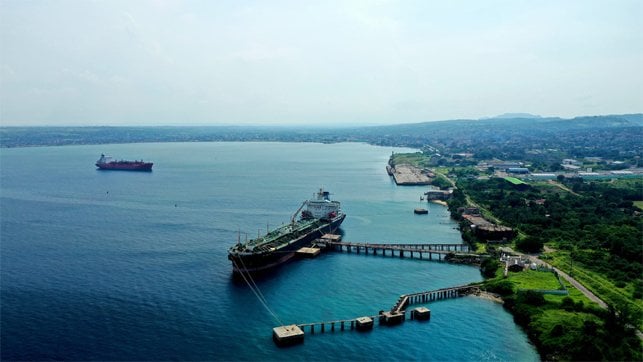
Tankers at the Cuban port of Matanzas in 2024 (posted by Eduardo Rodríguez Dávila)
A Chinese-owned MR tanker appears to have loaded a cargo of Russian fuel and is now heading toward Cuba. Based on an analysis of data by maritime intelligence firm Windward and Marine Traffic, the ship might be set to challenge the U.S. embargo on Cuba as early as next weekend.
Russian officials have repeatedly said that they were prepared to provide aid to Cuba and the Communist government since Donald Trump announced the country a “hotbed of spies” and threatened tariffs on any country that aided Cuba with fuel deliveries. Russian Deputy Foreign Minister Sergi Ryabkov spoke of potential financial aid, while Kremlin spokesperson Dmitry Peskov said discussions were underway about how Russia could provide assistance.
The Russian Embassy in Havana told Reuters earlier in the month that a fuel delivery was expected “soon,” while Russia also called for a diplomatic approach to Cuba. It pointed out the humanitarian needs on the island, with analysts suggesting the fuel supply was as low as 20 days. The United States cut off Cuba’s fuel supplies from Venezuela, but there was a report in The Economist that the United States might permit a humanitarian fuel delivery for cooking and to run the water system.
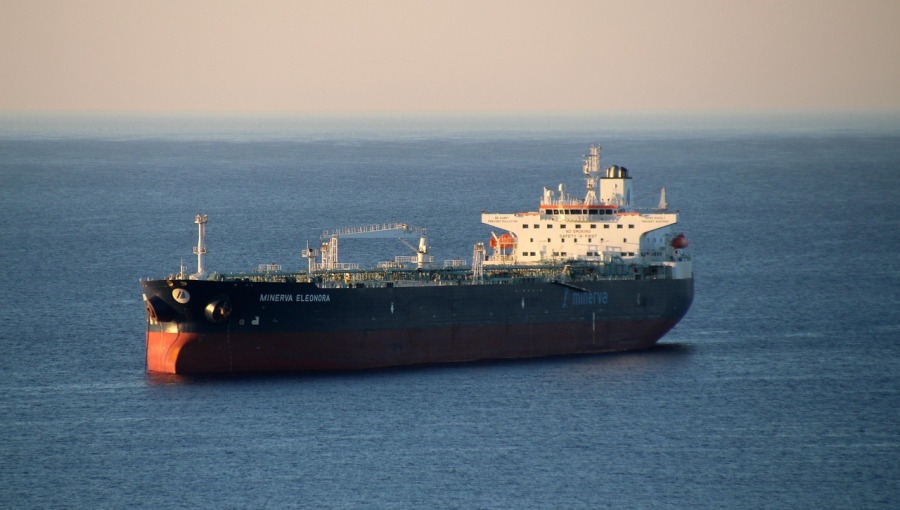
Windward and Marine Traffic are tracking the Hong Kong-flagged MR tanker Sea Horse (27,000 dwt). Built in 2002 and managed from China, the vessel appears to have undertaken a ship-to-ship transfer near Cyprus, with Windward reporting it likely loaded Russian middle distillate originating from the Black Sea ports. Windward says the vessel’s draft increased on February 8 and reports it could reach Cuba on March 2.
The ship’s AIS signal is transmitting that it is bound for Gibraltar. However, it passed Gibraltar days ago. The last estimates place it near the middle of the Atlantic, sailing due west. The Sea Horse is not under any sanctions.
If it reaches Cuba, it would be the first delivery since January 9. The U.S. stopped a crude oil tanker from leaving Venezuelan waters, and at least two or three other tankers have turned back, intimidated by the U.S. presence.
The tanker Ocean Mariner, as previously reported, sailed from Colombia and entered the Windward Channel off Haiti. The vessel made a sudden “U” turn and headed south of the Dominican Republic. The New York Times reported a U.S. Coast Guard vessel had approached the tanker and hailed it, inquiring about its destination. It said the Dominican Republic, and it has been loitering near Santo Domingo. It later proceeded to Nassau in the Bahamas, reportedly with a USCG shadowing its movements.
Another small tanker that regularly made the runs between Curacao and Cuba, The New York Times reports, also appeared to abandon a supply run. The Gas Exelero (3,100 dwt), the paper reports, sailed to Curacao in early February but returned to Cuba apparently empty. A third tanker, the Greek-owned Nicos IV (45,364 dwt), docked in Matanzas, Cuba, last month, but it was unclear if it had a cargo aboard. The vessels each have only represented a token supply that would do little to alleviate the long-term challenge.
It is unclear currently if the U.S. Coast Guard would interdict the Sea Horse as the vessel arrives in the Caribbean. So far, the U.S. appears only to have used its presence to intimidate vessels from approaching Cuba. The U.S. did permit a humanitarian aid shipment from Mexico to reach Cuba, but it did not have fuel supplies.


.png)