Barclays to cut 5,000 jobs as it turns to AI to improve efficiency
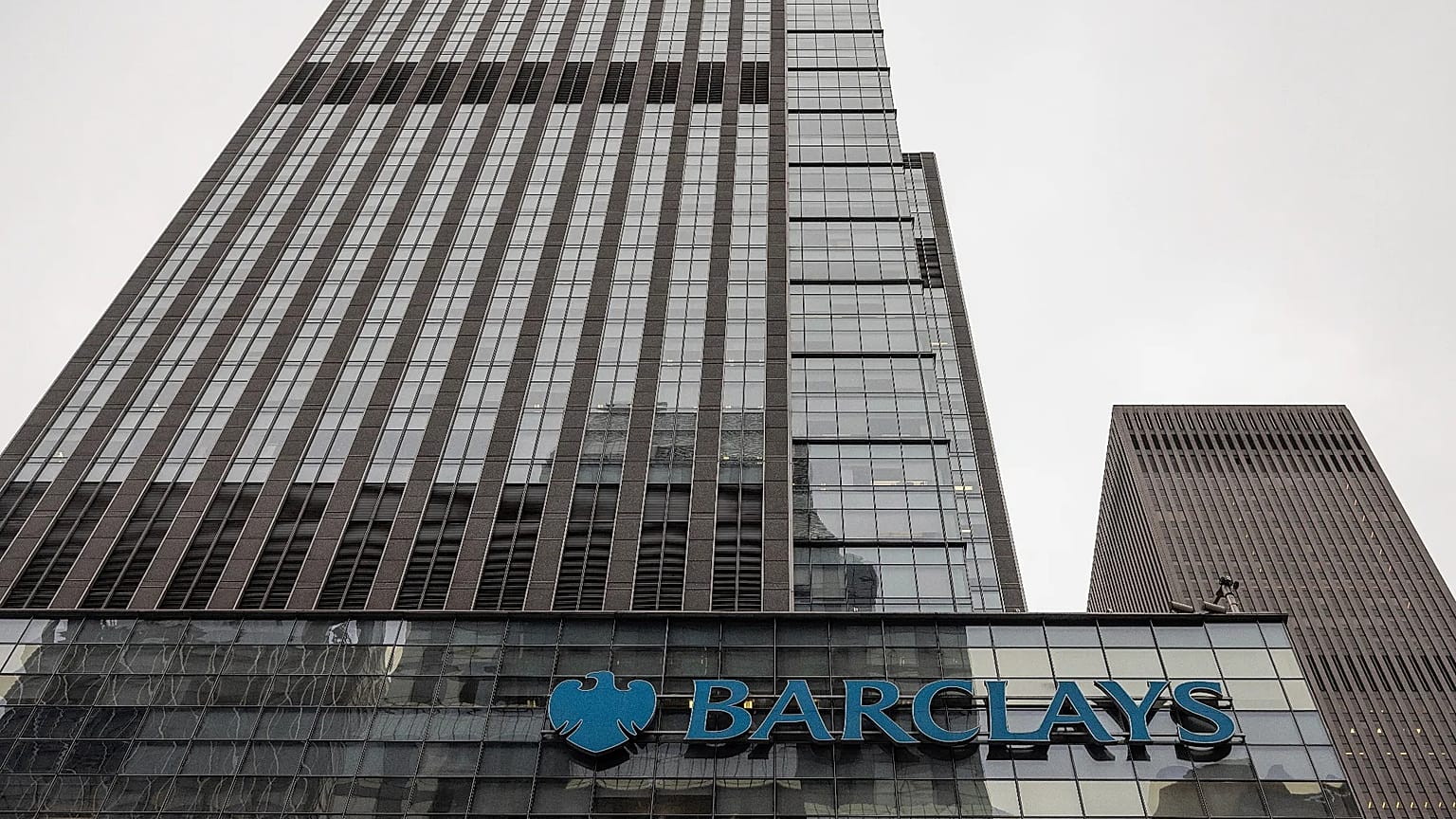
British bank Barclays said on Thursday it would cut around 5,000 jobs, or roughly 5% of its global workforce, by the end of 2026 as it turns to AI and other technology to streamline operations and improve efficiency.
Barclays shares edged lower in London after the bank said on Thursday it would cut around 5,000 jobs, including around 1,000 already cut in the first half of the year.
The announcement came alongside an earnings update that showed Barclays’ net profit grew 13% in the third quarter, helped by surging income in its equities division.
Barclays said in an earnings presentation that it was implementing “organisational simplification and technology change efficiency driven by AI”.
About 60% of the job cuts affect support functions, including developers, as AI makes staff more productive, according to the bank.
Will Howlett, a financial analyst at Quilter Cheviot, said the announcement illustrates "just how significantly AI and automation could reshape the banking industry over the next few years".
"Banks have spent heavily on technology for years, but we are increasingly reaching the point where that investment translates into fewer people being required to run the business," he said, adding that "Barclays expects its efficiency measures to deliver more than £1.1 billion (€1.31bn) of savings, which should help bring down costs and improve profitability."
The bank’s profit attributable to shareholders rose to £1.65 billion (€1.97 billion) in the third quarter from £1.46 billion (€1.74 billion) in the July–September period a year earlier.
Barclays chief executive C. S. Venkatakrishnan said he was pleased with the bank’s operational and financial momentum, and said the investment bank division “delivered strong equities performance”.
Income from equities jumped 47% year-on-year, while total group income for the quarter climbed 3% to £7.37 billion (€8.79 billion).
"The investment bank was weaker, particularly in fixed income trading, but Barclays remains on track against its longer-term targets," said Howlett. He added that "the question is increasingly whether Barclays can turn technological investment and a smaller workforce into sustainably lower costs without compromising growth." If it can, he said, "there is still considerable scope for improved returns.”
The bank also announced a £500 million (€596 million) share buyback.
The AI “announcement comes as the company failed to match expectations with its third-quarter performance — with the unveiling of a healthy share buyback failing to entirely ease investors’ disappointment”, noted AJ Bell investment director Russ Mould.
He added that while costs increased across the wider group, there are two "major clouds over the business".
“The first being a widely expected increase in tax on the sector in next week’s (UK) budget and the other being a reported probe into possible misrepresentation of risks in its private credit portfolio,” Mould said.
According to the FT, the Bank of England was examining claims that Barclays had understated risks linked to financing for private credit funds. The concern is whether Barclays made these exposures look less risky in its books, allowing it to hold less capital to cover potential losses.
Barclays has said its private credit exposure is treated in line with accounting and regulatory capital requirements.

No comments:
Post a Comment