Arctic sea ice loss linked to summer drought risk across Eastern Europe and Kazakhstan
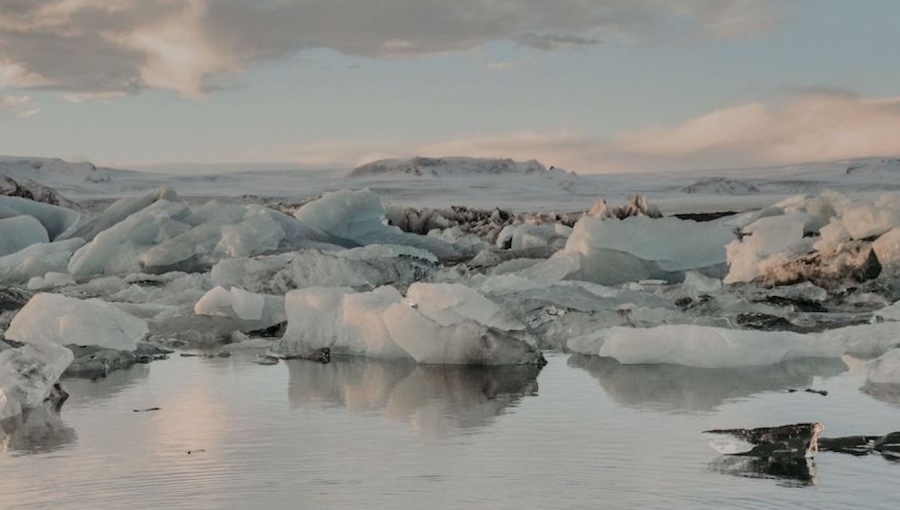
Winters with less sea ice in the Arctic's Barents and Kara seas are associated with drier summers across a belt stretching from eastern Romania and Ukraine to Kazakhstan, according to research published on November 12.
The study, by researchers at Germany's Alfred Wegener Institute (AWI) and the University of Bucharest, examined more than a century of sea ice records alongside a summer drought index covering May to September between 1901 and 2017. The researchers detrended both datasets against atmospheric carbon dioxide concentrations to reduce the influence of their shared warming trend.
Published in Frontiers in Water, the findings identify a potential early warning signal for drought across some of the world's most important grain-producing regions, where poor harvests can have significant consequences for agricultural exports and food prices.
The area identified stretches from eastern Romania, Moldova and Ukraine across the northern Black Sea and Caspian regions into Kazakhstan. Of the area where the drought relationship was statistically significant, 81.1% was also supported by a forecasting test showing that winter sea ice provided additional information beyond the previous summer's conditions. A separate information-flow test supported 65.1% of the area, while 54.1% was confirmed by all three methods.
The authors describe winter ice conditions in the Barents and Kara seas (BKS) as "a potential source of information for probabilistic summer drought prediction". They say the findings could also provide an observational benchmark for future climate models.
The proposed mechanism involves changes in atmospheric circulation following winters with reduced sea ice. The researchers suggest these can produce a pressure dipole in the Arctic, followed by a more pronounced meandering of the jet stream and a high-pressure blocking system north of the Caspian Sea.
This pattern could bring warm, dry air from North Africa and the Middle East into eastern Romania, Moldova and southern Ukraine, while reducing cloud cover across the wider region.
In low-ice years, the amount of solar radiation reaching the ground between May and September was 5.35 watts per square metre higher on average across the study's Eastern Europe-Caspian-Kazakhstan region than in high-ice years. Reduced cloud cover accounted for around 57% of the difference.
The Barents and Kara seas are among the Arctic's fastest-changing areas in terms of winter ice cover. The study draws on one reconstructed sea ice dataset covering 1851-2017 and another spanning 1941-2024. Both show that winters with relatively little ice have predominated since the early 2000s.
"As BKS sea ice continues to decline under anthropogenic warming, understanding whether this pathway may increase drought risk is essential for adaptation planning, particularly in regions already exposed to overlapping pressures from geopolitical instability," the authors write.
The researchers caution that the relationship does not mean low winter ice will inevitably produce a drought the following summer. They also warn that the signal could change as sea ice continues to shrink. The evidence for a similar relationship with summer dryness in Spain was less conclusive.
Other factors, including snow cover, soil moisture and longer-term ocean cycles, may also influence summer conditions. The authors call for targeted climate-model experiments to establish how much of the observed drying can be attributed to changes in Arctic sea ice.
The findings come as drought and extreme weather have increasingly disrupted agricultural production and infrastructure across the region.
In 2025, Russia's major grain-producing regions of Rostov, Krasnodar and Stavropol faced the prospect of their worst harvest in five years after drought damaged winter wheat. Moldova's economy contracted in the first quarter of 2025, partly reflecting the impact of the previous year's drought on agricultural output. Kazakhstan, meanwhile, harvested 24.3mn tonnes of grain this year despite prolonged dry conditions in several regions.
Drought has also affected infrastructure. Low water levels on the Danube forced Romania to shut both units at its Cernavoda nuclear power plant on August 13, while Bulgaria reduced output at its Kozloduy nuclear plant.
A more reliable indication of drought risk several months before the growing season could therefore be valuable for farmers, grain traders and governments planning agricultural production and exports.
The researchers stress that their findings offer a probabilistic signal rather than a deterministic forecast, but say the relationship warrants further investigation as Arctic sea ice continues to decline.

No comments:
Post a Comment