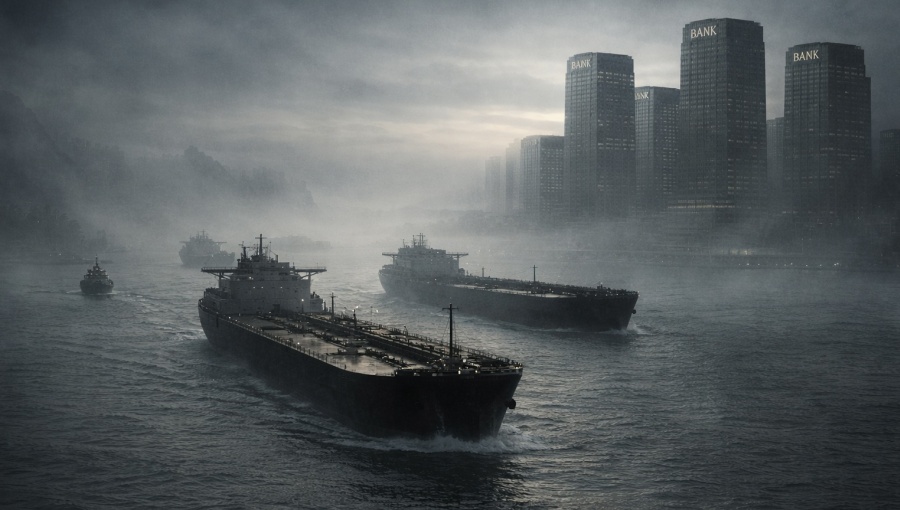
The US has given Russia breathing room by easing sanctions just as they began to hurt, and the EU cannot make up the difference, economist Vakhtang Partsvania argued in Riddle.
The two sides of the Atlantic pulled in opposite directions in mid-October. On October 12 the EU approved its biggest single expansion of sanctions listings since the full-scale invasion, adding nearly 1,600 companies and executives from Russia's military-industrial complex. Within days Washington authorised transactions in Russian diesel until April 7, 2027, extended exemptions for Lukoil's filling stations and other assets abroad to April 24, 2027, and President Donald Trump used a national interest waiver to hold off the hellish sanctions in Senator Lindsey Graham's act, including 100% tariffs on the biggest buyers of Russian oil.
The divergence over how much economic pain the West is prepared to inflict is the main threat to the sanctions regime, which will not collapse but could lose its coherence and credibility, according to Partsvania, an economist and professor of management at Caucasus University in Tbilisi. "The effectiveness of sanctions is determined not only by the severity of the prohibitions imposed, but by how consistently those who impose them are prepared to stand by their own decisions," he wrote in the October 26 note in Riddle entited A Sanctions Reprieve.
Relief at the worst moment
By the end of 2025 the restrictions were biting. European sanctions, backed by the US blacklisting of Rosneft and Lukoil, coincided with market conditions that went against Moscow: wide discounts on Russian crude, harder export logistics and payments, falling oil and gas revenues and a growing budget deficit.
The US-Israeli war on Iran that began in late February changed that. The disruption of shipping through the Strait of Hormuz, one of the world's chokepoints, pushed up world prices and narrowed the discount on Russian oil, and Washington began widening its exemptions to calm energy markets. The first general licences from the Treasury's Office of Foreign Assets Control (OFAC) in the spring covered only Russian oil and fuel already loaded on tankers, but they were extended and adjusted repeatedly, and by the autumn the easing had become a more durable practice.
Sanctions still work, and Russia's oil and gas budget revenues fell 17% y/y in the first nine months of 2026 despite higher prices. But the reprieve came just when the accumulated restrictions might have caused Moscow serious financial trouble.
Buyers are watching
Washington slapped an extra 25% tariff on Indian goods in August 2025 over India's purchases of Russian oil, and the later sanctions on Rosneft and Lukoil forced India's biggest refiners to rethink their Russian suppliers. India's imports of Russian crude fell to about 1.2mn barrels a day (b/d) in January 2026, then climbed back to nearly 2.5mn b/d by July, even though New Delhi had promised in February to stop buying in return for the removal of the tariff. The biggest consequences of the US retreat are likely to be felt in countries like these, according to Partsvania.
Washington's own demands now carry less weight. Only recently it was pressing India, China and Turkey to cut purchases under threat of sanctions and tariffs; now it is licensing trade in Russian energy, including imports into the US. The products and legal regimes differ, but that is not a strong reason for other buyers to bear extra costs. The argument has reached the EU itself: Hungary's new Prime Minister Peter Magyar has linked the Russian-US diesel arrangement to Budapest's bid to extend its own US exemption for imports of Russian oil.
Sanctions on Russia are not being lifted, but under Trump they are being applied more selectively, and Washington is less willing to add new ones. That lets Moscow keep some oil trade channels open and could blunt the deterrent effect of threats against buyers and middlemen.
Two of the three tankers carrying Russian diesel to the US under the deal turned away with no buyers in early November, as American importers balked at the legal and sanctions risks.
Europe's limits
The EU has kept adding sanctions and has changed how it applies them, going after the foreign infrastructure used to get around them. The 20th sanctions package in April was the first to use the anti-circumvention tool, restricting supplies of some industrial equipment to Kyrgyzstan over the risk of re-export to Russia. Brussels has since listed foreign banks, crypto platforms, oil traders, port terminals and refineries, among them Indonesia's Karimun oil terminal and Georgia's Kulevi refinery. Georgia imported 643,000 tonnes of Russian crude worth $270mn in January-August 2026. By July EU sanctions covered 673 shadow fleet tankers. Kulevi's operator has since switched to non-Russian crude.
EU restrictions rest on EU jurisdiction. They shut Russia out of the European market, financial services and infrastructure but do not let Brussels punish a foreign buyer for any deal involving Russian energy. The US can do that with secondary sanctions and tariffs. Where India and China use non-European carriers, insurers and payment channels, Europe's reach shrinks, and American pressure filled exactly that gap.
The energy crisis is testing Brussels' own resolve. EU countries are still buying Russian LNG, and deliveries from Yamal LNG rose 9.5% y/y in the first nine months of 2026 to 12mn tonnes worth €7.9bn, according to Partsvania. The bill reached €8.7bn by the end of October, with the ban on Russian LNG under long-term contracts due on January 1, 2027. No decision to delay it has been taken, and the phase-out is written into separate EU law as well as sanctions regulations, but with the gas crisis still squeezing supply, the deadline will show whether the EU sticks to its strategy when it costs money.
Europe can keep its own sanctions regime intact and raise the cost of Russia's trade, but it cannot replace America's hold over third countries. How long Russia's reprieve lasts will depend on oil prices, on Washington and on the EU's staying power. "The main risk to Western sanctions policy today is not the immediate collapse of its architecture, but the gradual erosion of its coherence and credibility," Partsvania wrote.
IntelliNews has published a complete sanctions ledger of all the sanctions against Russia detailing each of the first 21 packages.

No comments:
Post a Comment