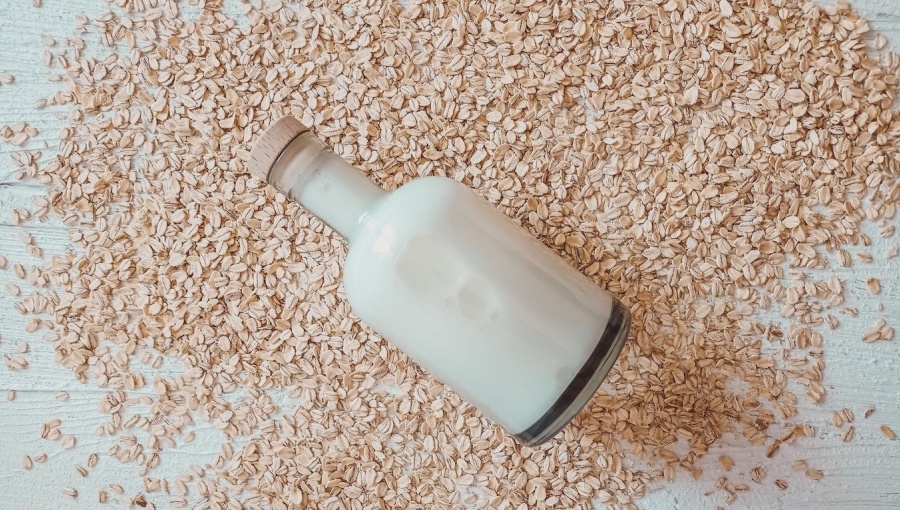
Logika Moloka, the Russian dairy group built from the former Danone business seized by Moscow, acquired two plant-based drinks brands in a week, betting that oat milk and other dairy alternatives have moved beyond their niche status to become an established consumer category.
The deals reflect a broader shift across Central and Eastern Europe. Plant-based milk and dairy alternatives have secured a place on supermarket shelves, while the market for meat substitutes, which expanded rapidly between 2017 and 2021, has struggled to maintain its initial momentum. Investment in alternative proteins continues, however, even as governments consider restrictions on cultivated meat and the labelling of plant-based products.
Logika Moloka completed the acquisition of Polygreen, owner of the 5Yes! brand, on October 26, followed by Velle Holding, which owns the Velle brand, two days later. Neither purchase price was disclosed, but analysts told Russian business daily Vedomosti that the combined value could have approached RUB1bn ($12.3mn).
The company emerged from the Russian operations of French dairy group Danone after Moscow placed the business under temporary state management in July 2023, alongside Carlsberg's Baltika brewing assets. The assets were sold in March 2024 to Yakub Zakriev, then Chechnya's agriculture minister and a nephew of Chechen leader Ramzan Kadyrov, and Tatarstan-based dairy producer Vamin for RUB17.7bn, well below their estimated market value. By the end of that year, the holding had come under the control of former Chechen official Ruslan Alisultanov.
Logika Moloka has since become Russia's largest dairy processor, overtaking PepsiCo's Russian dairy business. Revenue reached RUB161.1bn ($2bn) in 2025, up 13.6% year on year, while first-half 2026 revenue rose 3.5% to RUB84.5bn. Dairy sales reached a record 510,000 tonnes during the first six months of the year.
The group already sells plant-based products under its Planto brand and operates a dedicated production facility in Labinsk, Krasnodar region. The acquisitions broaden its range: 5Yes! makes more than 20 lines of plant-based drinks, particularly for coffee shops and restaurants, while Velle offers more than 30 oat-based products, including drinking and spoonable yoghurts, porridge, cream and sour cream.
Zakriev told Vedomosti that plant-based products had evolved from being merely substitutes for conventional dairy into a consumer category of their own. The acquisitions form part of the group's strategy through 2030, which envisages increasing its share of the plant-based market and expanding sales to the restaurant and cafe sector.
The move comes as Russian consumers show growing interest in specialised dairy products. Retail sales of high-protein dairy products rose between 1.5-fold and five-fold at major supermarket chains during the first nine months of 2026. Logika Moloka reported a 70% annual increase in sales of high-protein Greek yoghurt.
The meat-substitute boom loses momentum
When IntelliNews surveyed the region's alternative protein start-ups in 2021, Russia was emerging as a centre for the sector, with Moscow and Kaluga among the main hubs. Greenwise, one of the country's early plant-based meat producers, had established a factory in Kaluga region, while its founders helped create an industry association and an alternative protein incubator with Berlin-based ProVeg.
"The trend in Russia is the same as in Europe and all the world in that the plant-based evolution is coming," Greenwise co-founder Tim Ponomarev said at the time. He estimated that even Moscow and St Petersburg were five to seven years behind western Europe and the United States.
Some of the companies established during that period have continued to expand. Greenwise increased Russian sales by 60% in 2023 and began exporting to Kazakhstan, Uzbekistan, Belarus and Georgia. Fellow Russian start-up Welldone raised $1.5mn in 2021 from Lever VC and Phystech Ventures. In Hungary, Plantcraft, which makes soy- and gluten-free plant-based cold cuts, secured HUF150mn (€452,000) from X-Ventures in 2019 to enter the US market.
Meanwhile, US agribusiness group ADM acquired Serbia's Sojaprotein, the largest plant-based protein producer in southern Europe, in 2021 and opened an extrusion facility there the following year to produce non-GMO textured soy protein. In Lithuania, Royal Cosun's alternative protein plant in the Kaunas Free Economic Zone was one of the main foreign investment projects of 2025.
Much of the subsequent investment has gone into ingredients and production infrastructure rather than consumer-facing brands.
Poland, the region's largest food market, illustrates the contrasting fortunes of different products. A February 2025 report by the Polish Plant-Based Food Producers Association estimated the country's plant-based food retail market at approximately €250mn in 2023, rising to €340mn when restaurants, specialist shops and e-commerce were included.
Milk alternatives accounted for 45.4% of retail sales and grew by 39% in the two years to June 2024, according to NielsenIQ data cited in the report. The wider plant-based dairy category was worth approximately €153mn in the year to June 2024. By contrast, sales of meat, deli and fish alternatives fell to around €39mn from €43mn a year earlier.
The Polish market initially expanded rapidly after Danone's Alpro brand helped establish the plant-based drinks category in 2017. Traditional meat processors including Sokolow, Tarczynski and Olewnik subsequently introduced plant-based ranges, while dairy producer Magda switched entirely to plant-based production in 2020.
The industry has since entered a period of stabilisation following the rapid expansion of previous years.
"As an industry, we have gone through the honeymoon stage," Maciej Otrebski of the RoslinnieJemy campaign said in the report. "After all, how many vegetable burgers do you need to try? This is why we could see a correction of the expectations versus reality last year. Several companies had to disappear from the market or give up producing this category."
Anna Matusiak of Flora Food Group highlighted the difficulty of competing with conventional meat products: "If you compare the size of the plant-based deli slices category with its meat counterpart, you'll see that it's just a drop in the ocean."
Consumer spending remains considerably lower than in Western Europe. Polish consumers spent €4.23 per capita on plant-based food in 2022, while Romanians spent €1.76, compared with an average of approximately €20.85 in Denmark, Germany, the Netherlands, Sweden, Austria and Belgium.
Only 33% of Poles said they were willing to reduce or replace meat consumption, against a global average of 44%, according to think-tank Blue Europe. The slowdown has also affected established manufacturers: Nestle cut 80 jobs, a fifth of the workforce, at its meat-substitute factory in Krupka, Czechia, in 2025, citing weaker demand.
Plant-based milk finds a more receptive audience
Dairy alternatives have proved more resilient, partly because consumers appear more willing to add them to their diets than to abandon conventional dairy.
A study published in the Journal of Dairy Research in March, based on a survey of 2,157 dairy consumers in Poland, Germany and the UK, found that only 16.6% of Polish respondents planned to reduce their dairy consumption, compared with 33.4% in the UK and 30.5% in Germany.
Among consumers of plant-based dairy alternatives, just 8% of Poles cited ethical or environmental considerations as their reason for choosing them, against 22% in Germany and 20% in the UK. Curiosity was the main reason for trying the products in all three countries.
The researchers concluded that "the position of dairy products seems stable in Europe and is essentially not threatened by the availability of PBDA products on the market". Plant-based dairy products appear to be expanding consumer choice rather than displacing traditional milk and yoghurt.
Research funding continues despite regulatory resistance
Public investment in alternative proteins continues despite the mixed commercial performance of some products. Central and Eastern European countries invested more than €17mn in alternative protein research and innovation, according to a September 2025 report by Good Food Institute Europe. Poland accounted for the largest share, with Croatia, Czechia, Estonia and Serbia also supporting research.
Poland's National Centre for Research and Development entered the top 10 European public funders of alternative protein research in 2024. Funding has focused particularly on cultivated meat technologies and ingredient development for plant-based foods.
Regional start-ups are also targeting export markets. Ukraine's Green Go produces plant-based steaks from wheat, pea and soy protein, Romania's Bluana Foods is developing plant-based tuna and salmon sashimi, while Lithuania's BioGNR produces mycoprotein through fermentation for markets across northern and central Europe.
Market Data Forecast estimates that the European plant-based food market will grow from $4.32bn in 2026 to $10.22bn by 2034, identifying Poland and Romania as emerging markets where retailers including Biedronka and Auchan are expanding cheaper plant-based offerings.
Regulatory developments could nevertheless complicate the industry's expansion.
In Czechia, an agriculture ministry draft decree under consultation would reserve terms such as sausage and salami for products made from meat or offal. Plant-based producers argue that this would prevent them from using descriptions such as "soy sausage" and "vegetarian salami".
"Nobody standing at the shelf is wondering whether a soy sausage or lentil meatloaf contains meat. It says so on the packaging," said Jana Pavelkova of ProVeg Czechia.
Lada Gracova of Czech producer Salve Natura, which has sold plant-based smoked sausage for more than 20 years, said: "Our main concern is whether the customer will find us at all."
Poland suspended its own draft restrictions on terms including szynka (ham) and kielbasa (sausage) in 2024. That October, the European Court of Justice ruled that EU member states could not prohibit meat-related terms on plant-based products unless they had established legal names for those products.
Hungary has taken a tougher approach to alternative proteins. Since 2023, insect-based foods have been required to carry warning labels and be displayed on separate shelves. In November 2025, parliament voted 140 to 10 to prohibit the production and sale of cultivated meat, while leaving plant-based products unaffected.
Romania's Senate voted in 2023 to ban the sale of lab-grown meat, and a new bill proposing to suspend its sale is before parliament.
An April study of Romanian political and institutional decision-makers, published in Food Science & Nutrition, found that plant-based products were generally accepted as "palatable bridges" towards more sustainable diets, while cultivated meat and insect-based foods provoked reactions ranging from curiosity to outright rejection.
The objections extended beyond health concerns to food sovereignty and the protection of domestic farmers. This is particularly significant in Romania, where 90% of farms cover less than five hectares.
"Romanians are traditionalists. They like homemade food, the borscht from Moldova, and so on," one interviewee said.
The researchers found that support for restrictions on cultivated meat was frequently driven by scepticism and nationalism, concluding that public trust would be the "currency of transition".
For the alternative protein industry, the contrast between plant-based dairy and meat substitutes is increasingly clear. Milk alternatives have found a relatively straightforward route into mainstream consumption, complementing rather than directly challenging traditional dairy products.

No comments:
Post a Comment