Thursday, November 19, 2026

'The machines are sick': Tech writer says outage panic misses much scarier truth

By:Travis Gettys
Nov 18, 2026  
RAW STORY

'The machines are sick': Tech writer says outage panic misses much scarier truth
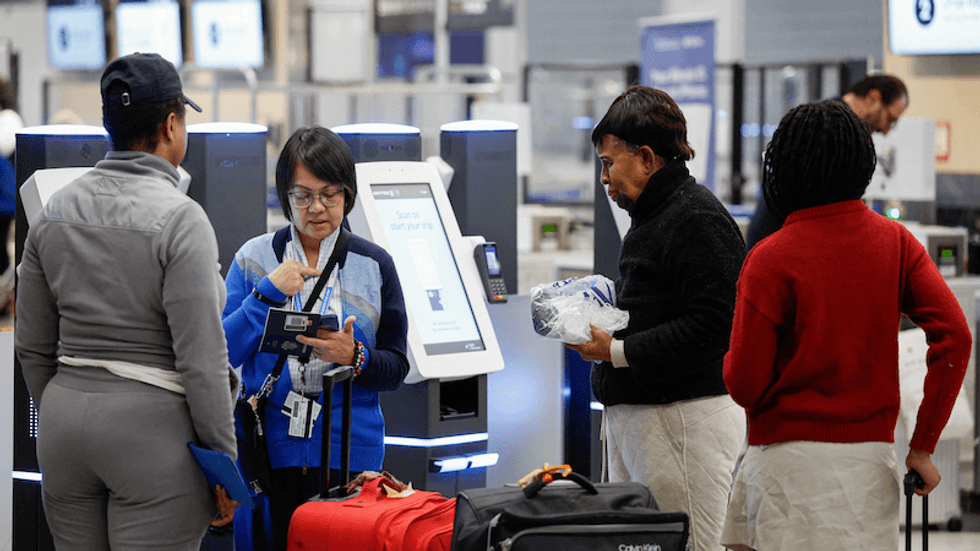
An agent helps travelers after United Airlines said it was troubleshooting a technology issue affecting departing flights, at Chicago O'Hare International Airport in Chicago, Illinois, US, November 16, 2026. REUTERS/Kamil Krzaczynski

A string of high-profile tech meltdowns has Americans wondering whether society is coming apart at the seams, but one tech writer argues the panic may be overblown — and that the real threat runs even deeper.

Tech columnist John Herrman published a new piece for New York Magazine’s Intelligencer that catalogued a dizzying week of failures – a Microsoft Outlook outage that cost businesses an estimated $7 billion, a nationwide ground stop that scrapped more than 20,000 flights, banking disruptions across multiple institutions, an internal NSA network going down, the National Weather Service going dark for nearly an hour and widespread Apple service failures.

The past week made it painfully clear “that we’re utterly dependent on the machines, that the machines are sick,” Herrman observed.

Still, the analysis cautioned that the frenzy risks becoming a “hyper-online Summer of the Shark scenario” — a reference to the summer of 2001, when wall-to-wall coverage of shark attacks convinced many Americans of a deadly surge that experts said wasn’t actually happening.

The official explanations so far have been mundane, Herrman noted. Microsoft’s outage stemmed from an internal error, the ground stop was blamed on a router upgrade, Chase cited a “bug,” the NSA said it saw no evidence of a cyberattack, the Weather Service pointed to “routine network maintenance” and Apple said an internal update was to blame.

Herrman did leave room for doubt, noting that the U.S. is at war with Iran, that AI-driven cyberattacks are on the rise and that the ground stop’s explanation comes through “some generationally untrustworthy and unqualified figures, so who knows.”

But the bigger story, the columnist argued, is what the outages reveal. The cybersecurity community’s emerging view is that any genuine spike in failures may be self-inflicted — a byproduct of the scramble to patch and upgrade aging software ahead of AI-powered cyber threats that are already showing up in the data.

That leaves society dependent on a digital infrastructure Herrman described as “a delicate, inscrutable, overburdened and vulnerable mess,” much of it creaky, patched-together systems run by outside contractors.

Holding it all together are exhausted engineers and IT workers “waging a grinding war against the entropy of codebases,” he said, even as many fear AI will soon take their jobs.

“There are many reasons to believe that this situation will get worse,” Herrman warned, as failures “force us to confront just how dependent we are on systems that most people don’t understand, or even know exist.”

“The people taking care of them have understood this for a long time,” Herrman concluded. “Now everyone else does too.”
Cyber expert's ominous 'world is ending' answer on outages spooks Washington: 'Disturbing'


By: David McAfee
Nov 18, 2026
RAW STORY


A former New York Times cybersecurity reporter has drawn more than a million views and praise from across the political spectrum with a long thread explaining why so much has broken in so little time. Hours later, new reporting suggested she was mostly right.

Nicole Perlroth wrote on X Tuesday that she was writing to answer “the hundreds of texts/DMs asking me if the world is, indeed, ending.” She listed four disruptions in six days: a Microsoft outage on Nov. 12, a nationwide FAA ground stop on Nov. 13, major U.S. banking disruptions on Nov. 16 and an outage of the NSA’s classified internal network on Nov. 17.

“I don’t want to get out over my skis here,” Perlroth wrote, adding that what she was hearing “does not contradict the messaging that most of this is the result of screwy updates.”

ALSO READ:Epstein spying probe shelved by FBI as Trump returns to White House

But she argued that “the dots are starting to form a collective picture.” She said artificial intelligence has pushed the number of discovered software vulnerabilities to three times last year’s pace, and that the “mean time to exploit” those flaws has “collapsed to NEGATIVE SEVEN DAYS.” The result, she wrote, is “enormous pressure to compress patching windows and accelerate software updates, increasing the likelihood these fixes break things in unexpected, cascading ways.”

“We were told to ‘move fast and break things,’” she wrote. “Now we’re telling ourselves we can simply ‘roll out AI’ across everything, as though nothing underneath will buckle. We never stopped to ask: SHOULD WE?”

She closed on a grim note: “This, I’m sorry to say, is just the opening chapter.”

Later Tuesday night, Perlroth followed up: “Sounds like this was, actually, the case.” She pointed to a Washington Sun report that Wall Street executives and the NSA had told members of Congress the outages stemmed from attempts to fix gaps in cyber defenses identified by AI models. Citing three anonymous sources, the outlet reported that the disruptions did not appear to come from a cyberattack and that the fixes “temporarily overwhelmed the systems.”

“They’re trying to push through a lot of patches all at once — more than the system was designed for,” a congressional official told the outlet.

Publicly, the agencies have been less specific. Microsoft blamed a technical defect, JPMorgan Chase cited software bugs, and the NSA said “scheduled routine maintenance” caused a “temporary degradation” of some networks. The cause of the FAA failure remains unclear.

Journalists, commentators and national security figures quickly amplified the thread.

“Must read. Best explanation yet that I have read about why so many tech failures are occurring,” wrote Fox News national security correspondent Jennifer Griffin.

Fox News senior political analyst Brit Hume called it “disturbing, but quite plausible.”

“Please read this excellent analysis of the recent string of tech outages,” wrote CNN’s Jim Sciutto.

Alyssa Farah Griffin, a co-host of “The View” and former Trump White House communications director, called it the “best thread I’ve read on the cyber outages we’ve seen,” and added that “it tracks with Rubio & Warner statements that came a few hours later.”

Chess grandmaster and Kremlin critic Garry Kasparov noted that he had recently interviewed Perlroth, “just as her vast experience, and book, become painfully relevant!”

Former GOP congressman Joe Walsh wrote, “This is really worth reading.” CNN’s Donie O’Sullivan added, “Always listen to @nicoleperlroth.” Retired Australian Army Maj. Gen. Mick Ryan called it “a very interesting look at the multiple software issues in recent days – and what might be ahead of us.”

Perlroth covered cybersecurity for the Times for a decade and wrote “This Is How They Tell Me the World Ends,” a book about the cyberweapons arms race. In 2019 she warned on CNN that North Korean hackers were targeting U.S. banks, energy companies and a water utility.


U.S. Farmers gear up for war over leaked bill that could open door to land seizures

By: Daniel Hampton
Nov 18, 2026
RAW STORY

Farmers gear up for war over leaked bill that could open door to land seizures
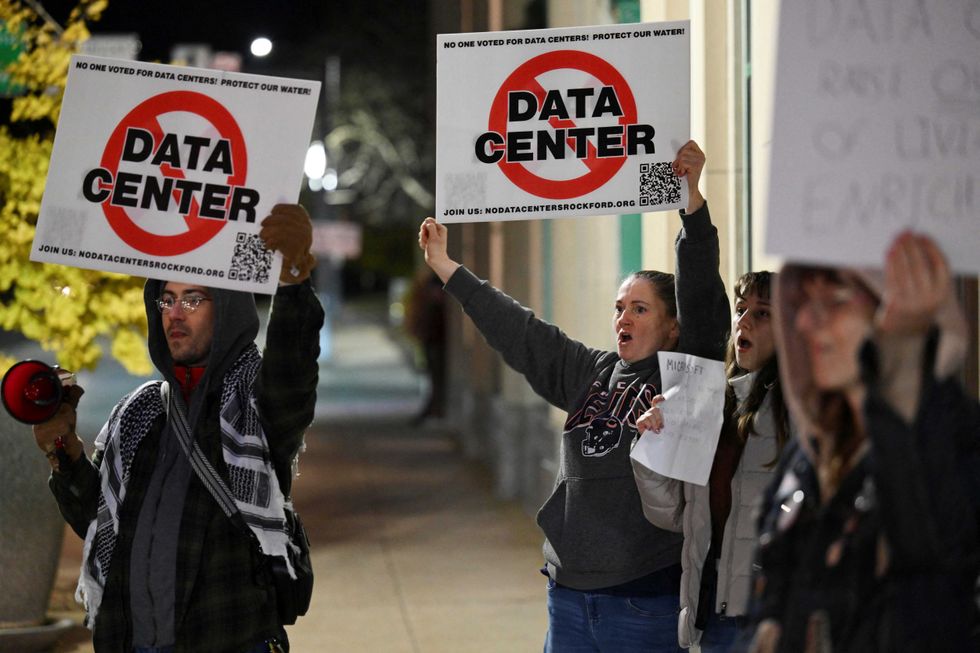
Demonstrators chant and hold signs during a protest against data centers outside Rockford City Hall in Rockford, Illinois, US, November 17, 2026. REUTERS/Yong Li Xuan


Ohio farmers are mobilizing against a leaked draft bill they fear could let energy developers take their land for data centers, just two weeks after voters in 18 Ohio communities voted against the projects.

The draft, obtained by WEWS, would expand Ohio’s definition of a “public utility” to include developers holding a state Power Siting Board certificate for electric transmission lines or gas pipelines. According to legal experts cited by the outlet, a transmission developer could then seize land to power or host a data center. The draft would also let those companies use a fast-track process called “quick take,” WDTN reported. Under quick take, a company deposits money, takes the property, and settles the final price later in court.

The Ohio Farm Bureau has braced for the proposal since June, when the Ohio Business Roundtable’s push to change eminent domain law came to light. The group says it does not oppose data centers.

“We are aware of efforts to further erode the limited protections that landowners have, allowing for quick take of property without first paying for the property and determining a landowner’s rights and compensation through a court of law,” the Bureau’s Evan Callicoat said.

Gretchan Francis, whose family farm has already lost land to highway projects, said losing land to a data center would be devastating.

“I think anybody would feel the same way if their personal land was taken for a data center,” she said.

Champaign County farmer Josh Gentis told WDTN that lawmakers should take heed of the election, when Ohio voters went 21 for 21 against data centers. Farmers are preparing a calling campaign to pressure legislators to kill the bill.

Republicans have fretted over the issue since at least August, with a National Republican Senatorial Committee memo telling AI companies that backlash threatened the party’s hold on an Ohio Senate seat. Even former Trump voters in Ohio soured on the president over his support for the facilities, and national polling has shown broad opposition across party lines.

Incoming state Senate President Bill Reineke (R-Tiffin), who is working on the bill, said it would not extend eminent domain to anyone who lacks that power today. He called it a framework to bring the state in line with 45 other states. Alexandra Denney of the Ohio Business Roundtable said the goal is a reliable, affordable grid and that the group does not intend to expand eminent domain. After the draft was read to her, she said she would need to look at the public utility language.

The bill has not been formally introduced.
Trump’s GOP law ripped food aid from millions of kids faster than anyone feared: analysis


By: Brad Reed,
 Common Dreams
Nov 18, 2026

Trump’s GOP law ripped food aid from millions of kids faster than anyone feared: analysis
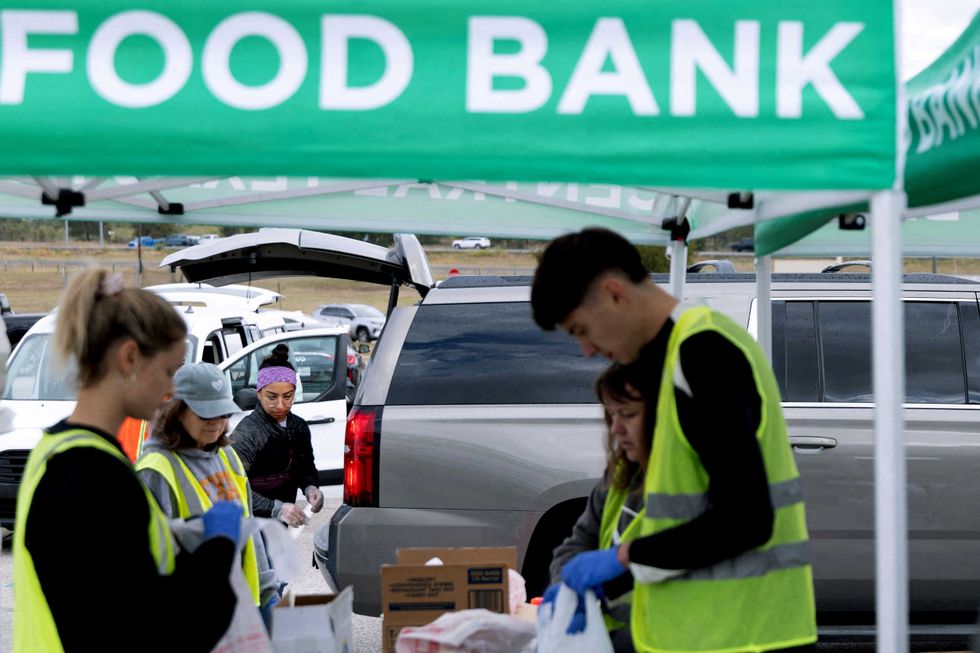
FILE PHOTO: Volunteers place food items in vehicles during a mobile food distribution at Cedar Creek High School, as nearly 42 million Americans face a potential lapse in Supplemental Nutrition Assistance Program (SNAP) benefits, known as food stamps, due to the second-longest U.S. government shutdown, in Cedar Creek, Texas, U.S., November 1, 2025. REUTERS/Kaylee Greenlee/File Photo


Cuts to federal food assistance in Republicans’ 2025 budget law are leading to drops in participation that are significantly higher than those projected by the Congressional Budget Office, according to an analysis published on Tuesday by economist Diane Schanzenbach.


Schanzenbach, a professor at the McCourt School of Public Policy at Georgetown University, found that participation in the Supplemental Nutrition Assistance Program (SNAP) fell by 13% in the year after President Donald Trump signed the One Big Beautiful Bill Act in

The decline in SNAP enrollment has been “much faster and deeper than anticipated,” Schanzenbach wrote, and participation in the program is now at its lowest rate since 2009.

“SNAP participation fell in every state except Alaska,” the economist explained. “The size of the drops varied widely: over 50% in Arizona, about 20% in Texas and 22% in Florida, compared with 7% in California and 9% in New York.”

Given that the unemployment rate has gone up since the start of Trump’s second term, there is no chance that drops of this size can be attributed to normal changes in economic conditions, Schanzenbach added, making it likely the GOP budget law’s cuts to the program are a main culprit.

The most high-profile change to the program was expanding work requirements to more recipients, but Schanzenbach found that these new eligibility rules alone “don’t account for the full decline.”

“Families with children are largely outside the new work requirements, yet an estimated 2 million fewer children received SNAP in October 2026 than in July 2025,” she explained. “This likely reflects some combination of eligible households lost at renewal over paperwork, fewer new applicants, and immigrant families staying away for fear of immigration enforcement, including members who remain eligible.”

State governments are another important variable determining SNAP participation declines, and Schanzenbach pointed to Arizona as an example of what happens when a state moves aggressively to reduce the risk of incurring financial penalties under the budget law’s payment error rate provisions.

“Arizona moved earliest and most aggressively to cut its error rate, and its caseload fell by about half between July 2025 and July 2026, the steepest drop in the country,” she wrote. “At the same time, the number of state staff determining eligibility fell from 1,370 in July 2024 to 880 a year later. Applicants described phone lines that wouldn’t connect, being informed of interview appointments after they were scheduled to occur, and cases closed over a single wrong document.”

The impact of these cuts on hunger is now more difficult to determine, Schanzenbach said, because the US Department of Agriculture no longer conducts an annual Food Security Survey.

That said, the economist projected that “losing SNAP benefits is likely to raise food insecurity for many families,” while pointing to the increased activity seen at food banks across the US as evidence of the cuts’ impact.

“In the face of these dramatic reductions in SNAP participation,” Schanzenbach wrote in her conclusion, “it becomes even more important to restore the collection of national food insecurity data so that policymakers can assess whether the shrinking caseload means more families are going without enough to eat.”
Cops swarmed teens with guns drawn after AI mistook Doritos for a 'gun': lawsuit


By:William J. Ford,
Nov 18, 2026


After an artificial intelligence program mistakenly identified a Baltimore County high school student’s bag of chips as a gun, county police and school officials turned that mistake into a “terrifying” and “life-threatening” encounter for the four teens involved, a new lawsuit says.

The suit was filed in Baltimore County Circuit Court Tuesday, a little more than a year after the confrontation at Kenwood High School. The 31-page complaint claims police officers inflicted pain and suffering on Oct. 20, 2025, on Taki Allen, then 16, and his three friends – Yui-Osa Ogbeide, Devon Thompson Jr. and Keith Winfield III – all now 18.

The incident began about 6:30 p.m., as the four were talking and waiting outside the school for a ride after football practice. Allen had a bag of Doritos that his coach had given him after practice, a bag that the school’s Omnilert Gun Detection identified as a gun, alerting school officials.

Three officials who received the alert recognized the mistake and canceled the alert within minutes. But the school’s principal, Catherine Smith, “never acknowledged the Alert’s cancelation or took any steps to verify whether the Alert remained active,” the suit says.

Instead, more than 10 minutes after the alert was canceled, she sent a screenshot of video footage of Allen “holding the chip bag” and sent a text message to the school resource officer, who forwarded the screenshot to the police department, prompting “an armed police response.”

The alert went out about 7:05 p.m. By 7:21 p.m., six police cruisers surrounded the teens and officers got out, “many with guns drawn,” according to the complaint. They forced the teens to the ground, cuffed and searched them, according to the suit, which shows a picture of the boys with their arms raised outside the school.

After they determined there was no gun, one officer told the students that “AI is not the best,” and another muttered “stupid AI cameras” and “[expletive] Omnilerts,” according to the complaint. “Yet officers relied on the Alert to initiate this painful encounter with the students,” it states.

One of the officers, Corp. Michael Foehrkolb, allegedly told the teens, “Hey, thanks for not running away, that would have been a real problem,” the suit says. It shows a text message from the principal to school staff and administrators that “made light of the incident.”

The text states: “No worries. SRO (school resource officer) had patrol car roll through. It was a bag of chips.” The message included four emojis crying from laughter.

Freya Jamison, an associate counsel with the Lawyers’ Committee’s Criminal Justice Program, said in an interview Tuesday there’s been no public apology from the school’s principal to the teenagers or their families. Jamison said Smith remains at the school.


“We can’t ignore the potential consequences of an armed police encounter, especially with young Black men like Takei, Osa, Devon, and Keith,” Jamison said. “They survived the encounter, but their safety never should have depended on luck.”

“As AI is on the rise around the country, it’s critical that technology companies and public officials are held accountable when they use that technology to violate constitutional rights,” she said. “We simply can’t outsource human judgment to machines, and this case shows exactly why.”

Omnilert spokesperson Blake Mitchell said in an email Tuesday that the company, named as a defendant, “cannot comment on lawsuits.” Baltimore County police and county school officials also declined to comment on pending litigation.

‘Failure’

The complaint notes that Omnilert’s AI weapon detection system was patented in 2022, “barely a year before it was deployed” in Baltimore County Public Schools, which was among “the first of its initial deployments.”

Richard Henry, the Maryland Office of Inspector General of Education, said in December on the “C4 and Bryan Nehman” radio show on WBAL that Omnilert works in Baltimore County schools. Henry attributed the Kenwood High situation to “human error” when looking at video and still images on a cell phone.

“In this case, this occurred in the evening hours, so it was low light,” Henry said on the show. “The student had the bag next to their hip, and they had the way that their hand was situated [with] a couple fingers in, a couple fingers out. That movement was detected, and it was just more or less, this is an alert. It could be a possible threat.”


But the complaint notes that Omnilert’s AI software suffered from false negatives before, including in January 2025 when it failed to detect a shooter’s gun at Antioch High School in Nashville. Two students died, including the shooter, and another was shot in the school’s cafeteria in that incident.

All four teens in the Kenwood High incident remain friends, the complaint says. Allen is still at the school, while Ogbeide, Thompson and Winfield, who graduated earlier this year, plan to visit the school on breaks from college and attend basketball games and other activities.

But with the current AI system in place and without adequate training for police and school staff, there remains concern for all four teenagers’ safety.


“The policies, customs, and training failures that produced this incident also remain in place, putting all four Plaintiffs at ongoing risk of being detained and searched without reasonable articulable suspicion,” the complaint states.

Maryland Matters is part of States Newsroom, a nonprofit news network supported by grants and a coalition of donors as a 501c(3) public charity. Maryland Matters maintains editorial independence. Contact Editor Steve Crane for questions: info@marylandmatters.org.