Showing posts sorted by relevance for query WOMENS HISTORY. Sort by date Show all posts

Monday, February 20, 2006

Black Herstory Month: Lucy Parsons

Forgotten in the pages of Black History is the unique voice of the 19th Century Afro-American, Immigrant, Native, Womens, Workers Struggle in the United States. I am speaking of the Anarchist and Wobbly Lucy Parsons, wife of the Haymarket Martyr Albert Parsons. An excellent article on her importance to modern day struggles for social justice is; Lucy was her name and a lifetime struggle was her game Nice to see someone else remembers Lucy.

I posted this at my bloglines site last year:

February is Black History Month and March is Womens History Month. While March 8 is International Womens Day.

To celebrate I give you one of the greatest overlooked African American Women: Lucy Parsons.

Wife of Haymarket Anarchist, Albert Parsons, Lucy went on to be a founding member of the IWW.


"
Lucy Parsons was an African, Native and Mexican-American revolutionary anarchist labor activist from the late nineteenth and 20th century America. Emerging out of the Chicago Haymarket affair of 1886, in which eight anarchists were imprisoned or hung for their beliefs, Lucy Parsons led tens of thousands of workers into the streets in mass protests across the country. Defying both racial and gender discrimination, she was at the forefront of movements for social justice her entire life. She sparked rebellion and discontent among poor and exploited workers wherever she spoke, and her fiery, powerful orations invoked fear in authority nationwide."


Find blog posts, photos, events and more off-site about:
, , , , , , , , , , ,

Wednesday, May 28, 2008

Eco Socialism

I love the pretense behind this meeting announcement. As if eco-socialism, social ecology or even feminist ecology were NEW only to be recently discovered by the Left in Toronto.

'red' movements that seek to free labor and bring down capitalism, and the
'green' movements that seek to mend our relationship with nature. Activists
from 13 countries met in Paris October 7-8 to discuss this perspective.

They founded the Ecosocialist International Network, and called
for a global ecosocialist conference, to be held in conjunction with the
next World Social Forum.

Speaker: IAN ANGUS


Ian is a member of the Steering Committee of the Ecosocialist International
Network, and the editor of the web journal Climate and Capitalism. He will
discuss what happened in Paris and provide an overview of the state of
ecosocialism today: as a goal, as a body of ideas, and as a movement
against capitalist ecocide.

Sponsored by: Socialist Project, International Socialists, New Socialist
Group, and Socialist Voice.


Seems to me they missed the notice that Murray Bookchin revived libertarian socialist environmentalism known as social ecology, over forty years ago. Of course being Trot's they probably didn't read his Listen, Marxist! either.

The journal Capitalism Nature, Socialism has been around for about thirty years. . Get a sub.

Monthly Review Editor John Bellamy Foster has long promoted a Marxist view of ecology and environmentalism. Get a sub.

Missed the big meeting announcing the founding of the German Red Greens led by old Sixties activist
Rudi Dutschke and Daniel Cohn Bendit over two decades ago did we.

As happened elsewhere in the world, most of the 1968ers ultimately joined the mainstream, with a number of 1960s activists -- including Rudi Dutschke -- later paving the way to found the Green Party. Dutschke himself was to be a key figure in the party, but he died shortly before its official creation in 1980. Some of them, most famously Joschka Fischer, became ministers in the German government led by Chancellor Gerhard Schröder.


Skipped reading Adrienne Rich on feminist ecology/green feminism because she was only taught in Womens Studies, did we.

Missed the work done by syndicalist feminist eco activist Judi Bari did we. She who split with Earth First! over its tactics that endangered lumber workers rather than getting them onside with eco activists.

And clearly these folks need to read my blog.

And while they jump on the eco-environmental-green bandwagon, they do so without addressing the contradictions current in the ecology/environmental/green movement, that places more emphasis on consumers and morality then on understanding that environmental degradation is essential for capitalism to function.

Here are some contemporary articles that they would do well to read as well.

The Modern World-System as environmental history?
Ecology and the rise of capitalism

JASON W. MOORE
University of California, Berkeley


Abstract.

This article considers the emergence of world environmental history as a
rapidly growing but undertheorized research ¢eld. Taking as its central problematic the gap between the fertile theorizations of environmentally-oriented social scientists and the empirically rich studies of world environmental historians, the article argues for a synthesis of theory and history in the study of longue duree socio-ecological change.

This argument proceeds in three steps. First, I o¡er an ecological reading of Immanuel Wallerstein’s The ModernWorld-System.Wallerstein’s handling of the ecological dimensions of the transition from feudalism to capitalism is suggestive of a new approach to world environmental history. Second, I contend that Wallerstein’s theoretical insights may be e¡ectively complemented by drawing on Marxist notions of value and above all the concept of ‘‘metabolic rift,’’ which emphasize the importance of productive processes and regional divisions of labor within the modern world-system.

Finally, I develop these theoretical discussions in a short environmental history of the two great ‘‘commodity frontiers’’ of early capitalism the sugar plantation and the silver mining complex.

Animals, Agency, and Class: Writing the History of Animals from Below


This essay is an historical exploration of the nexus between
animals, agency, and class. More significantly, it seeks
to place the agency of horses, cows, sheep, pigs, etc. into the
process of historical writing. This essay is divided into three
sections. The first is a critique of the current state of the historiography
of animal-studies. The second, ‘A Product of an
Unspoken Negotiation,’ considers how animals themselves
have shaped their own lives and labors. The third, ‘The Evolution
of Vegetarianism and Animal-Rights,’ explores how a
class relationship developed between humans and other animals.
Moreover, this section demonstrates how this solidarity
then led to the creation of social change.

Kate Soper:
Beyond Consumerism: Self-Interest, Pleasure and Sustainable
Consumption
Abstract
Responses to climate change and ecological attrition seldom say much about the downsides of the consumerist lifestyle nor promote the pleasures and fulfilments of a less work-driven and acquisitive life-style. This is hardly surprising given the dominance of global capitalism and the scale of its advertising budgets. But there are signs that the tensions between economic growth and human and environmental well-being will not be indefinitely contained. The negative impacts of affluence are a growing political concern and a source of disenchantment on the part of consumers themselves. In this context, the article seeks to counter the suppression of other visions of the ‘good life’ and presents the attractions of a post-consumerist life-style as of critical importance in winning wider support for a sustainable future.


Find blog posts, photos, events and more off-site about:
, , , , , , , , , , , , , , ,
, , , , ,
, , , , , , , , , , , , , , , , , ,
, , , , , , , ,

, , ,
, , , , , ,
,
, , , , ,
, , , ,
, , , , , ,
, , , , , , , ,

Saturday, February 04, 2006

Grandmother of Second Wave Feminism Dies


Betty Friedan one of the Second Wave feminists, along with Simone de Beauvoir, and Evelyn Reed, has passed away today at the age of 85. Known for her groundbreaking work on the contradicitons of Post War American stereotyping of women; The Feminine Mystique.

Friedan was a classic liberal, a fighter for womens rights as individuals and a New York left intellectual, thus her recognition that womens struggle were collective as well as one of individual rights.

"A woman has got to be able to say, and not feel guilty, `Who am I, and what do I want out of life?' She mustn't feel selfish and neurotic if she wants goals of her own, outside of husband and children," Friedan said.

The First wave feminists, are often thought of as those women who began the fight at the turn of the 2oth Century Suffragettes as well as anarchists and socialists like Emma Goldman and Elizabeth Gurely Brown, Helen Keller and womens reproductive rights advocate Margret Sanger. But in reality that was the real second wave.

The first wave really began in the 19th Century around the abolishionist movement which gained many women advocates who fought for Afro-American rights and labour rights ending up fighting a losing battle for their own rights.
Friedan and de Beauvoir I would class as Third Wave feminism in this light. As the later feminists of the late sixties and early seventies, Kate Millet , Shulamith Firestone , that continue that groundbreaking work would be known as.

The struggle for womens liberation is the essence of all class and revolutionary struggle. And it's at the root of classical liberalism and anarchism.

Rooted in the utilitarian philosophy of Godwin and Mills, the revolutionary athiesm and humanism of Byron and Shelly, feminism begins with Mary Wollestoncrafts famous essay on Womens Rights. Mary was married to Godwin. And was well versed in the arguements of utilitarianism and Godwins classic contractualism.

That contractualism is the basis of later libertarianism of the Prodhounian and Tuckers schools. Thus greatly influencing the libertarian school of thought in the U.S. including Ayn Rand.

A societies treatment of women, the role they play and the freedom they have is an expression of how liberal, plural and secular a society is. Those who would down play this who denigrate feminism, especially if they are women, and women on the right in particular, do a disservice to the women who fought for their rights. The fact they have a popular and respected voice regardless of their politics is because of the struggles of feminists like Freidan.

I expect to read critical apprasials of her life and work in the coming days. And we can expect the dissing of Freidan by the usual gaggle of right wing women in the next few days. They of course will give faint praise to her, and then damn her. But their voices would not be heard had it not been for Second Wave feminists like Freidan and de Beauvoir. And certainly they would not have been heard if the only womans voice that had been respected had been that of the hopeless romantic adulator of male indivdualism; Ayn Rand.

Friedans critique was one that challenged the dominance of Freud in American culture and the role of therapy that had become the method of social control. Therapy had replaced police and social workers in the fifies and sixties as the new science of mass control. Ironic that what had once been the science of the individual had now become what Reich called Mass Psychology. The dominance of the Fruedian mystique, which is the core of Fiedans critique, is well illustrated in the early movies of Woody Allen and his self parody of the neurotic New Yorker whose always on the couch.

The uncritical acceptance of Freudian doctrine in America was caused, at least in part, by the very relief it provided from uncomfortable questions about objective realities. After the depression, after the war, Freudian psychology became much more than a science of human behaviour, a therapy for the suffering. It became an all-embracing American ideology, a new religion. It provided a convenient escape from the atom bomb, McCarthy, all the disconcerting problems that might spoil the taste of steaks, and cars and colour television and backyard swimming pools. And if the new psychological religion – which made a virtue of sex, removed all sin from private vice, and cast suspicion on high aspirations of the mind and spirit – had a more devastating personal effect on women than men, nobody planned it that way.

But the practice of psychoanalysis as a therapy was not primarily responsible for the feminine mystique. It was the creation of writers and editors in the mass media, ad-agency motivation researchers, and behind them the popularisers and translators of Freudian thought in the colleges and universities. Freudian and pseudo-Freudian theories settled everywhere, like fine volcanic ash. Sociology, anthropology, education, even the study of history and literature became permeated and transfigured by Freudian thought. The most zealous missionaries of the feminine mystique were the functionalists, who seized hasty gulps of pre-digested Freud to start their new departments of ‘Marriage and Family-Life Education’. The functional courses in marriage taught American college girls how to ‘play the role’ of woman – the old role became a new science. Related movements outside the colleges – parent education, child-study groups, prenatal maternity study groups and mental-health education – spread the new psychological super-ego throughout the land, replacing bridge and canasta as an entertainment for educated young wives. And this Freudian super-ego worked for growing numbers of young and impressionable American women as Freud said the super-ego works – to perpetuate the past.

Mankind never lives completely in the present; the ideologies of the super-ego perpetuate the past, the traditions of the race and the people, which yield but slowly to the influence of the present and to new developments, and, so long as they work through the super-ego, play an important part in man’s life, quite independently of economic conditions.

The feminine mystique, elevated by Freudian theory into a scientific religion, sounded a single, over-protective, life-restricting, future-deriving note for women. Girls who grew up playing baseball, baby-sitting, mastering geometry almost independent enough, almost resourceful enough, to meet the problems of the fission-fusion era – were told by the most advanced thinkers of our time to go back and live their lives as if they were Noras, restricted to the doll’s house by Victorian prejudice. And their own respect and awe for the authority of science – anthropology, sociology, psychology share that authority now – kept them from questioning the feminine mystique.

The Feminine Mystique
Chapter 5
The Sexual Solipsism of Sigmund Freud

Also see:The Sexual Revolution Continues

Whose Family Values?

Tags


Monday, October 02, 2006

Five Things Feminism Has Done For Me


I got tagged in the Five Things Feminism Has Done For Me meme by John Murney, thanks John. You can read here to find out what its about.

Also Today the Progressive bloggers will be doing a pro feminist blog burst...october is women's history month, a call to post or re-post "5 things feminism did for me" anytime on the 2nd

I won't blog about five things rather I will blog about feminists I consider historically important.
Feminism has been essential in the development of my libertarian and pagan perspective.

I will blog about those who did not take State funding to fight for womens rights and against patriarchical society. In fact their autonomous activity showed that women had to organize despite the State, academia, capitalism, and Christianity. I am not here to support the Status of Women or the State. It is reformism pure and simple. That being said I donot support the attempts by the vile rightwhing to get rid of the Status of Women. This is political correctness from the right, attempting to impose their Christian fundamentalist values on secular society.

I think Status of Women is a liberal sop and it is irrelevant to historically authentic feminism and to women organizing for themselves as the proletariat.

Since it is womens history Month I thought I would post my selection of Greatest Feminists Not Supported By the State in historic waves of Feminism. And my waves fit historic periods. While mainstream Feminism says there are three waves of Feminism historically there are actually six. And those who claim we are in some sort of post-feminist period are deluded as are the post-modernists.

I look at when these women were active or published. When dealing with their ideas and influence it is interesting to note when they actually published. Margaret Mead for instance published her works on Samoa back in the late 1920's while her influence continues right through till today.

And yes I have included liberated women who embrace sexuality as a positive affirmation of themselves.
"Yes, I am a revolutionist. All true artists are revolutionists." Isadora Duncan.

And in keeping with this meme I tag the following five:

Larry Gambone


CathiefromCanada


RustyIdols


Daveberta


DearKitty


Feminist Wave 1 1790-1899

1. Mary Wollstencroft

2.
Sojourner Truth

3.
Victoria Woodhull

4. Anne Besant

5. Lucy Parsons

6. Eleanor Marx

7. Mother Jones

8.
Voltairine de Cleyre

9. Florence Farr

10.
Helena Petrovna Blavatsky

11. Sophia: British Feminism in the Mid Eighteenth Century


Feminist Wave 2 1900-1950

1.
Jane Ellen Harrison

2. Emma Goldman

3. Margaret Sanger

4. Alexandra Kollanti

5. Dr. Margret Murray

6. Sylvia Pankhurst

6. Mary Beard

7. Helen Keller

8.
Mujeres Libres

9. Simone de Beauvoir

10.
Margaret Mead

11. Dion Fortune

12. Isadora Duncan

13. Gypsy Rose Lee

14. Bettie Page

15. Elizabeth Gurley Flynn


Feminist Wave 3 1960-1970

1. Gloria Steinem


2.
Betty Friedan

3. Evelyn Reed

4.
Raya Dunesevkeya

5. Madalyn Murray O'Hair

6. Clara Fraser

7. Rachel Carson

8. Jayne Mansfield


Feminist Wave 4 1970-1980

1. Jane Godall

2. Shulamith Firestone

3. Selma James

4. Maria Della Costa

5. Kate Millet

6. Sheila Rowbotham

7. Angela Davis

8. Barbara Ehrenreich

9.
Sharon Presley

10. Robin Morgan

11. Ti-Grace Atkinson

12. Betty Dodson

13. Jo Freeman

14. CWLU


15. Marge Piercy


Feminist Wave 5 1980-1999

1.
Maria Gimbutas

2. Wendy McElory

3. Camilia Paglia


4. Stephanie Coontz

5. StarHawk

6. Annie Sprinkle

7. Nina Hartley

8. Dawn Passer


Feminist Wave 6- 2000-200?

1. Jennifer Baumgardner and Amy Richards

2. Kathy Pollitt


For more lists of women see:


Women in Science.

WOMEN WRITERS

Literary Resources -- Feminism and Women's Literature (Lynch)


For my blog articles see:

Feminism


Find blog posts, photos, events and more off-site about:
, , , , , , , , ,

Thursday, March 10, 2011

International Working Women’s Day Originated in the US

Was what International Women's Day was originally called. It originated, as did May Day, in the United States. It was a union and socialist holiday recognizing women workers rights to organize unions, a struggle that still is with us today as the battle in Wisconsin shows.

American Socialists organised a mass meeting on the suffrage in New York
on Sunday 8 March 1908. The first National Woman’s Day (woman’s in the singular) was held on 23 Feb 1909 in the USA, and American women kept the custom of gathering on the last Sunday of February. Sundays were preferred so that people would not miss a day of work.

Rosalind Rosenberg, a professor of history at New York's Barnard College
, says the holiday was created as the country's workers, including large numbers of women, were losing patience with poor labor conditions.

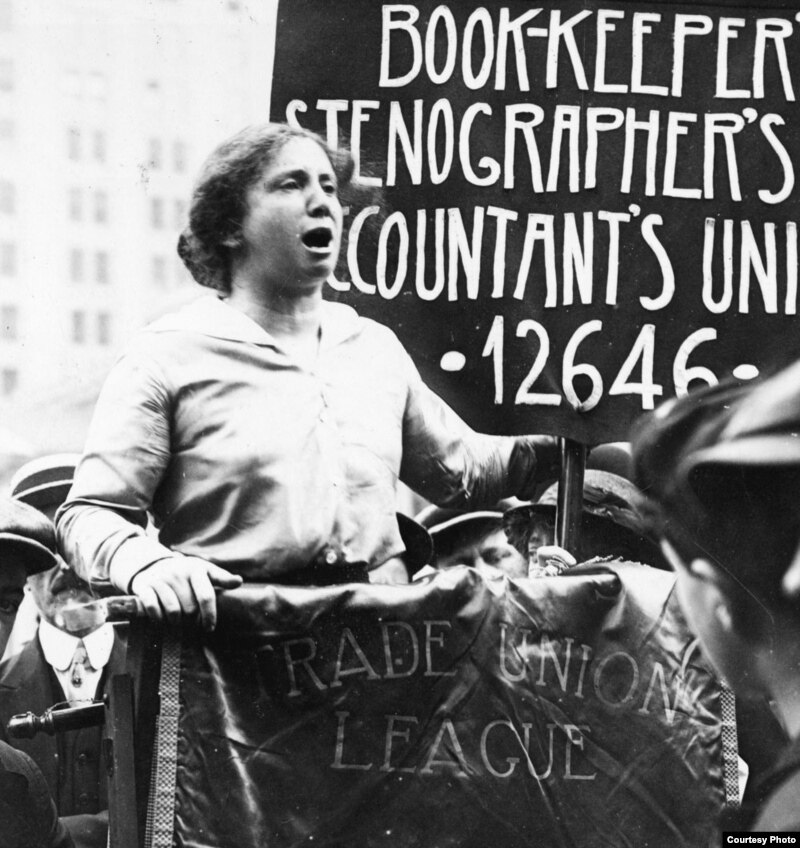
Early American women's activist Rose Schneiderman speaks at a union rally around 1910.

"I would date it back to 1908 and the strike of some 15,000 women in the garment industry on the Lower East Side who were suffering low pay and terrible working conditions, and who walked off the job and protested," Rosenberg says.

Among their complaints was the fact that employers refused to recognize workers' unions.

"Unionization is such an enormous issue in the United States today," Rosenberg says. "It's poignant to think about this 100th anniversary in that context."


It was the International proletariat organizations in Europe that responded to the call from workers organizations in the United States to celebrate both events.
And both are based on tragedy, May Day the Haymarket Massacre and IWD the Triangle Shirtwaist Factory Fire. Indeed the struggle of women workers in America would continue with the great Patterson Mill Strike of 1913.

And while American workers, both women and men, have made great leaps forward as has American Capitalism, class war has been declared once again on workers rights to organize.

The International Ladies' Garment Workers Union organized workers in the women's clothing trade. Many of the garment workers before 1911 were unorganized, partly because they were young immigrant women intimidated by the alien surroundings. Others were more daring, though. All were ripe for action against the poor working conditions. In 1909, an incident at the Triangle Factory sparked a spontaneous walkout of its 400 employees. The Women's Trade Union League, a progressive association of middle class white women, helped the young women workers picket and fence off thugs and police provocation. At a historic meeting at Cooper Union, thousands of garment workers from all over the city followed young Clara Lemlich's call for a general strike.

Women's labour unrest continued in the U.S. through 1909, with the International Ladies' Garment Workers' Union staging a short-lived strike in September in New York City. On Nov. 22, a general strike was called, dubbed the Uprising of the Twenty Thousand, which lasted 13 weeks and eventually led to a fairer contract for 15,000 labourers.

In Europe, women's issues were also top of mind. In 1907, the first meeting of Finnish parliament included 19 women. In 1910, an International Conference of Working Women was held in Copenhagen, featuring representation from 17 countries, including union leaders and the Finnish parliamentarians.

Clara Zetkin, the founder of International Women's Day, is seen at left with friend Rosa Luxemburg. Zetkin came up with the idea during a womens' labour conference in 1910.Clara Zetkin, the founder of International Women's Day, is seen at left with friend Rosa Luxemburg. Zetkin came up with the idea during a womens' labour conference in 1910. WikiMedia Commons

Clara Zetkin, head of the women's office for the Social Democratic Party of Germany, first raised the idea of an annual women's day when women all over the world would be able to air their grievances about labour conditions, suffrage and the need for women in parliament.

The first International Women's Day was held on March 19, 1911, (moved to March 8 in 1913), with rallies in Germany, Denmark, Austria and Switzerland. More than one million women and men attended.

One week later, a devastating fire at the Triangle Shirtwaist Factory in New York City drew further attention to the horrible working conditions female workers, mostly immigrants, were forced to endure.

275 girls started to collect their belongings as they were leaving work at 4:45 PM on Saturday. Within twenty minutes some of girls' charred bodies were lined up along the East Side of Greene Street. Those girls who flung themselves from the ninth floor were merely covered with tarpaulins where they hit the concrete. The Bellevue morgue was overrun with bodies and a makeshift morgue was set up on the adjoining pier on the East River. Hundred's of parents and family members came to identify their lost loved ones. 146 employees of the Triangle Shirtwaist Company were dead the night of March 25, 1911. The horror of their deaths led to numerous changes in occupational safety standards that currently ensure the safety of workers today.

To an entire generation of urban reformers, activist clergy, progressives,
feminists, and trade-unionists, the Triangle fire instantly became an emotion charged
symbol, a kind of menetekel, representing all the evils that they had
combated for so long; it became the impetus of a moral crusade to prevent things
like this from ever happening again. Many of the people who made modern America
2
- political leaders like Franklin and Eleanor Roosevelt, Al Smith, Fiorello
Laguardia, and Robert Wagner; social activists like Frances Perkins; and tradeunionists
like Rose Schneiderman and Dave Dubinsky, were all directly or indirectly
inspired by the Triangle Shirtwaist Fire. A direct genealogical line can be drawn
from the fire, to a host of New York City and New York State progressive reforms,
to the New Deal of the 1930s. No wonder that almost every American history
textbook lists the 1911 Triangle Shirtwaist Fire as one of the key events of
Progressive era America. “In the end,” write Ric Burns and James Sanders, in their
history of New York City, “the carnage of the Triangle shirtwaist factory fire would
prove to have been one of the most transforming events in American political
history.”2 It seems obvious that the Triangle Fire would assume the meaning that it
did. And yet, when one interrogates the obvious, one encounters the problematic.
“This is not the first time girls have been burned alive in this city,” trade
unionist Rose Schneiderman bitterly remarked to mourners just after the fire,3 and
in fact this was not the worst fire in New York City history, nor was it the only
industrial accident of this kind. Why then did the Triangle Fire become such an
incandescent icon for so many?


Striking laborers rallied against unfair labor practices with two of the most publicized strikes occuring in 1910: The garment workers in New York City and the strike that took place at the Los Angeles Times. However, one labor union strike would significantly define the labor movement: the Patterson Strike of 1913. To understand the pros and cons of striking unions, it's necessary to recall that few federal or state laws had been enacted at that time to protect workers from unsafe working conditions or from exploitation through which laborers earned unimaginably low wages while working fourteen or fifteen hours a day.

When IWW organizers began to arrive at textile mills to proclaim the doctrine of industrial democracy, a substantial number of workers were interested. By 1908, after leading a number of minor strikes, the IWW could claim 5,000 members for its National Industrial Union of Textile Workers headed by James P, Thompson. The biggest textile challenge came four years later when pay cuts led to a groundswell of strike sentiment in Lawrence, Massachusetts. IWW Local 20 had been on the scene for more than four years, and its members had an excellent grasp of the conditions of the 60,000 Lawrence residents dependent on the mills for their livelihood. Prompted by local IWWs, the strikers sent for seasoned organizer Joe Ettor, an IWW orator who had already been in Lawrence, and Arturo Giovannitti, Secretary of the Italian Socialist Federation and editor of its organ, Il Proletario.

Faced with having to organize workers from twenty-four major national groups speaking twenty-two different languages, the Lawrence leadership devised an organizational structure that became the standard IWW mode of operation. Each language group was given representatives on the strike committee, which numbered from 250 to 300 members. All decisions regarding tactics and settlements were democratically voted on by the committee, with the IWW organizers acting strictly as advisors.

The Lawrence strikers realized that their battle went beyond wages and work conditions to address the question of the quality and purpose of life. Female strikers expressed their needs in an unforgettable phrase when they appeared on the picket line with a homemade placard declaring, "We Want Bread and Roses Too," a demand which became a fixture in the labor and ferninist movements. But neither roses nor bread were possible without the most militant kind of strike and innovative worker tactics. Women would show the way on both scores. More female pickets than males were to be arrested for intimidating strikebreakers, and rank and file women provided decisive leadership at key moments in the strike.

Prohibited from massing before individual mills by law, the male and female strikers formed a moving picket line around the entire mill district! This human chain involving thousands of spirited workers moved twenty-four hours a day for the entire duration of the ten-week strike. Augmenting the awesome picket lines were frequent parades through town of from 3,000 to 6,000 strikers marching to militant labor songs. When a city ordinance was passed forbidding parades and mass meetings, the strikers improvised sidewalk parades in which twenty to fifty individuals locked arms and swept through the streets. They passed through department stores disrupting normal business and otherwise succeeded in bringing commerce to a halt. At night strikers serenaded the homes of scabs trying to get a good night's sleep, and in some cases the names of scabs were sent back to their native lands to shame their entire clan.

When striker Annie Lo Pezzo was killed during one of the demonstrations, Ettor and Giovannitti were arrested on murder charges; they were said to have provoked workers to illegal acts which in turn resulted in the death. Their places were promptly taken by Bill Haywood, Elizabeth Gurley Flynn, William Trautman, and Carlo Resca. Haywood's arrival in Lawrence was tumultuous. Fifteen thousand strikers greeted him at the railroad station and 25,000 listened to him speak on the Lawrence Commons. During the course of the strike, there were dynamite schemes by employers, a proclamation of martial law, the death of a Syrian teenage boy from a militiaman's bayonet, and repeated physical confrontations between strikers and law enforcement groups. Women again played a critical role when it was decided to have the children of the strikers cared for by sympathizers in other cities. After some groups of children had left Lawrence, the army resolved to block further removals. In the ensuing physical confrontation, many women were beaten and two pregnant women miscarried, The brutal incident led to the national publicity and governmental hearings that resulted in victory for the strikers.

In the wake of the Lawrence triumph came strikes in other textile centers under IWW leadership and a successful campaign to free Ettor and Giovannitti. Prominent women such as socialist humanitarian Helen Keller, birth control activist Margaret Sanger and AFL organizer Mary Kenney O'Sullivan enthusiastically supported various IWW initiatives. Textile owners not yet faced with strikes began to grant wage increases unilaterally in hopes of averting unionization. The Detroit News estimated that 438,000 textile workers received nearly fifteen million dollars in raises as an indirect consequence of the Lawrence strike, with the biggest gains scored by the 275,000 workers in New England.


In 1913, John Reed (later famous for his firsthand account of the Russian Revolution) met Bill Haywood, a leader of the Industrial Workers of the World (Wobblies). Reed ventured to Paterson, New Jersey, to learn about the Wobbly-led silk workers’ strike then in progress and decided to mount a massive public pageant to publicize the strike and raise money for the strikers. He won financial backing from art patron Mabel Dodge and enlisted artists such as John Sloan, who painted a ninety-foot backdrop depicting the Paterson silk mills. The pageant opened on June 7 in Madison Square Garden and ended with the workers and the audience triumphantly singing the “Internationale,” the anthem of international socialism. Unfortunately, neither the pageant nor the strike ended on a triumphant note. The pageant lost money while the strike ended in defeat after five months. Nonetheless, the pageant represented an important moment in the alliance between modern art and labor radicalism.

The celebrated New York Armory Show in early 1913 introduced Picasso, Matisse, Cubism and Dada to the American scene. Three months later, 1,200 striking textile workers from Paterson, N.J. staged a pageant in Madison Square Garden to dramatize their demands. Green, who is fond of cultural juxtapositions ( Children of the Sun, etc.), links these two events with the lame argument that modern art and revolutionary politics share a spiritual, transcendental goal. He takes us inside the salon of Mabel Dodge, the wealthy art patron and labor pageant organizer, who was ensconced in respectability yet actively subverted it. He also takes us into the Wobblies' union halls where people of any race or nationality were welcome and workers' poems were composed on the spot. The pageant saw hostilities flare up between leaders Bill Haywood and Elizabeth Gurley Flynn; Green believes the event marked the beginning of the International Workers of the World's slow decline. His atmospheric study limns a brief moment when art and politics came together. Photos. (Nov.)

Also See:

Lucy Parsons Redux

Black Herstory Month: Lucy Parsons

IWD: Raya Dunayevskaya

Whose Family Values?
Women and the Social Reproduction of Capitalism
"proletarii, propertyless citizens whose service to the State was to raise children (proles).”
Classical Antiquity; Rome, Perry Anderson, Passages from Antiquity to Feudalism, Verso Press 1974

Friday, May 31, 2019


CLARENCE THOMAS AND THE RIGHT WING REVISIONIST HISTORY OF EUGENICS
For over 100 years reactionary men in America have assaulted left wing eugenics; birth control by any other name. 

First using the postal act then other acts around obscenity, and moral turpitude, to halt information about and products used as birth control, linking it in the popular mind with other tawdry things the post office busted such as drugs and solicitation for prostitution 

And again another fight led by the ACLU formed to fight for free speech, labour rights, womens rights and birth control rights as it is today against anti abortion laws in Alabama and other Red Republican states where like that state 25 white men decided for several millions of women, who make up 52% of the state

As we see here from silent Tom he is speaking out on his wife's favorite topic, eugenics and Margret Sanger, who along with Emma Goldman and Havelock Ellis fought for the right to birth control and birth control information.

The right have used abortion as a trigger word like they used and still use eugenics falling to differentiate between liberal eugenics of birth control and women's reproductive freedom and RIGHT WING eugenics used by the state.

Such as Alberta did under right wing Social Credit govt when it forcibly sterilized people like their right wing counterparts in Nazi Germany did in Alberta’s case the social credit party was led by two Christian radio evangelists of their day Bill Aberhart and Ernest Manning  whose son Preston now leads a section of the Canadian right wing from the family homestead in Calgary the largest American city north of the 49th parallel.


Clarence Thomas Pens Screed Comparing Women Who Obtain Abortions to Eugenicists

Justice Clarence Thomas wasn’t willing to let Indiana’s nondiscrimination rule die a quiet death.


But Justice Clarence Thomas wasn’t willing to let Indiana’s nondiscrimination rule die a quiet death. Instead, he wrote an astonishing 20-page concurring opinion declaring that the rule is clearly constitutional—and, in the process, condemning many women who obtain abortions as willing participants in eugenicide. (Because Thomas says he wanted to “allow further percolation” of this issue in the lower courts before settling it, he joined his colleagues in refusing to review the case.)

Thomas began by insisting that the “foundations for legalizing abortion in America were laid during the early 20th-century birth-control movement,” which “developed alongside the American eugenics movement.” That’s not actually true: Abortion was legal at the founding, and states only began criminalizing abortion around the 1860s. Thomas is pushing a pro-life narrative that seeks to intertwine abortion and eugenics while ignoring history. To that end, he added that “Planned Parenthood founder Margaret Sanger recognized the eugenic potential of her cause. She emphasized and embraced the notion that birth control ‘opens the way to the eugenist.’ ”
Justice Clarence Thomas wasn’t willing to let Indiana’s nondiscrimination rule die a quiet death.

The justice then embarked on a lengthy excursion into the sordid history of the eugenics movement, which was, indeed, a dark period in American history. But he repeatedly elides the fact that most eugenicists promoted contraception, not abortion, as a vital tool of “population control.” To conflate the two, Thomas simply proclaimed that “the eugenic arguments that [Sanger] made in support of birth control apply with even greater force to abortion.” In effect, the justice condemned all reproductive rights—not just abortion, but all forms of contraception—as byproducts of the eugenics movement and scorned them as morally reprehensible. (Bizarrely, he also tossed in an off-the-wall footnote comparing disparate impact liability, which limits ostensibly neutral practices that disproportionately burden minorities, with eugenics.)

These wild tangents are a prelude to the meat of Thomas’ opinion: his belief that women who terminate their pregnancies due to a fetus’ “unwanted characteristics” are callous and monstrous child-killers who should be forced by the state to carry these fetuses to term. Abortion, he wrote, “is an act rife with the potential for eugenic manipulation.” Thanks to “today’s prenatal screening tests and other technologies, abortion can easily be used to eliminate children” due to some trait or abnormality. Indeed, Thomas wrote, abortion is a “disturbingly effective tool for implementing the discriminatory preferences that undergird eugenics.” He cited the high abortion rate for fetuses with Down syndrome and the “widespread sex-selective abortions” in Asia as evidence. And he noted that the nationwide abortion rate “among black women is nearly 3.5 times the ratio for white women.”

Notably, Thomas does not claim that women are being tricked into obtaining discriminatory abortions by sex partners or preyed upon by unethical doctors. Instead, his opinion is a rhetorical assault against women who terminate their pregnancies due to a fetal abnormality. (There is virtually no evidence that American women get abortions on the basis of a fetus’ race or sex; that part of the law seems designed to troll liberals.) He accuses these women of seeking “eugenic abortions,” of wishing to “eliminate” an “unborn child” for “discriminatory” reasons. There is none of the usual patronizing pro-life hand-waving here about how women are really the victims of abortion. To Thomas, women who undergo abortions are villains who must be stopped by the state.

The justice closed his opinion by urging the court, in a future case, to rule that states may criminalize abortions on the basis of a fetal characteristics. Anything less, he wrote, “would constitutionalize the views of the 20th-century eugenics movement.”

It may not be a coincidence that Thomas dropped the façade of disgust solely with abortion providers, and not women themselves, just as a state prepares to prosecute women who undergo abortions. A new Georgia law permits the imprisonment of women who terminate their pregnancies, elevating fetuses to full personhood. Any pretense of protecting women has vanished; the law now expressly elevates the interests of the fetus over the interest of the woman. Now that Roe is in mortal danger, abortion foes in state legislatures and federal courts alike can unleash their ire at women themselves. They no longer need to appease Justice Anthony Kennedy.


Clarence Thomas makes it clear: The right is coming for birth control next


By attacking Margaret Sanger's legacy, Justice Thomas isn't going after abortion — this is about contraception Clarence Thomas makes it clear: The right is coming for birth control next

AMANDA MARCOTTE MAY 29, 2019 


There is no doubt, as Thomas makes abundantly clear in this opinion, that Sanger was an advocate of the noxious early-20th-century pseudoscience of eugenics, which suggested that the human race could be "bettered" by manipulating breeding to improve human "stock." But it's historically inaccurate to imply, as Thomas and the anti-choice activists he's cribbing from do, that Sanger started the birth control movement because of her belief in eugenics. The historical record is clear on this: Sanger began advocating for birth control to empower women and then latched onto the eugenics movement as a way to increase interest in the issue.
Sanger advocate for some highly distasteful eugenics ideas at times. But it's flat-out false to imply, as Thomas does, that she supported forced sterilization or that she was trying to get rid of black people. In her writings, she insisted that birth control must be "autonomous, self-directive, and not imposed from without" and that no one should "be endowed with the authority to order anyone to be sterilized."
More importantly, Thomas is being disingenuous in his suggestion that Sanger was targeting black people for eugenics purposes when she teamed up with activists like W.E.B. Du Bois to open clinics geared towards helping black women obtain contraception. As Imani Gandy wrote at Rewire in 2015, this project was literally the opposite of a racist attack on black people. It was an explicit effort to make services available to black people that only whites previously had access to. Sanger believed that birth control helped people exert more control over their lives and help themselves economically, and this project was explicitly meant to help people in the black community empower themselves.
"Due to segregation policies in the South, the birth control clinics that opened in the 1930s were for white women only. Sanger wanted to change that," Gandy explained.
As Gandy notes, Sanger explicitly rejected the idea of racial eugenics, saying she had encountered a man who tried to give her money if she would "cut down" on the number of black people.
"That is, of course, not our idea. I turned him down," Sanger said. "But that is an example of how vicious some people can be about this thing." She added that her purpose was to reduce "sufferings for all groups."
Despite his protestations to the contrary, Thomas's opinion is clearly meant to bolster the growing efforts of the religious right to expand the war on reproductive rights past attacks on abortion, onward to reducing access to contraception.
Demonizing Margaret Sanger is clearly meant to stigmatize her legacy. But her legacy is not abortion — which, again, she opposed — but birth control. It was Sanger who coined the term "birth control." It was Sanger who went to jail repeatedly for teaching women how to prevent pregnancy. And it was Sanger who envisioned the concept of the birth control pill, eventually securing the funding that allowed it to be developed. So when anti-choicers seek to turn her into a villain, their goal is to taint contraception by association and create a moral case for restricting access.
There's no small amount of hypocrisy in play here. Clarence Thomas sits on a court that was literally created by slave-holders, including George Washington, who signed the act that created the Supreme Court. And Thomas adheres to an "originalist" judicial philosophy which claims that the beliefs of the nation's founders — who were, whatever their better qualities, a bunch of racists who literally wrote legal slavery into the founding documents — should matter more in jurisprudence than current, more progressive social mores. Thomas presumably doesn't believe that the U.S. Constitution or the Supreme Court is permanently tainted by these racist associations. But when it comes to restricting women's rights, he is happy to advance a much shakier case of guilt by association.
The good news is that there's not much that's legally binding in this rant from Thomas. His opinion was tied to a court decision that actually throws out Indiana's law banning abortions done on the basis of race, sex or disability. (To be clear, there is no evidence that the first two kinds of abortions even happen. Those seem to be figments of anti-choice activists' collective racist imagination.) For now, the claim that reproductive rights must be restricted on the basis of some imaginary eugenics threat against people of color has no legal importance.
The bad news, however, is that by elevating right-wing conspiracy theories about Margaret Sanger, Thomas has given the blessing of a Supreme Court justice to the escalating war on birth control. The pretense that the right's campaign against reproductive rights is about "life" is fast fading away. Instead, Thomas bluntly suggests that women can't be trusted to make their own decisions about when to give birth because they will use that power for unsavory or even racist purposes. That kind of argument isn't just about abortion. It's about the idea that society must control or restrict any method women employ to control childbirth.

Sunday, December 08, 2024

 WOMENS HEALTH


Mothers massively change their intestines during pregnancy and nursing


Scientists discover the molecular and structural principles of intestinal changes in pregnancy, critical for nutrient uptake and the health of babies


Medical University of Vienna


When women are pregnant and nurse their babies, their bodies change and various organs, such as the breasts or the immune system, are adapted to ensure the health of both mother and child. This happens throughout evolution in all mammals. An international research team led by Josef Penninger and Masahiro Onji, Medical University of Vienna, now reports the surprising finding that the intestine also changes completely in pregnant and nursing females, resulting in a doubling of the intestinal surface area and a striking structural reorganisation. The researchers also provide the first genetic and mechanistic evidence of how this intestinal epithelial expansion occurs in mothers, with direct implications for the transgenerational health of the babies. The study is being published in "Nature".

A multinational team led by Josef Penninger (MedUni Vienna, IMBA - Institute of Molecular Biotechnology, Vienna, University of British Columbia, Canada, Helmholtz Centre for Infection Research, Germany) observed that the intestinal villi reorganise during pregnancy and breastfeeding and significantly enlarge, doubling their surface area. The studies were carried out in genetically modified mice and intestinal organoids from mice and humans - self-organised three-dimensional tissues derived from stem cells in the intestine. Mechanistically, the researchers identified the RANK receptor/RANK ligand (RANK/RANKL) system as the key to the villous enlargement of the small intestine during reproduction, which is regulated by sex and lactation hormones. When mice were engineered to lack the RANK/RANKL system in the intestine, the villous expansion during pregnancy and breastfeeding was significantly impaired.

Fundamental importance for evolution
For decades, researchers have studied the RANK/RANKL system as a key facilitator of essential, evolutionarily conserved processes. The Penninger group has already identified key functions of the RANK/RANKL system in bone turnover, in the biology of the mammary gland, in breast cancer, and in immune tolerance in pregnancy, contributing to the development of drugs against bone loss used by millions of people and clinical trials for breast cancer prevention and cancer immunotherapies are underway. The researchers now discovered that these intestinal changes, which appear to be completely reversible when nursing is stopped, are important for proper feeding and nourishment of the babies. "Our study shows that the impairment of this intestinal expansion by the lack of the RANK/RANKL system during pregnancy changes the milk of the nursing mothers. This results in lower weights of the babies and transgenerational long-term metabolic consequences," states the lead author Masahiro Onji. "Mothers need to eat for themselves and their babies. These new studies provide for the first time a molecular and structural explanation of how and why the intestine changes to adapt to enhanced nutrient demand of mothers, which is probably the case in all pregnant and nursing mammals," adds study leader Josef Penninger.

How mothers adapt to the demands of pregnancy and breastfeeding remains a central question of evolution and human health. During this phase, female hormones influence multiple organs to control and change their structure and functions, which is crucial for the health of the mother and the development of the offspring. It was known that pregnant women have enhanced nutrient demands. However, this fundamental aspect has not been well studied until now: "By identifying the RANK/RANKL system as the driving force behind intestinal adaptation during pregnancy and lactation, our study contributes to a deeper understanding of biological processes that are of fundamental importance for evolution and human health", says Josef Penninger, summarising the impact of the findings.

This massive expansion is controlled by sex and pregnancy hormones, which change the stem cells in the gut via the RANK/RANKL system and then give the intestinal cell a survival signal to grow much larger. This growth then leads to a near doubling of the intestinal surface area, which also increases the molecular machinery for the uptake of sugar, protein, and fat, and even leads to a profound architectural change in the intestinal villi, which probably slows down the flow of food, again maximising the uptake of nutrients. Josef Penninger: "Our team has discovered an amazing new way how mother’s bodies change to keep babies healthy. Hardly anybody knew about this, apart from a few old studies that have largely been forgotten. We have also found that this system, via stem cells, can directly affect tumours in the intestine; maybe we can learn from pregnant and nursing mothers to reversibly rewire this system to develop new treatments and a better understanding of intestinal cancer or gut regeneration."

The study was a close collaboration between the Medical University of Vienna, the Institute of Molecular Biotechnology of the Austrian Academy of Sciences in Vienna, the Life Sciences Institute in Vancouver, the Helmholtz Centre for Infection Research, Braunschweig, the Hubrecht Institute, Utrecht, and the Kiel University. Researchers from the University of Tokyo and the University of Cambridge also participated.

U$A

Women pay for AI to boost mammogram findings


Radiological Society of North America
AI enhanced screening mammography. 

image: 

AI enhanced screening mammography.

view more 

Credit: Radiological Society of North America (RSNA) and DeepHealth


CHICAGO – More than a third of women across 10 health care practices chose to enroll in a self-pay, artificial intelligence (AI)-enhanced breast cancer screening program, and the women who enrolled were 21% more likely to have cancer detected, according to research being presented today at the annual meeting of the Radiological Society of North America (RSNA).

AI has shown great promise in mammography as a “second set of eyes” for radiologists providing decision support, risk prediction and other benefits. Despite its promise, AI is not yet reimbursed by insurance, which likely is slowing its adoption in the clinic. Some practices have elected to offer enhanced workflows enabled by AI at additional cost, much like what was done when digital breast tomosynthesis was originally deployed.

For the study, researchers investigated the impact of AI—including a safeguard review—as a self-pay option in screening mammography. A self-pay, AI-powered screening mammography program was offered to patients across 10 clinical practices, ranging from a few sites up to 64 sites at the largest practice. Women who enrolled had U.S. Food and Drug Administration-compliant AI software applied to their mammograms. An expert breast radiologist provided a third, safeguard review in cases where there was discordance between the first reviewer and the AI.

Out of the 747,604 women who underwent screening mammography over an initial 12-month period, the overall cancer detection rate was on average 43% higher for enrolled women than for unenrolled women. The pattern of a substantially higher cancer detection rate in enrolled women was observed at all 10 practices.

Further analysis attributed 21% of the increase in cancer detection to the AI program. The researchers credited the remaining 22% increase in detection to the fact that higher-risk patients chose to enroll more frequently.

“These data indicate that many women are eager to utilize AI to enhance their screening mammogram, and when AI is coupled with a safeguard review, more cancers are found,” said study senior author Gregory Sorensen, M.D., from DeepHealth Inc. in Somerville, Massachusetts.

The recall rate—the rate at which women were called back for additional imaging—was 21% higher for enrolled versus unenrolled women. Relatedly, the positive predictive value for cancer was 15% higher for the enrolled women, indicating that each recall resulted in more cancer diagnoses in the enrolled population.

“This is the first report on results from a program that provides an AI-powered enhanced review that patients can elect to enroll in,” said study lead author Bryan Haslam, Ph.D., from DeepHealth. “The AI-driven enhanced review program leverages AI in a novel workflow to ensure women with suspicious findings get expert level care that could help detect many more breast cancers early. The number of women electing for this program is now at 36% and growing, and the rate of cancer detection continues to be substantially higher for those women.”

In the future, the researchers hope to better quantify the benefit of the AI-driven safeguard review with prospective randomized controlled trials that would eliminate the self-selection bias and provide the highest level of evidence.

Co-authors are Leeann Louis, Ph.D., Jacqueline S. Holt, M.D., and Janet M. Storella, M.D.

###

Note: Copies of RSNA 2024 news releases and electronic images will be available online at RSNA.org/press24.

RSNA is an association of radiologists, radiation oncologists, medical physicists and related scientists promoting excellence in patient care and health care delivery through education, research and technologic innovation. The Society is based in Oak Brook, Illinois. (RSNA.org)

For patient-friendly information on breast cancer screening, visit RadiologyInfo.org.