Showing posts sorted by date for query cannibalism. Sort by relevance Show all posts

Wednesday, September 09, 2026


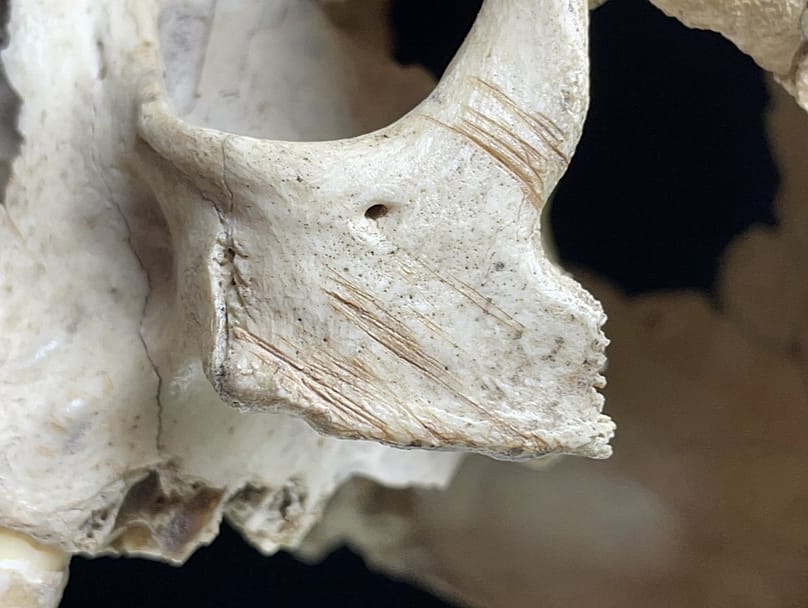
Possible massacre and cannibalism 7,000 years ago uncovered in Granada

Found in Neolithic caves
Copyright IPHES-CERCA

By Escarlata Sánchez
Published on

Analysis of nearly 1,000 bones found in three caves in Granada shows that cannibalism was a recurring Neolithic practice, with signs of collective violence, possible rituals and skulls turned into containers.

Three caves in Granada reveal that cannibalism was a recurrent practice during the Neolithic in the south of the Iberian Peninsula. The analysis of nearly 1,000 human remains found at Malalmuerzo, Carigüela and Majólicas has made it possible to date these assemblages for the first time and determine that acts of cannibalism took place in different periods and social contexts.

One of the most striking cases is Malalmuerzo, where researchers suggest that the cave may have been the scene of an episode of collective violence followed by acts of cannibalism around 5000 BC.

More than half a century after these sites became key references for the study of prehistoric cannibalism, an international team has re-examined the remains using radiocarbon dating and new taphonomic analysis techniques.

The results indicate that Neolithic cannibalism in the Iberian Peninsula was not an isolated phenomenon, but a practice that recurred at different times and under varying social circumstances, in line with evidence documented in other regions of Europe.

The research, published in the 'Journal of Archaeological Science', involved universities and research centres in Spain, Austria, Brazil and Argentina.

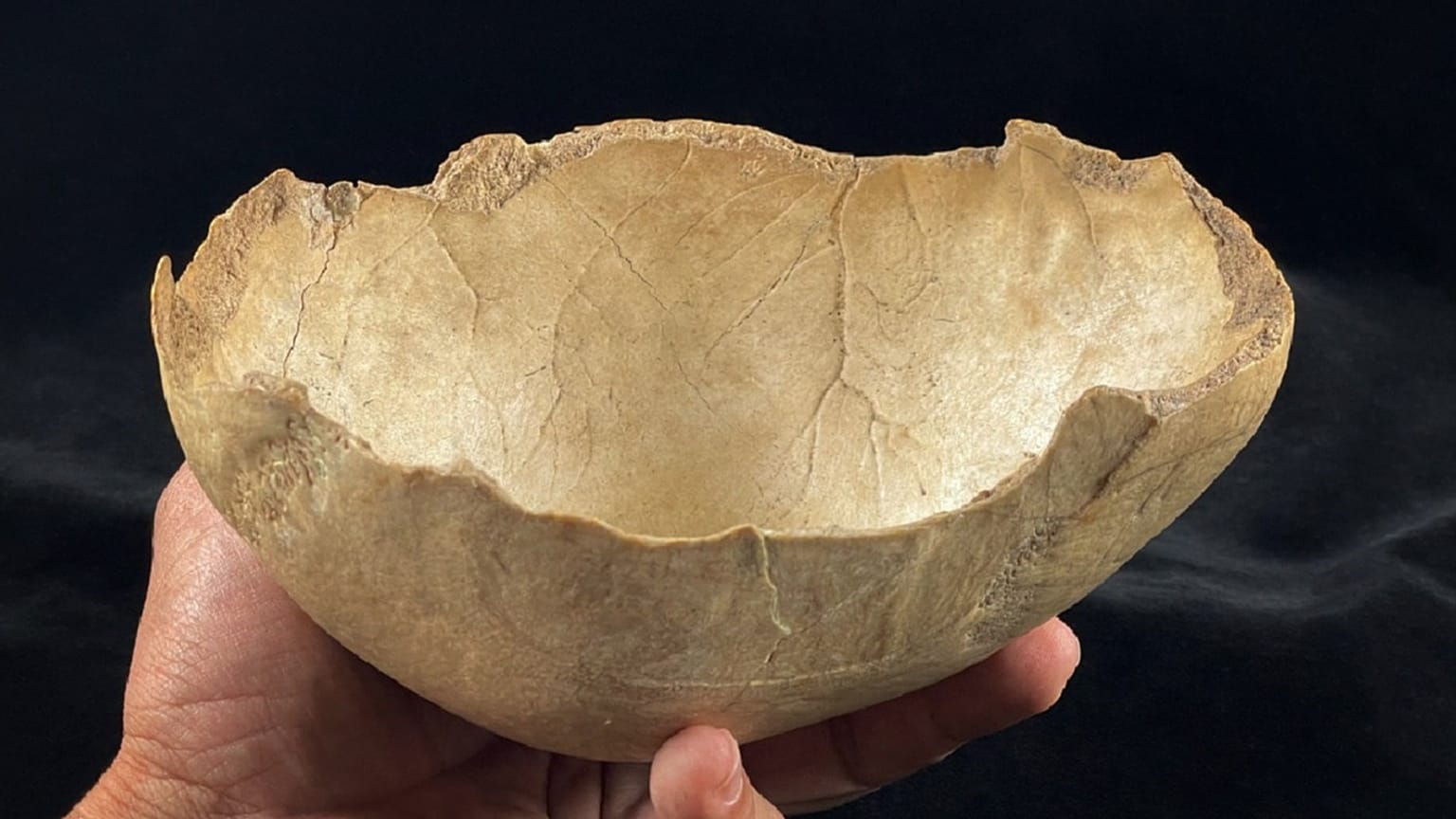
The skull found in a Neolithic cave. Cortesía: IPHES-CERCA

Cannibalism in three Granada caves with different contexts

The team examined nearly 1,000 human remains from the three caves in search of evidence of deliberate manipulation. The researchers studied cut marks, fractures and tooth marks under the microscope and combined statistical analyses, machine learning and direct radiocarbon dating to determine how and when the bones were modified.

Although all three sites show evidence linked to cannibalism, such as cut marks, cooking and bite marks, each tells a different story. Malalmuerzo shows signs of violence; Carigüela reveals the recurrence of these practices and a distinctive treatment of skulls; and Majólicas points to possible ritual practices.

For decades, prehistoric cannibalism tended to be interpreted as a homogeneous phenomenon. However, the new study shows that practices that appear similar may reflect different social realities and that their meaning needs to be analysed by jointly considering chronology, the archaeological context and the evidence preserved in the bones.

This is how Antonio Rodríguez-Hidalgo, Ramón y Cajal researcher at the Institute of Archaeology of Mérida and one of the study’s authors, explains it.

A possible massacre followed by cannibalism at Malalmuerzo

The Malalmuerzo cave offers one of the most striking findings of the research. The remains point to a possible episode of collective violence around 5000 BC, involving individuals of different ages whose bodies were subsequently consumed.

In Carigüela, the new dates indicate several episodes of cannibalism throughout the Neolithic. Among the most unusual discoveries are two skulls that were modified so they could be used as containers.

The most recent episode is documented at Majólicas, around 3800 BC, and does not appear to be linked to a violent context. Some bones stained red, probably with cinnabar, point to possible ritual practices.

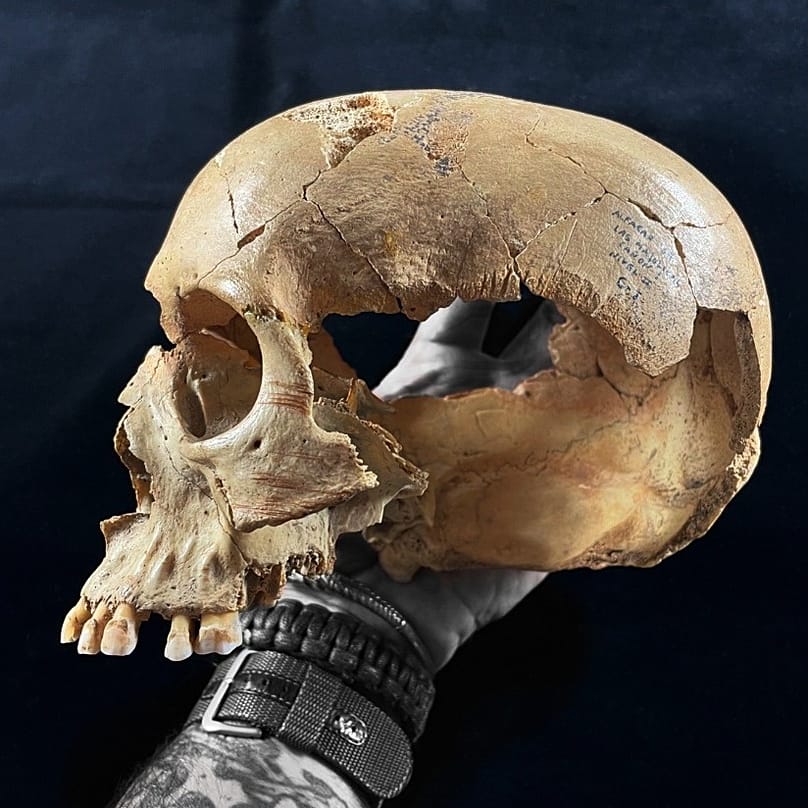
The remains found. IPHES-CERCA

Neolithic cannibalism was recurrent in Europe

The three Granada sites fit into a broader pattern observed in Europe. Cannibalism during the Neolithic would not have been a continuous practice, but a phenomenon that appears concentrated in specific periods and regions.

Anthropophagic practices are particularly concentrated in three phases: the late 6th millennium BC, the mid-5th millennium BC and the late 3rd millennium BC, the last already in the Bronze Age.

Although the researchers have not identified a single cause that explains all these episodes, they believe they may be linked to changes in social organisation, relations between different groups and the way in which death and violence were understood.

New techniques reveal secrets of remains excavated decades ago

The research also highlights the scientific value of historical archaeological collections and shows how new techniques can provide unprecedented information on material excavated decades ago.

Among the authors is Miguel C. Botella, then director of the Laboratory of Forensic Archaeology at the University of Granada, whose work was crucial to the study of these remains.

"His work helped establish Malalmuerzo, Carigüela and Majólicas as benchmark sites for the study of cannibalism in Europe’s late Prehistory," concludes Francesc Marginedas.

Tuesday, August 25, 2026


Record numbers of climate crisis insects: what to do if you spot a praying mantis

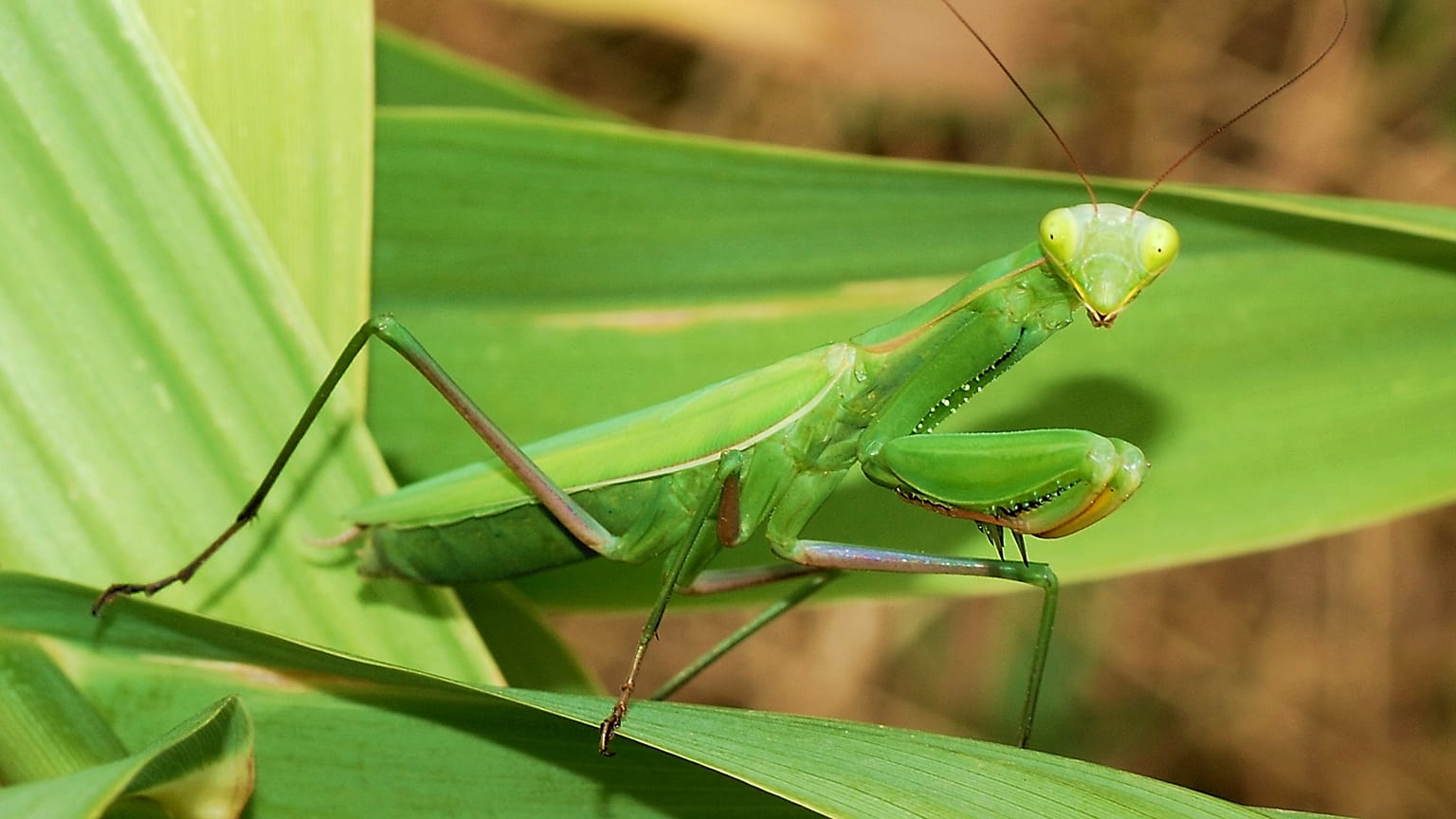
The praying mantis - Mantis religiosa
Copyright Alvesgaspar, CC BY-SA 3.0 , via Wikimedia Commons


By Kirsten Ripper & Euronews with NABU
Published on

This summer, unusually many praying mantises can be spotted in German gardens. How to distinguish the "Mantid religiosa" from a grasshopper and what to do…

This exceptionally hot summer of 2026, with one heatwave following another, is ideal for the praying mantis. The mantis is a warmth-loving species and prefers sunny, dry habitats.

The praying mantis is among the largest native insects: males grow up to 6 centimetres long and females even up to 8 centimetres.

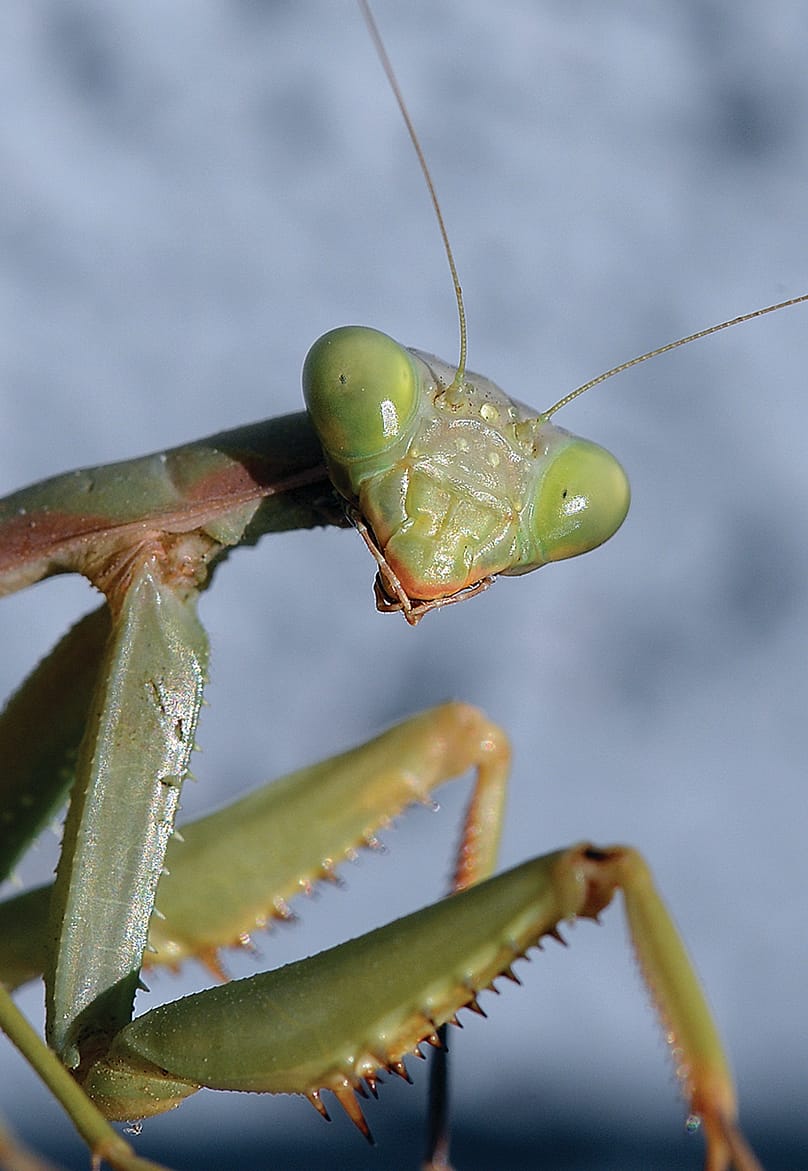
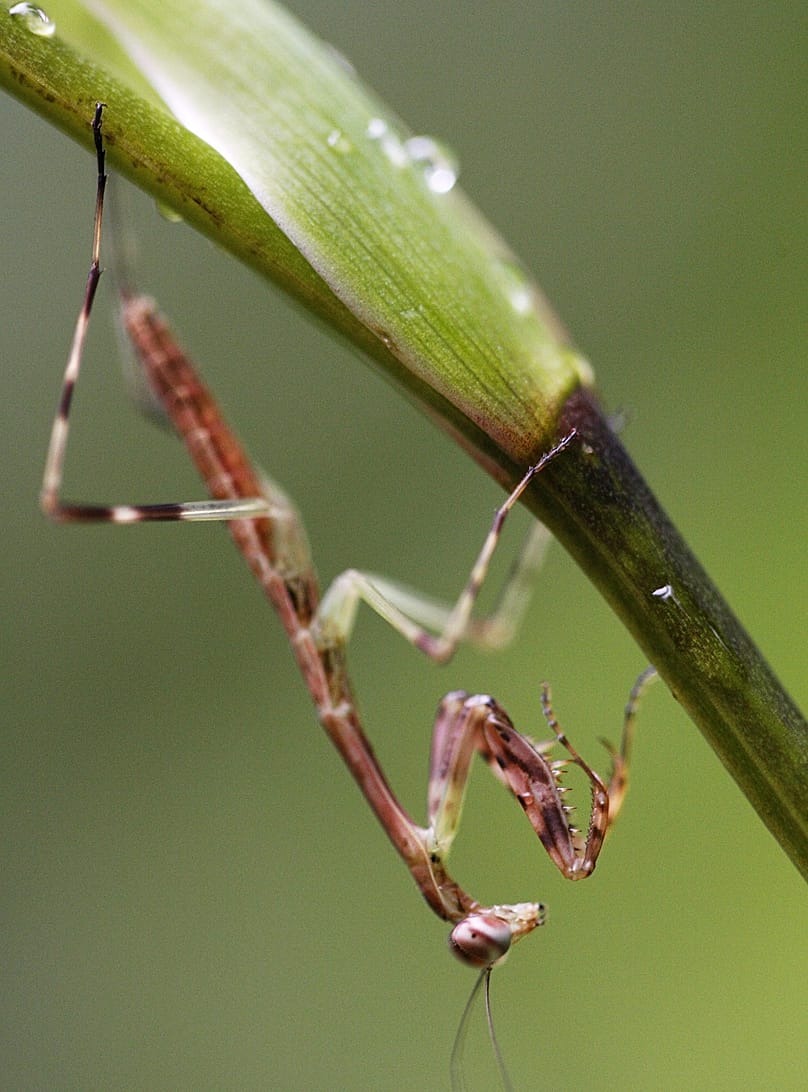
The insect with compound eyes: Mantis religiosa AP Photo


In Germany, this big-eyed insect, which fascinates many people because of its sexual cannibalism, can still be spotted in gardens and parks right into October. And apparently there have never been as many in Germany as there are in 2026.

The praying mantis originally comes from Africa, but it has long been native to the Mediterranean region. "Its migration to Europe goes back around 10,000 years," explains the German Nature and Biodiversity Conservation Union (NABU). It was introduced to the USA at the end of the 19th century and has since spread widely there as well.

Praying mantis in Arizona, USA AP Photo

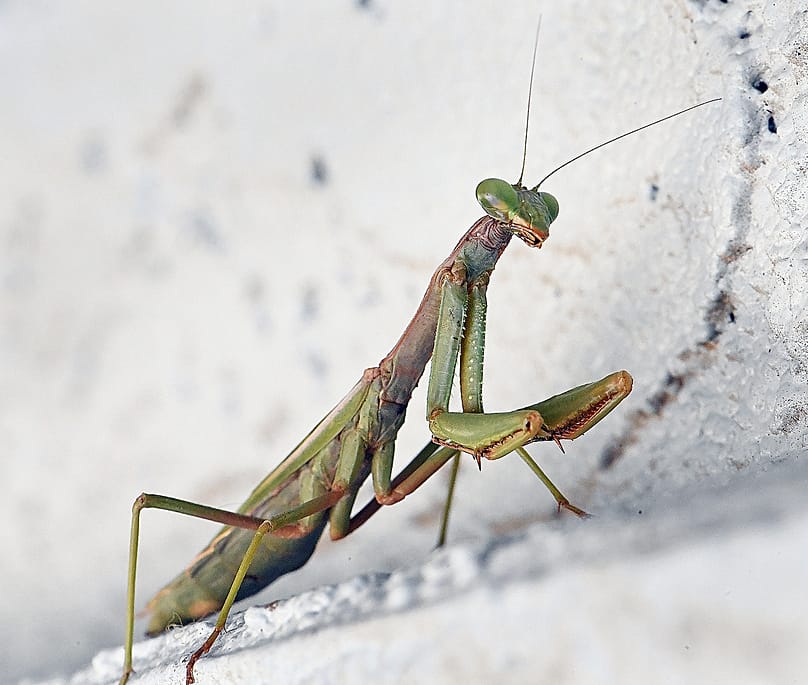
It owes its German name "Gottesanbeterin" to its two raptorial forelegs, which it holds in front of its body when at rest and which resemble arms raised in prayer.

Record reports to NABU

If you spot a praying mantis, you are asked to report it to the German Nature and Biodiversity Conservation Union on the Naturgucker page online (source in German) – ideally with a photo.

The species Mantis religiosa can be green or brown and is roughly twice the size of a bush-cricket or a grasshopper. The praying mantis has a rather triangular, mobile head on a neck, whereas in grasshoppers the head sits directly on the thorax.

Mantis religiosa at Zurich Zoo AP Photo

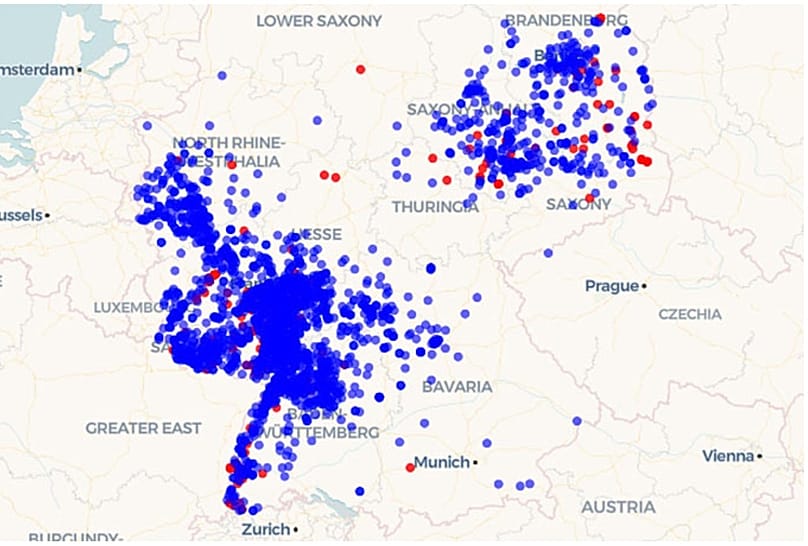
NABU and other researchers want to find out where in Germany – also against the backdrop of climate change – Mantis religiosa is now occurring more frequently. After the warm spring, particularly large numbers were recorded in Baden-Württemberg.

They also want to know whether the metapopulations observed in south-western and eastern Germany are merging. Up to now it has been too cold for the praying mantis in the north.

From the beginning of July to mid-August 2026, NABU-naturgucker.de recorded more than 15,000 reports. That is more than in the whole of 2026. Even though the photos "occasionally included a bush-cricket or a sickle-bearing bush-cricket uploaded as a praying mantis", 99.9 percent of the pictures are correct, according to NABU. The organisation says that with an error rate of just one per thousand, the results are "sensationally good".

Where Mantis religiosa was sighted in 2026 in BLUE, in previous years in RED NABU

Praying mantises cannot sting

There is no need to be afraid of the mantis: the praying mantis poses no danger to humans. It has no venom and cannot sting.

Both larvae and adult praying mantises feed exclusively on insects and spiders. They lie in wait motionless for prey, usually approach in slow motion and then strike with lightning speed. As NABU describes, the prey is held fast and eaten alive.

Most male praying mantises die after mating and are eaten by the females, which use this to build up strength for the demanding production of eggs. Only the eggs survive the winter.

Sunday, August 23, 2026

Monsters, Coyotes and Other Native Tales of Resistance

August 21, 2026

Part II, read Part I here.

In Necessity: Climate Resistance and the Thin Green Line, Chief Don Sampson tells a story written by beloved Umatilla storyteller Edith Motanic, “The Monster Who Comes Up the River.” He explains how the monster in this folk tale symbolizes the insatiable appetites of colonial powers that devour Native lands and how the wily coyote, spirit of Indian resistance, tricks the monster and ultimately outwits him. Chief Sampson adds that there is a moral to this contest between the monster and coyote and it concerns competing forces within the human spirit. We all carry the capacity for good and for evil. Indigenous people can become selfish betrayers of their own people.

The Windigo legend circulates similarly among First Nations Peoples. According to Shawn Smallman, author of Dangerous Spirits: The Windigo in Myth and History, the image of the windigo beast “was a means of defining moral social behavior, which could serve as a warning against greed and selfishness.” This cannibalistic forest beast takes over the spirits of victims and turns them into other windigos. Driven by insatiable hunger, the beast appears as a towering, emaciated figure emanating the odor of decaying flesh and arousing feelings of intimate horror.

For many Indigenous scholars and cultural critics, the Native cannon of windigo folklore unfolds historically alongside settler colonialism and reflects as much the anxieties of the colonizers as it does the fears of the colonized. From the late 19th through the mid twentieth centuries, Christian missionaries, white trappers, traders and anthropologists reported what came to be termed windigo psychosis, a mental disorder where the sufferer holds the delusional belief that he is possessed with the evil spirit of the windigo monster and is driven to acts of cannibalism. While a few cases of cannibalism have been documented historically, they generally occur in famine or other extreme conditions of scarcity.

Windigoism and the Psychiatric Gaza

Fascination with windigo psychosis among Western psychiatrists and anthropologists led to a hotly debated controversy in the 1980s over the historical validity of the phenomenon. The challenge for these white experts, including American psychiatrists, was to identify and diagnose cases where the person is driven by madness to acts of actual cannibalism. Scholars in the 1960s began to look more carefully at the case material on which this diagnostic picture was formed. In 1981, anthropologist Lou Marano looked back on reports that circulated in psychiatry of psychosis-induced cannibalism among First Nations peoples. “In the vast majority of cases in which the Indians employ the term there is no psychosis by either Algonkian or European criteria, much less a psychosis involving murder and cannibalism,” Marano concludes. “Unfortunately, anthropologists zeroed in on the bizarre, the grotesque, and the macabre in Landes’s reports rather than on their inconsistencies and their second-hand nature.”

The term windigoism is used very broadly among First Nations and Native peoples, Marano points out, for states associated with “going mad.” Among the Ojibwe, “almost driven to windigo” refers to madness that arises from life-threateningly harsh conditions. The term is invoked with considerable sympathy as it expresses despair and distress of people who are separated from the group or lost. To white anthropologists and psychiatrists, the search for evidence of actual cannibalism in the reports they collected blinded them to the social symbolic meaning of the story. Scholars documenting the phenomenon agree, however, that tales of windigoism circulate among the Cree, one of the largest groups of First Nations and Indigenous peoples in North America, living mostly in Canada from Quebec to Alberta. Missionary settlers among the Cree were a common source of these stories, imposing their own cure of Christian conversion on sufferers.

Decolonizing Family Memory

My mother grew up in Norway Valley, Alberta–an area of Norwegian settlers straddling a Cree Reserve. Working with Tara Houska and other Native activists fighting pipelines transporting oil from the Tar Sands fields in Alberta, led me to revisit my own family history. What do we owe to Indigenous people as descendants of white settlers? In Canada, The Truth and Reconciliation Commission (TRC), operating from 2008-2015, was one form of recognition and place for reparations. Based on legal settlement between Residential Schools Survivors, the Assembly of First Nations, Inuit representatives and the parties responsible for creation and operation of the schools, the federal government and the church bodies, the TRC opened space for uncovering repressed memories of Native suffering–repressed in white colonial narratives but also among Indigenous people themselves.

For those of us who are conscious of the debts we share as descendents of white settlers, disturbing conflicts arise over how we pass on our own family stories of hardship. As a clinical psychologist, I hold a longstanding interest in family stories passed from one generation to the next and in working through family mythologies. One debt we owe to Indigenous peoples, including the Palestinians, is that they have helped us to understand the historical inter-dependencies of the oppressors and the oppressed. And we have learned how oppressed people can become the oppressor, as we see in the brutal subjugation of Palestinians by Jewish Israelis.

My mother worked as a maid for a wealthy family in Bellingham as a young woman in the 1930s before she married my father. She had many stories about growing up dirt poor in Northern Alberta. Her parents, like many rural poor people, were drawn to Spirit-filled Pentecostalism. Their faith was forged by the hell-fire preachers at revival meetings, those seasonal gatherings of believers and backsliders in tents on the prairies.

One beloved family story passed on from my mother unfolded around her own brave and adventurous mother, Ma, following her older brother Ole who had gone before her, leaving Norway in 1906 to arrive in New York City. She then traveled to northern Minnesota where she secured a job as a cook in a hotel. Eight years after marrying my grandfather, Pa, a Norwegian farmer and carpenter, the couple migrated with their four young children to an area at the border of Alberta and Saskatchewan, not far from what are now the tar sands oil fields. My grandpa had seen a post in their town, a railway hub in Minnesota, that announced land grants for white settlers by the Canadian Pacific Railroad. White settlers served as paramilitary sites protecting the rails going through Indian country. My grandparents had seven more children in a cabin that was built by Pa at Frog Lake–an area of Scandinavian settlers that became Norway Valley. The settlement straddled the Reserve of Frog Lake Nation–a band of Cree. My mother liked to tell us stories about her brothers running away from the lashings of Pa and how the brothers found sanctuary from his abuse among the Cree.

Of the many pioneer stories about family hardships that were passed on in my family, the story that put Frog Lake in Canadian history books was not among them. In 1885, twenty-three years before my grandparents arrived at Frog Lake, the largest violent resistance to white settlers in Canadian history took place. The Frog Lake Massacre, or what the Cree call the Frog Lake Rebellion, was organized by a band of Cree that had settled in the area but had not yet accepted the government’s reserve site. In resisting treaty demands and the decimation of buffalo that had left the Cree people in a state of near starvation, Chief Big Bear and Wandering Spirit, the war chief of the band, organized a campaign to seize weapons and food supplies, targeting the Hudson Bay Company post. Cree men attacked and killed nine whites in the small settlement of Frog Lake. Eight Natives, including Wandering Spirit, were hanged on Nov. 27, 1885 in the largest mass hanging in Canada’s history.

My mother and her siblings are now dead and I have no way of knowing what they knew of this history, although a commemorative grave in their town honors the white settlers who were killed. Local records from the region suggest that the massacre was a formative cultural memory for whites as well as for Indigenous people: “After the Indian uprising of 1885 twenty-five years passed before the influx of white settlers began to move into the area…Because of the wide-spread publicity that stemmed from the rebellion, Frog Lake was the place to which the pioneers came.” My grandparents were among those pioneers, encouraged by the Royal Canadian Mounted Police to settle in Frog Lake alongside the Reserve as part of a larger program of Indian pacification.

Solomon (Sa-we-pah-u) Delver, a Cree member whose family story is recorded along with that of my grandparents in Frog Lake, recalls another legacy of the era.

When I was a very small boy, I don’t know how old I was, I was sent to the Roman Catholic Residential School at Onion Lake. I was there for twelve years. My dad had sent me there to learn to understand the language of the white people. It was hard for me to be brought up as an orphan. I stayed with the nuns; they told me I am really a Roman Catholic which is how I was brought up. I used to ask a blessing before every meal I had. I used to go to Church in the evenings and in the mornings to the service in the Chapel before breakfast. I remember all these things when I was in the Residential School. It was hard far away from home, but it was the only way in which I could understand the White men.

Delver explains how his father sent him to the residential school to learn the language of white people. Yet laws passed in Canada made removal of Native children from their families and severing ties with their cultures mandatory. There were 25 residential schools in the province of Alberta and many were open until the last of the schools closed in the 1990s. The network of boarding schools was established by the Canadian government’s Department of Indian Affairs after the Indian Act of 1876 and administered by Christian churches, primarily the Catholic Church and the Anglican Church. Smaller denominations ran Residential Schools as well although their religious oppression may have taken more subtle forms. The Doctrine of Discovery, the papal edict of the late 15th century subsequently incorporated into international law that provided religious authority for European conquest of the continent, was a guiding worldview, supported by a series of Supreme Court decisions in the US and Canada, that justified claims on Native lands.

Solidarity and Survival

In my deeper understanding of my mother’s stories and my own familial work of “decolonizing history,” I still find a place for one of my mother’s favorite memories of the Cree. She liked to tell the story of being sent to fetch fish from an ice trap at the age of 10 and getting lost in thick fog in trying to find her way home. She remembered releasing the reins of her horse, knowing that the animal would know the way. In the fog surrounding her, she realized that she was passing through the Cree Reserve and closer than she had ever been to the Indians. The story ended with Mom’s girlhood astonishment: “After I passed through, I realized that they were not going to hurt me. The Cree Indians were actually good people.”

The monstrous violence inflicted on the Cree by white settlers never found a place in her family stories. Nor was there a place for recognizing Indigenous peoples’ own right to resist their colonizers. It is up to us, as descendants of those settlers, to join in the ongoing work of Indigenous resistance. As ravenous industries devour more of life, land and the planet itself, our collective survival lies in that shared struggle.

This is the second piece of a four-part series. These can be read along with other weekly commentary on her Substack page.
Jan Haaken is professor emeritus of psychology at Portland State University, a clinical psychologist and documentary filmmaker.

Monday, August 10, 2026

They are Coming for the Penguins: Artem Ivanovich Kirpichenok is in a Shin Bet Prison in Israel


 August 10, 2026

My friend Artem Ivanovich Kirpichenok would not hurt a fly. On 2 August 2026, he arrived in Tel Aviv and – somehow – ended up in prison. What we know is that he was arrested by the Shin Bet, Israel’s secret police. There has been no contact with him since. There has been no official reason for his detention. A historian and writer who is unusually gentle and kind has now disappeared into the Israeli prison system.

Artem was born and lived in St. Petersburg (Russia), although he lived in Israel for fifteen years and graduated from the Hebrew University (Jerusalem). He later took a PhD in History from the Department of Slavic Studies at the Center for Arab-Eurasian Studies. Working as a journalist, Artem wrote for TRT Russian (Turkey) and Caliber (Azerbaijan), where he reported on the Israeli policy toward the Palestinians and on the Israeli war on Gaza. In 2018, Artem travelled to Iran, where he visited several cities and wrote about them on his personal blog.

During the past few days, agitated about Artem, I have taken refuge in literature produced in and about our city of St. Petersburg (when we were born there, it was Leningrad). In March 1901, Maxim Gorky published Song of the Stormy Petrel about an event in the city: students in the city protested over the conscription of their fellow student in Kyiv for a war that no-one wanted; and so, the Tsar’s Cossacks came to attack these students at Kazan Cathedral. The song appeared inside a longer satirical piece called Spring Melodies, which the authorities banned. Spring Melodies is set in a land of birds, where Siskin – a small bird who stands in for the youth – sings this song. Gorky slipped the song out of Spring Melodies and published it in the journal Life. That song was later canonized in the Soviet Union as a great revolutionary song.

I love the accident of it. The most dangerous text of that era slipped by the censors because it pretended to be a harmless little bird song. I never spoke with Artem about this song, but it is impossible to imagine that he would not have – like myself – memorized it and sung it in our Soviet schools.

There are two main characters in the song: the petrel and the penguin. The petrel fights the storm, ‘soars with pride’, and as the wind picks up, perishes, but with its dignity intact. The penguin, on the other hand, ‘hides his fat body among the crags’, and therefore survives the storm. But the storm has other ideas. To rewrite Gorky’s song, we must add in verses that show how the storm now hunts the penguin as well – how there is no escape from the wrath of the storm. Artem Kirpichenok is a charming and impractical man who belonged to no political party and no activist group, who never donated money to any political cause or signed any statement. He published books about history and wrote mostly ironic posts on his personal Facebook page. He was not a penguin (he held strong views on a range of topics), but he was not a petrel either (he did not advertise his views for the wider public).

Impossible not to have a view on Israeli government policy these days, but Artem’s views are not so different than those held by the mainstream Israeli newspaper Haaretz. In which case, the question is what has Artem done and why has he been sitting in a Shin Bet prison without habeas corpus for a week? If Artem had been part of a movement or a public figure, then there would be press releases demanding his release. But he is a private individual. So, who will stand for someone like him?

To arrest Artem is to make private individuals afraid and to make them internalize their penguin-like condition, to shut up, and sit quietly in the corner. Arresting a bespectacled writer with a narrow audience is both easy and makes for a perfectly instructive example. Before Artem was arrested, it seemed to many of us – me included – that there were ‘anomaly zones’ out there: in those anomaly zones, one could be somewhat safe from arbitrary arrest. It was felt that as long as you did not cross certain well understood line, you could write, read, and speak about pretty much anything. Don’t join a party, don’t donate to certain organizations, don’t say certain things. But the lines that seemed to exist have now been erased and what you whisper in your kitchen can now get you into a prison cell.

The everyday curdles into a nightmare. The kitchen and the prison are becoming the same room. We have become like frogs that do not notice that the water in which they are swimming has started to come to a boil. We have made straightforward cannibalism normal.

When Artem was arrested, his old blog opponents said, what did he expect, going to Israel, when he could have sat quietly in Petersburg and minded his own business. Sorry. That’s just the attitude of the frog. There are no safe places left. There are no crags left to hide a penguin. Artem is not the hero-petrel. He is much more like the penguin. And so, it is now getting clear to us, that the penguin hunt has begun. Anyone at all can be picked up and tossed into the darkness.

Gorky did not know much about penguins. Although they look defenseless, they can stand their ground as a pack and peck their way out of trouble; in water, penguins are agile and fast, forming ‘rafts’ to beat adversaries and escape. Artem needs his penguins to act in unison. Please make noise for him.

Nika Dubrovsky is the director of the David Graeber Institute.

Nika Dubrovsky is an artist and writer. She is the founder of the David Graeber Institute and the editor of Graeber books.