Monday, July 27, 2026

 Can an AI Black Box Be Trusted to Run a Nuclear Reactor?

  • China's Chinese Academy of Sciences unveiled ADANES at WAIC in Shanghai, a five-layer AI system meant to control nuclear reactors from design through decommissioning.

  • Nuclear officials call full AI integration inevitable, but today's opaque “black box” large language models clash with the transparency nuclear safety demands.

  • The push comes as Microsoft, NVIDIA and a wave of U.S. startups race into nuclear power to feed AI's soaring energy needs, sometimes outpacing safety oversight.

China has unveiled a daring new plan to integrate artificial intelligence throughout the nuclear energy life cycle. This week, at the World Artificial Intelligence Conference (WAIC) in Shanghai, researchers at the Chinese Academy of Sciences (CAS) revealed a new plan for safely integrating artificial intelligence into the nuclear sector, called ADANES  – the Accelerator-Driven Advanced Nuclear Energy System. The system “fundamentally changes the safety logic that governs conventional nuclear reactors” and marks a major turning point in the AI revolution as well as the global nuclear renaissance.

While nuclear disasters are historically rare, their potential fallout is massive. But there is potential for artificial intelligence to lessen this risk. According to Interesting Engineering, “Disasters like Chernobyl and Fukushima have reminded us time and again, that the risk of an accident remains with this technology, and we need to prepare for the worst scenarios. A technology like AI is well suited for this role as it can process large number of signals coming in from an operational reactor and shut it down in the earliest stages of a mishap.”

Wang Shoujun, the president of the Chinese Nuclear Society, makes the argument that the integration of large language models into every corner of the economy, including nuclear energy, is an inevitability. By accepting this as fact, the scientists behind the ADANES believe that the responsible thing to do is get ahead of the trend and focus on planning and safety measures, rather than trying to prevent AI from infiltrating the nuclear power sector. Wang says that, through the use of ADANES, “AI will play a core role throughout the full life cycle of nuclear energy by improving quality, efficiency and safety.”

However, today's large language models operate under great opacity, and this ‘black box’ functionality is fundamentally at odds with stringent nuclear energy safety requirements. We need a far greater level of transparency and a deeper understanding of how large language models work and will be applied in this context. According to a recent report from China Daily, ADANES can be used to establish such an understanding.

“The AI architecture consists of five layers — a unified data infrastructure, physics-native world models, physical-system control, intelligent-agent coordination and continuous evolution — embedding AI throughout the system's full life cycle, from design and commissioning to operation and maintenance,” the report states. China is also developing a national-scale supportive infrastructure to provide an “engineering verification platform” for ADANES in order to shore up the long-term stability and viability of the system.

It’s true that the artificial intelligence boom is already finding its way into the nuclear energy sector in various ways and to varying degrees. Earlier this year, tech giants Microsoft and NVIDIA announced that they are jointly rolling out an AI-powered toolkit designed to cut down on arduous permitting, design, and engineering processes that have made new nuclear plants notoriously slow and expensive to build in the United States.

Ushering in a new digital era for nuclear power, the toolkit “provides end-to-end tools that combine AI and digital twins for creating faster iterative design and engineering solutions,” according to a March report from Interesting Engineering. “Licensing and permitting is handled by Generative AI for document drafting and gap analysis.”

Furthermore, the push to develop new and advanced nuclear energy generation capacity is also being largely driven by the AI boom. Silicon Valley is getting increasingly involved in funding and developing next-gen nuclear technologies in order to fuel the rapidly growing energy demands of generative AI, which are projected to far outstrip energy additions unless we make some major breakthroughs. China is not the only nation making unsettlingly daring decisions when it comes to nuclear power. A wave of U.S.-based startups is also eagerly crowding into the sector with concerning disregard for safety measures, creating a concerning security environment in the world's largest economies.

By Haley Zaremba for Oilprice.com


Molten Salt Reactors Just Cleared A Major U.S. Regulatory Hurdle

  • The DOE granted its first-ever Nuclear Safety Design Agreement for a molten salt reactor, developed by Abilene Christian University in Texas.

  • MSRs use molten salt as both fuel and coolant, cutting water use and waste compared with standard reactors, and sidestepping the drought risk that just forced France to shut down reactors.

  • Critics say Trump's focus on unproven next-gen tech could slow his goal of quadrupling U.S. nuclear capacity by 2050, while China races ahead with its own thorium reactor.

domestic nuclear energy sector is set to bounce back as the technology finds favor among the public and policymakers alike for its ability to provide round-the-clock clean energy. At a time when data center hyperscalers are driving up energy insecurity and climate deadlines are drawing ever closer, the nuclear option is looking better and better. And not only is the United States trying to kickstart the expansion of traditional nuclear energy, it’s also trying to establish a place at the vanguard of next-gen nuclear energy technologies.

Just this month, in a historic first, the Department of Energy approved a Nuclear Safety Design Agreement for a molten salt reactor currently under development by researchers at Abilene Christian University in Abilene, Texas. Molten salt reactors (MSRs) are emerging as one of the leading potential technologies that could someday take over the global nuclear power sector, as they may be able to solve or sidestep many of the pitfalls associated with traditional nuclear energy.

“MSRs are designed to use less fuel and produce shorter-lived radioactive waste than other reactor types,” describes the United States Department of Energy. “They have the potential to significantly change the safety posture and economics of nuclear energy production by processing fuel online, removing waste products and adding fresh fuel without lengthy refueling outages.” In other words, MSRs are cheaper and safer than a standard nuclear fission reactor.

MSRs are also resource-efficient, with the molten salt acting as both the fuel medium and the coolant for the reactor. This also boosts the security and reliability of these models. Typically, nuclear reactors use water for cooling, which can lead to water stress in dry areas and render traditional power plants vulnerable to drought conditions and heat waves. Just this month, France was forced to take a slew of its nuclear reactors offline as a blistering heat wave heated the nation’s rivers to temperatures too high to be used safely for cooling.

These reactors are still in an experimental phase, but research labs like the one at Abilene Christian University and the Oak Ridge National Laboratory (ORNL) in Tennessee are pushing the technology closer to becoming a commercial reality. ORNL has made critical inroads into modelling and understanding the behavior of molten salt to better design the reactors for practical application, while Abilene is making major steps forward when it comes to regulatory measures. By securing key safety approval earlier this month, the lab has established “baseline parameters required for federal authorization of facility construction and system testing,” according to a recent report from Interesting Engineering.

These developments come against the backdrop of a major push for advanced nuclear power innovation from the Trump administration. The administration has said that it aims to “produce lasting American dominance in the global nuclear energy market” and has earmarked federal funds from the U.S. Department of Energy’s Reactor Pilot Program to accelerate the testing and commercialization of advanced nuclear technologies in order to bring them to scale through Executive Order 14301.

However, critics have pointed out that this focus on next-gen nuclear energy technologies like MSRs could actually be undermining Trump’s broader goal of quadrupling domestic nuclear energy production capacity by 2050. A recent op-ed for the Wall Street Journal argued that “The administration is chasing unproven technology when it could encourage Wall Street investment in large-scale reactors,” and, as a result, Trump’s nuclear renaissance is stalling.

Moreover, where ‘lasting American dominance’ is concerned, Trump’s bullish approach may be too little, too late. Half of the nuclear reactors under construction in the world are in China, and the country is on track to overtake the United States (and France) to become the world’s biggest producer of nuclear energy within the next ten years. And Beijing is at the forefront of next-gen nuclear technologies as well. China claims to have already built an operational thorium-based molten salt reactor (TMSR) that allegedly achieved “first criticality on October 11, 2023” and has since been “steadily generating heat through nuclear fission”.

By Haley Zaremba for Oilprice.com 

Long overlooked and newly energized, Black Buddhist studies challenges US Buddhist history


(RNS) — Buddhism is an American religious tradition that intersects meaningfully with African American religious history, experts in the emerging field of Black Buddhism say.

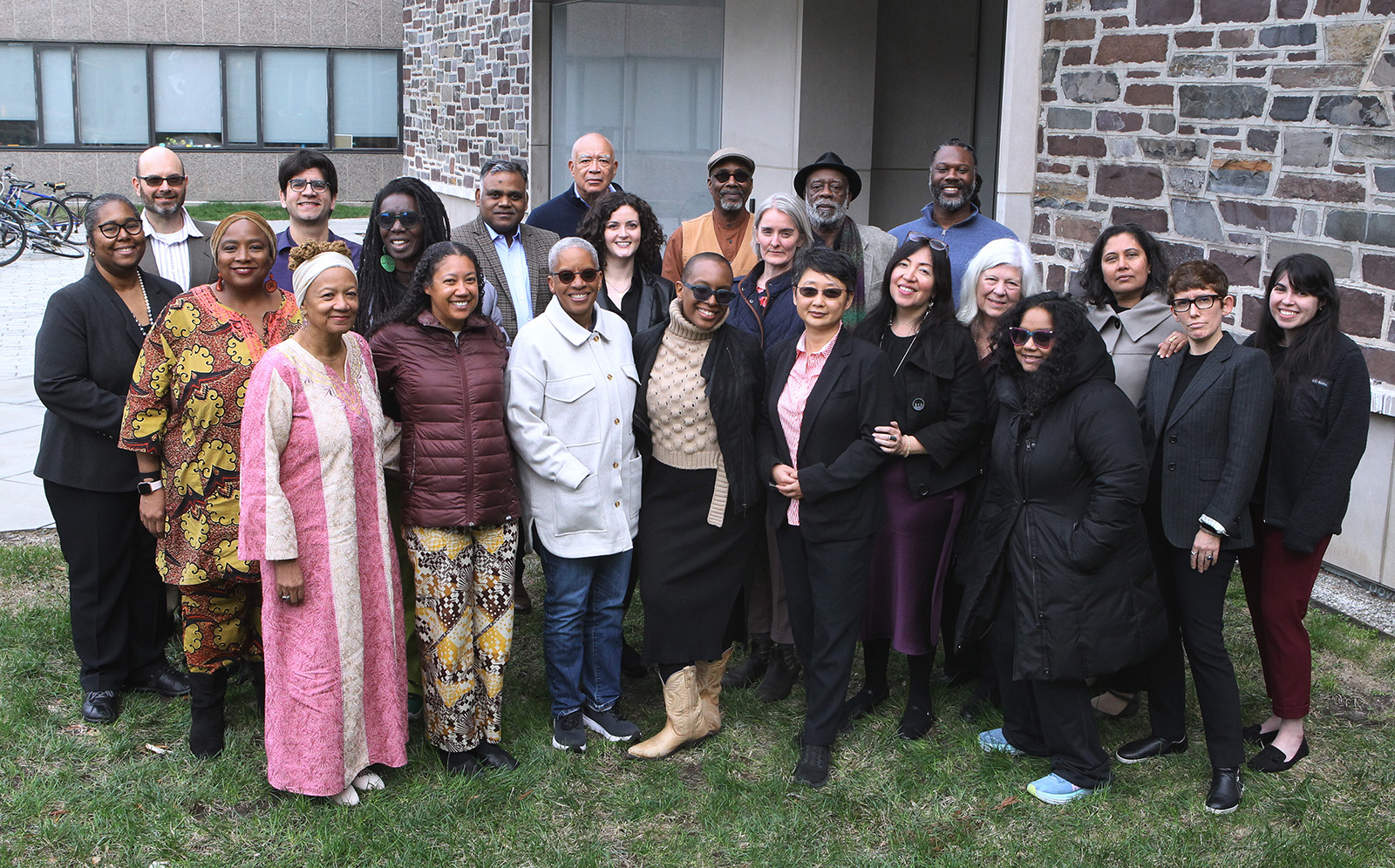
“Race, Caste, and the Challenge of Karma” conference, organized in conjunction with the Black Buddhist Faculty Project, April 4-5, 2025 (Photo courtesy of Frank Wojciechowski)


(RNS) — When Pamela Ayo Yetunde began hospice volunteering with an organization that utilizes mindfulness to help patients confront their own deaths, she was already far removed from her Methodist upbringing and on a quest for “peace of mind.” At the same time, she was reading the book “Touching Peace” by the influential Buddhist monk Thích Nhất Hạnh. Shortly thereafter, she began sitting for meditation retreats.

Those introductions to Buddhism changed the trajectory of her life. Yetunde has now been a Buddhist for 24 years and is an accomplished pastoral counselor, educator and author of several works, notably contributing to “Black and Buddhist: What Buddhism Can Teach Us about Race, Resilience, Transformation, and Freedom.”

Yetunde told RNS that many Black people are increasingly drawn to deeply practiced Buddhism, in part because it lacks the “guilt and shame”-based practices and beliefs common in Christian traditions.

Long overlooked and newly energized, “Black Buddhism” is emerging as a movement and academic field to rewrite the history of Buddhism in the U.S. — a history that has overlooked the role of Black practitioners and intellectuals for more than a century, scholars argue.

In early August, Princeton University will host a four-day Black Buddhism Faculty Training workshop that aims to “foster generative conversation among scholars of African American religion and Buddhism” and develop resources to teach about Black Buddhism in their classrooms. The workshop is sponsored by Princeton’s Black Buddhism Faculty Project (BBFP) launched in 2023. The initiative draws attention to the growing study of Black Buddhism, which it describes as “a boundary-crossing field” in its bridging of scholars across Buddhist Studies, American Religions, African American Studies and Comparative Literature and Philosophy.

Adeana McNicholl (Photo courtesy of Frank Wojciechowski)

Black Buddhism as a self-identified movement emerged in the ’90s and accelerated after the 2020 Black Lives Matter reckoning, when some Buddhists began engaging in conversations about race and karma and held meditation retreats specifically for people of color, said Adeana McNicholl, an assistant professor of religious studies at Vanderbilt and part of Princeton’s BBFP. 

Most historians trace the origins of Buddhism in the U.S. to the mid-19th-century Gold Rush, when Chinese laborers and immigrants arrived on the West Coast and in Hawaii. Buddhism’s national presence only expanded in the late 19th century with the arrival of Japanese immigrants. But scholars say that isn’t the whole story. 

“Black people have been engaging with Buddhist thought and ideas for nearly as long as Buddhism has been in the United States,” said McNicholl, who is writing a book about her research on the history of Black Buddhism and “Afro-Asian Solidarity.”


Jonathan C. Gold, a professor of Buddhist Studies and the director of Princeton’s Center for Culture, Society and Religion, of which the BBFP is a part, said those behind the initiative hope to strengthen academic knowledge of Black Buddhism. The faculty contend Buddhism is fundamental to American religious history and intersects meaningfully with African American religious history.

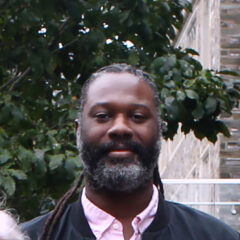
Ralph H. Craig III (Photo courtesy of Frank Wojciechowski)

Buddhist ideas, figures and tenets — particularly the commitment to nonviolence — played an important role in the long Civil Rights movement, spanning from the end of Reconstruction to the late 1960s, said Ralph H. Craig III, an assistant professor of religion at Whitman College who is involved in Princeton’s project. Influential Black thinkers like W.E.B. Du Bois, Howard Thurman and Bayard Rustin engaged with various Eastern philosophies and Asian anti-colonial movements.

Notably, Black Civil Rights leaders meaningfully interacted with Hindu leader Mahatma Gandhi, who drew inspiration from the Buddha’s approach to nonviolence and transformed it into a tool of political resistance. Later, the Rev. Dr. Martin Luther King Jr. developed a close friendship with Nhất Hạnh, the Buddhist monk, who once told King that some referred to him as “a bodhisattva, an enlightened being.”

Buddhist ideas trickled down to broader African American public spaces, influencing Black newspapers, the musical world of jazz, new religious movements and other cultural products, Craig said.

“It’s not necessarily just because they happened to pick up a book in a bookstore and it blew their minds, right? There is a kind of circulation of ideas that’s happening,” Craig added. 


By the end of the 20th century, Buddhism had become more familiar to Americans and was promoted by many celebrities, including the “Queen of Rock ’n’ Roll,” Tina Turner.

Despite its historical presence and popularity, only 1% of U.S. adults identify as Buddhist today. Of that population, a majority were born outside the U.S. and nearly 60% are Asian, a quarter are white, and only 3% are Black. Yet McNicholl cautioned against taking survey results at face value. “It’s limiting if we just assume that religious identity is equivalent to formal professions of faith or attendance,” she said, adding that those who engage in practices like Buddhist meditation but wouldn’t necessarily call themselves Buddhist get left out.

Black Buddhists like Yetunde say the tradition continues to grow and is appealing to many Black Americans in its offering of a radical acceptance not easily found within other U.S. religious traditions. “You can be a Black woman, you can be a Black trans woman, trans man, queer and … you can still be a leader within Black Buddhist traditions and Buddhist traditions,” she said. 

Princeton’s BBFP has partnered with and received support from the Numata Foundation, Lion’s Roar and the Initiative for Black Buddhist Studies. Since its inception, the BBFP has established a digital library, held three workshops and begun developing teaching resources and curricula that bring together scholars and practitioners. 

For now, Gold measures the initiative’s positive impact by the growing confidence among those who defend Black Buddhism’s distinctive contributions to contemporary Buddhism. Gold cited several recent panels related to Black Buddhism at the annual American Academy of Religion meeting as examples.

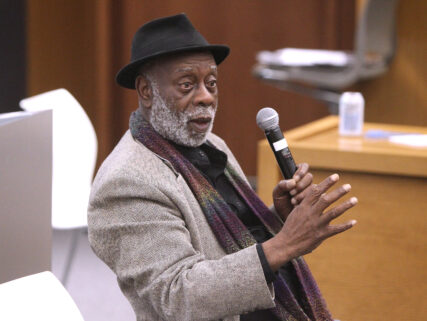
Keynote lecturer Dr. Larry Ward speaks at the “Race, Caste, and the Challenge of Karma” conference in April 2025. (Photo courtesy of Frank Wojciechowski)

Nonetheless, McNicholl acknowledged that persisting within Buddhist studies is “a lingering sense that what counts as real Buddhism is Buddhism in Asia, and not necessarily Buddhism in the United States,” she said. Even further removed are Black Buddhists, because “they’re not Asian, they’re not white, which is sort of like the predominant demographics of the academy of Buddhist studies in the United States,” she added.

“American Buddhism, Buddhism in the West, is up for debate,” Craig told RNS. And claims to authentic Buddhism are not limited to the academy. Craig noted that in addition to Asian Buddhists and Black Buddhists, there are also alt-right, white supremacist Buddhists

Tenets like karma also remain topics of meaningful and contested discussion. Last year, the BBFP hosted a conference called “Race, Caste, and the Challenge of Karma” that examined how it can be “difficult to reconcile traditional Buddhist approaches to karma with projects to counter systemic injustice.” The discussion was spurred by the work of Rima Vesely-Flad, who wrote “Black Buddhists and the Black Radical Tradition” and created the Initiative for Black Buddhist Studies.

Vesely-Flad became interested in karma after one of her students at Union Theological Seminary, a 70-year-old Black woman enrolled in the school’s Buddhism program, asked a visiting monastic how he explained the suffering of Black people. His response was, “You suffer because of your karma.”

“She left the Buddhism program after that,” Vesely-Flad told RNS.

Karma is a central Buddhist doctrine. “We can’t pretend it doesn’t exist,” Vesely-Flad said, adding that Buddhists must acknowledge it has been weaponized against subjugated people to blame them for their own oppression. Yet Vesely-Flad also remains interested in how karma has been used to confront harm.

The term “Black Buddhism” is similarly contested. Vesely-Flad, for instance, distances herself from the term, which she claims flattens the nuance that Black practitioners are a part of a variety of Buddhist lineages with distinct practices and interpretations. Instead, she prefers terms like “Black Buddhists” and “Black Buddhist thought.”

McNicholl noted that the field of Black Buddhist studies is growing around the juncture of America’s 250th, as the country is thinking about how “we tell the story of religion in the nation,” she said.

“Uncovering this history of Black Buddhism allows us to see the diversity of religious life in the United States” and to recognize that Buddhism has been a part of the national fabric for much of the nation’s lifespan, she added. 


A New Spirit Of Oneness Will Take Hold Of The Human Race: Sri Aurobindo – Essay


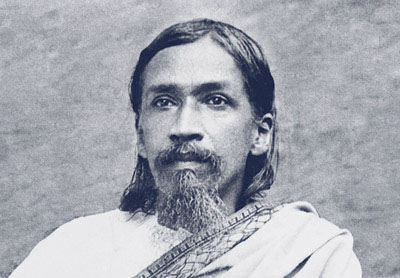
Sri Aurobindo, the philosopher-saint of Pondicherry (now Puducherry). 
Photo-credit: www.sriaurobindoashram.org


July 27, 2026
By Raju Mansukhani


Key Takeaways:

India’s Role in Unity and Freedom: In his 15 August 1947 All India Radio address, Sri Aurobindo celebrated India’s independence while stressing that true national fulfillment requires overcoming internal divisions (especially the Hindu-Muslim partition) and achieving lasting political and social unity.

Vision for Asia and the World: He outlined broader dreams of Asia’s liberation and resurgence, the eventual formation of a world-union based on international spirit and cooperation, and India’s capacity to contribute statesmanship and leadership toward these goals.

Spiritual and Evolutionary Mission: Sri Aurobindo emphasized India’s spiritual gift to the world and the ultimate evolutionary aim of raising human consciousness to a higher level, seeing India’s independence as potentially the starting point for these larger civilizational and spiritual transformations.


Recalling visionary words of philosopher-saint of Pondicherry

Given the global wars, killings of millions of people, the subsequent distress and discord across our world, it is time to revisit the key messages from the writings of Sri Aurobindo, the philosopher-saint of Pondicherry (now renamed as Puducherry). On 15 August 1947, on the eve of India’s Independence from British imperial rule, Sri Aurobindo’s message was broadcast on All India Radio. As most readers would agree, his thoughts, words of advice remain relevant and important till date.

“August 15th, 1947 is the birthday of free India. It marks for her the end of an old era, the beginning of a new age. But we can also make it by our life and acts as a free nation an important date in a new age opening for the whole world, for the political, social, cultural and spiritual future of humanity. August 15th is my own birthday and it is naturally gratifying to me that it should have assumed this vast significance. I take this coincidence, not as a fortuitous accident, but as the sanction and seal of the Divine Force that guides my steps on the work with which I began life, the beginning of its full fruition. Indeed, on this day I can watch almost all the world-movements which I hoped to see fulfilled in my lifetime, though then they looked like impracticable dreams, arriving at fruition or on their way to achievement. In all these movements free India may well play a large part and take a leading position,” he said.

In the universal, global vision of Sri Aurobindo there is a clear role for India to play. He enunciated his thoughts, his dreams when he said, “The first of these dreams was a revolutionary movement which would create a free and united India. India today is free but she has not achieved unity. At one moment it almost seemed as if in the very act of liberation she would fall back into the chaos of separate States which preceded the British conquest. But fortunately, it now seems probable that this danger will be averted and a large and powerful, though not yet a complete union will be established.” Besides the areas directly under British rule, there were more than 560 Princely States across the sub-continent. Many of these Princely States had been established after the collapse of the Mughal Empire, and several pre-dated the Mughals by centuries. The Princely States had a long and illustrious history; in fact, Sri Aurobindo after his return from England in 1893 was working for Baroda, one of the biggest and richest of the Princely States. He spent fourteen eventful years developing the university, and assisting the Maharaja of Baroda in his official duties.

Unity and division

Sri Aurobindo was not only deeply conscious of history he was able to assess the role of the Constituent Assembly in bringing together different segments of India’s citizens in the address of 1947. He said, “the wisely drastic policy of the Constituent Assembly has made it probable that the problem of the depressed classes will be solved without schism or fissure. But the old communal division into Hindus and Muslims seems now to have hardened into a permanent political division of the country. It is to be hoped that this settled fact will not be accepted as settled for ever or as anything more than a temporary expedient. For if it lasts, India may be seriously weakened, even crippled: civil strife may remain always possible, possible even a new invasion and foreign conquest. India’s internal development and prosperity may be impeded, her position among the nations weakened, her destiny impaired or even frustrated. This must not be; the partition must go. Let us hope that that may come about naturally, by an increasing recognition of the necessity not only of peace and concord but of common action, by the practice of common action and the creation of means for that purpose. In this way unity may finally come about under whatever form—the exact form may have a pragmatic but not a fundamental importance. But by whatever means, in whatever way, the division must go; unity must and will be achieved, for it is necessary for the greatness of India’s future.” For India, in the third decade of the 21st century, the words of Sri Aurobindo are prophetic with his emphasis on social-political unity at all times.

The young Aurobindo Ghose, around the time he was working in Baroda. 
Photo-credit: www.sriaurobindoashram.org

Not merely confined to India and its emergence from oppressive colonial rule, Sri Aurobindo’s vision is for Asia’s resurgence. He said, “Another dream was for the resurgence and liberation of the peoples of Asia and her return to her great role in the progress of human civilisation. Asia has arisen; large parts are now quite free or are at this moment being liberated: its other still subject or partly subject parts are moving through whatever struggles towards freedom. Only a little has to be done and that will be done today or tomorrow. There India has her part to play and has begun to play it with an energy and ability which already indicate the measure of her possibilities and the place she can take in the council of the nations.”

During those formative years in Baroda, Sri Aurobindo established a programme of national emancipation even though he was preoccupied with administrative and educational responsibilities. In his magnum opus, The Intellectual Roots of India’s Freedom Struggle (1893-1918), Prithwindra Mukherjee wrote how Sri Aurobindo “sailed upstream towards the source of Indian civilization. In addition to possessing Bengali (to the extent of using it for editorials published in his Bengali magazine Dharma, in 1909), and learning other major Indian languages (Hindi, Gujarati, Marathi and, later, Tamil), Aurobindo mastered Sanskrit and keeping with the initial objective of the seers of antiquity—the Vedas, the Upanishads, the Gita and of other fundamental texts. Up to then, these new significances escaped the grasp of the routine philologists. Sri Aurobindo affirmed, in his treatise on the philosophy of the Upanishads that, thanks to a number of inner disciplines and observances, the seers of ancient India had discovered some essential truths of the universe inside and outside themselves.”

For all Mankind

In the address on 15 August 1947, Sri Aurobindo spoke of the third dream and the role which India had to play. “The third dream was a world-union forming the outer basis of a fairer, brighter and nobler life for all mankind. That unification of the human world is under way; there is an imperfect initiation organised but struggling against tremendous difficulties. But the momentum is there and it must inevitably increase and conquer. Here too India has begun to play a prominent part and, if she can develop that larger statesmanship which is not limited by the present facts and immediate possibilities but looks into the future and brings it nearer, her presence may make all the difference between a slow and timid and a bold and swift development. A catastrophe may intervene and interrupt or destroy what is being done, but even then the final result is sure. For unification is a necessity of Nature, an inevitable movement. Its necessity for the nations is also clear, for without it the freedom of the small nations may be at any moment in peril and the life even of the large and powerful nations insecure. The unification is therefore to the interests of all, and only human imbecility and stupid selfishness can prevent it; but these cannot stand for ever against the necessity of Nature and the Divine Will. But an outward basis is not enough; there must grow up an international spirit and outlook, international forms and institutions must appear, perhaps such developments as dual or multilateral citizenship, willed interchange or voluntary fusion of cultures. Nationalism will have fulfilled itself and lost its militancy and would no longer find these things incompatible with self-preservation and the integrality of its outlook. A new spirit of oneness will take hold of the human race.”

His faith in India’s spiritual heritage and its contribution to the world remained at the forefront of his vast writings. Sri Aurobindo said, “Another dream, the spiritual gift of India to the world has already begun. India’s spirituality is entering Europe and America in an ever increasing measure. That movement will grow; amid the disasters of the time more and more eyes are turning towards her with hope and there is even an increasing resort not only to her teachings, but to her psychic and spiritual practice. “The final dream was a step in evolution which would raise man to a higher and larger consciousness and begin the solution of the problems which have perplexed and vexed him since he first began to think and to dream of individual perfection and a perfect society. This is still a personal hope and an idea, an ideal which has begun to take hold both in India and in the West on forward-looking minds. The difficulties in the way are more formidable than in any other field of endeavour, but difficulties were made to be overcome and if the Supreme Will is there, they will be overcome. Here too, if this evolution is to take place, since it must proceed through a growth of the spirit and the inner consciousness, the initiative can come from India and, although the scope must be universal, the central movement may be hers. Such is the content which I put into this date of India’s liberation; whether or how far this hope will be justified depends upon the new and free India.” On the 154th birth anniversary of the philosopher-saint on 15th August 2026, we pay our homage to him and search deeper into his writings for inspiration and wisdom.


About Raju Mansukhani

Raju Mansukhani, based in New Delhi, is a researcher-writer on history and heritage issues; a media consultant with leading museums, non-profits, universities and corporates in India and overseas. Contributing regular columns, book reviews and features in the media he has drawn attention of the new generations to critical issues and personalities of Indian and Asian history. Over the last three decades he has authored books on diverse subjects including the media, palace architecture, sports and contemporary history. Through in-depth documentaries, he has profiled leading Asian public figures highlighting their research and publications.
View all posts by Raju Mansukhani


Nestle siphons off bottled water business into joint venture


AFP
July 23, 2026

Spanning more than 30 brands in 120 countries, Peranel includes mineral water brands such as S.Pellegrino, Source Perrier and Acqua Panna – Copyright AFP Fred TANNEAU

Swiss giant Nestle said Thursday that it will create a joint venture for its bottled water business, which includes top-selling brands such as San Pellegrino, Source Perrier and Acqua Panna.

Nestle said in a statement that it would transfer the business into a company called Peranel, which would be jointly owned by US investment firm Platinum Equity.

Peranel will span more than 30 brands in 120 countries.

“As an independent company focused exclusively on water and premium beverages, Peranel will have full flexibility to invest in its brands and pursue growth opportunities,” the Swiss food giant said.

“By partnering with Platinum Equity, Peranel will be better positioned to execute its strategy with enhanced agility,” said Nestle’s chief executive Philipp Navratil.

“Through additional focus, it will be well equipped to drive its long-term growth ambitions by strengthening this unique portfolio of international and local brands, with continued investments in innovation, premiumisation, operational excellence and sustainability.”

The transaction values Peranel at 4.9 billion euros, which will generate around three billion euros in cash proceeds for Nestle, the food giant said.

The joint venture will be based in Paris and headed by Muriel Lienau, currently head of Nestle Waters.

Nestle also published its earnings for the first six months of 2026.

In the period from January to June, the food giant — which owns more than 2,000 brands, including Nespresso coffee pods and Maggi bouillon cubes — generated sales of 43.1 billion Swiss francs ($52.9 billion), down 2.5 percent from a year earlier.

Net profit fell 31.4 percent to 3.5 billion francs, due to restructuring costs and asset write-downs on holdings earmarked for disposal, Nestle said.


Trump tariff wall set to stay after Supreme Court blow: analysts


AFP
July 24, 2026


US President Donald Trump has found different authorities to announce new tariffs after his Supreme Court setback – Copyright AFP/File Brendan SMIALOWSKI

Circumventing the US Supreme Court, President Donald Trump has found a way to resurrect his tariff wall in a fashion that analysts say could prove more durable to legal challenges.

Just this week, Trump slapped sweeping new tariffs on 60 trading partners and saw 25-percent duties take effect on Brazilian products. Both cases involved an authority that has previously been used to impose levies.

Trump separately tapped an untested justification for 50-percent tariffs on many Canadian goods.

The actions and threats “underscore the president’s continued affection for tariffs, and that they are not going away as long as he is in the White House,” Asia Society Policy Institute senior vice president Wendy Cutler told AFP.

Trump’s latest tariffs of 10 percent to 12.5 percent apply to goods from 60 economies starting Friday.

They came after probes over forced labor concerns, under Section 301 of the Trade Act of 1974.

Cutler said this has a lower likelihood of being overridden by courts, noting Trump’s top trade official Jamieson Greer had carefully navigated procedural requirements before imposing duties.

More concerning was Trump’s targeting of Canada using the untested Section 338 of the Tariff Act of 1930, the Atlantic Council’s Josh Lipsky told AFP.

The justification was Canada’s alleged discriminatory treatment of US exports, with duties effective after a month.

“That’s more tariff-as-punishment” and could signal that Washington intends to keep less conventional tools at its disposal, Lipsky said.

This is an “uncertainty generator,” added Scott Lincicome of the libertarian Cato Institute.

Already, Trump’s newest tariffs face legal challenges from small businesses.

As courts have earlier allowed the use of Section 301 for imposing duties, arguments against Trump’s latest salvo would likely focus on official findings that justified action, Lincicome said.

“That’s just not something that courts typically want to weigh in on,” he added.

Still, some argue that Trump lacks such broad powers to impose sweeping tariffs.

Within months of returning to the presidency, Trump unleashed a barrage of tariffs on US trading partners.

He invoked emergency economic powers to impose a swath of these duties quickly, a move deemed illegal by the high court this February.

Trump’s sector-specific tariffs, imposed under different legal authorities on steel, automobiles and other goods, are unaffected.

Officials have since launched Section 301 investigations, including on forced labor, to reinstate duties.

Lincicome warns however that past investigations were more substantive. A probe into China during Trump’s first term took a year to result in duties.

This time, probes into 60 economies including major partners like the EU and India spanned just four months.

US tariffs are tough to undo. Former president Joe Biden, the Democrat who succeeded Trump after his first term, kept his predecessor’s tariffs on China intact.

Even if a future leader wanted to reverse Trump’s duties, revenue considerations will complicate the situation, Lipsky predicts.

Many countries were likely hoping the worst of trade wars are behind them, he said, but some may now have doubts.

The Trump administration has struck 19 framework or reciprocal tariff deals. Yet, threats of further duties loom with Washington investigating 16 economies including China, the EU and Japan over excess industrial capacity.

“The administration has been careful not to exceed the tariff levels agreed to in bilateral agreements,” Cutler said. “But partners are concerned that this assurance may not hold.”

Chad Bown of the Peterson Institute for International Economics believes Trump is missing a chance to address bigger problems like China’s rare earth export curbs.

Trading partners have to “fight a two-front trade war — dealing with Trump’s tariffs and China’s export restrictions — instead of just being able to focus on China,” he said.

While countries have expressed disappointment, Cutler said, there are no signs of retaliation, “knowing full well they would risk further US tariff escalation.”


Meta quits clean energy pledge amid gas-powered data center push

META THINKS NUCLEAR POWER IS GREEN

AFP
July 24, 2026
Meta: — © AFP RONALDO SCHEMIDT

Meta has abandoned a global pledge by leading companies to source all of their electricity from renewable sources, the social media giant confirmed Friday.

RE100, an initiative of the UK-based nonprofit Climate Group, aims to spur corporate climate action, and counts Apple, Google and Microsoft among its 444 members.

The Climate Group’s website no longer lists Meta, the company behind Facebook and Instagram, as a member.

The news was first reported by Recharge News, a renewable energy industry outlet.

Meta joined the pledge in 2016 according to a Wayback Machine archive of RE100’s website.

The departure comes amid a frenzied data center buildout by leading tech companies. Meta has struck deals paying utilities to bring new natural gas power plants online, including 10 to power its Hyperion data center in Louisiana alone.

A Meta spokesperson told AFP the company is continuing to scale up investments in renewable energy, and that leaving RE100 does not change its goal of matching its electricity use with 100 percent clean energy.

It has met that goal on an annualized basis since 2020, according to its website, by partnering with renewable energy providers on long-term power purchase agreements.

But the Climate Group told Recharge News that was no longer enough.

“After several in-depth conversations between Meta and Climate Group, Meta has withdrawn from the RE100 initiative, as it is no longer able to meet the technical criteria due to investments made in new gas power,” a Climate Group spokesperson told the website.

Natural gas has long been billed as a “bridge fuel” between dirtier polluting fossil fuels and renewables such as wind and solar. While its emissions are lower, drilling and extracting it causes the leakage of methane, a powerful greenhouse gas and the main component of natural gas.

Burning natural gas also causes significant air pollution in the form of nitric oxides, sulfur, mercury and particulates, while hydraulic fracturing or “fracking,” can contaminate ground water supplies.

Meta isn’t alone in its pivot. Microsoft signed a deal with Chevron last month to supply natural gas electricity to a data center in West Texas, while Google has also been linked to similar partnerships in press reports.
Climate

Heatwaves & strategy

Sunday 26 July 2026, by Daniel Tanuro


During the heatwaves of 2026, large sections of the population have recognised the danger posed by climate change. There is hope that a mass movement will be reignited. It is up to us to demonstrate that ecosocialism offers an alternative for a liveable and desirable society. [1]

Whilst ecosocialism has made great strides in its ability to offer a comprehensive alternative for society, its supporters must still prove that they are capable of engaging in politics – that is, of fighting for power.

This is no small challenge, because it is clearly not a question of gaining power within the bourgeois institutional framework. It is a question of fighting for a class-based break that involves redefining power to serve the exploited and the oppressed, whilst respecting ecological limits.

A major difficulty in this endeavour stems from the fact that most of the planet’s ecological limits have been exceeded. Consequently, an anti-capitalist break must necessarily involve a reduction in global energy consumption, material production and transport. However, this constraint is unpopular amongst workers because, under capitalism, growth determines employment, wages, social benefits, etc.

The heatwaves of 2026 could be a game-changer. Large sections of the population have recognised the danger of climate change. Yet the threat posed by climate change, by its very existential nature, transcends socio-economic concerns and tends to reveal the absurdity of the capitalist logic that dispossesses workers of their labour and their lives.

This awareness may wane. But any such lull would be temporary because 1) capitalism is incapable of stabilising the climate and 2) with a 3°C rise in temperature, Western Europe is particularly threatened by heatwaves and other extreme weather events.

There is therefore a chance that the world of work will join the fight against the climate catastrophe on a much larger scale, on the basis of its own demands and from an anti-systemic perspective. This is a major challenge, as workers make up the majority of the population and can bring the capitalist economy to a standstill.

In this context, eco-socialists cannot be content with merely spreading propaganda: they must also campaign for an emergency plan comprising demands that bridge the gap between the issues perceived as most pressing by the working classes and the maximum programme.

In this plan, it is of paramount importance not to neglect adaptation measures. The catastrophe is upon us, and is partly irreversible. Action must be taken. The task of protecting the most vulnerable must not be left to the demagoguery of the climate-denying far right!

We obviously do not view adaptation in the same way as neoliberal governments. We link it to the redistribution of wealth, give it a democratic and social dimension, and combine it with the reduction of emissions (in housing, transport, agricultural policy, etc.).

The comprehensive eco-socialist programme is an irreplaceable propaganda tool because it presents an alternative vision of society. Engaging in practical politics involves selecting those proposals which, in each specific situation, are likely to set in motion the momentum needed to advance towards the strategic objective: the expropriation of the fossil fuel industry and the financial sector by a government as loyal to the oppressed as current governments are to the employers.

23 July 2026

Translated by International Viewpoint from SolidaritéS.

Footnotes

[1] Photo: National climate march in Bderne, Switzerland, 28 September 2019. Al Gutierrez. The sign reads "Kill Capitalism, the small act which counts”.