Saturday, August 22, 2026

Wild gaffe as Trump threatens to unleash military on sluggish bond market


Bennito L. Kelty
August 21, 2026 
RAW STORY

President Donald Trump on Friday answered a reporter's question about calming the turbulent bond market by saying he'll use military force.

Trump was asked whether he had spoken with Treasury Secretary Scott Bessent about "another type of intervention" after bond yields climbed back to multi-year highs.

"The ultimate intervention is our military," Trump said. "And if we have to use that, we will."

The remark came as Trump seems to be escalating his military posture against Iran. Bessent told CNBC on Thursday that the U.S. likely would not need to restart large-scale combat with Iran, hours after Trump declared "economic D-day" on the country.

It also came shortly after Bessent announced that the Treasury would buy back far more of its own debt than planned. The step was meant to push interest rates down, according to reporting by CNBC. The Treasury acted after the rate on the government's 30-year bond hit its highest levels since 2007, Reuters reported.

Trump distanced himself from Bessent's move during his comments to reporters on Friday. Trump said he had not directed the intervention.

"No, not at all," Trump said. He added that Bessent is "a very capable man. He wanted to do it."

Bessent's fix barely lasted a day. Rates quickly climbed back to where they started after Trump escalated his standoff with Iran and drove oil prices higher, according to reporting by CNBC. The nation's total debt topped $40 trillion for the first time shortly after, which fueled investor anxiety over rising borrowing costs and deepening deficits, Reuters noted.

The Iran war is now in its sixth month. Trump has faced questions about how far he is willing to go. The Telegraph reported earlier this week that Trump was weighing a possible nuclear strike, a claim amplified by former Rep. Marjorie Taylor Greene, who said the administration had discussed the option in strategy meetings.


'Addled' Trump viciously mocked after flub: 'Bond market also two weeks away from a nuke?'

Bennito L. Kelty
August 21, 2026 
RAW STORY

President Donald Trump's threat to use military intervention to handle the troubled bond markets is baffling his online critics.

On Friday, a reporter asked Trump about increasing bond yields, which Treasury Secretary Scott Bessent has struggled to contain after a failed debt buyback intervention earlier this week.

"Have you talked to Bessent about another type of intervention?" a reporter asked Trump.

"The ultimate intervention is our military," Trump responded. "And if we have to use that, we will."

The response from Trump prompted mockery as he seemed to conflate military intervention with a bond market intervention.

"Addled Trump threatens to use the military on bond traders," reacted Ron Filipkowski, the editor-in-chief of the political news network MeidasTouch, in a post on X.

"Is the bond market also two weeks away from a nuclear weapon?" asked Acyn Torabi, the senior digital editor for MeidasTouch, referring to reports that Trump was weighing a possible nuclear strike against Iran.

"Operation Epic Interest Rates," suggested political blogger and Kash Patel foe Jim Stewartson.

"Is Trump going to bomb the bond market?" wondered PatriotTakes, which covers right-wing extremism.

"I preferred it when yield curve control didn't involve the military," economist Justin Wolfers lamented. "But perhaps mine is a radical position."

During his comments, which came ahead of a South Carolina rally for Sen. Darline Graham (R-SC), Trump also pinned the initial debt buyback to Bessent as bond yields climbed shortly after the buyback.

"Did you direct Secretary Bessent to intervene in the bond market?" a reporter asked Trump.

"No, not at all," he responded. "He's a very capable man. He wanted to do it. He's very good at it. He's got a good touch for bonds and interest rates. He did it."

The question came shortly before he was asked about considering another intervention, but Trump still pivoted to talking about military force.


Economists Blame $40 Trillion Debt Milestone on Two Things: GOP Ineptitude and Tax Cuts for the Rich

“There is one point that should be very clear: It has been run up almost entirely due to Republican tax cuts and their inept management of the economy.”


US President Donald Trump, joined by Republican lawmakers, signs the One Big Beautiful Bill Act into law on July 4, 2025 in Washington, DC.
(Photo by Eric Lee/Getty Images)

Jake Johnson
Aug 20, 2026
COMMON DREAMS

Congressional Republicans have seized upon news that the US national debt reached $40 trillion to bash what they described as “unaffordable socialist policies” and out-of-control spending.

But economists and policy analysts say Republican policy decisions—from massive tax cuts for the rich to disastrous wars of choice in the Middle East—are primarily responsible for the explosion of the national debt over the past quarter-century. President Donald Trump, who has repeatedly promised to eliminate the national debt, has so far overseen an $11.6 trillion debt surge across his two White House terms.

“I have never been a deficit hawk, and I’m not about to change my religious affiliation now,” Dean Baker, senior economist at the Center for Economic and Policy Research, wrote Thursday. “But whatever we think of debt and deficits, there is one point that should be very clear: It has been run up almost entirely due to Republican tax cuts and their inept management of the economy.”

Economist Paul Krugman similarly wrote that while the $40 trillion figure “has no special significance,” it underscores “the incredible irresponsibility of the Trump administration, with its unfunded tax cuts that overwhelmingly benefit the wealthy, billions in wasteful military spending—redesigning aircraft carriers because Trump doesn’t like the way they look!—and more.”

“As Jared Bernstein and Bobby Kogan have shown, our deficit would be far more manageable if first [George W.] Bush, then Trump, hadn’t rammed through tax cuts that hugely favored high-income Americans,” Krugman added.

Kogan, senior director of federal budget policy at the Center for American Progress, estimated in 2023 that tax cuts enacted during the Bush administration and Trump’s first term were “responsible for 57% of the increase in the debt ratio since 2001, and more than 90% of the increase in the debt ratio if the one-time costs of bills responding to Covid-19 and the Great Recession are excluded.”


Last summer, Trump signed into law another massive tax cut package that will disproportionately benefit the rich and large corporations—and add trillions of dollars more to the national debt over the next decade.

“From now on, whenever you hear someone fret about how huge, horrible, and out-of-control the national debt is, explain to them that it’s largely because of tax cuts to the wealthy—who are also the major recipients of interest on that debt,” former US Labor Secretary Robert Reich wrote on Thursday.

The US national debt reached $40 trillion months earlier than forecasters expected, partially due to lost federal revenue from Trump’s court-invalidated tariffs.

“Before his second term is even over, Donald Trump is responsible for more than $10 trillion of this,” Rep. Chris Deluzio (D-Pa.) wrote on Thursday. “Just INTEREST on this debt is now sucking up more of our public money than even the military and Medicare. DC Republicans are leaving our kids a colossal mess to clean up.”

Warning signs flash as 'eye-popping' economic figures spell doom for GOP voters: analyst


Matthew Chapman
August 20, 2026 
RAW STORY


House Speaker Mike Johnson (R-LA) speaks with members of the media while arriving at the U.S. Capitol ahead of a two-week Easter recess starting at the end of this week, in Washington, D.C., U.S., March 26, 2026. REUTERS/Nathan Howard

A panel of experts on CNN blasted through the ramifications of the U.S. national debt hitting the $40 trillion mark.

More than a decade ago, President Donald Trump promised he could eliminate the national debt, and instead introduced a series of tax cuts that accelerated its growth.

"These are certainly eye-popping numbers for voters to see, and come as voters continue to have concerns about the Trump administration's handling of the economy," said CNN's Arlette Saenz in a sidebar.

She added that "the climbing debt isn't just a GOP issue," as debt has been rising steadily since the early 2000s among presidents from both parties — although the debt as a percent of GDP has been a bit more variable.

Meanwhile, Mark McKinnon, a longtime Republican strategist, told anchor Kasie Hunt that the implications for the GOP this election cycle are grim.

"I'll tell you this, as a campaign guy: the last thing that I want to be talking about 70 days out from a midterm election is the fact that we're busting out $40 trillion in [debt], and the stock market has taken a 700-point dive," said McKinnon, saying that the whole situation is "a really bad stew for the president."

Trump, he noted, "had largely campaigned on a macro message of sort of ... listen, just elect me and I'll go break stuff," he added. "And people said, yeah, go break stuff. And then they get turned around, and they say, wait a minute, not everything."

Thank Idiot, Greedy Republicans If You’re Upset With $40 Trillion in US Debt

Somehow, many people talk about Republicans as the party of fiscal responsibility. That’s insane.


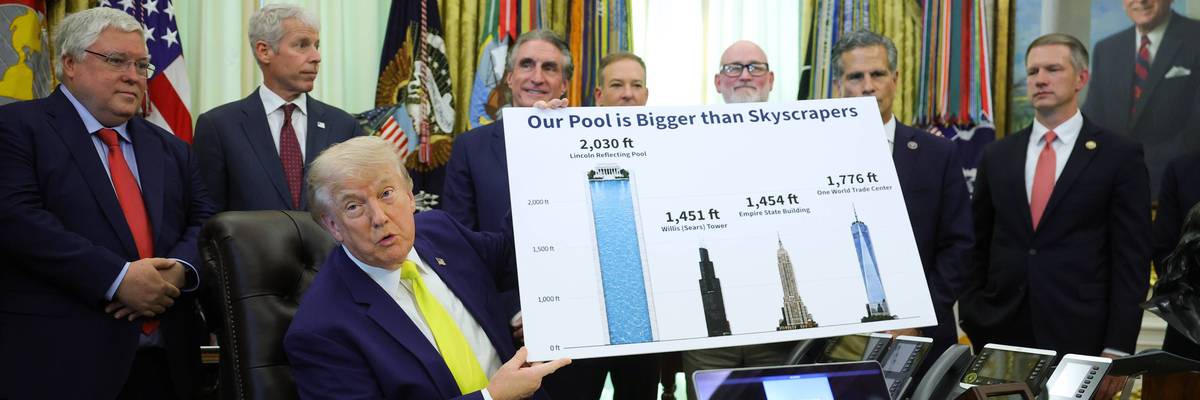
US President Donald Trump displays a graph entitled “Our Pool is Bigger than Skyscrapers” as he speaks on his renovations to the Lincoln Memorial Reflecting Pool during a “Beautiful, Clean Coal” event in the Oval Office of the White House on June 04, 2026 in Washington, DC. President Trump is expected to announce a $700 million investment in funding for coal plants and energy infrastructure.
(Photo by Kevin Dietsch/Getty Images)

Dean Baker
Aug 21, 2026
Beat the Press

I have never been a deficit hawk, and I’m not about to change my religious affiliation now. But whatever we think of debt and deficits, there is one point that should be very clear: it has been run up almost entirely due to Republican tax cuts and their inept management of the economy.

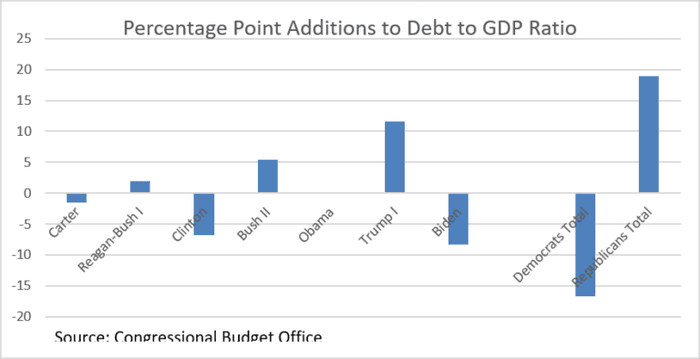
Every Democratic president of the last half century has left with a deficit that was lower, measured as a share of GDP, than the one they came in with, except Obama, who left it unchanged. By contrast, every Republican president has left with a considerably higher deficit than what they inherited.

Starting with Carter, the deficit for fiscal year 1976 was 4.1% of GDP. When he left office in 1980, it was down to 2.5% of GDP, despite a recession that year. That was the starting point for Reagan. (These figures refer to fiscal years, which end on October 1 of the year.) Reagan’s tax cuts, along with a big military buildup, were most of the story of higher deficits. When his successor, George H.W. Bush, left the White House in 1992, the deficit was 4.5% of GDP.

For better or worse, Clinton took deficit reduction seriously. He was helped by an explosion of tax revenue associated with the tech bubble, but he both made budget cuts and increased taxes. When he left office in 2000, the government was running a surplus equal to 2.3% of GDP.

George W. Bush quickly reversed the picture. A big part of the story was the collapse of the tech bubble in 2001-2002, which both led to a recession and a plunge in tax revenue from capital gains. He also had big tax cuts and a military buildup associated with his invasions of Afghanistan and Iraq. When Bush left office after 2008, he handed Obama a deficit equal to 3.1% of GDP, as well as a financial crisis and severe recession, resulting from the collapse of the housing bubble.

The deficit initially exploded in 2009 under Obama, as the country faced the worst recession since the Great Depression. As the economy gradually recovered, the deficit came down, falling back to 3.1% of GDP in 2016, just as Obama was leaving the White House.

Trump’s tax cuts caused the deficit to rise again. It hit 4.6% in 2019, but it really took off the following year, as a result of the pandemic. It reached 14.7% of GDP in 2020, the largest since World War II. The recovery and some modest increases in tax collections brought the deficit down to 6.3% of GDP in 2024.

Taking the cumulative changes from Democratic and Republican presidents, Democratic presidents have reduced deficits by 16.7 percentage points of GDP during their terms in office, while Republican presidents have raised them by 18.9 percentage points. Somehow, many people talk about Republicans as the party of fiscal responsibility.


As I said earlier, I am not hugely troubled by the debt. It would be better to be paying less money in interest, but 3.0% of GDP going to interest is not a disaster. The more important issue is to have a healthy economy with solid growth.

Here is where the big failure is. Trump’s war is leading to shortages, most importantly of oil, but also fertilizer and other products. His tariffs have led to higher prices for a wide range of products, as has his mass deportations. Perhaps most importantly, Trump’s open corruption and self-dealing undermine confidence in the U.S. financial markets and business system more generally.

In the past, investors could view the United States markets as relatively clean and stable. Unlike in some other countries, getting your investment back didn’t depend on staying in the good graces of the political leadership. Under Trump, this is no longer true. He has openly threatened companies and their management for saying and doing things he does not like. That is not a good recipe for a stable economy with solid growth.

If there is a run on the dollar, and interest rates soar higher, it is far more likely to be the result of Trump’s corruption and incompetence than the high debt. This is what people should be losing sleep over, not the debt crossing the $40 trillion mark.

‘I’ve Never Seen This’: Massive Collapse in Support for AI Data Centers Captured in New Poll

“If you can think of a cohort of Americans, there’s a good chance they wouldn’t welcome a data center in their area.”
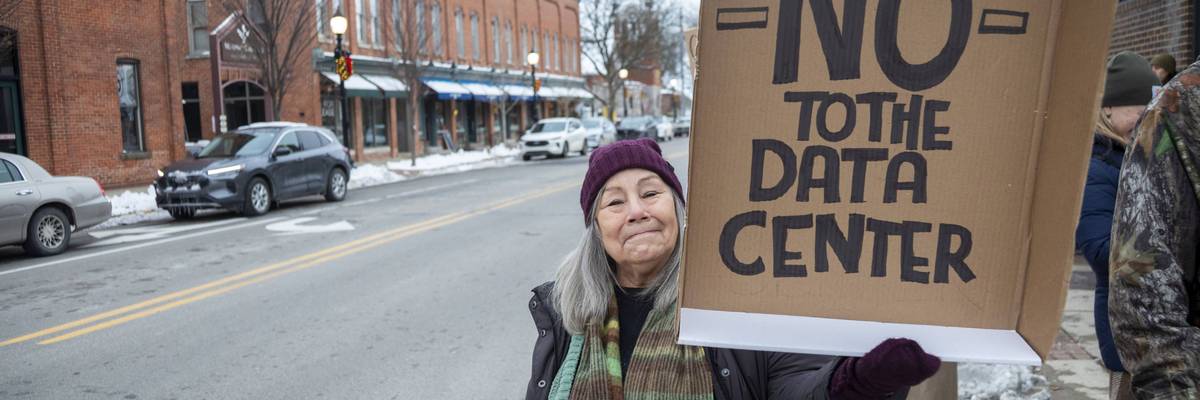


Residents in Saline, Michigan rally against the $7 billion Stargate data center planned on local farm land on December 1, 2025.
(Photo by: Jim West/UCG/Universal Images Group via Getty Images)

Brad Reed
Aug 20, 2026
COMMON DREAMS

A poll released on Thursday shows a massive collapse in support for building artificial intelligence data centers among Republican, Democratic, and independent voters.

The poll, which was conducted by Embold Research and published by Heatmap Pro, shows that 75% of Americans now oppose building AI data centers in their area, including 61% registering strong opposition.

Just one year before, 42% of Americans said they opposed AI data centers in their areas, compared with 43% who expressed support.


The collapse in support has also been uniform across all demographics, the pollsters found.

“If you can think of a cohort of Americans, there’s a good chance they wouldn’t welcome a data center in their area,” explained Heatmap executive editor Robinson Meyer. “The shift against the facilities is represented across age, gender, income, partisan ID, and the rural-urban divide. Data centers are 43 points underwater with Republicans, 65 points underwater with independents, and 75 points underwater with Democrats.”

Meyer further described the drop in support for data centers as “a swift, massive shift in US public opinion on a scale that I wouldn’t have once thought possible.”

Other observers expressed similar shock over how quickly US voters have turned against data centers, which President Donald Trump on Wednesday touted as a great source of jobs, even though the facilities employ very few people relative to their size once completed.

“I don’t think I’ve ever seen public opinion shift this quickly on an issue,” wrote Adam Carlson, founding partner at Zenith Polls.

Justin Slaughter, vice president of regulatory affairs at venture capital firm Paradigm, expressed astonishment at how quickly Americans’ views on AI data centers had fallen in just the span of a year.

“I’ve NEVER seen this,” Slaughter wrote. “Data center opponents are converting supporters not just to neutral but to opposition.”

Technologist Ramez Naam, a former computer scientist at Microsoft, described the shift against data centers as “crazy” and asked, “When’s the last time political opinions on an issue shifted that fast?”

The social media account for Oil PAC Tracker pointed to several reasons for US voters to distrust the AI industry, including developers forcing local government officials to sign nondisclosure agreements (NDAs) related to data center development and predictions from tech CEOs about the technology putting millions of people out of work.

“Sign secret NDAs, arrest people at city council meetings, surveil, tout job displacement, and raise utility bills and pollution,” wrote Oil PAC Tracker, “this is what you expect.”

Max Steele, senior director of communications at gun safety advocacy organization Everytown, sarcastically argued that the AI industry’s collapse in popularity was an impressive achievement.

“Credit where credit is due,” Steele wrote, “the tech sector has managed to unite a deeply divided country at a time of maximal partisanship.”

Almost Overnight, the Data Centers Were Everywhere in My Community—Don’t Let This Happen to You

Virginia spent years asking how quickly it could build data centers. But Maryland and other states have an opportunity to ask a better question: How do we embrace innovation without sacrificing the affordability, environment, and quality of life that make our communities worth living in?
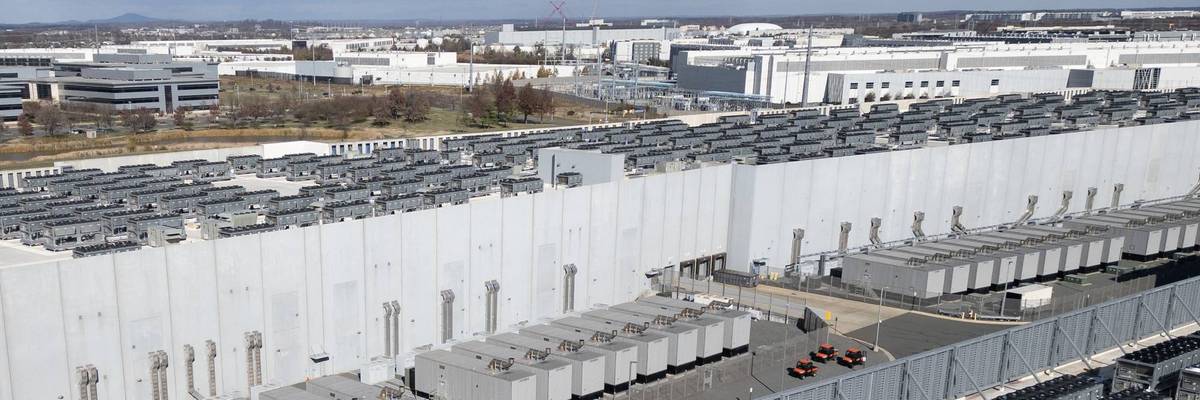

An aerial view shows cooling vent fans on the roof next to generators on 
the lower level of a Digital Realty data center in Ashburn, Virginia on November 12, 2025.
(Photo by Andrew Caballero-Reynolds / AFP via Getty Images)

Danielle Johnson
Aug 21, 2026
Common Dreams


I’ve lived in Northern Virginia my whole life, but no one told us we would soon be living alongside one of the largest concentrations of data centers in the world.

No one asked our community whether we wanted them. No one explained what they would mean for our neighborhoods, our landscape, or our monthly bills. Then, almost overnight, they were everywhere. Massive industrial buildings rose where open space once stood. The constant hum became part of daily life. And one month, our electricity bill didn’t gradually creep upward, it nearly doubled.

We were told these projects would bring jobs, innovation, and economic growth. What we weren’t told was what residents would be expected to give up in return.

Now, as I watch Maryland debate whether to accelerate data center development, I can’t help but feel like I’ve seen this story before.

As someone living with the consequences of Virginia’s choices, my advice is simple: Don’t wait until the bills arrive, the forests are gone, and the data centers are already built to ask whether they were worth it.

For years, Virginia has been held up as the nation’s data center success story. But if Maryland leaders only see Virginia’s balance sheet, they’re missing the growing backlash from the people who live here.

I have watched forests disappear, industrial buildings replace open land, electricity demand surge, and communities be transformed by sprawling server farms. Everyone I know is asking whether the promised economic benefits outweigh the environmental and financial costs.

Maryland has a choice. You can rush to replicate Virginia’s model, or you can learn from our mistakes before it’s too late.

The conversation surrounding data centers has largely centered on artificial intelligence and economic development. But too often, what gets left out are the communities expected to absorb the costs.

Supporters frequently describe data centers as major job creators, but the reality is more complicated. Construction creates temporary employment, yet once operational, many hyperscale facilities require relatively few permanent workers. Communities are often asked to trade farmland, forests, neighborhoods, and increased pressure on utilities for projects that may never deliver the long-term economic engine they were promised.

That trade-off deserves far more scrutiny than it has received.

The race to build data centers is being driven largely by the explosive growth of artificial intelligence. Every major technology company wants more computing power, faster infrastructure, and greater capacity. But history teaches us that economic booms rarely continue unchecked. America has seen speculative waves in office construction, shopping malls, and commercial real estate that far exceeded demand before markets eventually corrected.

No one can say with certainty whether today’s data center boom will follow the same path. But uncertainty itself is reason for caution, not acceleration.

Maryland should pause before repeating Virginia’s mistakes. A statewide moratorium would give policymakers time to complete a comprehensive assessment of the environmental, economic, and energy impacts of these facilities; strengthen safeguards for communities; ensure developers bear the costs of new infrastructure; and give the public a meaningful voice in decisions that will shape their neighborhoods for generations.

Virginia spent years asking how quickly it could build data centers.

Maryland has an opportunity to ask a better question: How do we embrace innovation without sacrificing the affordability, environment, and quality of life that make our communities worth living in?

As someone living with the consequences of Virginia’s choices, my advice is simple: Don’t wait until the bills arrive, the forests are gone, and the data centers are already built to ask whether they were worth it.

By then, the answer may come too late.


Our work is licensed under Creative Commons (CC BY-NC-ND 3.0). Feel free to republish and share widely.


Danielle Johnson
Danielle Johnson is a federal contractor and community advocate who lives in Woodbridge, Virginia.
Full Bio >


Trump alarms red state with power plant bombshell: 'Big deal'

Daniel Hampton
August 21, 2026 
RAW STORY


Natural gas plant. (Photo credit: tonton / Shutterstock)

The data center OpenAI is building in southern Ohio will draw its power from what would be the largest fossil-fuel power plant ever constructed in the United States, and the Trump administration is racing its environmental review to the finish.

According to Heatmap News, the federal review of the PORTS-Pike project's 9.2-gigawatt natural gas plant began July 10 and is slated to wrap by Dec. 23, roughly seven months to clear a facility bigger than five of Ohio's largest existing power plants combined. Regulators are handling it with an "environmental assessment," the lighter of the two federal review options, rather than a full environmental impact statement.

The gas plant would anchor a 10-gigawatt AI campus at the former Portsmouth Gaseous Diffusion Plant, a decommissioned uranium enrichment site on federal land in Pike County. OpenAI signed a 20-year lease for roughly 8 gigawatts last week, backed by a $105 billion guarantee from Nvidia and developed by SoftBank's SB Energy alongside the Energy Department.

OpenAI has cast the project as a rebirth for the region.

"Pike County helped power America's industrial growth in the 20th century and now, with this project, it has another opportunity to play a leading role in the next era of American industrialization," the company said.

The reaction from energy watchers was swift.

Heatmap's Jael Holzman, who broke the story, warned the scale hadn't sunk in: "y'all are not getting how big of a bfd this is yet." Her colleague Emily Pontecorvo laid out the trifecta drawing alarm: "the biggest fossil fueled power plant EVER BUILT IN THE US" getting the lighter review and clearing permitting "in just 7 months."

Energy analyst John Bistline put the size in perspective, noting that 9.2 gigawatts of new gas at one Ohio site is more generating capacity than any of 10 entire states hold — among them Montana, Idaho, Maine, Alaska and Vermont.

Longtime Ohio journalist Darrel Rowland took aim at the rushed review with a nod to the site's fraught history: "Where have southern Ohioans heard this before?"


Trump Says Better Industry Propaganda Needed to Make Americans Embrace Widely Unpopular Data Centers

“If I were the mayor of a town or the governor of a state, and I had a chance to get a big plant in, an AI plant, or a data center, I would absolutely want it,” said the billionaire president.
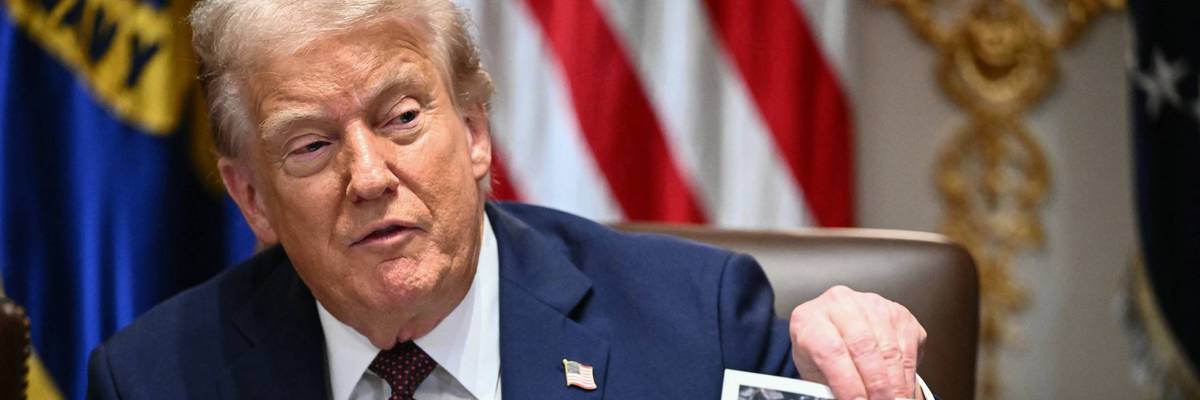


US President Donald Trump holds an image showing the size of Meta’s new data center in Washington, DC on August 26, 2025.
(Photo by Mandel Ngan/AFP via Getty Images)

Brad Reed
Aug 20, 2026
COMMON DREAMS

President Donald Trump on Wednesday insisted that Americans should welcome artificial intelligence data centers in their communities, despite polls showing widespread opposition to their construction across the US, as well as mounting evidence of their negative impacts on the environment, public health, and Americans’ utility bills.

During a White House event with cryptocurrency and technology leaders, Trump was asked what he would say to working-class voters who backed him in the 2024 election but are skeptical about the benefits of AI.

Trump said he saw no reason why there should be opposition to building data centers, which have drawn criticism for producing pollution and forcing major spikes in utility bills thanks to their massive energy needs.

“If I were the mayor of a town or the governor of a state, and I had a chance to get a big plant in, an AI plant, or a data center, I would absolutely want it,” Trump explained. “The jobs are enormous and the money paid, the taxes paid, are enormous. And if you don’t take it, you’re going to be left behind because there are plenty of places that want it.”

The president then suggested that the only reason data centers aren’t popular is due to lack of effective propaganda from the tech industry.

“Maybe it could use a little public relations help,” he said.


An internal memo written by the National Republican Senatorial Committee that leaked to Axios on Wednesday warned Silicon Valley that data centers were massively unpopular throughout the country and were putting GOP candidates at risk.

In particular, the memo singled out the US Senate race in Ohio, where former Democratic Sen. Sherrod Brown has used incumbent Republican Sen. Jon Husted’s support for data centers as a cudgel.

“If voters’ perceptions of data centers are not fixed quickly,” the memo cautioned, “the campaign against them will expand far beyond Ohio.”

The New York Times reported on Thursday that the backlash to data centers has gotten so strong that it has inspired recall campaigns against officials who approved their construction in states including Missouri, Oklahoma, and Michigan.

Sen. Bernie Sanders (I-Vt.), who has proposed a nationwide moratorium on AI data center construction, told the Times that opposition to Big Tech should be a basic litmus test for any ambitious politician.

“People are standing up and saying, ‘Sorry, we don’t want these data centers in our communities for a number of reasons,’” Sanders said. “If you can’t have the guts to stand up to some large corporation, you should not continue serving in office.”

GOP Accused of Trying to ‘Pull Wool Over the Eyes of the Public’ With Data Center Shift

“They are realizing how wildly unpopular Big AI’s agenda is with the American people.”

Texas Gov. Greg Abbott speaks during a news conference on June 8, 2023 in Austin, Texas.
(Photo by Brandon Bell/Getty Images)

Jake Johnson
Aug 20, 2026
COMMON DREAMS


Corporate-friendly Republicans who are typically hostile to regulation are attempting to reshape their image in the lead-up to the November midterms in what critics say is a cynical attempt to capitalize on mounting grassroots backlash against artificial intelligence data centers.

Semafor reported Wednesday that prominent Republicans, having “cheered the AI boom,” are now “scrambling to find a new identity as middle-ground pragmatists,” even as they receive campaign contributions from companies directly involved in or benefiting from data center construction and maintenance. The National Republican Senatorial Committee recognized in an internal memo that data centers have “become a sleeper issue for the entire election cycle.”

Semafor noted that “instead of a moratorium on building new facilities, a growing number of GOP candidates have called for ‘guardrails’ to protect skeptical communities from unchecked AI growth, as well as the rollback of industry tax breaks.”

“These Republicans’ rebrand also involves a bid for the high ground by attacking Democrats with more nuanced positions on data centers,” the outlet added.

Semafor points specifically to Texas Gov. Greg Abbott’s sudden decision in June to “audit tech companies’ use of the electric grid,” as well as his vow to work with state lawmakers to repeal the companies’ tax breaks. The Houston Chronicle reported last month that “several of the Republican governor’s most generous financial backers are increasingly investing in the boom that has voters in deep-red rural parts of the state up in arms... including ”real estate titan Ed Roski, Jr., who gave $1 million in April, and energy executive Kelcy Warren, who gave $500,000 in June.“

Abbott is facing state Rep. Gina Hinojosa (D-49) in November. In an ad debuted earlier this week, Hinojosa’s campaign said Abbott “took $20 million in campaign donations from data center executives and companies, and he gave them billions in tax breaks.”


Semafor observed Wednesday that the “Republican shift is underway in Michigan, too,” but it is “most intense in Wisconsin,” where Republican gubernatorial nominee Tom Tiffany is attempting to posture as tough on data centers despite his voting record in the US House and fundraising history.

Tiffany’s campaign has tried to label Milwaukee County Executive David Crowley, Wisconsin’s Democratic gubernatorial nominee, as “Data Center David.”

“Tiffany’s social media posts that clipped Crowley’s answers to data center questions were reshared and condemned by many progressives who had supported [democratic socialist Francesca] Hong,” Semafor reported. “That obscured what are in fact minor policy differences between the candidates: Tiffany wanted community input and for data centers to pay for their electricity, and so did Crowley. Like Texas, Wisconsin has passed bipartisan tax breaks to entice companies to do business there and were losing out on revenue when the profits blew away their projections.”

Charlie Blaettler, political director of the Guardrails Alliance—a coalition working to expose the AI industry’s growing political influence—said in a statement Wednesday that “the Republican Party is panicking because they sold out to the AI industry—a while ago—and they know it.”

“But now they are realizing how wildly unpopular Big AI’s agenda is with the American people,” said Blaettler. “The GOP and AI’s unaccountable billionaires are scrambling to backtrack and find a new way to pull the wool over the eyes of the public so they can get what they want: a Congress that will do their bidding and an AI future that benefits them, not the many.”

Leaked GOP Memo Warns Big Tech That AI Data Centers as Popular as ‘Nuclear Waste’

“If voters’ perceptions of data centers are not fixed quickly, the campaign against them will expand far beyond Ohio.”



Demonstrators wave signs during a nationwide protest against artificial intelligence data center expansion in Imperial, California on July 18, 2026.
(Photo by Sandy Huffaker/AFP via Getty Images)

Brad Reed
Aug 19, 2026
COMMON DREAMS

A leaked memo written by the National Republican Senatorial Committee is warning Silicon Valley that its artificial intelligence data firms are becoming a massive political liability.

Axios reported on Wednesday that the GOP memo centers on the US Senate race in Ohio, where former Democratic Sen. Sherrod Brown has made opposition to data centers central to his campaign against incumbent Republican Sen. Jon Husted.

The memo argues that if Brown’s campaign is successful in a state that President Donald Trump won by double digits in 2024, it will send a signal that support for data centers is a losing position across the US.

“If he loses and data centers get the blame, politicians across the country will take notice—and they will not go near the next one,” the memo says. “This has become a sleeper issue for the entire election cycle.”

The memo goes on to argue that the tech industry needs to do more to show Americans the benefits they will get from data centers, which have been criticized for raising people’s utility bills and generating large amounts of pollution.

“If voters’ perceptions of data centers are not fixed quickly,” the memo cautions, “the campaign against them will expand far beyond Ohio.”

According to Axios, AI CEOs and GOP insiders have become unnerved by internal polls showing that “data centers are as popular as spent nuclear waste, and more broadly have become a proxy for feelings about AI.”

A poll released in June by Echelon Insights found that only 27% of Americans said they would want an AI data center built in their nieghborhood, with 62% opposed. This made data centers even less popular than nuclear power plants, which 34% of Americans said they would welcome in their neighborhoods.

A separate Axios report published Wednesday described AI CEOs being in “full panic mode” over the backlash to data centers. What’s more, reported Axios, tech insiders privately acknowledge that “they can’t find a compelling message to shift opinion fast enough” ahead of the 2026 midterm elections.

In fact, noted Axios, Wisconsin Republican gubernatorial nominee Tom Tiffany has even come out against AI data center construction in his state, which the report described as “a striking crack” in President Donald Trump’s “pro-AI coalition.”

In a Wednesday social media post, pollster Adam Carlson predicted that any Big Tech public relations campaign to change Americans’ minds about data centers was likely doomed.

“Charm offensives from tech firms... would’ve been more effective if they did them proactively instead of in response to (very predictable) local backlash,” Carlson explained. “They got greedy. Now they’re trying to play catch-up and it’s probably too late. No one to blame but themselves.”


‘Hoard and Destroy’? Advocates Demand Federal Probe of Book-Burning by AI Giants

“AI companies are engineering a future where only the wealthiest incumbents can build high-quality AI models and operate as the sole holders of humanity’s written works.”


Robot competitors arrange books during the library scenario competition of the Second World Humanoid Robot Games on August 16, 2026 in Beijing, China.
(Photo by Jia Tianyong/China News Service/VCG via Getty Images)


Jake Johnson
Aug 21, 2026
COMMON DREAMS
A coalition of American civil society groups on Friday called for a federal investigation into reports that artificial intelligence giants are mass-purchasing physical books, scanning them to train their AI models, and destroying them without regard for historical artifacts or the public good.

In a letter to the Federal Trade Commission (FTC), the coalition notes that “at least one top AI company, Anthropic, is known to have acquired millions of print books in bulk, scanned them into digital form, and discarded the physical originals.” The letter notes that “this process leaves only the digitized text in the company’s proprietary database for use in training its large language models behind products such as Claude.”

The coalition, led by the Demand Progress Education Fund, pointed to an internal Anthropic memo that was made public as part of a copyright lawsuit against the company. The memo is headlined “Project Panama,” which is described as “our effort to destructively scan all the books in the world.”

“We use a ‘soft codename’ for it because we don’t want it to be known that we are working on this,” the memo states. “This document is visible to all Anthropic employees, but you should avoid talking about it in public areas, and the fact that we are working on this should not be shared with anyone outside Anthropic.”

At one point, Anthropic reportedly considered approaching US libraries such as the New York Public Library for its massive book-consumption campaign. One court document describes how an Anthropic vendor’s “hydraulic powered cutting machine” would “neatly cut” books for scanning. The scanning company would then “schedule with the recycling company to pick up the completed books,” according to the filing.

Amazon is also reportedly engaged in a large book-buying operation, under which employees “cut the bindings off in order to scan the books more quickly.”

“The AI industry is acquiring books on vast commercial scales to scan and destroy, all to keep that scanned text in a private database walled off from the world and subject to corporate censorship and manipulation.”

The new letter to the FTC observes that “proxies and intermediaries now function as sourcing partners for AI companies, offering the buyers anonymity and brokering bulk book orders—including rare, out-of-print titles with few surviving copies.” 404 Media reported last month that ISBNdb, which markets itself as “the world’s largest book database,” is offering “high-volume book acquisition services for AI companies.”

“Books published before the rise of generative AI (such as Claude, ChatGPT, and Gemini) command a premium because they are free of the AI-sourced text common in today’s writing,” the new letter adds.

The coalition argues that AI giants’ mass book buying and subsequent destruction—dubbed the “hoard and destroy” practice—is part of an effort to “build and entrench their market dominance” by “corner[ing] the essential inputs of AI development.”

“We ask the FTC to use its investigative authorities, including potentially under Section 6(b) of the FTC Act, to determine whether and to what extent this practice forecloses competing AI developers and the public from a scarce, non-reproducible input and whether it constitutes an unfair method of competition under Section 5 of the FTC Act,” the groups write.

“Through their practice of permanently destroying books en masse and thus removing those non-renewable resources from broader access, AI companies are engineering a future where only the wealthiest incumbents can build high-quality AI models and operate as the sole holders of humanity’s written works—after having destroyed the originals to get there.”

Kate Oh, special adviser to the Demand Progress Education Fund, said in a statement Friday that “the secretive and reckless way that major AI companies like Anthropic and Amazon are acting shows that there is real smoke here that the FTC needs to investigate.”

“There is credible reporting that the AI industry is acquiring books on vast commercial scales to scan and destroy, all to keep that scanned text in a private database walled off from the world and subject to corporate censorship and manipulation,” Oh added.
Trump Threatens to Sue Think Tank Over Study That Exposed Folly of His DC National Guard Deployment

“Efforts to silence independent research because its findings are unwelcome by an administration or president should alarm every American.”


A National Guard vehicle is parked near the Lincoln Memorial on August 14, 2025 in Washington, DC.
(Photo by Kevin Dietsch/Getty Images)

Brad Reed
Aug 21, 2026
COMMON DREAMS

President Donald Trump is threatening to sue a liberal think tank after it published a report last month casting doubt on the purported effectiveness of his deployment of the National Guard in Washington, DC.

The New York Times reported on Friday that Alejandro Brito, one of the president’s personal lawyers, sent a letter to the Center for American Progress (CAP) this week demanding that it retract a study it published on July 13, which concluded that there was no evidence the National Guard’s presence in the nation’s capital did anything to reduce violent crime.

Brito threatened to file a $5 billion defamation lawsuit against CAP if it did not retract the report and offer a personal apology to the president, according to the Times.

CAP president Neera Tanden said the organization was standing by its work and would not back down in the fact of legal threats from the president.

“This threatened lawsuit’s attack on facts and evidence is baseless,” said Tanden. “A fundamental protection of the First Amendment is to allow for the publication of facts and analysis that is contrary to the arguments and claims of any administration. A lawsuit is a transparent attempt to silence us.”

Tanden added that “efforts to silence independent research because its findings are unwelcome by an administration or president should alarm every American.”

CAP’s report notes that crime has been declining in major US cities across the country over the last two years, and it finds that declines in Washington, DC over that period were not significantly greater than in cities where there was no National Guard presence.

“Despite multiple tests using multiple data sources, measures, and windows of time,” the report concludes, “there is no compelling evidence that these deployments reduced homicides, violent crime, or gun violence.”

The report adds that the goal of the deployment was never about fighting crime but rather “a dangerous power grab by the Trump administration.”

CAP isn’t alone in questioning the effectiveness of Trump’s DC National Guard deployment.

Reuters on Wednesday published an investigation finding that National Guard soldiers have been mentioned in just 1.3% of cases brought before the Superior Court of the District of Columbia, which processes nearly all prosecutions in the city.

What’s more, the investigation found that National Guard soldiers were mostly deployed to wealthier neighborhoods in the city, where they responded to minor incidents.

After examining court records, Reuters investigators “could find no reference... to soldiers doing any kind of law enforcement in the neighborhoods where about 82% of the city’s 859 murders occurred over the past five years.”

Deploying the National Guard in DC is also an expensive endeavor. Sen. Elizabeth Warren (D-Mass.) earlier this month revealed that keeping soldiers deployed in the city is projected to cost taxpayers an extra $1.4 billion through the end of Trump’s term.


Trump’s National Guard in DC Costs Millions Each Day, But Hardly Ever Stops Crime

Though National Guard troops now outnumber police officers in the capital, Reuters found they’ve been involved in just over 1% of criminal cases in the city, and most of them have been for minor offenses.

LITTERING


The White House is visible as National Guard troops stand next to a military Humvee along Constitution Avenue on August 12, 2026, in Washington, DC.
(Photo by Andrew Harnik/Getty Images)


Stephen Prager
Aug 19, 2026
COMMON DREAMS

It’s been about a year since President Donald Trump began his military occupation of Washington, DC. But while costing taxpayers millions of dollars per day, a new investigation reveals that his National Guard deployments have done almost nothing to stop violent crime.

Crime in DC was already at its lowest level in decades when Trump sent in the troops last August, as was the case in many of the cities that came under unprecedented federal occupation.


Warren Decries $1.4 Billion Cost of Trump’s National Guard Deployment in DC


But while Trump claimed that these soldiers—who can only detain suspects but must call police officers to make arrests—were the only force capable of saving DC from “crime, bloodshed, bedlam, and squalor,” a Reuters investigation out Wednesday found that they’ve had a role in responding to only a tiny fraction of criminal cases.

Since their arrival last August, National Guard members have been mentioned in only about 1.3% of the criminal cases filed in the Superior Court of the District of Columbia, which handles nearly all the city’s criminal prosecutions.


And though Trump has repeatedly credited his troops with protecting residents from being murdered and mugged, charging documents show that his soldiers “mostly responded to minor incidents in neighborhoods that are wealthier, whiter, and less dangerous than the rest of the capital.”

Many of the cases where troops intervened, Reuters found, were to stop offenses like subway fare evasion and shoplifting.

Reuters said it “could find no reference in court records to soldiers doing any kind of law enforcement in the neighborhoods where about 82% of the city’s 859 murders occurred over the past five years.”

The investigation describes a pattern of soldiers simply standing around while crimes occurred and waiting for police to arrive. In one instance, police officers arrived to arrest a man stomping on a woman outside a nightclub.

According to one of the officers who responded to the scene, “There was approximately 15 National Guard members in the area on routine patrol who did not take any action.”

In another case, soldiers called emergency services after finding a man who’d been stabbed in an upscale waterfront area. But believing him to have only been intoxicated, they left him lying on the ground without performing emergency measures.

They only realized once the police arrived that he’d been “stabbed so severely his intestines were spilling out.” He died two hours later after being brought to the hospital.

The administration has portrayed the mere presence of troops as a “deterrent” against crime. But violent crime in the city has actually risen slightly in the year since they arrived. Data from the Metropolitan Police Department (MPD) shows 1,712 violent crimes in 2026 versus 1,645 at the same point in 2025—a 4% increase.

Meanwhile, the grassroots group Free DC has been documenting hostile encounters between guard troops and city residents. The group has cataloged several instances in which troops have detained people, including those protesting their presence, with what it says was “absolutely no cause.”

“They harass people a lot more than they are actually doing police work,” said the Rev. Norman Nixon, the pastor of the Union Temple Baptist Church, who spoke with Reuters.


DC now has over 4,500 troops patrolling the streets. Despite lacking the ability to perform many ordinary police functions, they now outnumber the city’s police force, and maintaining the National Guard’s presence is costing more each day.

According to a report from the nonpartisan Niskanen Center, a deployed Guard member costs around $607 per day, compared with about $384 for an MPD officer. The Trump administration has estimated that keeping the Guard deployed until the end of Trump’s term in 2029 will cost about $1.4 billion.

The troops also played a role in the administration’s campaign to remove homeless people from DC and help federal agents dismantle encampments last summer as part of what Trump described as a war against “vagrancy.”

Last year, researcher Hanna Homestead of the National Priorities Project estimated that the deployments, which then cost an estimated $1.1 million per day, was costing four times as much as it would to provide an affordable housing unit for every homeless person in the city, which was pegged at about $257,000 per day.

The Defense Department has since estimated that the cost of the deployments was nearly $1.7 million per day. But that was before the number of troops doubled.

Applying Homestead’s methodology today would mean that deploying the National Guard is now nearly 9-10 times as costly as providing housing for the Washington, DC’s homeless population, all while providing little apparent benefit to public safety.

“I can think of many other ways that federal resources could have been invested to make the nation’s capital safer,” said Clinique Chapman, the CEO of the DC Justice Lab, in a letter to the editor of the Washington Post earlier this summer.

“For what it costs to deploy the Guard in [the] US for just six days,” Chapman said, taxpayers could have instead paid for the annual cost of running trauma recovery centers in each ward to help crime survivors heal and connect them to treatment and support.

For five days of the expenditure, the US could fund a mental health crisis response program like Denver's, which responds to hundreds of calls for service each month and reduces arrests, for one year.

For 41 days of what the National Guard deployment costs, the District could fund a year of living-wage jobs and pay the rent on a one-bedroom unit for every US resident returning home from the Bureau of Prisons.

ACLU-DC executive director Monica Hopkins emphasized that the point of the deployments was never to improve the lives of DC residents or enhance public safety, but a “political prop.”

“The Pentagon’s acknowledgment that the deployment will continue until 2029 confirms what we’ve said all along—there is no real emergency here,” she said in a statement to mark the one-year anniversary of the deployment. “As was true one year ago, armed military troops are not needed and are not wanted on our streets.”

“Because the nation’s capital is not legally recognized as a state, extremist politicians have used DC as a testing ground for anti-democratic orders,” she added. “We cannot let military deployment on the streets of the United States become normal or acceptable as a part of daily life here or anywhere else.”

‘Cruel and Shameful’: ICE Begins Mass Deportation of Haitians After Trump TPS Revocation

One Democratic congresswoman denounced the expulsions, which followed the lifting of temporary protected status for 350,000 Haitians, as “a humanitarian betrayal that will stain America for generations.”


People displaced from their homes due to gang violence are seen sheltering at a temporary camp in Port-au-Prince, Haiti, on August 17, 2026.
(Photo by Clarens Siffroy/AFP via Getty Images)

Brett Wilkins
Aug 21, 2026
COMMON DREAMS

A US Immigration and Customs Enforcement charter flight on Thursday deported 161 Haitians following the Trump administration’s cancellation of temporary protected status for 350,000 people from the Caribbean nation ravaged by deadly gang violence and a wider humanitarian crisis.

The first of what the administration says will be a wave of mass deportations to Haiti followed a June decision by the right-wing US Supreme Court affirming the Department of Homeland Security’s revocation of temporary protected status for Haitians and 6,000 Syrians, many of whom have lived in the United States for years under TPS due to unsafe conditions in their countries.


‘Bigotry’ as Government Policy: Trump Orders ICE to Ramp Up Arrests of Haitians

However, Haiti’s National Office of Migration said that none of those aboard Thursday’s flight were former TPS beneficiaries; rather, they were “people facing removal proceedings after entering the US without authorization, people who had served prison sentences, and some individuals born outside Haiti to at least one Haitian parent,” according to The Haitian Times.

Late last month, President Donald Trump ordered ICE to ramp up arrests of Haitians, who have been the target of racist verbal attacks by the president and other Republicans. Vice President JD Vance, infamously—and baselessly—claimed during Trump’s 2024 presidential campaign that the migrants were killing and eating people’s pets in Springfield, Ohio.

Beloved Springfield pastor Gilbert Joubert Adrien was arrested along with another Haitian by ICE agents on Thursday morning.

Carl Ruby, also a local pastor and founder of immigrant advocacy group G92, told the Springfield News-Sun on Friday that Adrien’s arrest inflicted a “profound wound” to the “embattled” Haitian community.

“Pastor Joubert Adrien left Haiti because his life was in danger, served Christ and his congregation faithfully, and his arrest shows how far ICE will stoop to incite panic among people who came here peacefully, came here legally, and offered nothing but good to our community,” Ruby said.

Thursday’s deportations came despite continuing warnings about Haiti’s deteriorating security conditions. Gangs control an estimated 70% of the capital city of Port-au-Prince and major transportation routes, while roughly 1.5 million of the Caribbean nation’s approximately 12 million people have been displaced by violence, according to the United Nations International Organization for Migration.

The UN says more than 3,100 Haitians were killed and nearly 1,200 others wounded between January and June of this year. The violence isn’t confined to Port-au-Prince; for example, at least 70 people were killed and 30 injured in a March gang massacre in the Artibonite region.

Krish O’Mara Vignarajah, president and CEO of the immigration nonprofit Global Refuge, said earlier this month that it is a “stunning contradiction” that a government that advises Americans against traveling to Haiti due to the dangerous security situation there would “compel hundreds of thousands of Haitians into such dire circumstances.”

The Trump administration policy, O’Mara Vignarajah added, “is an unconscionable abdication of our moral responsibility.”

Democratic US lawmakers also condemned the deportations.

Congresswoman Ayanna Pressley (D-Mass.)—who earlier this year led the Republican-controlled House of Representatives’ remarkable passage of a bill extending TPS for Haiti for three years—called the Trump administration’s policy “cruel and shameful.”

“We should not deport ANYONE into an ongoing humanitarian crisis,” Pressley added. “The Senate must come back into session NOW and pass our bill to extend TPS for Haiti before more people die.”


Sen. Elizabeth Warren (D-Mass.) said Wednesday on social media: “Haitian families on TPS are part of the fabric of our community and our economy. They’re neighbors, workers, and friends who have been in the US legally to stay safe from horrific violence in Haiti. It is cruel for Donald Trump to end TPS protections for them now.”

Congressman Greg Landsman (R-Ohio) also took to social media, writing Thursday that “our Haitian neighbors deserve dignity and respect... not this dangerous deportation effort from the Trump administration.”

Rep. Yvette Clarke (D-NY) asserted Friday that “our Haitian neighbors asked only for safety from the gang violence, rampant sexual exploitation, and vicious anarchy that has totally overtaken their nation.”

“Donald Trump saw their suffering, and asked only how he could make it worse,” she added. “His act to force thousands of men, women, and children back into the same hell they barely escaped with their lives is a humanitarian betrayal that will stain America for generations.”

Thursday’s ICE flight landed in the relatively peaceful northern city of Cap-Haitien, where The Associated Press interviewed deportees including Jean Diane Louis, who left Haiti when he was 5 years old.

“ICE came and took me without questioning me,” Louis said. “They just sent me here.”

Back in Ohio, Viles Dorsainvil, director of the Haitian Support Center in Springfield, told the News-Sun that “behind every number is a human being.”

“Behind every detention is a family,” Dorsainvil added. “Behind every deportation is a mother, a father, a husband, a wife, a child, a friend, a church member, a coworker, or a neighbor whose life may be changed forever.”