Sunday, October 11, 2026

GOP lawmakers reject U.S.-Russia diesel deal, Trump’s Zelensky comments

Mira Bhakta
Sat, October 10, 2026 
THE HILL

Several Republicans voiced objections to the Trump administration Russian diesel deal and President Trump's suggestion that Ukraine needed a new leader.

When asked about the deal, Sen. John Kennedy (R-La.) said on Friday he supported the president's decision but he doesn't "support his decision to import it from Putin. Vladimir Putin is a butcher. He's a butcher of his own people. And he's a butcher of the good people of Ukraine."

"He [Putin] will never be our friend. So the president is doing everything he can to get diesel prices down. But you know what's going to bring diesel prices down? An end to the war in Iran," he continued.

A reporter pressed former Rep. Mike Rogers (R-Mich.), who appeared alongside Kennedy while campaigning for Michigan's open Senate seat, on whether he agreed with the president's decision.

"No, not in importing it from Russia. I've actually called for a temporary export ban just to try to give some relief while farmers are out harvesting," Rogers stated.

The deal would permit Russia to supply 300,000 tons of diesel to the U.S. and the global marketplace amid growing pressure to address concerns over mounting energy costs due to global fuel shortages during the U.S.'s military operations against Iran and the Russia-Ukraine war.

Rep. Brian Fitzpatrick (R-Pa.) unveiled a bipartisan bill on Saturday that he says would block Trump from lifting sanctions, called the Ronald Reagan Peace Through Strength Act. Rep. Don Bacon (R-Neb.) already signed on as a co-sponsor though it is unclear who the Democratic sponsor on the bill is.

"[Ukrainian] President Volodymyr Zelensky has the overwhelming support of the United States Congress, he has the overwhelming support of the American people, and he has the overwhelming support of the Ukrainian people," Fitzpatrick wrote on social media.

Rep. Michael McCaul (R-Texas), former Chair of the House Foreign Affairs Committee, stated he was "concerned the lifting of sanctions on Russian oil will only fund the Kremlin's war machine—emboldening more violence and destruction, as we have seen in recent days."

He added that Congress already passed the Lindsey O. Graham Sanctioning Russia and Iran Act which "gave the president significant authorities and leverage against China and Russia to bring Putin's war to an end with a negotiated settlement."

In September, Trump signed the act, calling for the president to impose tariffs of up to 100 percent on the top five purchasers of Russian energy or on countries helping the Kremlin evade sanctions.

Sen. Lisa Murkowski (R-Alaska) similarly expressed on social platform X that Trump "should be using those authorities instead of allowing Russia to export diesel, rake in revenues, and continue its catastrophic war in Ukraine."

"We can discuss Russia's return to global energy markets once the war is over, but in the meantime, we need to cut off everything fueling it," she said.

Copyright 2026 Nexstar Media, Inc. All rights reserved.


Ukraine strikes major Russian oil hub hours after Trump's deal with Putin

James Bickerton
Sat, October 10, 2026 
NEWSWEEK


The loading terminal of Russia's Novoshakhtinsk oil refinery caught fire overnight following reports of a Ukrainian drone strike just hours after President Trump announced a deal to supply millions of tons of Russian diesel fuel to the global market.

The incident suggests Kyiv will continue targeting Russian energy infrastructure despite pressure from the United States, with the Trump administration hoping energy costs will come down ahead of the November midterm elections.

Newsweek contacted the Russian and Ukrainian foreign ministries for comment on Saturday by email.
The Fire

Overnight a large blaze broke out at the Novoshakhtinsk oil loading terminal in Rostov-on-Don with footage shared on social media showing intense smoke and flames emanating from the facility. The videos have not been independently authenticated by Newsweek.

Independent Russian media outlet ASTRA confirmed the video showed the Yug Rusi oil-loading terminal, which handles production from the nearby Novoshakhtinsk Oil Refinery.

According to Exilenova+, a Telegram monitoring channel following the Ukrainian conflict, the fire followed a large Ukrainian drone strike on the region.

Russian state news agency RIA Novosti, citing Rostov-on-Don governor Yury Slyusar, said over 100 drones had been shot down by air defenses in the region overnight but didn't directly address the oil loading terminal fire.

On X, risk analyst Brett Erickson shared footage purported to be from the oil loading terminal fire, adding: "BREAKING: Just mere hours after President Trump announced the unsanctioning of Russian diesel, Ukraine responded by striking the Novoshakhtinsk oil terminal inside of Russia. It seems Ukraine is back to imposing their own sanctions on Putin."


Video was also shared by UNITED24 Media, an X account with 110,000 followers that reports on the Ukraine war, which said: "More than 100 drones were reportedly shot down over Russia's Rostov region, according to local authorities.

"Drones reportedly targeted an oil loading terminal operated by the Novoshakhtinsk Oil Products Plant."

Trump's Deal

President Trump on Friday announced Russia would supply additional diesel fuel to U.S. and world markets following what he called a "highly successful discussion" with the country's President Vladimir Putin.

In a post on his Truth Social website Trump wrote: "It was agreed that Russia will immediately supply over 300,000 Tons of Diesel Fuel to the American and Global Marketplace, another 500,000 Tons during the month of November, and 1,000,000 Tons immediately thereafter."

The president said Russia had agreed to supply another three million tons of diesel fuel in the long-term adding: "Diesel Prices for Americans and, indeed, the World, will be COMING DOWN, IN RECORD NUMBERS, AND FAST!"

Speaking to Newsweek a White House official confirmed the Treasury Department had issued Russia-related General License 135, allowing the diesel fuel to enter the United States.


Stock photograph showing smoke rising from the area of the Russian oil producer Gazprom Neft's Moscow oil refinery as seen from Dzerzhinsky in the Moscow region on September 20, 2026. (Photo by AFP via Getty Images)More

However, the agreement sparked an angry response from Ukrainian President Volodymr Zelensky who said the deal would be used by Moscow to fund "further terror."

Zelensky added: "We count on America's fair support for our defence of life, for our defence of people in Ukraine, and on the United States having a correspondingly strong conversation with Russia. A strong one, not a weak one."

European Union foreign affairs head Kaja Kallas also criticized the move which she said "provides Moscow with more revenues to wage war."


Speaking to the BBC Tim Armitage, an investment strategist who works for Quilter Cheviot, said the amount of diesel fuel Russia had agreed to release was "relatively small" adding: "So it won't make a material difference to pump prices in the U.S."

Diesel fuel prices increased by 70 percent in the United States following President Trump's decision to launch military action against Iran in February according to Reuters. This has heightened inflation ahead of the midterm elections with polling showing most Americans don't approve of Trump's handling of the economy.
Ukraine's Energy Campaign

Over recent months Ukraine has launched an intense drone campaign targeting Russian energy infrastructure including oil refineries, export terminals and fuel depots.

According to the International Energy Agency (IEA) in June Russian refinery output fell to its lowest level in 30 years due to strikes by August only five of Russia's major refineries had escaped damage from Ukrainian drones.

The IEA said the increased strikes were the result of "dramatic expansion of Ukraine's technological and military capabilities" adding that during the first six months of 2026 a Russian refinery was hit once every three days on average.

Ukraine's oil facility strikes have led to fuel shortages in some parts of Russia with long lines forming for what is available.

However, the move has angered Trump who in September said Zelensky "has to stop knocking out diesel fuel in Russia" as this was "causing a shortage of diesel fuel."

According to Axios the Trump administration has made multiple requests to Ukraine to stop striking Russian energy facilities but this has been ignored by Kyiv. The outlet said Ukraine offered to halt attacks in exchange for Russia ending its attacks on Ukrainian power plants but there's no indication Moscow will agree to this.
Russian Strikes

Russia has launched a number of devastating missile and drone strikes on Ukraine over the past few weeks causing dozens of fatalities.

On Sunday Ukrainian authorities said 17 people, including three children, were killed by a Russia attack in the city of Zaporizhzhia.

A series of Russian missile and drone attacks on Ukrainian cities, including Kyiv, in the early hours of October 7 killed 25 civilians, of whom five were children, according to Kyiv.

Ukraine has accused Russia of deliberately hitting civilian targets, though this has been denied by Moscow.

Contact Newsweek editor on this story: Edward Pearcey.


Trump Says Ukraine Needs New Leader Amid Dispute Over Russia Diesel Deal

NEWSWEEK
OCT 10, 2026
By Hollie Silverman
News Editor
Newsweek is a Trust Project member


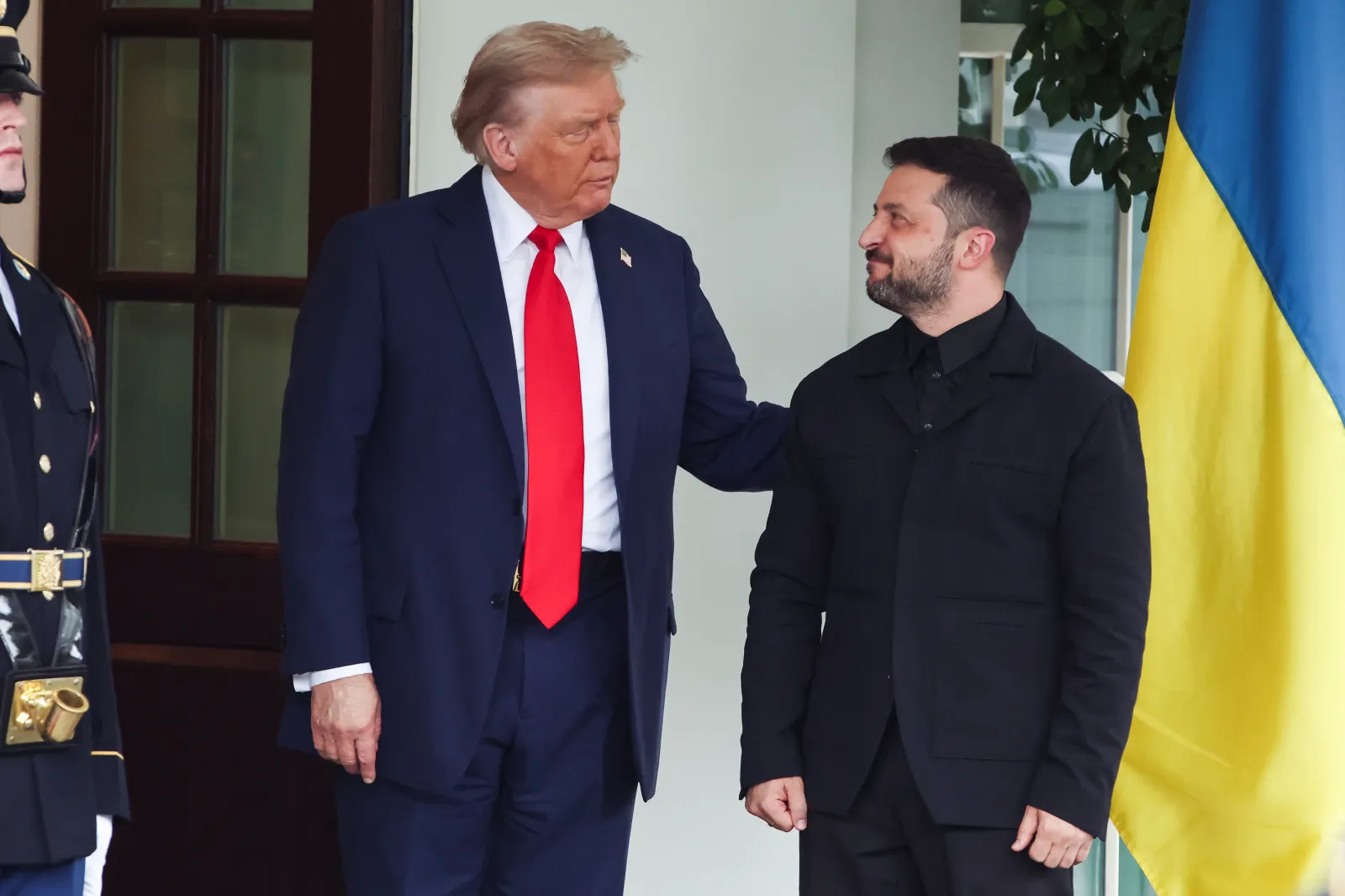
President Donald Trump called for Ukrainian President Volodymyr Zelensky to be replaced Saturday, accusing the Ukrainian leader of repeatedly rejecting opportunities to end the war with Russia and defying his warning against striking Russian oil infrastructure.

“I think it’s time for Ukraine to get a new president,” Trump told reporters in a gaggle outside the White House. “I suggest they get a new leader who can make a deal, because he could have made many deals, and for some reason he never does.”

The comments appeared to be Trump's strongest call yet for Zelensky's replacement. However, Zelensky cannot be legally removed through regular elections while the country remains under martial law.

The criticism came following a Ukrainian strike on a major Russian oil hub hours after Trump reached an agreement with Russian President Vladimir Putin to reduce global diesel prices, escalating tensions over Kyiv’s campaign against the infrastructure supporting Moscow’s energy industry.

Some Republican lawmakers, including Representatives Don Bacon and Michael McCaul, have warned that Trump’s diesel deal with Putin could bolster Russia’s war effort.

The strike also threatened to deepen the divide between Trump and Zelensky after the U.S. president said he had directly warned the Ukrainian leader not to attack Russian refineries.

Trump’s demand for new leadership in Ukraine represents another sharp deterioration in his relationship with Zelensky and aligns with his longstanding claim that the Ukrainian president has obstructed efforts to end the war that began in February 2022.

On Saturday, Trump also said that he had given Zelensky broad latitude to attack other Russian targets but explicitly warned him not to strike refineries because of the potential repercussions for global diesel supplies.

“We said you can do whatever you want to Russia. Don’t hit these refineries because that’s a world problem,” Trump said. “Russia supplies a large portion of the diesel fuel throughout the world.”

The president argued that attacks on Russian refining capacity could harm American farmers and ranchers along with consumers globally.

“And what does he do? He goes and hits the diesel fuel,” Trump said. “He can do whatever he wants, but he can’t do that because we have a world problem, and the problem is caused by the lack of refineries for diesel fuel.”

Newsweek reached out to the White House and Zelensky's office on Saturday for comments.


U.S. President Donald Trump welcomes Ukrainian President Volodymyr Zelensky to the West Wing of the White House on August 18, 2025, in Washington, D.C...Read More

Trump Says Ukraine Needs a New President

Trump blamed Zelensky for failing to reach an agreement with Putin, saying the Ukrainian leader had passed up multiple opportunities to settle the conflict.

“Zelensky could have settled this war many times, many, many times, and he chooses not to,” Trump said. “Very difficult. It’s a war that should have never been started.”

Trump also repeated his claim that Russia’s invasion would not have occurred had he been president when the war began, while blaming what he described as incompetence for the conflict.

“If I were president, you wouldn’t have ever had that war,” Trump said. “That war would have never started.”


This is not the first time there has been tension between the White House and Zelensky.

In February 2025, Trump and Vice President JD Vance publicly clashed with the Ukrainian president during an Oval Office meeting. During that meeting, Trump accused Zelensky of being disrespectful and warned that he was “gambling with World War III.” The Ukrainian delegation left without signing a planned minerals agreement, and a joint news conference was canceled.

Days later, Trump said Zelensky “doesn’t want to make a deal” and suggested that a leader who refused an agreement “won’t be around very long.”

The relationship later appeared to improve. During an August 2025 meeting involving Zelensky and European leaders, Trump pushed for a three-way meeting with Zelensky and Putin. Zelensky described that discussion as possibly his “best” with Trump.

The two leaders met again at Mar-a-Lago in December 2025, when both said they had moved “a lot closer” to a resolution of the war.
Trump and Putin Make Oil Deal

On Friday, Trump announced he had reached a diesel agreement with Putin intended to bring down fuel prices.

Hours later, Ukraine struck a major Russian oil hub. The attack appeared to defy Trump’s warning to leave Russian refineries alone, although the available reporting did not establish whether Kyiv had formally agreed to the terms discussed by Trump and Putin.


Trump said Saturday that he had personally addressed refinery strikes with Zelensky.

“I said to him, ‘Do what you want. Don’t hit refineries,’” Trump said. “And he went out, and he hit.”

The Ukrainian government has maintained that Russian energy infrastructure is a legitimate target because oil revenue and fuel supplies support Moscow’s war effort.

The Associated Press previously reported said Kyiv had intensified its long-range campaign against Russian oil facilities as part of an effort to take the war into Russia and pressure Putin.


“He’s not going to affect our farmers, and he’s not going to affect our ranchers, and he’s not going to affect the rest of the world,” Trump said about Zelensky on Saturday. “He’s better damn well stop.”

Seton Hall University professor Margarita Balmaceda, an expert in energy economy told Newsweek, that the deal appears to benefit Russia more than the U.S.

"As I see it, this deal has the potential to do much to help Russia—and to help Russia pursue its war against Ukraine—but not so much to help ease the diesel and gasoline crunch, the causes of which lie largely in the continued tensions around the Strait of Hormuz [in the Iran war]," she said in a statement emailed to Newsweek Saturday.

She added: "It also reminds me of long-standing Russian tactics of gaining an upper hand over other states through 'low price' sales, what I have called a 'natural gas Trojan Horse,' and in this case, a 'diesel Trojan horse.' Moreover, Russia's ability to deliver on this deal is called into question by the continued damage to Russian refineries by Ukrainian drones."

Mike Pence Condemns Trump’s Russia Deal


Former Vice President Mike Pence, who served in the first Trump administration, sharply criticized Trump’s decision to ease sanctions on Russian fuel, arguing that the move could strengthen Putin as Moscow continues its war against Ukraine.

“America should not be throwing a lifeline to Putin’s war machine,” Pence wrote in the statement on X. “Now is the time to stand strong against Russian aggression as we did during the first Trump administration.”

He also invoked the late Senator Graham, a staunch supporter of Ukraine, calling the decision “a betrayal of the legacy and leadership” of the senator and urging Trump to reverse course.

“Putin doesn’t want peace. Putin wants Ukraine,” Pence said, before calling on the administration to “rescind this deal immediately” and impose tougher penalties on countries purchasing Russian energy.

Trump and Putin’s Relationship

Trump’s relationship with Putin has faced scrutiny for years, particularly over Russia’s alleged interference in the 2016 U.S. election and Trump’s repeated efforts to improve relations with Moscow.

Trump has repeatedly presented his personal relationship with Putin as an asset in negotiations, even as the Russian leader has continued the war and resisted efforts to secure a lasting ceasefire.

At their 2018 summit in Helsinki, Trump appeared to give weight to Putin’s denial of election interference rather than unequivocally backing U.S. intelligence agencies. The AP described the exchange as the summit’s “defining moment.”

Following a two-hour phone call in May 2025, Trump said he wanted to meet Putin in person as soon as possible. The two discussed peace negotiations, U.S.-Russian trade and even first lady Melania Trump, whom Putin reportedly complimented during the call.

Trump later welcomed Putin to Alaska for an August 2025 summit. Although the meeting ended without a ceasefire, Trump rated it “10 out of 10” because he and Putin had gotten along well.

He also said the leaders had “largely agreed” on possible territorial exchanges involving Ukrainian land. Zelensky was not invited to the summit.

Afterward, Trump said it was “really up to President Zelensky to get it done,” shifting the burden of securing an agreement toward Ukraine despite Russia having launched the full-scale invasion in February 2022.

Trump has continued engaging with both sides, but his Saturday remarks again placed responsibility for the war’s continuation on Zelensky.
What Happens Next

Trump did not specify how he believed Ukraine should replace Zelensky, whose political future is a matter for Ukraine’s constitutional and electoral processes.

His comments are likely to intensify questions about Washington’s position toward Kyiv and whether future U.S. support could be tied to halting Ukrainian attacks on Russian energy infrastructure.

The immediate durability and precise scope of the reported diesel agreement with Putin also remain unclear.

Newsweek’s reporters and editors used Martyn, our AI assistant, to produce this story. Learn more about Martyn here. Contact Newsweek editors for this story: Steve Mollman and Anthony Murray.


Trump announces Russia will release 2.2 million barrels of diesel 'immediately,' with more to follow


Molly Moorhead
Fri, October 9, 2026 


President Trump announced on Friday that Russia will "immediately" release hundreds of thousands of tons of diesel into global markets, in an effort to combat spiraling prices around the globe.

In a social media post, Trump said he'd struck a deal with Russian President Vladimir Putin for a quick release of 300,000 tons (about 2.2 million barrels), followed by another 500,000 in November and 1 million tons "immediately thereafter." That comes out to about 13.5 million barrels.

"Between our TOTAL CONTROL of the Strait of Hormuz, and this great announcement on Russian Energy, Diesel Prices for Americans and, indeed, the World, will be COMING DOWN, IN RECORD NUMBERS, AND FAST!" Trump wrote on Truth Social.

Diesel prices have soared in recent weeks, averaging $6.28 per gallon on Friday, according to AAA. The administration has pulled other levers in an attempt to reverse the rise, with just weeks to go before the midterm elections, in which cost-of-living and economic issues are at the forefront of voters' minds.

Rob Thummel, senior portfolio manager at Tortoise Capital, told Yahoo Finance on Friday that the release of Russian oil onto global markets should bring some short-term price relief but is not a long-term fix.

"This is not going to dramatically change the price of diesel, but I do think it will push the price of diesel down, you know, over the next at least few weeks," Thummel said.

The initial 2.2 million barrels is less diesel than the US uses for transportation in a single day.


After initially floating a domestic ban on diesel exports, Trump backed off that notion and later joined a global agreement by G7 nations to release up to 100 million barrels of emergency oil and diesel over the next four months.

He also relaxed restrictions on red-dyed diesel, an untaxed fuel that is used primarily in agriculture. Experts say that move is likely to bring some relief to farmers but may not help America's truckers.

To enable the deal with Moscow, the Treasury Department relaxed sanctions on Russian energy, allowing it to be imported into the US. A document posted to Treasury's website eases the restrictions on Russian diesel through April 7, 2027.

Patrick De Haan, GasBuddy head of petroleum analysis, posted on X that he's skeptical about Russia's ability to deliver that much supply.

"It may be difficult to achieve. The psychological impact may reduce prices temporarily but it'll take more time to determine if Russia has such ability," he wrote. "Some impact short term, perhaps 10-20c/gal."

 ‘Lipstick on a pig’: Trump’s red-dyed diesel plan is more midterms appeal than gas price solution, experts say—and even truckers are calling his bluff


Analysts and trucking industry groups have warned the White House’s tax deferral on red-dyed diesel will do little to combat high fuel costs. · Fortune · Zeng Hui—Xinhua/Getty Images

Sasha Rogelberg
Thu, October 8, 2026 
FORTUNE

Diesel fuel prices are hovering at record highs above $6 per gallon amid the ongoing Iran war, but both energy analysts and trucking industry groups say the Trump administration's new strategy is less a viable solution—and more of an act of political posturing.

President Donald Trump signed an executive order this week deferring taxes on the use of red-dyed diesel, a type of fuel typically only used by farmers and truckers. Because this type of fuel is exempt from highway fuel taxes, it is illegal to use on public roads. The red dye also allows a road inspector to detect whether a trucker is evading taxes by using the fuel on highways.

The tax deferral, which would theoretically increase the supply of fuel truckers had access to by temporarily relieving the tax burden of 24.4 cents per gallon, is in place through the end of the year.

Rather than rejoice at the prospect of more fuel with fewer strings attached, experts and stakeholders don't see many advantages to the change. Instead, they contend, it's a way for the Trump administration to try to save face as approval ratings continue to sink. A Reuters/Ipsos poll published this week revealed a 32% approval rating for the president, with Americans citing cost of living as their top concern.

Trump has floated a suspension of the federal gas tax ahead of the midterm elections, though the move would require congressional approval, and it has drawn widespread criticism over concerns of it creating an additional debt burden, as the tax revenue would have to come from elsewhere in the federal budget. Patrick De Haan, head of petroleum analysis at GasBuddy, sees the red-dyed diesel tax deferral as a way for the White House to bypass Congress while appearing to the public as if it is addressing concerns over rocketing fuel costs.

"This dyed diesel waiver—it doesn't add supply globally. It doesn't improve the reasons that have led to high prices," De Haan told Fortune. "It would be more akin to lipstick on a pig."

White House spokesperson Taylor Rogers said in a statement to Fortune the executive action "will quickly cut diesel costs and put money directly back into the pockets of American truckers," and save them more than $100 per fuel refill.
The ramifications of a red-dyed diesel tax deferral

Chief among the concerns from industry stakeholders is that a tax deferral is not the same as a tax break, likely leaving truckers or drivers to still have to pay for the use of red-dyed diesel down the line.

"We do not expect most reputable diesel retailers and fuel marketers to do this," the Society of Independent Gasoline Marketers of America and the National Association of Truck Stop Owners said in a joint statement to their members. "First, the tax is still owed, so there's limited upside."

David Russell, global head of market strategy at TradeStation Group, explained that deferrals are leaving truckers on edge because of the possibility they will still have to pay the taxes, just down the line. Trump has asked the Treasury to look for ways to eliminate the deferral, but the agency has not provided any guidance.

"You have an unusual situation where they're basically saying, 'We're going to try to not enforce a tax for a period of time, and we're going to hope that Congress later blesses that action,'" Russell told Fortune. "And if not, then we might be on the hook, or we might create a situation where gas stations need to pay that tax back to the government later.' So it creates a lot of uncertainty."

Even without the potential tax concerns, red-dyed diesel makes up only a fraction of the total fuel—about 30%—used by commercial vehicles, De Haan argued. Red-dyed diesel is typically only used for specific contexts like farming, and isn't widely available at many truck stops. The White House said more than 4,000 retailers in the U.S. distribute dyed diesel.

"It's rarely a truck stop fuel," he said. "Even if you wanted to find this, it may be kind of like a diamond in the rough to find."

Solving the U.S. fuel supply problems

Analysts agreed that solving the U.S.'s fuel shortage would require larger geopolitical stabilization, such as the ending of the wars in Iran and Ukraine. Russell said that if the worst of the conflict in the Middle East were over, bottlenecks could ease—and combined with the few disruptions to the U.S.'s domestic oil production as a result of a mellow hurricane season so far, that could mean diesel prices could actually ease on their own.

"The real solution to this situation is ultimately the supply and demand in the market," Russell said. "It would not be because of this measure with red diesel. It would be a result of the improving situation and normal seasonal dynamics."

De Haan, however, fears a potential future spike in gas prices if Ukraine repeats its attack on Russian oil refineries—which is what Trump has attributed rising gas prices to—and suggested the best bet to increase global oil supply is for the president to keep his word to end the war in Ukraine. Otherwise, the red-dyed diesel tax deferral would have limited impact because actual fuel supply would not increase.

"Aside from solving the underlying geopolitical issues, I don't know that there's a great, quick win here," De Haan said. "The president is scrambling ahead of the midterms to do something, but I just don't know that this is really a needle mover in my mind."

This story was originally featured on Fortune.com

 US diesel prices remain high despite Trump's moves to boost supplies


By Jarrett Renshaw and Nicole Jao
Fri, October 9, 2026 

WASHINGTON/NEW YORK, Oct 9 (Reuters) - US diesel prices remain at near-record highs, up 70% since the US-Israeli war on Iran began despite two recent moves by President Donald Trump to boost supplies: pressuring allies to release emergency reserves and ‌expanding access to tax-exempt red-dyed diesel.

The wars in Iran and Ukraine have triggered a severe global fuel supply crunch, pushing the average ‌US diesel price to $6.28 a gallon on Friday, according to motorist group AAA.

"Aside from a recession that hammers consumption, the only thing that can prevent oil prices from rising further and ​put them on a sharp downward trajectory is a durable end to conflicts in the Arabian Gulf and between Russia and Ukraine," said Bob McNally, president of Rapidan Energy Group. "Otherwise, policy options range from marginal to counterproductive."

High fuel prices have made it harder for Trump and his Republican Party to defend narrow congressional majorities in the November 3 midterm elections. The cost of living is the top item cited by voters in a Reuters/Ipsos poll, and high diesel prices put particular ‌pressure on traditional Republican constituencies: farmers, truckers and rural ⁠voters.

Trump's approval rating is at a career-low 32%, according to the poll.


The administration has touted a G7 agreement to release 100 million barrels of oil and petroleum products as a major step to help ease prices, but those barrels ⁠appear to largely cover what remains of a March emergency release by International Energy Agency members, rather than new supply.

A White House official disputed that characterization, saying the earlier commitments were not specifically for refined products. The administration negotiated for the previously committed barrels to be front-loaded with diesel and released on a tight timeline beginning ​immediately, ​the official said.

The White House said Trump was focused on easing temporary disruptions while pursuing ​longer-term energy policies.

RED-DYED DIESEL

The administration's other major initiative, an executive ‌order allowing red-dyed diesel on public roads through year-end, has drawn limited industry uptake. The fuel is chemically identical to what trucks normally burn but is tinted to show it is exempt from the 24.4-cent-per-gallon federal highway tax.


The order defers the federal tax and waives penalties for burning off-road fuel on highways. But major retailers and marketers remain wary of selling it because of unclear tax liabilities, logistical hurdles and the risk of fines when trucks cross state lines.

The tax savings are relatively small with diesel prices above $6 a gallon.

David Fialkov, who lobbies on behalf of NATSO, a trade group for truck stops ‌and travel centers, said the White House appeared to be encouraging the supply chain to ​sell dyed fuel through channels not traditionally used for highway diesel, but said that most ​reputable retailers and marketers were unlikely to do so.

John Tirado, president ​of New Jersey-based commercial fuel supplier Summa Energy, called the red-dyed diesel plan "a Band-Aid on a much bigger problem."

The White ‌House said more than 4,000 retailers distribute dyed diesel. It ​said Treasury Department guidance will clarify the ​rules, allowing drivers to use it without federal tax or penalty. It said the savings should outweigh any detour costs for truckers seeking the fuel.

"The fundamental problem facing the US is not taxation but an exceptionally tight global market for refined products," said Caspian Conran, lead economist ​at Baringa, citing disruptions to energy flows from the ‌Middle East and reduced refining output elsewhere.

He described the measures as short-term steps ahead of the election that could provide "probably a few ​weeks of relief," rather than a durable solution.

(Reporting By Jarrett Renshaw in Washington, Additional reporting by Nicole Jao in New York ​and Timothy Gardner in Washington; Editing by Nathan Crooks, David Gregorio, Rod Nickel)
Trump slashes tariffs to flood U.S. with 661 million pounds of foreign beef — Nebraska ranchers push back


Avril Ayers
Fri, October 9, 2026 
MONEYWISE

In March 2026, President Donald Trump touted the value of American beef, saying he wanted to make it easier for Americans to buy U.S.-made beef. But in recent months, his administration has clashed with ranches and farms extensively.

Beef prices in the U.S. have skyrocketed from an average of $4.47 per pound in August 2021 to $6.92 in August 2026.

Dave Ramsey warns nearly 50% of Americans are making 1 big Social Security mistake. Here's what it is and 3 simple steps to fix it ASAP

The Trump administration has responded by drastically cutting tariffs on imported beef, allowing 300,000 metric tons — or 661 million pounds — into the U.S. It promises the beef will be sold at 25% below market prices.

That might seem reassuring next time you're at the grocery store, but for food inspection experts and American ranchers, this has been a worrying development.

And for voters in Nebraska, where the cattle industry was worth $11.43 billion in 2025, it could help sway a competitive House race to the left.
Why beef has gotten so expensive

For ranchers across the U.S., it has been a dry, difficult year.

According to the U.S. Drought Monitor, 57% of American cattle are in locations with moderate or greater drought, a 27% year-over-year growth.

The total amount of cattle in the U.S. has been declining for decades, with 86 million heads of cattle at the start of 2026. That leaves ranchers with a difficult decision: Do they focus on increasing the size of their herd, or do they improve short-term profits by selling cattle?

America's constrained beef supply is complicated by the fact that the government is heavily pushing beef as a health food.

That's largely due to the Make America Healthy Again (MAHA) movement, spearheaded by Health Secretary Robert F. Kennedy Jr. On Jan. 11, 2026, the White House posted a photo of Kennedy on X with the caption "We are ending the war on protein."

Kennedy has extensively promoted beef, as well as beef tallow as a cooking fat. Doctors have raised concerns, saying that Kennedy is wrong about seed oils being dangerous and beef fat benign.

Americans are worried about food safety

The Trump administration hopes it can lower the price of beef by importing more beef from countries like Brazil and Argentina.

However, many people are worried about the risk of contaminated food, and ranchers have been encouraging people to seek out U.S.-grown beef instead.

The EU banned imports of Brazilian beef on Sept. 3, 2026, saying that it did not meet requirements on the use of antibiotics and other antimicrobials.

According to a survey by GS1, 94% of U.S. adults are worried about the frequency of food recalls. 67% have avoided buying certain types of foods entirely due to recalls, and 59% are more willing to buy a product with more detailed product information.

The ranching industry has responded by embracing a new "Product of USA" label that now appears on some U.S. food.

"This is a positive step in advancing our goal of empowering consumers to support America's beef supply chain through their purchasing decisions," Bill Bullard, CEO of ranchers' association R-CALF, said.
The cost of beef could help Democrats flip a House seat in Nebraska

In Nebraska's second congressional district, beef and fuel prices are crucial both for Republican Brinker Harding and Democrat Denise Powell. Polls in the district have so far swung in Powell's direction.

Harding was endorsed by Trump, but he's opposed to the plan to import beef. In an Aug. 21 post on X, he wrote, "The real solution involves growing the U.S. cattle herd to meet demand."

On Monday, Oct. 5, Trump signed an executive order reducing restrictions on red-dyed diesel at a campaign event in Nebraska.

Red-dyed diesel is exempt from certain taxes, but it is only legal for certain uses, including agriculture. The Trump administration argues that removing these restrictions will help businesses and farmers that rely on diesel.

"The typical trucker will save more than $100 every time they fill up," Trump said.

This article originally appeared on Moneywise.com 

This article provides information only and should not be construed as advice. It is provided without warranty of any kind.
Trump Official Lauds Administration for ‘Protecting White American Men From Discrimination’

Nikki McCann Ramirez
Thu, October 8, 2026 
R0LLING STONE


Trump Official Lauds Administration for ‘Protecting White American Men From Discrimination’


Republicans are bracing for an electoral spanking in the upcoming midterms, but they can rest assured that the Trump administration is focused on the most important issue on voters' minds: protecting white guys.

On Thursday, Vice President JD Vance and other administration officials held a press conference touting efforts to curb alleged fraud in visa programs. The effort is part of the Trump administration's transparent efforts to curb non-white immigration into the United States, and they said as much to the gathered audience.

Federal Trade Commission Chair Andrew Ferguson, who is also the vice chair of the White House Task Force to Eliminate Fraud, touted the work of the U.S. Equal Employment Opportunity Commission to "protect white American men from discrimination," and protect Americans from "national origin discrimination."

Vance teased similar goals in his own speech. In his discussion of the Trump administration's efforts to overhaul the H-1B visa program — which provided employee-sponsored visas to foreign workers — the VP stated that the immigration program should be reserved for people like Elon Musk and AMD CEO Lisa Su (Su immigrated to the United States as a young child, not under a work authorization).

Musk, a naturalized South African immigrant, has been one of the most vocal peddlers and amplifiers of right-wing racial agitprop. He has shared tweets promoting "white solidarity" and posts a near-constant stream of content extolling the need to protect "Western civilization" from external forces.


Meanwhile, the Trump Justice Department has reoriented its Civil Rights Division away from its stated mission of protection for all Americans, and toward conservative priorities like the protection of Second Amendment rights and the elimination of diversity and inclusion policies in public institutions.

Vance later hinted that the federal government may look to investigate American universities they deem have hired too many foreign workers. "Some of America's most elite universities bring in foreigners to undercut the wages of American residents. There are nine universities in particular that we believe merit an investigation: those are Harvard, Yale, Stanford, Brown, the University of Pittsburg, UC Davis, Cal Tech, Arizona State, and MIT."

The investigations would compound efforts by the Trump administration to overturn affirmative action policies intended to boost the admission of non-white and minority students to institutions of higher learning, and prevent racial and gender discrimination in education systems.

The motives are transparent. These are, after all, the same people who spent the 2024 election accusing Haitian migrants of slaughtering and eating family pets, and who have since instituted a widespread policy of mass detention and deportation that relies heavily on racial profiling to execute. We'll see if American voters still buy it.


Trump’s New Press Secretary Busted Peddling Bonkers Nazi Claim

Sarah Ewall-Wice
Fri, October 9, 2026 
THE DAILY BEAST


Photo Illustration by Victoria Sunday/The Daily Beast/Getty Images

President Donald Trump's new press secretary has a history of spreading misinformation, from election denialism to an extreme claim linking the abortion pill mifepristone to Nazi concentration camps.

Katie Zacharia was named White House press secretary on Friday, filling the role vacated by Karoline Leavitt, who left the role at the end of August.

When not busy with her frequent appearances on conservative television, including Fox News and Newsmax, the 41-year-old blonde MAGA commentator has been a rabid poster on social media, where she defends Trump and blasts his enemies.

But she has also promoted an outlandish argument attempting to tie the abortion pill directly to Nazi Germany and concentration camps, as captured in a recently resurfaced clip:

In November 2025, Zacharia posted on X about the claim, similar to ones used by right-wing anti-abortion activists.

She wrote, "Mifepristone, formerly called RU-486, is connected to the manufacturer of the deadly gas Zyklon B, used in the World War II concentration camps."


The new press secretary posted a conspiracy theory trying to tie the abortion pill to Nazi Germany in November 2025. / X

She continued, "Zyklon-B was originally used as a pesticide and marketed by the German Corporation for Pest Control, now known as Detia Degesch GmbH. Degesch, in which German chemical company I.G. Farben had a 42.5% interest and on whose board of 11 it had five seats, was the sole producer of the gas."


Conservative media commentator Katie Zacharia, pictured Dec. 14, 2025, is the new White House Press Secretary. / Terry Wyatt/Getty Images for 2521 Entertainment and Angel Studios

"According to the New York Times, 'I.G. Farben played so important a role in Hitler's war machine and in the Holocaust that it came to be called "the devil's chemist." It manufactured Zyklon B, the gas-chamber poison, among many other products, and its factories exploited more than 35,000 slave labourers, many from Auschwitz. It even built a concentration camp of its own to improve efficiency,'" Zacharia posted.

It's not exactly clear where she came up with her conspiracy theory tying RU-486 to Zyklon B and concentration camps.

RU-486, which is known generically as mifepristone, is a synthetic steroid medication invented in the 1980s by a French pharmaceutical company, Roussel-Uclaf.


The abortion pill, mifepristone, was invented by a French company in the 1980s. / Callaghan O'Hare / Callaghan O'Hare/File Photo/Reuters

The name comes from an abbreviation for the company plus a serial number, as noted by Britannica.

It was approved for use in 1988. Meanwhile, the gas Zyklon B used in death camps was provided by Degesch, a subsidiary of I.G. Farben, which later evolved into the German chemical company Hoechst, according to Britannica.

While Roussel-Uclaf was acquired by Hoechst AG, that did not happen until 1997, nearly a decade after RU-486 was approved for use. Mifepristone was approved for use in the U.S. by the FDA in 2000.


Katie Zacharia has been named as the next White House press secretary. / The Daily Beast/Katie Zacharia/Instagram

Not only is its creation attributed to the French company, but French biochemist Étienne-Émile Baulieu is credited specifically as the "father" of the abortion pill for his work on RU-486. He was born in France and was a member of the French Resistance during the war before attending school to become a physician.

Zacharia has also promoted Trump's baseless claims that the 2020 presidential election was stolen, even invoking the death of a National Guard soldier to attack former President Joe Biden.

In a December 2025 post on X, Zacharia responded to a White House tribute to Army Spc. Sarah Beckstrom, 20, who was fatally shot while serving in Washington, D.C.

"The price of a stolen 2020 election and subsequent autopen presidency is American Blood," she wrote, adding, "RIP 🕊️."


Katie Zacharia pushed Trump's baseless stolen election theory. / Katie Zacharia/X

But Beckstrom had been deployed to the nation's capital in August 2025 as part of Trump's own National Guard operation, months after Biden left office. She was shot on Nov. 26 and died the following day. There is no evidence that the 2020 election was stolen, and Zacharia offered no evidence connecting Biden's presidency to Beckstrom's killing.

Zacharia, who was named White House press secretary on Friday, previously served in the Trump administration as spokesperson for the Department of Homeland Security from February to March 2026.


Trump’s New Press Secretary Runs to Fox News for Awkward Debut

Evgenia Anastasakos
Sat, October 10, 2026 
DAILY BEAST


Fox News

Press Secretary Katie Zacharia has run to one of the president's favorite shows in her first appearance since being named press secretary.

Zacharia, 41, awkwardly fawned over her new boss in a softball interview on Fox & Friends that was focused on her new gig.

"I am looking forward to walking in and working for President Trump," she told the panel. "This job is not about me; this job is about him and how he wants to communicate to the American people. His policies are the most effective, the most exciting. He is the most energetic and intense president we have ever seen."

The mother of four is replacing Karoline Leavitt, who left the White House in August. She officially starts on Monday, but is already playing the role of MAGA's top mouthpiece.

"When I was there yesterday, he went and showed me where the ballroom will be," she said of her White House visit. "The building is so fast—he is ahead of schedule, under budget, and it's going to be amazing, and just to see this vision he has for building, but also for America and the greatness that America has and has always had, and that he's bringing back, I can't wait to work for President Trump on Monday."

When asked whether she'll hold a press briefing on her first day, she said she will if Trump asks her to.

Zacharia previously served as a senior communications advisor at Trump Media & Technology Group, the parent company of Truth Social. She was also a frequent guest commentator on Fox News and Newsmax and a lawyer for Fix California, a nonprofit founded by Trump ally Ric Grenell.

She also briefly worked under Kristi Noem as a deputy assistant secretary for public affairs at the Department of Homeland Security.

On Fox, Zacharia defended Trump's diesel deal with Russian President Vladimir Putin, which has been slammed as a betrayal of Ukraine and our European allies. Zacharia says the deal is "not actually deleterious toward bringing peace."

"In fact, it works toward peace," Zacharia said. She did not elaborate on how the agreement will help end the Russia-Ukraine war.

Saturday, October 10, 2026

Strait of Hormuz crisis fuels Cairo's plastic recycling business
Cover image: FOCUS © FRANCE 24

Issued on: 08/10/2026 - 
04:49 min  From the show


In the heart of the Egyptian capital Cairo, within the labyrinthine streets of the Manshiyet Nasser district, nearly 120,000 residents process a third of the megacity's waste every day. Long marginalised, these informal recycling specialists are now undergoing a dramatic transformation due to geopolitical tensions in the Strait of Hormuz, through which polyethylene from the Gulf usually passes.

Faced with a shortage of imported raw materials and a doubling in the price of new plastic, Egyptian factories are now increasingly turning to the backstreets of this Coptic neighbourhood, whose residents sort through and recycle up to 8,000 tonnes of rubbish every day. Up to 90 percent of the plastic waste that arrives in Manshiyet Nasser is given a new lease of life.

FRANCE 24's Mathilde Delvigne and Grégory Holyoke report.


Foreign aid to Africa falls by over 25%: How women and children are bearing the brunt

Cover image: THE 51 PERCENT © FRANCE 24


Issued on: 09/10/2026 - 
11:45 min From the show


As international aid to Africa dries up, what does it mean for women and children on the ground? We report from Kenya on the impact of cuts to US-aid backed health programmes for women. Annette Young also talks to Nana Zulu from the African Women's Development Fund on what it means for the region as a whole. Plus the bravery of Borneo's female firefighters; as Indonesia endures its worst fire season in 11 years, these women are also facing a sexist backlash.