Italy on high alert as thousands take the streets in nationwide strike
People have taken to the streets again in dozens of Italian cities to protest against the rising cost of living, as part of a general strike called by grassroots unions.
Another general strike and street demonstrations are taking place in Italy this Friday across dozens of cities, in a mobilisation called by the grassroots union USB against the rising cost of living and rearmament in Europe.
The protest, under the slogan "Shut everything down", involves workers and students, as well as pensioners, housing rights activists and port workers, who are also striking in around 20 countries against the transport of weapons.
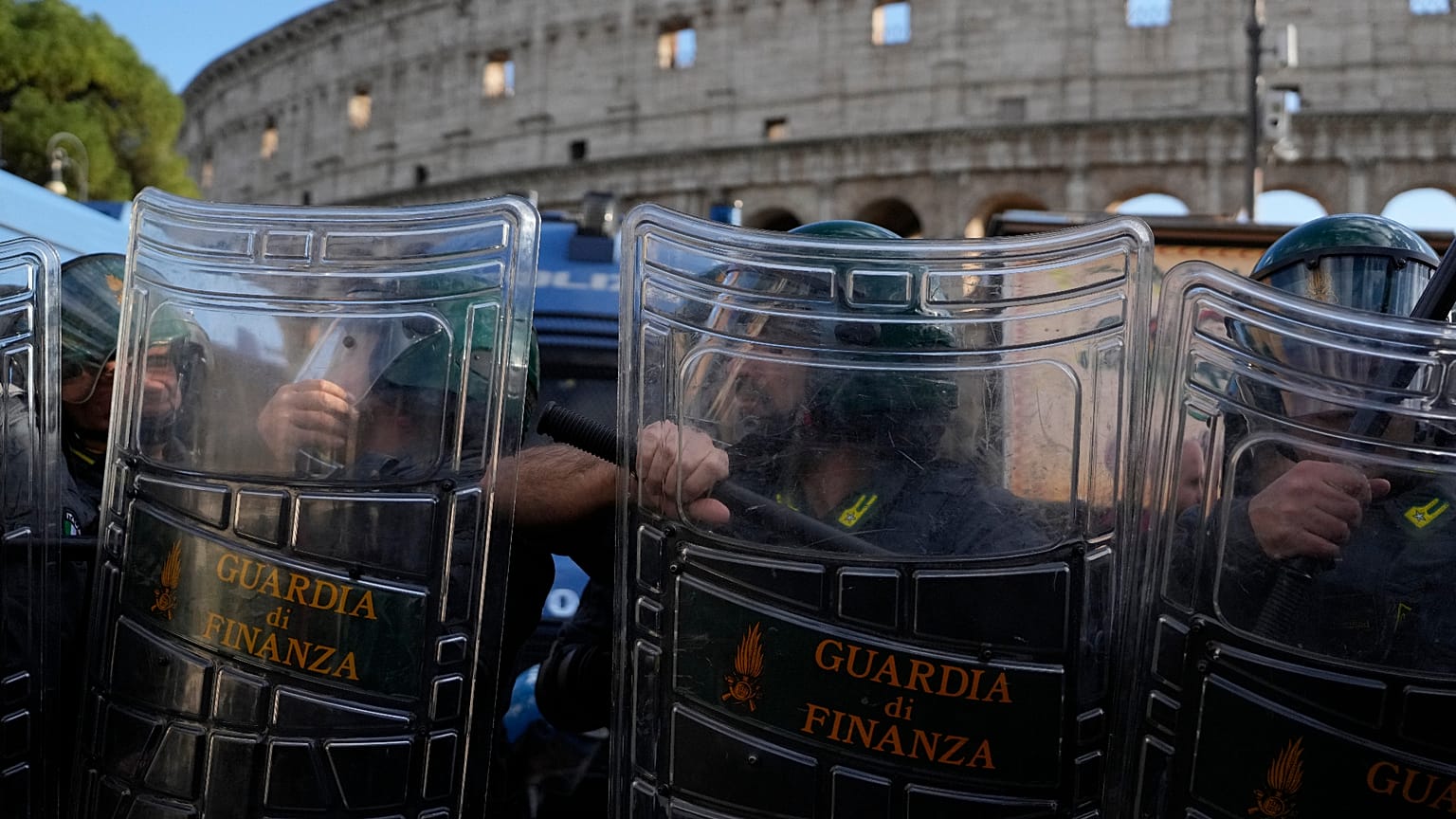
Italian authorities are closely monitoring security, after the recent violence in Milan. The Interior Ministry has been put on alert over the possible infiltration of violent groups into the various marches, amid fears of unrest that could continue throughout the weekend, described as "problematic" by Interior Minister Matteo Piantedosi.
"There are alarms, because there is this very insidious way of activating the squares, but nothing different from what we have dealt with so far", Piantedosi said on Thursday.
In this context, the police plan to step up checks and potentially carry out preventive detentions allowed under the latest security decree. As for transport, reports indicate that services are operating only partially as normal.
Where demonstrations are taking place in Italy
In Rome, the march is set to begin mid-morning near Termini station, heading towards the Imperial Forums, with at least 20,000 people expected to take part. Authorities are on high alert along the route, which passes through the historic centre, close to government buildings, the Defence Village at Circus Maximus and the Colosseum area, which was targeted during previous demonstrations.
Hundreds of students gathered nearby, in Piazzale Ostiense, under a slogan referencing the movement that paralysed France, "Le monde est à nous" (The world is ours).
Two marches are taking place in Milan, one organised by students and the other by trade unions and pro-Palestinian activists. They are expected to converge in the morning along Corso Buenos Aires, heading away from the city centre, which was the scene of unrest on 17 and 18 October. There are concerns that demonstrators could try to reach the city's eastern ring road and block traffic, as happened a year ago.
In Turin, a mobilisation organised by USB is taking place, with school and university students, as well as autonomous collectives, joining the march towards the city centre and city hall. The situation is similar in Bologna, while in Naples the demonstration is being led mainly by student movements, which have occupied university buildings and secondary schools in recent days.
In Genoa, dockworkers blocked part of the port area early in the morning using tyres and smoke flares, calling on colleagues from "all over Italy" who "do not want to work for war" to join them. Hundreds of demonstrators also gathered at the entrance to the port of Trieste.
Major strikes planned across Italy on Friday against cost of living and military spending
Strikes and rallies are planned over rising living cost and the shift of public funds to arms. Unions are demanding wage increases in line with inflation; while dockworkers in 17 countries are mobilising against the war.
Strikes are planned across Italy on Friday, with widespread disruption expected as trade union Unione Sindacale di Base called on both public and private sector workers to strike, mobilise and protest, including at a major demonstration in Rome.
Renewed student protests are also expected to return to the street in major cities across Italy.
Meanwhile, the Cobas unions, together with Adl, Clap and Sial, have also called for a general strike across the public and private sectors, excluding transport.
The strike will also be a new test for public order, as students are set to return to the streets in all the main cities across Italy.
Friday's protests are directed against the rising cost of living, which unions say makes it increasingly difficult for people to cover essential expenses, as well as military spending.
Rail services are expected to be disrupted from 21:00 on Thursday until 20:59 on Friday, while the strike in air transport is expected to last for the entirety of Friday.
In local public transport, the impact will vary from city to city. The strike is also expected to affect taxi services throughout Friday, while motorway staff will begin their strike in the evening on Thursday.
Also on Friday, dock workers will mobilise globally against arms trafficking, rearmament policies and the militarisation of ports.
The action has been organised by several unions, including USB in Italy, the CGT in France and other trade union organisations in Greece, Turkey, Morocco and the Basque Country.
According to the organisers, workers from more than 100 ports in 17 countries and four continents have joined the mobilisation.
In Italy the protests will affect, among others, the ports of Genoa, Livorno, Trieste, Civitavecchia, Ancona, Ravenna and Gioia Tauro.
What are unions demanding?
Among USB's key demands is for wages to rise in line with the cost of living, including through the reintroduction of the "scala mobile", a mechanism previously used to automatically adjust wages in line with inflation.
The union is also calling for measures to bring down the costs of essential goods, household bills and rents, and for a reduction in VAT on basic necessities.
According to USB, the government is allocating too many resources to military spending, while funding for health care, education and other public services remains inadequate.

No comments:
Post a Comment