Tuesday, October 27, 2026


Democratic Senators Warn U.S. Seaports Not to Handle Russian Diesel

Primorsk
File image courtesy Primorsk Oil Terminal

Senior Democrats in the House and Senate are warning American banks, ports and energy companies to steer clear of any cargoes of Russian diesel that may be headed towards U.S. shores. 

On October 9, the Trump administration announced a deal with Russian President Vladimir Putin to lift sanctions on Russian diesel, a long-shot bid to reduce prices for fuel ahead of midterm elections. The U.S. Treasury says that the cargo import arrangements are legal - but in a letter obtained by Axios and Bloomberg, six senior Democratic lawmakers (and one departing Republican senator) have warned ports that the activity "may be subject to legal action, as well as congressional investigation." 

The letter was sent to the ports of Houston, Beaumont, Corpus Christi and New York/New Jersey, as well as six of the largest Wall Street banks. It warns them all to avoid touching any Russian diesel cargoes arriving in the U.S. market or headed to any markets overseas. 

The letter cites the Ending Importation of Russian Oil Act of 2022, which banned all Russian energy products from the United States. Waiving the Act would require the consent of Congress and the president's certification that the war in Ukraine is over - circumstances which have not yet occurred. Critics of the diesel deal suggest that the Act has not been waived, and that Russian fuel imports are therefore against the law.

In the letter, the lawmakers requested ports and financiers to confirm that they will preserve records and correspondence related to Russian diesel transactions, anticipating future investigation or litigation. 

Signatories included Senators Jeanne Shaheen (D-NH), Chris Coons (D-DE), Elizabeth Warren (D-MA), Ron Wyden (D-OR), Sheldon Whitehouse (D-RI) and Thom Tillis (R-NC), plus Rep. Gregory Meeks (D-NY). The list of sponsors overlaps with a similar bipartisan letter sent to the Trump administration earlier this month. Some of the signatories may soon be well-positioned to initiate public investigations: Rep. Meeks would inherit chairmanship of the House Foreign Affairs Committee if the House transitions to Democratic control, and he would have the power to hold hearings and issue subpoenas. 

Similarly, Rep. Jamie Raskin (D-MD) - who is in line to take over the chairmanship of the House Judiciary committee - has warned the American Petroleum Institute, the U.S. Chamber of Commerce and the American Fuel and Petrochemical Manufacturers that the cargoes are unlawful. 

"Your members are now on notice that taking part in any effort to help President Putin hawk Russian diesel in the U.S. is a clear and dangerous violation of federal law," Rep. Raskin wrote. "[Importers] may therefore have to face both civil and criminal penalties, including up to 20 years’ imprisonment."

Reuters has identified one cargo that is likely under way for an American port, but the extent of any further scale-up may be limited. The rationale for importing the physical fuel into the U.S. is unclear: the United States already produces more diesel than it can consume, and exports about 1.6 million barrels each day to foreign buyers. By contrast, Russia has a diesel shortage, and until recently it did not export the fuel at all. Its war-damaged refineries are operating an estimated 40-50 percent below capacity due to Ukrainian drone strikes, leading to shortages and long queues for fuel in some Russian regions. 

Nonetheless, tracking data suggests that three tankers are full of Russian diesel fuel and under way for North America, and the Kremlin predicts that the deal's exports will amount to about 3.5 million barrels per month - equivalent to roughly three percent of U.S. consumption. 


Sanctioned Tanker Bound for US Passes Through UK Waters
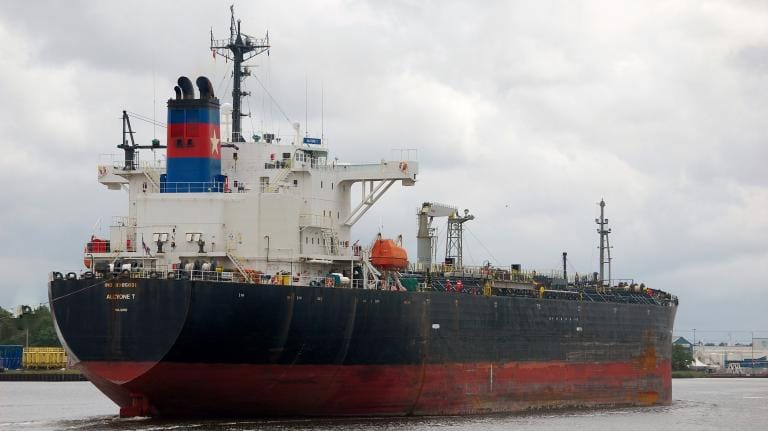
sanctioned tanker carrying Russian diesel
Sanctioned tanker loaded with Russian diesel believed to be heading to the U.S. (Ruud Coster photo courtesy of Vessel Finder)

Russia has used the lifting of U.S. sanctions on the purchase of diesel to resume exports both to the United States but also other countries, in what President Vladimir Putin will regard as a diplomatic victory and a weakening of solidarity in support for Ukraine. Not only will the Russians earn revenue from the diesel sales to fund their war effort, but they will also drive a wedge between the United States on the one hand, and the UK and the EU on the other, because both the UK and EU have declared that their sanctions will remain in place.

The identity and destinations of ships involved in the resumption of Russian diesel exports are not absolutely clear, depending as it does on announcements from the Russian government and changing AIS signals being broadcast from the ships potentially involved. 

But the divisions that the resumption of exports has created are well-illustrated by the course of Sierra Leone-flagged oil products tanker Leruo (IMO 9385831), which remains on both UK and EU sanctions lists. This vessel, loaded with about 40,000 tons of diesel oil at Primorsk on October 16, is indicating on AIS that it is heading for the Atlantic coast “for orders,” but is expected to dock in New York on about November 7. Its exact course through waters around the Shetland Islands is not yet clear, but if not through territorial waters, then the ship is likely to have passed through the UK’s Exclusive Economic Zone – and has done so without being intercepted, despite its flag of convenience and UK/EU sanctioned status. There may have been an intent to intercept the ship, but simply a lack of any available Royal Navy frigates to undertake the operation.
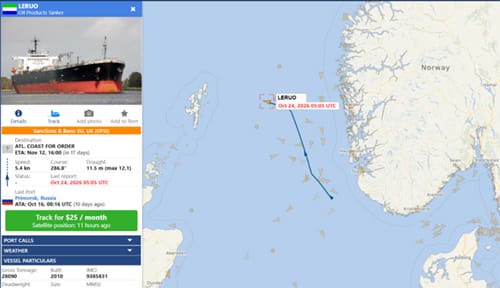
Track of the sanctioned diesel tanker Leruo as she approaches Shetland Island waters on October 24 (VesselFinder)

Two other product tankers, but both unsanctioned, have also recently loaded at Primorsk. The Maltese-flagged tanker Agioi Fanendes (IMO 9798375) was on October 26 passing through the Skagerrak, also with about 40,000 tons of diesel on board, declaring it is operating “For Orders.” It had earlier indicated it was bound for New York, due to arrive November 7, but now with its actual destination undeclared. It could also be heading for the Atlantic seaboard, although industry sources suggest that Morocco may also be resuming imports of Russian diesel.

The Palau-flagged product tanker Dolunay (IMO 9327463) completed loading on October 16, and is signaling its arrival at Alanya in Turkey on November 1. The Turkish government has indicated that it is about to resume imports of Russian diesel, on the back of the Trump deal, and has already begun to reduce production of diesel from its own domestic refineries so as to exploit the price differential on cheaper Russian imports.

Russian exploitation of the Trump-Putin deal to pry open the sanctions regime has been clearly indicated by the Russian Deputy Prime Minister Alexander Novak, who has said that Russian exports could reach 3.5 million tons per ?month (875,000 bpd) by the end of the year, well above the 1.8 million tons of diesel covered by the initial Trump-Putin deal.


Indonesia Busts Mongolian-Flagged Tanker for Ketamine Smuggling

ELON'S FAVORITE DRUG
Global 168 bust
Press handout image courtesy Indonesian Army

Authorities in Indonesia have discovered an abundant quantity of ketamine aboard a tanker in the Strait of Malacca, prompting an investigation into its ownership and activities. 

The tanker was detained October 20 off Tanjung Balai, on the coast of North Sumatra, after making suspicious movements and disabling its AIS transmission for several days. Indonesian police had already been tracking the vessel for some time, having suspected its involvement in smuggling. The ship had been spotted holding position off the west coast of Thailand in a suspicious manner. Once on board, Indonesian authorities discovered $14 million worth of ketamine in 54 sacks (1.1 tonnes). The crew - including seven Indonesians and one Chinese national - have all been detained pending further investigation.  

The Global 168 is flagged in Mongolia and owned by two Malaysian businessmen in Johor. The Royal Malaysia Police were notified of the seizure, and the agency's national narcotics unit plans to bring the owners in for questioning, department director Hussein Omar Khan told The Star. The unit will also investigate whether a Malaysian drug syndicate was involved in the vessel's operations.  

In August, Indonesian authorities busted a small freighter carrying 2.6 tonnes of liquid methamphetamine and 1.5 million illicit Chinese cigarettes. The 10 Myanmarese crewmembers were all detained for questioning. 

Drug smuggling is technically punishable by death in Indonesia, though in practice the maximum sentence has become indefinite imprisonment on death row. A moratorium on executions entered into effect in 2016. Courts still routinely issue death sentences, which could be carried out in the future if policies change. 


Chevron Pulls Out From Financing Study for Guyana’s Deepwater Port

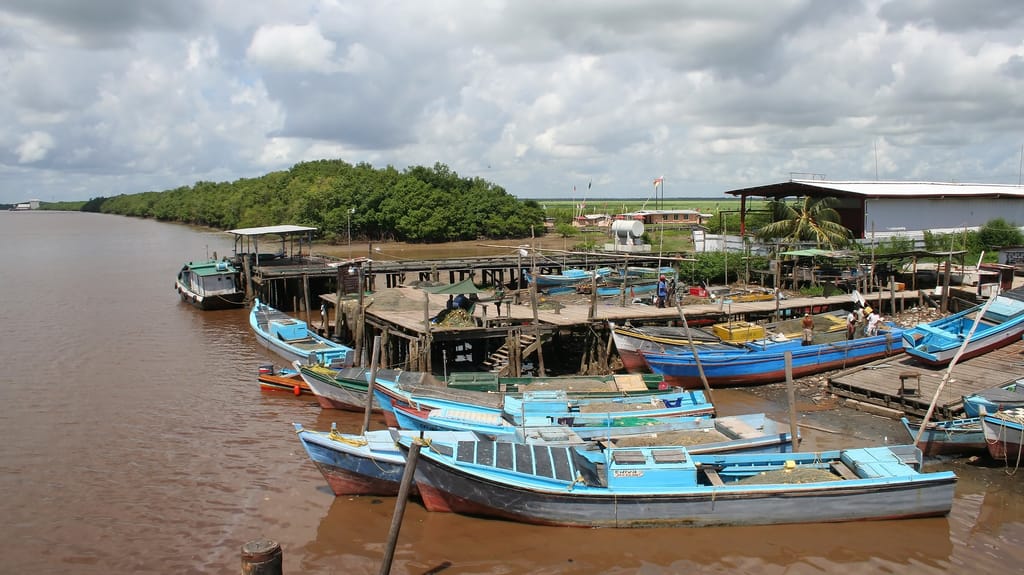
A fishing pier on the Berbice River, 2007 (Ian Mackenzie / CC BY)

Chevron has reportedly opted out in funding preliminary studies for Guyana’s planned Berbice deepwater port. Hess Corporation - acquired by Chevron last year - supported pre-planning studies for the port, but Chevron is said to have reconsidered.

The American engineering firm Bechtel has been leading the initial design plans. Bechtel in 2023 completed the pre-front-end engineering design, but the feasibility study is yet to be completed. Commenting on the issue last week, Bechtel’s Guyana Engineering Director Harry Pastuszek said that Hess financed the preliminary engineering and design for the project. For the remaining parts of the feasibility study, Chevron declined to move ahead with financing.

Through the Hess acquisition, Chevron secured a 30% stake in the Stabroek Block, Guyana’s prized offshore oil and gas resource. ExxonMobil, the block’s operator, is the majority shareholder with a 45% stake while China National Offshore Oil Corporation (CNOOC) holds 25%.

With the ongoing Stabroek production ramp up through 2030, it is expected that a deep-water facility such as Berbice port would accommodate strengthened offshore energy logistics. The port project is estimated to cost between $1 billion and $2 billion, and would feature an industrial hub including data centers, a fertilizer plant and a refinery.

Berbice’s development has been in the pipeline for over a decade now. Back in 2016, Inter-American Development Bank (IDB) presented a report on the potential economic prospects of an improved port. The report highlighted regional benefits of the project, specifically linking Northern Brazil to the Atlantic Coast. Berbice port could therefore become a transshipment hub for northern Brazil.

The ongoing feasibility study is intended to update the findings made by the IDB report. Already, several development partners have shown interest in the port project but further progress can only be made after the feasibility study is completed. The Export-Import Bank of the United States (EXIM) has pledged to finance phase three engineering design study. This followed a meeting held last month in New York between Guyana’s President Mohammed Irfaan Ali and Exim’s Chairman John Jovanovic.

In addition, President Ali recently told local media that Qatar has also expressed interest in participating in the development of the proposed port. If the port project is finalized, it will be another major economic milestone for Guyana. In the last year, the country has become one of the fastest-growing economies in the world, projected to reach GDP growth of 22.3 percent this year, according to International Monetary Fund (IMF) estimates.

The economic boom has also seen expansion in Guyana’s maritime capacity. Unfortunately, the country’s major ports lack deep water access to accommodate larger vessels. For instance, the main port of Georgetown - on the eastern banks of the Demerara River before it enters the Atlantic Channel - has a shallow channel. The maximum allowable draft is about 9.7 meters. Development of a deep-water port would create greater opportunities for Guyana.

Top image: A fishing pier on the Berbice River, 2007 (Ian Mackenzie / CC BY)


Maersk Tankers' Ammonia Power Tanker Retrofit Project Gets EU Funding

Very Large Ammonia Carrier
Maersk Tankers took delivery of its second VLAC this week (Maersk Tankers)

Maersk Tankers' Ammonia Power Tanker Retrofit Project Gets EU Funding


Maersk Tankers’ proposal to retrofit its Very Large Ammonia Carriers (VLACs) for ammonia power has been selected for funding by the EU Innovation Fund. The first-of-its-kind project, designed to adapt the large vessels to use ammonia as a marine fuel, is in keeping with the pioneering adoption steps by the industry for ammonia power.

The proposal submitted to the EU fund calls for retrofitting the ocean-going ships. Known as Ripple, the project envisions equipping the vessels with dual-fuel ammonia two-stroke engines as the first retrofit of its kind in the EU for a VLAC. Maersk Tankers reports the project will demonstrate the commercial viability of ammonia-fueled operations.

The company proposed retrofitting four of its VLACs, saying that by running on the fuel, the retrofitted carriers would avoid over 1.2 metric tonnes of CO2e in 10 years.

The EU Innovation Fund selected the Ripple Project as part of 77 additional projects designated for funding. The latest round for the fund was launched in December 2025, and according to the European Commission, it will entail €3.4 billion for investments. They noted it would reinvest the revenues from the EU Emissions Trading System into innovative decarbonization technologies. 

The selected projects will begin negotiations to finalize their funding grants, including confirming budgets and timetables. The EU expects to complete the process in the first quarter of 2027 after the projects prepare grant agreements.

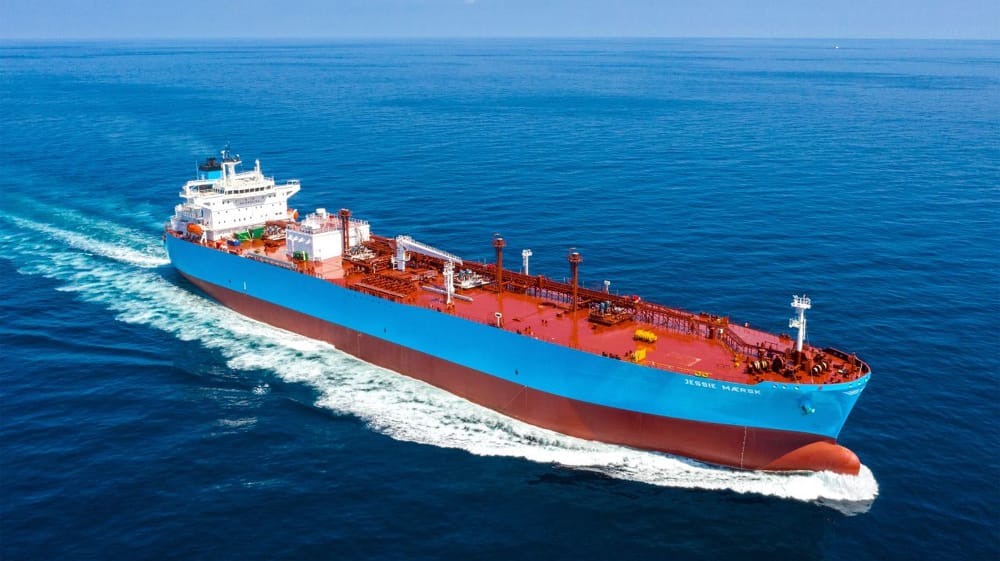
Maersk Tankers has taken delivery of the first two of a series of 10 VLACs it ordered. The first vessel, Jane Maersk, with a 93,000 cbm capacity, was delivered by HD Hyundai Samho in July. The vessel measures 221 meters (725 feet) in length. The ship is equipped to transport either liquefied ammonia or LPG. The second vessel, Jessie Maersk, was delivered to the company on October 21. The deliveries will continue until September 2028.

Samho highlights that because liquefied ammonia has a higher specific gravity than LPG, it requires advanced hull and unloading systems compared to conventional LPG carriers. The yard sees it as an emerging segment, noting it already has a backlog of 22 vessels worth $2.55 billion, including nine orders for VLACs it received this year.

It is part of an emerging trend in the industry. DNV calculates there are 41 ammonia-fueled vessels now on order. Exmar took delivery earlier this year of its first ammonia-fueled gas carriers and CMB.TECH recently highlighted the delivery of the first ammonia-fueled bulkers for its Bocimar division. On October 21, Eastern Pacific Shipping celebrated the naming of its first Very Large Ammonia Carrier at the HD Hyundai Heavy Industries yard in Ulsan, South Korea. Also, a 93,000 cbm vessel, they reported it is powered by the first Everllence B&W ammonia dual-fuel two-stroke engine.

Maersk Tankers highlighted that the project would move it a step closer in its efforts to reduce emissions. It said moving ahead with the retrofits would depend on securing commercial commitments from customers. 

Monday, October 26, 2026


Salvage Teams Continue to Fight Fires on Two Boxships at Sea

container fire
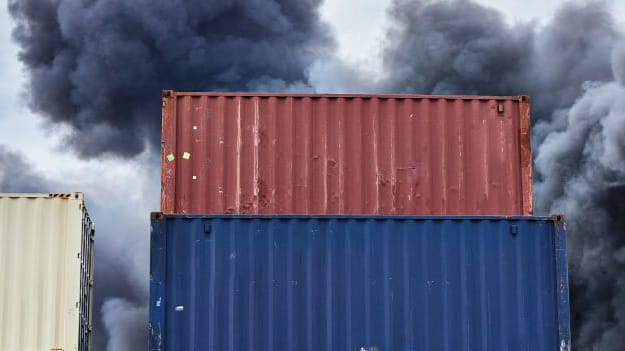
Salvage crews continue to fight the fires at sea on the HMM and Seaspan vessels (file photo)

Salvage teams are continuing to work on two different containership fires. Both Seaspan, as the owner of the Espirito Santo Express, and HMM updated on the status of their vessels, highlighting the difficulties the industry faces from fires at sea.

A spokesperson for HMM told The Maritime Executive that the firefighting operations aboard the HMM Platinum are “in the final dampening-down stage. Once the fire is fully extinguished, the vessel is scheduled to proceed to a near port to conduct follow-up measures and investigations.” 

The company emphasizes that all 24 crewmembers are safe. The vessel continues, however, to indicate on its AIS transmissions that it is under “Restricted Manoeuvrability” and moving at less than 1 knot. The ship had approached Durban and continued to show it as its destination, but it appears to have moved further out to sea based on the AIS data. The HMM spokesperson told us that the “vessel attempted to proceed to a port in South Africa but is currently remaining offshore due to adverse weather conditions.” Tugs are reported to be standing by as a precaution.

The 63,000 dwt ship departed Kattupalli International Container Terminal in India on September 27 and was reported to have approximately 2,300 TEU aboard, according to the claims consultants. The ship was scheduled to proceed on a month-long crossing to Santos, Brazil, and the reports indicate the fire began while the ship was south of Lavanono, Madagascar, around the beginning of the month. The ship has been holding east of South Africa for approximately two weeks or more, planning on proceeding to a port of refuge.

At the same time, reports indicate that salvage teams reached the containership Espirito Santo Express (132,789 dwt), which had been abandoned by its crew on October 15 in the middle of the South Atlantic more than 1,000 miles from Brazil. The ship, which was built in 2018, is reported to have a capacity of 11,800 TEU and was operating under charter to Hapag-Lloyd, shared with Ocean Network Express (ONE).

Seaspan, the vessel’s owner, reports that smoke, and subsequently the fire, was observed emanating from cargo located in the cargo bay area, forward of the accommodation block. It reports that active measures are underway to stabilize the vessel with on-site firefighting operations.

Hapag-Lloyd advised customers that the full extent of the incident and its potential impact on the vessel and cargo remain under assessment. It repeated Seaspan’s statement that the focus is on managing the incident and stabilizing the vessel. Hapag said it is not yet possible to determine when detailed information would be available about cargo damage.


Aging Freighter Banned From European Ports for Skipping Yard Date

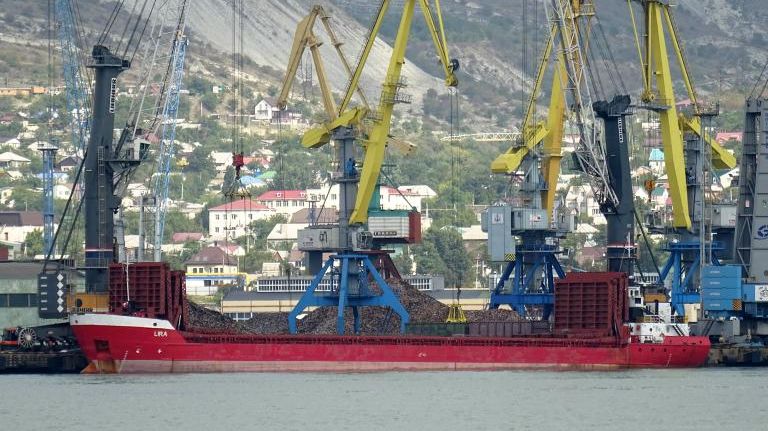
Lira, seen here in Novorossiysk in 2016 (VesselFinder)

A 42-year-old general cargo ship characterized as high-risk has been banned from European ports for failing to call at a repair yard as agreed.

The Paris MoU, a regional system of 28 maritime authorities that aims to eliminate substandard shipping in European waters and the North Atlantic region, said that the MV Lira (IMO 8516744) will not be allowed into any port in the bloc after failing to call at a repair yard in Greece.

The 1985-built ship had been detained at the Port of Olbia, Italy, but left on October 3. While one of the conditions for the ship's release from Olbia was that she head straight to a yard in Piraeus, the ship refused to honor the agreement to proceed for repairs.

The Paris MoU said that it had received a communication from the coordinator of the Piraeus Port State Control office on October 15 indicating that the vessel had not arrived at the port and had also failed to give any updates regarding its arrival.

Although the Paris MoU did not reveal the deficiencies that led to the vessel's detention in Italy, the fact that the vessel is sailing under the flag of Tanzania means she is considered very high-risk under the Paris MoU's inspection priority scheme. The 89-meter vessel was sailing under the Panamanian flag before changing to the flag of Tanzania.

Rather than inspecting at random, the Paris MoU uses risk-based targeting in which every ship is assigned a risk profile of high, standard or low, based on its type, age, flag performance, track record, and the operating company's deficiency and detention history. While high-risk ships are often inspected every five to six months, low-risk ships go years between inspections. Annually, the Paris MoU oversees the inspection of more than 17,000 foreign ships.

The Paris MoU's detention rate for ships that do not meet the set standards has long averaged four percent. For ships with a history of repeated detentions, the MoU can escalate to refusal of access and even a ban that can become permanent for repeat offenders. Last year, a total of 688 vessels were detained across European ports, while 19 ships were banned.

Top image courtesy VesselFinder.

UAE Confirms Approaching Oil Spill as Iran Claims Continued Attacks

Persian Gulf oil spill
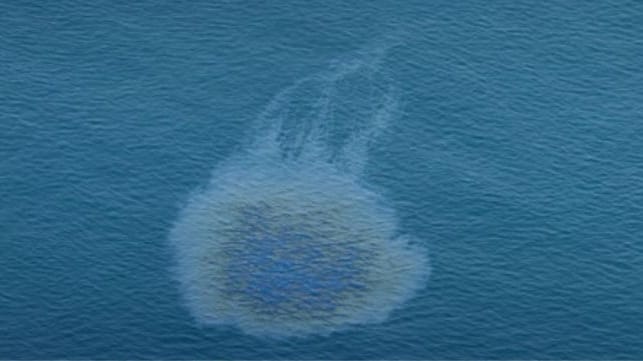
UAE officials closed beaches and confirmed strong odors from an oil spill likely coming from a VLCC struck earlier in the month (UAE Ministry)

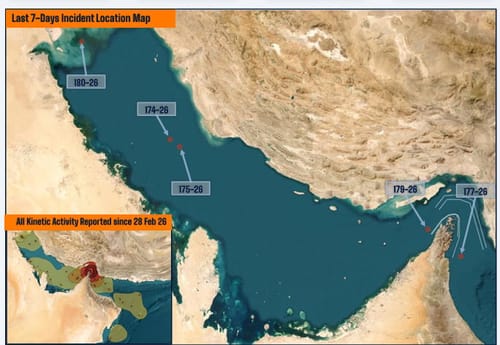
The UAE confirmed earlier reports of a large and spreading oil spill along the Persian Gulf side of the Khor Al Beidah peninsula while Iran continues to claim tanker strikes as it enforces rules for the Strait of Hormuz. It comes as there appears to be a continuing escalation, or propaganda effort, which is being linked to the Israeli legislative elections on October 27 and the U.S. midterm election on November 3.

The slick had first been spotted earlier in the week, likely coming from one of the tankers Iran struck at the beginning of the month. The UAE’s Ministry of Climate Change and Environment was forced to acknowledge the slick as it came ashore along much of the peninsula, and there were widespread reports of a strong odor. The ministry said the odors pose no health risk, but it has ordered the Umm Al Quwain beaches closed. It also warned fishermen to stay away from the affected areas.

It said the coastal areas would remain closed until technical teams complete an assessment. Furthermore, it said efforts were also underway for containment, cordoning, cleanup, and remediation.

Windward AI had detected the spill on Tuesday, saying they believed it was coming from one of the VLCCs, which was about 16 miles off Umm Al Quwain. Reports said the slick has spread more than 22 miles and, based on satellite imagery, is covering an area of more than 60 square miles. 

UAE officials have not commented on the source of the spill, but several reports are linking it to the Taiwanese VLCC Gem No. 2 (302,783 dwt), which was struck on October 9. The VLCC, which is registered in Panama, was 13 nautical miles west of Al Jazeera when it was struck.

At the same time, Iran continues to make broad claims about additional vessel strikes, which are not being independently verified. Yesterday, it claimed to have hit four vessels that were involved in ship-to-ship transfers as part of the shuttle service started by the Gulf states to get oil out to the larger crude oil tankers that are not entering the Gulf. Iran also claimed three vessels were disabled after they struck mines, while U.S. Central Command asserts there are no mines in the Strait.

During the week, Iran’s so-called Persian Gulf Strait Authority released data saying that Iranian forces had taken 40 enforcement actions. It raised the count to 122 non-compliant vessels that would be targeted if they cross the Strait, while saying negotiations were ongoing with an additional 19 ships to prevent their listing or to secure removal. It said another 30 might be added due to non-response to its notice, while two had agreed to fulfill obligations for removal.

Five attacks confirmed this week by UKMTO before the additional report received today in the Strait of Hormuz (UKMTO)

Donald Trump responded to the assertions, writing on social media, “Iran is doing everything they can to drive up the price of oil prior to the U.S. midterm election. They are even making up fake hits, mines, and everything else, because more Oil is coming through the Hormuz Strait now than it did even prior to the beginning of the conflict.”

Oil markets, however, continue to be jittery, with the benchmark Brent crude price hovering around $115 a barrel on Friday. US West Texas Intermediate also jumped above $100 a barrel. Analysts noted oil prices are now at their highest since early May.

UK Maritime Trade Operations reported that it received details about an attack on Thursday. It said a tanker reported being struck approximately 7 nautical miles northeast of Limah, Oman, in the Strait of Hormuz.  This tanker, it said, was able to continue its voyage.

The weekly summary report from UKMTO listed five incidents spread broadly across the Persian Gulf and the Strait prior to today’s report. It said three vessels had required assistance this week and that since July there had been 79 projectile strikes, of which 57 were on vessels transiting the southern route through the Strait. It puts the tally at 119 vessels reporting damage year to date and 77 crew injured or killed.

UKMTO calculates there were 114 outbound transits in the past seven days, which was down, as well as 127 inbound. It tracks a daily average of between 25 and 35 vessels recently. 


Russian Trawlers Go Fishing for Cables

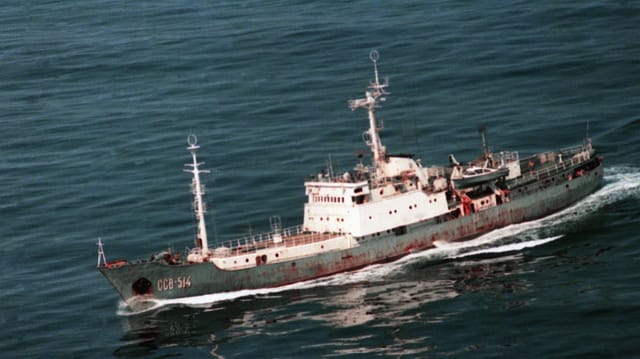
Russian trawlers have been used for intelligence duties since the Cold War, alongside more formal spy ships like the Seliger, above (USN)
Russian trawlers have been used for intelligence duties since the Cold War, alongside more formal spy ships like the Moma-class, above (USN, 1987)

London’s Daily Telegraph has published a lead story outlining how a Russian fleet of trawlers has been surveying and loitering over cables in the waters around the United Kingdom. There is nothing new in Russian trawlers being tasked with non-fishing duties, with some never having been seen to have landed any fish; the novel element of the story is the scale on which the Russians are carrying out this operation.

The Telegraph has logged more than 500 separate incidents where Russian trawlers have either loitered above cables linking Britain with the United States to the West of to Europe to the East, or have precisely followed their routes over long distances. The data was gathered by Global Fishing Watch since 2021, and identified 17 trawlers in particular involved in the activity.

The assessment in the report is that the trawlers are precisely mapping the routes of the cables, so that at a later stage unmanned submarine vehicles will autonomously be able to interfere with these cables, either by cutting them or by placing sleeves around the cables for the purpose of interrupting the cable’s data flow.

The problem is compounded because the Royal Navy does not have the resources to identify where the trawlers are operating, and then does not have capability to intervene or to monitor the activity, a task often undertaken by submarines.

At present, the Royal Navy is believed not to have a single operational attack submarine available. Of the seven boats in the Astute Class nuclear attack submarine fleet, HMS Achilles is still being built, three are non-operational at the Faslane Naval Base (HMS Astute, HMS Ambush and HMS Artful), two boats are under maintenance in Devonport (HMS Audacious and HMS Anson), and HMS Agamemnon is on pre-delivery sea trials.

The shortage of Astute Class boats is so critical that the Royal Navy had to ask for assistance from a French Navy Suffren Class nuclear attack submarine to escort the ballistic missile submarine HMS Vanguard (S28) out of its base in Faslane when Vanguard began its current patrol in April.

When the Royal Navy has been able to mount effective surveillance, often using sensors towed behind Type 23 frigates, in tandem with maritime patrol aircraft, and with assistance from allies, then the nature of Russian activity has been evident. An operation in British waters by two Kola Bay-based submarines operated by the Russian Navy’s Main Directorate of Deep-Sea Research (GUGI), accompanied by an Akula Class attack submarine, was disrupted earlier this year. A GUGI trial of an offensive underwater robot designed to sabotage undersea cables was disrupted in March, in a joint US, UK and Norwegian Navy operation conducted in waters around Svalbard.

Monitoring this threat will be a high priority both for the UK and NATO. But a lack of British capability to take the lead on these operations in UK waters means that much of the Russian activity is either not being detected or is being executed without hindrance. The threat posed is both serious and very real, as cables could be cut unattributably in a period of tension prior to armed conflict breaking out. Such a covert attack could effectively sever communications linking critical essential services with the data centers supporting them, and might take months to repair.


Unexplained Ship Clusters Anchoring off Taiwan

Taiwan
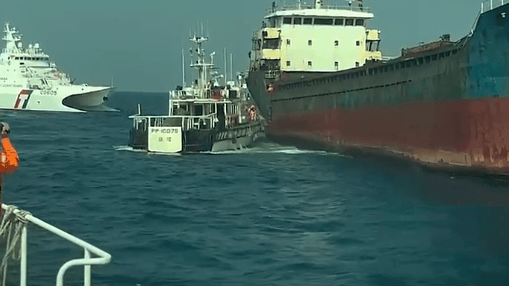
The Bao Shun being boarded by the Taiwanese Coastguard on suspicion of cable-tampering (Courtesy Taiwan Coast Guard Administration)

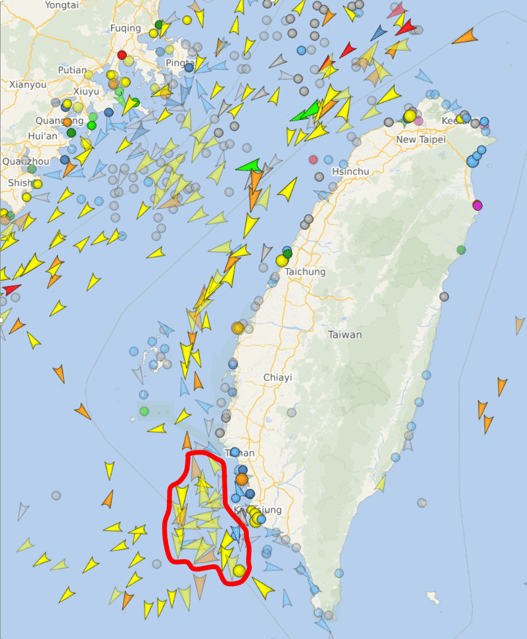
TaiwanPlus TV’s investigative journalist Cadence Quantara has filed a report on an unexplained cluster of shipping which is lingering a short distance off the southwest coast of Taiwan, adjacent to the cities of Tainan and Kaohsiung. On average there are 75 ships maintaining position in the area, with a familiar list of vessels arriving, lingering, departing and then returning, but with the overall number of ships in the cluster remaining roughly constant. 

Further out to sea, a smaller number of ships are also gathered, and separately off Taiwan’s northern tip there is another anchorage area within Internal Waters where ships also tend to gather. These concentrations of ships have become more pronounced since March.

The Taiwanese authorities, and the Coast Guard Administration in particular, are perplexed at to what is the common purpose of these groups of ships, and are speculating why this pattern of behaviour has emerged in the last six months. Most of the ships are either cargo vessels or oil/chemical products tankers, and are on the elderly side; of the 75 ships regularly seen in the area, 65 fall into the pan-Asian Tokyo MOU’s High Risk category because of their age and degraded seaworthiness. 

The majority of vessels either anchored or on the recurring visitor list are flying fraudulent flags, or flags of convenience from six states:  Cameroon, Comoros Islands, Mongolia, Tanzania, Togo and Sierra Leone.  Most are Chinese-crewed and appear to be owned or managed by companies registered on the Chinese mainland. Only a small number of these vessels are formally sanctioned. 

Examples of some of the dubious vessels on the recurring visitor list include product tankers, the Sierra Leone-flagged Huixin (IMO 9175133) and the Tanzanian–flagged Athena (IMO 9063811).  Cargo vessels include the Comoros-flagged Midas or Magician 66 (IMO 9020637), and Tanzanian-flagged Long An (IMO 9140255) and Bao Shun or Ada (IMO 8359081), plus the Pioneer or Win or Shunjia (IMO 9078543) currently Sierra Leone-flagged, the unflagged Chang Shun (IMO 8964056) and the Togo-flagged Hong Tai 58 (MMSI 671756000).  Several of the ships have been noted trading with North Korea, or have been designated by the Taiwan authorities as a security risk for having lingered over internet cables.

VesselFinder / CJRC

The ships appear to be neither idling to take on cargo, to discharge cargo, nor even awaiting orders. Most are unladen, prompting questions as to how owners can afford to keep these vessels crewed and at sea without revenue-earning tramp work. To be incurring such losses, the owners are either being compensated for deploying ships into these areas, or there is some form of covert or illicit revenue stream. The ships themselves have almost no capital value sufficient to justify the cost of keeping them afloat.

The Taiwanese authorities at first thought that the ships might be positioned for some hostile security or intelligence purpose.  The south-west cluster is within about 15 miles of three major Taiwanese airbases, at Pingtung, Tainan and Chiayi, plus a number of hidden highway airstrips, as well as the Tsoying Naval Base. The Taiwanese armed force mounted Exercise Han Kuang in this area in August, a major air and naval test of Taiwan’s ability to respond to a surprise attack.

But with few constraints, the Taiwanese Coastguard can board and inspect those vessels which are anchored close in and within Internal Waters, and neither regular PLA personnel nor military surveillance equipment have been found on board the vessels.  Possibly the ships are trying to normalize a Chinese presence in Taiwanese waters, innocent for the moment but capable of being exploited for some military purpose sometime in the future, as part of an invasion or blockade.

In the meantime, the vessels can possibly be prompted by Chinese authorities to inflict unattributable damage to internet cables, as a small number have been identified doing by the Taiwanese authorities. A regional security consultancy believes some of the vessels may belong to Chinese mainland organised crime groups and be involved in illicit food smuggling into mainland China, in particular of frozen meat, or of pharmaceuticals; this view is supported by the location of the cluster – inside Taiwanese Internal Waters – where Chinese authorities cannot intrude to board them, and also by the short duration of the trips vessels in the cluster make before returning. Some are known to have conducted illicit trading into North Korea. 

No one explanation appears to cover the purpose of the clustered group as a whole, unless it is a gathering of ships whose owners are all losing money by remaining afloat while their revenues have sunk. The Taiwanese authorities appear to be at a loss to know what is going on too, because they would have the legal right to board or seize ships should they have cause or a suspicion to initiate such action. The Coastguard report they have frightened off 240 of these ships – but they keep coming back.

The opinions expressed herein are the author's and not necessarily those of The Maritime Executive.


New Lease on Life for Historic Tall Ship Providence

Tall ship Providence (left) during a call in Boston in 1980 (City of Boston Archives)

The recently-formed United States Maritime Foundation (USMF) is set to acquire the tall ship Providence with the intention of reopening it as a museum, educational and tourist attraction in the port city of Alexandria, Virginia.

The Providence, a replica of an 18th-century ship that played an instrumental role in the American Revolution, was facing the prospect of fading into oblivion after its previous owner, the Tall Ship Providence Foundation, suspended its educational and tour programs in June. Considering that the ship had become a top tourist destination, the charity said the decision to suspend operations was not made lightly.

A longtime attraction on the Alexandria waterfront, the Providence is a reproduction of the sloop Providence, originally named Katy, which was built in 1769 and was one of a fleet of ships owned by John Brown of Providence. Six years later, the ship would go on to become the flagship of the tiny Rhode Island Navy, which was created to protect the interests of Rhode Island merchants against British naval captains.

The original Katy, however, gained historical significance in 1775, when legislation was passed authorizing her purchase, along with another ship, to serve as the first ships of a new Continental Navy. Following her commissioning into the Navy, she was renamed Providence in honor of both her city of origin and the fact that all the Rhode Island delegates to the Continental Congress were from Providence. The passage of the legislation remains the reason why October 13 is still celebrated as the birthday of the U.S. Navy.

Construction of the replica ship, a project spearheaded by a young Harvard graduate named John Fitzhugh Millar, started in 1973 and was completed three years later. The ship went on to serve as Rhode Island's official tall ship for years, offering educational sailing and tours and participating in tall ship events. The ship even appeared in the second and third movies of the Pirates of the Caribbean franchise.

In February 2015, Providence was nearly destroyed by a severe storm while in dry dock at Newport Shipyard. One of her jack stands collapsed, the ship fell, the mast and spars were shattered, and the jack stand punched a large hole in the hull. Two years later, the Tall Ship Providence Foundation purchased the ship with the intention of restoring her to her previous glory and using her as the centerpiece of a new maritime museum in Alexandria.

The nonprofit ran into financial challenges, which forced the suspension of operations in June, and USMF is stepping in to give the ship a new lease on life. Founded last year, the nonprofit organization has presented a proposal to the Alexandria Waterfront Commission under which it intends to acquire Providence and its pier as soon as next month, keeping the tall ship running for education and tourism.