Tuesday, October 27, 2026


Trump Moves to Ease Methane Regulations for U.S. Oil Producers

The Trump Administration is set to announce easing of the federal methane regulations for oil and gas production in a bid to boost U.S. domestic energy production and lower costs for producers and consumers.

President Donald Trump is set to unveil the proposal at a campaign rally in Lubbock, Texas, America’s biggest-oil producing state.

The top U.S. oil industry lobby, the American Petroleum Institute (API), and many oil and gas companies have long called for changes to the Biden administration’s 2024 methane emissions standards, arguing that the rules impose excessive compliance costs on producers.

The new rule would provide regulatory relief to small marginal wells producing below 15 barrels of oil equivalent per day, after many small producers have complained that the regulatory burden for complying with the methane rule is busting their economic rationale to keep producing from many of these marginal wells.

As much as 79% of all oil and gas wells in the United States are considered marginal, according to Bloomberg.

The U.S. Environmental Protection Agency (EPA) is also expected to scrap the so-called Methane Super Emitter Program, an Administration official told Bloomberg ahead of the official announcement of the new methane rule.

The program, which the EPA had already halted last year, encouraged government-approved third-party groups to help find and report large methane releases.

Earlier this month, EPA Administrator Lee Zeldin said the Trump EPA would soon propose the next part of the agency’s comprehensive reconsideration of the Biden Administration’s 2024 oil and natural gas rules.

EPA is looking to address “widespread concerns from American energy producers and operators that the 2024 Rule is unworkable and is holding back American energy dominance,” the agency said.

“This proposal takes on many of the problems American producers and operators have raised with us. That includes the burden on marginal wells and oil and gas operators in general, the Super Emitter Program, associated gas, and control device requirements,” Zeldin said.

“Americans must be able to afford to heat their homes in the winter and fill up their car and drive to work. They can’t do that when the people producing the energy are weighed down by unnecessary burdens.”   

By Tsvetana Paraskova for Oilprice.com

 ALASKA

Alleged Russian Funding Prompts Executive Exodus at U.S. LNG Firm

  • Polar LNG's senior executives have resigned amid allegations of undisclosed Russian funding, claiming Novatek was financing and influencing the Alaska LNG startup.

  • The proposed Alaska LNG project faces potential sanctions complications, with U.S. approval still pending for the purchase of equipment from Novatek.

  • Polar LNG denies wrongdoing and disputes its former CEO's account, insisting its activities comply with U.S. law while targeting first gas deliveries by 2030.

The top executives of U.S. energy startup Polar LNG have all resigned in recent weeks, just six months after the company was launched, amid a controversy over alleged funding and control of the venture’s strategy by Russia’s biggest LNG developer and exporter, privately-held Novatek.

The senior managers who left Polar LNG say they resigned in September after learning earlier during the month that Novatek was at least partly funding the U.S. company, which looks to build a project on Alaska’s North Slope.

Polar LNG was created in March 2026, pitching its proposed North Slope location as offering “one of the shortest shipping routes from North America to key Asian markets” to expand U.S. LNG exports to Asia.

Polar LNG also specifically said it “is not in competition with the proposed Alaska LNG pipeline. The North Slope contains far more gas than any single project can develop, and success depends on advancing multiple efforts in parallel.”

Polar LNG touted its investment proposition as a project that would use a modular gravity-based structure (GBS) to process and liquefy the gas directly at the source to accelerate construction and lower costs. The startup plans to buy an unfinished GBS from Novatek and has applied to the U.S. Treasury’s Office of Foreign Assets Control (OFAC) to be authorized to do so.

U.S. authorization hasn’t been granted yet.

However, the former Polar LNG employees say they are concerned about potential violations of the U.S. sanctions on Russia. While the U.S. has not sanctioned Novatek, it blacklisted in 2023 Novatek’s Arctic LNG-2 project whose expansion has since stalled.

Joel Riddle, who resigned as CEO of Polar LNG in September, told the Financial Times last week that he discovered Novatek was actually calling the shots and providing capital to the project without approval from the Treasury’s OFAC or other agencies of the U.S. Administration.

“I resigned as chief executive of Polar LNG because I felt uncomfortable that the Russian company Novatek was financing and ultimately controlling the strategic direction of the company,” Riddle told FT.

Furthermore, two former Polar LNG executives told The Wall Street Journal this weekend that senior executives at the company had shared concerns about Novatek’s role with the Administration in early September and that government officials had also expressed concern.

Abu Dhabi-based TechWave, an engineering firm, has provided capital to Polar LNG.

Bjorn Gundersen, a former executive at Novatek, is now at TechWave, sources with knowledge of the matter told the Journal.

During discussions about new funding for the U.S. project this summer, Riddle found out that Novatek was already financing Polar LNG and directing its operations before U.S. approvals were obtained.

Polar LNG last week issued a statement referring to the leadership change following “concerns regarding a disgruntled former employee, Joel Riddle.”

“Riddle was recently terminated from the company for cause. The company is investigating claims concerning Riddle that may result in litigation. To preserve the integrity of that process, the company will not comment further on the matters under discussion and asks other parties to exercise similar restraint,” Polar LNG said.

It added that “TechWave has provided financing to Polar LNG and initiated preliminary engineering work involving U.S. contractors. The project is seeking American investors and implementation partners.”

“Development activities are being pursued in full compliance with applicable U.S. laws,” said the U.S. start-up, which has submitted an application to OFAC “for a license authorizing the proposed purchase of an unfinished GBS from privately-owned Russian private company NOVATEK.”

There has been no progress in securing a license, various sources tell the Journal.

The alleged Russian funding and the potential sanctions threat could derail the Polar LNG project, which currently targets beginning natural gas deliveries “by the end of 2030, subject to securing necessary permits, financing, engineering and other development requirements.”

By Charles Kennedy for Oilprice.com

UK Weighs Scrapping Its Largest Untapped Oilfield With Oil Over $100

  • Britain faces a major political split over the £8.7 billion Rosebank oilfield, with energy security and investment concerns clashing with climate commitments.

  • Rosebank could produce 69,000 bpd at peak, potentially supplying around 10% of UK oil output as North Sea production and reserves continue declining.

  • The government has approved Jackdaw and launched a £2 billion Energy Wealth Fund, while Rosebank's fate remains uncertain amid legal and environmental concerns.

Britain is deciding whether to drill its largest untapped oilfield in the middle of an oil shock, with Brent above 100 and more than 70% of its oil already coming from abroad. Rosebank, west of Shetland, is an £8.7 billion (~11.6 billion) development that its operator says would pump about 69,000 barrels a day at peak, roughly a tenth of the country’s expected oil output. The production vessel has been on site since June, and Ithaca Energy, which owns a fifth of the field, says it will likely stop investing in Britain if the government says no.

A major Cabinet split has emerged within Prime Minister Andy Burnham’s government over whether to approve drilling at the Rosebank oilfield, with energy security on one side and climate commitments on the other.

Chancellor John Healey wants Rosebank approved for the jobs and the Treasury revenue, and Business Secretary Jonathan Reynolds is backing him. An unnamed minister told the Mail on Sunday that Burnham will ultimately back the development too. Unite and GMB, two of Britain’s largest unions, are pushing for approval.

Energy Secretary Miatta Fahnbulleh makes the call, and she is minded to say no. In 2022 she wrote that funding new fossil fuels was “irresponsible and shortsighted,” and that the world “can’t have any new oil or gas fields” if it wants to keep warming to 1.5C. Foreign Secretary Ed Miliband, who blocked new licences when he held her job, is backing her.

Fahnbulleh approved Jackdaw on October 21 and has already explained why Rosebank is different. She calls Jackdaw “a gasfield that caters for the domestic market” and Rosebank “an oilfield that is mainly for export.” She also says the decision is hers alone under a quasi-judicial framework, and that bending it would invite a court to strike it down. Scotland’s Court of Session did exactly that in January 2025, quashing the first consents for both fields because their environmental assessments ignored the emissions from burning the oil and gas.

Rosebank lies about 80 miles northwest of Shetland in the North Atlantic. Rystad Energy estimates it holds nearly 500 million barrels of oil equivalent, about 90% of it oil, and Ithaca puts recoverable oil across two development phases at around 300 million barrels. Campaigners estimate that burning that oil would release more than 200 million tonnes of CO?, and government officials put the field’s emissions at roughly seven times Jackdaw’s.

Adura, the North Sea joint venture between Equinor (NYSE:EQNR) and Shell Plc (NYSE:SHEL) that operates Rosebank with an 80% stake, has deployed an electrification-ready Floating Production Storage and Offloading (FPSO) vessel at the field. Adura says the field will produce oil at about 12 kg of CO? per barrel, against a North Sea average of about 20 kg. Powering the vessel from shore could cut those emissions by more than 70%, to below 3 kg per barrel, once the technology is qualified and the consents are in place. The oil will be shipped by shuttle tanker to customers’ refineries in Europe.

North Sea production is in steep decline. The North Sea Transition Authority reported last week that UK proven and probable reserves fell to 2.5 billion barrels of oil equivalent at the end of 2025, down 0.4 billion in a year, and that not a single exploration well was drilled on the UK Continental Shelf in 2025. 

Jackdaw, which is nearly complete, is expected to start supplying gas within weeks and could account for about 6% of North Sea gas production at full output. The government says approving it does not break Labour’s pledge against new exploration licences because Jackdaw holds an existing licence. The field had been held up by the legal challenge over downstream emissions.

Alongside the Jackdaw approval, Healey announced a £2 billion down payment for a new Energy Wealth Fund. Future North Sea oil and gas revenues will flow into it, and the capital is earmarked for renewable generation, low-carbon infrastructure and industries to replace the oil and gas economy. Treasury modelling found that had the UK invested its roughly £200 billion in North Sea receipts since the 1980s at returns similar to Norway’s, the fund could have reached about £1 trillion.

Norway’s sovereign wealth fund, officially the Government Pension Fund Global, is worth approximately $2.3 trillion, making it the world’s largest sovereign wealth fund. It is financed primarily by surplus revenues from the Norwegian state’s petroleum sector, alongside returns from its global investments. Managed by Norges Bank Investment Management, the fund posted a record profit of $184.3 billion in the first half of 2026, then lost $29.7 billion in the third quarter as rising borrowing costs cut the value of its bond portfolio.

By Alex Kimani for Oilprice.com


Op-Ed: Jackdaw Gas Project Passed UK's Legal Test - Rosebank Will Be Harder

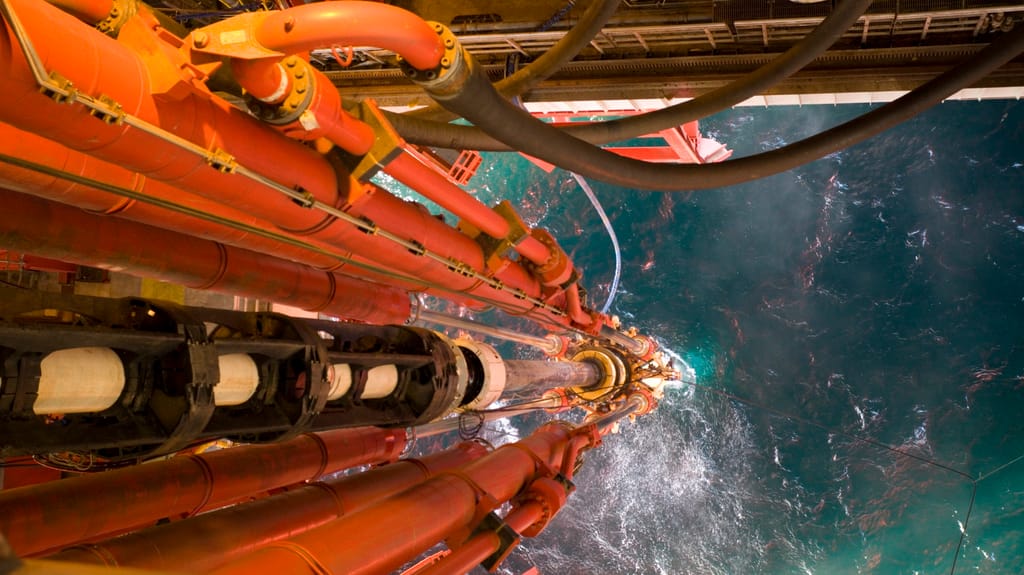
Drill pipe
iStock / MikeUK

[By Robert Hargreaves]

For the first time, UK ministers have had to weigh the emissions from burning gas extracted from a North Sea field before approving its development. The way they did so for Jackdaw says a good deal about how the far larger Rosebank oil field is likely to fare.

Coverage of the decision to approve the Jackdaw gas field has focused on energy security and household bills. But the decision also marks an important test of the legal rules governing new fossil fuel projects. Jackdaw, about 150 miles, or 250km, east of Aberdeen, could send gas ashore from as early as the end of October. Yet the project was first approved in 2022, only for a court to strike that approval down. What happened in between explains why the much larger Rosebank oil field will find the same test far harder.

How a government elected on a promise of no new oil and gas licences can approve new drilling turns on a distinction that rarely makes the headlines. A licence gives a company exclusive rights over an area of seabed, but it does not, on its own, allow anything to be built or any oil or gas to be produced. The regulator must also consent to the project, with the energy secretary’s agreement following an environmental impact assessment. Jackdaw had its licence, but lacked a consent that could survive in court.

The case that changed the rules

That process was transformed by a dispute over a modest oil site at Horse Hill in Surrey, where campaigner Sarah Finch argued that the environmental assessment should have counted not only the emissions from drilling but also those released once the oil was refined and burned as fuel. In June 2024 the Supreme Court agreed by a majority of three to two, reasoning that since the whole purpose of extracting oil is to burn it, those emissions are an effect of the project itself. As The Conversation reported at the time, the ruling’s effects were always likely to reach well beyond Surrey.

Jackdaw and Rosebank had both been approved without any such calculation, and in January 2025 the Court of Session in Edinburgh, hearing challenges brought by the campaign groups Greenpeace and Uplift, quashed both approvals. Construction continued, but neither field could produce anything until ministers decided again. After the government published new guidance in June 2025, the developer, Adura, went back to the regulator with fresh information.

What the minister weighed

The decision document shows those rules at work for the first time. Jackdaw’s total emissions, including those from burning its gas and the liquids produced alongside it, are put at up to 36.6 million tonnes of carbon dioxide equivalent over the field’s life, with only about 2% coming from production itself. The energy secretary, Miatta Fahnbulleh, accepted that those emissions are likely to have a significant effect on the environment, and then approved the field anyway.

That is exactly what the Finch ruling allows, since it requires decision makers to face the climate cost openly rather than refuse every project that carries one. Fahnbulleh set what her decision calls “moderate adverse weight” on the emissions against “significant positive weight” for energy security. Because most of Jackdaw’s gas will be burned in the UK, she measured its emissions against the country’s legally binding carbon budgets, of which they would make up no more than 1.32% in any single period, and concluded that they would not stop the UK reaching net zero by 2050.

It is worth stressing, though, that Jackdaw’s approval does not set a precedent that ministers can simply apply to every new field. Each project must still be assessed on its own merits, with its emissions weighed against its claimed benefits. That balance could look very different for Rosebank, an oil field whose output is far less likely to be used in the UK than Jackdaw’s gas.

Greenpeace says the approval shows the “grip fossil fuel lobbyists still hold over energy policy”, although it has not so far announced a fresh legal challenge. Any challenge would most likely return to the Court of Session, where applications for judicial review normally must be made within three months. Judicial review asks whether a decision was taken lawfully rather than whether it was the right one, so campaigners would need to show that the minister misread the law or left something important out.

Why Rosebank is a harder test

Rosebank, about 80 miles (130km) north west of Shetland, is the UK’s largest undeveloped oil field. Its operator’s own assessment puts the emissions from burning its oil and gas at up to 249 million tonnes over the life of the field, nearly seven times Jackdaw’s total. Fahnbulleh has already called it a different proposition, because its oil would be exported while Jackdaw’s gas flows straight into the UK system, and with only four refineries left in the country, much of it is expected to be refined in Europe.

This goes to the heart of the legal reasoning, because the Jackdaw decision leaned heavily on its gas being burned at home, within carbon budgets the government is bound to meet. That story is much harder to tell about oil sold on world markets, especially as the government’s guidance expects effects to be judged globally. A report by UCL researchers published last year argued that more UK oil means more global emissions, and any minister minded to approve Rosebank will need a persuasive answer.

The courts have not shut down the North Sea, then, but they have forced ministers to set out their climate reasoning in public before they say yes. Rosebank will reveal whether that reasoning still holds once the oil is shipped abroad. 

Robert Hargreaves is Lecturer in Law, York St John University.

This article appears courtesy of The Conversation and may be found in its original form here. 

The Conversation

The opinions expressed herein are the author's and not necessarily those of The Maritime Executive.

The Pentagon's Rare Earth Deadline Is Almost Here. Is Anyone Ready?


For years, the rare earth industry has been talking about January 1, 2027 as the date that changes everything. That date is now less than 75 days away.

On January 1, new Pentagon procurement rules take effect that will restrict the use of Chinese-origin rare earth materials in American weapons systems. The restrictions cover the full supply chain, from mining and refining through separation, melting, and production. Every defense contractor currently sourcing rare earth magnets or magnet materials from China will need a compliant domestic alternative.

That deadline is almost here…so who’s actually ready?

Not who’s planning to be ready. Not who has a roadmap or a feasibility study. Who has real material, from a real facility, going through real qualification with real defense customers?

The answer, for heavy rare earths in North America, thus far appears to be one company: REalloys (NASDAQ: ALOY).

With 75 Days to Go, Everyone Else Is Planning…And REalloys is getting ready for Qualification

In June, REalloys announced that it expects to receive high-purity dysprosium, terbium, and NdPr oxides from SRC as early as Q4 2026, specifically to support customer qualification and supply chain validation ahead of the January deadline.

The SRC facility in Saskatoon is currently undergoing its upgrade, with approximately 150 tonnes per year of NdPr metallization capacity targeted for the first quarter of 2027 and integrated production from monazite concentrate through to separated products and metal targeted for Q3 2027.

Downstream, REalloys’ Euclid, Ohio facility has been working on heavy rare earth metallization and magnet manufacturing. It has worked on several contracts with the Department of Defense, Department of Energy, and NASA. The expertise behind it spans more than 30 years of specialty metals development.

And as of September, the person running REalloys’ operations is Dr. Muhammad Imran, who spent 17 years at SRC and served as its Chief Technology Officer. The man who built the processing technology is now overseeing its industrial scale operations. A move like that tells you everything you need to know about how seriously REalloys is taking this deadline.

Why the Next 75 Days Will Decide the Next 30 Years

What most people outside the defense industry don’t realize is that qualification is where the real competitive advantage gets built, and once it’s built, it’s almost impossible to dislodge.

Defense qualification is a rigorous, multi-year process. Materials are tested, stressed, incorporated into components, and evaluated again after changes in scale. Any variation in chemistry, microstructure, or processing conditions can reset the entire clock. Once a supplier clears that process and gets locked into a program, replacing them becomes a technical and regulatory undertaking that nobody takes on willingly.

Defense platforms are designed to operate for decades. Suppliers are chosen early and rarely replaced. That means the companies that get qualified before the January 1 deadline won’t just have a short-term advantage. They’ll be embedded in programs that could run for 20, 30, even 40 years.

Each qualified alloy reduces the friction and time required to qualify for the next program. Over time, the first mover builds a platform effect that becomes more difficult for a later entrant to replicate.

This is why the next 75 days matter so much. The companies that get qualified before January 1 will lock in supply relationships that last decades. The ones that don’t will be starting the process while their competitors are already delivering. 

Where Everyone Else Stands

The rare earth sector is crowded with miners sitting on resource estimates, separators running pilot plants and exploration-stage companies with promising geology.

But when you narrow the field to heavy rare earths and ask who can actually deliver processed, defense-compliant metals and alloys by January 1, the list gets very short very fast.

Throwing money at the problem simply hasn’t worked.

MP Materials has raised over $1 billion. USA Rare Earth secured a $1.6 billion government equity stake. Billions of dollars have flowed into the sector. But money alone doesn’t solve the processing problem.

The Center for Strategic and International Studies identifies rare earth metallization as the least developed and most difficult capability to rebuild outside China. It takes years of hands-on operational expertise, and that timeline can’t be compressed with funding.

For a competitor to catch REalloys, it would need to simultaneously secure non-Chinese heavy rare earth feedstock and chemicals, build commercial-scale separation capability, develop metallization technology, and then complete the multi-year qualification process with defense customers. Industry estimates put that timeline at three to seven years. By then, REalloys would likely be locked into the programs that matter most.

The Platform Behind the Sprint

When REalloys (NASDAQ: ALOY) crosses the January 1 finish line, it won’t be running on a single facility and a hope. Behind it is an end-to-end supply chain covering every step from raw feedstock to finished magnet.

Upstream, the company owns the Hoidas Lake rare earth project in Saskatchewan and has secured feedstock agreements with partners in Kazakhstan, Brazil, Greenland, Wyoming, and Appalachia. Midstream, it holds an exclusive 80% offtake on SRC’s NdPr, Dy and Tb rare earth production.

Downstream, the Euclid facility handles metallization, alloying, and magnet manufacturing. And the recently signed a letter of intent for a  strategic partnership with South Korean magnet manufacturer JS Link that targets the development of a fully integrated, non-Chinese magnet supply chain in North America.

The U.S. Army has selected REalloys to enter negotiations to build and operate rare earth processing facilities on the Tooele Army Depot in Utah, the first time the Army has ever placed a commercial rare-earth-processing facility on an American military base.

Additionally, the company closed $100 million in institutional financing earlier this year and sits on approximately $122 million in cash with virtually no debt.

The leadership team has been built for this moment: Chairman Stephen S. DuMont, President of GM Defense; General Jack Keane (Ret.), four-star general and Presidential Medal of Freedom recipient; former Secretary of Defense Chief of Staff Joe Kasper chairing the advisory board; and Dr. Muhammad Imran, 17-year SRC veteran, running operations.

The Clock Is Ticking

Then on July 7, REalloys signed the deal that ties it all together…a strategic letter of intent with JS Link, a South Korean permanent magnet manufacturer listed on the KOSDAQ.

This partnership is designed to combine REalloys’ North American supply chain and metallization capabilities with JS Link’s magnet manufacturing technology and global production platform, targeting what would be one of the first fully integrated, non-Chinese rare earth magnet supply chains in North America.

That deal closes the last gap. REalloys already handles everything from raw feedstock through metallization and alloying. JS Link adds the magnet manufacturing step, giving REalloys a credible path to delivering finished magnets for defense, EV, and aerospace customers without touching China's supply chain

The Countdown Clock

Morgan Stanley projects rare earth magnet demand rising three to five times over the coming decade, driven by defense platforms, electric vehicles, robotics, and AI infrastructure.

The supply side remains dangerously concentrated in China, which has tightened export controls on processing technology, equipment, and materials repeatedly over the past two years. 

The stakes extend well beyond the companies racing to rebuild America's rare earth supply chain. Some of the country's largest defense and aerospace manufacturers operate in sectors where high-performance permanent magnets are essential to missiles, radar systems, aircraft and precision-control technologies. Three industry giants illustrate the scale of the challenge.

Raytheon, an RTX business (NYSE: RTX), is among the most important manufacturers of American missile and air defense systems, including Tomahawk cruise missiles, AMRAAM air-to-air missiles and SM-3 interceptors. Such advanced defense systems depend on specialized materials and components, including rare earth magnets used in precision actuation, guidance and radar applications. Raytheon is rapidly expanding production, securing a multiyear AMRAAM contract worth up to $20.7 billion in September and a $6.3 billion SM-3 interceptor contract in October. Parent company RTX reported third-quarter 2026 sales of $25 billion, up 11% year-over-year, alongside a record $340 billion backlog. With defense orders growing, securing reliable material supplies remains an important industrial priority.

L3Harris Technologies (NYSE: LHX) is another major player in the defense supply chain, producing communications equipment, advanced sensors, space systems and missile propulsion technologies. The broader categories of precision electronics, guidance systems and aerospace hardware that it serves include applications requiring high-performance rare earth magnets. L3Harris is investing heavily in expanding U.S. defense manufacturing, announcing a more than $1 billion expansion of its Virginia missile propulsion facilities and an agreement to quadruple production of THAAD missile propulsion systems. The company reported second-quarter 2026 revenue of $5.9 billion, an 8% increase, with its backlog reaching a record $42 billion.

Honeywell Aerospace (NASDAQ: HONA) is a major supplier of aerospace and defense technologies, including aircraft power generation systems, navigation equipment and electromechanical actuators. Its product portfolio includes permanent-magnet generators and precision actuators, illustrating the importance of advanced magnetic materials in modern aviation and military equipment. Honeywell Aerospace became an independent publicly traded company in June 2026, following its separation from Honeywell Technologies. In its first earnings report as a standalone company, it recorded second-quarter sales of $4.5 billion, up 5%, with its backlog increasing 9% to $18.2 billion. As aircraft and defense systems become increasingly electrified, reliable access to qualified magnetic components remains an important consideration.

January 1, 2027 is now a rapidly approaching date on the calendar. The companies that are qualified and delivering when that deadline passes will be locked into defense supply chains, perhaps for decades. The companies that aren’t will spend years trying to catch up to a moving target.

REalloys (NASDAQ: ALOY) has spent the past year making sure it’s ready for this moment. Material is expected from SRC in Q4 for qualification. The Euclid facility is operational. The cash is in the bank. The team is in place.

Seventy-five days. That’s what’s left. And then we find out who was ready and who was just talking about it.

By. Michael Kern


Op-Ed: US tariff war is fueling Vietnam’s coal boom


Stock image.

(The opinions expressed here are those of Gavin Maguire, a columnist for Reuters.)

A years-long trade war between the United States and China has helped shift manufacturing investment, factory output and export production into Vietnam, driving the Southeast Asian nation’s coal-fired electricity generation to record highs.

Vietnam’s coal plants generated 132.9 terawatt hours (TWh) of electricity during the first nine months of 2026, which is a 15% jump from the same months last year and the highest for that period on record, according to data from Ember.

A roughly 12% decline in year-to-date hydro power production due to below-normal rainfall this summer has been a key driver of the greater coal-fired activity, forcing utilities to offset stunted reservoir output with higher coal production.

But a larger factor has been the steady swell in Vietnam’s export-oriented manufacturing sector, which has grown rapidly within the past decade and lifted the country’s total electricity demand by nearly 50% since 2019.

In many respects, that manufacturing expansion can be traced back to Washington. US tariffs on Chinese imports since 2018 encouraged manufacturers to diversify production into lower-cost locations, with Vietnam emerging as one of the biggest winners.

The shift has helped supercharge Vietnam’s factory sector and power demand, but it has also tied an increasing volume of export production destined for the US market to a power system that still relies heavily on coal for electricity generation.

America’s factory floor

The switch in production origins shows up clearly in US trade data.

In 2018, US imports from China were roughly 10 times larger than imports from Vietnam. This year, monthly imports from the two countries have been nearly level.

When US imports from China hit their peak of roughly $539 billion, average monthly US trade flows to China were around $45 billion, data from LSEG shows.

During that same year, average US monthly trade flows to Vietnam were around $4 billion.

So far in 2026, average monthly US trade flows to China and Vietnam have been around $22.9 billion and $22 billion, respectively.

That more than 400% rise in the value of Vietnam’s monthly exports to the US helped fuel an economy-wide boom, with Vietnam’s gross domestic product (GDP) posting an average annual expansion of 7.4% since 2022, according to the International Monetary Fund.

That growth pace was one of the world’s fastest during that period, and in turn triggered sustained growth in Vietnam’s total electricity consumption, which expanded at an average rate of 6% a year between 2022 and 2025, data from Ember shows.

Coal-heavy power mix

Vietnam’s electricity system is heavily reliant on coal, with coal-fired power stations accounting for an average of around 49% of total utility supplies since 2019.

By comparison, coal accounts for around a third of electricity generation globally, which means that Vietnam has a substantially more coal-dependent power system than most.

However, coal’s share of Vietnam’s power mix can fluctuate significantly depending on the availability of alternative power sources in any given year.

For instance, coal only accounted for 38.5% of the power mix in 2022 thanks to strong hydro production that year as well as a surge in international coal prices, which spurred nearly all cost-sensitive power systems to pare back coal use.

So far in 2026, coal’s share has averaged nearly 52% of the generation mix due to the lowest hydro production tally since 2023.

That coal share is the highest for that period since 2020, and has resulted in a 16% jump in power sector emissions to a record 129 million metric tons of carbon dioxide and equivalent gases so far this year, data from Ember shows.

And with the peak hydro production period already passed, additional gains in both coal use and coal emissions are likely, which will help cement 2026 as a record for Vietnam’s coal power reliance.

Over the longer term, Vietnam does have significant non-coal power capacity under construction, including around 11 gigawatts (GW) of gas-fired power, 1.4 GW of new hydro capacity, and around 1.3 GW of wind capacity, according to Global Energy Monitor.

But there are also an additional 2.7 GW of new coal plants being built, with a further 2.6 GW planned after that.

That means that, having won a growing share of the US import demand, Vietnam looks set to primarily power that production with coal.

That in turn may serve to keep the cost of goods production relatively low, but comes with its own climate price tag that US importers may have to wrestle with as and when their supply chains come under scrutiny.

(Reporting by Gavin Maguire; Editing by Lincoln Feast.)