UK Weighs Scrapping Its Largest Untapped Oilfield With Oil Over $100
- Britain faces a major political split over the £8.7 billion Rosebank oilfield, with energy security and investment concerns clashing with climate commitments.
- Rosebank could produce 69,000 bpd at peak, potentially supplying around 10% of UK oil output as North Sea production and reserves continue declining.
- The government has approved Jackdaw and launched a £2 billion Energy Wealth Fund, while Rosebank's fate remains uncertain amid legal and environmental concerns.
Britain is deciding whether to drill its largest untapped oilfield in the middle of an oil shock, with Brent above 100 and more than 70% of its oil already coming from abroad. Rosebank, west of Shetland, is an £8.7 billion (~11.6 billion) development that its operator says would pump about 69,000 barrels a day at peak, roughly a tenth of the country’s expected oil output. The production vessel has been on site since June, and Ithaca Energy, which owns a fifth of the field, says it will likely stop investing in Britain if the government says no.
A major Cabinet split has emerged within Prime Minister Andy Burnham’s government over whether to approve drilling at the Rosebank oilfield, with energy security on one side and climate commitments on the other.
Chancellor John Healey wants Rosebank approved for the jobs and the Treasury revenue, and Business Secretary Jonathan Reynolds is backing him. An unnamed minister told the Mail on Sunday that Burnham will ultimately back the development too. Unite and GMB, two of Britain’s largest unions, are pushing for approval.
Energy Secretary Miatta Fahnbulleh makes the call, and she is minded to say no. In 2022 she wrote that funding new fossil fuels was “irresponsible and shortsighted,” and that the world “can’t have any new oil or gas fields” if it wants to keep warming to 1.5C. Foreign Secretary Ed Miliband, who blocked new licences when he held her job, is backing her.
Fahnbulleh approved Jackdaw on October 21 and has already explained why Rosebank is different. She calls Jackdaw “a gasfield that caters for the domestic market” and Rosebank “an oilfield that is mainly for export.” She also says the decision is hers alone under a quasi-judicial framework, and that bending it would invite a court to strike it down. Scotland’s Court of Session did exactly that in January 2025, quashing the first consents for both fields because their environmental assessments ignored the emissions from burning the oil and gas.
Rosebank lies about 80 miles northwest of Shetland in the North Atlantic. Rystad Energy estimates it holds nearly 500 million barrels of oil equivalent, about 90% of it oil, and Ithaca puts recoverable oil across two development phases at around 300 million barrels. Campaigners estimate that burning that oil would release more than 200 million tonnes of CO?, and government officials put the field’s emissions at roughly seven times Jackdaw’s.
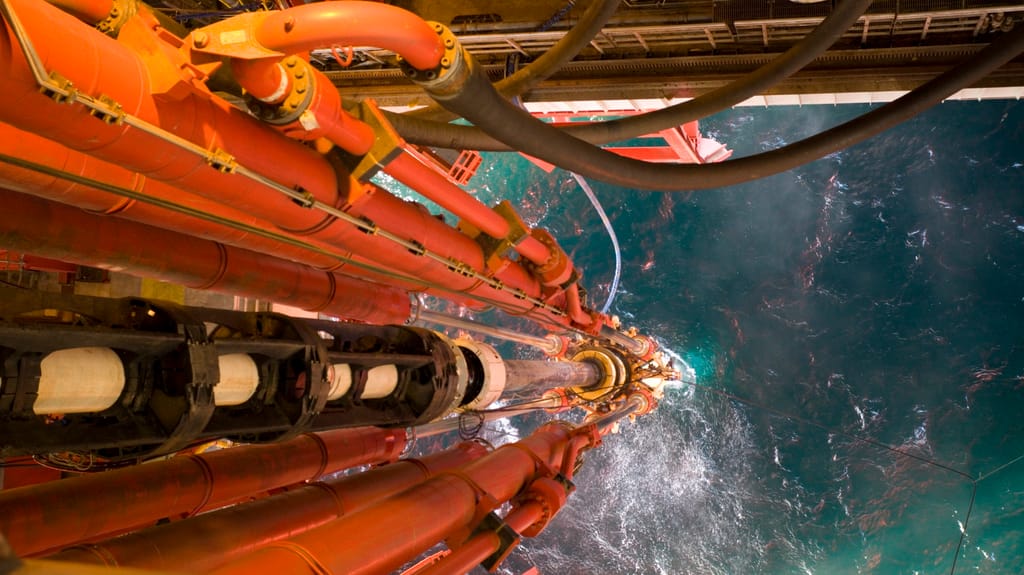
Adura, the North Sea joint venture between Equinor (NYSE:EQNR) and Shell Plc (NYSE:SHEL) that operates Rosebank with an 80% stake, has deployed an electrification-ready Floating Production Storage and Offloading (FPSO) vessel at the field. Adura says the field will produce oil at about 12 kg of CO? per barrel, against a North Sea average of about 20 kg. Powering the vessel from shore could cut those emissions by more than 70%, to below 3 kg per barrel, once the technology is qualified and the consents are in place. The oil will be shipped by shuttle tanker to customers’ refineries in Europe.
North Sea production is in steep decline. The North Sea Transition Authority reported last week that UK proven and probable reserves fell to 2.5 billion barrels of oil equivalent at the end of 2025, down 0.4 billion in a year, and that not a single exploration well was drilled on the UK Continental Shelf in 2025.
Jackdaw, which is nearly complete, is expected to start supplying gas within weeks and could account for about 6% of North Sea gas production at full output. The government says approving it does not break Labour’s pledge against new exploration licences because Jackdaw holds an existing licence. The field had been held up by the legal challenge over downstream emissions.
Alongside the Jackdaw approval, Healey announced a £2 billion down payment for a new Energy Wealth Fund. Future North Sea oil and gas revenues will flow into it, and the capital is earmarked for renewable generation, low-carbon infrastructure and industries to replace the oil and gas economy. Treasury modelling found that had the UK invested its roughly £200 billion in North Sea receipts since the 1980s at returns similar to Norway’s, the fund could have reached about £1 trillion.
Norway’s sovereign wealth fund, officially the Government Pension Fund Global, is worth approximately $2.3 trillion, making it the world’s largest sovereign wealth fund. It is financed primarily by surplus revenues from the Norwegian state’s petroleum sector, alongside returns from its global investments. Managed by Norges Bank Investment Management, the fund posted a record profit of $184.3 billion in the first half of 2026, then lost $29.7 billion in the third quarter as rising borrowing costs cut the value of its bond portfolio.
By Alex Kimani for Oilprice.com
Op-Ed: Jackdaw Gas Project Passed UK's Legal Test - Rosebank Will Be Harder
[By Robert Hargreaves]
For the first time, UK ministers have had to weigh the emissions from burning gas extracted from a North Sea field before approving its development. The way they did so for Jackdaw says a good deal about how the far larger Rosebank oil field is likely to fare.
Coverage of the decision to approve the Jackdaw gas field has focused on energy security and household bills. But the decision also marks an important test of the legal rules governing new fossil fuel projects. Jackdaw, about 150 miles, or 250km, east of Aberdeen, could send gas ashore from as early as the end of October. Yet the project was first approved in 2022, only for a court to strike that approval down. What happened in between explains why the much larger Rosebank oil field will find the same test far harder.
How a government elected on a promise of no new oil and gas licences can approve new drilling turns on a distinction that rarely makes the headlines. A licence gives a company exclusive rights over an area of seabed, but it does not, on its own, allow anything to be built or any oil or gas to be produced. The regulator must also consent to the project, with the energy secretary’s agreement following an environmental impact assessment. Jackdaw had its licence, but lacked a consent that could survive in court.
The case that changed the rules
That process was transformed by a dispute over a modest oil site at Horse Hill in Surrey, where campaigner Sarah Finch argued that the environmental assessment should have counted not only the emissions from drilling but also those released once the oil was refined and burned as fuel. In June 2024 the Supreme Court agreed by a majority of three to two, reasoning that since the whole purpose of extracting oil is to burn it, those emissions are an effect of the project itself. As The Conversation reported at the time, the ruling’s effects were always likely to reach well beyond Surrey.
Jackdaw and Rosebank had both been approved without any such calculation, and in January 2025 the Court of Session in Edinburgh, hearing challenges brought by the campaign groups Greenpeace and Uplift, quashed both approvals. Construction continued, but neither field could produce anything until ministers decided again. After the government published new guidance in June 2025, the developer, Adura, went back to the regulator with fresh information.
What the minister weighed
The decision document shows those rules at work for the first time. Jackdaw’s total emissions, including those from burning its gas and the liquids produced alongside it, are put at up to 36.6 million tonnes of carbon dioxide equivalent over the field’s life, with only about 2% coming from production itself. The energy secretary, Miatta Fahnbulleh, accepted that those emissions are likely to have a significant effect on the environment, and then approved the field anyway.
That is exactly what the Finch ruling allows, since it requires decision makers to face the climate cost openly rather than refuse every project that carries one. Fahnbulleh set what her decision calls “moderate adverse weight” on the emissions against “significant positive weight” for energy security. Because most of Jackdaw’s gas will be burned in the UK, she measured its emissions against the country’s legally binding carbon budgets, of which they would make up no more than 1.32% in any single period, and concluded that they would not stop the UK reaching net zero by 2050.
It is worth stressing, though, that Jackdaw’s approval does not set a precedent that ministers can simply apply to every new field. Each project must still be assessed on its own merits, with its emissions weighed against its claimed benefits. That balance could look very different for Rosebank, an oil field whose output is far less likely to be used in the UK than Jackdaw’s gas.
Greenpeace says the approval shows the “grip fossil fuel lobbyists still hold over energy policy”, although it has not so far announced a fresh legal challenge. Any challenge would most likely return to the Court of Session, where applications for judicial review normally must be made within three months. Judicial review asks whether a decision was taken lawfully rather than whether it was the right one, so campaigners would need to show that the minister misread the law or left something important out.
Why Rosebank is a harder test
Rosebank, about 80 miles (130km) north west of Shetland, is the UK’s largest undeveloped oil field. Its operator’s own assessment puts the emissions from burning its oil and gas at up to 249 million tonnes over the life of the field, nearly seven times Jackdaw’s total. Fahnbulleh has already called it a different proposition, because its oil would be exported while Jackdaw’s gas flows straight into the UK system, and with only four refineries left in the country, much of it is expected to be refined in Europe.
This goes to the heart of the legal reasoning, because the Jackdaw decision leaned heavily on its gas being burned at home, within carbon budgets the government is bound to meet. That story is much harder to tell about oil sold on world markets, especially as the government’s guidance expects effects to be judged globally. A report by UCL researchers published last year argued that more UK oil means more global emissions, and any minister minded to approve Rosebank will need a persuasive answer.
The courts have not shut down the North Sea, then, but they have forced ministers to set out their climate reasoning in public before they say yes. Rosebank will reveal whether that reasoning still holds once the oil is shipped abroad.
Robert Hargreaves is Lecturer in Law, York St John University.
This article appears courtesy of The Conversation and may be found in its original form here.

The opinions expressed herein are the author's and not necessarily those of The Maritime Executive.

No comments:
Post a Comment