Wednesday, October 28, 2026


Von der Leyen’s Canada ‘associate membership’ spurs battle of words with EU capitals
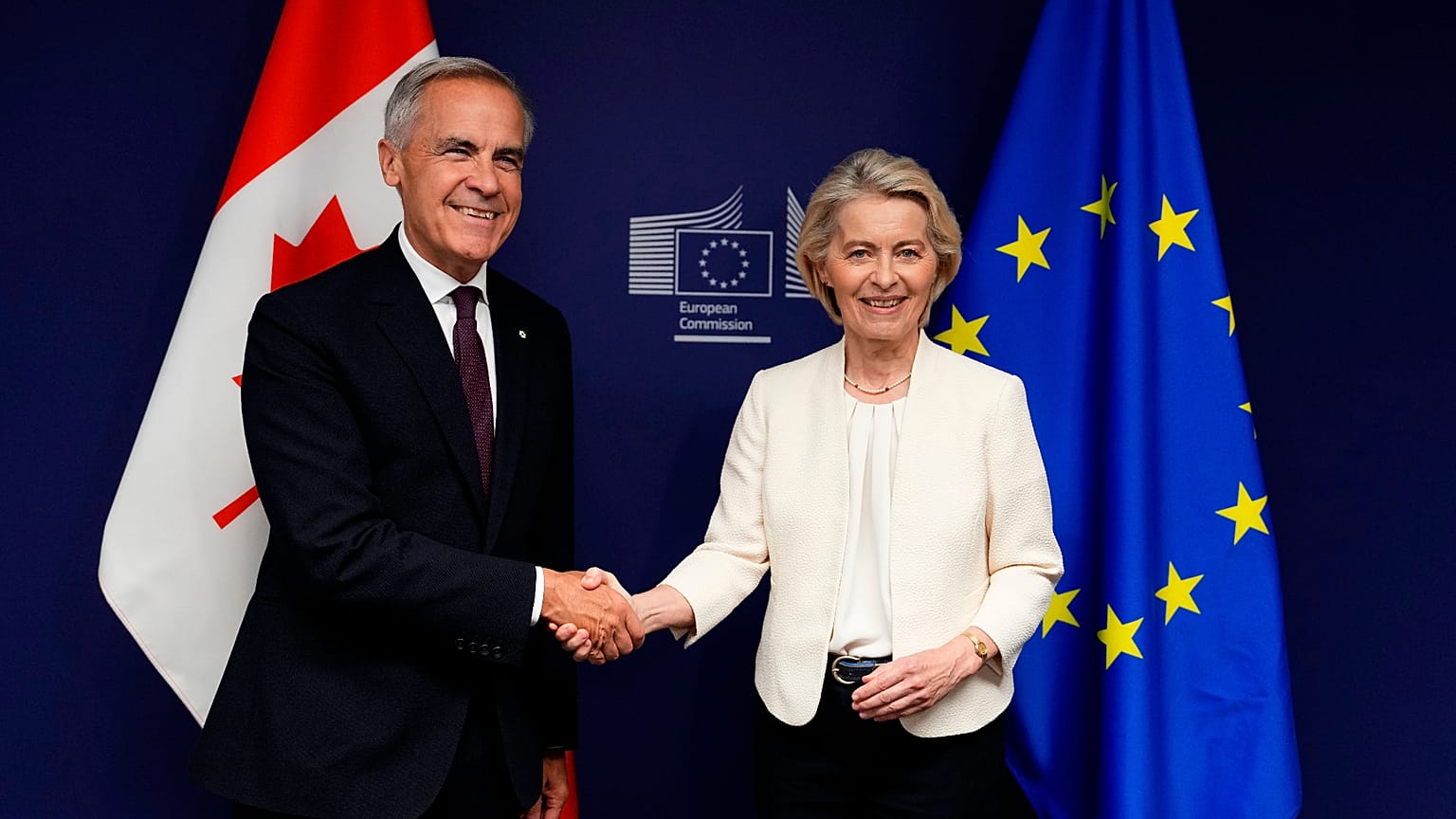
Canadian Prime Minister Mark Carney left, and European Commission President Ursula von der Leyen participate in a bilateral meeting at the European Parliament in Strasbourg,.
Copyright AP Photo/ Justin Tang
By Luca Bertuzzi
Updated
EURONEWS


Germany, Italy, France and Greece objected to a draft EU-Canada declaration that cites von der Leyen’s ‘associate membership’ offer, as the member states fear legal uncertainty and a precedent for other third countries ahead of the Montreal summit on Thursday and Friday.

Last month, European Commission President Ursula von der Leyen made a bombshell offer to Canada: to become the first EU “associate member”. Now the term is proving hard to swallow for several member states, including her own Germany.

Ahead of the EU-Canada summit, meant to chart what many see as the closest partnership between the bloc and a non-member country, European capitals led by Berlin have pushed back against a term that has yet to be clearly defined, five EU diplomats told Euronews.

“The main concern is that this is unknown terminology, it might bring up legal uncertainty and expectations from other third countries,” one of the diplomats said. “This was not communicated previously from the Commission. We don’t know what we are talking about.”

Last week, a revised draft of the joint declaration explicitly mentioned the notion, vowing regular exchanges with Canadian authorities on major policy and regulatory initiatives and to define the full scope of the partnership at the 2027 summit.

Naming the term outright in what would be the first EU official document of major political significance to include it has drawn strong pushback from Germany, Italy and Greece, and scepticism from other countries, including France.

A new draft circulated on Monday evening added wording that distanced member states from the concept, specifying that it was “put forward by the European Commission," wording suggested by the Italian government.

The text was due to be adopted on Tuesday through the so-called silent procedure, under which a document passes unless a member state objects. Germany, Italy, France and Greece all raised objections before the deadline.

Italy's objection does not relate to associate membership, since its proposed wording was accepted, but it asked to change a paragraph related to competitiveness and technological sovereignty for a balanced decarbonisation transition.

The office of European Council President António Costa is now expected to circulate a new version, with another round of talks at ambassador level on Wednesday, before the summit opens in Montreal on Thursday.

Von der Leyen floated the idea of offering associate membership to Canada in her annual State of the Union speech to the European Parliament in September, with Prime Minister Mark Carney as guest of honour.

The idea had been put to the Canadians before, but it was never discussed with member states or within the Commission, catching capitals including Paris and Berlin off guard.

Even Carney did not seem fully sold on the nomenclature, preferring to call it an “alliance of the future”. “What matters is the substance,” he said when asked whether he was comfortable with the term.

With governments now finalising the joint declaration, to be adopted at the summit on Thursday and Friday, that initial lack of consultation is coming back to haunt the bid.

For Berlin, the main issue is that member states should first define what the cooperation package contains, and only then agree the terms for the declaration, not the other way around.

There is broad consensus on seeking closer cooperation with Canada in areas such as defence, critical raw materials, energy, trade and border security. It is the associate membership label that has drawn scrutiny.

Others took aim at its legal implications, arguing these must be carefully studied before the term enters a political declaration.

“It does not mean anything, it is not in the treaties,” a second EU diplomat said, adding that “we want to find a way to make the concept work.”

Von der Leyen is not new to launching new ideas and forging ahead with initiatives without consulting with the member states. In 2023, she announced a migration deal with Tunisia and was criticised for lacking a formal mandate to do so.

“In the case of Tunisia, member states fully agreed with the objective of reducing arrivals, but they had to say that they did not 100% agree with the way it was done. It is a bit the same case here,” a third diplomat told Euronews.

For this diplomat, the EU should not view the label as merely institutional, but as a way of packaging what would otherwise inevitably look like a sector-by-sector technical exercise in bringing Canada closer to the bloc.

For von der Leyen’s critics, she has a habit of making grand announcements before figuring out the implications. For her supporters, her strength is staying ahead of the curve, setting out a political vision and letting the bureaucratic machinery do the rest.

German Chancellor Friedrich Merz was the first to propose associate membership, but pitched it as a way to anchor Ukraine to the EU, with security guarantees, as Kyiv progressed through the accession process.

Applying it to Canada carries a very different connotation: it would offer a blueprint for the closest possible partnership with a non-European country that could never join the bloc.

“A lot of other countries want to come closer to the EU, but we don’t know what to offer them. Whatever deal we reach with Canada might be an important motivator for others,” an EU official told Euronews.

This story was updated with additional information.


Germany Slams Brakes On EU-Canada ‘Associate Member’ Statement

Canada's Prime Minister Mark Carney. 
Photo Credit: World Economic Forum / Ciaran McCrickard

October 28, 2026

By Rapporteur


Key Takeaways:

Germany, Italy, France and Greece blocked a draft EU-Canada statement that would have named Canada the bloc’s first “associate member,” forcing a redraft.

The undefined label, floated by Ursula von der Leyen, remains contentious ahead of the Montréal summit, with the text now only pledging to define it by 2027.

U.S. President Trump has already dismissed the idea as “laughable” and threatened heavy tariffs on the EU.


(Rapporteur) — Germany and three other countries have objected to a joint EU-Canada statement proposing to make the north American country the bloc’s first “associate member”.

The objection has put the brakes on a text that was due to be automatically adopted on Tuesday morning. The statement will now need to be redrafted.


Ursula von der Leyen, the European Commission president, first floated the concept of associate membership in September.

The label has since become one of the most contentious elements ahead of this week’s EU-Canada summit in Montréal, and has raised eyebrows in both Brussels and Ottawa amid a lack of clarity over what the status would mean in practice.Advertisement

Germany has been among the fiercest opponents of the term.

The objection came before the deadline for the EU’s so-called silence procedure, a diplomatic mechanism under which a text is approved automatically unless a member objects in time, several EU diplomats told Rapporteur.

Three other countries, Italy, France and Greece, also objected to the statement.

The draft objected to by the four members was circulated after member states discussed the text on Monday, in an attempt to bridge the different positions.


The latest version, dated 26 October and seen by Rapporteur, referred to work in order to define the concept of “Associate Member put forward by the European Commission,” effectively shifting ownership of the label back to the EU executive as national capitals sought to distance themselves from the internal dispute, said diplomats.

Monday’s draft still retained a commitment to define the concept ahead of the next EU-Canada summit in 2027.

The label had earlier triggered the ire of Donald Trump, the US president, who called the idea “laughable” in September, and threatened to impose “very heavy tariffs” on the EU for what he deemed a “hostile act.”

Germany did not immediately reply to a request to comment.


About Rapporteur
Rapporteur, formerly EurActiv, is Europe’s expert media organisation for policy and politics. Through deeply reported journalism, trusted expertise and a commitment to engagement with our audiences, we aim to help the people shaping Europe’s future make better decisions.
View all posts by Rapporte
How El-Fasher Remains Gripped By Fear One Year After Sudan’s RSF Seized The City – Analysis


Thousands have fled El Fasher and surrounding areas with many arriving in the locality of Tawila after walking for days under threat of violence.
 Photo Credit: UNOCHA/ Mohamed Galal


October 28, 2026

By Arab News

By Jonathan Gornall


Key Takeaways:

A BBC investigation documented at least 43 attacks on hospitals and healthcare sites in El-Fasher between May 2024 and the city’s fall in October 2025, resulting in 55 medical workers killed, 120 injured and 10 forcibly disappeared or abducted.

Doctors who fled the city described systematic shelling and drone strikes intended to put facilities out of service; after South Hospital was raided and closed, the Saudi Maternity Hospital was hit up to 25 times a day, while the RSF denies the claims and asserts hospitals have been restored.

A UN fact-finding mission has described the RSF’s mass killings and siege conditions as indicators of a genocidal path against non-Arab communities, and Amnesty International reports ongoing surveillance, detention and torture that leave the city, now reduced to roughly 70,000 residents, unsafe for return.


One year on from the fall of the Sudanese city of El-Fasher, allegations have emerged that the paramilitary Rapid Support Forces deliberately targeted hospitals and health workers during the 18-month siege.

Some details of the atrocities carried out by the RSF in El-Fasher were already known. In October 2025, the Sudan Doctors’ Network claimed that 460 people had been murdered at the Saudi Maternity Hospital.


RSF fighters, they said, had “cold-bloodedly killed everyone they found inside … including patients, their companions, and anyone else present.”

At the time, the massacre drew condemnation from the World Health Organization. It was denied by the RSF, but satellite imagery acquired by the Humanitarian Research Lab at Yale University on Oct. 27 and 28 appeared to show clusters of bodies in the grounds of the hospital.

But fresh evidence, reported last week by a BBC team that conducted extensive interviews with medics who had fled the city, suggests that the deliberate targeting of healthcare facilities in the city by the RSF was even more widespread than previously thought.

The BBC said it had documented “at least 43 separate attacks on hospitals and healthcare sites” between May 2024 and October 2025, when the city finally fell.

It also reported that 55 medical workers were killed, 120 injured and 10 “forcibly disappeared or abducted.”


Mohamed Madi, a senior broadcast journalist who worked on the report with Barbara Plett-Usher, the BBC’s Africa correspondent, told Arab News they had not been able to visit El-Fasher.

Instead, they had conducted interviews from Nairobi, Kenya, with medics who had escaped from the city and were now in various parts of Sudan, including Omdurman and Khartoum.

They also spent several months reviewing and verifying open-source video footage and still photographs.

Dr Muhamed Suliman, a surgeon who was in El-Fasher during the siege, told the BBC that the RSF had been “trying to put (the hospitals) out of service because the health system is the cornerstone of any city or any state.”

He added: “The RSF started hitting these areas so citizens no longer have any way to stay there. It was intense. It was deliberate. It was planned.”

The investigation found that in May and June 2024, the city’s South Hospital — also known as Al-Janoubi Hospital — “was shelled several times as paramilitary fighters pushed forward from their positions in the east of the city.”

The hospital was raided and briefly occupied on June 8. Many staff managed to escape but when government forces retook the hospital later the same day, they discovered the bodies of several murdered patients and found medical equipment had been deliberately destroyed.

The hospital closed and later fell back into the hands of the RSF.

Interviewed by the BBC, the health minister of the self-proclaimed RSF-backed Government of Peace and Unity, Dr Alaa Eldin Nugud, claimed the South Hospital had been used as a military base, an accusation strongly denied by the doctors who worked there.


After South Hospital closed, staff and equipment were relocated to the Saudi Maternity Hospital in the west of the city, which then immediately came under attack.

Six doctors in exile spoken to by the BBC insisted the hospital had been systematically targeted multiple times, at one stage being struck up to 25 times a day by a mix of drones and artillery shells.

Other medical facilities were also targeted, including the Specialized Children’s Hospital, which was forced to move to two different locations before finally being forced to close.

According to the report, by the time the city fell to the RSF, on Oct. 26, 2025, only the Saudi Maternity Hospital was still functioning, despite having been badly damaged.

Interviewed in Nairobi by the BBC, Dr Nugud dismissed all the allegations as “lies” designed to discredit the RSF.

The RSF-backed government says most healthcare services in the city have been restored and has released videos on social media purporting to show the Saudi Maternity Hospital and the Teaching Hospital up and running.

Dr Nugud told the BBC that doctors had chosen to stay and work after having been “liberated.” But one of the doctors featured in a video with Dr Nugud told a different story.

“I was forced to be there,” Dr Al-Haj Mohamed Ahmed told the BBC. “If I spoke out of line, they’d put a bullet through my head.”

The targeting of hospitals is just one aspect of the RSF’s behavior during and after the siege of El-Fasher that has been condemned by international bodies.

On Feb. 19, a report by the Independent International Fact-Finding Mission for the Sudan for the UN Commission for Human Rights found that “the mass killings and related atrocities committed by the Rapid Support Forces in and around El-Fasher, during its takeover of the city on or around Oct. 26 and 27, 2025, are indicators of a genocidal path.”

The crimes, the report added, “followed an 18-month siege during which the Rapid Support Forces deliberately imposed conditions of life calculated to bring about the physical destruction of non-Arab communities, in particular the Zaghawa and the Fur.”

El-Fasher is not the only place in the Darfur region where healthcare infrastructure has been damaged or destroyed during the civil war, which began in April 2023.

In March this year the World Health Organization condemned an attack on a teaching hospital in Al-Daein, the capital of East Darfur state, in which at least 64 people, including a dozen children, were killed.

The WHO said the conflict had so far claimed the lives of 2,036 people in 213 attacks on healthcare facilities. Al-Daein was under the control of the RSF, and on this occasion the SAF was accused of having hit the hospital. It has denied responsibility.


One year on from the fall of El-Fasher, information about conditions inside the city is hard to come by.

But according to Medecins Sans Frontieres, which was given rare access in January, El-Fasher, once a city of a million people, is now a virtual ghost town with only 70,000 inhabitants remaining.

Under constant supervision by the RSF, the MSF team was allowed to spend only four hours in the city, during which time “we saw destroyed areas, largely emptied of the people who used to live there.”

In a statement on Jan. 28, MSF added: “Although we were unable to carry out a thorough and independent assessment, we did not find massive acute medical needs across what now looks like a ghost town, with few civilians who remained or have since returned.

“This is in stark contrast to the regional capital it once was.”

Although few independent witnesses have been able to gain access to El-Fasher, Amnesty International has been collecting testimonies from people who fled the city.

“The RSF’s claims that El-Fasher is safe for civilians to return to after the horrific massacres that took place one year ago could not be further from the truth,” said Agnes Callamard, Amnesty’s secretary-general, in a statement issued on Oct. 23.

“A pervasive pall of fear hangs over El-Fasher today. Men and women live under constant RSF surveillance, and with the ongoing threat of detention, torture and killing.”

Callamard said the international community “has failed to take the necessary actions to address the desperate plight civilians face as the conflict rages.

“The moves towards a ceasefire have been half-hearted, and Amnesty International is not aware of any diplomatic attempts to establish an international force that would meaningfully protect civilians.”

She singled out one state player in the conflict for criticism.

“Crucially, the United Arab Emirates has continued to support the RSF, while governments with the required influence have largely failed to name and denounce their role or hold them to account.”

Amnesty’s accusation that the RSF committed crimes against humanity and ethnic cleansing during its campaign to seize El-Fasher is supported by testimonies it gathered in August and September from 25 civilians, including 19 residents and six humanitarian workers.

All but one of the civilians had managed to flee the city.

“Modathir,” a 29-year-old Zaghawa man who had been held in Shala prison before escaping in July 2026, told Amnesty he had been regularly beaten and had witnessed killings.


“Torture is something which is permanent in any (RSF) detention,” he told Amnesty.

“They executed people who tried to look at them … If you sleep a lot, they don’t like that, they will execute you. They ask, ‘You want to take a rest? We will give you permanent rest’.”

Another Zaghawa man, 33-year-old “Mamoun,” who was also held in Shawa prison until July, said he had witnessed the RSF shooting prisoners, and the death of a man with untreated diabetes whom his captors had refused to help.

“They take people out randomly, they accuse you of being with the Joint Forces or the military … And they beat you until you faint … Sometimes I was beaten four times a day … It just depends on their mood.”

Mamoun was eventually released after his family paid a ransom.

Women and children were held in schools that had been turned into detention centers. Women who had escaped in July or August this year described high rates of malnutrition among children, a lack of medicines and regular beatings.

As of September, a small number of humanitarian organizations had been able to return to the city, but residents said their movements were closely monitored and residents were prevented from speaking freely to them.

One resident who had returned to El-Fasher in June 2026 told Amnesty: “The El-Fasher I knew is gone, it is a completely destroyed city.

“The public infrastructure, the schools, government institutions, hospitals, all are destroyed … It seemed like everybody is watched very closely, they don’t give humanitarian workers any private space to talk … Everybody is terrorized.”
China’s Biotechnology Expansion Spreads Across Latin America – Analysis

Laboratory equipment at the University of Concepción’s UdeC-Omics facility in Concepción, Chile, August 4, 2025. The laboratory uses genetic sequencing technology from Chinese company MGI Tech as Chinese biotechnology companies expand their presence in Latin America’s health and research sectors, raising questions about technological dependence, sensitive biodata, and national security.

 (Photo: Esteban Paredes Drake/Universidad de Concepción)


October 28, 2026

Diálogo Américas
By Paolo Manzo


Key Takeaways:

China is expanding rapidly in Latin American biotechnology through vaccine plants, sequencing labs and research partnerships, including a $100 million Sinovac commitment in Brazil.

Local production does not equal autonomy: facilities and genetic-data systems can remain dependent on Chinese inputs, creating hard-to-reverse strategic vulnerabilities, especially with firms later listed as military companies.

Stronger biosafety, data-ownership and dual-use rules, plus regional coordination, are needed so Latin American countries retain control over biodata and supply chains.


In recent years, China has accelerated its expansion in Latin America’s biotechnology sector, investing in production facilities, laboratories, genetic sequencing technologies, and partnerships with local institutions. From vaccines to genomics, China’s presence is reaching strategic sectors that are critical not only to public health, but also to scientific research, technological capabilities, and the national security of countries across the region.

While these investments are often presented as a solution to gaps in production and technological capacity, particularly in more fragile health systems, they also risk creating dependencies that are difficult to reverse when strategic technologies, supplies, or infrastructure become concentrated among Chinese providers or reliant on supply chains linked to China.


“Access to genetic data, biological samples, research infrastructure, and specialized knowledge can have security implications, especially in countries with weak regulations on biosafety, data protection, and technology transfer,” César Santos Victoria, a researcher at Central American think tank Expediente Abierto who specializes in Chinese influence in Latin America, told Diálogo.

The risk is particularly significant because biotechnology depends on resources and capabilities that take years to develop, such as genetic data and research infrastructure, and that cannot easily be replaced. Dependence on Chinese providers can create market concentrations that are difficult to reverse, increase Latin American countries’ vulnerability to China, and give Beijing a strategic position in sensitive sectors such as health care, scientific research, and national security.
From vaccine supply to local production

The vaccine sector represents one of the most sensitive areas of China’s biotechnology expansion. Chinese biotechnology companies are increasingly seeking to establish large-scale, competitively priced local production in Latin America, bringing manufacturing facilities closer to consumer markets and reducing supply times and costs. While this may offer advantages to countries in the region in terms of health security and access to essential medicines, it also risks progressively consolidating Chinese companies as key suppliers. Large-scale production capabilities, competitive prices, and long-term government contracts can make it more difficult for other competitors to enter the market and for countries to diversify their sources of supply, creating strategic dependence.


As Santos Victoria warns, “Local production does not necessarily mean autonomy. A plant established in Latin America may continue to depend on China for active ingredients, equipment, reagents, maintenance, financing, or training. The risk is creating production ecosystems that are difficult to replace.”

Among the companies expanding the most is Sinovac Biotech, which announced in June plans to invest $100 million in Brazil over the next five years to establish a local operation focused on vaccines and other areas of biotechnology, including cell therapies and monoclonal antibodies.

The project initially includes vaccines against human rabies and chickenpox through an agreement with the Paraná Institute of Technology. In Colombia, Sinovac Biotech established a public-private partnership with the Bogotá city government and BogotáBio, which plans to begin producing vaccines in 2029. In Chile, meanwhile, Sinovac secured the government contract for influenza vaccines for the second consecutive year, winning exclusive rights for 2026 with an order of more than 8 million doses.

The COVID-19 pandemic showed how Beijing sought to use its production and distribution capacity as a tool of geopolitical influence, using vaccine distribution in Latin America to strengthen political and diplomatic ties through what became known as “vaccine diplomacy.” With production established directly in the region, the concentration of supply among Chinese providers could take on a more lasting dimension: a dominant position in the supply of essential vaccines risks creating structural dependence within local health systems and increasing Beijing’s ability to exert influence over a critical sector during periods of crisis or geopolitical tension.

China’s race for Latin American biodata

China’s biotechnology expansion in Latin America is also extending into genetic sequencing, a strategic sector because it enables the collection of highly sensitive and permanent information not only about individuals, but also about their relatives and, on a larger scale, the genetic characteristics of entire populations. Control over such information can have long-term implications for pharmaceutical research, precision medicine, and the development of new biological technologies.

In 2024, Chinese company MGI Tech Co. opened its main Latin American center in São Paulo, with the goal of expanding the use of genetic sequencing in diagnostics and the fight against cancer, while providing technology and training to laboratories, hospitals, and universities. Applications include precision medicine and oncology. The company also operates in Colombia, Chile, Argentina, and Mexico. That same year in Uruguay, BGI Genomics opened its first Latin American laboratory, dedicated to genetic sequencing and early diagnosis, with a planned investment of $10 million over five years.

BGI’s presence took on an additional security dimension in June 2026, when the U.S. Department of Defense included BGI Group and BGI Genomics on its list of Chinese military companies under Section 1260H. The Pentagon maintains that BGI Group is affiliated with the People’s Liberation Army and contributes to China’s military-civil fusion system.

Large-scale access to genetic and clinical data can strengthen China’s position in the development of medicines and therapies, increasing its market concentration and other countries’ dependence on its technologies. As occurred with vaccines during the pandemic, China could use this dependence as a tool of geopolitical influence. “China’s approach has been to steal, scale, and strangle competitors,” Caitlin Frazer, executive director of the U.S. National Security Commission on Emerging Biotechnology (NSCEB), told industry publication BioSpace. Frazer also warned of the risks of depending on Beijing “for life-sustaining medications.”

Artificial intelligence further amplifies this risk: Combined with vast quantities of biodata, it can more rapidly identify biological correlations, design proteins, identify new therapeutic targets, and accelerate drug development. If agreements do not clearly establish where data is stored, who can access it, and how it can be used in subsequent research, biodata generated in Latin America could become a strategic resource for outside companies or research centers without the region necessarily retaining control over it or benefiting from its economic and strategic value.

“In joint projects, it must be clearly established who controls the patents, the data, the research results, and their subsequent commercialization,” Santos Victoria said. The expert warns of the risk of “asymmetries in negotiations” with countries in the region, including opaque contracts and unbalanced negotiating terms that favor Chinese partners, leaving Latin American universities and health institutions in a weaker position when it comes to controlling data, research results, patents, and their subsequent commercialization.
Defending biotechnology autonomy

Countries such as Brazil, Colombia, and Chile have already adopted measures to protect genetic data, biological samples, and genetic resources. In Brazil, the General Data Protection Law (LGPD) classifies genetic data as sensitive personal data, while the Biodiversity Law regulates access to genetic resources and benefit sharing. In 2023, Colombia created a National Biobank System that regulates informed consent, confidentiality, and the traceability of genetic samples and data, and establishes specific authorizations for their transfer abroad. Chile, meanwhile, has had specific regulations governing scientific research and the human genome since 2006. These regulations protect genetic identity, classify genetic information as confidential, require consent for its use, and mandate encryption of identifiable genomic data.


These regulations provide an important foundation, but experts say they increasingly need to be integrated into national security plans that assess the risks associated with control over research infrastructure, biological resources, intellectual property, and technologies with dual-use potential. At the same time, stricter standards are needed for the collection, storage, and transfer of biodata, along with traceability, cybersecurity, and biosafety systems capable of preventing unauthorized access and uses that conflict with national interests. Finally, mapping supply chains, identifying bottlenecks, and maintaining alternative suppliers should be considered an integral part of national security planning, rather than solely a matter of industrial policy.

A regional response is also important. Common standards, reference laboratories, surveillance capabilities, and shared procedures for assessing investments can strengthen Latin American countries’ ability to protect strategic infrastructure and resources. Knowing where sensitive data is stored, who can access it, who maintains technological platforms, and what alternatives are available if a supplier is disrupted is also part of that resilience. For Latin America, maintaining control over biodata, biological resources, infrastructure, and technologies means safeguarding not only its competitiveness, but also its autonomy and national security.

This article was published Diálogo Américas


About Diálogo Américas
Diálogo Américas is a professional magazine published by U.S. Southern Command as an international forum for security issues in Latin America.
View all posts by Diálogo Américas →


Africa drives 96% of Eni’s net oil and gas production growth in Q3

Africa drives 96% of Eni’s net oil and gas production growth in Q3
By bne IntelliNews October 28, 2026

Africa accounted for approximately 96% of Italian energy major Eni’s (BIT:ENI; NYSE:E) net global oil and gas production increase in the third quarter of 2026, as the Italian energy major works to expand offshore developments and liquefied natural gas (LNG) capacity while divesting mature assets.

Eni produced 939,000 barrels of oil equivalent per day (boepd) across North and sub-Saharan Africa during the quarter, equivalent to 51.3% of its global output of 1.829mn boepd, according to its third-quarter results published on October 23.

African production increased 8.1% from 869,000 boepd a year earlier, contributing 70,000 boepd of the 73,000-boepd net increase in group output, which rose from 1.756mn boepd. Output elsewhere rose by just 3,000 boepd on a net basis as regional gains and declines largely offset one another.

Sub-Saharan African production rose 18.5% to 403,000 boepd, accounting for most of the continent’s increase, while North African output grew 1.3% to 536,000 boepd.

The figures include Eni’s attributable production from equity-accounted joint ventures and 81,000 boepd associated with certain sanctioned JV partners. They represent reported production growth rather than the company’s adjusted underlying measure, on which Eni said group output rose 7% year on year, against reported growth of 4.2%. The company raised its 2026 underlying growth guidance to 6%–7% from 3%–4%.

The expansion has been supported by offshore project ramp-ups, particularly in West Africa. Alongside this growth, Eni is selling selected assets and minority interests in producing developments to release capital and rebalance its upstream portfolio.

West African projects drive expansion

Côte d’Ivoire has emerged as a major production centre following the rapid development of the offshore Baleine field, which began producing in 2023.

Baleine’s first two phases currently produce more than 57,000 barrels of oil per day (bpd) and 78mn cubic feet of gas daily, according to Eni’s September update.

Eni and its partners approved a final investment decision for Phase 3 in May 2026, targeting total field production of 150,000 bpd and 0.2bn cubic feet per day (bcfd) of gas. The gas is intended primarily for the domestic market. These targets represent gross field production rather than Eni’s attributable share.

In Ghana, Eni operates the Offshore Cape Three Points project, which produces oil and natural gas for domestic consumption, particularly electricity generation. Eni and its partners, Vitol and Ghana National Petroleum Corporation, are assessing further development opportunities using existing infrastructure.

The Republic of Congo is another important production and gas development centre. In February, the second phase of the Congo LNG project shipped its first cargo, bringing combined installed liquefaction capacity to approximately 3mn tonnes per annum (mtpa).

The project uses floating LNG facilities supplied by the offshore Marine XII licence. Its 3-mtpa capacity represents potential annual production rather than actual exports.

In Angola, Eni operates through Azule Energy, its equally owned joint venture with BP (LSE:BP; NYSE:BP).

Azule is ramping up production from the Agogo Integrated West Hub, where the Agogo floating production, storage and offloading vessel began operations in August 2025 and the Ndungu full-field development started production in February 2026.

Together, Agogo and Ndungu are expected to reach gross peak output of approximately 175,000 bpd. Azule holds a 36.84% interest in the development, alongside Sonangol E&P and Sinopec International. The peak figure represents total field output, not production attributable to Azule or Eni.

New investments target further production growth

Eni is also investing in projects intended to extend African production growth beyond the current development cycle.

In Angola, a June final investment decision cleared the $5.1bn Greater PAJ development, which will connect five offshore fields to a floating production, storage and offloading vessel with gross nameplate capacity of 95,000 bpd. First oil is expected in the first half of 2029.

In Mozambique, Eni is advancing the $7.2bn Coral North project after reaching a final investment decision in October 2025. The project’s hull was launched in South Korea in January 2026, with completion targeted for 2028.

Coral North is designed to provide 3.6 mtpa of liquefaction capacity, potentially increasing Mozambique’s combined LNG capacity to approximately 7 mtpa alongside Coral South, which began production in 2022.

The facilities are expected to strengthen Mozambique’s role as an LNG exporter, although actual volumes will depend on commissioning, operating performance and plant utilisation.

North Africa remains an established production base

North Africa accounted for 29.3% of Eni’s global production in the third quarter.

Egypt and Libya remain major operating centres alongside Algeria and Tunisia, with current investments focused on maintaining production, expanding gas-processing infrastructure and recovering associated gas.

On October 20, Eni announced the start-up process for the Meleiha Phase 2 project in Egypt’s Western Desert. The development includes facilities designed to process up to 0.1 bcfd of gas, supporting additional domestic supplies. The figure represents processing capacity rather than a confirmed production increase.

Egypt’s petroleum ministry has said completion of Meleiha’s second phase should support about 80mn cubic feet per day of additional gas production. Petroleum Minister Karim Badawi pressed Eni in September to accelerate development of the Denise West discovery in the Mediterranean, estimated at about 2 trillion cubic feet of gas in place, as Egyptian gas output fell to a multi-decade low.

In Libya, Eni and state-owned National Oil Corporation completed the Bouri Gas Utilisation Project on October 19, with commissioning under way.

The project is expected to recover approximately 700mn cubic metres a year, or about 1.9mn cubic metres per day, of associated gas previously flared, supporting domestic consumption and potentially increasing supplies available for export through the GreenStream pipeline to Europe.

Eni estimates the development could reduce annual carbon dioxide emissions by approximately 1.5mn tonnes once operational.

Disposals reshape African portfolio

Alongside production growth and new investment, Eni is reducing its exposure to selected mature African assets.

On October 26, the company completed the sale of its Nigerian subsidiary Agip Energy and Natural Resources (AENR) to Apex Global Energy, wholly owned by Sterling Oil Exploration and Energy Production.

AENR held a 5% interest in the Renaissance joint venture, which operates onshore and shallow-water oil and gas assets in Nigeria. The other shareholders are Renaissance Africa Energy, with 30%, TotalEnergies (EPA:TTE; NYSE:TTE), with 10%, and Nigerian National Petroleum Company Limited (NNPCL), with 55%.

The transaction’s value was not disclosed. Completed after the September 30 reporting period, it did not contribute to Eni’s third-quarter production growth.

The disposal follows Eni’s August 2024 sale of Nigerian Agip Oil Company to Nigerian energy producer Oando (NGX:OANDO; JSE:OAO). The 5% interest in the former Shell-operated SPDC joint venture, subsequently renamed Renaissance, had been excluded from that transaction and retained by Eni.

The latest sale therefore completes the disposal of a residual interest rather than representing an unrelated withdrawal from Nigeria.

Eni retains Nigerian interests in deepwater exploration and production and Nigeria LNG.

In Côte d’Ivoire, the company completed the sale of a 10% stake in Baleine to Azerbaijan’s state-owned SOCAR in September, marking SOCAR’s entry into Africa’s upstream sector, reducing its interest to 37.25%. Vitol holds 30%, Petroci 22.75% and SOCAR 10%.

The transaction forms part of Eni’s dual exploration model, under which the company develops discoveries while selling minority stakes to recover capital, reduce financial exposure and fund additional investments.

African concentration raises strategic stakes

Africa’s contribution to almost all of Eni’s net reported production growth in the third quarter highlights the continent’s importance to its upstream expansion.

The company is combining increased output from producing offshore assets with investment in new oil and LNG projects.

However, Africa’s growing share of production also makes Eni’s future upstream performance increasingly dependent on the execution of developments across the continent, as well as regulatory stability, security conditions and commodity prices.

The continent’s 51.3% share of reported production does not necessarily translate into an equivalent contribution to group earnings or cash flow, which depend on ownership structures, production costs, fiscal terms and realised prices.

See IntelliNews: Italian-led consortium wins five-year services contract for Angola’s Greater PAJ oil development
See IntelliNews: Eni seeks EPC contractors for proposed $130mn Mozambique power plant
See IntelliNews: Egypt urges Eni to accelerate development of Denise gas field
See IntelliNews: Azerbaijan’s SOCAR enters African upstream with 10% stake in Côte d’Ivoire’s Baleine project


India, China hold talks over border standoff

India, China hold talks over border standoff
/ Unexplored Northeast - UnsplashFacebook
By IntelliNews - Chennai Bureau October 28, 2026

India is holding military and diplomatic talks with China after Chinese troops set up tents on land New Delhi regards as its own in its eastern state of Arunachal Pradesh which China claims as its Zangnan or South Tibet province.

According to remarks by Indian Ministry of External Affairs spokesperson Randhir Jaiswal during a press briefing, the discussions followed disturbances that arose when Chinese forces departed from their established patrol patterns, the BBC reported.

The standoff puts at risk a thaw between the two nuclear-armed neighbours that was barely beginning to settle in the public eye. Relations collapsed most catastrophically in June 2020, when hand-to-hand fighting in the Galwan Valley of Ladakh killed 20 Indian and four Chinese soldiers according to each side’s official figures.

While the deaths caused a major public uproar in India, it also caused deep diplomatic and economic strain between the two biggest economies in Asia. Preliminary agreements reached in 2024 eased tensions on the frontier and led to the return of direct flights and looser visa rules.

In September 2026, Chinese President Xi Jinping travelled to India for the BRICS summit, his first visit to the country in seven years.

While it is unclear if similar incidents between 2024 and 2026 involved any significant violence, the incursion again came to the fore on October 22, 2026, when Shatrujeet Singh Kapur, chief of India’s border constabulary force, the Indo-Tibetan Border Police revealed that Chinese troops had entered Indian territory in Arunachal Pradesh and pitched tents.

India’s opposition leaders belonging to the Indian National Congress party, Mallikarjun Kharge and Jairam Ramesh responded by attacking Prime Minister Narendra Modi's government, accusing it of keeping quiet and giving up territory.


Russia's Arctic sea route could run year-round from 2027, Rosatom says

Russia's Arctic sea route could run year-round from 2027, Rosatom says
Regular winter shipping east to Asia would start when one of the route's biggest cargo owners begins year-round deliveries, Rosatom's Arctic chief said. / bne IntelliNewsFacebook
By Ben Aris in Berlin October 27, 2026

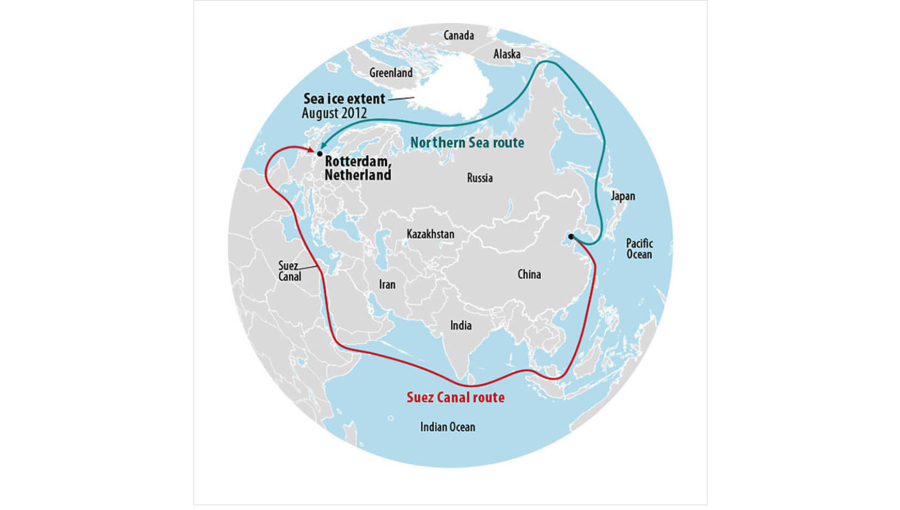
Russia's Northern Sea Route (NSR) could switch to year-round shipping as early as 2027, Vladimir Panov, head of Rosatom's Arctic directorate, said in an interview with Interfax, according to Vedomosti's October 27 report.

"The NSR is one step away from regular eastbound shipping, meaning year-round operations. We expect this to happen as early as 2027, when one of our largest shippers begins regularly shipping its products to Asia," Panov said. He did not name the shipper.

A year-round route would turn the Arctic passage from a summer-autumn window into a standing alternative to the Suez Canal for Russian exports heading to China and India, at a time when Moscow's Western markets are largely closed. State nuclear corporation Rosatom, which is the NSR's infrastructure operator, has been building the icebreaker fleet and convoy system to make that possible, but cargo volumes have lagged the targets. Cargo carried on the route fell 2.3% in 2025 to 37mn tonnes, and Panov told Interfax in June 2025 that the base forecast was around 109mn tonnes by 2030.

Panov said the technology still needed work. Convoys must move faster to raise cargo efficiency, and emergency rescue, communications and medical services along the route need to improve. Russian crews already have the Arctic experience, he said, and Arctic-class ships for NSR work have already been delivered to the customer.

"Today, we're no longer just talking about the NSR: we're talking about creating a Trans-Arctic Transport Corridor, which will include the Northern Sea Route, as well as associated inland waterways, rail routes, and other transport infrastructure," Panov said, adding that the corridor was aimed at developing the Arctic zone and the Far East and at domestic, international and transit traffic along the Russian coast.

Voyages on the route hit a record 133 in September, up 46% from August and more than four times the 2022 level, the Financial Times reported earlier this month, citing Lloyd's List Intelligence data. Almost half the voyages were made by Russian-flagged ships. Shippers' interest has grown as Arctic ice cover thins and as shipping is disrupted in the Middle East, the Red Sea and other chokepoints, the paper said.

Rosneft loaded the first Vostok Oil crude at the Sever Bay terminal on the Taimyr peninsula in September, and India plans to send its first cargo ship through the route in 2027.


Moldova cyberattack exposes personal data linked to a quarter of population

Moldova cyberattack exposes personal data linked to a quarter of populationFacebook
By bne IntelliNews October 28, 2026

A cyberattack on Moldova’s government digital services exposed personal data associated with approximately 750,000 personal identification numbers, affecting about a quarter of the country’s population, the Agency for Electronic Governance said on October 27, citing preliminary investigation findings.

The attack took place between October 19 and 23. Attackers attempted to obtain information linked to around one million identification numbers.

The agency said bank card details and other critical financial data were not compromised.

The information potentially accessed without authorisation included names, dates and places of birth, details of relatives, health insurance and family doctor information, social benefits, pensions, disability records, driving licences, vehicle ownership and photographs. Other potentially exposed data included international bank account numbers (IBANs), tax debts and payment histories through the government’s MPay platform.

The agency cautioned that the categories of information potentially compromised varied between individuals. The full set of listed data was not necessarily accessible for every identification number affected.

Following detection of the attack, authorities examined 82 digital services and temporarily shut down services and information systems considered at risk. The agency said the measures isolated the incident and prevented further breaches.

Unauthorised data extraction was stopped at 11:30 AM on October 23. Authorities subsequently shut down 82 government services, more than 30 information systems and administrative panels as a precaution.

On October 25, specialists identified and blocked another attempt to gain unauthorised access to several government services. A further attempt to extract data was detected on the morning of October 27 but was unsuccessful, according to the agency.

Most affected services have since been restored. The remaining services will resume once authorities have reconfirmed the effectiveness of the security measures in place.

The scope of the incident is still being established through audits and investigations involving the Cybersecurity Agency, the Information Technology and Cybersecurity Service, the Information and Security Service and the Agency for Electronic Governance.

The agency said bank card information had not been compromised because payments through MPay and EVO are processed by secure banking systems, while government platforms do not store card details. It added that possession of an IBAN alone was insufficient to access a bank account or make an unauthorised transfer.

Investigators have also found no evidence so far of unauthorised changes to state registry records. Access to information about real estate or a company does not, by itself, enable ownership rights to be transferred.