Wednesday, October 28, 2026


‘Hybrid weapon of war’: Why climate disinformation could be a growing public health threat
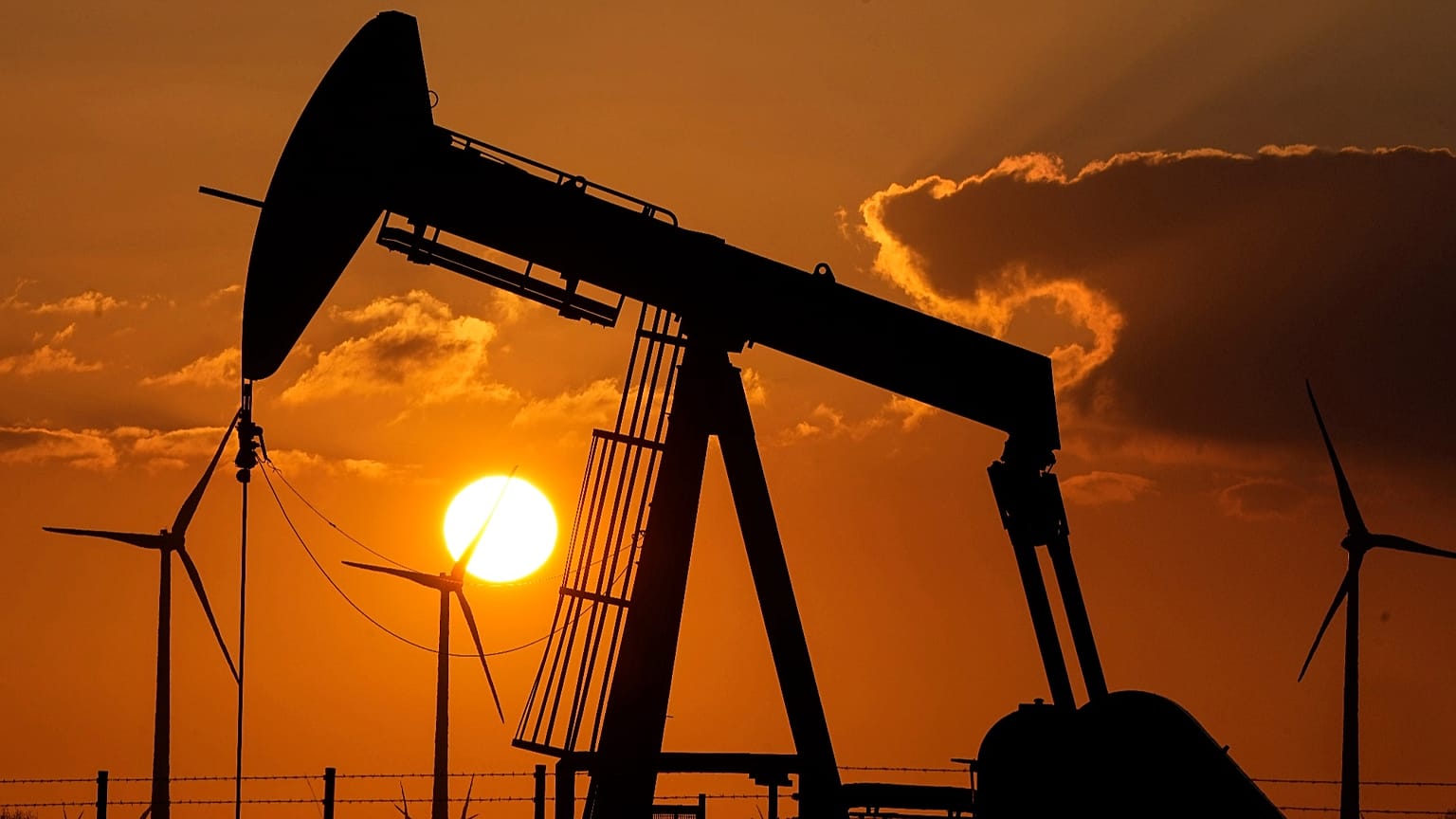
 A pumpjack extracts crude at an oil field in Emlichheim, Germany, March 18, 2022.
Copyright Copyright 2022 The Associated Press. All rights reserved.

By Liam Gilliver
Published on

“Climate disinformation is not only a problem of false rumours and mistruths; it is also a problem of power, incentives and accountability.”

WHO member states are being urged to recognise climate disinformation as a public health threat as vested interests attempt to “sow doubt and confusion”.

Health and civil society organisations have called on 194 countries to make information integrity a core part of climate and health policy, preparedness and response.

It follows the EU-backed landmark declaration to crack down on fake news and conspiracy theories that was launched at the COP30 summit in Belém last year.

A new report, ‘Protecting Health in the Age of Climate Disinformation’, is said to be the first instance of the health community addressing how climate disinformation harms human health around the world – from undermining emergency warnings and public-health guidance to delaying policies on air pollution, clean energy and fossil fuels.

The report, produced by the WHO Civil Society Working Group on Climate and Health, argues that a “healthier information environment” is not a communications luxury but a “condition for climate justice, public health and the right to a healthy future”.

What is climate disinformation?

Climate disinformation refers to the intentional spread of false or misleading information about climate change and climate action.

This includes the complete denial of global warming as well as conspiracy theories.

It differs from climate misinformation, which is defined as false or out-of-context information that someone is presenting as fact.

While misinformation does not carry the same level of intent as disinformation, it can result in equally dangerous consequences.

How climate disinformation is impacting public health

The report highlights several case studies where climate disinformation has interacted with existing inequalities and power structures.

For example, after the 2023 Maui wildfires, false claims circulated online that residents who applied for disaster assistance could have their land or property seized by the Federal Emergency Management Agency.

Fact-checkers established this was false, but the rumour had potential to deter survivors from seeking aid at precisely the moment they needed housing support, financial assistance, medical care and recovery services.

“In a disaster setting, misinformation is not just confusing,” the report reads. “It can directly obstruct access to life-saving and stabilising support.”

In Europe, clean air policies such as low-emission zones – designed to reduce people’s exposure to harmful traffic-related pollution – are often targeted by misleading narratives.

The debate around London’s Ultra Low Emissions Zone (ULEZ), which imposes a charge for vehicles that do not meet emissions standards, has included concerns about affordability and implementation, particularly for low-income households, workers, small businesses, and people who depend on older vehicles.

But the report states that these concerns have also been “amplified and distorted” by misinformation, politicised attacks on air quality evidence, fake social media claims, and in some cases even violent backlash against ULEZ infrastructure

“The backlash against ULEZ shows how disinformation can turn a public health intervention into a culture-war issue,” the report states.

“Instead of focusing debate on how to reduce pollution while protecting those least able to bear transition costs, misinformation can shift attention toward fear, mistrust, and false claims. This risks weakening public support for policies that protect lungs, hearts, pregnancies, children, and communities most exposed to polluted air.”

Other case studies in the report highlight the interests and power structures that “enable disinformation to flourish”, including fossil fuel greenwashing and conflicts of interest.

Dr Jeni Miller, Executive Director of the Global Climate and Health Alliance, and co-chair of the WHO Civil Society Working Group on Climate and Health, says governments must integrate tools for mis- and disinformation response into how they prepare and communicate heat, wildfire, flood, storm, drought and infectious disease scenarios.

“Climate disinformation is not only a problem of false rumours and mistruths; it is also a problem of power, incentives and accountability,” Miller adds.

“WHO, its member states, health institutions and the health community must go beyond simply providing better information and messaging – they must establish robust conflict-of-interest safeguards against fossil fuel greenwashing, and against those who wield climate disinformation as a hybrid weapon of war.”

Dr Laura Jung, Chair of the Working Group on Environment, World Medical Association, argues that the public health impacts of climate disinformation can be “immediate”.

“Misleading information can for example discourage people from evacuating during wildfires or floods, undermine confidence in heat and air-pollution warnings, interfere with access to disaster assistance, and create confusion about health risks during emergencies,” she explains.

How to spot climate disinformation

As part of the efforts to address the issue of fake news, the European Commission’s Directorate-General for climate action recently launched a campaign called #ClimateFactsMatter.

It aims to “empower people” to see through climate disinformation and reveals the main techniques used to mislead the public.

The campaign urges members of the public to always check the source of an article they’re reading, fact-check ‘expert’ comments, look out for loaded, emotional language, and fact-check stories claiming to have a ‘quick solution’ to climate change.

 

‘Profiteering from pain’: Investments of super-rich fuel climate crisis and capitalise on recovery

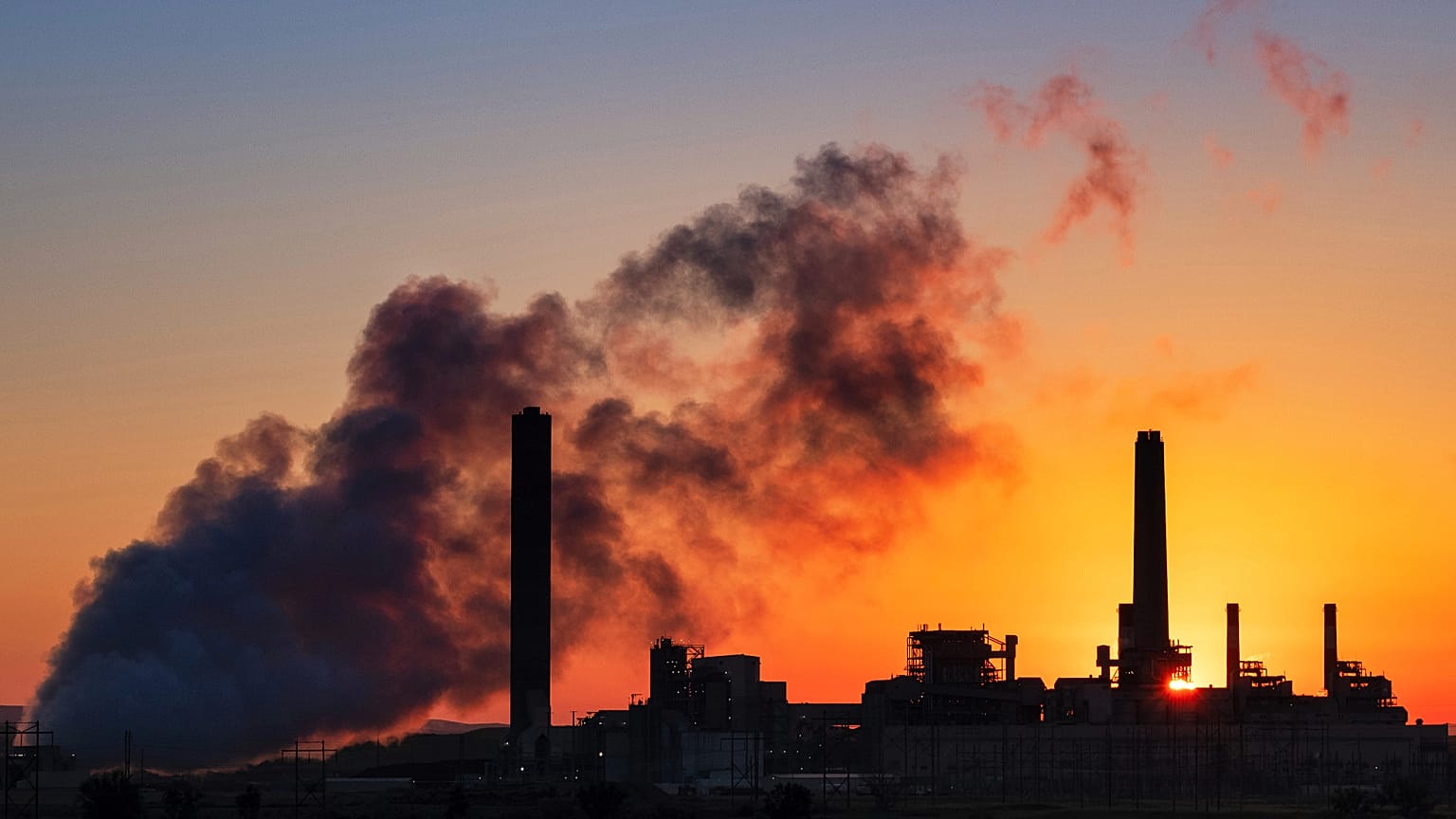
FILE - In this July 27, 2018, file photo, the Dave Johnson coal-fired power plant is silhouetted against the morning sun in Glenrock, Wyo.
Copyright AP Photo/J. David Ake, File

By Angela Symons
Published on

Climate pledges fall short as Oxfam exposes how the super-rich profit from disaster.

A new UN report makes it clear we can’t depend on current national climate pledges to keep global temperature rise within safe limits.

The latest plans would reduce global greenhouse gas emissions by just six per cent by 2035, compared with 2019 levels.

This is down from last year’s projection of a 10 per cent cut, largely due the US’s withdrawal from the Paris Agreement. It remains far short of 60 per cent scientists say is needed to limit warming to 1.5°C, the threshold to avoid catastrophic and irreversible climate impacts.

Combining the pledges of 154 countries, the report covers 71 per cent of global emissions. Even if every country fully implemented their obligatory plans under the Paris Agreement and also met conditional targets, emissions cuts would still amount to just nine per cent.

To keep warming within the Paris Agreement’s fallback limit of 2°C above pre-industrial levels, emissions would need to fall by 37 per cent by 2035.

Even if efforts to cut emissions succeed, the UN warned earlier this month that the world is on track for a temporary or potentially prolonged overshoot of the 1.5°C limit. The news prompted an EU warning that countries must prepare for a potential 3°C temperature rise by 2100.

Could private investors move the needle on global warming?

In a second report, also published on 27 October, the UN found that global climate finance is increasing but still falls far short of what is needed.

Global climate finance averaged $1.9 trillion (€1.7tn) a year in 2023-24, up 32 per cent from 2021-22. The increase was driven largely by private investment in low-emissions technologies, including renewables, as well as household spending on electric vehicles, solar power and heat pumps.

So with government efforts failing, could private investment make up the shortfall?

A separate report by the charity Oxfam, published ahead of the COP31 climate talks in Türkiye, argues that for the wealthiest investors the incentives often steer them in the wrong direction.

Not only are the super-rich fuelling the climate crisis through polluting activities, they’re also “profiteering from pain” – sometimes reaping a “double dividend”: first from the industries driving climate breakdown, then from the businesses involved in disaster preparation and recovery, says Oxfam.

How are the super-rich profiting from the climate crisis?

Oxfam’s new ‘Destroy and Rebuild Index’, within the report ‘Disaster Divide: How climate chaos deepens inequality and enriches the few’, looked at 217 companies, some in industries that drive climate breakdown and others in industries that prepare for or rebuild after climate disasters.

The companies in the index not only made an average profit of $1.8 billion (€1.6bn) in 2025 but paid out more than $1bn on average to shareholders, according to the charity. The global disaster recovery market is forecast to grow from $70bn (€63bn) to $92bn (€84bn) a year by 2029.

Oxfam says the investments of the world’s 1,000 richest billionaires were linked to 486 million tonnes of CO2 equivalent in 2025. If they were a country, they would rank as the world’s 19th biggest polluter. 71 per cent of those investments are in high-polluting sectors such as oil, gas and chemicals.

Emissions of the super-rich linked to millions of deaths

Oxfam says the wealthiest also contribute disproportionately to the emissions driving the crisis. The richest 0.1 per cent – around eight million people – emit more than the poorest 44 per cent of humanity combined, accounting for around 3.5 billion people.

Oxfam estimates that emissions from the richest one per cent have been responsible for around 20 per cent of global warming since 1990. A single year of their emissions will cause an estimated 1.9 million excess heat-related deaths over the following century, according to the report.

Calling climate disasters “inequality machines”, Oxfam points to research published in the journal Nature showing flood deaths are seven times higher in more unequal countries.

Yet the wealthy are best placed to shield themselves, from buying safer homes to hiring private firefighters. Rich households can also absorb higher food costs and insure their assets. Poorer people tend to live in more exposed areas and in lower-quality housing, with fewer savings to fall back on.

Oxfam is calling on governments to curb the emissions of the super-rich, including those linked to their investments, to make rich countries provide far more grant-based finance for adaptation, and to end profiteering from climate disasters.


Trucker strikes emptied my local supermarket shelves: Shopping locally made all the difference

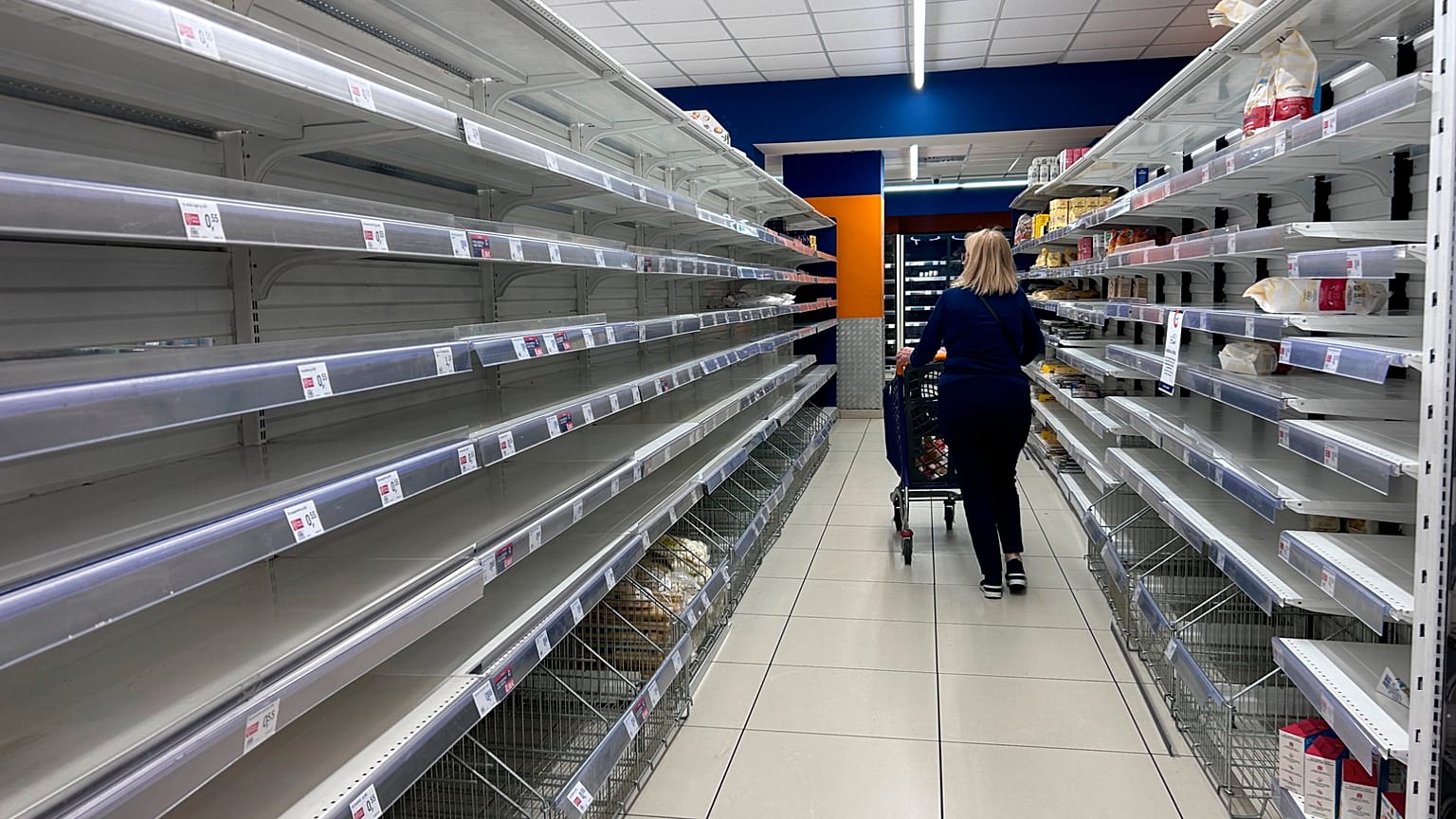
A woman walks past empty supermarkets shelves after a trucker strike brought food transport to a standstill in southern Italy, October 2026
Copyright AP Photo


By Ruth Wright with AFP, AP
Published on

I didn’t think a trucker strike would really affect me - until supermarkets and petrol pumps were empty.

Last week truck drivers in southern Italy staged a strike - and it had the desired effect. Protesting the rising cost of diesel driven up by the US-Iran war, the truckers’ refusal to work started on a Friday. By Wednesday the supermarket shelves in our area of Sicily, where I live as a foreigner, were empty.

It was much the same across the island and the south of mainland Italy, where drivers set up roadblocks to stop lorries leaving food warehouses. Petrol stations also ran dry and a government minister even said that the Mafia were exploiting the protests by intimidating drivers into taking part and slashing truck tyres.

Strikes are fairly common in Italy - public transport workers often walk out over low pay or working conditions, or rubbish services grind to a halt because of Mafia influence. I’m usually aware these strikes are happening but I’ve never been affected by them. Italian friends had warned me that a truckers’ strike 15 years ago had brought food supplies to a standstill but I foolishly thought that wouldn’t happen again. How wrong I was.

Supermarket stock lasted only a few days

I hadn’t needed to buy food for the first few days of the strike and I hadn’t paid much attention to news about the impact it was having. Then I realised I’d almost run out of a few key essentials - like milk for my toddler and fruit - the go-to when he won’t eat a bite of anything else. That was when I started paying attention to videos on social media of local influencers filming completely empty fridges and aisles in the supermarkets in my local town. I cynically thought they probably went at the end of the day, timing their visit in the hope of catching shocking footage to gain attention.

So I went shopping myself, in the morning, to the local Lidl, Eurospin, a nationwide budget supermarket chain, and a Conad, also nationwide but mid-range. There was no fresh food at all - no meat or fish, no dairy products and no fruit or vegetables. Most of the other aisles looked fairly normal but I could see that in a couple of days, if new deliveries didn’t arrive, staples like pasta, tinned goods and cleaning products would also have disappeared.

It was shocking to realise how quickly the system we all rely on for food can be brought to a grinding halt. This was a well coordinated approach: haulage operators, farmers and shopkeepers, often backed by citizens and students, were all involved in disrupting the transport and delivery of goods, all designed to put pressure on the government to intervene.

Shopping locally became the only option

I left the supermarkets unsure what to do. On my route home I passed a greengrocer’s - charmingly called ‘frutterias’ in Italian. I’d been into this one a couple of times but not regularly, finding it easier to get everything in one go at the supermarket. I pulled up and was delighted to see that it had plenty of fruit and veg. I got a basket full of food and chatted to the owner while I was paying. He said they’d had no problems with stock because local farmers, or their distributors, drive produce directly to his shop. If there’s no logistic chain involved, the logistics can’t be disrupted.

My unexpected visit to the ‘frutteria’ turned out to be one of the best parts of my day: on top of the relief of finding fresh food, my mood was boosted by the friendly chat with the owner - it would never have happened during a rudimentary exchange at a supermarket checkout. On top of that, I got fruit and veg that had only been picked a few days before - it also hadn’t been sprayed with the chemicals needed to make it last long journeys by road.

How did the trucker strike come to an end?

As the strike continued, the fallout got worse and worse. Mozzarella dairies lost €3 million in 24 hours because the buffalo milk needed to produce the cheese couldn’t be delivered. Construction companies were affected when they couldn’t receive deliveries of raw materials.

Eventually the Italian government held an extraordinary cabinet meeting and approved new measures to help truckers, farmers and fishers deal with higher fuel costs, bringing financial aid for the two groups to a combined €540 million in tax credits, up from €434 million.

It’s now been four days since the last roadblocks were opened but I’m still waiting on deliveries I ordered before the strike began, and big companies such as Vinted have notified customers they should expect delays.

Make food transport electric rather than pouring more money into the tank

This protest and its fallout happened for one reason: our addiction to fossil fuels. Almost all of the essential services that keep society moving - like delivery trucks and public transport and production of goods - are powered by oil and gas. The Iran war has caused an unprecedented disruption and shortages of fossil fuels, leading to sky high prices in countries far away from where the war is being raged.

As climate scientists have been saying for decades: we have the solutions to bring down carbon emissions and a big one is electrification - replacing fossil fuels with clean energy sources, like wind and solar, to power transport, heating, factories, everything ideally.

Trucking accounts for roughly 11-17 per cent of total oil demand across the US, EU and China - making it the perfect sector for electrification. The diesel price surge is driving record uptake of electric trucks this year: worldwide, sales of medium- and heavy-duty electric trucks hit a record high in the first half of this year at nearly 160,000 units - up by around 75 per cent versus the first half of 2025.

So as with heat pumps and solar panels, the energy crisis created by the Iran war is actually giving a boost to clean energy. The Italian government would be wise to use tax credits to incentivise hauliers to switch their fleet to electric trucks, rather than pouring more money into fossil fuels.


Dog scared of fireworks? Switzerland could bring in a nationwide ban if public votes yes

Fireworks illuminate the night sky over Zurich, Switzerland, during the New Year's Eve celebrations, on Thursday, Jan. 1, 2026.
Copyright Andreas Becker/Keystone via AP

By Angela Symons
Published on

Fireworks were banned in the Netherlands earlier this year on safety and environmental grounds.

Swiss citizens are gearing up for an explosive vote: whether to ban noisy fireworks.

Spurred on by animal welfare and environmental groups, the citizen-proposed ‘popular initiative’ will be put to the ballot on 29 November.

“For pets, wild animals, and farm animals, fireworks are not a celebration, but pure stress,” says non-profit Schweizer Tierschutz STS (Swiss Animal Protection), which is supporting the initiative.

The proposal also calls for better protection for people and the natural environment against noise, air pollution, litter, accidents and fires caused by fireworks.

An initial Swiss Broadcasting Corporation (SBC) poll released on Friday (23 October) showed promising support for the ban, with 69 per cent of voters backing it.

While the proposal proved most popular among left-wing voters, it received majority support across the political spectrum, and particularly among women.

Votes like these are common in Switzerland, where any citizen or group can launch an initiative by gaining 100,000 valid signatures from eligible voters. Recent examples include the neutrality initiative, rejected in September, and the pending nuclear disarmament initiative.

Would it mean a complete ban on fireworks in Switzerland?

The proposal seeks to “significantly restrict particularly loud and disruptive fireworks” in private settings by banning the sale of noisy pyrotechnics. Quieter alternatives would still be permitted, such as sparklers and fountain-style volcano fireworks.

It would also allow ‘cantons’ (local areas) to grant exemptions for events of “supra-regional significance”, such as 1 August (Swiss National Day) and New Year’s Eve, but still with a focus on quieter alternatives.

Currently, Swiss cantons and communes may restrict or ban the sale and use of fireworks on a local level. Age limits and licensing requirements also govern their use.

STS says the initiative, ‘For a restriction on fireworks’, would create a clear rule for the entire country.

But industry association the Swiss Fireworks Coordination Office (SFK) argues that the proposal is a “threat to Swiss tradition”, while some politicians have said that it would infringe on citizens’ personal freedoms and should be left up to the cantons to govern.

The Swiss People’s Party, the Centre Party and the Swiss Trade Association have launched a campaign to vote against the measure, warning of its impact on business owners and potential to fuel a "prohibition culture".

After initially being submitted in 2023, the proposal received over 137,000 signatures. A failed counter-proposal in summer means it will now be followed by a public vote.

If successful, it could see Switzerland follow in the footsteps of the Netherlands, where a broader firework ban came into force this summer, primarily for safety reasons but also on animal and environmental welfare grounds. Other countries in Europe have their own rules and restrictions, such as Belgium where the use of large, powerful fireworks is restricted to professionals only.

How do fireworks impact the environment?

When fireworks explode, they release tiny dust particles, which are rich in toxic metals from the gunpowder and colouring compounds they contain.

According to the Swiss Federal Office of Police, between 1,000 and 2,000 tonnes of fireworks – three-quarters of which is made up of packaging – are used annually in Switzerland, producing between 200 and 400 tonnes of particulate matter per year.

This accounts for two-to-three per cent of the country’s annual particulate matter emissions, according to the Federal Office for the Environment (FOEN).

As well as contributing to air, water and soil pollution, these fine particles can be inhaled with harmful health impacts, particularly for vulnerable people with existing conditions.

Unfavourable weather conditions can heighten the harms, such as fog which can trap particles in the air for longer, or hot and dry conditions which can increase wildfire risk.

FOEN urges responsible disposal of used fireworks, which can be placed in regular household waste once cooled down, while packaging should be recycled as normal.

Fireworks trigger ‘fear, panic and disorientation’

Animal welfare groups have been vocal in their support of a firework ban.

“The sudden noise triggers fear, panic, and disorientation [in animals],” says STS. “The consequences range from flight behaviour and acute stress to injuries or even death. Protecting animals from unnecessary noise is therefore a central concern of animal welfare.”

Speaking in a campaign video for the initiative, Swiss veterinarian Maruschka Blaser says that animals hear high-pitched sounds and loud bangs more acutely than humans. Giving horses as an example, she says “things can become dangerous very quickly when they run uncontrollably because of fireworks”, either for people in crowds or other animals in fields.

“When it comes to domestic animals such as cats and dogs, they sometimes need to be given medication to calm them down days in advance” of firework displays, says Blaser. “I also know families who spend the night in an air-raid shelter with their pets, but somehow that isn’t a solution either,” she adds.

“Millions of pets live in Switzerland. For many of them, fireworks trigger stress or panic,” says Casimir von Arx, President of the Bern branch of Schweizer Tierschutz STS (Swiss Animal Protection SAP) in a campaign video. “We can only protect them if, as a society, we show consideration for one another.”


Small and very scary: Rare miniature T.rex dinosaur skeleton fetches €42 million at auction

FILE: Jodi, a mounted Nanotyrannus skeleton, of the Cretaceous Period, approximately 67 million years ago, on display at Sotheby's, 13 Oct 2026, New York
Copyright AP Photo/Yuki Iwamura

By Tokunbo Salako with AP
Published on

A dinosaur that looks like a tiny Tyrannosaurus rex is now one of the world's most expensive fossils having been sold at a Sotheby's auction for €42.6 million in New York.

A rare skeleton of a smaller cousin of the Tyrannosaurus rex has sold for a record €42.6 million at an auction in New York.

The Nanotyrannus, nicknamed "Jodi" after the person who discovered the remains in 2019, was bought by a mystery buyer after a 12-minute bidding battle online and over phones. Sotheby's had expected it to fetch anywhere from €4 to €7 million.

In a statement, the auction house said the deal now ranks the junior T.rex as the world's second most valuable dinosaur ever sold. This summer, a T. rex fossil known as “Gus” sold for a record €44 million at Sotheby's

FILE: Jodi the Nanatyrannus on display at Sotheby's in New York, 13 Oct 2026
 AP Photo/Yuki Iwamura

Close family claws and controversy

A Nanotyrannus was about half the length of an adult T. rex, and the two creatures coexisted during the Cretaceous period some 67 million years ago. Nanotyrannus had relatively longer forelimbs and larger hand claws, as well as more slender, blade-like teeth than its famous cousin.

“Jodi” is one of only three such skeletons known to exist. Standing 2.9 metres and stretching nearly 6 metres, it has been on display at the auction house’s upper Manhattan headquarters since earlier this month, and is considered almost 70% complete.

However, some scientists have opposed such private sales, saying “Jodi” and other significant fossils should be displayed in museums or other institutions so they can be studied by researchers and viewed by the public.

Sotheby’s, in a statement, thanked the team of professional fossil hunters whose efforts to discover and excavate the specimen were the focus of the Discovery Channel documentary series “Dino Hunters” in 2020.


Italian archaeologists discover links to tomb of Jesus underneath Jerusalem's Church of the Holy Sepulchre

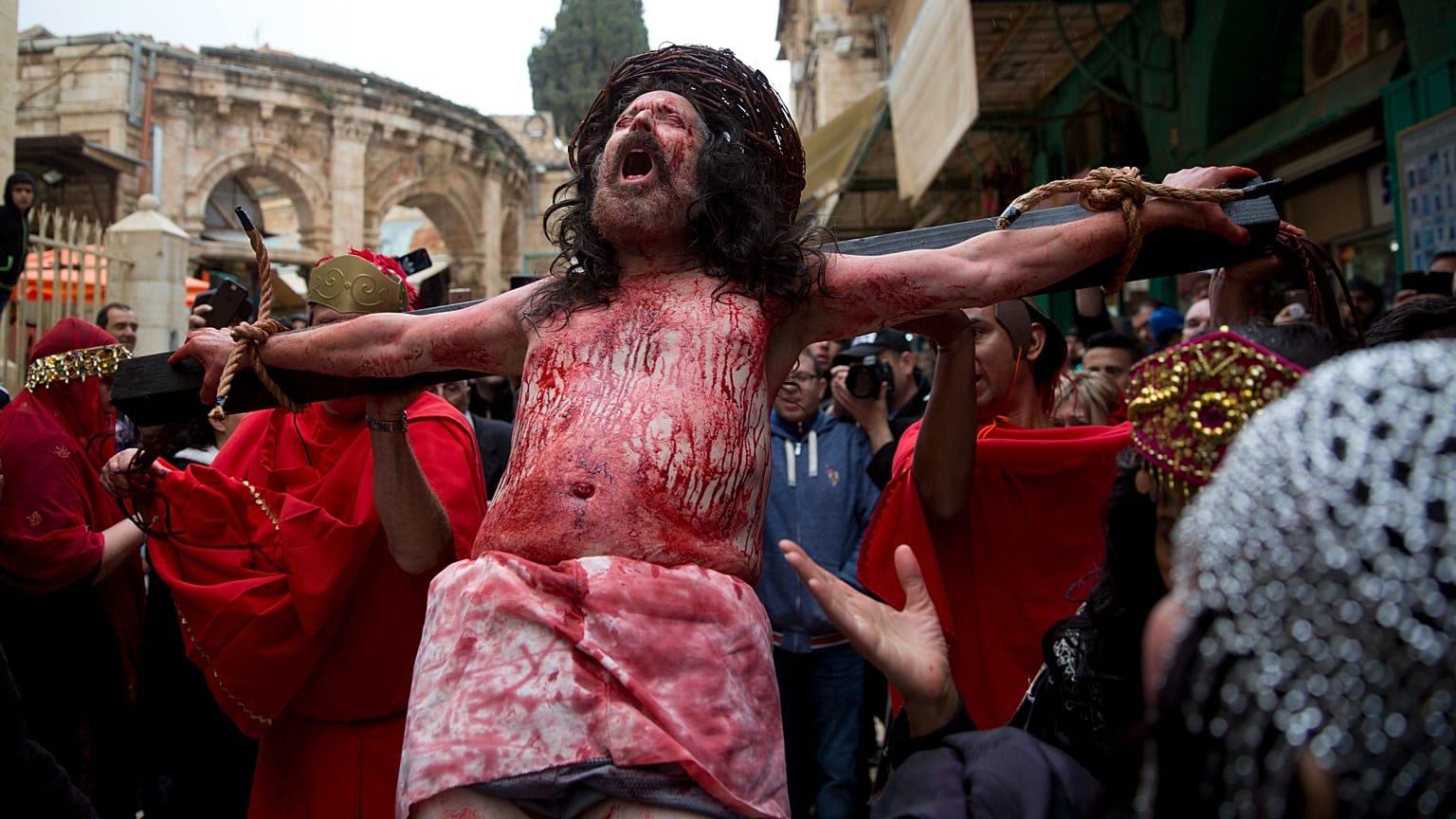
A performer dressed as Jesus Christ re-enacts the Way of the Cross along the Via Dolorosa towards the Church of the Holy Sepulchre
Copyright Copyright 2018 The Associated Press. All rights reserved.

By Kevin Koehrmann
Published on

Italian researchers have found a burial ground beneath Jerusalem's Church of the Holy Sepulchre, matching biblical accounts of the location of Jesus' burial.

Whether God exists or not is a matter of dispute around the world. A large majority of modern historians are, however, convinced that Jesus of Nazareth was a real historical figure who lived in the 1st century and was crucified under the Roman governor Pontius Pilate. Christians across the globe have long believed that the tomb of the Jewish itinerant preacher lies beneath the Church of the Holy Sepulchre in Jerusalem.

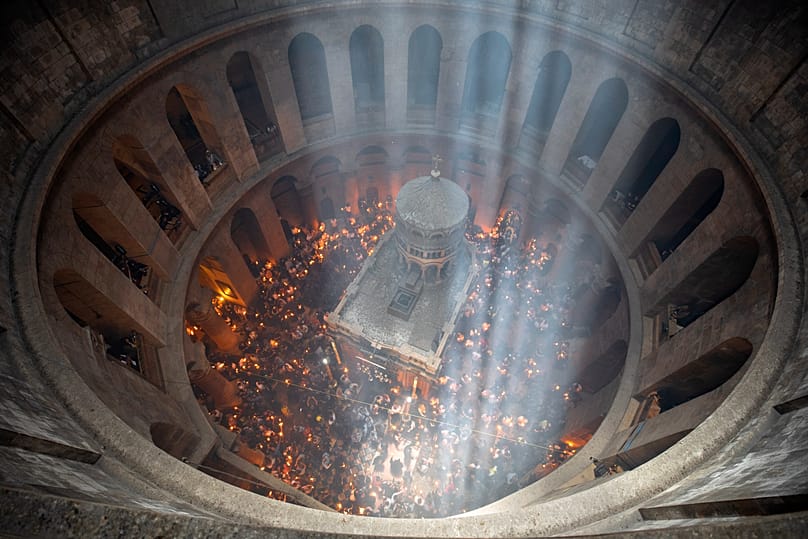
Christian pilgrims hold candles as they gather in the Church of the Holy Sepulchre in Jerusalem's Old City.
Christian pilgrims hold candles as they gather in the Church of the Holy Sepulchre in Jerusalem's Old City. Copyright 2021 The Associated Press. All rights reserved.

The Church of the Holy Sepulchre, known to Orthodox Christians as the Church of the Resurrection, stands in the Christian Quarter of Jerusalem's Old City. It is one of the most important shrines in Christianity, as it is believed to have been built on what was thought to be the site of the crucifixion, burial and resurrection of Jesus Christ. It was commissioned by the Roman emperor Constantine the Great, and was built in the fourth century.

The first church was consecrated in 335 AD. Over the course of its history, the building was destroyed and rebuilt several times. It suffered particularly heavy damage in 1009 under the Fatimid caliph al-Hakim. In the following decades the church was partially restored.

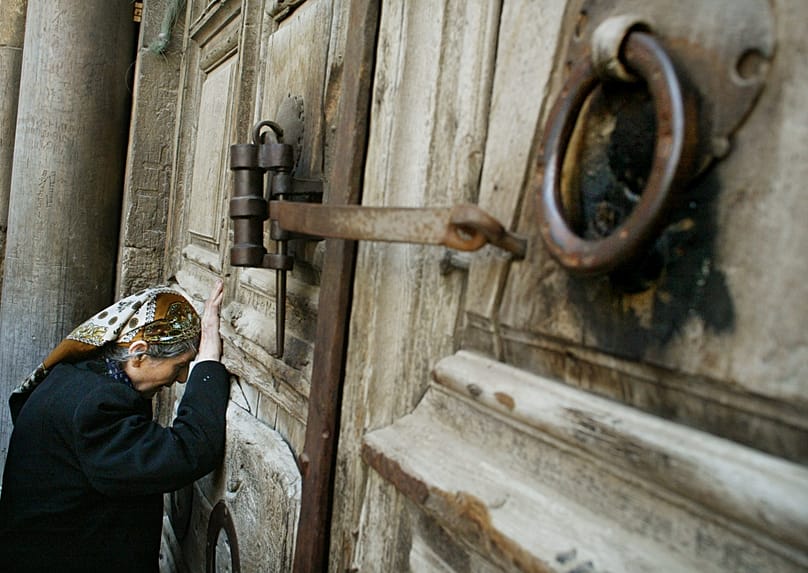
A Christian pilgrim prays in front of the doors of the Church of the Holy Sepulchre in Jerusalem's Old City.
A Christian pilgrim prays in front of the doors of the Church of the Holy Sepulchre in Jerusalem's Old City. KEVIN FRAYER/AP

After the Crusaders captured Jerusalem in 1099, extensive alterations were carried out. The church's present appearance is therefore the result of numerous phases of construction and restoration.

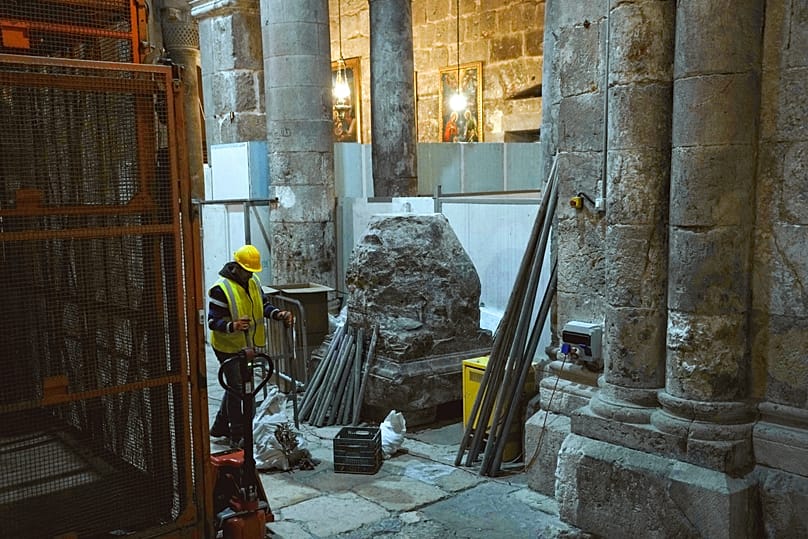
For a long time hardly any structural changes, renovation work or excavations were permitted, because several Christian denominations share the church and each feared that changes could weaken their rights and influence. Now the different parties have reached agreement. Since 2016 the Church of the Holy Sepulchre has been undergoing restoration, for the first time in more than 200 years.

Ancient tombs and a garden found beneath the church floor

In 2022 a comprehensive restoration of the church floor was initially planned. As work progressed, it turned into an extensive excavation project. Researchers discovered, beneath the church, an abandoned stone quarry, agricultural plots, a garden and rock-cut tombs.

A member of the restoration team works on the floor of the Church of the Holy Sepulchre, where many Christians believe that Jesus was crucified, buried and rose from the dead.
A member of the restoration team works on the floor of the Church of the Holy Sepulchre, where many Christians believe that Jesus was crucified, buried and rose from the dead. Copyright 2022 The Associated Press. All rights reserved

The garden is of particular significance, as the Gospel of John mentions a garden at the place of Jesus's crucifixion. According to the Bible, the crucifixion took place close to the city limits of Jerusalem. The Letter to the Hebrews notes that Jesus suffered outside the city gate. This, too, is consistent with the archaeologists' findings.

Lead archaeologist Francesca Romana Stasolla of Rome's "La Sapienza" university interprets the finds as evidence of a burial landscape. The excavations suggest that cultivated land once lay between Golgotha, known as Calvary in the Bible's new testament, and the tomb, according to Stasolla.

The archaeologists also found traces of olive trees and vines, dated to around 33 AD, the period in which Jesus's death is usually placed.

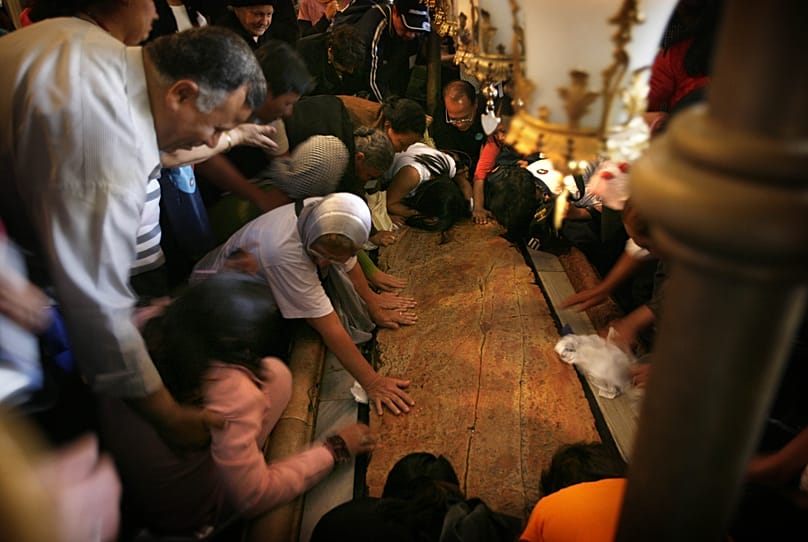
Christian worshippers pray at the stone on which, according to belief, Jesus Christ was washed after his crucifixion.
Christian worshippers pray at the stone on which, according to belief, Jesus Christ was washed after his crucifixion. Copyright 2006 AP. All rights reserved.

According to Stasolla, the tombs carved into the rock also point to an earlier burial site. The Gospels of Matthew, Mark and Luke describe Jesus's tomb as a burial chamber hewn from rock, so this detail fits as well.

No conclusive proof

The finds do not provide scientific proof that Jesus was buried underneath the site of the Church of the Holy Sepulchre. There is no inscription to that effect, nor can it be shown that the tomb chamber was unused or belonged to Joseph of Arimathea, who, according to the Gospels, laid Jesus in his new rock-cut tomb. The plant remains also cannot yet be dated precisely to the time of the crucifixion.

The excavations therefore do not settle the question of Jesus's actual burial place. They do, however, show that the site venerated by Christians for centuries has geographical and archaeological features that correspond to the descriptions in the New Testament.