It’s possible that I shall make an ass of myself. But in that case one can always get out of it with a little dialectic. I have, of course, so worded my proposition as to be right either way (K.Marx, Letter to F.Engels on the Indian Mutiny)
Friday, October 30, 2026
SPACE/COSMOS
Research: New gel fuel could make rocket and satellite propulsion easier to control
Concordia researchers develop a kerosene-based gel that could potentially improve fuel delivery to engines
A kerosene-based gel developed by Concordia researchers could make rocket and satellite fuels easier to store and control.
The material combines kerosene with lecithin, a combustible, naturally derived substance, and a small amount of calcium chloride. The researchers say it addresses a longstanding challenge in space propulsion: keeping fuel stable during storage while allowing it to flow efficiently when engines need it.
Liquid fuels can slosh inside tanks, complicating spacecraft control, while conventional gel fuels can be difficult to pump and spray into engines for combustion, they say. The new formulation is designed to balance these competing demands.
The researchers tested how the gel responds to force, temperature and chemical changes. They found that its viscosity drops by about 100 times as it is subjected to increasing force, making the gel flow more easily under the conditions needed for fuel injection. At rest, the gel behaves more like a soft solid, potentially reducing unwanted fuel movement and leakage.
The samples also remained stable for more than a year in sealed containers, with no visible separation.
The findings provide a detailed picture of how the gel behaves under different conditions and help identify the properties needed for reliable fuel storage and delivery. Its transparent appearance could also help researchers observe how fuel moves and burns.
The team says the work establishes a promising foundation for further development, but testing in actual propulsion systems will be needed to determine how well the material performs in spaceflight applications.
Credit: Dorotea Dolinšek credit: Florian Voggeneder. Amy Karle credit: Amy Karle. Johannes Heldén credit: Martin Vallin
October, 29, 2026, Mountain View, CA -- What does it mean to be alive? How could life adapt to places beyond Earth? Could intelligence and consciousness exist in ways we have not yet imagined?
The SETI Institute welcomes three international artists to its Artist-in-Residence (AIR) program: Amy Karle (USA), Dorotea Dolinšek (Slovenia), and Johannes Heldén (Sweden). These artists work in bioart, biotechnology, experimental poetry, and interactive media. Through collaborations with SETI Institute scientists, they will bring fresh creative perspectives to fundamental questions about life, intelligence and consciousness.
“Scientists and artists often ask the same fundamental questions, but approach them in very different ways,” said Dr. Bettina Forget, Director of the SETI Institute’s Artist-in-Residence program. “These three artists challenge us to think differently about what life might look like, how we might adapt to other worlds, and what intelligence and consciousness could mean beyond our own human experience. That’s what makes these collaborations so exciting.”
Amy Karle | Speculative Life: BioArt Residency
American artist Amy Karle works at the intersection of art, biology, and emerging technologies, exploring how scientific advances might transform our understanding of life and its possibilities. Her work includes bioart, sculpture, digital technologies, and immersive installations.
How would we recognize life that is completely different from anything we know on Earth? During her residency, Karle will explore this question through The First Cell and the Last, an artistic investigation into how life emerges, survives, and leaves traces across biological and planetary scales. Drawing on astrobiology and biosignature research, the project considers how we might identify living systems fundamentally different from those on Earth.
Working with SETI Institute scientists, Karle plans to create an immersive installation with sculpture, sensory, and interactive features. The installation will invite audiences to reconsider the boundaries between living and nonliving matter.
With advice from Danielle Siembieda and Rolando Perez, the Speculative Life: BioArt Residency links artistic research with astrobiology, biotechnology, and questions about what the future of life could be.
Dorotea Dolinšek | Catalyst Award for Transdisciplinary Research
Slovenian artist Dorotea Dolinšek combines contemporary art, biology, technology, and space exploration in her work. Her installations explore the relationship between the human body and its environment, challenging conventional distinctions between human and nonhuman life. She has shown her work at events like Ars Electronica and the European Patent Office.
What if living beyond Earth meant we had to change ourselves instead of changing other planets? Dolinšek’s project, Endoforming, explores this idea by looking at the relationship between humans, microorganisms, and environments beyond Earth.
Drawing on research into microorganisms that survive in extreme conditions, the human microbiome, and planetary geology, she proposes developing an experimental Exo-Gut Bioreactor to investigate how microbes interact with simulated lunar material. The project imagines a future where humans and their microbes adapt together to new environments, challenging usual ideas about space exploration and living on other worlds.
Her research will lead to an interactive installation that brings lab processes to the public. It will invite people to think about symbiosis, how living things adapt, and the ethics of humans moving into space.
Dolinšek has received the new Catalyst Award for Transdisciplinary Research. This award supports creative projects that cross different fields and encourage conversations between art and science.
Johannes Heldén | Cosmic Consciousness Literary Residency
Johannes Heldén is a Swedish writer, visual artist, and musician who creates work that explores ecology, sentience, language, and possible futures. He works in poetry, digital literature, sound, video, and installation. He has published 18 books, including the well-known Astroecology, and has shown his work at major exhibitions including the Gwangju Biennale, Kochi-Muziris Biennale, and Desert X.
Can the way we read and experience language change how we see consciousness? During his residency, Heldén will look into this question with Prisoners Cinema, an experimental poetry project about the links between vision, language, and awareness.
Drawing on patterns found in nature, technology, and potentially SETI research data, he plans to develop an interactive system that generates and transforms poetic texts. By experimenting with the visual arrangement of language and how our eyes move across text, the project explores how reading itself might produce unfamiliar experiences of perception and self-awareness.
With guidance from Gregory Betts, the Cosmic Consciousness Literary Residency encourages writers and poets to explore ideas about consciousness, intelligence, and new ways of communicating beyond what we know, using experimental literary forms.
Art and Science in Dialogue
The SETI Institute’s Artist-in-Residence program brings artists and scientists together to explore questions that neither group can answer alone. By encouraging creative experiments and teamwork, the program helps people think in new ways about life, intelligence, and our place in the universe.
From imagining unfamiliar forms of life to reconsidering how humans might survive beyond Earth and exploring the nature of consciousness, these three artists reflect the curiosity and willingness to challenge assumptions that drive the SETI Institute’s scientific mission.
About the SETI Institute Founded in 1984, the SETI Institute is a nonprofit, multidisciplinary research and education organization whose mission is to lead humanity’s quest to understand the origins and prevalence of life and intelligence in the universe and to share that knowledge with the world. Its research encompasses the physical and biological sciences and leverages expertise in data analytics, machine learning and advanced signal detection technologies. The SETI Institute is a distinguished research partner for industry, academia and government agencies, including NASA and the National Science Foundation.
WashU study helps Martian astronauts prepare for dust
WashU's Scott VanBommel leads close-up examination of the dust future astronauts will encounter
Tucked away among its sensors, cameras and navigation tools, NASA’s Mars rover Perseverance is wearing small swatches of spacesuit material. A rover doesn’t need a spacesuit, but the swatches — each less than a square inch in size — serve an important purpose: They’re helping scientists assess the potential damage caused by ubiquitous Martian dust.
“Mars is a very dusty place,” said Scott VanBommel, a research assistant professor of earth, environmental and planetary sciences in WashU Arts & Sciences. “Astronauts to Mars will have to be prepared.”
VanBommel is the lead author of a new paper in the Proceedings of the National Academy of Sciencesthat examines how dust interacts with Perseverance’s spacesuit swatches and other materials, including Teflon. Co-authors include Abigail Knight, a staff scientist who helped conceptualize and conduct the analysis as a PhD student. Both researchers are also fellows of the McDonnell Center for the Space Sciences.
Planners of future Mars missions have good reason to plan around dust. On the Apollo missions, which were far shorter than any potential visit to Mars, lunar dust scratched visors and degraded spacesuits. When the astronauts returned to the lunar module, particles clinging to their suits contaminated the air and eventually entered their lungs, causing hay fever-like symptoms in some cases.
The new study suggests Martian dust may not be quite as abrasive or irritating as its lunar counterpart. The swatches showed little visible wear after 1,645 Martian days, an encouraging finding for future visitors.
Closer inspection revealed that particles on Mars were much smoother than the jagged grains found on the moon, suggesting they may be less likely to scratch equipment or irritate human lungs. “The particles in the Martian atmosphere have been blowing in the wind for potentially billions of years, so they tend to be well rounded, like pebbles in a river,” VanBommel said.
But there’s another problem: Martian dust can be exceptionally fine. VanBommel developed a method to estimate the size of each particle, some of which were ultrafine specks measuring as small as 100 nanometers (one ten-thousandth of a millimeter) across.
On Earth, ultrafine particles from smoke and other forms of air pollution pose a significant health threat because they can penetrate deep into the lungs and enter the bloodstream. Astronauts won’t breathe the Martian atmosphere directly, but engineers will need to account for these microscopic hazards when designing habitats, spacesuits and air filters, VanBommel said.
“The electrostatic properties of Martian dust are likely causing it to preferentially adhere to some surfaces,” Knight added.
The data acquired by Perseverance’s PIXL (Planetary Instrument for X-ray Lithochemistry) instrument also enabled the researchers to analyze the particles’ chemical composition. Unlike lunar dust, the material on Mars contains perchlorates and other potentially toxic compounds. It’s also enriched in sulfur, iron and silica.
Brief exposure to these substances may not seriously threaten astronauts’ health; a lot comes down to dose and duration. Still, their presence adds another risk for mission planners to consider, VanBommel said.
Perseverance and previous rovers have given researchers remarkable insights into the history and current conditions on Mars. But beyond their scientific discoveries, these missions also serve as real-world tests of technology that could one day support human exploration.
“We’ve been operating rovers on the surface of Mars continuously for more than 20 years at this point,” VanBommel said. “We know that dust will be a challenge, but it’s something we can prepare for and overcome.”
Journal
Proceedings of the National Academy of Sciences
UNM scientists help uncover 4.1 billion-year-old Martian meteorite revealing clues to planet's ancient past
Rare discovery provides new insights into conditions that may have supported life
Scientists at the University of New Mexico have played a key role in identifying a rare, 4.1-billion-year-old Martian meteorite that provides new evidence that the Red Planet may have once had a wetter, Earth-like environment.
The discovery, titled “A Martian meteorite that formed ≳4.1 billion years ago samples Mars' early crust and mantle” and published today in the Journal Science, provides an unprecedented look at Mars’ earliest geological history that could help guide future exploration of the planet.
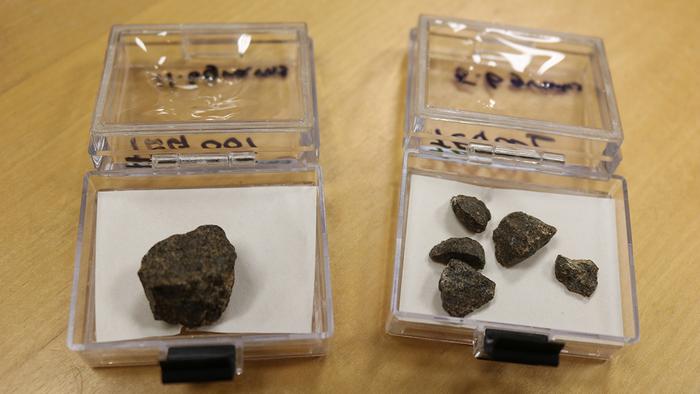
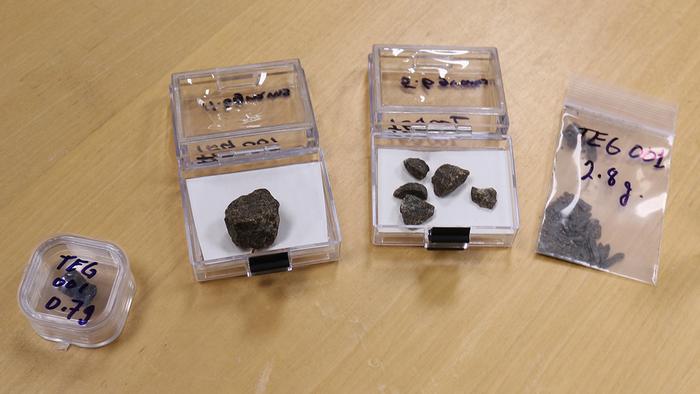
Scientist Carl Agee, director and curator at UNM’s Institute of Meteoritics (IOM), has long studied the origin and evolution of planetary interiors and their differentiation. After receiving meteorite samples recovered from the Sahara Desert, he began examining one of them, now known as Teghaza 001 (Teg 001), and recognized unusual textural, mineralogical, and compositional features not typically seen in Martian meteorites. These characteristics were somewhat similar to another famous Martian rock Agee studied, Black Beauty, a water-rich meteorite linked to the Martian crust.
Agee’s experience analyzing and noting something unusual in this sample led to further scientific detective work to pursue the mystery. Using UNM's electron microprobe and oxygen isotope analysis capabilities at UNM’s Center for Stable Isotopes, Agee and colleague Karen Ziegler, a scientist in the IOM and research professor in the Department of Earth and Planetary Sciences, examined the meteorite more closely and identified characteristics that distinguished it from previously studied specimens, including high levels of manganese oxide, a common byproduct of microbial life.
“I realized that this one was a little bit like Black Beauty, not exactly, but it resembled it in the oxygen isotope values,” said Agee, who thought this meteorite might be something special. I looked at it microscopically and found domains within it that had high levels of manganese oxide, a compound being looked for on Mars by the rovers as an indicator of environments conducive to life.”
UNM's expertise in meteorite identification and analysis helped initiate a research effort that produced a significant planetary science discovery. The findings led to a collaboration with scientists at NASA's Jet Propulsion Laboratory, Caltech’s Division of Geological and Planetary Science Analytical Facility, UCLA’s Department of Earth, Planetary, and Space Sciences, and the University of Maine's School of Earth and Climate Sciences.
Scientists, including NASA JPL’s Yang Liu, whose research focuses on extraterrestrial rocks and soils using microbeam methods, along with scientists at Caltech, conducted additional testing and discovered tiny zircon crystals that allow age-dating of igneous rocks. Using uranium-lead age analyses to date the tiny zircon crystals, Liu dated the meteorite to an extraordinary 4.1 billion years old, making it the oldest known Martian lava rock identified to date, according to Agee.
“There are a few parts to Black Beauty that are around that age, but that whole meteorite itself is a conglomeration of many different rock types. Teghaza 001 is just one unadulterated rock type, and it's 4.1 billion years or older, so that was a big surprise,” said Agee. “It's the oldest Martian igneous rock ever found by a huge margin, but in addition to that, it seemed to have these clues in its composition that suggested it had been in an environment that had fluids and water coursing through it.”
Unlike most Martian meteorites, which formed hundreds of millions of years ago, Teg 001 dates to the earliest stages of the planet's formation. Its composition consists of a single rock type, unlike other known Martian meteorites such as Black Beauty, offering a unique glimpse into Mars and a rare opportunity to study the planet's ancient crust and geological evolution.
One of the discovery's most significant findings is evidence that the meteorite interacted with fluids on Mars' surface billions of years ago. The unusual oxygen isotope composition and altered minerals suggest that early in the planet’s life, Mars experienced environmental conditions dramatically different from today's cold, dry planet. The findings support theories developed over the decades that Mars once had a warmer, wetter and more geologically dynamic environment.
“We also had these anomalous oxygen isotopes, and these domains that had high manganese levels. All of that was consistent with it being from a time on Mars, from the very, very beginning when the Martian environment was different from the time in which most of the Martian meteorites that we see were formed and erupted a few 100 million years ago when Mars was a dry desert, just like it is now. This sample probably came from an environment on Mars that was more Earth-like.”
The period of time on Mars when it was more like Earth is called the Pre-Noachian period, the oldest geological epoch, approximately 4.5 to 4.1 billion years ago. If life ever existed on the Red Planet, this would be the era when it could have been possible. Combined with evidence of water, the discovery offers scientists another opportunity to investigate environments that may once have supported life.
“If there was ever abundant life on Mars, on the surface, not sequestered away in some subsurface, that would be the time that you would be looking at, the Pre-Noachian period,” said Agee. “It's the very earliest time, and that was when maybe Mars still had a magnetic field, and it was shielded from radiation, and there were surface waters. There was a denser atmosphere. If primitive life was abundant in Mars. That is the time that is most likely for it to have happened.”
Because Teg 001 is chemically and geologically distinct from other Martian meteorites, most of which are roughly 200 million years old, scientists believe it may have originated from a previously underrepresented region of Mars, an area where a rover has yet to explore. In their Science paper, Agee and co-authors also used orbital remote-sensing data to identify possible locations on Mars that match the meteorite's composition, several of which place Teg 001’s origin in Mars's ancient southern highlands.
“This is just one single meteorite. It's like going out, going back in time and chipping off a hunk of an outcrop, 4 billion years ago on Mars, and then we have this example of what was actually happening,” said Agee. “That is why it's such a valuable sample. We’ve never found one like this before. The most exciting part about this find is its age, plus the alteration in the meteorite that indicates it has been in what I would call an Earth-like environment, with fluids coursing over the surface and volcanoes creating hydrothermal systems. There are surface waters and so on. And that's all reflected in the way that the meteorite has been sort of altered from its original state.”
Identifying its potential source could help scientists determine where future landers, rovers or sample-return missions should investigate the planet's ancient crust. The discovery also reinforces how much remains unknown about Mars' geological diversity.
“It's not like this is very common so not only is it ancient and samples a different type of environment in a different time on Mars, but we don't have any other samples like it,” said Agee. “Chances are very slim or next to impossible, that we'll get another one, like this anytime soon.”
Teghaza 001 provides new evidence that the Red Planet may have once had a wetter, Earth-like environment. The rare find provides an unprecedented look at Mars’ earliest geological history that could help guide future exploration of the planet.
Credit
University of New Mexico
Journal
Science
Method of Research
Observational study
Article Title
A Martian meteorite that formed ≳4.1 billion years ago samples Mars' early crust and mantle
Article Publication Date
29-Oct-2026
New study reveals that asteroids near white dwarfs don't break directly into dust
Researchers found that the size of asteroid fragments near white dwarfs depends largely on how strongly the asteroid's materials hold together and how close it gets to the star. Even the weakest objects would break into fragments a few hundred meters (several hundred feet) across.
Jordan Steckloff will present the research during a press conference at the American Astronomical Society's Division for Planetary Sciences (DPS) annual meeting.
Date: Thursday, October 29, 2026 Time: 11:45 am PDT (Tentatively scheduled to be fourth presenter) Attendance: Livestream or Register to Attend to ask questions
_________________
SPOKANE, Wash. — When asteroids travel too close to white dwarfs, the dense remnants of stars that have exhausted their nuclear fuel, powerful gravitational forces can tear them apart. However, new research from Planetary Science Institute (PSI) suggests that these asteroids don't immediately break into dust. Instead, most of the mass initially remains in larger fragments, revealing a previously overlooked step in how debris forms around dying stars.
The study, led by PSI Senior Scientist Jordan Steckloff, identifies a "kilometer-size barrier" that limits just how much asteroids can break apart when subjected to the powerful gravitational forces of white dwarfs.
White dwarfs are often surrounded by disks of planetary debris, including dust from asteroids and other objects pulled apart by the star's gravity. Previous models have generally assumed that these objects behave like loosely-bound piles of rubble with no internal strength. This allows them to break into increasingly smaller pieces and eventually turn into dust.
However, those models did not take into account that rubble-pile asteroids have some strength. Tiny attractive forces between their grains and particles help hold them together, preventing them from breaking apart into smaller pieces.
“Nothing is truly strengthless,” Steckloff said. “Tiny attractions between grains called Van der Waals forces give comets and asteroids a minimum strength 10 to 100 times weaker than pulling apart freshly fallen snow.”
While using a physical model that accounts for an asteroid's internal strength, density, and the gravitational forces acting on it, Steckloff and his team found that most debris mass remains in pieces approximately 0.1 to 1 kilometer in size.
These fragments are too large to be significantly affected by Poynting-Robertson drag, a process in which radiation from a star gradually causes small particles to spiral inward. Instead, the fragments must undergo additional events or processes, such as collisions or rotational breakup, before they can become the fine dust that we observe around white dwarfs.
There have been examples of these findings in our own Solar System. When Comet Shoemaker-Levy 9 traveled near Jupiter in 1992, the planet's gravity tore it into these large ~100-1000 m fragments. Those large fragments later collided with the planet. Similar tidal fragmentation has also produced families of comets that pass extremely close to the Sun.
The study also found that asteroid fragments remain on nearly identical orbits after breaking apart. These orbits are potentially keeping debris more concentrated around white dwarfs than previous models predicted.
“Understanding the details of how debris around white dwarfs is produced and evolves is important for putting the observations into context” says co-author Kat Volk. “This will help us understand what happens to the small bodies in orbit around a star as it undergoes the end stages of its life.”
The Planetary Science Institute is an independent nonprofit 501(c)(3) corporation dedicated to Solar System exploration. It is headquartered in Tucson, Arizona, where it was founded in 1972. PSI scientists are involved in numerous NASA and international missions, the study of Mars and other planets, the Moon, asteroids, comets, interplanetary dust, impact physics, the origin of the Solar System, extra-solar planet formation, dynamics, the rise of life, and other areas of research. They conduct fieldwork on all continents around the world. They are also actively involved in science education and public outreach through school programs, children’s books, popular science books and art. PSI scientists are based in over 30 states, the District of Columbia and several international locations.
This artist's illustration shows a white dwarf star surrounded by a debris disk with three asteroids orbiting in the disk.
Graphical abstract illustrating the proposed tidal heating anomaly near the lunar core–mantle boundary. The localized heating pattern is predicted by numerical simulations, while associated deep melting and possible links to surface volcanism remain hypotheses requiring further investigation.
Why did volcanic activity continue on the Moon long after its formation? Part of the answer may lie deep beneath the lunar surface, where tidal forces could have generated concentrated regions of internal heating.
A new study published in Planet explores how tidal heating may have been distributed within the Moon. Using numerical simulations, Miao Chen and colleagues from Chengdu University of Technology show that an ultralow-viscosity zone near the lunar core-mantle boundary could concentrate tidal energy dissipation, creating localized heat sources with potentially important implications for the lunar thermal evolution.
How Tides Generate Heat Inside the Moon
Tides are most familiar as the rise and fall of Earth's oceans. But tidal forces also act on solid planetary bodies. As the Moon orbits Earth, Earth's gravitational pull causes the Moon to deform periodically. Because the Moon’s interior is not perfectly elastic, some of the energy involved in tidal deformation is converted into heat. This process is known as tidal heating.
However, tidal heating is not distributed uniformly throughout the Moon. Its intensity depends on both the Earth-Moon orbital configuration and the physical properties of the lunar interior. In particular, materials with different viscosities respond differently to tidal forces, potentially producing substantial variations in heat generation.
Understanding where tidal heating occurs therefore requires more than reconstructing the Moon's ancient orbit. It also requires knowledge of the viscosity structure deep within the Moon.
A Hidden Heat Source Near the Core-Mantle Boundary
Previous studies have suggested the presence of an ultralow-viscosity zone near the lunar core-mantle boundary. Based on this evidence, the researchers incorporated this deep structure into their tidal heating calculations and used 3D numerical simulations to investigate its heating effects.
The results reveal a striking pattern: tidal heating can become strongly concentrated near the equatorial region of the core–mantle boundary, forming two symmetrically distributed regions of enhanced heating in model cross sections. The researchers refer to this feature as the Tidal Heating Anomaly Zone (THAZ).
The significance of this finding lies not simply in the presence of tidal heating, which has long been recognized, but in how the deep viscosity structure of the moon may control where that heat is generated. Rather than being distributed evenly, tidal energy dissipation could produce localized heat sources within the deep lunar mantle.
How Much Heat Could Be Generated?
To estimate the potential strength of this deep heat source, the researchers examined orbital conditions relevant to approximately 3.2 billion years ago, assuming a lunar orbital period of about 16 present-day Earth days and testing different orbital eccentricities.
Under a high-eccentricity scenario (e = 0.5), the model predicts that a strongly heated region occupying only about 2.5% of the lunar mantle volume could generate approximately 150 GW of tidal heating power. This is about 4.3 times the radiogenic heating power estimated for the same region.
By comparison, when orbital eccentricity is reduced to 0.05, the predicted tidal heating power falls to just 1.5 GW.
This hundredfold difference highlights the strong influence of orbital conditions on deep tidal heating. Importantly, the high-eccentricity case represents a model scenario illustrating the potential strength of this mechanism, rather than evidence that such intense heating persisted throughout lunar history.
What Could This Mean for Lunar Evolution?
The three-dimensional simulations further suggest that concentrated tidal heating could alter temperatures in the deep lunar mantle and influence the upward movement of mantle material. Such processes may provide an additional pathway for transporting heat from the Moon's interior toward shallower regions.
These findings offer a possible explanation for how localized deep heating might have contributed to the prolonged magmatic activity of the moon. However, identifying a potential heat source does not establish a direct connection to volcanic eruptions at the surface.
Several processes must be considered before such a connection can be demonstrated, including partial melting, magma generation and transport, and heat loss during magma ascent. The present simulations do not fully account for the latent heat associated with melting or heat loss during magma transport, leaving important questions for future research.
Nevertheless, the study provides a new perspective on lunar thermal evolution. It suggests that the interaction between tidal forces and the deep viscosity structure of the moon could have produced localized heating near the core-mantle boundary, potentially influencing mantle dynamics and the redistribution of internal heat.
Further modeling, together with constraints from lunar observations and returned samples, will be needed to determine how strongly this mechanism contributed to the Moon's magmatic history.
Agriculture accounts for about 25% of China’s total greenhouse gas emissions. Under the national strategic framework of peaking carbon emissions by 2030 and achieving carbon neutrality by 2060, the green transformation of agriculture has shifted from an “optional question” to a “required question”. However, smallholders face a triple dilemma of insufficient funds, high costs, and a lack of technical knowledge, making the promotion of green technologies difficult. Agricultural socialized services (ASS), which cover full-chain services such as machinery rental, hired labor, and technical consulting, are regarded as a key breakthrough. Nevertheless, a core issue still needs to be clarified: can ASS truly drive green production? What are their mechanisms and boundary conditions?
Although the academic community has paid attention to the potential of ASS, three major research gaps have hindered the formulation of precise policies. First, existing studies mostly remain at the level of theoretical deduction and lack rigorous empirical testing based on large-scale panel data. Second, the “black box” of the mechanism has not yet been opened—how resource endowments moderate the relationship, whether non-linear thresholds exist, and whether farmers in different regions and with different scales respond consistently have not been systematically answered. Third, accurate measurement of green total factor productivity at the household level has long been missing due to data and methodological limitations, causing research to often “see only the macro level while neglecting the micro level”. These dilemmas have led to “one-size-fits-all” policymaking, making it difficult to adapt measures to local conditions and individual circumstances, and the green benefits of ASS have not been fully released.
Against this background, the team led by Tingyi YANG at the School of Economics and Management, Xi’an University of Technology, recently published a research paper titled “Impact mechanisms and pathways of agricultural socialized services on agricultural green production in China under its dual-carbon goals” in ENGINEERING Agriculture (DOI: 10.15302/J-FASE-2026676). Using China Family Panel Studies (CFPS) data from 2014 to 2022, covering 7794 agricultural households in 24 provinces, the study accurately measured household-level agricultural green total factor productivity (AGTFP) using the slack-based measure global Malmquist-Luenberger (SBM-GML) index, constructed a comprehensive index of rural household resource endowments with five dimensions and 21 indicators via the entropy weight method, and applied a panel fixed-effects model, moderation effect model, dynamic panel threshold model, and GMM estimation. The study achieved three major breakthroughs.
First, the discovery of the moderating effect is highly inspiring: rural household resource endowments (natural, economic, human, physical, and social capital) significantly and positively moderate the green effectiveness of ASS—households with richer resources are better able to use services to achieve green efficiency gains.
Second, the threshold effect reveals the “critical point logic” of services: when service provision is below the threshold, its impact on green productivity is actually negative; once the threshold is crossed, the effect immediately turns significantly positive. This means that the green effect of ASS has a clear “critical point”: service provision must cross this threshold before it can shift from “ineffective or even negative” to “significantly positive”.
Third, the identification of dual heterogeneity provides a scientific basis for precise policymaking: Northeast China, with its high mechanization rate (98.2%) and advantages in scale operation, shows the most prominent service effects; large-scale farms (≥ 0.4 ha) show significant green effects from services, while the effects for smallholders are not significant.
This study not only responds to the agricultural emission-reduction demands under the dual-carbon goals but also provides an actionable micro-level pathway for comprehensively advancing the rural revitalization strategy. First, the study confirms that ASS can bring smallholders onto the track of modern agriculture, but only if resource empowerment lowers the adoption threshold—offering precise optimization directions for the agricultural production trusteeship service projects promoted by the Ministry of Agriculture and Rural Affairs. Second, the proposed environmental–economic–livelihood three-dimensional assessment framework incorporates indicators such as carbon emissions per unit of output and the share of green agricultural output value into evaluation, moving agricultural carbon governance from a “slogan” to something “measurable and manageable”. Finally, the revealed scale heterogeneity reminds us that if policies benefit only large farms, smallholders may be further marginalized. The three-pillar policy framework—integrating endowment empowerment, differentiated strategies, and multi-criteria carbon governance—should be implemented to ensure that the benefits of green transformation reach smallholders and advance green agricultural production and rural development under the dual-carbon goals.