Friday, October 30, 2026

Afghanistan opium cultivation quadruples as Kabul disputes UN data

Afghanistan opium cultivation quadruples as Kabul disputes UN data
/ Tim Cooper - UnsplashFacebook
By IntelliNews - New Taipei Bureau October 29, 2026

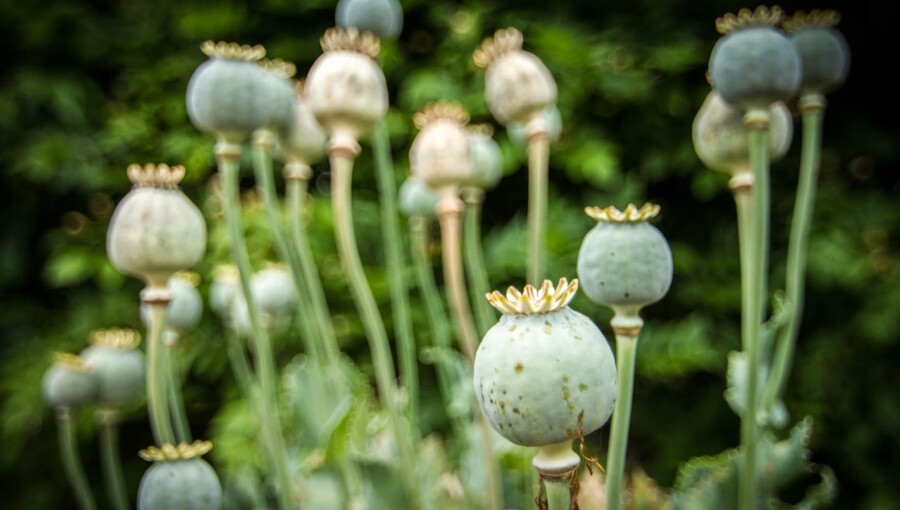
Opium poppy cultivation in Afghanistan more than quadrupled in 2026, the United Nations Office on Drugs and Crime (UNODC) said, but the country's Ministry of Interior dismissed the findings and insisted cultivation had been cut to almost zero, Pajhwok reported on October 29.

The survey, released in Kabul, records the first significant rise since narcotics were banned in 2022. Cultivation and output both remain below levels seen before the prohibition. UNODC warned, however, that early signs of a heroin shortage in Europe could drive further expansion in Afghanistan as traffickers' opium stockpiles appear to be running low.

The agency put the area planted with poppy at more than 43,000 hectares this year, up from 10,000 hectares in 2025, a rise of 330%. Estimated opium production climbed 400% to nearly 1,500 tonnes from about 300 tonnes.

"The fourfold increase in opium poppy cultivation demonstrates how difficult it is to sustain reductions in illicit opium cultivation when poor farmers lack alternative ways to provide for their families," the report said.

According to UNODC, farmers have adapted to enforcement by hiding small plots among cereal crops, planting behind walls and staggering sowing and harvest times. Afghan officials put eradication at around 22,000 hectares. Poppy growing spread to 16 of the country's 34 provinces, five more than a year earlier, with three-quarters of the total area in the north-east. Before the ban, the south-west was the main growing region.

A kilogramme of opium now sells for $500, down from $570 last year but still above pre-ban prices.

"It is essential for the de facto authorities and the international community to work together to support farming communities. This support should be strengthened through investment in alternative livelihood opportunities, basic agricultural infrastructure and access to markets," said UNODC Executive Director Monica Juma according to Pajhwok.

Mufti Abdul Mateen Qani, spokesperson for the Ministry of Interior, told Pajhwok that its counter-narcotics department rejected the report's numbers and conclusions as contrary to official data and evidence gathered on the ground.

"Relying on satellite imagery, estimates and inaccurate information from biased groups without comparing them with field data and crop-eradication records is insufficient to support definitive conclusions. The presence of a field in satellite imagery before operations begin does not mean it remains there until harvest, and it should not be used as the basis for calculating production," he said.

Qani said ministry figures showed more than 26,000 hectares were cleared in 2026, before the crops matured, leaving almost no cultivated area afterwards. He called on UNODC to disclose its data sources, satellite image dates, field coordinates, methodology and margins of error.

"The responsibility for explaining the discrepancy and correcting inaccurate information rests with the institution that published the report," he said.


Tokyo University of Science Distinguished Professor Kenso Soai wins the Nobel Prize in Chemistry 2026


Distinguished Professor Kenso Soai and Professor Emeritus Henri B. Kagan share the Nobel Prize for their pioneering work on life’s molecular handedness


Tokyo University of Science

Distinguished Prof. Kenso Soai, winner of the 2026 Nobel Prize in Chemistry

image: 

Distinguished Professor Kenso Soai, along with Professor Emeritus Henri B. Kagan hav been awarded the 2026 Nobel Prize in Chemistry for their pioneering work on life’s molecular handedness.

view more 

Credit: Courtesy of Tokyo University of Science


The Core Concept 
Many molecules are ‘chiral’ — it means they exist in two forms that are non-identical mirror images or enantiomers of each other, just like human hands. In living organisms, one mirror-image form often predominates over the other, a phenomenon known as homochirality, meaning “same handedness.” For example, 19 out of the 20 amino acids found in living organisms are exclusively left enantiomers. How such homochirality emerges spontaneously has been one of the most fundamental chemical mysteries.  

The Journey 
A major breakthrough came about in 1986 when Professor Emeritus Henri B. Kagan from the Faculty of Sciences of Orsay, Université Paris-Saclay, France, demonstrated how nonlinear effects in asymmetric chemical reactions can amplify an initial imbalance between enantiomers, generating an excess of one form over the other. Distinguished Professor Kenso Soai at Tokyo University of Science (TUS), Japan, followed this breakthrough with his seminal work in developing asymmetric autocatalysis, a process in which the product of a reaction itself acts as a catalyst to promote the formation of additional product with the same molecular handedness. The Soai reaction demonstrated how an initial imbalance between enantiomers can be strongly amplified through a self-reinforcing chemical reaction.  

Interestingly, Distinguished Prof. Soai arrived at his famed discovery after much trial and error — observations from an asymmetric chemical process that produced a significant non-linear effect prompted him to design an asymmetric autocatalytic method. This approach utilizes a specific enantiomer to drive its own formation, exponentially amplifying that enantiomer and, in turn, resulting in homochirality. By successfully applying a pyrimidyl alkanol product in an asymmetric autocatalytic reaction, he demonstrated the self-reinforcing chemical process now studied by scientists worldwide as the Soai reaction, which provides a model for investigating the amplification of molecular chirality and its possible implications for understanding the origin of biological homochirality. 

The Significance 
Together, the Professors’ findings hold significance for understanding and controlling asymmetric chemical reactions, with potential relevance to several fields, such as pharmaceutical synthesis and the development of flavors and fragrances. For example, many drug molecules occur as both enantiomers— however, while one is therapeutic, the other may even be harmful. Eliminating the non-active/harmful enantiomers during drug development is possible thanks to the combined work of Distinguished Prof. Soai and Prof. Emeritus Kagan. Recognizing the impact of their work, they have been awarded the Nobel Prize in Chemistry 2026 “for the discovery of non-linear effects and autocatalysis in asymmetric organic synthesis.” 

Upon receiving the news of winning the Nobel Prize, Distinguished Prof. Soai says, “Thank you so much. I’m very excited to hear the news. Good news, very good news.” He adds, “The Nobel Committee has kindly recognized our research and we are very pleased to receive the prize.”  

Interestingly, chirality, the central concept in the Nobel Prize in Chemistry 2026, has been researched since the mid-19th century. In 1848, Louis Pasteur made a landmark discovery when he separated mirror-image crystals of a tartaric acid salt and showed that the two forms rotated plane-polarized light in opposite directions. In 1857, he made another important observation: microorganisms preferentially consumed one enantiomer of tartaric acid over the other during fermentation. These findings were some of the first to shed light on the chirality of life.  

On how chirality is intricately tied to the question of life’s origin, Distinguished Prof.  Soai says, “People have been wondering — especially Louis Pasteur who tried to induce chirality in molecules. He didn’t publish his findings but mentioned them in his lecture. So, we made a little contribution to solve the homochirality problem.”
 

Reference  
Title of reference article: They made chemistry choose a mirror image  
Source: NobelPrize.org.  
URL: https://www.nobelprize.org/prizes/chemistry/2026/press-release/   

About The Tokyo University of Science 
Tokyo University of Science (TUS) is a well-known and respected university, and the largest science-specialized private research university in Japan, with four campuses in central Tokyo and its suburbs and in Hokkaido. Established in 1881, the university has continually contributed to Japan's development in science through inculcating the love for science in researchers, technicians, and educators.  

With a mission of “Creating science and technology for the harmonious development of nature, human beings, and society," TUS has undertaken a wide range of research from basic to applied science. TUS has embraced a multidisciplinary approach to research and undertaken intensive study in some of today's most vital fields. TUS is a meritocracy where the best in science is recognized and nurtured. It is the only private university in Japan that has produced a Nobel Prize winner and the only private university in Asia to produce Nobel Prize winners within the natural sciences field.  
Website: https://www.tus.ac.jp/en/mediarelations/ 

About Distinguished Professor Kenso Soai from Tokyo University of Science, Japan 
Distinguished Professor Kenso Soai is renowned for discovering the Soai reaction, a landmark example of asymmetric autocatalysis that demonstrates how molecular handedness can be amplified, providing insights into biological homochirality. His research focuses on asymmetric synthesis, chiral chemistry, autocatalysis, enantioselective catalysis, and the origin of chirality. He received his PhD from the University of Tokyo in 1979 and served as a visiting Professor at ESPCI Paris, Waseda University, and Louis Pasteur University. 


Sunlight turns microplastics into unexpected players in heavy metal transformation


Scientists discover how aging microplastics help convert toxic chromium into a less harmful form through two distinct chemical pathways.


Shenyang Agricultural University Collaborative Journals

Microplastics as emerging mediators of Cr(VI) reduction: roles of environmentally persistent free radicals and microplastic-derived dissolved organic matter

image: 

Microplastics as emerging mediators of Cr(VI) reduction: roles of environmentally persistent free radicals and microplastic-derived dissolved organic matter

view more 

Credit: Xinyue Wang, Xianjie Tang, Donglin Wang, Lingqing Gu, Xi Zhang, Yujie Tai, Chao Ma, Jingjie Zhang, Rongdi An & Jiunian Guan


Microplastics are widely recognized as a growing environmental threat. However, new research reveals that these tiny plastic particles may also play an unexpected role in the natural transformation of heavy metal pollutants. Scientists have discovered that ultraviolet (UV) light can activate aged microplastics, enabling them to convert highly toxic hexavalent chromium into a less harmful form.

The findings, published in Environmental and Biogeochemical Processes, challenge the traditional view of microplastics as passive pollutants. Instead, they suggest that microplastics can actively influence chemical reactions and the movement of contaminants in aquatic environments.

Hexavalent chromium, or Cr(VI), is a hazardous industrial pollutant commonly associated with metal processing and manufacturing. It dissolves readily in water, travels easily through the environment, and poses serious risks to ecosystems and human health. Converting Cr(VI) into trivalent chromium, Cr(III), generally reduces its mobility and toxicity.

To investigate whether microplastics could influence this transformation, researchers from Northeast Normal University and collaborating institutions examined polystyrene microplastics exposed to UV light. They studied how prolonged light exposure changed the particles' surfaces and chemical properties.

The results were striking. Under laboratory UV irradiation, microplastics aged for 96 hours achieved a Cr(VI) reduction efficiency of 89.90%, compared with 38.11% for unaged particles. Without UV exposure, the reaction was negligible.

The team identified two important mechanisms behind this process.

First, UV exposure generated environmentally persistent free radicals, which are reactive chemical species capable of transferring electrons. These radicals accumulated on aging microplastic surfaces and directly contributed to chromium reduction. This direct electron transfer pathway accounted for approximately 80% of the reduction associated with the aged particles.

Second, aging microplastics released dissolved organic matter into surrounding water. Under UV irradiation, these dissolved compounds generated superoxide radicals, which helped transform Cr(VI) through an indirect chemical pathway. This mechanism accounted for approximately 78% of the reduction driven by microplastic-derived dissolved organic matter.

Together, these findings reveal that microplastics can influence chromium chemistry through both their surfaces and the substances they release.

"Our findings suggest that microplastics are not simply passive carriers of pollutants. As they age under light exposure, they can become chemically active participants in environmental processes," said Jiunian Guan, the study's corresponding author. "Understanding these reactions is important for evaluating how plastic pollution may alter the behavior of heavy metals in aquatic ecosystems."

Importantly, the researchers emphasize that these findings do not mean microplastic pollution is beneficial or that microplastics should be used to clean contaminated water. The experiments were conducted under controlled laboratory conditions, and the reactions may behave differently in natural environments.

Future studies will examine how environmental factors, including water chemistry, natural organic matter, sunlight conditions, and realistic microplastic concentrations, influence these reactions. The researchers also highlight the potential of machine learning to predict complex interactions between microplastics and pollutants.

The study opens a new perspective on microplastic pollution: beyond transporting contaminants, microplastics may actively reshape the chemical cycles that determine their environmental fate.


=== 

Journal reference: Wang X, Tang X, Wang D, Gu L, Zhang X, et al. 2026. Microplastics as emerging mediators of Cr(VI) reduction: roles of environmentally persistent free radicals and microplastic-derived dissolved organic matter. Environmental and Biogeochemical Processes 2: e020 doi: 10.48130/ebp-0026-0015 

https://www.maxapress.com/article/doi/10.48130/ebp-0026-0015  

=== 

About the Journal:

Environmental and Biogeochemical Processes (e-ISSN 3070-1708) is a multidisciplinary platform for communicating advances in fundamental and applied research on the interactions and processes involving the cycling of elements and compounds between the biological, geological, and chemical components of the environment. 

Follow us on Facebook, X, and Bluesky.  


Reduced-data impedance analysis enables near-real-time diagnosis and control of fuel cells


University of Tsukuba


Tsukuba, Japan—Proton-exchange membrane fuel cells (PEMFCs) are a clean power-generation technology that produces no direct carbon dioxide emissions during operation. Their performance and durability depend strongly on effective water management. Monitoring internal conditions during operation is essential to prevent flooding, in which excess liquid water accumulates within the cell, and membrane dry-out, in which the electrolyte membrane loses moisture. Electrochemical impedance spectroscopy (EIS) is a widely used diagnostic technique that characterizes the cell's electrochemical response by applying a small alternating-current signal over a range of frequencies. However, conventional EIS measurements typically involve sequential measurements across a broad frequency range and can take several tens of seconds or longer to complete. This limits their suitability for monitoring rapidly changing operating conditions.

In this study, the researchers reduced both the frequency range and the number of measurement points required for diagnosis. The proposed method uses only six measurement frequencies, compared with 41 in conventional EIS. Comparisons with conventional EIS results showed that a carefully balanced selection of frequencies that capture changes in impedance improved diagnostic accuracy relative to conventional frequency-selection approaches.

The researchers also developed an integrated program combining impedance measurement, data analysis, and operational control. Using resistance parameters derived from impedance data as indicators of the cell's internal condition, the program automatically adjusted operating conditions. This approach enabled the detection and mitigation of electrolyte membrane dry-out and insufficient air supply within the cell.

The proposed method could enable near-real-time diagnosis and control of fuel cell operating conditions without substantially increasing system complexity. Future work will focus on further reducing measurement time and optimizing frequency selection to advance practical diagnostic and control technologies for fuel cell systems.

###
This research was conducted under a joint research agreement between the University of Tsukuba and HIOKI E.E. CORPORATION. The ALDAS impedance measurement system used in this research was provided free of charge by HIOKI E.E. CORPORATION.


Original Paper

Title of original paper:
Real-Time PEMFC Diagnosis Using Electrochemical Impedance Spectroscopy Under Limited Data Conditions

Journal:
International Journal of Hydrogen Energy

DOI:
10.1016/j.ijhydene.2026.157623

Correspondence

Assistant Professor AKIMOTO, Yutaro
Institute of Systems and Information Engineering, University of Tsukuba

Related Link

Institute of Systems and Information Engineering


Chinese experts release new consensus to combat severe dengue


Addressing China's unique clinical profile to improve early recognition and reduce mortality


Chinese Medical Journals Publishing House Co., Ltd.

Clinical Pathways for Severe Dengue Management

image: 

The new consensus addresses three core clinical pain points—identification, diagnosis, and treatment—by providing 16 tailored recommendations. It outlines a complete pathway from risk stratification to clinical decision-making, focusing on early recognition of warning signs and standardized organ support therapy.

view more 

Credit: Linghua Li/Infectious Diseases & Immuntiy


As dengue fever expands its geographic range due to climate change and global travel, China faces an increasing public health burden. While most dengue cases are mild, severe dengue (SD)—characterized by shock, severe bleeding, and organ impairment—progresses rapidly and carries a high mortality rate.

Historically, China has relied on WHO guidelines, but the clinical profile of SD in China differs significantly from highly endemic regions like Southeast Asia. In China, SD predominantly affects older adults and those with underlying comorbidities. To address this gap, the Society of Infectious Diseases, Chinese Medical Association, has published a new expert consensus in Infectious Diseases & Immunity, offering 16 tailored recommendations for the diagnosis and treatment of severe dengue.

The consensus clarifies high-risk populations, including those aged ≥65, pregnant women, and patients with secondary infections or chronic diseases. It pinpoints core warning signs—such as severe abdominal pain, persistent vomiting, mucosal bleeding, and rapid platelet decline—that emerge 24 hours before severe progression. Crucially, the experts detail diagnostic criteria for specific organ complications, including severe cardiac injury, neurological complications, and severe liver and kidney injury, which are often overlooked or lack unified global definitions.

For treatment, the consensus emphasizes a conservative fluid resuscitation strategy guided by point-of-care ultrasound and lactate levels to avoid fluid overload. It also provides clear recommendations on the rational use of blood products, restricting prophylactic platelet transfusions while outlining targeted interventions for severe organ-specific damage.

By standardizing early recognition and optimizing clinical management tailored to China's specific epidemiological context, this consensus aims to significantly reduce SD mortality and improve patient outcomes globally.


First individual-based model of basking sharks replicates complicated social and environmental drivers of behavior


A first for basking shark science: individual-based modelling proves a viable way to simulate how these sharks behave.


Pensoft Publishers

Model area.

image: 

Model area. The Inishowen Peninsula, modeled in the IBM, is part of Ireland, adjacent to Northern Ireland. It sits in the Malin-Hebrides Sea, directly across from the Hebrides, Scotland.

view more 

Credit: Gray et al., 2026


A new study published in Individual-Based Ecology presents the first individual-based model (IBM) of basking shark behaviour. The model simulates shark movement around the Inishowen Peninsula in County Donegal, Ireland, from 1982 to 2018. It shows that basking shark aggregations emerge from a combination of environmental and social drivers, not food availability or chance alone.

Basking sharks (Cetorhinus maximus) are the second-largest fish in the world. They are largely solitary and follow highly individual migration routes. Yet they also form surface aggregations ranging from pairs to groups of up to 1,000 animals, and the reasons remain poorly understood. These gatherings put sharks at risk of boat strikes, which makes understanding them a conservation priority.

Previous models captured long-range migration trends but could not reproduce behaviour at finer scales. Satellite chlorophyll a, the usual stand-in for the sharks' zooplankton prey, has also matched sightings data inconsistently. This study takes a different approach: it simulates zooplankton directly to capture fine-scale prey patchiness.

The researchers tested four behavioural submodels against three decades of sightings data from the Irish Basking Shark Group and the Irish Whale and Dolphin Group:

  1. Sharks seeking food only
  2. Sharks seeking other sharks only
  3. Sharks seeking both food and other sharks
  4. Random movement, as a control

The combined food-and-social submodel produced the most realistic results, with lower error and closer correspondence to observed sightings than the alternatives. The food-only, social-only and random submodels rarely generated aggregations larger than two sharks.

This paper has been a long time in the making, and I'm proud to finally share it.  Most importantly, it shows that an IBM can realistically replicate basking shark behaviour. This first iteration lays the groundwork, and I see enormous potential for new developments, collaborations and experimental modelling.

- said lead author Chelsea Gray, Researcher with the Irish Basking Shark Group

The model offers a flexible framework that can incorporate improved environmental and behavioural data as they become available. It is freely available in the paper's supplementary material. Gray invites researchers interested in developing or experimenting with IBMs for basking sharks to get in touch with questions or ideas.

Original source: 

Gray C, Rothman DS, Peters-Burton E, Smith C, Parsons ECM, Garretson A (2026) An individual-based model of basking sharks in Ireland. Individual-based Ecology 2: e176474. https://doi.org/10.3897/ibe.2.176474]


Modelling shark video [VIDEO]