Friday, October 30, 2026


EU's push to reduce reliance on China could come at a price

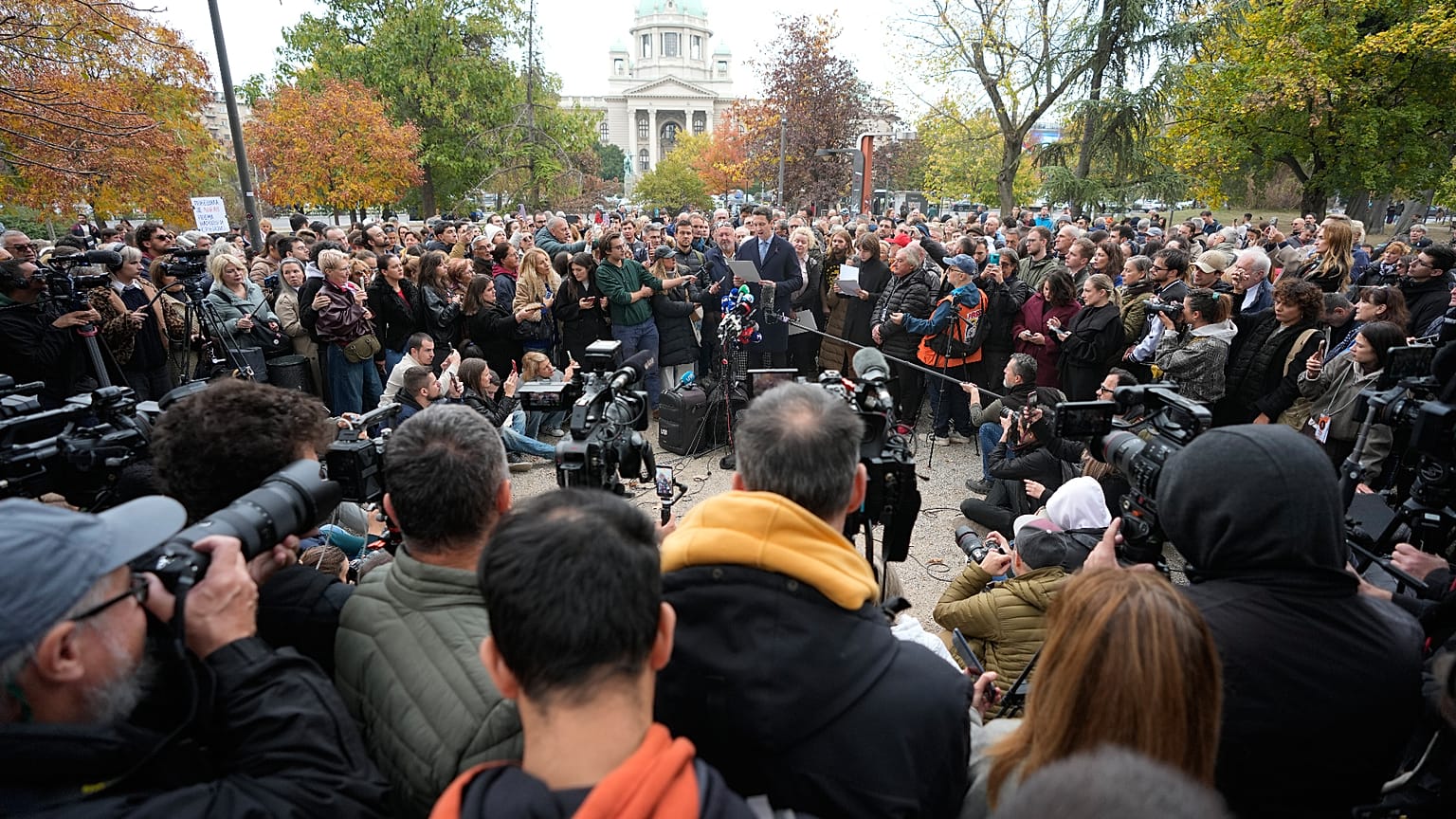
China blocked exports of rare earths in 2025.
Copyright AP Photo

By Peggy Corlin
Published on

Brussels is preparing a new tool to shield the EU economy from countries weaponising its strategic dependencies. But European businesses fear the costs of diversification - and question which sectors will be targeted.

The European Commission will present a tool in early December, a week before a meeting of EU leaders, designed to push companies to diversify their suppliers and reduce strategic dependencies on a single country.

Although China has not been explicitly mentioned, the future proposal is directly aimed at Beijing, which blocked exports of rare earths — essential for green technologies, digital industries and defence — in 2025 amid a trade war with the US.

The EU car industry was also put at risk that same year after Beijing cut off access to strategic chips during a dispute with the Dutch government over chipmaker Nexperia.

Even as Brussels negotiates with Beijing to rebalance their trade relationship, diversification has become urgent in sectors where dependencies create economic vulnerabilities.

Few details of the future proposal have emerged, but in a consultation with EU businesses that closed on Tuesday, the Commission stated that the new instrument would aim “to address cases where a high level of strategic dependencies on a single supplier country creates a risk for the EU’s security of supply and thus its economic security.”

Increased costs

Some companies warned in their consultation responses that finding alternative suppliers would increase their costs.

“Companies are already doing the maximum to have a cost-effective structure,” Luisa Santos, Deputy Director General at BusinessEurope, told Euronews. “If they are working with certain suppliers it is because they are the ones that have the best offer in terms of the product, regarding its cost and performance.”

However, on 5 June 2026, EU Trade Commissioner Maroš Šefčovič made clear in a speech that industry would be “on the front line” of efforts to diversify suppliers and that business models should incorporate “the cost of resilience.”

“Economic security is a shared responsibility, industry stands on the front line,” he said, “we must have their back, but industry also must do its part.”

He added: “That means diversifying rapidly and strategically, and it means integrating the cost of resilience into business models and treating geopolitical risks as what it is, the core business risks.”

EU car industry was hit by China's decision to block exports of some strategic chips in 2025.
EU car industry was hit by China's decision to block exports of some strategic chips in 2025. AP Photo

It remains unclear which sectors will be covered and what criteria will be used. Santos, however, stressed that while diversification is necessary to address the risk of the EU's dependencies being weaponised, not all dependencies should be considered problematic.

“We should be focusing more on the areas where we are seeing weaponization. I don’t think that our dependency on Chinese electric appliances for instance should fall within the scope.”

The business representative also stressed that, for products falling within the instrument's scope, alternative suppliers must be available. That is not the case for some critical raw materials, including rare earths, where China dominates production and processing.

“Diversification in that case is not an option, and this needs to be considered unless new sources come into the picture,” Santos added.

The “minimalist” and “maximalist” scenarios

Last June, Šefčovič suggested that the Commission could draw inspiration from the Energy Union, which pushed companies to diversify their energy supplies away from Russia following the outbreak of the war in Ukraine.

“At that time, I remember very vividly the discussions we had about investing in energy terminals and interconnectors and how unpopular it was,” the Commissioner said last June, adding that the investments had raised numerous questions, particularly over their cost, given that Russian gas was cheaper.

“With the hindsight, it was vital for us,” Šefčovič added.

The EU's REPowerEU plan, launched in May 2022 to phase out dependence on Moscow, bans import of Russian oil and provides for an end to short- and long-term contracts for Russian gas and liquefied natural gas (LNG) in 2026 and 2027. EU businesses have had to adapt. Investments have been made in renewable energy, new suppliers have had to be found, joint purchasing has been made possible, and prices have risen for EU consumers.

Tobias Gehrke, a senior policy fellow at the European Council on Foreign Relations, sees the energy approach as the minimalist scenario for December's diversification tool.

“The minimalist scenario would be to restrict diversification to a couple of sectors,” he told Euronews, “like they made it mandatory for European energy utilities to diversify.”

The expert pointed to the US defence industry, which was pushed to diversify its suppliers to reduce its dependence on Chinese minerals. Other critical sectors could also fall within the instrument's scope, including dual-use industries and infrastructure such as healthcare and energy grids.

A second, “maximalist” scenario, according to Gehrke, would be to say: “ Everyone who is buying more than a certain threshold of a specific product from a single source would face tariffs.”

Gehrke added: “Therefore they would be incentivized to buy from a different source.”

Such a scenario would cover a broader range of sectors. If tariffs made supplies of certain critical raw materials more expensive, the consequences would be felt across green technologies, defence and digital industries simultaneously.

“Everyone would be captured,” the expert said.

For EU businesses, this would be what Šefčovič called “the cost of resilience.”


Myanmar’s military leader has the minerals to stand up to Trump

Myanmar’s military leader has the minerals to stand up to Trump
/ Alexander Schimmeck - UnsplashFacebook
By Mark Buckton in Taipei October 29, 2026

For years, Myanmar’s military rulers have been treated as international outcasts, accused of atrocities, condemned for crushing democracy and blamed for plunging their country into a devastating civil war.

Now Donald Trump’s administration appears willing to entertain the possibility that the generals might be useful business partners after all.

And all because Myanmar has something Washington desperately wants: rare earth minerals. Geographically it also occupies a strategically valuable position between China, India and Southeast Asia. In Trump’s transactional world, those considerations may carry considerably more weight than the suffering of Myanmar’s population ever could.

But there is another uncomfortable truth to the story, one that Western governments and much of the international media have spent years struggling to confront or outright ignoring.

Myanmar’s supposedly glorious democratic alternative, Aung San Suu Kyi, has a record on ethnic minorities that warrants none of the reverence once showered upon her.

The ruling generals are brutal. That much is beyond serious dispute. Yet the idea that Myanmar’s problems began with the military coup of 2021, when Suu Kyi was forcibly removed from office, is a convenient Western distortion of a far longer and uglier history.

The country was deeply divided before the coup was even considered. Ethnic minorities were persecuted, and some of the most notorious crimes against the Rohingya took place while the Nobel Peace Prize winner was the country’s de facto civilian leader - another issue beyond serious dispute.

Washington’s apparent change of direction therefore raises two questions. Is Trump preparing to do business with a military regime accused of appalling abuses? And why has the West been so reluctant to apply a similar or identical level of unforgiving scrutiny to its former democratic heroine?

From international pariah to potential business partner

The most striking development came in September, when Michael Vance, the US Assistant Secretary of State for Intelligence and Research, travelled to Myanmar’s capital, Nay Pyi Taw.

According to Reuters, which first reported the visit, Vance met Min Aung Hlaing on September 15 and 16, in what has been described as the highest-level contact between Washington and the military leader since the 2021 coup.

The stated purpose concerned Adam Castillo, an American detained following a dispute involving the local American Chamber of Commerce. But a visit at that level inevitably carries diplomatic significance far beyond the detention of any given individual.

It was also reported that Vance had already been in contact with Myanmar officials in Tokyo - home to a significant Burmese population. He had also spoken to representatives of organisations opposing military rule.

This does not establish that Washington has yet recognised the regime or abandoned its sanctions policy. It does, however, indicate that the administration is prepared to at least engage with a leader previous US governments largely sought to isolate.

For Min Aung Hlaing, even the optics are valuable. An American official of such rank visiting his capital and holding talks with him offers precisely the kind of international standing he has struggled to obtain in recent years.

The military leader has also been travelling around Southeast Asia. His October visit to Malaysia, where he met Prime Minister Anwar Ibrahim, illustrates how regional governments are finding reasons to deal with Myanmar’s leadership despite the unresolved civil war and global opposition.

Trump’s tariff threat an unexpected invitation

One of the more interesting episodes came out of a US tariff demand.

In July 2025, Trump informed Myanmar’s leader that goods from the country faced a proposed 40% tariff. For an economy already devastated by conflict, this was hardly welcome economic news.

Yet Min Aung Hlaing, surprising many, responded with enthusiasm. His reply expressed “sincere appreciation for this encouraging invitation to continue participating in the extraordinary Economy of the United States, the Number One Market in the World”.

He went on to praise Trump personally, saying “It is with great esteem that I wish to acknowledge Your Excellency’s strong leadership in guiding your country toward national prosperity with the spirit of a true patriot.” Regional leaders took note.

It was an extraordinary performance in diplomatic flattery, particularly from a leader facing crushing levels of international condemnation. The significance was not the tariff itself of course. It was that the American president had addressed Myanmar’s military ruler as a normal counterpart.

And for a man desperate to escape diplomatic quarantine, that was a small but potentially important victory.

Myanmar’s rulers subsequently turned to professional Washington influence brokers. According to filings under the US Foreign Agents Registration Act, the regime signed a $3mn agreement with lobbying firm DCI, while Roger Stone, a longtime Trump associate, was retained through DCI for the not-insignificant fee of $50,000 a month.

There is nothing mysterious about the objective and in many ways Myanmar is showing its hand to the world. The military wants access. It wants legitimacy and it wants relief from economic pressure. Myanmar is now paying people with Washington connections to help pursue those goals.

The more difficult and unknown question is what the United States expects in return.

Rare earths: the minerals behind the smiles

China dominates the world's rare earth supply chains on which many advanced industries depend but in the past year or so, Trump’s trade confrontation with Beijing has exposed the risks of that dependence, all the time making alternative supplies an increasingly attractive strategic objective.

Myanmar, on China's southwestern border, possesses substantial rare earth resources of its own. On paper at least, that makes the country an interesting prospect for Washington. In practice though, the situation is considerably less promising.

Much of the mining takes place in territories currently disputed or controlled by ethnic armed groups, rather than in areas where the military government can simply grant an American company secure access.

Adding to America's concerns, Chinese operators already have established extraction networks, and the minerals cross daily into China for processing. 

Yet Washington cannot overcome these geographical, military and commercial realities merely by establishing cordial relations with Min Aung Hlaing. Contemplating such would be a remarkable miscalculation should the Trump administration relax pressure on the junta in the expectation of obtaining resources that the junta itself cannot reliably deliver.

If Washington believes better relations with the ruling generals will automatically produce meaningful action against transnational fraud, it may be in for a disappointment.

ASEAN’s uncomfortable embrace

ASEAN faces its own dilemma. Myanmar is a member of the Association of Southeast Asian Nations, yet its civil war has exposed the weakness of a regional grouping built around consensus and what many see as a weak concept of non-interference. As a result, the military’s refusal to relinquish power has left ASEAN struggling to reconcile diplomatic engagement with its stated commitment to a political settlement.

Min Aung Hlaing’s regional visits show that isolation is far from absolute, however. Governments can describe their meetings as a combination of practical discussions about repatriation, humanitarian matters or bilateral interests, but every high-level encounter also has political consequences with the risk being that repeated contact gradually makes military rule appear normal, even as large parts of Myanmar remain beyond the government’s effective control.

ASEAN too needs channels of communication. Humanitarian access, refugee issues, all-important border security and also organised crime across the region cannot be addressed through silence alone.

But there is a substantial difference between talking to an abusive government and treating that government as though the underlying crisis has been resolved. It is a distinction that is becoming increasingly important as Washington also tests the possibilities of engagement.

And in turn it leads to the other uncomfortable part of Myanmar’s story: the selective moral outrage surrounding Aung San Suu Kyi.

The saint who defended the indefensible

For much of her political career, Aung San Suu Kyi occupied an almost untouchable position in Western political imagination. Few dared to publicly question her human rights record.

She was the courageous dissident, the prisoner of conscience, the Nobel Peace Prize winner who stood against military dictatorship. Her struggle became an international symbol of democratic resistance. That image was not entirely undeserved. She spent years under detention and challenged an authoritarian establishment that had systematically denied Myanmar’s population political freedom.

But such actions do not automatically make someone a defender of universal human rights, and and when it came to the Rohingya, Suu Kyi’s record was disastrous.

The persecution of this predominantly Muslim minority long preceded her own government. Myanmar’s 1982 citizenship legislation had already deprived large numbers of Rohingya of recognised citizenship, leaving generations vulnerable to discrimination and exclusion and while Suu Kyi did not create that system, after her party entered government in 2016, she failed to deliver any fundamental changes that might challenge it.

Then, in 2017, the consequences became impossible to ignore.

Following attacks by Rohingya militants, Myanmar’s military launched operations in Rakhine State that were accompanied by widespread killings and sexual violence. Destruction of villages and the flight of hundreds of thousands of civilians into Bangladesh followed.

United Nations investigators subsequently identified evidence warranting investigation and prosecution for genocide and other serious international crimes.

The military at the time was directly responsible for its operations. Suu Kyi, however, had a responsibility to confront the abuses, protect civilians and resist attempts to conceal what had happened. Instead, her government rejected major international findings and restricted independent scrutiny.

The problem was not only that she completely failed to stop the military generals. It was also that she used the political authority she held at the time to step up and defend the indefensible on the international stage while oppression became the norm at home.

In December 2019, Suu Kyi herself appeared before the International Court of Justice in The Hague to represent Myanmar against The Gambia’s genocide allegations.

The woman celebrated internationally for resisting military oppression was now speaking on behalf of a state whose armed forces stood accused of some of the gravest crimes recognised under international law. In the end, her appearance did not amount to a judicial finding of personal responsibility for genocide. Nor did it mean that she had ordered the military’s actions. But it destroyed any credible claim that her public position on the Rohingya was merely one of helpless silence. She had chosen to defend Myanmar’s position before the world’s highest court - a choice she made that  deserves to remain central to any assessment of her political legacy.

Minorities were never just a Rohingya issue

The Rohingya are the most internationally recognised victims of Myanmar’s ethnic persecution, but the country’s problems extend far beyond Rakhine State. Ethnic communities in Kachin, Shan and other regions have endured prolonged conflict, displacement and abuses by the armed forces.

The country’s democratic transition did not end these struggles. Nor did the arrival of Suu Kyi’s civilian-led government produce the inclusive political settlement that many minority communities had hoped for. Her administration operated within a deeply unequal constitutional framework. The military retained control of key security ministries, parliamentary representation and considerable autonomy over its operations.

Yet this does not absolve civilian politicians of responsibility for their own rhetoric, policies and political priorities. Suu Kyi’s government completely failed to dismantle the discriminatory framework confronting the Rohingya. It resisted international investigations and did not deliver the protections demanded by minority communities.

The woman idolised by millions stood by and largely ignored the continued persecution of the Rohingya. 

For people whose homes had been destroyed, whose citizenship remained denied or whose families had fled military operations, the distinction between an elected civilian government and an unelected military establishment could offer little practical comfort.

A Nobel Prize cannot erase political responsibility

There is a temptation to regard Suu Kyi’s imprisonment following the 2021 coup as sufficient reason to restore her old status as an uncomplicated democratic icon. That would be yet another mistake in the long and twisted history of the country.

Her detention is an injustice. The military’s seizure of power was an assault on the electoral government. Neither proposition requires ignoring what happened under her civilian leadership though. Suu Kyi was wrongfully removed from power, and she failed minorities whose fundamental rights were threatened during her administration - both issues now clear historical fact.

And while Western governments eventually became more critical of her response to the Rohingya crisis, the mythology surrounding her earlier struggle has remained remarkably persistent - the reason why a question for future generations perhaps.

Maybe it was simply easier to present Myanmar’s political conflict as a contest between a beloved democratic figure and a collection of ruthless generals even if Myanmar’s political realities have never fitted neatly into such a story.

The military’s abuses were real. Suu Kyi’s resistance to military dictatorship was real. So too were the failures of her government and the discrimination endured by ethnic minorities as a result.

Trump is changing the calculation, not solving the crisis

Against this history, the Trump administration’s emerging approach looks less like a principled reassessment of Myanmar and more like another exercise in geopolitical bargaining.

Washington already sees China expanding its influence and doesn't like it. It sees valuable mineral resources. It sees organised crime operating across borders. And Washington sees a military government that may be prepared to offer concessions in exchange for diplomatic and economic benefits.

The temptation is thus obvious, but what exactly would the United States be buying?

The junta does not control all the territory it claims to govern and its military campaign has devastated communities and driven mass displacement. Its ability to provide access to resources in contested regions is uncertain and likely impossible.

Meanwhile, American decisions have already weakened some of the people most vulnerable to military rule. The Trump administration’s dismantling of USAID has severely reduced assistance available to refugees, opposition organisations and independent media. The withdrawal of Temporary Protected Status for thousands of Myanmar nationals in the United States has created additional insecurity for people who fear returning home.

It is these decisions that have immediate human consequences, irrespective of whether Washington eventually delivers broader sanctions relief.

Nor should ASEAN mistake greater diplomatic access for political progress. The regional body may have legitimate reasons to communicate with Myanmar’s authorities, but any arrangement that rewards the military without meaningful improvements in civilian protection risks reinforcing the very behaviour that helped produce the crisis.

This must be borne in mind before Min Aung Hlaing can secure another meeting with a foreign leader.

Myanmar doesn’t need another Western fairy tale

The greatest danger for now is that international governments will replace one simplistic narrative with another.

For years, the West elevated Suu Kyi into a near-sacred symbol of democracy while paying insufficient attention to the weaknesses of Myanmar’s civilian political order and the treatment of ethnic minorities. Now there is a risk that Washington will move towards treating the generals as practical partners because they might offer minerals, intelligence or even assistance against criminal networks.

Both approaches place too much emphasis on prominent personalities as is so often the American way in politics, and too little on the people living under their authority.

The Rohingya deserve justice whether Myanmar is governed by generals or elected politicians. Kachin, Shan and other ethnic communities too deserve security and political representation regardless of which foreign government claims to have discovered a new diplomatic solution.

And Myanmar’s wider population and its diaspora deserves something more substantial than another arrangement designed primarily around the interests of Washington, Beijing or regional capitals.

Trump may believe that dealing with Min Aung Hlaing offers opportunities his predecessors neglected. Perhaps limited engagement could secure humanitarian concessions or reduce some of China’s influence. But what should not be negotiable is the historical record.

Myanmar’s military leadership bears responsibility for enormous suffering. Suu Kyi’s government also has serious failures to answer for, particularly over the oppression forced upon the Rohingya.

The West once made the mistake of imagining that Myanmar could be saved by a Nobel Peace Prize winner. It couldn't and she failed with devastating consequences. It should be wary of imagining that the same country can now be fixed by a businessman in the White House shaking hands with a military general - even if he has the minerals Trump lacks.


After the victory: The foreign policy and governing challenges facing Serbia’s student movement

Serbia’s Student List
Copyright Copyright 2026 The Associated Press. All rights reserved


By Ljubiša Ivanović
Published on


The victory of Serbia’s Student List has fundamentally changed the country’s political landscape. But winning the election may prove to have been the easier part.

The movement that emerged from two years of student protests won the elections without a conventional party structure, without a clearly identifiable leader and, for much of the campaign, without revealing who would actually run the country if it won.

That ambiguity was one of its greatest political strengths. Now, however, the same ambiguity may become a problem.

One of the things that the region, Brussels, Moscow and China will be watching is how the new government positions itself. But there are already fairly clear signals from the leaders of the Students’ List.

Russia: No sanctions, but what comes next?

One of the clearest positions to emerge so far concerns Russia.

Jovo Bakić, sociologist and one of the most prominent figures on the Student List, has explicitly said that a new government would not impose sanctions on Moscow. He described Russia as a historically important partner for Serbia, arguing that sanctions imposed by a small country such as Serbia would have little practical effect while carrying considerable symbolic consequences.

Academician of the Serbian Academy of Sciences and Arts and professor at the University of Belgrade’s Faculty of Chemistry, Radomir Saičić, told RIA Novosti that the Students’ List does not plan to impose sanctions on Russia.

“As we stated in our programme, the Students’ List does not advocate imposing sanctions against Russia,” Saičić said.

He noted that Serbia itself had been subjected to sanctions and argued that such measures do not solve problems.

“Problems should be resolved through dialogue, negotiations and agreements, not sanctions,” Saičić said.

Dejan Šoškić, a candidate on the “Students Win” list, and posible new prime minister said that Serbia must develop good-neighbourly relations with Croatia, while noting that there would probably continue to be significant differences in the general perception of what happened in the 1990s, and that the Students’ List does not concern itself with that issue. In an interview with Index.hr, Šoškić announced better relations with Croatia and the European Union, while he did not answer a question about the new government’s position towards Russia.

“The Students’ List advocates full respect for the legal framework in Serbia, including international law. The legal framework in Serbia is therefore quite clear, because the Constitution states that Kosovo and Metohija is an autonomous province of Serbia. On the other hand, key documents of the international legal framework, such as United Nations Security Council Resolution 1244, also affirm this,” Šoškić said.

As for the European Union, Šoškić was less definitive.

“I believe that Serbia will certainly be in a position to fulfil the EU criteria much more easily and quickly. Whether it will join the European Union at some point after fulfilling all the conditions will depend, among other things, on whether the European Union offers Serbia full membership, as well as on whether, in a referendum at the end of that process, the citizens of Serbia decide in favour of that option,” Šoškić added.

Marta Kos’s message to the future government

It is already clear that when it comes to Serbia’s relations with Russia, the new government, just like the previous one, has no intention of aligning itself with Brussels’ policy. European Commissioner for Enlargement Marta Kos spoke with Ilija Srdanović, the lead candidate of the Students’ List, and immediately stressed that a change of government in Belgrade does not remove the obligation to align with the EU’s foreign and security policy. Brussels has indicated that it will assess the future government’s concrete actions, including on the basis of its relations with Moscow.

Marta Kos said that “Serbia will not be able to make significant progress towards EU accession unless it aligns its foreign and security policy with Brussels, including its position on Russia and the sanctions imposed on Moscow over the war in Ukraine.”

The European Commissioner, responding to a question about whether Serbia could become an EU member without joining sanctions against Russia, said that it would be very difficult for a country that does not share the EU’s strategic foreign-policy positions to make progress.

“It will probably not be possible for a country that does not align with us on strategic interests — namely foreign and security policy, or our joint opposition to Russia, particularly in the context of Russia’s war in Ukraine — to make progress. It will be very, very difficult,” Kos said.

The official postition of the Student's list contradicts one of former President Aleksandar Vučić’s central warnings during the campaign: that a Student List victory would eventually mean a dramatic change in Serbia’s policy towards Moscow in terms of imposing sanctions.

For now, there is no indication that sanctions against Russia are about to become part of Serbia’s foreign policy. Given the response from the new authorities, we can conclude that it will be business as usual.

The Student List’s programme also retains Serbia’s policy of military neutrality and rejects NATO membership. Its position on Kosovo remains firmly opposed to Kosovo’s unilateral declaration of independence and to its membership of international organisations.

You could search with a magnifying glass for any difference in policy towards Kosovo between old and new power in Belgrade, and you would not find one. That elephant will therefore remain in the room when it comes to Serbia’s diplomatic relations with the West. We can expect tensions to ease, along with a shift away from harsh rhetoric and threats, but there will be no fundamental change.

This means that the arrival of new government in Belgrade should not automatically be interpreted as a geopolitical realignment in the traditional sense. Professor Radomir Saičić on Kosovo said:

"For us, Kosovo is a temporarily occupied territory. Russia has done more to defend Serbia’s territorial integrity in Kosovo and Metohija than this regime has. Fake patriots accuse the students of lacking patriotism, but it was not the students who signed the Brussels and Washington Agreements, nor did they accept the Franco-German plan."

A pro-European movement — but a suspicious one

The student movement is essentially a “big tent” movement, bringing together people with very different worldviews who were united by their opposition to the rule of Aleksandar Vučić and their criticism of the nature of his government, rather than an ideologically clearly defined alliance.

The more likely scenario is a complicated balancing act: closer political and economic cooperation with the European Union, while maintaining military neutrality, avoiding sanctions against Russia and preserving existing energy and diplomatic links with Moscow.

That will be difficult.

The EU is Serbia’s largest economic partner, while Russia remains important because of energy and, above all, its position on Kosovo. The Student List will therefore have to reconcile two realities that have often been presented as mutually exclusive in Serbian politics.

The Student List is very broadly pro-European. But it is not a traditional pro-EU political organisation. Its relationship with Brussels is likely to be considerably more complicated than that of a government simply seeking to accelerate Serbia’s EU accession.

The leader of the Students’ List, Dr Ilija Srdanović, spoke most openly about the European Union:

“We will remain on the path of European integration. Serbia committed itself to the European integration process back in 2000, 26 years ago. That work will continue. The process will continue. What we can certainly promise, however, is that we will not do what the previous government did: allow public support for European integration in Serbia to fall by 20 percentage points over a period of 15 years. That is the net outcome, the overall result of what the previous government did.

We will certainly bring our domestic policies fully into line with Chapters 23 and 24, on the basis of the same civilisational values: respect for the rule of law and equality, anti-corruption measures, the functioning of institutions and media freedom. These chapters are the main obstacle to further progress towards European integration.”

The students and many of their supporters are deeply suspicious of the way the European Union dealt with the previous Serbian government. For years, Brussels maintained close relations with Vučić’s administration despite growing concerns over democratic standards, media freedom, the electoral environment and the concentration of political power.

Europe has constantly sent Serbia divergent signals. From the past almost two decades the European Parliament has been highly critical, describing Serbia as a “captured state” and sharply criticizing the authorities in all of its reports. The European Commission has been more moderate, alternating between a tougher and a more conciliatory approach, while the European Council has, since the outbreak of the war in Ukraine — and even before that — effectively frozen Serbia’s European integration process. As a result, it is sometimes difficult to discern what Europe’s position towards Serbia actually is.

For many people who supported the student movement, the EU’s willingness to cooperate with the SNS government was not a sign of pragmatic diplomacy but evidence that Brussels tolerated authoritarian tendencies in Belgrade for the sake of stability.

The Western Balkans: a chance for a reset

The regional dimension could prove to be one of the areas where the new government moves fastest. The Student List has signalled that relations with Serbia’s neighbours should be relaxed and that Belgrade should return to a more predictable and less confrontational regional policy. Two issues will be particularly important.

On Bosnia and Herzegovina, the movement is expected to insist on respect for the Dayton Peace Agreement and Serbia’s obligations towards the constitutional order established by Dayton. That could mean a less interventionist approach and an attempt to reduce the political temperature between Belgrade and Sarajevo.

Given that Milorad Dodik, the de facto leader of the Bosnian Serbs, openly sided with the now-former government and maintained that position for 14 years, it is reasonable to expect that the new government in Belgrade will, at the very least, take a cool stance towards him personally.

Similarly, when it comes to Serbs in Croatia, the Erdut Agreement and the rights and political status of the Serbian minority are likely to remain an important reference point.

This could potentially represent one of the biggest changes in Serbia’s regional policy: defending the interests of Serbs outside Serbia while simultaneously trying to reduce tensions with neighbouring states.

A less confrontational Belgrade could also improve relations with Montenegro, as well as Bosnia and Herzegovina, where Serbian politics has often been perceived both in Podgorica and Sarajevo as unpredictable or excessively interventionist.

Hungary: a particularly interesting test

Relations with Hungary will be another early test.

The previous Serbian government developed an exceptionally close relationship with Viktor Orbán. That relationship was political, economic and personal, and Budapest became one of Belgrade’s most important partners inside the European Union.

The arrival of Péter Magyar changes that equation.

A Student List government is likely to have a much closer political affinity with Magyar’s European orientation than with Orbán’s model of government. That does not mean Serbia will abandon its economic relationship with Hungary. On the contrary, there are too many practical interests at stake.

But the political chemistry will almost certainly play a role.

The question is whether Belgrade will seek to build a new relationship with Budapest based less on personal ties between leaders and more on institutional cooperation between two neighbouring European states.

China: perhaps the biggest question mark

If Russia is the area where the Student List has already given relatively clear signals, China remains considerably less defined.

During the Vučić era, Chinese companies became deeply involved in Serbian infrastructure, mining, and industrial projects. Beijing has become an important economic partner, only second to the EU, and many of those investments cannot simply be cancelled by a new government.

At the same time, the Student List is likely to face pressure from parts of its electorate to scrutinise Chinese investments more closely — particularly questions concerning transparency, environmental standards, public procurement and the treatment of state-owned Chinese companies.

The most probable outcome is therefore not a dramatic break with Beijing. China’s economic presence in Serbia is simply too significant for that.

But there could be a transition from politically driven strategic partnership towards a more conventional investment relationship, in which Chinese companies are expected to compete under clearer rules and greater transparency.

The movement’s foreign-policy balance may ultimately look less like an ideological choice between East and West and more like an attempt to redefine Serbia’s relationships with Russia, China and the EU on different terms.

The problem that comes with power

Perhaps the greatest uncertainty, however, has nothing to do with Russia, China or the EU.

It is the Student List itself.

For almost a year, the movement successfully concealed its internal political architecture. At various points, speculation suggested that the rector of the University of Belgrade, Vladan Đokić, might become its political leader. In the end, he was not even a parliamentary candidate.

That episode illustrates just how effectively the students have kept their cards close to their chest.

The same caution must therefore be applied to current speculation about possible office holders.

Informal discussions have mentioned academic and professor Radomir Saičić as a possible presidential candidate, while economist Dejan Šoškić is being mentioned as a possible prime minister. But these names should be treated as political speculation rather than established decisions.

The Student List has already demonstrated that it can surprise almost everyone.

It may do so again.

From movement to government

The transformation will nevertheless have to happen quickly. The movement’s decentralised structure was an advantage during the political struggle. Once in government, however, decentralisation can become paralysis. The public will want to know who is responsible for the economy, foreign affairs, defence, the interior, the security services, education and the judiciary. And the state bureaucracy will want instructions.

This is where the Student List faces its most dangerous transition: from moral authority to political accountability. During the protests, it was enough to say what needed to change. In government, they will have to decide how. That distinction is enormous.

The first signs of change

The political earthquake is already shaking institutions beyond parliament.

On Wednesday, the public broadcaster RTS Director-General Manja Grčić resigned, just eight months after being appointed. Her resignation followed demands from parts of the RTS workforce, informal employee organisations and the Student List for changes in the management of the public broadcaster.

The students have made a radical transformation of Serbia’s media landscape one of their central demands, particularly concerning outlets that are directly or indirectly financed with public money.

But the events surrounding the private TV Informer have also demonstrated the danger of a rapid transition. On Monday night, a group of protesters entered the premises of Informer TV, one of the staunchest supporters of the former Vučić's governments. The incident escalated into a confrontation with police outside the building, and workers inside. The Student List subsequently distanced itself from the break-in and called for calm and non-violence.

This is an important distinction.

Removing political influence from the media is one thing.

Replacing one form of political pressure with another would be quite another.

The new authorities will therefore be judged not only by whom they remove, but by the rules they establish for everyone who comes afterwards.

However, these elections have demonstrated something that media experts have been pointing out for a long time: the role of the media in political developments is greatly overestimated. Compared with the authorities, the students had very limited media exposure, yet they still won a convincing victory.

This shows that the government and the opposition were operating in two parallel realities. While the role of the media cannot be entirely dismissed, the elections have demonstrated that traditional media can no longer dictate the narrative. This trend is clearly visible in the United States and many European countries, and Serbia is no exception.

There are already calls for changes at the security services, including demands for the resignation of the leadership of Serbia’s intelligence apparatus. Prosecutors have suddenly started pulling “forgotten” cases out of their drawers, and the first arrests have begun. It is highly unlikely that the institutional shake-up will end with the first resignations.

The presidential election will provide the next test

And Serbia’s political transition will not end with the parliamentary election. Presidential elections are expected before the end of the year, meaning that the Student List must soon answer another fundamental question: who represents the new Serbia?

This will force the movement to confront precisely the problem it avoided during its rise.

It will have to personalise power. A government cannot be anonymous. Someone must become prime minister. Ministers must be elected, state-owned companies need directors, the security services need new leadership and public institutions need people capable of taking responsibility for decisions. The Student List will therefore have to move with extraordinary speed from a movement into a governing structure.

The election victory was achieved by a collective movement whose greatest political asset was that it had no single face. Presidential elections and forming a new Government requires the opposite.

A prime minister must negotiate. A president must represent the country abroad. Ministers must make decisions. Somebody must ultimately accept responsibility if, or when those decisions prove unpopular.

This will be an equally difficult challenge for Vučić as opposition leader. He can no longer run for president, and his absolute dominance over the Serbian Progressive Party has meant that, over the past 14 years, no one else has been given the opportunity to emerge as the party’s number two.

That is why the coming weeks may be more important than the election itself. The Student List has already shown that it knows how to win without revealing its full strategy. Now it has to demonstrate that it knows how to govern without losing the principles that brought it to power.

The students spent a year keeping their cards hidden.

They now have to show them.

And Serbia — as well as the EU, Russia, China and the countries of the Western Balkans — will be watching every card they play.
 

Ex-police commander claims Serbia's Vucic planned to cling to power by force

By Ben Aris in Berlin October 29, 2026

Aleksandar Vucic was ready to hold on to power by force after losing Serbia's October 25 election but backed down, a former police commander and politicians told The Times.

"He sent 4,000 police and 3,000 thugs to central Belgrade to protect the regime on Sunday - I am 100 per cent sure he was planning to refuse the result," Spasoje Vulevic, a former head of Serbia's anti-terrorism police unit, told the London newspaper in a report by Tom Kington published on October 27.

Vucic's spokeswoman denied any plan, telling The Times that the police presence in Belgrade was a response to threats of protester violence and was not linked to a power grab. The claims rest on a handful of named critics of the president and on rumour, and no evidence of an order to use force has been published. If true, they would recast a concession that was widely read as a peaceful handover: the Student List won a landslide that ended 14 years of rule by Vucic's Serbian Progressive Party (SNS), and Vucic conceded within hours.

As IntelliNews argued in a recent op-ed “election earthquake in Serbia” repression and violence are key tools for long-serving authoritarian leaders that want to hang on to their jobs, but neither option was available to Vucic without sparking major protests and possibly a colour revolution in the style of Ukraine’s Maidan protests or those in Minsk.

According to the newspaper's sources, Vucic backed down when the Student List's 500,000-vote lead became clear and he received calls urging him not to fight on. At 9.30pm, 90 minutes after the polls closed, he gave up and the men gathered in the centre of the capital vanished, peppered with stones and trash as they pasted the crowds on the street.

Radomir Saicic, a leading Student List candidate tipped for high office in the next government, made the same claim.

"They had a plan to overturn the vote with brute force if the result was close, but I have information he got many calls from the police and others which changed his mind," Saicic said. "He was persuaded it would go really badly for him if he carried out his plan."

Saicic also said a former police officer who had warned colleagues against beating and shooting protesters received an anonymous threat reading: "The first bullet is for you."

As voters turned out in record numbers, men dressed in black were seen heading towards Pioneers' Park, opposite parliament, to reoccupy a tent camp where Vucic supporters had squatted for months, The Times reported. "They were sent in in small groups, 20 to 30 at a time," Vulevic said. Gendarmerie officers took up positions, roads were closed to traffic and street lights were switched off, according to the paper.

Sandro Gozi, an MEP who heads the European Democratic Party in the European Parliament, said his group had received "alarming reports on Sunday from diplomatic sources that he was ready to fight and stage a coup". At 6.43pm on election day the group issued a statement warning that Vucic's party "may be mobilised to provoke confrontations at around 9pm tonight, as the first election projections emerge".

"I can't exclude calls were made, but in any case the voting against him was simply too big, Vucic was just taken aback," Gozi said of why Vucic stood down. Vulevic said he believed Vucic "got calls from European governments - conversations at the highest level", but not from police officers, since every commander running units in Belgrade had been handpicked by Vucic. Unconfirmed rumours in Belgrade credit Viktor Orban, who lost Hungary's election in April, with talking him down, the paper said.

Rade Djuric, a lawyer at the Independent Journalists' Association of Serbia, told the paper he suspected the plan had been to cite voting irregularities and call for reruns, which would have provoked protests. "They would have then stoked violence and used it as another excuse for cancelling the vote," he said.

Vulevic, a critic of the president, commanded the Special Anti-Terrorist Unit (SAJ) from 2005 until he was removed in September 2025, a move the interior ministry said was at his own request and N1 reported came at Vucic's request.

Georg von Ehren, who writes on Southeast Europe on X as @suedostX and was in Belgrade on election night, called the account unconvincing in a thread posted after the report, though not out of any faith in Vucic, whose rule "had become increasingly authoritarian over the years".

"Vucic is an experienced political operator. Trying to overturn a clear electoral defeat by force would have carried enormous risks, with potentially devastating consequences for him and for Serbia," von Ehren wrote.