Monday, November 02, 2026

‘Absurd and Outrageous’: UK Bars Entry to Climate Scholar, Palestinian Rights Advocate Andreas Malm

“This is a drift toward authoritarianism that didn’t begin with me, and it’s not going to end with me either.”



Climate scholar Andreas Malm was pictured speaking at the Code Rood action camp in The Netherlands in 2018.
(Photo: Code Rood/CC BY-SA 2.0 via Wikimedia Commons)


Jake Johnson
Oct 30, 2026
COMMON DREAMS


The United Kingdom’s Labour government has barred Swedish climate scholar and Palestinian rights advocate Andreas Malm from entering the country, without explanation, just days before he was scheduled to speak at a conference that will also feature a cofounder of Palestine Action—an organization banned by the UK government on highly dubious grounds.

Malm, an author and associate professor of human ecology at Sweden’s Lund University, said Friday that he was “dismayed” by the UK Home Office’s decision this week to cancel his Electronic Travel Authorization, noting that he has “been going to the UK for decades—this is where I did my archival research for my PhD dissertation and lectured at dozens of universities and participated in even more conferences.”

Malm said the UK government’s move was “nothing short of scandalous,” and he linked the decision to his scheduled appearance at the conference organized by the socialist magazine Tribune. The event was billed as a discussion of “domination and resistance in the age of [US President Donald] Trump,” featuring Malm and Palestine Action cofounder Huda Ammori.

“This is a drift toward authoritarianism that didn’t begin with me, and it’s not going to end with me either,” Malm told Al Jazeera. “If I’m now being deemed a threat to the public good because I’m supposed to have a conversation with someone from Palestine Action, this is guilt by association.”

Verso Books, Malm’s publisher—including of his 2025 book The Destruction of Palestine Is the Destruction of the Earth—said in a statement Friday that it is “shocked and disturbed by the Labour government’s decision to ban one of our leading authors.”

“Never in over 55 years of publishing has a British government revoked the right of one of our authors to enter the country,” said Tariq Ali, the chair of Verso’s board of directors. “We can only assume, since no reasons have been given for banning him, that Andreas’ positions on Palestine, no different from the [International Criminal Court] and UN commissions, is the cause.”

“Verso Books condemns the silencing of critical voices and stands in support of writers and scholars who continue to speak out about important issues and contribute to open intellectual discourse,” Ali added. “We urge the government to restore Andreas Malm’s electronic travel authorisation immediately and allow him entry into the country.”

Jeremy Corbyn, the former UK Labour leader who now serves as the Your Party MP for Islington North, joined the chorus denouncing the cancellation of Malm’s travel authorization.

“This is an absurd and outrageous decision,” Corbyn wrote on social media. “What kind of society are we living in where world-renowned authors and campaigners are treated as enemies and threats? The real threat is this government’s assault on freedom of expression.”

“This is not an isolated incident—and the government should know that it is gaining a bad reputation for censorship and repression,” added Corbyn. “We know why the government has taken this decision: because it wants to silence criticism of Israel, as well as its own complicity in genocide. It will not succeed.”


Britain

Andreas Malm and the policing of political life


Monday 2 November 2026, by Simon Pearson


I organised for Andreas Malm to speak to Anti*Capitalist Resistance about his book How to Blow Up a Pipeline. The recording became our most-watched video and probably still is. People wanted to hear what he had to say. I think about that recording now, reading the Home Office’s judgment that his presence in Britain would not serve the public good. Those who watched our discussion decided for themselves whether his arguments deserved their time. The government evidently considers that judgment insufficient.

Malm was preparing to visit Britain for a public meeting and an academic conference when the Home Office cancelled his electronic travel authorisation. His presence was “not considered to be conducive to the public good”. Somewhere inside that sentence, the government has mistaken its own comfort for the welfare of the population.

I have written to my MP to complain, for all the good it will do. Anyone who has challenged the British state knows how readily a question about an abuse of power comes back as an explanation that the power exists. I expect a summary of the immigration rules. The reply needs to answer for the decision instead. We already know the Home Office can obstruct a visit. It has just demonstrated that.

The Palestine action link

Tribune had booked Malm for its launch event on 4 November, alongside Huda Ammori, co-founder of Palestine Action. He suspects that planned appearance explains his exclusion. I suspect the same. Neither of us knows, because the Home Office has not said, and its silence leaves everyone else arguing over motives while the department never commits to a reason anyone can test. Parts of my argument rest on that silence, and the department could yet show me wrong on the particulars by explaining itself.

The Home Office has found a grubby way to censor a political meeting, removing one speaker and presenting the disruption as bureaucratic process. An email from the department told Malm he could apply for a visa instead, so that officials could “consider your circumstances in more detail”. A standard visitor visa takes about three weeks; the meeting is days away. Nobody has closed Tribune or banned the discussion. The organisers just have to work around the government’s interference. Malm can address them by video, as Tribune intends, and the official who cancelled his permission to travel need never sit in the room and defend the decision.

The arrangement carries an invitation to surrender. Adjust the programme and carry on; the meeting can still happen, so what is there to complain about? A video link salvages the speech and loses most of what happens around it. Political life depends on people meeting in the same room and carrying an argument on past the time allotted on the platform. A government that obstructs those encounters interferes with how opposition gets organised, and its power should not be measured only by the words it manages to suppress.

Nor did this begin with Malm. The government cancelled the travel permissions of Cenk Uygur and Hasan Piker earlier this year, using the same public-good justification. The powers are extraordinarily broad. As the Commons Library explains, immigration officials can refuse entry because of a person’s conduct, character, associations or other reasons.

Associations: a word capacious enough to make someone else’s politics your liability.

The objection holds when the person excluded belongs to the far right. The government has also used these powers against far-right figures, and the left should resist the temptation to applaud a ministerial veto because it has landed on someone we despise. Applause concedes the principle the Home Office will then use against us: political views may justify exclusion, provided the government considers them dangerous enough. We cannot make a convincing case against that power while cheering its use against our enemies. The far right should be confronted and defeated through organised opposition, and nobody owes it an invitation or a platform. An organisation deciding whom to invite is exercising its own political judgment; a minister barring someone from the country imposes the state’s judgment on everyone who might invite or hear them. Where someone poses a specific threat or commits a crime, the law already has ways to deal with it. Handing the executive a roving authority to exclude political opponents puts a weapon in the hands of an institution the left has every reason to distrust.

Once exclusion becomes an accepted way of governing, officials need not intervene in every case. Organisers start doing the sums themselves. Will sharing a platform put another speaker at risk? Might the university or venue decide that the event is more trouble than it is worth? The chilling effect is often described as if it were a change in the weather. It is a cost, paid in speakers never asked and rooms never booked, and it falls hardest on groups with the least money or institutional protection to absorb it.

State is still defining seniors with cardboard placards as terrorists

Malm’s exclusion prompted this piece, but Saturday’s arrests outside the US embassy show how much further the repression has already gone. Malm loses a trip and can still speak over a video link. Police reported 139 arrests on 31 October, most for expressing support for a proscribed organisation, each made under terrorism law. A speaker excluded ahead of a meeting with Ammori and protesters detained for supporting the organisation she co-founded appear to be answering to the same ministerial decision. Police were enforcing it on Saturday against people publicly disputing the political judgment on which it rested.

Ministers proscribed Palestine Action, and the designation has since hardened into a settled fact that police enforce against anyone who disputes it in public. Debate continues, with one side controlling the legal consequences of what the other says. People may still argue that the ban was wrong. They risk arrest the moment a placard says they support the organisation.

The Tribune panel Malm was meant to join had already named the arrangement: “Washington’s global reign of terror and Britain’s role in reinforcing it”. On Saturday, protesters chose a site that stands for the power sustaining Israel, and British police set the limits of solidarity outside its gates. The British state needed no phone call from Washington. It has a stake in the alliance and institutions quite capable of spotting a challenge to it. An account that blames every act of repression on American pressure lets the British establishment off far too lightly. It has interests of its own, and it knows how to protect them.

Arms to Israel’s genocide = public good

Palestine solidarity becomes especially threatening when it asks how military power is supplied and sustained. Elbit Systems’ factories in Britain, which Palestine Action spent years targeting, are workplaces and investments, and they sit inside a supply chain that serves the Israeli military. A military alliance ties contracts and industrial capacity to decisions made by governments. Follow those connections and the war arrives somewhere people can organise against it, at a factory gate in Filton. What ministers prefer to discuss as foreign policy turns into a fight over what happens here, with beneficiaries who have names and addresses. Treat Palestine Action as a question of offensive speech (terrorism?) and that whole setting disappears. The companies under criticism have money and long relationships with the state. Their critics face a state that decides how to classify what they do and what it will cost them, and ministers call that arrangement the public good, which gives the interests being protected a more respectable name. I do not think the left has settled where solidarity that follows the supply chain ends and sabotage begins, and the proscription has made the question harder to argue about in public.

The government’s silence over Malm encourages a familiar diversion: put the excluded writer on trial instead. Search his work for the most contentious passage and make his right to attend a meeting depend on whether you approve of it. The department exercising coercive power slips out of view. An academic can be required to explain every sentence he has uttered while the Home Office gets by with a formula. Anyone who accepts that split, with every question put to Malm and none to the department, has already conceded too much to the state.

Campaign to support Malm and free speech

I want my MP to demand that Malm’s travel authorisation be restored and that the Home Office disclose why it cancelled it. I also want publishers, universities and unions to treat the exclusion as interference in their own work. A supportive statement costs little if every institution then quietly avoids the next controversial invitation. Exclusion will stay cheap for the Home Office until it meets organisations that defend the meetings they convene and the people they invite, and keep on defending them.

The phrase “public good” assumes a public too passive to object to what ministers do in its name. People who keep organising meetings and turning up to protest, as the penalties pile up, are testing that assumption. My letter is a small part of the same objection. It asks an elected representative to confront a government that claims the authority to decide which critics we may meet, then refuses to explain itself. If the reply tells me only that the correct procedure was followed, it will confirm the problem. Political exclusion has become an ordinary piece of government business, and we are expected to accept the denied stamp as an answer.

Support the campaign to reverse the travel ban

30 October 2026

Defend Academic Freedom: Reverse the UK Travel Ban on Andreas Malm

Dear Prime Minister Andy Burnham and Home Secretary Shabana Mahmood,

We strongly condemn the UK government’s decision to bar Andreas Malm, Associate Professor at Lund University and internationally recognised scholar of climate change, from entering the UK.

Malm was scheduled to participate in a public discussion in London on November 4 when his permission to travel was revoked on the vague grounds that his presence “may not be considered to be conducive to the public good”.

This decision constitutes a grave violation of academic freedom and freedom of expression. The ability of scholars to travel, exchange ideas, and participate in public debate—including on politically contentious issues—is fundamental to a free and democratic society. Excluding academics because of their political views or the topics they discuss sets a dangerous precedent and risks creating a chilling effect on academic and public discourse.

We call on you to immediately reverse this decision, restore Andreas Malm’s permission to enter the UK, and reaffirm your commitment to protecting academic freedom and freedom of expression.

More information: The Guardian 30 October 2026 https://www.theguardian.com/uk-news/2026/oct/30/climate-academic-andreas-malm-barred-from-entering-uk.

sign the petition here: https://openletter.earth/defend-academic-freedom-reverse-the-uk-travel-ban-on-andreas-malm-8e62

Additional coverage

Tribune: https://tribunemag.co.uk/2026/10/andreas-malm-denied-entry-to-the-uk-to-speak-at-tribune-event

Al Jazeera: https://www.aljazeera.com/news/2026/10/30/swedish-academic-says-denied-entry-to-uk-over-palestine-event

Financial Times: https://www.ft.com/content/f67fafcb-9ac8-436c-a5e6-b3fbc04ab6e6?syn-25a6b1a6=1

Novara Media: https://novaramedia.com/2026/10/30/home-office-bans-pro-palestine-author-andreas-malm-from-entering-uk/

Verso statement: https://www.versobooks.com/blogs/news/a-statement-in-response-to-andreas-malm-being-denied-entry-into-the-united-kingdom

1 November 2026

Source: Anti*Capitalist Resistance.

Houston Activists Are Working to Disrupt the Flow of Weapons to Israel


Organizers and workers around the world are highlighting the invisible complicity of logistics companies in genocide.
October 30, 2026

Semitrucks leave with shipping containers at the Bayport Container Terminal operated by the Port of Houston Authority in Seabrook, Texas, on July 10, 2026.Jacob Lujan / Houston Chronicle via Getty Images

On October 30, port workers in over 100 locations across the world stood in principled resistance to Israel’s ongoing genocide through an international strike meant to constrict the arms trade and physically halt munitions destined to be used in Palestine. From coast to coast, linking arms in the struggle against maritime transport has been a historic strategy to intervene in the material transport of weapons, ammunition, and military equipment, through coordinated direct action by the working class.

Three years into Israel’s livestreamed genocide, actions of international magnitude underscore the immediate and collective need to stop the flow of artillery into Gaza. Following the repeated demands of the Palestinian General Federation of Trade Unions to “urgently halt the arms trade with Israel” and “take action against complicit companies involved in implementing Israel’s brutal and illegal siege,” several grassroots arms embargo campaigns in port cities across the United States — including New York City, Oakland, and Houston — have been mobilizing alongside dockworkers, transportation crews, and unions.

In New York, the “Break the Chain” campaign is fighting to halt explosives and F-35 bomber components from reaching Gaza through the JFK Airport. In Oakland, the People’s Arms Embargo gathered hundreds outside FedEx’s massive Air Freight Center in East Oakland to protest the company’s complicity in shipping arms to Israel. Last year, the Palestinian Youth Movement shared a report stating that in 2025, at least 280 military cargo shipments, including parts for one of the world’s most lethal fighter jets, reached Gaza via Oakland’s airport. Now, the Houston arms embargo campaign is calling on Texans to join their week of action to confront logistics executives complicit in unfathomable violence and destruction at the 2026 Houston International Maritime Conference.

Houston Calls on Logistics Executives to Deplatform Genocide

In the sweltering September Houston heat, at a cafe with “ICE not welcome” signs plastered on every door and window, arms embargo organizers hosted a teach-in about the city’s port — a key transportation hub for the global weapons supply chain. Elsewhere in the cafe, others hand-crafted banners with calls that read “A Future Without Genocide, A Port for the People” as a response to the conference’s slogan “Lessons from the Past, Strategies for the Future.”

The fifth annual maritime conference, hosted from November 2-5, presents a unique opportunity to directly confront executives from logistics companies responsible for supplying the Israeli military with weapons. Roshni Ahmed, a member of the outreach working group, said that the arms embargo demands aren’t new: “Many people in the past three years have felt a deep sense of hopelessness and heartbreak watching the genocide unfold.” In May 2024, the Palestinian Youth Movement launched the #MaskOffMaersk campaign, in which Houston has played a critical role through a myriad of ongoing organizing strategies.


We Said “We Will Block Everything” and We Did: Inside Italy’s Strike for Gaza
Following a 24-hour general strike on September 22, the country is now gearing up for more national protests. By Laura Montanari , Truthout September 30, 2025


“Through coordinated pressure, boycotts, and refusal to handle military cargo, the world can make these genocidal supply chains politically untenable.”

“Arms embargo campaigns, such as this one in Houston, give people a very tangible way to stop the genocide by cutting off the very weapons that are used to kill Palestinians,” said Ahmed. The movement against the blood-soaked military industrial complex in Houston centers on Lockheed Martin’s massive aeronautics production plant in nearby Fort Worth, where the F-35 fighter jet is assembled from components transported on Maersk container ships before being flown directly to the Nevatim Airbase and used to bomb the besieged population in Palestine. “From 2020 to 2025, Houston’s port processed 85 percent of all Israeli shipments of F-35 fighter jet parts,” said Ahmed, noting how logistics companies like Maersk directly facilitate U.S. and Israeli wars.

Logistics companies like Maersk “are integral to the arms pipeline sustaining Israel’s genocidal assault in Gaza and its brutal military occupation of the West Bank,” said Dr. Jake Alimahomed-Wilson, a professor of sociology at California State University. Over 2 million Palestinians are being intentionally starved in the Gaza Strip, a tactic engineered by Israel to exact maximum suffering as bombardments continue. Israel’s blockade on essential humanitarian aid cannot be understood in isolation from commercial networks that perpetuate these war crimes, and “through coordinated pressure, boycotts, and refusal to handle military cargo, the world can make these genocidal supply chains politically untenable,” Dr. Alimahomed-Wilson said.

Organizers hope to use the week of action to emphasize that Houston residents are invested in using the city’s infrastructure to better their communities rather than continue facilitating genocide. Simply put, the arms embargo campaign demands that no military cargo for Israel moves through Houston’s port. Through a multi-pronged approach that takes inspiration from previous organizing wins within the context of Palestinian liberation and beyond, Houston activists have planned several demonstrations throughout the week: a region-wide protest with Palestine Youth Movement chapters across the state, a picket with union and faith group members, and an installation honoring Palestinians killed by Israel alongside a people’s panel that will happen concurrently outside the conference at Hilton Americas in downtown Houston.

“The installations are incredibly powerful visuals to understand the depth of the organizing that has happened nationally and internationally,” said Ahmed. “The installation focused on logistics shipping company Maersk depicts the many wins we’ve seen around the globe from dockworker strikes across ports in Morocco and Italy, and Spain’s arms embargo as well as stopping trade with illegal settlements.” The October 30 International Port Strike brings together unions from France, Greece, the Basque Country, Turkey, Morocco, and Italy, representing workers from more than 40 European and Mediterranean ports. In a similar vein, Houston-based organizers are pushing for direct action initiatives to intervene in one of the material conditions that makes genocide possible: the invisible complicity of logistics companies.
Dockworker Solidarity and the Effectiveness of Arms Embargo Campaigns

The Houston arms embargo campaign is a fragment of the global struggle for a liberated Palestine. Organized worker strikes across the globe have gained momentum as ordinary people of conscience decide that their government’s complicity and inaction mean taking matters into their own hands. Arms embargo campaigns in Houston, as well as across the country and the globe, demonstrate vulnerabilities in the weapons supply chain that have historically been deemed “choke points” and thus targets of collective pressure.

“In fact, there’s a long history of dockworkers, seafarers, and other workers taking coordinated action to refuse to work cargo or commodities to protest injustice, imperialism, fascism, and war,” said Dr. Peter Cole, a professor of history at Western Illinois University and scholar of dockworker activism. It’s clear that the United States is committed to its multi-billion-dollar defense agreements with the Israeli military, and as Israel’s biggest arms supplier, “the thing [logistics and] business executives would most likely respond to is if their profits are interrupted,” said Dr. Cole. “Stopping work or being community activists who are able to stop the work seems like an effective tactic.”


“There’s a long history of dockworkers, seafarers, and other workers taking coordinated action to refuse to work cargo or commodities to protest injustice, imperialism, fascism, and war.”

Each vein of the campaign, from confronting logistics executives to tapping into the diverse organizing ecosystem in Houston, is meant to cultivate stronger relationships between allied organizations that support peace and justice. In doing so, arms embargo activists have called on labor unions, student movements, faith groups, and community-based organizations to join the week of action to halt the flow of capital and logistics that fund the Israeli death machine. On September 27, the Texas State Employees Union (TSEU)/ CWA Local 6186 voted unanimously to endorse the arms embargo campaign and join the ranks of union solidarity with Palestine, refusing business as usual.

Josiah Rector, a representative of TSEU, a union representing nearly 10,000 state agency and public university employees and retirees across Texas, co-sponsored the resolution to endorse the week of action, stating that “this week of action is an opportunity to increase pressure on Port of Houston officials, on war profiteers like Maersk, and on all other actors who are actively or passively complicit in this machinery of death and destruction.” After attending several arms embargo workshops and trainings in preparation for Houston’s week of action, Rector noted, “Houston is also headquarters to multinational oil and gas companies like Chevron and ExxonMobil that literally fuel the war machine.”

“Here in the state of Texas, public sector unions (except for police and firefighters) have no collective bargaining rights and no right to strike,” said Rector. “It is still important for us to stand in solidarity with Palestinian trade unions and the international working class by all the means at our disposal: passing resolutions, showing up at protest actions, doing public education, and generally participating in these campaigns.”

As these words are penned, more than 3,300 Palestinians have been forced from their homes in Hebron as Israel’s brutal lockdown of the besieged West Bank continues past Israel’s elections. As Israel’s rearmament continues, requiring a growing involvement of logistics companies and transportation schemes, a network of unionized masses and grassroots arms embargo campaigns is but one example of a path forward. Warehouses, ports, and distribution sites are inseparable from war, and the fate of Palestinians, as well as people in Lebanon, Syria, Iran, and all other nations destroyed by war profiteers, requires our continued steadfast resistance. From Spain to Oakland, from Morocco to New York City, people are using all the tools at their disposal to disrupt the networks that make Israel’s genocide possible. Houston’s week of action is an essential node in the international struggle for liberation.

This article is licensed under Creative Commons (CC BY-NC-ND 4.0), and you are free to share and republish under the terms of the license.


rimsha syed
rimsha syed (she/her) is a Texas-based Pakistani Muslim daughter of fierce immigrants. She is a freelance journalist, community organizer, and creative who is passionate about the intersection of reproductive justice across movement homes. She believes in the power of the press to expose injustice and amplify the struggles of working-class communities globally.
Masked White Supremacists Are Stoking Residential School Denialism in Canada


“We have endured fear, and we will not be intimidated,” one Indigenous leader said.

October 30, 2026

A makeshift memorial is seen outside the former Kamloops Indian Residential School in Kamloops, British Columbia, Canada, on September 1, 2021.COLE BURSTON / AFP via Getty Images

It was 3:00 am when Doug George-Kanentiio first arrived at the Mohawk Institute Residential School in Brantford, Ontario, in 1967.

He was 11 years old, and he would go on to spend 18 months at the abusive institution, which was Canada’s longest-running residential school. The notorious school operated for more than 140 years before it closed in 1970.

“They weren’t places of learning, they were places of confinement,” George-Kanentiio said.

Decades later, he still remembers the hunger, fear, and brutality that he and the other Indigenous children who were forced to attend the Mohawk Institute endured there every day.

“Anything you could imagine [being done] to a child, when it comes to abuse, that’s what these individuals did,” said George-Kanentiio, who is from Akwesasne, a Kanien’kehá:ka (Mohawk) community on the U.S.-Canada border, between New York state and the provinces of Ontario and Quebec.

Related Story

My Childhood Was Stolen, Says Linda Raye Cobe, Indian Boarding School Survivor
Linda Raye Cobe discusses the growing movement of survivors seeking to heal from the “Indian boarding school” system. By Frances Madeson , Truthout October 10, 2022


“It was physically painful and extraordinarily cruel,” he told Truthout.

More than 150,000 First Nations, Metis, and Inuit children were separated from their families and forced to attend residential schools across Canada between the 1870s and the mid-1990s.

The institutions — which aimed to forcibly assimilate Indigenous children into the country’s predominantly white European culture — were rife with physical, sexual, and psychological abuse.

The children were barred from speaking their languages, and thousands are believed to have died while in attendance due to abuse, malnutrition, and rampant disease that resulted from squalid conditions. In 2015, a federal commission of inquiry said the system amounted to “cultural genocide.”

Yet while George-Kanentiio and other survivors have spoken about their abuse for years, efforts to downplay, minimize, and distort facts about the residential school system are getting louder in Canada.

The rising wave of residential school denialism has drawn widespread alarm as Indigenous community leaders and other experts say right-wing figures are trying to derail truth and reconciliation — the process of investigating and redressing the devastating impacts of Canada’s colonial policies, including its residential school system — while harming survivors in the process.

Residential School Denialism Is Spreading


Niigaanwewidam Sinclair, an Indigenous studies professor at the University of Manitoba, likened residential school denialism to Holocaust denialism.

“They’ll say, ‘We’re just asking questions, it’s free speech, we’re trying to just tell the other side,’” he told Truthout.

“They weren’t places of learning, they were places of confinement.”


But he emphasized that residential school denialists are not really interested in a “good-faith conversation.” Instead, Sinclair said, they have two main goals: to “monetize ignorance” and to gain public attention.

“They’re trying to profit off of the fact that for 150 years Canadians were miseducated about Indigenous peoples and residential schools in particular,” he explained.

The issue came to a very public head last month when a group of about two dozen masked men affiliated with white nationalist group Second Sons Canada gathered on the lands of Tk̓emlúps te Secwépemc, an Indigenous (First Nation) community in the province of British Columbia.

Tk̓emlúps te Secwépemc has faced years of pressure from denialists since it announced in 2021 that a preliminary radar search of the grounds of the former Kamloops Indian Residential School had uncovered the potential remains of more than 200 children.

The discovery sparked a reckoning across Canada as people demanded justice for the myriad crimes committed at residential schools, which were funded by the government but run by various churches.

But the findings in Tk̓emlúps te Secwépemc also fueled denialism, with far right activists and politicians seizing on early reporting errors to accuse the community and media outlets of lying.

“The entire country is motivated and moving towards implementing truth and reconciliation,” whereas denialists are “trying to slow things down, and they’re trying to profit,” said Sinclair.

Canada Has Its Own “Charlottesville Moment”


The men who entered Tk̓emlúps te Secwépemc in late September hung a banner on an overpass that day reading, “Got bones?” — a reference to the 2021 discovery of possible remains.

The incident drew widespread condemnation, including from Prime Minister Mark Carney, who called it a “disgusting display of hate.”

For its part, the Tk̓emlúps te Secwépemc community said it would not stop “continuing to share the truth.”

“White supremacy will not instill fear in generations of Survivors and Intergenerational Survivors who have already carried fear for far too long,” Kúkwpi7 (chief) Rosanne Casimir said in a statement. “We have endured fear, and we will not be intimidated.”

Sean Carleton, an expert on residential school denialism who also teaches at the University of Manitoba, said the incident marked “a Canadian Charlottesville moment,” referring to the 2017 white supremacist rally in Charlottesville, Virginia.

Carleton said it’s not a coincidence that the Second Sons Canada “stunt” came just days before millions of Canadians took part in National Day for Truth and Reconciliation rallies and other events.

“Using the tactics of the American far right — because many of them are influenced by this — this [was] basically a stunt by 30 masked dudes trying to derail and distract, deliberately provoking, [and] using racism and the rhetoric of denialism to change the conversation,” he told Truthout.

But Carleton warned that while it may be easy to denounce residential school denialism “when it looks like fascism and white supremacist groups marching in masks,” the phenomenon can be slyer, too.

“We need to have a flexible enough definition to be able to see all of [it], such that we don’t say in this country, ‘Well anything that’s not a provocative banner drop is OK,’” he said. “We need to understand that [denialism] takes different forms and they’re all equally repugnant.”


The Canadian Government Earmarks Funds to Address Misinformation


The Canadian government has acknowledged the issue, saying residential school denialism “compounds the harms” that survivors and Indigenous people across the country experience.


“It was physically painful and extraordinarily cruel.”

In a September statement, the minister of Crown-Indigenous relations, Rebecca Alty, said Ottawa earmarked $3.5 million ($5 million Canadian) for public education on residential schools.

A focus, she said, would be placed “on delivering informative and accessible content that clearly addresses misinformation and denialist claims.”

But many say education alone can’t fix the problem, and calls are growing for Canada to criminalize residential school denialism in the same way that Holocaust denial is criminalized.

The Assembly of First Nations (AFN), a national advocacy group, recently passed an emergency resolution calling for residential school denialism to be categorized as a hate crime.

“This country perpetuates hate crimes, they condone it,” Grand Chief Garrison Settee of Manitoba Keewatinowi Okimakanak, which represents 26 First Nations in Manitoba, said after the unanimous July vote.

“And this is not acceptable to our people, to our survivors, and those that did not survive,” he said.

The Search for Unmarked Graves Continues

In 2021, the government also established the Residential Schools Missing Children Community Support Fund to help communities find and commemorate unmarked burial sites.

Efforts to downplay, minimize, and distort facts about the residential school system are getting louder in Canada.

But three years later, in 2024, Ottawa attempted to cap the amount of funding that would be available, drawing fierce criticism. The decision was later reversed due to public pressure.

“Funding for search activities is an essential part of the debt of justice owed to the families and Nations whose children were forcibly taken away,” Stephanie Scott, executive director of the National Centre for Truth and Reconciliation, said at the time. “Funding must be determined by need, not by arbitrary formula.”

According to George-Kanentiio in Akwesasne, a focus should be placed on finding the children who never came home from the residential schools. He said that means making sure communities who are committed to identifying and uncovering the unmarked graves have the funding to do that work.

“We have to find the children because their spirits still have not been released to go on to their respective journey,” he explained.

“We need to do that, and we are committed to that. Whenever we have a gathering, we reaffirm that — that there’s no peace unless those children are found, and unless the children are found, there’s no justice.”


This article is licensed under Creative Commons (CC BY-NC-ND 4.0), and you are free to share and republish under the terms of the license.


Jillian Kestler-D’Amours
Jillian Kestler-D’Amours is a journalist based in Montreal, Canada. Her work focuses primarily on human rights and social justice issues and Canadian foreign policy.


Trump Is Dealing With a Different North Korea


by | Nov 2, 2026 | 

With all of President Donald Trump’s wars – Iran, Yemen, Ukraine, Nigeria, Somalia, Venezuela, and cartels – it’s easy to lose track of what is happening on the Korean Peninsula. However, since Trump returned to the White House, a series of developments on the Korean Peninsula have increased the risk that a relatively minor border incident could escalate into a much larger conflict.

The first, and potentially most important, was a policy shift by Pyongyang that began before Trump returned to the White House. North Korea abandoned its longstanding goal of reunification with South Korea, moving toward treating the Military Demarcation Line (MDL) as an international border.

Pyongyang ruled out any direct negotiations with Seoul. North Korea argues that South Korea is a proxy of the US, and therefore any meaningful agreement will be with Washington, not Seoul.

Additionally, Supreme Leader Kim Jong Un is in no hurry to meet with Trump. Pyongyang says that preconditions to any negotiations include Washington dropping its demand that North Korea give up its nuclear weapons, and the US must end its hostile policy.

And while Trump has suggested he would like to meet with Kim, Washington has refused to drop the demand for denuclearization, and Pyongyang has rejected any talks.

With the diplomatic pathway at a standstill, concerning military developments have emerged on the Korean Peninsula.

Over the past several months, the US has participated in two major rounds of military exercises in the region, including the bilateral Ulchi Freedom Shield (UFS) drills with South Korea in August and the trilateral Freedom Edge exercises with South Korea and Japan in September.

While Trump announced the UFS would be halved as they are too hostile toward North Korea, Pyongyang argued that the gesture was not enough and that even the scaled-back war games were proof of Washington’s aggressive posture.

North Korea responded to the war games with its standard fiery rhetoric and missile tests.

The annual wargames typically cause a few months of heightened tensions on the peninsula before flaming out. However, this year other developments have continued to escalate the situation.

First, Pyongyang is upset by the US aiding South Korea and Japan’s efforts to develop nuclear-powered attack submarines. North Korea has also accused the US of upsetting regional stability through its support for South Korea’s nuclear-powered submarine ambitions. Pyongyang has separately criticized discussions in Japan about acquiring nuclear-powered submarines.

Adding to tensions is a landmine explosion south of the border that injured three South Korean soldiers. Seoul says that North Korea planted the mine on the southern side of the DMZ, but Pyongyang denies the allegation.

Seoul said it would take “countermeasures” in response to the landmine south of the MDL.

Last month, Kim Yo Jong, a senior official and sister of Supreme Leader Kim, warned that the situation inside the DMZ had become concerning. “Now the situation of the southern border is very unstable,” Kim said. “A grave situation is prevailing along the southern border due to the reckless behavior of the ROK military gangsters.”

Kim also accused South Korean soldiers of repeatedly firing warning shots and issuing loudspeaker warnings at North Korean troops working near the border.

She continued, “To cope with the prevailing situation, our military leadership is examining the issues of deploying more tactical strike means along the southern border as a preemptive and suppressive measure to deal with contingency, and of resuming the loudspeaker broadcasting against the ROK, and considering other necessary and appropriate measures.”

The situation creates the possibility that a relatively minor incident along the heavily militarized DMZ could provoke retaliation, triggering a cycle of escalation.

Nearly all the progress that was made between the US, South Korea, and North Korea aimed at ending the decades-long hostility has now been undone. When Trump first took office, tensions on the Korean Peninsula were high, in part, from a similar landmine explosion in the south-side of the DMZ in 2015.

While Trump initially approached Kim with threats of nuclear annihilation, Seoul would eventually help to broker talks between Washington and Pyongyang. Kim would meet several times with Trump during his first administration, as well as multiple summits with then-South Korean President Moon Jae-in.

The diplomacy resulted in a moratorium on kinetic US-South Korean war games and North Korean missile tests. Additionally, Pyongyang and Seoul began removing military posts and loudspeakers along the MDL. Loudspeakers and border outposts are now back.

No doubt, there is a significant reason for pessimism in Korea. However, there is one bright spot: Kim – in statements from North Korean officials – and Trump continue to tout the positive relationship between the two leaders.

Maybe the relationship will rekindle the diplomatic period from 2018-2020, but that seems to require Washington recognizing Pyongyang’s new conditions for talks. The Trump administration may believe that it is dealing with the same North Korea it was in 2018, but Pyongyang’s geopolitical standing has significantly shifted during the Joe Biden presidency.

A major victory for Kim was signing a mutual defense pact with Russian President Vladimir Putin, a treaty that was sealed with North Korean blood after Ukraine invaded Kursk. The treaty gives Pyongyang a powerful new partner and raises the potential costs of a conflict involving North Korea.

Additionally, the US military has been depleted by supporting Ukraine and the ongoing war against Iran. As Washington is struggling to keep enough military assets in the Middle East, it moves its aircraft carrier strike group and advanced air defense systems out of East Asia.

An emboldened Kim will be less likely to make concessions to the US than he was just a few years ago, and renewed diplomacy with North Korea will require Washington understanding the new reality.

Kyle Anzalone is the opinion editor of Antiwar.com and news editor of the Libertarian Institute. He hosts The Kyle Anzalone Show and is co-host of Conflicts of Interest with Connor Freeman.
Trump’s Truth Social hits rock bottom as users flee and stock crashes


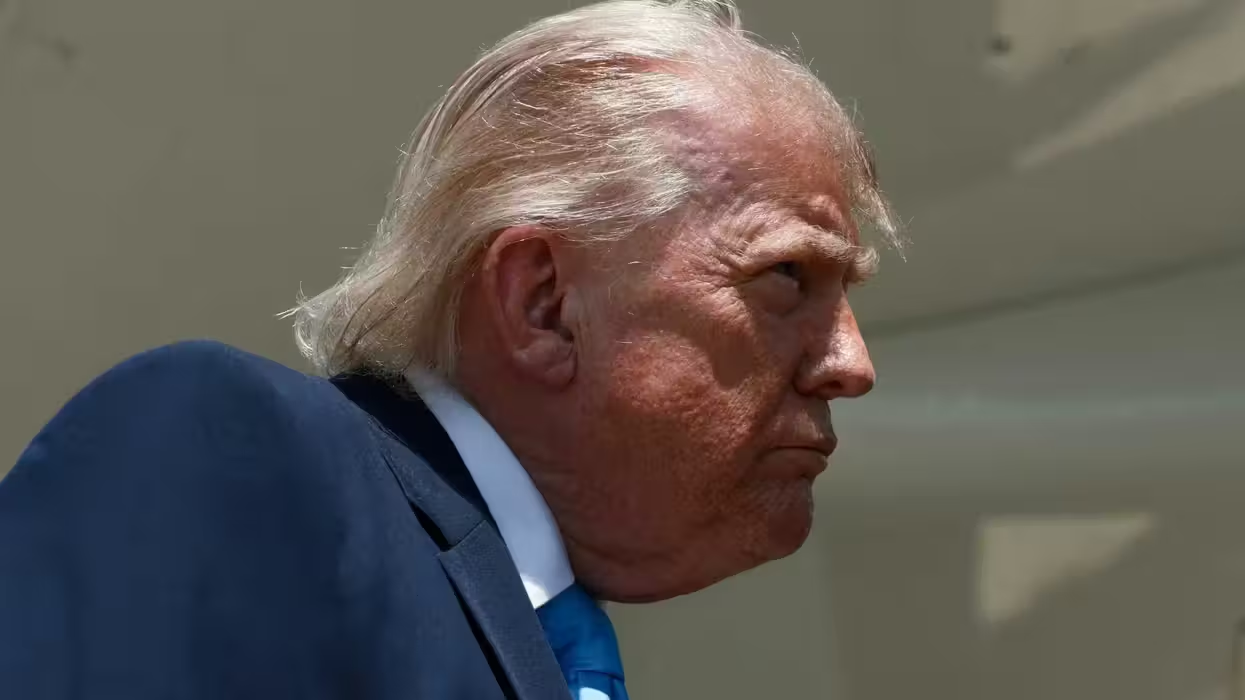
U.S. President Donald Trump speaks to members of the media as he arrives at Joint Base Andrews in Maryland, U.S., May 20, 2026. REUTERS Evelyn Hockstein

October 20, 2026 
ALTERNET

President Donald Trump's Truth Social is shedding users, and its parent company's stock has dropped to a record low as the president continues with his relentless posting that they appear no longer interested in.

Shares of Trump Media & Technology Group have gone down 29 percent over the last month and plunged down to 7.5 percent on Monday, hitting its all-time low of $6.40 before picking up slightly before closing at $6.43, according to The Daily Beast.

Investors are selling off the stock as users flee from the failing social media company.


According to data from digital intelligence company Similarweb, Truth Social had 420,000 daily users in June last year and just averaged 260,000 daily users in September.

The Washington Post reported the decline last week and was accused of being biased by a spokesperson for the social media app’s parent company


A Daily Beast analysis found that Trump shares about 27 posts daily and had 861 posted in May. The report states that the president is posting more as users flee because his average in April was 18 posts daily.

Since abandoning X, even after Elon Musk brought him back to the platform, Trump has used Truth Social to attack his adversaries and make policy announcements. It appears that his exclusive content on the platform is not convincing users to stay.

Its scale has always been small even at its peak compared to the giants of the social media world such as Facebook, which has over 2 billion daily users, and X with about 250 million using it daily.


Trump Media has plans to save its plummeting social media operation by merging its cryptocurrency and gambling initiatives with a nuclear fusion company called TAE Technologies.

The Wall Street Journal reported Friday that shares were already approaching a record low despite hopes that the fusion deal would boost the company's financial standing.

In a controversial and potentially illegal move, Trump offered a $100,000 monthly fee for early access to his Truth Social posts, which has already landed him in another court battle.


The Intercept & Freedom of the Press Foundation filed a lawsuit in August arguing that selling priority access to Trump's announcements is corrupt and unconstitutional. The lawsuit also argues that it violates First and Fifth Amendment protections.

Truth Social launched in February 2022 in response to Trump’s social media ban following the Jan. 6 attack on the Capitol.

Nearly five years later, the president remains its biggest attraction on the platform, but the numbers suggest that his audience is getting bored of his midnight meltdowns and AI slop.


Supreme Court’s sweeping authority dismantled by historian

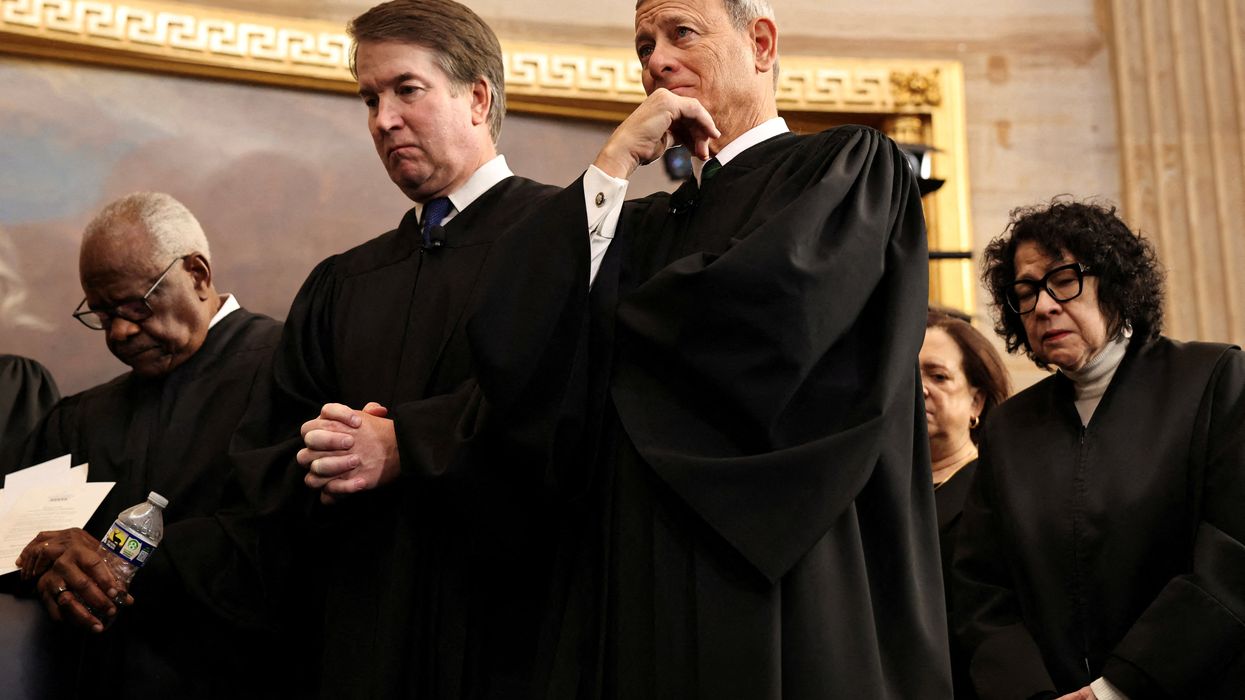
Chip Somodevilla/Pool via REUTERS/File Photo

Frank Yemi
October 28, 2026
ALTERNET


A historian argues that the Supreme Court's claim to be above politics, while wielding immense power over the Constitution, rests on a fairly recent conception of American government, and that early Americans would have been entirely unsympathetic to the court's claim to be the final arbiter of constitutional interpretation.

Rachel Shelden, a historian at Penn State and author of The Political Supreme Court: A Forgotten History, dismantled the court's image as being entirely apolitical in an interview with Legal AF.


"The court was designed to be a political institution, and it operated as a political institution for 100 years," Shelden said.

She contended that the notion of justices being above politics only emerged in the late 19th and early 20th centuries and gradually became the accepted view of the Supreme Court.

"But for the first 100 years, people would have been horrified by the idea that the Supreme Court got to have the ultimate authority over the Constitution," she said.


That doesn't mean the early court had no authority to decide cases or to interpret the Constitution. Instead, constitutional interpretation used to be part of a much wider political discourse involving all the branches of power and ordinary Americans, rather than something simply within the justices' scope.

She was also skeptical of the idea that the court today can be cleanly divorced from the politics of the day.

She described the court's modern judicial identity as "a way for the court to pretend as though it is separate from politics" and referred to the current partisan divisions on the bench.


Shelden’s examples included Chief Justice John Marshall, who was very much in the political arena prior to his appointment to the court and, for a very short time, continued on as secretary of state after he became chief justice.

Shelden said Marshall also defended his judicial decisions in the public sphere, including in newspaper exchanges over the national bank, which would be highly unusual for a modern justice.

"Nineteen of the first 51 justices were presidential candidates," Shelden said, referring to judges who didn't necessarily abandon their political affiliations upon taking office.


They would travel to regional courts, preside over trials and meet the sort of people whose lives were affected by their decisions. That practice declined as the federal judiciary grew and justices became increasingly removed from the day-to-day political life.

As she put it, "the court was political by design, but it was political in a different way from the way we think about it today."

Her argument is really about challenging the notion that the separation of the court from politics and its claim to ultimate constitutional authority were always fundamental to the American constitutional system. She's not challenging the court's right to interpret the law.