Friday, August 21, 2026

From 'terror threat' to 'civilizational threat,' top Republicans escalate anti-Muslim rhetoric  HATE

(RNS) — The avalanche directed at El-Sayed added to a wave of blatant anti-Muslim sentiment in mainstream politics that experts say is unprecedented, with politicians openly decrying the faith in new ways.
Abdul El-Sayed, center, a progressive candidate in the Democratic primary for U.S. Senate in Michigan, speaks to participants before the March of the Many, Sunday, Aug. 2, 2026, in Detroit. (AP Photo/Julia Demaree Nikhinson)

(RNS) — Within 24 hours of Abdul El-Sayed becoming Michigan’s Senate Democratic nominee, the candidate faced an onslaught of attacks. But instead of critiquing his policy positions or campaign promises, the comments focused on his background and Muslim faith, framing the epidemiologist-turned-political candidate as a danger to the country.

Sitting in the Oval Office, President Donald Trump referred to him as a “jihadist.” The National Republican Senatorial Committee published a digital advertisement referring to El-Sayed by his full name and labeling him a “radical.” And Rep. Nancy Mace of South Carolina, who once championed the separation of church and state, published a post on X insisting every “Muslim holding public office in America is a Trojan horse and a threat to both national security and our republic.” 

El-Sayed has deflected the attacks, saying the GOP is resorting to Islamophobia “because their ideas are tired.”

“I’ve been Abdul in Michigan my whole life,” he told MS Now. “I’m so grateful for the way Michiganders have embraced me and my family, and I know that Michiganders are open-minded, they’re big-hearted, they’re less interested in how you pray than what you pray for, and we all pray for the same thing.”

But the wave of vitriol directed at El-Sayed added to a rise in blatant anti-Muslim sentiment in mainstream politics that experts say is unprecedented, with politicians openly condemning the faith in new ways. Analysts say that unlike past spikes, which tended to focus on tying Islam to violence, the version of anti-Muslim bigotry that has emerged this year also reflects xenophobic talking points from far-right factions in Europe, who cast the world’s second-largest religious tradition as an existential threat to the Western world.


RELATED: Abdul El-Sayed could be the first Muslim senator. Here are 5 religion takeaways from his campaign.
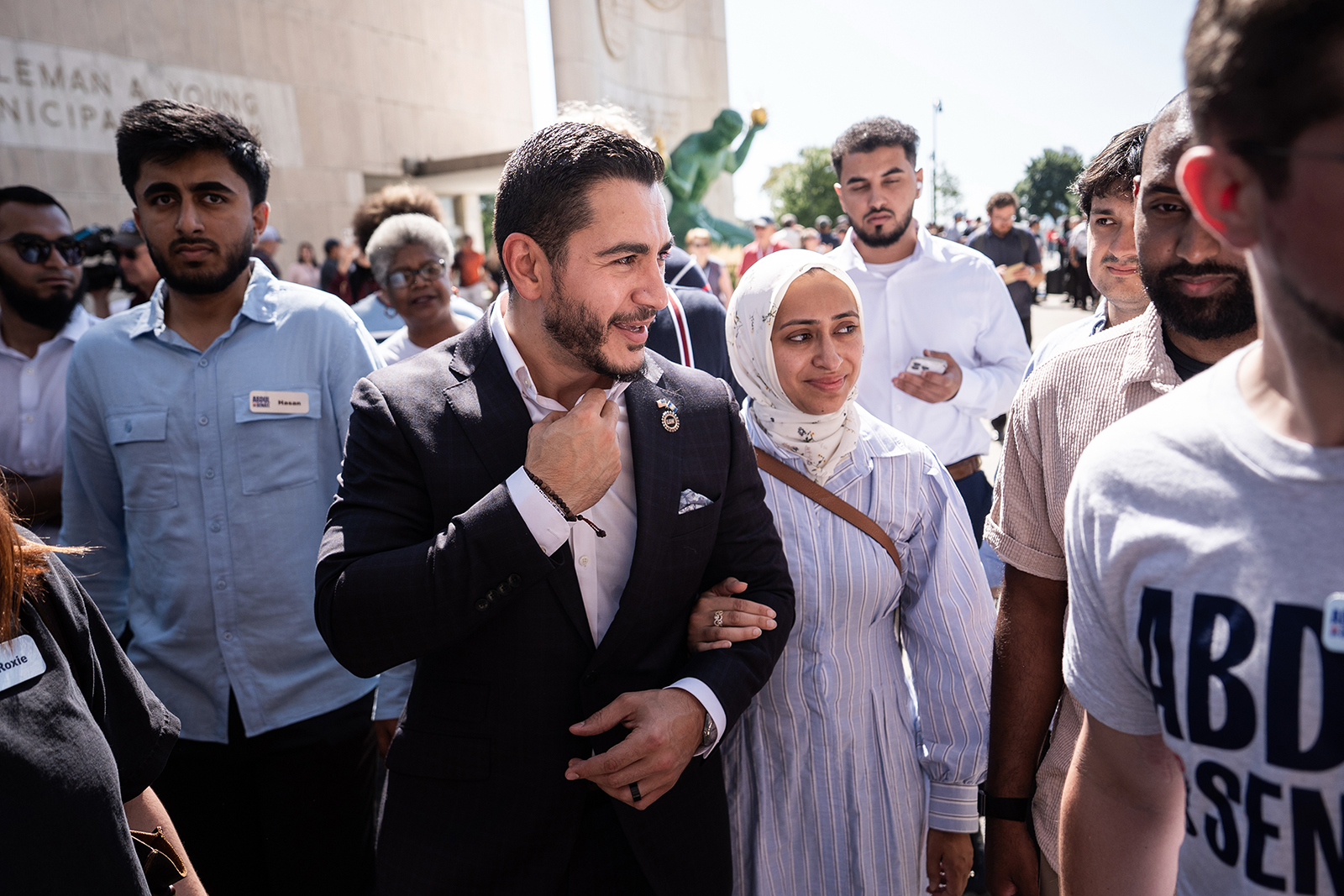

Abdul El-Sayed, with his wife Sarah Jukaku, departs following a news conference at the Spirit of Detroit shortly after winning the Democratic nomination for U.S. Senate in Michigan, Wednesday, Aug. 5, 2026, in Detroit. (AP Photo/Julia Demaree Nikhinson)

Anti-Muslim hate targeting El-Sayed online rose twentyfold in the days after his win, according to a study from the Washington, D.C.-based Center for the Study of Organized Hate. Many tied El-Sayed to terrorism, but the study noted others claimed he would impose Islamic law and warned of the alliance between “Islamists and communists.”

Posts also “advocated ‘remigration,’ the mass removal of Muslims from Western countries, as the only solution to a claimed ‘Islamic takeover,’ ‘invasion,’ and ‘conquest,’” according to the study.

For Mobashra Tazamal, associate director of The Bridge Initiative, the comments speak to a shift toward a form of anti-Muslim rhetoric that frames Muslims in the U.S. not just as a “security threat” but also as “a cultural threat.”

Purveyors of such rhetoric, she said, are “creating a manufactured narrative and hysteria around a so-called Sharia takeover, trying to create this narrative that Muslims are going to take over the U.S., which is completely false.”

“It’s scary: Is there a line for the GOP when it comes to Islamophobia? I don’t think there is,” added Tazamal.
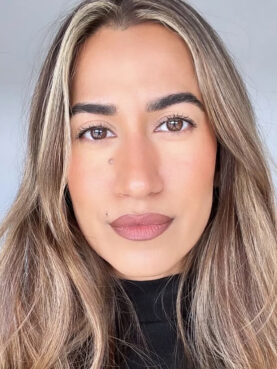
Mobashra Tazamal. (Photo courtesy of The Bridge Initiative)

Several experts who spoke to RNS also noted the tendency to frame Islam and Muslim immigration as a threat to “Western” values. It’s an argument that has already gained traction in far-right European circles: At last year’s National Conservatism conference in Washington, speakers repeatedly referenced Muslim immigrants in Europe, with Center for Renewing America senior fellow Nathan Pinkoski warning that the continent’s “trashed civilizational immune system” allowed “Islamists to make inroads into European nations.”

Critics of Pinkoski and others have long rejected the idea that Muslim immigrants are fundamentally altering Europe. In addition, many note that Europe-focused Islamic immigration narratives don’t apply to the U.S., where Muslims represent roughly 1% of the population and where Trump has banned entry from several Muslim-majority countries and frozen the refugee program for all but primarily white Afrikaners from South Africa.

Even so, some Republican officials have welcomed far-right, anti-Islam European leaders in the past year, saying Europe is a cautionary tale. In Texas, Republican Congressmen Chip Roy and Keith Self hosted British agitator Tommy Robinson at an April event titled “Confronting the Islamization of Texas and our Nation.” Dutch politician Geert Wilders also headlined a conservative conference alongside former White House official Steve Bannon in January. 

In the U.S., this shift may be a response to an emerging political paradox: Despite multiple spikes in intense rhetoric directed at Muslim Americans over the past few decades, New York Mayor Zohran Mamdani and other American Muslims have nonetheless won elections in various parts of the country. According to a new report from the Council on American Islamic Relations and CAIR-Action, 228 American Muslims from 26 states serve at local, state and federal levels.

Meanwhile, Islamophobic attacks have become an expected part of the campaign trail for Muslim candidates. Worse, the rhetoric extends beyond the candidate and is “incredibly dangerous” for average Muslims in the country, said Nazita Lajevardi, an associate professor of political science at the University of Michigan.

A demonstrator wears a stars-and-stripes cowboy hat and holds a sign as she protests against Islamic law at a rally June 10, 2017, in Seattle, as counterprotesters demonstrate across the street. (AP Photo/Ted S. Warren, File)

“Even if you don’t come out and explicitly say, ‘I’m speaking about all Muslims,’ you’re certainly putting the associations in people’s minds,” Lajevardi said. “And you’re heightening a sense of security threat, an existential threat, that the American public already feels about American Muslims.”

Lajevardi said some people are emulating anti-Muslim narratives from top elected officials, including from members of the Sharia-Free America Caucus. The group, which boasts 68 Congress members, targets what it claims is a growing threat of Sharia, or Islamic religious law, in the U.S., a move that harkens back to anti-Islam movements that flourished during the post-9/11 era and the early 2010s. Caucus members have introduced seven related bills, though they have gained little traction in the House. One of the bills, No Sharia Act, seeks to restrict American courts from enforcing judgements based on Islamic law.

Many of the caucus members, who come from a range of faith backgrounds, have used religious language to frame their fight against the alleged threat of Sharia.

“Sharia is a direct threat to our Constitution and Western values and seeks to replace our legal system and erode our basic freedoms. Our immigration system must be prepared to confront this challenge and defend our Judeo-Christian values,” Roy, a co-founder of the caucus, said in a June press release. 

Tennessee Rep. Andy Ogles, a Protestant Christian and a prominent member of the caucus, has also courted controversy for posting AI-generated videos of himself dressed up to resemble a Crusader and declaring on social media that “Muslims don’t belong in American society.” Rep. Andy Fine, who is Jewish, has fielded calls for his resignation after publishing anti-Muslim posts directed at Muslim elected officials, including Mamdani, and Muslims in general. One such post read: “We need more Islamophobia, not less. Fear of Islam is rational.”


RELATED: Congressional Democrats call GOP anti-Sharia caucus ‘hateful’


Nazita Lajevardi. (Photo courtesy of Michigan State University)

More than 100 Democratic Congress members in June condemned the Sharia-Free America Caucus as “hateful,” and comments from caucus members have triggered some religious pushback. In March, a diverse array of faith leaders — including Rabbi David Saperstein, the former U.S. ambassador-at-large for international religious freedom — attempted to meet with Rep. Ogles as well as House Speaker Mike Johnson on Capitol Hill to express outrage over anti-Muslim rhetoric voiced by Republicans. The faith leaders — some of whom called on Ogles in particular to “repent” — were unable to meet with the lawmakers, but prayed for both in their offices.

But Lajevardi, who studies how minority groups experience discrimination, said there is less pushback to the rhetoric than in past years, including among faith leaders.

RNS reached out to churches, dioceses and other religious institutions associated with around a third of the caucus members, but none of the leaders of those institutions said they had discussed the topic with the lawmakers. Most did not respond or declined to comment, although Florida Bishop Erik T. Pohlmeier, who oversees the Diocese of St. Augustine, which overlaps with the district represented by caucus member Rep. John Rutherford, noted generally that the “Catholic Church consistently upholds the dignity of every human person, supports religious freedom and advocates for immigration policies that are both just and humane.”

If Republicans see anti-Muslim rhetoric as a campaign strategy, their theory will face a major test in November. While Trump won his 2016 election campaigning on policies like a blanket ban on all Muslim immigration, other Republicans haven’t seen the same boost at the ballot box: Ogles lost his primary earlier this month, and Roy, who ran for Attorney General in Texas, fell short as well.

And Tazamal argued that if some are hoping to discourage Muslim Americans from running for office, those efforts are backfiring.

“It’s not scaring them to step away,” Tazamal said, referring to Muslim Americans. “It’s only making them feel that they actually do need to do more to protect themselves, and also other marginalized communities. To say to wider society, ‘Look, I belong. I am part of this country.’”

This piece has been updated to note that Rep. Chip Roy lost his bid for Attorney General in Texas, not Lieutenant Governor.

 

11 faith groups accuse Trump administration of violating court order while spying on churches

(RNS) — Religious groups now argue that the government has committed ‘multiple egregious violations’ of a preliminary injunction handed down in their case back in February.
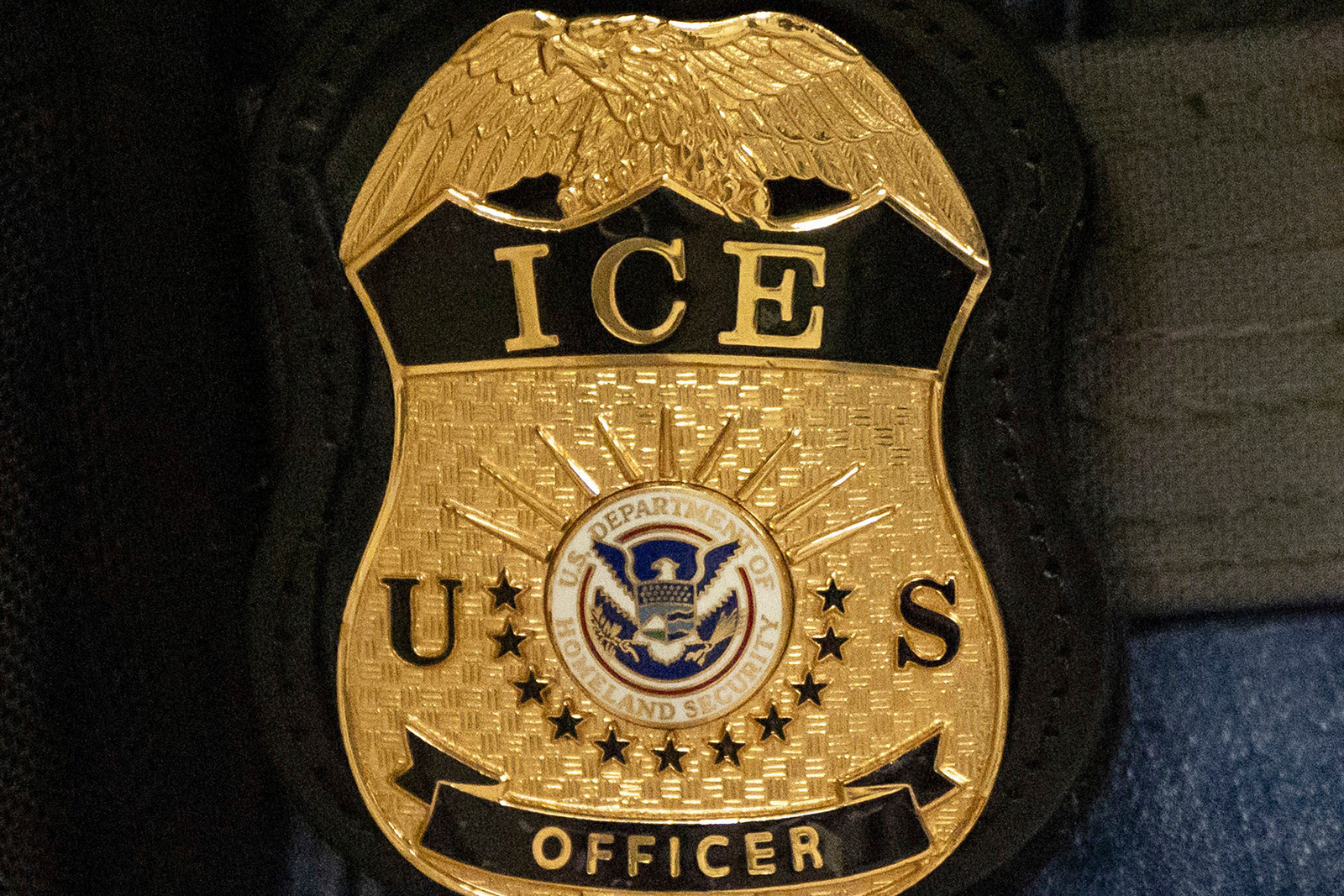
A federal agent wears an Immigration and Customs Enforcement badge in New York, June 10, 2025. (AP Photo/Yuki Iwamura, File)

(RNS) — Faith groups suing President Donald Trump’s administration filed a motion Thursday (Aug. 20) alleging the Department of Homeland Security committed “multiple egregious violations” of a court order that largely barred warrantless surveillance at their churches.

The motion, filed on behalf of the 11 religious plaintiffs, also asked the court to issue an order showing why DHS shouldn’t be held in contempt.

“Given the blatant and repeated nature of Defendants’ violations, the harm to fundamental rights of religion and expressive association, and the threat of future similar violations, Plaintiffs also respectfully request the Court’s expedited consideration of this motion,” the filing reads.

The religious plaintiffs — which include denominations such as American Baptist Churches USA and several regional bodies of the Evangelical Lutheran Church in America — sued the administration last July challenging the government’s decision to rescind the “sensitive locations” policy that had previously discouraged immigration raids at locations such schools, hospitals and churches. A federal judge eventually issued a 62-page injunction in February temporarily barring warrantless investigations on the grounds of churches involved in the case — except in “exigent” circumstances.

But last week, documents filed in a separate case detailed DHS surveillance operations in five churches in the Midwest, including a church subject to the injunction.

Skye Perryman, head of Democracy Forward, one of the groups representing the faith organizations, accused DHS agents in a statement of invading “churches and other places of sanctuary, terrorizing the people who seek refuge and respite within them.”

“It is clear that the government will stop at nothing — including at church doors — in its campaign to stoke fear in communities across the country, so we are asking the court to hold them accountable for this intrusion,” Perryman said of the case, which is known as New England Synod, Evangelical Lutheran Church in America v. Department of Homeland Security. 

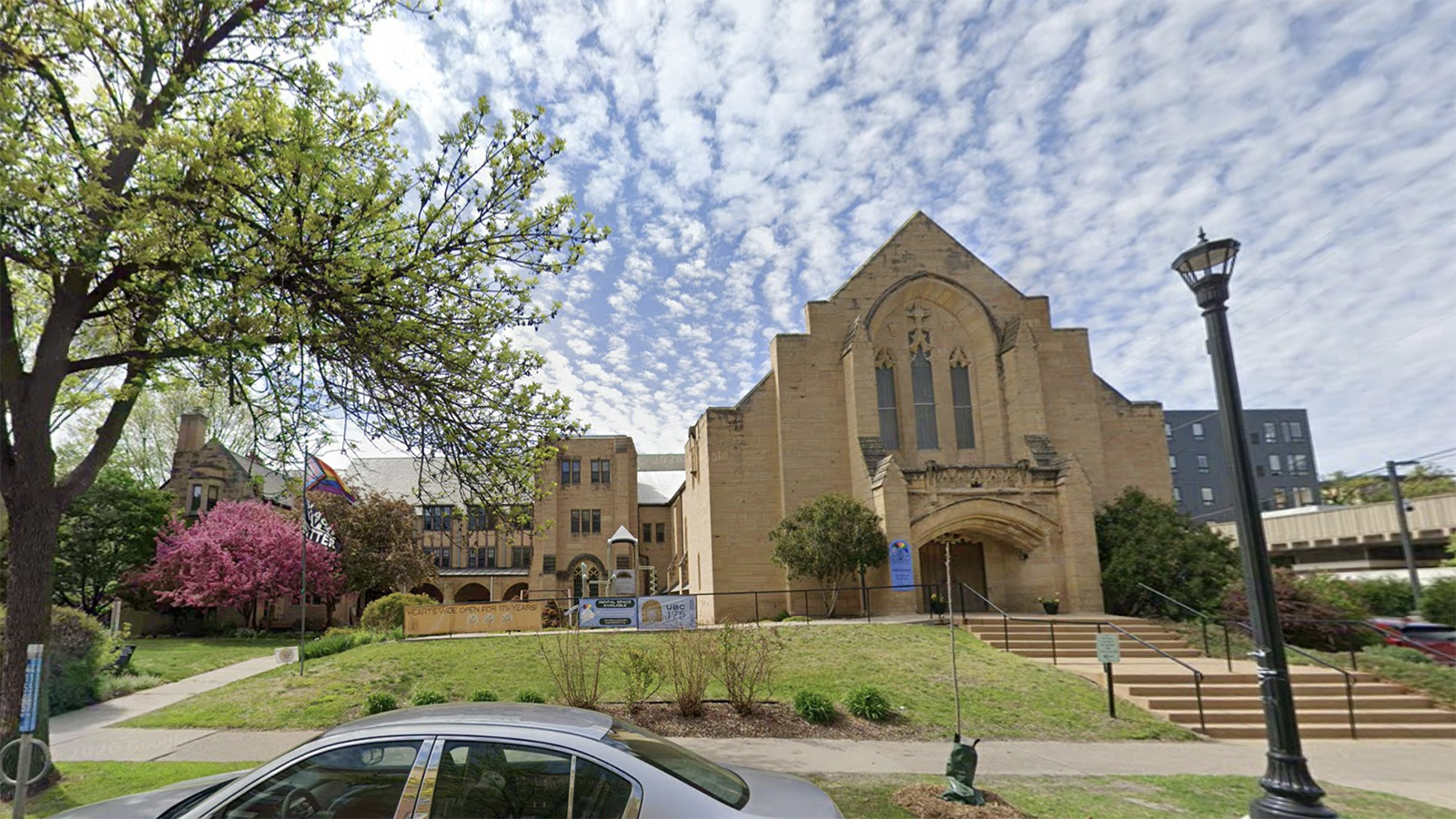
University Baptist Church in Minneapolis, Minn. (Image courtesy of Google Maps)

Several of the surveillance operations described in the documents, including an instance where an undercover DHS agent entered a church for at least two hours, took place at University Baptist Church in Minneapolis, Minnesota. The church is affiliated with two groups that are plaintiffs in the case: American Baptist Churches USA and the Alliance of Baptists.

The new motion accuses federal agents of “repeatedly violat(ing) the preliminary injunction at University Baptist Church in Minneapolis” despite signs posted around the church building declaring “these Premises are a Protected Area Pursuant to Federal Court Order in New England Synod v. Department of Homeland Security.”

The motion also claims the plaintiff’s lawyers spoke with lawyers for DHS about the surveillance, and that the government’s legal team insisted the activities do not quality as “immigration enforcement actions” largely barred by the court order.

But lawyers for the faith groups rejected that argument, alleging “DHS has wholly failed to explain under what authority ICE agents even could undertake investigations into crimes having no connection to the immigration laws.” They further alleged DHS did not take “any steps to consider the preliminary injunction before it took action at University Baptist Church and to ensure that its actions at the church were compliant with the order. It certainly has not suggested that it did.”

As a result, the motion contends, “the argument DHS offers now may reflect merely a post-hoc effort by DHS to escape the consequences of its conduct rather than its considered interpretation of the order.”

A DHS spokesperson told RNS on Monday the agency would not comment on the filings, saying in a statement that “DHS does not comment on the existence or status of specific on-going investigations, nor on investigative methods.” The spokesperson referred further inquiries to the U.S. Attorney for the District of Minnesota, who did not respond to questions from Religion News Service.

The case is one of four similar ongoing lawsuits regarding the sensitive locations policy that more than 50 religious denominations, regional denominational bodies, faith-based organizations and individual houses of worship have filed against the government since Trump began his second term. In addition to New England Synod v. DHS, several regional Quaker groups, a Sikh temple and the Cooperative Baptist Fellowship won a similar preliminary injunction last year in a separate lawsuit. The latter injunction was appealed, but a federal appeals court unanimously agreed on Tuesday to the leave the injunction in place.

DHS, probing anti-ICE activists, spied on at least five Midwest churches, court records indicate


(RNS) — Church leaders were outraged and vowed to continue their advocacy for immigrants.
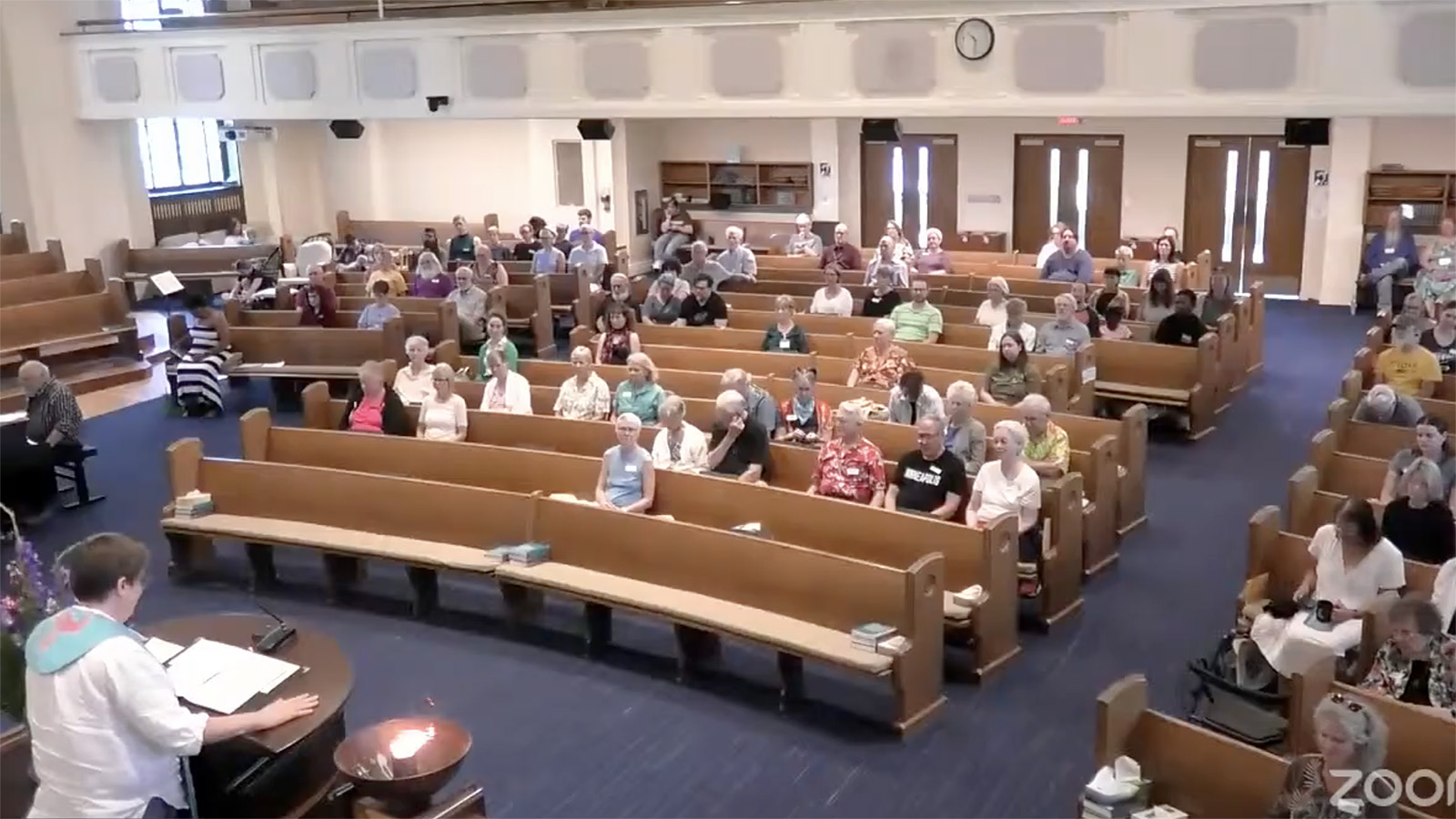
The Rev. Jen Crow, bottom left, speaks at First Universalist Church of Minneapolis on Sunday, Aug. 16, 2026. (Video screen grab)


(RNS) — About halfway through the service at First Universalist Church of Minneapolis on Sunday, Aug. 16, the Rev. Jen Crow delivered the news: Recent court filings, she said, revealed that U.S. Department of Homeland Security agents had spied on churches, including First Universalist, as part of a broader investigation into activists opposing the work of Immigration and Customs Enforcement.

“We know what the work of the church is,” Crow said, referring to the church’s efforts to push back against President Donald Trump’s mass deportation campaign. She spoke from a pulpit positioned next to a flickering open flame burning in a chalice, a symbol of Unitarian Universalism.

“Our spiritual practice grounds us in that work,” the pastor said, adding, “Amen.”

In response, the congregation burst into applause. 

It was a defiant moment, capping more than a year of rising tensions between federal immigration officials and religious communities in the Twin Cities. Since January, when thousands of federal agents arrived in the area as part of a targeted mass deportation campaign known as “Operation Metro Surge,” faith-led groups have joined others in resisting the government’s efforts — be it through protests in the streets or even a religious freedom lawsuit demanding the government allow faith leaders access to immigrant detainees.

The latest source of friction centers on federal court filings that emerged last week, which state that DHS agents, as part of an investigation referred to as Operation Puppet Master, surveilled five churches in Minnesota and Michigan since December, with agents often operating both outside and inside church buildings. The documents, part of a federal case stemming from June charges against 15 immigration-enforcement protesters (none of them church officials), appear to be DHS’s own internal investigation records. The filings describe agents investigating events hosted by the churches, which appear to be organized by outside liberal activist groups, and the revelations are already raising questions about whether DHS may have violated a court injunction barring warrantless investigations on the grounds of some churches — except in “exigent” circumstances.

People participate in a singing vigil that started at San Pablo — St. Paul Lutheran Church, Sunday, Jan. 11, 2026, in Minneapolis. (RNS photo/Jack Jenkins)

According to court documents, one of the five churches surveilled was University Baptist Church in Minneapolis, which is affiliated with both the American Baptist Churches in the USA and the Alliance of Baptists. The two denominations are among more than 50 faith groups that have filed four separate lawsuits challenging the Trump administration’s decision to rescind an internal policy discouraging immigration enforcement activities at “sensitive locations” such as schools, hospitals and churches.

In February, the judge overseeing the lawsuit that includes American Baptist Churches in the USA and the Alliance of Baptists as plaintiffs, issued an injunction barring DHS from conducting “warrantless enforcement actions—absent exigent circumstances” inside and around the churches involved in the suit. In March, University Baptist Church hung up signs that declared federal agents are not permitted on the premises and even cited the specific order, according to a signed declaration from Jean Lubke, who served as the church president until June 30. 

The testimony was submitted Aug. 14 as part of the Minnesota conspiracy case. But according to other court filings released last week, an undercover DHS agent attended a Mixed Martial Arts class in May, which was organized by a liberal group called “Left Jab” and held in the gymnasium of University Baptist Church. The agent had a hidden audio recording device that apparently fell to the floor “due to the physicality of the event,” and the DHS official only noticed it missing after leaving the gymnasium. The agent returned minutes later to retrieve the device from the gym floor, according to the court filing.

In the case of First Universalist, documents describe an undercover agent attending a “How to Stop ICE and Build a Revolution” event in December 2025. Held at the church, the event was led by Sunrise Movement, a liberal activist organization that, as the federal filing notes, was described by leaders at the meeting as a “nonviolent, direct-action group.”

The documents also describe an undercover agent attending an April meeting of the activist group Direct Action Minnesota that was held at St. John the Evangelist, an Episcopal Church in St. Paul, and collecting license plate information of vehicles parked in a nearby parking lot — seemingly irrespective of whether the owners of the cars were confirmed to be attendees of the meeting.

In addition, two churches affiliated with the Evangelical Lutheran Church in America — one in Minnesota and another in Ann Arbor, Michigan — were listed in the documents as subject to surveillance. 

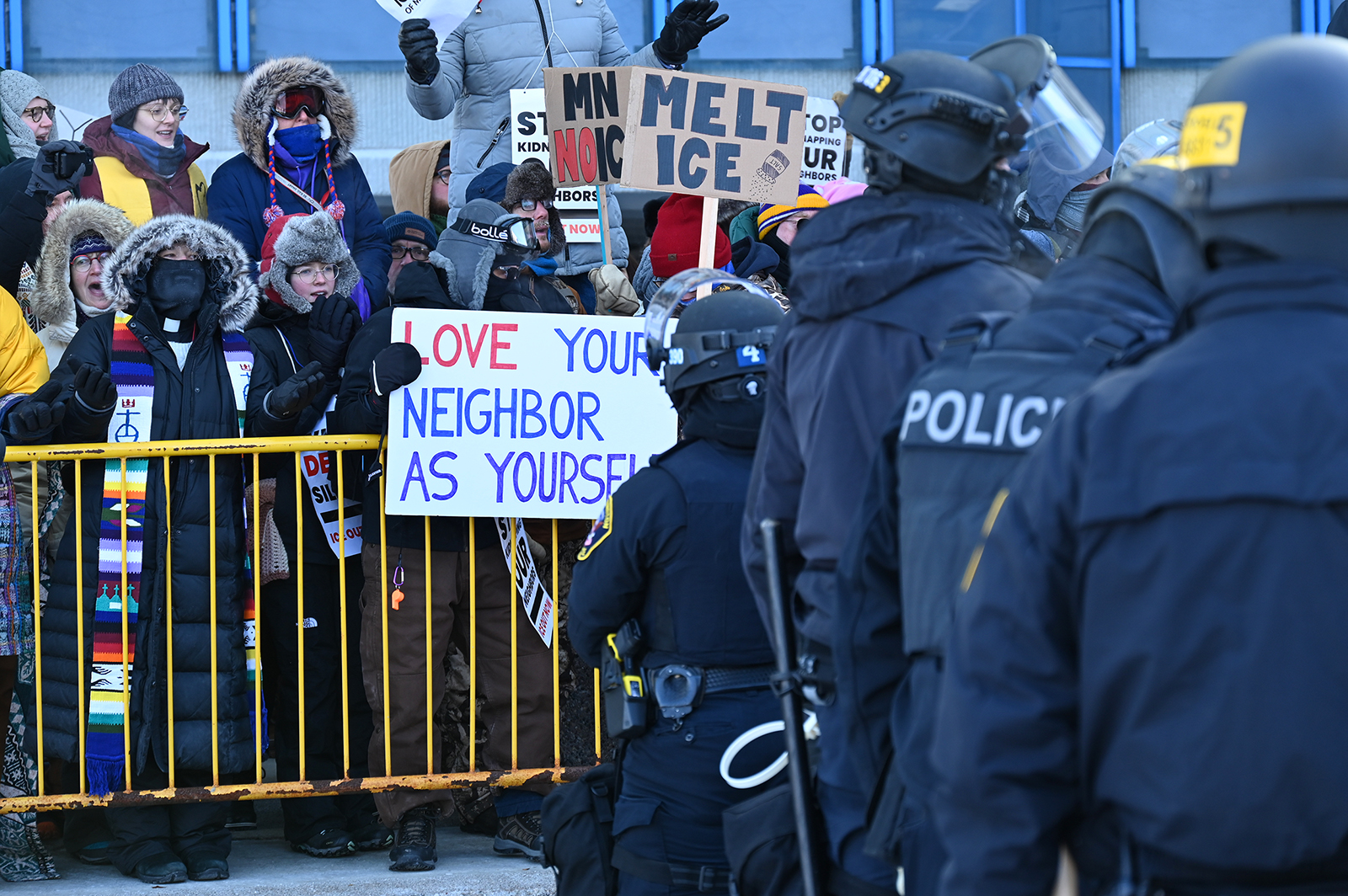
Faith leaders demonstrate against ICE tactics, in the departures area of Terminal 1 of the Minneapolis–Saint Paul International Airport, Friday, Jan. 23, 2026, in St. Paul, Minn. (RNS photo/Jack Jenkins)

A DHS spokesperson would not comment on the filings. “DHS does not comment on the existence or status of specific on-going investigations, nor on investigative methods,” the spokesperson said. DHS referred further inquiries to the U.S. Attorney for the District of Minnesota, which did not immediately respond to questions from RNS.

Whether Minnesota faith communities surveilled by federal agents will challenge the government in court remains to be seen, but some are already voicing outrage — and vowing to continue their advocacy for immigrants.

Rev. Crow, First Universalist’s pastor, spoke at a press conference on Tuesday alongside some of the 15 plaintiffs in the Minnesota conspiracy case. Flanked by some of her church board members, she called on fellow Minnesotans and people of faith to “say no to political surveillance and intimidation.”

In a statement, the Rev. Cody J. Sanders, University Baptist Church’s interim pastor, wrote that the church didn’t know about the surveillance until the court filings and pledged that the congregation “will continue to insist that solidarity with our most vulnerable neighbors is the way that we best follow the ways of Jesus in the world.”

“We should, as a society, agree that sacred places and the many and varied community activities taking place within them should not become targets of government infiltration,” the statement read. “Yet we know that many churches like University Baptist Church and our sibling congregations around the country have become a threat to those in power when we care for our neighbors, provide safe spaces for our community members to gather in peace, and strive together toward justice.”

Both Sanders and Crow noted government surveillance of religious communities has occurred before, pointing to widely publicized surveillance of mosques conducted by the New York Police Department and other law enforcement groups after the Sept. 11, 2001, terrorist attacks in the city. The U.S. government also conducted surveillance and used informants to investigate the Sanctuary Movement in the 1980s, when churches housed immigrants on their grounds in defiance of federal law.

In an interview, Crow said when she heard reports about her church being surveilled she was “disappointed, but not surprised.” She suggested government surveillance may simply be a risk people of faith like herself take by advocating for immigrant rights under the Trump administration, saying, “I’m always disappointed in the ways that our government doesn’t live up to the principles it espouses.”

The pastor also told RNS she considers the surveillance to be ironic, arguing her church has been public about its activism and has “never been shy about what we believe in and what our faith is.”

“We don’t hide the fact that we care about our neighbors,” she said. “We don’t hide the fact that we’re not afraid. There’s nothing that the government’s going to do that’s going to make us to scared to care for our neighbors.”


USA

Rampage of the Surveillance State: What’s Behind the Minneapolis Indictments?

Thursday 20 August 2026, by Randy Furst


FOR TWO MONTHS last winter, 4000 U.S. Immigration and Customs Enforcement (ICE) unleashed an assault on the Twin Cities with a violent roundup of immigrants, prompting a mass, nonviolent grassroots resistance movement that eventually involved hundreds of thousands of protesters. The Trump administration was forced to retreat.

Based on new revelations, it turns out that federal authorities took their sinister siege a step further, according to just-released federal documents. Undercover federal agents engaged in a broad spy operation, targeting activist groups and mainstream labor organizations who supported the resistance.

Agents posing as protesters infiltrated meetings at union halls and in churches, secretly making audio and video recordings, and spied on peaceful demonstrations. They seized union financial records.

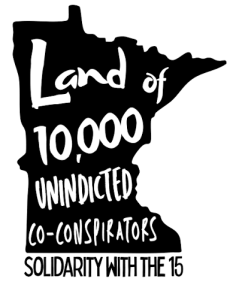
These disclosures have emerged in a federal criminal case brought by the U.S. Attorney’s office in Minneapolis which indicted 15 activists in June for protests outside the federal Whipple building where immigrants were being held.

After the indictments were announced, prosecutors were required to provide the defense with materials given to the grand jury that indicted the protesters. Those documents detail investigative practices that recall some of the worst abuses by law enforcement in U.S. history, underscoring how the Justice Department and Homeland Security have become the tool of rightwing extremists.

The newly released materials reveal that Homeland Security agents “participated in organizing and directing the groups they were surveilling, at times working to entice people into discussing or committing crimes,” according to a filing by Kevin Reich, a Minneapolis attorney representing one of the defendants in a case that’s become known as the Minnesota 15.

The 15 defendants are accused of conspiracy, assault and other charges, stemming from protests outside the Whipple federal building in the Twin Cities. The feds allege that the defendants violently impeded immigration officers during the ICE invasion in the Twin Cities.

The defendants counter that they were engaged in First Amendment-protected activities and the charges are aimed at silencing dissent in the metro area where “ICE out” signs, especially in Minneapolis neighborhoods, have become ubiquitous.

Mystery “Antifa”

Prosecutors claimed those charged were members of two groups tied to “Antifa,” an anti-fascist movement in the United States, even though there is no actual organization called “Antifa.”

Indeed, the 90-page indictment provided no information that the so-called violent activity by the defendants injured anyone. When asked at a June news conference announcing the charges, to identify specific incidents where law enforcement officers were injured by the alleged conspiracy, U.S. Attorney Daniel Rosen declined.

The new spying disclosures are contained in a motion for discovery by attorney Reich, who is asking a federal magistrate judge to require Homeland Security to turn over all its surveillance records.

“Undercover agents posing as protesters surveilled community meetings at churches, parks, libraries, schools and union halls,” Reich wrote. “These agents surreptitiously recorded dozens of conversations with ordinary people who were simply exercising their First Amendment rights to protest ICE’s lawless rampage in our state.”

That included spying on a peaceful No Kings demonstration and another protest against U.S. involvement In Iran.

The government’s presentation to the grand jury reflected a “broad and irrational investigation,” Reich declared. “With no evidence, the government alleged to the grand jury that the conspiracy in this case extends far beyond the defendants to include the AFL-CIO, the Minneapolis Federation of Educators, the Minnesota Association of Professional Employees [a union representing state employees]…Veterans for Peace and the Grease Pit bicycle repair shop, among others.”

It should be noted that the Minnesota AFL-CIO has played a central role in organizing the big No Kings protests in the Twin Cities, developing a large marshaling system that ensured that the marches and rallies would remain peaceful.

Operation Puppet Master

Demonstrations grew massive in Minneapolis this winter in the wake of the January murders by ICE and border patrol agents of two nonviolent citizen observers of ICE activity, Renee Good and Alex Pretti. Between 100,000 and 200,000 protesters rallied outside the State Capitol in St. Paul in April in a No Kings protest that may have been the largest single demonstration in Minnesota history.

Rather than prosecute the killers of Good and Pretti, Homeland Security Investigations (HSI), the investigative arm of the agency, launched a massive spying campaign on January 29, four days after Pretti’s death, that it dubbed “Operation Puppet Master.” It did so, with a memorandum, filled with lies, claiming that ICE was the target of a violent conspiracy.

“Since November 28, 2026,” the memo said, “ongoing protests and incidents of civil unrest have occurred in public areas throughout Minneapolis, MN. During these events violent opportunities (VOs) have exploited the protests as cover to attempt breaches of federal properties and have perpetrated multiple assaults against federal officers tasked with protecting these facilities.

“HSI St. Paul has identified an organized network of conspirators operating through online and in person who are providing material support to violent opportunists and agitators involved in impeding federal law enforcement, rioting, destruction of federal property and assaults on Federal agents and Officers.”

As attorney Reich points out, HSI does not identify any “violent opportunists” in its memorandum, nor does it cite any incidents of “rioting, destruction of property” or “assaults on federal agents and officers.”

Two weeks after it began Operation Puppet Master, HIS launched “Project Whipple Shield,” citing protests at the Whipple federal building. The purported purpose of the project was to investigate and disrupt “sophisticated organized campaigns” aimed at “acts of violence, destruction of property, intimidation of federal officers and employees and attempts to impede federal operations.”

Reich reported that Homeland Security secretly obtained financial records of several national labor unions including the Service Employees International Union and the Communication Workers of America. The records provided federal authorities with nothing useful, according to Reich.

The alleged “conspirators” were listed in a diagram, presented to the federal grand jury, that defies credulity. The so-called conspirators include the Minnesota AFL-CIO; the Minneapolis Federation of Educators Local 59; the Minnesota Association of Professional Employees [a labor union representing state employees], Service Employees Union Local 26; Democratic Socialists of America; Socialist Alternative; and Vets for Peace.

None of these groups have been charged, however, which is further evidence of the spurious character of the accusations.

Also named as a conspirator was Monarca, the rapid response unit of Unidos MN, a pro-immigrant group, that trained thousands of Minnesotans to be non-violent constitutional observers during ICE’s “Operation Metro Surge.” Monarca encouraged observers to blow whistles to alert neighborhoods of the presence of ICE agents and film ICE activities without interfering.

Monarca issued a statement, immediately after the new spy revelations. “Hundreds of thousands of Minnesotans took action together,” it said, “including constitutional observation, sharing food, filing legal briefs, protecting kids on their way to school and marching in subzero weather to protect our neighbors and restore the rule of law….Minnesotans have already proven we won’t cave to bullies. We know the power we have when we organize and act together and we’ll continue using that power to defend our neighbors and our freedoms.”

Bernie Bernham, president of the Minnesota AFL-CIO, also blasted the government’s actions and allegations in a statement:

Instead of holding federal agents accountable for shooting and killing Renee Good and our union brother, Alex Pretti, or addressing the dangerous and deadly conditions within immigration detention facilities, the Trump administration continues to weaponize our federal government to intimidate our unions, our communities, and anyone who peacefully opposes their radical authoritarian agenda.

Marcia Howard, president of the Minneapolis Federation of Educators, the union representing the city’s school teachers, defended her local’s role in the protests, according to the Minnesota Star Tribune.

Howard stated, “Minneapolis educators worked in union to exercise our constitutional rights to peacefully protest Operation Metro Surge and other discriminatory policies of the president and we will continue to do so.”

Going through local banks, HSI surreptitiously obtained financial records of labor unions and nonprofit organizations as part of a “financial investigation” into “domestic terrorist financing.” It used an administrative summons to obtain years’ worth of “wire transfers from various financial institutions to and from Service Employees International Union (SEIU) from U.S. Bank of Minneapolis.”

Not surprisingly, attorney Reich notes, SEIU finances revealed nothing more than “various types of debits and credits to include annuity payments, strike supplies, investments, union member dues, retiree dues, medical expenses and pension fund expenses.”

HSI also issued an administrative summons seeking financial information on the Communication Workers of America (CWA), regarding donations and PAC spending from 2023 to 2026.

The CWA represents 700,000 workers, many in telecommunications, but also in the media industry, including virtually all of the major newspapers in the United States. It may be more than a coincidence that the Trump administration has been on the warpath against journalists.

“Our union has become the latest target of a corrupt administration that weaponizes the legal process against law-abiding Americans exercising our Constitutional rights,” declared Claude Cummings, the CWA president.

The CWA is a union with a long history of standing up to bullies and billionaire bosses. We will not be intimidated, and we will not be silenced in our solidarity with our members, with our communities, and with our neighbors. Our union halls remain open. Our fight continues. Together, we will speak out, we will vote, we will fight, and we will win.

No Limits

HSI also subpoenaed PayPal and Venmo for information regarding payments to and from Voices for Racial Justice, which describes itself as “the longest running social justice organizing training organization in the state of Minnesota.”

HSI agents surveilled community meetings at churches, parks, libraries, union halls, schools and restaurants, including a meeting at the United Labor Center, the building that houses a number of Minneapolis labor unions.

Federal agents also surveilled, investigated and obtained financial records related to Sunrise Movement, a nonprofit focused on climate change and other social justice issues.

Undercover agents described one meeting of the Sunrise Movement at a public library, according to a government document: “During the Action meeting, it was made clear that the Sunrise Movement organization focused on ‘peaceful’ protests.”

The agent wrote that he privately spoke to one individual whose name is redacted, and “informed him that he works construction and could build items that might assist other groups with more ‘direct-action’ protests.” The agent told the individual “that going to jail did not bother him.”

The Homeland agents also surveilled individuals observing ICE vehicle activity at the Whipple building, even though federal judges in Minneapolis have ruled this year that such observation is not unlawful.

There seems to have been no limit to Homeland Security’s reach. Undercover agents took pictures of license plates of attendees during a meeting of anti-ICE protesters and activists at Prince of Peace Lutheran Church in Roseville, a St. Paul suburb.

They used that information to obtain the names of the attendees, searched social media for pictures of the individuals, and compiled an “intel workshop” that included names, photos, addresses and personal information, including family and employment information and vehicle registration information.

“None of these individuals did anything other than engage in protected First Amendment speech in a church meeting,” Reich wrote.

Undercover Everywhere

Homeland Security also sent an undercover agent to an in-person meeting at La Dona Cerveceria restaurant in north Minneapolis, where activists were planning for what was referred to as a general strike and march in Minneapolis on January 23 when tens of thousands marched. The agent described it as “a general discussion of the upcoming walk out on ICE event being held on January 23.”

There were reports of agents surveilling a No Kings protest and a “Stop the War on Iran!” protest organized by 50501, Veterans for Peace and the Sunrise Movement.

“Incredibly,” as Reich notes, a Homeland agent whose last name is Garcia told the grand jury:

“One of the things that is absolutely clear, not only in guidance in just principles as far as this investigation is, no one is ever investigated or looked at or even researched on for First Amendment protective activities. Every single individual that we have investigated there is a criminal predicate to why we’re investigating them, either statements that they have made that are criminal to their actual participation in overt criminal acts.”

Susan Du, a reporter for the Star Tribune, wrote on August 13 that the newly released documents confirmed that the government prosecutor who convened the grand jury for the Minneapolis indictments was Deputy Attorney General Brian Lynch.

Lynch was appointed this year as director of the Joint Task Force Vanguard, a special unit dedicated to prosecuting leftwing political violence.

“Lynch was reportedly photographed participating in the Jan. 6 Capitol protest, standing inside a restricted zone while rioters stormed the building,” Du wrote.

The Justice Department did not respond to a request for comment from the Minnesota Star Tribune about Lynch’s involvement in the protest, but an official told Talking Points Memo last month that while Lynch was present at Jan. 6, he ‘never entered the Capitol, left the grounds after a brief period, and did not commit and was never accused of any violation of law.’

There may be another factor to explain why Lynch came in to prosecute the Minnesota 15. At least 14 federal prosecutors have resigned from the U.S. Attorney’s office in Minneapolis since the beginning of the year, largely over directives from Justice Department in Washington, D.C. to defend ICE and immigration policies and the refusal of the department to conduct a civil rights investigation into the killing of Renee Good.

Sinister Precedents

Peter Rachleff, a retired history professor at Macalester College in St. Paul, points out that the surveillance described in documents is not new for federal authorities, noting that the notorious J. Edgar Hoover, cut his teeth more than a century ago, spying on the anarchist movement in America. In 1924, Hoover became the FBI’s first director, making subversion a prime focus.

Fast forward to 1941, says Rachleff, when the government went after the leaders of Teamsters Local 574, a militant trade union local in Minneapolis led by socialists, that won the historic 1934 truckers strike.

The union leaders were convicted and sent to prison on federal charges of sedition under the Smith Act, much of which was later found to be unconstitutional.

Then came the massive crackdown against political dissent under McCarthyism in the late 1940s and early 1950s, followed by the spying against the civil rights movement including Dr. Martin Luther King in the 1960s, and the federal COINTELPRO spy and disruption tactics against antiwar, Black and radical groups, in the early 1970s.

Rachleff said he is surprised the Homeland Security targeted some of the mainstream organizations like the Minnesota AFL-CIO, but adds, “I’m not surprised they are going after the resistance movement to ICE.”

Rachleff co-founded the East Side Freedom Library in St. Paul, which has become a hub for dialogue and activism in the Twin Cities in the last decade. He said that the latest spy revelations give the movement against authoritarianism a focus for supporting the Minnesota 15 and the Prairieland defendants, a group of activists in Texas, convicted on trumped-up terrorism charges and given shockingly long prison sentences.

“People who are victimized by the authoritarian government can become the center of the next stage of the movement for democracy and justice,” Rachleff said.

August 2026

Source: Against The Current.