Tuesday, October 27, 2026


Strike curbs output at Canada’s largest copper mine

Teck Resources’ Highland Valley copper project in British Columbia. (Image of Highland Valley Copper. Courtesy of Teck.)

Teck Resources (TSX: TECK.B; NYSE: TECK) is operating its Highland Valley Copper mine in British Columbia, Canada’s largest, at reduced capacity after workers went on strike Saturday, the company said.

The walkout involves United Steelworkers Local 7619, which represents about 1,200 workers at the operation near Logan Lake, about 200 km northeast of Vancouver. All 944 members who participated in the strike vote supported a walkout, the union said in a statement.

Teck remains committed to securing a collective agreement that is “fair and reasonable for employees and supports the ongoing viability of the operation,” the company said in an Oct. 24 release.

Highland Valley is Canada’s largest copper mine, with an approved extension set to keep it operating through 2046. The strike comes as Teck pursues its merger with Anglo American, a combination expected to create one of the world’s five largest copper producers as demand for the metal grows from power grids, electric vehicles and data centres.

Wages issue

Shares in Teck Resources gained 1.6% to $84.01 apiece on Monday morning in Toronto as wider markets rose. The miner has a market capitalization of C$41.2 billion ($29.3 billion).

The production impact will depend on the strike’s duration, Teck said. Contingency measures prioritize safety and environmental management, it added.

The dispute centres on wages, pensions and staffing. The union is seeking improvements to pay and retirement benefits, arguing the mine is struggling to recruit and retain skilled workers.

Highland Valley produced 127,100 tonnes of copper in 2025, accounting for about 28% of Teck’s total output of 453,500 tonnes, according to the company’s annual production update.

The stoppage follows unsuccessful contract negotiations and the expiry of a 72-hour strike notice. The previous collective agreement expired Sept. 30, Teck said in its notice.

The union didn’t immediately respond to a request for comment outside regular business hours on Monday.

Teck says strike begins at Highland Valley Copper mine in British Columbia


Teck Resources (TSX: TECK.B) said on Saturday workers had started a strike at its Highland Valley Copper mine in British Columbia, with operations continuing at reduced capacity.

The impact on overall production remains dependent on the duration of the strike, Teck said.

The labour action follows the expiry of a 72-hour notice served by United Steelworkers (USW) Local 7619 after contract talks failed to produce a new collective agreement.


The United Steelworkers union represents about 1,200 workers at Highland Valley, according to its website.

In its strike notice, the union said it is seeking higher wages and improved pensions, arguing the mine faces challenges attracting and retaining skilled workers amid staffing shortages.

Teck said it remains committed to negotiating a new collective agreement.

The USW did not immediately respond to a request for comment.

(Reporting by Ananya Palyekar in Bengaluru; Editing by David Gregorio and Nia Williams)


Closing the Sea: Lessons from Ancient Mediterranean Blockades

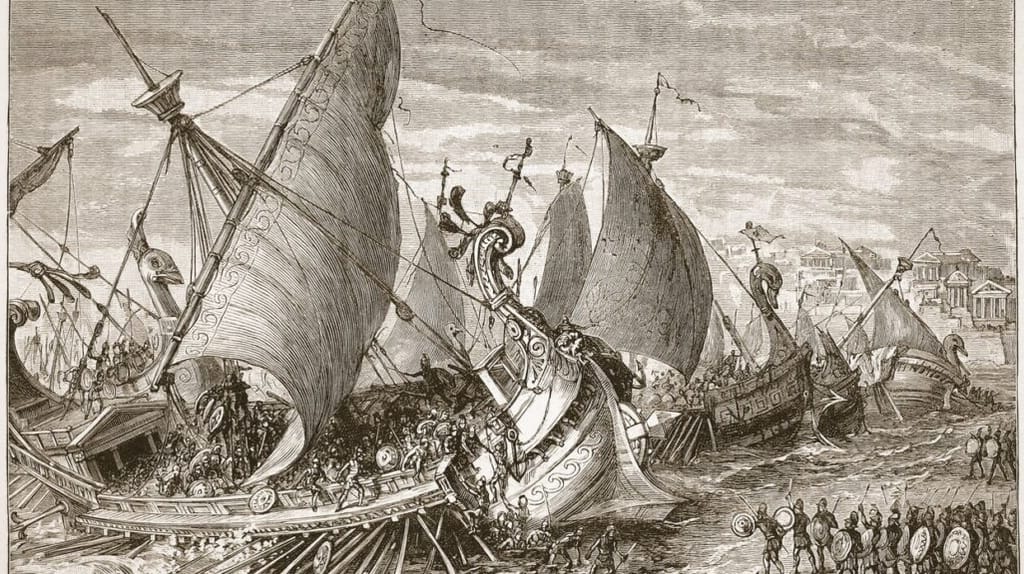
The naval battle of the harbor of Syracuse, 1890 (artist unknown / public domain)
Naval battle at the harbor of Syracuse, illustration circa 1890 (artist unknown / public domain)

[By Dr. Stephen DeCasien]


Nearly a century ago, Rear Admiral William A. Moffett, U.S.N., wrote in the foreword to Arthur M. Shepard’s seminal work, Sea Power in Ancient History, that “Readers of this work cannot but be impressed by the similarity between the problems of sea power in ancient times and problems of sea power which are engaging the attention of maritime nations today.” Practitioners of naval power have long looked to the past for warnings, lessons, and insights that might inform the challenges of the present and future. This post follows in that tradition by considering what antiquity might offer for understanding one of the most enduring applications of naval power, the blockade.

The British naval theorist Julian Corbett distinguished between commercial blockade, intended to restrict an enemy’s maritime trade, and naval blockade, directed against an enemy’s fleet. The latter could itself serve different purposes, either keeping an enemy fleet confined to port or watching it closely while encouraging it to put to sea, where it could be brought to battle. Although Corbett developed these categories from the experience of more recent naval warfare, their basic purposes would have been readily recognizable in antiquity. Ancient fleets likewise sought to restrict maritime commerce and supplies, contain hostile naval forces, or compel an adversary’s fleet to come out and fight.

The relevance of these forms of blockade is hardly confined to the past. At the time of writing, the United States is enforcing a blockade against Iran, restricting maritime traffic to and from Iranian ports as part of the ongoing conflict. At the same time, across the Indo-Pacific, the possibility of a Chinese blockade of Taiwan remains a central concern in discussions of a potential cross-Strait conflict. Chinese military planning considers blockade operations as one means of isolating and coercing Taiwan, alongside the considerably more demanding possibility of an amphibious invasion. Despite enormous differences in political circumstances, technologies, and scale, these situations underscore a common problem. Establishing control of the sea is one thing, but maintaining that control long enough to achieve a political or military objective is another.

There are, of course, many examples of naval blockade in the ancient Mediterranean, but four cases highlight particularly well the different challenges such operations presented: Samos in 440–439 BCE, Syracuse in 413 BCE, Rhodes in 305–304 BCE, and Roman operations around Lilybaeum and Drepana in 250–249 BCE. Each exposes a different problem associated with blockade, including maintaining forces on station, preserving or contesting command of the sea, restricting or sustaining access to supplies, and protecting the forces involved.

Samos, 440–439 BCE: The Challenge of Maintaining a Blockade

The Athenian campaign against Samos in 440–439 BCE provides a clear example of both the effectiveness and fragility of naval blockade. After an earlier Athenian intervention on the island, a group of Samian exiles returned, overthrew the Athenian-backed government, and revolted. Athens responded by sending sixty ships under the command of Pericles and other generals. After defeating a Samian fleet of seventy vessels near Tragia and receiving additional ships from Athens, Chios, and Lesbos, the Athenians landed troops and surrounded Samos with three walls while simultaneously blockading the city “from the sea at the same time” (?κ θαλ?σσης ?μα).

The blockade quickly revealed a problem that remains fundamental to such operations, as forces maintaining a blockade may also be required to respond to threats elsewhere. Reports reached Pericles that a Phoenician fleet was approaching to assist the Samians. He therefore took sixty ships from the force stationed around Samos and sailed toward Caunus and Caria to meet the anticipated threat. His departure weakened the blockade at precisely the moment the defenders needed.

The Samians exploited the opportunity. They attacked the inadequately protected Athenian naval station, destroyed the guard ships, and defeated the vessels sent against them. For fourteen days they “controlled the sea in their area” (τ?ς θαλ?σσης τ?ς καθ? ?αυτο?ς ?κρ?τησαν) and, as Thucydides puts it, “brought in and carried out whatever they wished” (?σεκομ?σαντο κα? ?ξεκομ?σαντο ? ?βο?λοντο). When Pericles returned, however, the Athenians reestablished the blockade by land and sea. Further reinforcements arrived from Athens, Chios, and Lesbos, and after a nine-month siege the Samians surrendered, demolished their walls, surrendered their fleet and hostages, and agreed to repay the costs of the war.

For fourteen days, the diversion of part of the Athenian fleet was enough to reopen Samian access to the sea, demonstrating the importance of persistence in maintaining a blockade. For those under blockade, even a temporary weakening of the forces on station could provide an opportunity to restore maritime access.

Syracuse, 413 BCE: The Reversal of a Blockade

When the Athenians arrived at Syracuse in 415 BCE, seeking to conquer the city and extend their power into Sicily, their overwhelming superiority at sea was one of the expedition’s greatest advantages. Over the course of the campaign, however, they gradually lost that advantage and ultimately found themselves trapped in the Great Harbor. By 414 BCE, the campaign had developed into an effort to isolate Syracuse by land and sea. The Athenians occupied Plemmyrium at the entrance to the Great Harbor, using it to protect their ships and store equipment, while their army attempted to complete a wall of circumvallation around the city. Thucydides emphasizes how far the Athenian works had progressed by the time Spartan support for Syracuse arrived under the command of Gylippus. Much of the wall toward the Great Harbor was already complete, while materials had been prepared to extend the line toward the opposite coast.

Gylippus’ intervention changed the strategic situation. Syracusan counter-walls prevented completion of the Athenian circumvallation, while the capture of Plemmyrium deprived the expedition of its principal position at the mouth of the Great Harbor and cost it substantial stores and naval equipment. The Syracusans also refused to remain blockaded within the Great Harbor, continuing to contest Athenian control of its waters. In 413 BCE, they modified their triremes for its confined waters, strengthening and shortening their prows for direct, head-on, prow-to-prow attacks (?ντιπρ?ροις), rather than the maneuvering attacks (?κ περ?πλου) for which the more lightly constructed Athenian prows were designed.

After defeating the Athenians at sea, the Syracusans closed the mouth of the Great Harbor with merchant vessels, warships, and other crafts moored across the entrance. The fleet that had arrived with overwhelming maritime superiority now had to fight its way out of the harbor it had once helped control. In the final naval battle, the Athenians attempted to break the Syracusan blockade, attacking the barrier across the harbor entrance, but the Syracusan and allied fleet prevented their escape. The surviving Athenians abandoned their ships and attempted to retreat overland, ending in the destruction of the expedition.

Syracuse demonstrates that a blockade depends on continued control of the surrounding maritime space. As Athenian control weakened through setbacks ashore, the loss of key positions, Syracusan tactical adaptation, and defeat at sea, the Athenians went from attempting to cut off Syracuse to being trapped themselves. For a force under blockade, contesting control rather than simply accepting isolation can fundamentally alter the strategic situation.

Rhodes, 305–304 BCE: The Limits of a Blockade

Few commanders in antiquity possessed a reputation for naval siege warfare comparable to Demetrius Poliorcetes, yet his enormous effort against Rhodes in 305–304 BCE failed to isolate the city completely. Maritime commerce was fundamental to Rhodian wealth and strategic power. Diodorus Siculus describes Rhodes as possessing considerable naval strength (?σχ?ουσα ναυτικα?ς δυν?μεσι) and notes its particularly close economic relationship with Ptolemy I of Egypt. When Antigonus and Demetrius attempted to force Rhodes away from its relationship with Ptolemy, separating the city from outside support became a central part of the campaign.

Demetrius arrived with a formidable fleet. He attacked the Rhodian harbor defenses from the sea, deployed ship-mounted artillery and siege machinery, and later shifted much of his effort ashore. Yet his fleet could not make the waters around Rhodes impermeable. Rhodian warships continued to operate, and outside powers repeatedly sent assistance. Ptolemy, Cassander, and Lysimachus supplied the city, with Diodorus describing major shipments of grain and other provisions. Their importance was reflected in the honors Rhodes later granted its benefactors.

Every successful entry weakened the coercive purpose of Demetrius’ effort to isolate the city. So long as Rhodes retained sufficient maritime access to receive supplies and outside assistance, time did not necessarily favor the attacker. After roughly a year of fighting, Demetrius accepted a settlement. Rhodes preserved its autonomy and its relationship with Ptolemy, while agreeing to support Antigonus except in conflicts against Ptolemy.

Rhodes illustrates the difficulty of maintaining a fully effective blockade. A blockade does not need to stop all traffic to exert pressure, nor does every successful passage render it ineffective. Its effectiveness ultimately depends on whether enough traffic is restricted to achieve its strategic purpose, while even limited access may be sufficient for the defender to sustain resistance.

Lilybaeum and Drepana, 250–249 BCE: The Costs of Maintaining a Blockade

By 250 BCE, during the First Punic War, Roman successes in Sicily had narrowed the Carthaginian position to a handful of strongholds in the west, but the effort to blockade Lilybaeum exposed the Roman fleet to risks that would ultimately threaten the operation itself. Polybius notes that the Romans believed its capture would open the way for attacks against North Africa, while Carthage resolved to hold it at virtually any cost. The Romans therefore invested Lilybaeum by land and sea.

The harbor proved exceptionally difficult to blockade effectively. Carthage exploited local knowledge, favorable winds, and skilled seamanship to penetrate the Roman blockade. A force under Hannibal, son of Hamilcar, carried approximately 10,000 troops and supplies into Lilybaeum despite the Roman presence. Hannibal “the Rhodian” later repeatedly sailed between Carthaginian territory and Lilybaeum, running the Roman blockade until the Romans captured a sufficiently fast Carthaginian vessel to intercept him. These episodes demonstrated the difficulty of transforming naval superiority into complete control of a contested area.

The blockade also imposed costs on the Romans. Combat, siege operations, and disease depleted the fleet’s manpower, requiring 10,000 replacement sailors. In 249 BCE, the Roman consul Publius Claudius Pulcher used the reconstituted fleet to strike the nearby Carthaginian naval base at Drepana, apparently hoping to surprise the Carthaginian commander Adherbal and eliminate the threat to Roman blockade operations around Lilybaeum. Instead, Adherbal brought his ships into open water. The Romans, caught close to the coast with less maneuverable ships and inexperienced replacement crews, suffered a devastating defeat. Polybius reports that ninety-three Roman vessels were captured while Claudius escaped with about thirty. Carthaginian forces subsequently returned to the vicinity of Lilybaeum and attacked Roman ships there.

Lilybaeum and Drepana reveal the sustained costs of blockade. Maintaining pressure exposes the forces involved to attrition, crew exhaustion, enemy action, and competing operational demands. As these pressures accumulate, they can create opportunities for the opposing force to challenge the blockade and reshape the balance at sea.

Ancient Blockades and the Problem of Sea Power

Ancient and modern blockades operate with radically different technologies. Samos, Syracuse, Rhodes, and Lilybaeum offer no tactical prescriptions for fleets operating with submarines, aircraft, missiles, satellites, or unmanned systems. Their relevance lies instead in the strategic problems they expose.

Taken together, the four cases suggest that blockade should be understood as a continuing contest rather than a condition established simply by achieving maritime superiority. Samos demonstrates the demands of persistence, as even the temporary removal of part of the blockading force created an opportunity to reopen access to the sea. Syracuse shows how control can be reversed, as the Athenians went from attempting to isolate the city to being trapped within the Great Harbor themselves. Rhodes demonstrates that a blockade need not be broken completely to fail; sufficient access may allow a defender to continue resisting. Lilybaeum and Drepana show how the accumulating costs and vulnerabilities of maintaining a blockade can create opportunities for it to be challenged.

These cases raise several enduring strategic questions about blockades. How difficult is a blockade to impose, sustain, resist, or break? How much force does it require, and for how long? How complete must it be to achieve its political or military objectives? How much traffic can continue to pass through before its effectiveness is undermined? What outside powers might intervene or provide support? And what forces, bases, or geographic features might strengthen, weaken, or threaten a blockade?

The central question is therefore not simply whether a blockade can be imposed, but whether it can be maintained long enough to achieve its purpose in the face of resistance, changing circumstances, and the costs of sustaining it.

That broader lesson returns us to Moffett’s observation nearly a century ago. The instruments of sea power have changed beyond anything an ancient commander could have imagined. The underlying strategic problem has not changed. Control of the sea is only valuable insofar as it can be translated into lasting political or military results


Dr. Stephen DeCasien is the Henry A. Kissinger Visiting Scholar Postdoctoral Fellow at Yale University’s Jackson School of Global Affairs. His research integrates archaeological and historical evidence to examine ancient warships, naval warfare, and the exercise of maritime power. He is currently co-editing, with William M. Murray, “The Naval Rams from the Battle of the Egadi (Aegates) Islands in 241 BCE”, a volume presenting archaeological evidence from the first securely identified ancient naval battlefield and examining Roman and Carthaginian naval warfare, technology, and logistics.

This article appears courtesy of CIMSEC and may be found in its original form here. 

The opinions expressed herein are the author's and not necessarily those of The Maritime Executive.

BAN DEEP SEA MINING 

US Deep-Sea Mining Claim Areas Rival ISA Licenses in Size

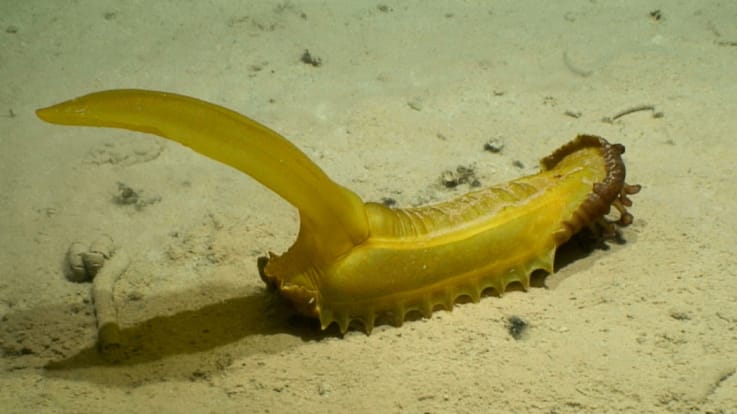
A sea cucumber, dubbed the “gummy squirrel” (Psychropotes longicauda), encountered at a depth of 5,100 meters (about 16,700 feet) on abyssal sediments in the western Clarion-Clipperton Zone. Image courtesy of NOAA/DeepCCZ expedition.

[By Elizabeth Claire Alberts and Andrés Alegría]

U.S. ambitions to mine the deep sea are rapidly expanding across the ocean, not only in the country’s own waters, but also on the high seas — the vast expanse of ocean outside any one country’s jurisdiction. In the Clarion-Clipperton Zone of the Pacific Ocean, a hotspot of mining interest in international waters, a Mongabay analysis shows that companies have either applied to the U.S. or already been granted rights to areas of the seabed equal to about half the expanse already designated for mining activities by the international community. Most of the applications to the U.S. occurred within the past year and a half, a fraction of the 25 years the multilateral U.N.-affiliated International Seabed Authority (ISA) has spent issuing seabed mining exploration licenses.

U.S. applicants are not only seeking rights to explore the deep seabed, but some are also applying for commercial recovery permits. If approved by the U.S. National Oceanic and Atmospheric Administration (NOAA), these recovery permits would allow the companies to extract and eventually sell the minerals. While the ISA can also accept mining exploitation applications, no company has yet submitted one to the organization. No other country or institution is known to unilaterally accept applications to mine in international waters, and commercial-scale seabed mining has not yet begun anywhere in the world.

Deep-sea mining companies are interested in many parts of the international seabed, but Mongabay’s analysis focused on the Clarion-Clipperton Zone (CCZ), an extensive stretch of the Pacific Ocean between Mexico and Hawai‘i that holds vast quantities of polymetallic nodules — mineral-rich rocks that resemble burnt potatoes.

Mongabay’s analysis also revealed overlaps between claims in the CCZ. U.S. applicants are seeking rights to seabed areas that overlap with areas the ISA has already contracted, as well as areas the ISA holds in reserve for future mining and to benefit developing countries. There are overlaps between ISA and U.S. applicants, and overlaps between U.S. applicants.

The scale and locations of the U.S. claims, as well as the potential overlaps, are raising legal and regulatory questions about who has authority over the seabed in international waters, which are global commons beyond any nation’s sole jurisdiction. Some experts expressed concern that a U.S. move to unilaterally permit mining in the high seas could weaken or even topple multilateral systems that have long governed the oceans. Others said the U.S. push to mine might also trigger a premature start of commercial mining. Forty-six countries have called to put the brakes on the industry due to concerns about the potential damage to the marine environment, the need for further research, and a lack of international rules to govern the activity.

“If NOAA goes ahead and starts issuing [exploration] licenses, and then also proceeds to issue exploitation permits, that is a direct affront to multilateral ocean governance, and basically the entire international law system,” Lori Osmundsen, an independent environmental attorney based in the western U.S. city of Seattle, told Mongabay. “Because the United States is then saying … ‘We’re not concerned about international repercussions, and we have the right under our own law to go and do this.’”

Kim Doster, NOAA’s communications director, outlined the agency’s position in an emailed statement responding to questions from Mongabay. “It is the legal opinion of the United States that exploration for and commercial recovery of hard mineral resources of the deep seabed are freedoms of the high seas subject to a duty of reasonable regard to the interests of other states in their exercise of those and other freedoms recognized by general principles of international law,” she wrote.

Doster also pointed out that the U.S. in 1980 passed the Deep Seabed Hard Mineral Resources Act (DSHMRA), under which the government has justified issuing these licenses for the seabed mining in international waters, giving experts “forty-six years to study and express their concerns.”

“The emerging deep sea mining industry is understandably ready to move as quickly as feasible to establish this industry and recover these abundant mineral resources for the benefit of the United States,” Doster said. “NOAA is proud to be an example of a government agency that truly works for its constituents and the American people,” she added. “Our team continues to work expeditiously to ensure that bureaucracy is no longer an obstacle to sustainable economic development.”

The rules governing the deep seabed

In 1982, nations agreed upon the United Nations Convention on the Law of the Sea (UNCLOS), a landmark international treaty often referred to as the “constitution of the oceans” that sets a legal framework for most ocean activities, including the possible extraction of minerals. One mandate of UNCLOS was the creation of the ISA, an international body tasked with overseeing all activities on the international seabed, managing seabed mineral resources, and ensuring the protection of the marine environment. When UNCLOS took effect in 1994, so did the ISA, which is headquartered in Kingston, Jamaica.

To date, 172 parties — including 171 countries and the European Union — have ratified UNCLOS, meaning they’re legally bound by its provisions. Ratification also grants automatic membership in the ISA. The U.S., however, remains one of the few major maritime powers that hasn’t ratified UNCLOS. That said, the U.S. does have observer status at the ISA, which means it can participate in meetings but not in decision-making.

The ISA began issuing exploration contracts for international seabed areas in 2001 and has since approved 32 contracts (although one was renounced). In the CCZ alone, 17 ISA-issued exploration contracts cover 1.23 million square kilometers (476,444 square miles) — an area three times the size of the U.S. state of California.

In 1980, years before UNCLOS entered into force, the U.S. established its own legal pathway for deep-sea mining in international waters through the enactment of the DSHMRA. The federal law was actually meant to be an interim measure, allowing U.S. companies to explore and potentially exploit minerals from the deep seabed in areas beyond the country’s national jurisdiction while the international community negotiated the framework of UNCLOS. But since the U.S. didn’t ultimately ratify UNCLOS, the DSHMRA has remained the country’s legal mechanism governing deep-sea mining activities in international waters.

After the DSHMRA’s enactment, NOAA, which administers the law, issued four exploration licenses in 1984, although two were relinquished in the 1990s. The other two remain active and are still held by weapons giant Lockheed Martin.

Ferromanganese nodules collected from the Clarion-Clipperton Zone during a U.S. Geological Survey research expedition. Image courtesy of USGS (Public domain).

In the past year and a half, however, the U.S. has stepped up its game. In April 2025, the Trump administration issued an executive order calling for the U.S. to accelerate its development of the deep-sea mining industry, both in international waters and in areas under U.S. jurisdiction. Shortly after, Canadian deep-sea miner The Metals Company (TMC) announced that its newly established U.S. subsidiary, TMC USA, had applied to NOAA for “two exploration licenses and one commercial recovery permit” in international waters. At least half a dozen other companies have followed in TMC USA’s footsteps, filing their own NOAA applications.

“DSHMRA establishes the framework through which the U.S. government authorizes citizens to pursue these freedoms in a manner providing reasonable regard to the interests of states as consistent with the general principles of international law,” Doster told Mongabay.

But the legal basis for U.S. unilateral mining has been disputed by the ISA, the European Commission, and some Chinese authorities. Many legal experts also say that such a move would invite litigation, not only internationally but also domestically within the U.S., creating what Coalter Lathrop, a lawyer specializing in maritime law at U.S.-based consultancy Sovereign Geographic, described as a “total legal mess.” One lawsuit has already been launched: U.S. conservation groups are suing NOAA over its decision to “certify” one of the applications submitted by TMC USA, arguing that the agency violated the legal procedures set out under the DSHMRA. NOAA will certify an application when it believes a company has demonstrated its scientific, financial, and technical ability, and that its proposed exploration and commercial recovery plans are sufficient, according to a press release from the agency. Certification, however, does not mean the license has been granted.

Besides the legal questions around the industry, seabed mining has generated considerable controversy, with critics warning that it could cause irreversible damage to deep-sea ecosystems that remain among the least understood on the planet, and that the negative impacts of the industry could also affect larger parts of the ocean. On the other hand, those in favor of the industry say it’s necessary to procure critical minerals for modern technologies, including green energy and defense applications, and can be developed with less environmental harm than terrestrial mining.

U.S. applications rival the ISA’s footprint

Mongabay found evidence that at least seven companies (two with the same parent company) have submitted about a dozen applications to NOAA since April 2025 to explore or exploit the international seabed, all of them for areas in the CCZ or elsewhere in the Pacific. Of these, nine applications appear to be currently active. NOAA has published six of these active applications in full on the U.S. Federal Register. Companies announced they submitted the other three applications, but these are currently unavailable to the public.

Doster did not respond to Mongabay’s questions about whether NOAA had received additional applications.

Of the nine active applications, seven, submitted by six companies, request rights to seabed areas in the CCZ, making this region a focal point of U.S. interest in international waters.

Mongabay’s analysis of application data from the Federal Register and information publicly disclosed by the companies indicates that U.S. companies are seeking rights to around 727,738 km2 (280,981 mi2) of the CCZ. Combined with Lockheed Martin’s existing exploration license areas, also in the CCZ, which cover 234,896 km2 (90,694 mi2), the total area that could come under U.S. control for either seabed exploration or exploitation in the CCZ might swell to 962,634 km2 (371,675 mi2), if NOAA were to approve all applications without revisions.

That would be equivalent to around 50% of the seabed area in the CCZ currently overseen by the ISA for mining purposes, including both exploration contract areas and reserved areas. Measured just against the ISA’s current exploration contract areas in the CCZ, U.S. applications and Lockheed Martin’s existing licenses in the CCZ already amount to nearly 80%.

These figures only count overlapping areas between U.S. applicants once. They also exclude one of the nine known active applications targeting the CCZ: An application for 147,430 km2 (56,923 mi2) that the U.S. subsidiary of Canada-based Deep Sea Minerals Corp. announced it had submitted. The announcement did not provide geographic data for the proposed mining areas, so including this application risked introducing errors if its requested areas overlap with those of other U.S. applicants. The map accompanying this report likewise excludes this application. However, its omission also means our figures underestimate the true size of U.S. deep-sea mining ambitions in the CCZ.
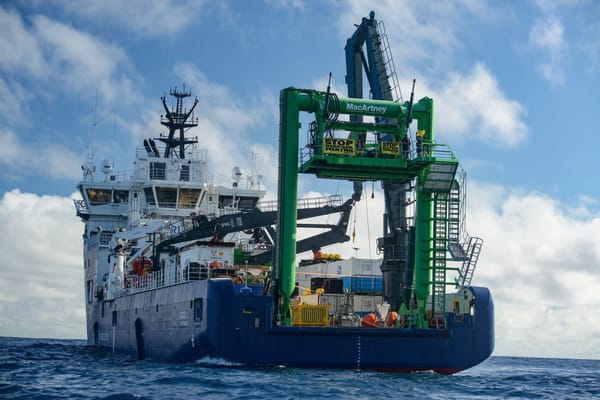
The MV COCO, an offshore research vessel used by The Metals Company, a deep-sea mining firm that has submitted applications to both NOAA (via a subsidiary) and the ISA for exploration and exploitation of the Clarion-Clipperton Zone. Image © Martin Katz/Greenpeace.

Mongabay’s analysis also does not account for mining areas requested in international waters outside of the CCZ: Two companies have requested mining rights to areas in the South Pacific, close to the exclusive economic zones of the Cook Islands, Kiribati, and French Polynesia.

The speed with which the U.S. footprint in the CCZ has expanded is striking. The ISA has taken roughly 25 years to assemble its portfolio of exploration contracts, while the recent U.S. applications have materialized in only the last year and a half.

The ISA secretariat did not directly respond to Mongabay’s questions about the scale of U.S. deep-sea mining applications or the speed at which they are being filed. It did, however, refer Mongabay to a document detailing its appeal to member states to approve its request to seek an advisory opinion from the Seabed Disputes Chamber of the International Tribunal for the Law of the Sea about how to deal with possible mining outside of the UNCLOS legal system. In other words, the ISA is searching for legal advice about how to deal with the onslaught of applications to the U.S. for rights to the international seabed.

Overlapping claims

Doster said NOAA would find a solution to potential conflicts where U.S. applicants are seeking mining rights in areas that overlap with ISA reserved areas and exploration contract areas in the CCZ.

“To the extent any DSHMRA application proposes activities that would unreasonably interfere with the interests of other states in their exercise of the freedoms of the high seas, as recognized under general principles of international law, NOAA regulations provide the process by which the Agency, in consultation and cooperation with State Department and other Federal agencies, would seek to resolve such conflict,” Doster said.

While Doster did not elaborate on how NOAA would resolve such conflicts, Lathrop pointed to what he described as a “conflict avoidance provision” in the DSHMRA that requires NOAA to acknowledge overlapping claims.

A close-up of the mouth of a brittle star (class Ophiuroidea) from an area of particular environmental interest (APEI), a designated no-mining zone in the Clarion-Clipperton Zone. Image courtesy of DeepCCZ Partners: University of Hawai‘i (U.S.), Natural History Museum (U.K.), and University of Gothenburg (Sweden).

“The NOAA administrator can’t issue a license if somebody else already holds that area,” Lathrop told Mongabay. However, he said NOAA may not recognize ISA claims on the grounds that the DSHMRA was enacted before those ISA licenses came into effect, plunging the situation into “unknown” legal territory.

Based on available data, Mongabay found that areas requested by SeaX Inc. and American Metal Resources (AMR) LLC., both subsidiaries of Texas-based American Metal Inc., overlap with a combined 79,213 km2 (30,584 mi2) of ISA reserved areas in the CCZ. The ISA has set these reserved areas aside for potential future use by developing countries that are parties to UNCLOS, or for future use by the ISA’s own commercial mining arm, known as the Enterprise.

A report published by the ISA in the lead-up to ISA meetings that took place in July in Kingston notes that these overlaps should be of “very serious concern to the Enterprise as it has the potential to undermine the future ability of the Enterprise to participate directly in activities in the Area.”

“The inability of the Enterprise to engage in activities in the Area would also undermine the principle of the common heritage of humankind,” the report noted. “In addition, it would affect the clear balance that the Convention and the 1994 Agreement has created to ensure that developing countries also participate in activities in the Area.”

Some of the areas SeaX has requested from the U.S. not only overlap with ISA reserved areas, but also with areas sought by an ISA applicant. In September 2025, a Bahraini subsidiary of U.S.-based company Impossible Metals submitted an application to the ISA seeking exploration rights to 74,761 km2 (28,865 mi2) of seabed across six blocks. SeaX’s requested areas overlap with nearly half of this claim. The ISA has not yet approved Impossible Metals’ application.
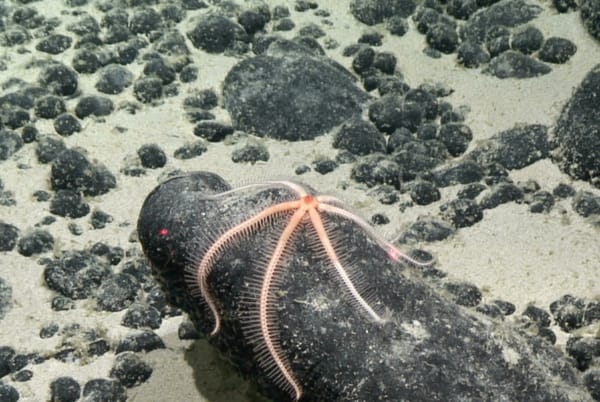
A deep-sea starfish (family Brisingidae) on a manganese-encrusted rock, surrounded by polymetallic nodules, in the Clarion-Clipperton Zone. Image courtesy of DeepCCZ Project.

TMC USA is also pursuing U.S. approval to mine areas that nearly match the areas its parent company has already secured exploration contracts for from the ISA, through two different subsidiaries.

A spokesperson for TMC, who declined to be named citing company policy, told Mongabay in an email that TMC USA was “proceeding responsibly under the United States’ longstanding seabed mining regime, supported by its clear and consistent position that it is not bound by rules created under a treaty it never joined.”

The ISA did not respond to Mongabay’s questions about how these conflicting claims would be handled. The ISA did, however, renew one of the TMC subsidiaries’ two exploration contracts in July.

Besides overlaps with areas earmarked for potential mining, The Pew Charitable Trusts, a U.S.-based nonprofit organization focused on policy, has also raised concerns about SeaX and AMR requesting rights to areas directly adjacent to areas of particular environmental interest (APEIs). These are zones that the ISA began setting up in 2012 to protect biodiversity and ecosystem functions in the CCZ should mining proceed. In a letter to NOAA, Pew said the proximity of the application areas to the APEIs calls into question how “mining impacts into the APEIs from US-based applicants will be measured or monitored.” That being said, several ISA contract and reserved areas already border APEIs, and in December 2021, the ISA established its 13th APEI in an area overlapping with one of Lockheed Martin’s U.S.-issued exploration licenses.

Within the CCZ, there are also overlapping claims among U.S. applicants TMC USA, AMR, and SeaX. Doster of NOAA said the DSHMRA indicated that applicants would be given “priority of right” for licenses in the order they submit their applications, provided the applications are in “substantial compliance” with DSHMRA requirements.
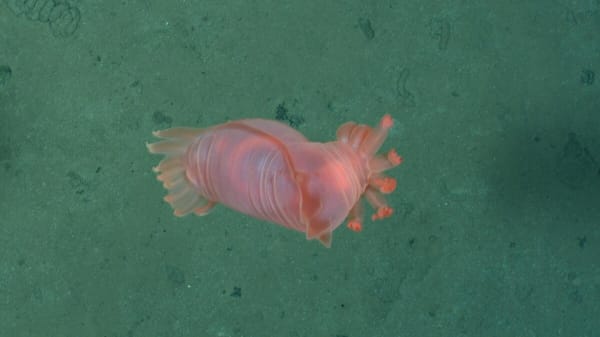
A sea cucumber (class Holothuroidea) swimming over polymetallic nodules at a depth of 5,000 meters (about 16,400 feet) in the western Clarion-Clipperton Zone. Image courtesy of DeepCCZ Project.

‘Too dangerous and too destructive’

If and when deep-sea mining begins, Chris Robbins, the associate director of scientific initiatives at the Ocean Conservancy, a U.S.-based nonprofit focused on ocean protection, said the industry could have a severely negative impact on deep-sea communities and ecosystems.

“These deep ocean ecosystems are just not used to massive amounts of disturbance, which is exactly what deep sea mining would result in,” Robbins told Mongabay. He added that he viewed deep-sea ecosystems as a “house of cards,” in which the loss of even a few species could “potentially lead to the collapse of local food webs or communities.”

Arlo Hemphill, the project lead for Greenpeace USA’s campaign to stop deep-sea mining, told Mongabay that Greenpeace maintains that neither the U.S. nor the ISA should be pursuing mining in the CCZ, or anywhere else in the global ocean.

“Deep sea mining should just not occur,” Hemphill said. “It’s just too dangerous and too destructive, and we don’t need it.”

However, Hemphill added that from a justice point of view, he believed it would ultimately be more harmful for the U.S. to lead the way with deep-sea mining.

“The U.N. Convention on the Law of the Sea was built upon the principle that the international seabed is the common heritage of humankind, and there’s tenets in it that anything mined from the deep sea needs to benefit all humanity at some level,” Hemphill said. He noted that the U.S. process does not treat the international seabed as common heritage, and as a result, does not have mechanisms to benefit developing nations.

“The Trump administration’s drive is not based on equity and justice at all,” he added. “It’s all about financial gain and power and growing wealth and resources of a singular nation — the United States. So, in that sense, it is worse.”

Elizabeth Claire Alberts is a senior staff writer for Mongabay and was a 2024-2025 fellow with the Pulitzer Center’s Ocean Reporting Network. Find her on Bluesky and LinkedIn.   


Jelter Meers contributed to the reporting of this story.

This article appears courtesy of Mongabay and may be found in its original form here.

The opinions expressed herein are the author's and not necessarily those of The Maritime Executive.


HD Hyundai and Kiewit Plan to Develop New Gulf Coast Shipyard

HD Hyundai shipyard
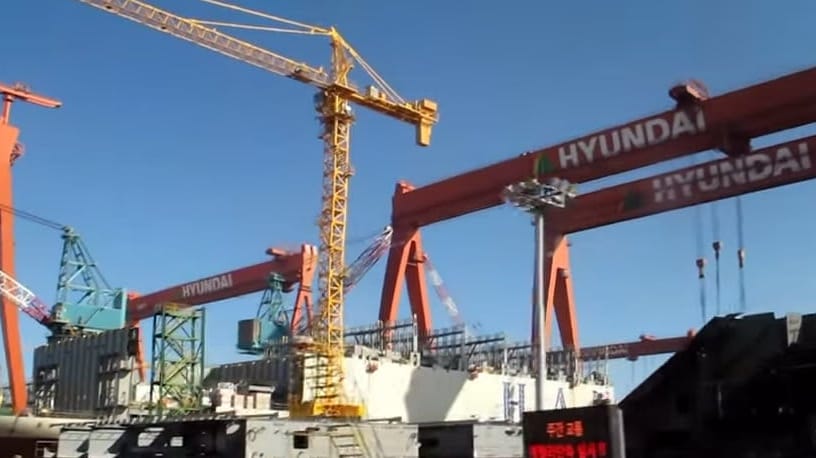
HD Hyundai and Kiewit announced a joint venture to develop a new U.S. shipyard on the Gulf Coast (HD Hyundai)

South Korea’s largest shipbuilder, HD Hyundai, is continuing its efforts to expand in the U.S. market, announcing a new joint venture with Texas-based Kiewit Maritime, an affiliate of Kiewit Offshore Services. The companies announced plans to establish HD Kiewit Shipbuilding and envision developing a new, purpose-built shipyard on an existing industrial site along the U.S. Gulf Coast.

No details were announced on the yard, but they said the approach would create modern vessel production facilities while making use of an existing industrial location with deep water and unrestricted access to the Gulf. They reported that construction is targeted to begin in 2027, with full-scale operations targeted for 2029. When fully operational, they said the yard could support up to 3,000 jobs.

The proposed venture they announced would combine HD Hyundai’s shipbuilding technology and shipyard operating expertise with Kiewit’s large-scale fabrication and construction capabilities, supported by the experience and the facilities of its affiliate, Kiewit Offshore Services. The joint venture will explore opportunities involving naval auxiliary and commercial vessels, as well as ship block and module fabrication for U.S. shipbuilders. The companies also intend to expand their cooperation into maritime infrastructures.

“Our proposed joint venture HD Kiewit Shipbuilding marks an important milestone in HD Hyundai’s journey to become a strategic partner to the U.S. shipbuilding industry,” said Hannae Choi, Executive Vice President and Head of Corporate Planning Division of HD Korea Shipbuilding & Offshore Engineering. “Building on HD Hyundai’s shipbuilding technology and shipyard operating capabilities, we will contribute to strengthening the U.S. shipbuilding industry and expanding shipbuilding cooperation between the United States and South Korea.”

As part of the plan, they envision incorporating HD Hyundai’s “Future of Shipyard” (FOS) model and digital manufacturing technology at the proposed facility. Advanced solutions—including digital twins, automated production systems and robotic welding—are intended to improve productivity, quality and safety throughout the shipbuilding process.

South Korea, as part of its trade talks with the Trump administration, had committed to invest $150 billion in a program they dubbed Make American Shipbuilding Great Again. It would be part of a wider $350 billion investment in the United States promised in exchange for lower tariffs.

It is the latest in a series of steps announced by HD Hyundai targeting the U.S. industry. The company had previously announced plans to work with Kiewit on projects. It also reported agreements with Fraser Industries, HII (Huntington Ingalls Industries) and Edison Chouest Offshore. 

Previous reports indicated that HD Hyundai was in negotiations with at least three companies as part of its plan to develop a U.S. shipyard. It also positions the company as reports continue to say that the Trump administration looks to use the “Finland model,” pairing foreign shipbuilding expertise and capacity with developing U.S. capabilities. Two yards in Finland are working on the first polar icebreakers for the U.S. Coast Guard while the plan calls for transferring expertise and building the later vessels in the United States. Reports have said that Trump has repeatedly spoken with South Korea’s president about a need for U.S. ships and a plan to build two warships and two non-combatant support ships in South Korea.