Trump’s DOE Issues First Final Export Approval to Sempra’s Port Arthur LNG
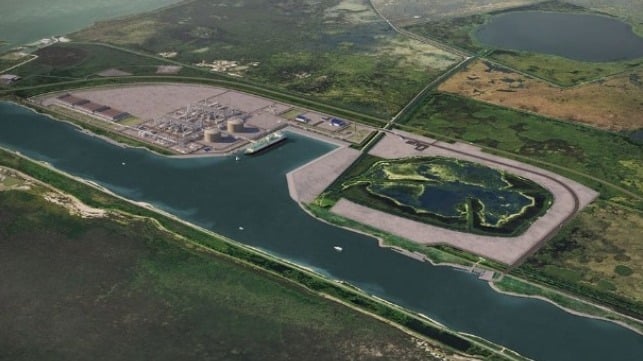
After campaigning on a promise to accelerate the U.S. energy industry, the Trump administration issued its first final LNG export approval which went to Sempra Infrastructure’s proposed Port Arthur LNG Phase 2 project. The permit granted by the Department of Energy would make it possible for the second phase project to export LNG to countries that do not have a free-trade agreement with the United States.
The Trump administration has been fiercely critical of its predecessor’s pause on LNG export permits, terming the move “reckless.” Following the finalization of the 2024 LNG Export Study, which the administration is praising for confirming that LNG exports support the U.S. economy, strengthen allies, and enhance national security, the Department of Energy (DOE) has moved to support the expansion of the industry.
The Port Arthur LNG facility is promoted as having the potential to become one of the largest LNG export facilities in North America. Phase II of the export facility has been in the works since September 2023 when the Biden administration issued authorization from the Federal Energy Regulatory Commission. The project is expected to include two liquefaction trains capable of producing approximately 13 Mtpa of LNG, which would double the total liquefaction capacity of the Port Arthur LNG facility up to 26 Mtpa.
Phase 1 of the Port Arthur LNG project is currently under construction and consists of trains 1 and 2, as well as two LNG storage tanks and associated facilities. Sempra reports construction of the project continues to progress, and they expect commercial operation for train 1 in 2027 and train 2 in 2028.
DOE is hailing the issuing of the permit for Phase 2 as another critical step in expanding the U.S.’s LNG industry. Sempra however highlights that the project remains subject to a number of risks and uncertainties. These include completing the required commercial agreements, securing and/or maintaining all necessary permits, obtaining financing, and reaching the final investment decision.
Sempra also operates the Cameron LNG export terminal in Louisiana, which has been exporting LNG since 2019, and is currently constructing the Energia Costa Azul terminal in Mexico, which will begin commercial export operations of U.S.-sourced gas as LNG beginning in 2026.
In authorizing the exports, DOE has relied heavily on the LNG Export Study that was released by the Office of Fossil Energy & Carbon Management in December last year and had a public comment period through March 20 this year. Part of the findings in the study is that the U.S. has a robust natural gas supply that is sufficient to meet growing levels of exports while minimizing impacts on domestic prices, growing LNG exports increase gross domestic product and expand jobs while also improving trade balance. It also asserts that increasing LNG exports enhances domestic and international global security with no discernable impact on global greenhouse gas emissions.
While Port Arthur Phase 2 marks the first final approval, the administration had previously issued four LNG export authorizations. This includes one to Commonwealth LNG's proposed export facility in Louisiana, and another to Venture Global's CP2 project also in Louisiana. Energy Secretary Chris Wright says the administration has approved a total volume of exports of 11.45 Bcf/d.
The U.S. has been the largest exporter of LNG ahead of Qatar and Australia. Qatar however is preparing to open its North Field Expansion project starting in 2026. By 2030 it expects to double production to 142 mtpa.
Fincantieri Floats Second LNG-Fueled Cruise Ship for Germany’s TUI Cruises
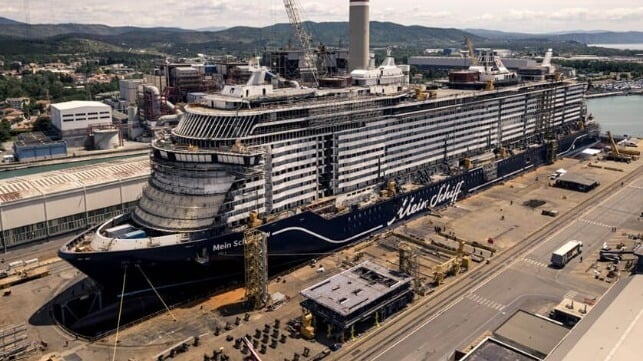
Italian shipbuilder Fincantieri continues to show the strength of its cruise ship orderbook as the company’s Monfalcone shipyard today floated the second LNG-fueled cruise ship, Mein Schiff Flow, for Germany’s TUI Cruises. It follows the delivery of her sister ship, Mein Ship Relax, in February, and a recent order from another TUI Group company Marella Cruises for two new ships.
The relationship with TUI Group was established in 2018 with the order of the two cruise ships known as the InTUItion class for Mein Schiff, which is a partnership between TUI and Royal Caribbean Group focused on the German-speaking market. Fincantieri highlights the ships each of which is approximately 157,650 gross tons, as a first-in-class project developed by the shipyard enhancing the modernity and sustainability characteristics that TUI Cruises promotes in its operations.
The new ships are 1,070 feet (326 meters) in length with 1,945 passenger cabins and accommodations for 3,984 passengers and 1,535 crew. In addition to being the largest ships of the fleet, they have innovations for relaxation, 14 restaurants including more variety and a new Asian restaurant, and redefined spa and wellness areas. The ships feature the cruise line’s first two-deck “freedom suites,” as well as introducing inside, outside, and balcony cabins for solo travelers.
They are designed for operations either on LNG or Marine Gas Oil (MGO), making them the first LNG-fueled ships in the Mein Schiff fleet. TUI has highlighted that they are a future-proof design with the ability to utilize low-emission fuels such as bio- or e-LNG when the alternatives become available in sufficient quantity for commercial operations. TUI last year also introduced a cruise ship built by Meyer Turku that is ready for future operations on methanol fuel.
The two cruise ships from Fincantieri feature catalytic converters meeting Euro 6 standards, a steam turbine, using the residual heat from the diesel generators, as well as an electrical shore-power connection. They are also being equipped with an innovative and highly efficient waste treatment system capable of transforming organic materials into recyclable components through a thermal process.
After a christening ceremony and blessing in Monfalcone, Italy, the floodgates were opened on the dry dock to float Mein Schiff Flow for the first time on May 30. They are reporting it required around 130 million liters of water to enter the dock for the successful flotation. Mein Schiff Flow will be moved to the outfitting berth and is due to enter service in the summer of 2026.
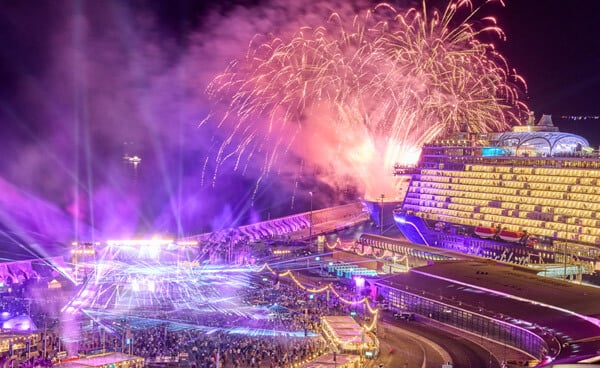
Naming ceremony for the first cruise ship Mein Schiff Relax (TUI Cruises)
Her sister ship Mein Schiff Relax was celebrated with a spectacular naming ceremony early in April in the port of Malaga, Spain. More than 12,000 people attended the event which included two other ships from the fleet, Mein Schiff 5 and Mein Schiff 7, also docked in the port. The event concluded with a 120-meter (nearly 400-foot) rocket line launched from the bow of one of the ships.
Mein Schiff Relax is the eighth ship for the brand, all new builds, and will be joined by the ninth ship when Mein Schiff Flow starts operations. The brand has grown rapidly having operated its first cruises in 2009.
Fincantieri received the order for two cruise ships, the first new builds for Marella Cruises (a brand owned by TUI Group) at the end of March. Carnival Corporation also placed an order in April for Mein Schiff competitor AIDA Cruises, the first for Fincantieri, while the yard also has confirmed orders for its first cruise ships over 200,000 gross tons to be delivered to both Carnival Cruise Line and Norwegian Cruise Line. It will build seven ships under those contracts with deliveries scheduled into the 2030s.

No comments:
Post a Comment