Ghana orders first major audit of mining firms in a decade
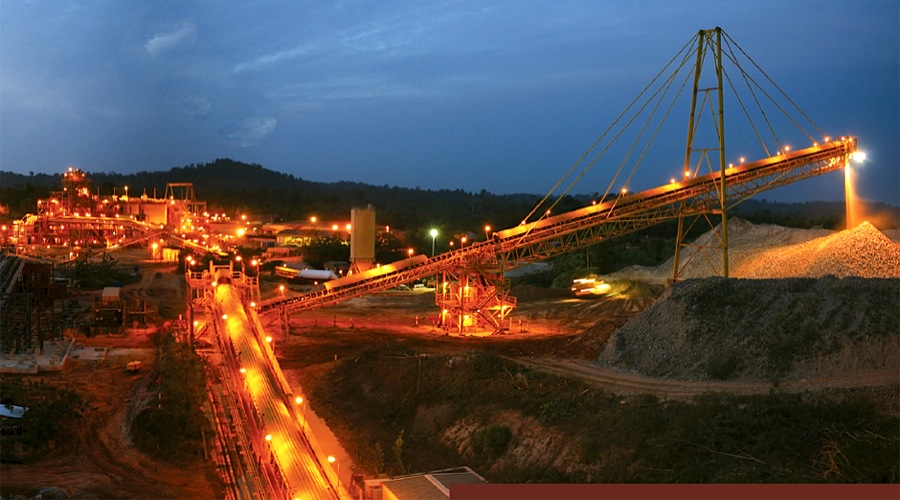
Ghana, Africa’s top gold producer, has launched its most aggressive mining audit in a decade, targeting top miners to recover lost revenue and tighten oversight, a government letter seen by Reuters shows.

Governments across West Africa are intensifying scrutiny of mining firms to enforce compliance with regulations and safeguard revenue from soaring commodity prices.
Spot gold prices hit a record above $4,380 an ounce on October 20.
The audit will cover major gold miners including top producer Newmont, AngloGold Ashanti, Gold Fields, Perseus, Asante Gold and China’s Zijin.
It will be led by government auditors, forensic accountants, and independent consultants, according to an October 13 government letter from the regulatory Minerals Commission sent to mining companies via the Ghana Chamber of Mines.
Industry regulator, the Minerals Commission, is deploying teams for the nationwide physical and financial audit from November 1 to June 2026 to scrutinize production volumes, mineral flows, tax and royalty payments, and environmental compliance.
Miners must submit 10 years’ worth of production logs, 3 years of financial records, all permits, stockpiles and shipping manifests by October 31.
Company-specific reports are due within 30 days of each site visit, the letter said.
The Minerals Commission declined to comment. The mines ministry did not immediately respond to a request for comment.
True revenue potential
Mining is key to the world’s second-largest cocoa producer, generating 17.7 billion Ghanaian cedis ($1.68 billion) in 2024, driven by a 25.1% surge in gold output that helped stabilize the economy after its worst crisis in a generation.
Ghana, which also exports bauxite, diamonds and manganese, expects gold output to rise to 5.1 million ounces this year from 4.8 million.
The commission’s letter details a phased audit starting with Gold Fields’ Damang mine and Perseus in November, ending with Canada-based Xtra-Gold’s Kibi unit in late June 2026.
Individual companies have received letters detailing the schedule, an executive of one of the companies said, asking not to be named.
AngloGold Ashanti, Asante Gold, Gold Fields, Newmont, Perseus, Xtra-Gold and Zijin did not immediately respond to requests for comment.
The Chamber of Mines also did not immediately respond.
Ghana last audited its mining sector in 2015 with help from external investigators, but some companies challenged the findings, a source familiar with the process told Reuters.
Special audits should be done every year, not periodically, Said Boakye, an economist and research fellow at the Accra-based Institute for Fiscal Studies, told Reuters.
“It’s the only way to inform sound tax policy and unlock the sector’s true revenue potential.”
The government is pushing sweeping reforms to boost returns. Its mines minister said the country planned to shorten licence terms and enforce direct revenue-sharing with host communities, the most ambitious mining law overhaul in nearly 20 years.
($1 = 10.5500 Ghanian cedi)
(By Maxwell Akalaare Adombila; Editing by Pratima Desai and Jason Neely)
Newmont CEO says Ghana’s fiscal stability key as $900M gold mine opens
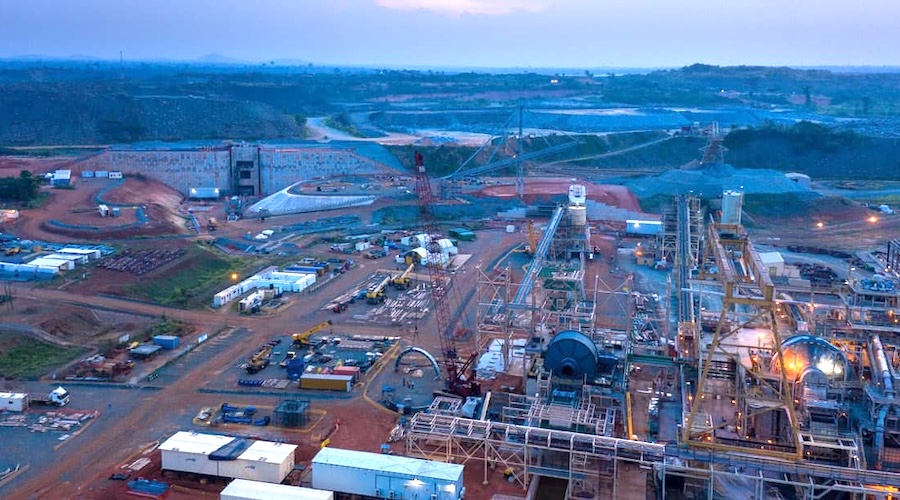
Fiscal stability and fair tax and royalty systems are vital if countries want to attract mining investment, Newmont CEO Tom Palmer told Reuters as the company opened its $900 million Ahafo North mine in Ghana.
In Africa, Newmont now only operates in Ghana, one of the continent’s most stable mining jurisdictions, offering stability agreements for firms to lock in royalties for five to 15 years, although the government plans tighter oversight of mining companies.
Newmont’s investment decisions hinge on “very stable fiscal regimes” and “robust, fair tax and royalty systems,” Palmer said in an interview with Reuters on Thursday following the inauguration of the Ahafo North mine, its second mine in Ghana after selling the Akyem mine to China’s Zijin last year.
“It is important that we see a regime that is fair and transparent … If not, capital will go elsewhere,” he said.
Reuters reported this week that Ghana, Africa’s top gold producer, has ordered sweeping audits of mining firms, including US-based Newmont, AngloGold Ashanti, Gold Fields and China’s Zijin.
Ghana is also preparing major legal reforms, as West African states push for greater control over natural resources amid a global commodity boom. Palmer said the investment climate was still attractive.
“Ghana is a key place,” he said. “We’re in Australia, Canada, the United States, Peru, Argentina, Mexico, Suriname, all of those locations are very deliberately chosen and all of those locations we choose to go there for the very long term because we can be confident that we can build and maintain lasting relationships.”
Newmont now operates two mines in Ghana – Ahafo South and Ahafo North – which Palmer described as “cornerstones” of the company’s global portfolio.
“We’ve been here 30 years. I expect Newmont will be here at least another 30.”
Ghana’s Vice President Jane Naana Opoku-Agyemang said the Ahafo North mine marks a new phase of inclusive growth for Ghana’s economy.
“This partnership must go beyond profit. It must deliver lasting value to the people of Ghana, especially those in the host communities,” she said.
Ghana’s regulatory environment is more stable than other parts of Africa where military-led governments in Burkina Faso, Mali, Niger and Guinea, also rich with gold, uranium, bauxite, lithium and iron ore resources, are tightening fiscal regimes to boost state revenues.
Spot gold prices hit a record above $4,380 an ounce on October 20, boosting miners’ revenue.
The Ahafo North mine, located 30 km (19 miles) from Newmont’s Ahafo South operation, is expected to produce 50,000 ounces of gold this year, ramping up to 275,000–325,000 ounces annually over its 13-year life.
The mine will employ about 1,000 permanent workers, Palmer said. Newmont produced around 800,000 ounces of gold in Ghana in 2024.
(By Emmanuel Bruce and Maxwell Akalaare Adombila; Editing by Pratima Desai and Susan Fenton)
World Bank arbitration body rejects Barrick expedition request in Mali case

A request by Barrick Mining to expedite its international arbitration case against Mali has been rejected, two people familiar with the matter told Reuters on Friday.
The West African country’s government has been in fraught negotiations with Barrick since 2023 over the implementation of a new mining code that raises taxes and gives the government a greater share of its gold mines.
Barrick launched arbitration proceedings with the World Bank’s arbitration court, known as ICSID, in December 2024.
It had wanted ICSID to urgently address issues including the ongoing detention of four of its staff members, the appointment of a provisional administrator to operate the Loulo-Gounkoto complex after Barrick had suspended operations amid the dispute, and the expiration of the Loulo mine’s licence in 2026.
The request was rejected this week, the two sources said.
ICSID said on its website that it had issued an order concerning “provisional measures” on Wednesday, without giving further detail.
Barrick declined to comment on the situation. ICSID and the Malian mines ministry did not respond to requests for comment.
(By Portia Crowe and Divya Rajagopal; Editing by Alexander Smith)

No comments:
Post a Comment