Indian Refiner HPCL Says It Doesn’t Need Russian Crude

Russian crude has accounted for a very small portion of supply for Indian state-run refiner Hindustan Petroleum Corporation Limited (HPCL) as oil from Russia has not been economical to run at the refinery, HPCL chairman Vikas Kaushal said on the company’s earnings call.
The call took place as Indian refiners are scrambling this week for alternative supply after the U.S. sanctions on Russia’s major oil firms.
Russian crude has not been economical for HPCL regardless of grades, the executive said.
Therefore, of all the crude processed in the past quarter, Russian crude accounted for just 5% of HPCL’s total supply, he added.
“We could run Russian crudes there also, but we have alternatives with us. I'm not worried about it at all,” the executive said, referring to the procurement of crude now that Rosneft and Lukoil are off limits as Indian refiners don’t want to run afoul of the U.S. sanctions just as India is trying to have its massive 50% tariff for exports to the U.S. reduced.
Earlier this week, refiner HPCL-Mittal Energy Ltd (HMEL) -- HPCL’s joint venture with Mittal Energy – became the first Indian oil company to suspend Russian crude purchases following new U.S., UK, and EU sanctions targeting Russia’s two largest oil companies, Rosneft and Lukoil.
The move marks a major shift in India’s Russian oil trade, which has surged since 2022.
Indian refiners, which import from Russia about a third of all their crude, are scrambling for alternative supply and clarity in the sanctions set to come into effect on November 21.
India’s Reliance Industries, the top private refiner in the country, is expected to stop importing crude under a long-term deal with the now-sanctioned Russian oil giant Rosneft.
Reliance Industries, one of Rosneft’s biggest clients in India, has turned to the spot market for crude oil deliveries.
India’s refiners have reportedly suspended new orders for Russian crude. The refining industry in Russia’s second-biggest crude buyer after China awaits clarity from the government about navigating the new U.S. sanction context, Reuters reported earlier this week, citing unnamed sources.
By Charles Kennedy for Oilprice.com
Indian Oil Corp. Seeks to Replace Russian Oil With American Barrels

Indian Oil Corp. is looking to buy 24 million barrels of crude oil from the Americas in the first quarter of next year to replace lost Russian supply after the latest U.S. sanctions on Rosneft and Lukoil.
Bloomberg reported that the company, which is India’s largest refiner, is looking for cargos from the United States, Canada, Brazil, and Latin America. Reuters reported IOC was looking for both high-sulfur and low-sulfur grades. The publication cited an unnamed source as saying the invitation for expression of interest aimed to test the appetite of sellers in case it needed to tap the Americas oil market.
Reuters also cited traders as reporting that Indian Oil Corp. had bought 2 million barrels of West African crude from Exxon this week, from Angola and Nigeria.
India Today reported, meanwhile, that the sanctions are already starting to push Indian refiners’ import bill higher as they switch to costlier grades from sources other than Russia. The switch is also affecting run rates, the publication noted, adding that Russian crude was available at discounts ranging between $8 and $12 per barrel to Middle Eastern benchmarks.
This fiscal year, the share of Russian oil in India’s total imports had ticked down from 36% to 34%, and the average price for imported crude had inched higher by $5 per barrel over the Dubai benchmark, India Today also wrote. It noted that so far this month, imports from the United States had gone up to 575,000 barrels daily, the highest since 2022.
Refinery run rates, meanwhile, had slipped to the lowest in 19 months in September, before the latest U.S. sanctions were announced.
“Crude oil prices surged sharply following fresh sanctions on Russian oil majors, sparking tightening supply fears and renewed inflation concerns. This could negatively impact India, as elevated crude prices may widen the fiscal deficit and strain the import bill,” the head of research at Indian Geojit Investments told India Today.
By Irina Slav for Oilprice.com
Indian Metals-to-Oil Conglomerate Vedanta
Vedanta’s quarterly adjusted profit rises on higher metal prices
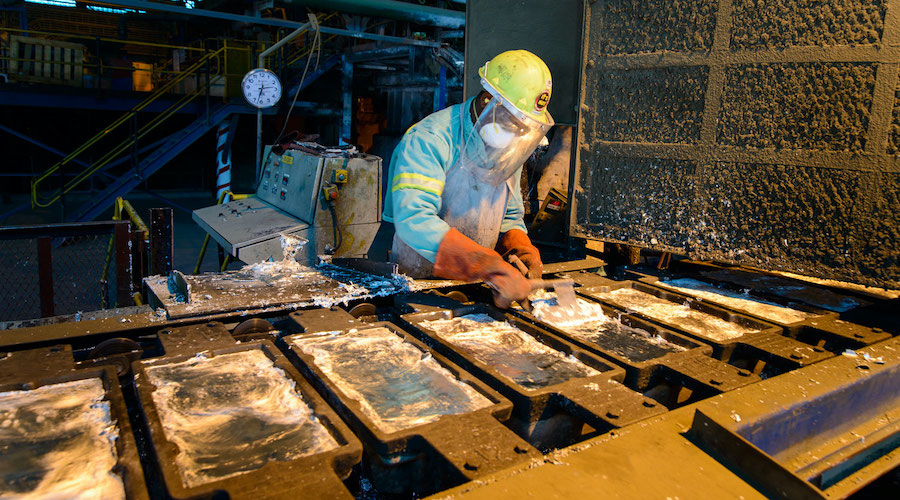
Indian metals-to-oil conglomerate Vedanta reported higher quarterly adjusted profit on Friday, helped by higher metal prices.

The company’s consolidated profit before tax and exceptional items rose 21.7% from a year earlier to 70.14 billion rupees ($798 million) in the quarter ended September 30.
Its operating profit margin rose to 22% from 20%, aided by steady expenses.
The benchmark three-month aluminum and copper rose 8.2% and 5.6% on-year during the quarter due to uncertainty around US trade policies. Higher commodity prices tend to support selling prices and margins for mining companies.
The miner’s total revenue rose 5.5% to 392.18 billion rupees.
Vedanta’s aluminum business is the biggest in India and contributes to nearly 40% of the company’s revenue. Zinc is the second-biggest business, followed by copper.
Revenue from the aluminum segment rose 14%, copper gained 3.6%, while its India zinc, lead and silver segment grew 3.5%.
Total expenses rose 0.8% to 334.49 billion rupees.
The company reported a net exceptional expense of 20.67 billion rupees, which included a write-off of 14.07 billion rupees and a settlement payment of 6.60 billion rupees.
Earlier this month, Vedanta’s subsidiary Hindustan Zinc posted a higher quarterly profit on strong silver and zinc prices.
($1 = 87.8950 Indian rupees)
(By Anuran Sadhu; Editing by Mrigank Dhaniwala)

No comments:
Post a Comment