Toronto (Canada) (AFP) – Canadian Prime Minister Mark Carney signed an
agreement Thursday with the western energy-producing province of Alberta
to advance a new oil pipeline, sparking immediate concerns about Ottawa's
commitment to battling climate change.
Issued on: 28/11/2025 -
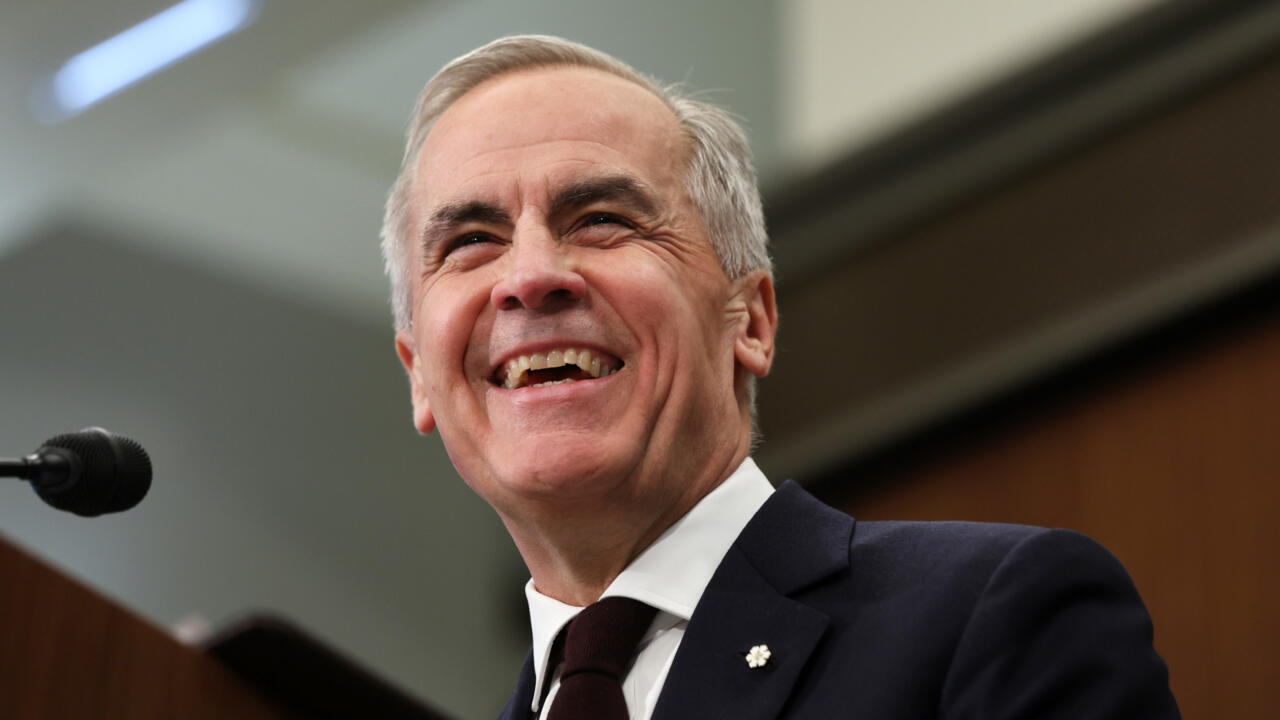
Canadian Prime Minister Mark Carney has signed an agreement with the energy-producing province of Alberta to advance a new oil pipeline © Dave Chan / AFP
The memorandum of understanding charts a plan for a pipeline going from Alberta to Canada's Pacific coast, to boost oil exports to Asia -- in line with Carney's goal of expanding overseas trade to offset damage from US President Donald Trump's trade war.
"At the core of the agreement, of course, is a priority to have a pipeline to Asia," Carney said ahead of the signing alongside Alberta's conservative Premier Danielle Smith.
Aside from broadening exports, the plan endorses an overall increase in Alberta oil and gas production.
The deal marked a clear pivot for Carney's Liberal Party and a departure from the policies that defined former prime minister Justin Trudeau's decade in power.
Carney's culture minister, Stephen Guilbeault -- who was Trudeau's environment minister -- resigned from the cabinet in protest over the pipeline deal hours after it was signed.
"I chose to enter politics to champion the fight against climate change," Guilbeault said in a statement.
He said he "strongly" opposed the Alberta MoU, charging it would "move Canada further away from its greenhouse gas emission targets."
Guilbeault was the architect of several Trudeau-era climate policies, measures he said were being "dismantled."
The Trudeau-Guilbeault climate policies were also partly responsible for fueling a breakdown in relations between Alberta and Ottawa.
Smith, who accused the previous Liberal government of suffocating Alberta's economic potential, took a jab at Trudeau on Thursday.
"The last 10 years have been an extremely difficult time," she said.
Carbon capture
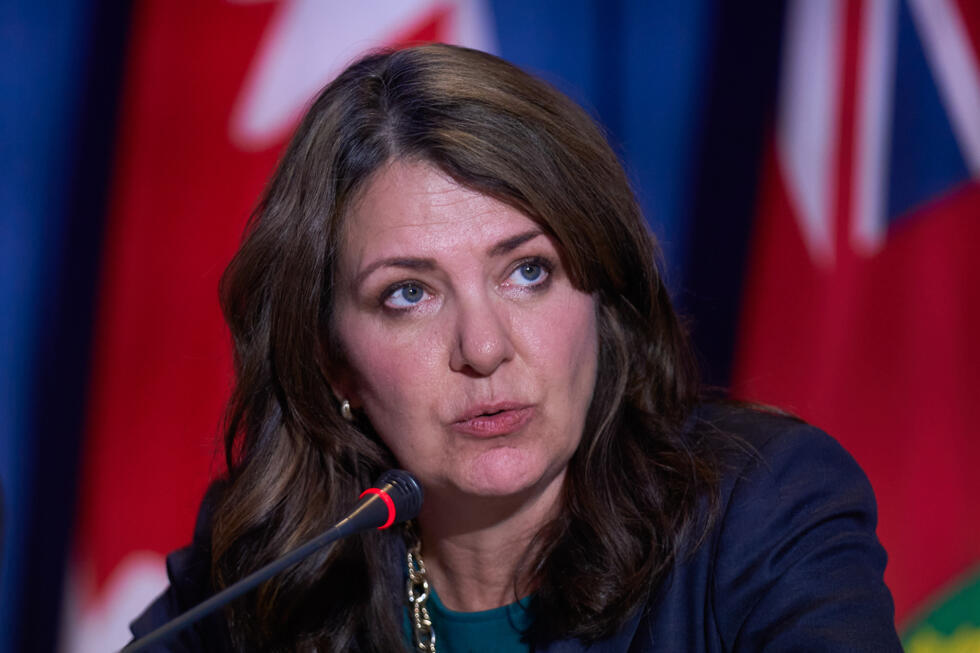
Alberta's conservative Premier Danielle Smith accused the previous government of suffocating the province's economic potential © Geoff Robins / AFP
Carney, who grew up in Alberta, has worked to improve relations with Smith, repeatedly discussing his desire to make Canada an energy superpower.
Under the plan, Ottawa also agreed to set aside an emissions cap, which has not yet come into effect.
But the prime minister -- a UN climate envoy before entering Canadian politics this year -- insisted the project will also make Canada's oil sector more sustainable.
"The way we're going to do that is in combination with the Pathways Project, which will be the largest carbon capture project in the world," Carney said.
The IPCC, the UN's expert panel on climate science, says carbon capture is one option for reducing emissions, but critics slam it as an excuse to keep burning fossil fuels.
Actual construction of a new pipeline remains far off. The plan calls for a formal project proposal to be ready by July 2026.
The memorandum of understanding mandates consultation with Indigenous groups and Indigenous co-ownership of any infrastructure.
But First Nations and Indigenous groups have often opposed large-scale oil projects.
A pipeline would also have to go through British Columbia, the west coast province currently led by a left-wing government, which was not party to Thursday's deal.
Canada stronger?
Trump's impact on the Canadian economy loomed over Thursday's announcement.
Alberta oil exports currently go to the United States, and Canadian energy products have largely been exempted from Trump's tariffs so far.
But Trump has cut off trade talks with Canada, threatening the future of the existing North American free trade agreement.
Carney has also warned that economic relations with the United States will never return to a pre-Trump normal.
Carney said Thursday's deal came "in the face of global trade shifts and profound uncertainty."
"This is a good day for Canada," the prime minister said.
"This agreement will make Canada and Alberta, of course, more independent, more resilient (and) stronger."
© 2025 AFP
Ottawa and Alberta have struck a pipeline
deal. What does it include?
• 5h

Prime Minister Mark Carney, right, meets with Alberta Premier Danielle Smith in Calgary, Alta., on Nov. 27, 2025. THE CANADIAN PRESS/Jeff McIntosh
A new agreement between the federal government and Alberta aims to lay the groundwork for a new pipeline to the B.C. coast.
Prime Minister Mark Carney and Alberta Premier Danielle Smith signed the Memorandum of Understanding (MOU) Thursday, which aims to “diversify our export markets, make Canada an energy superpower, and build a stronger, more sustainable, more competitive economy.”
But what does the Memorandum of Understanding say? And what does it actually get done?
Here's what you need to know.
The flagship proposal in the MOU is a bitumen pipeline from Alberta to Canada’s West Coast that would carry an additional 300,000 to 400,000 barrels per day destined for Asian markets.
Video: Liberals ‘will stand in the way’ of pipeline construction, despite Carney’s groundwork: Poilievre
The agreement doesn’t say what route the pipeline will take but says Alberta is expected to submit a proposal for the pipeline to the federal government on or before July 1, 2026.
The MoU says Ottawa’s approval of the pipeline would be based on whether the project is seen as being in the national interest and “provides opportunities for Indigenous co-ownership and shared economic benefits."
The memorandum lays out that if Alberta proposes a plan by Canada Day 2026, the federal government will clear the path for construction by cutting red tape for the approval process.
The federal government “will provide a clear and efficient approval process under the Building Canada Act for the construction of a new pipeline," the memorandum says.
As of now, no company has stepped up to build a new oil pipeline from Alberta to B.C., but Smith has said in the past that her government nevertheless intends to submit a proposal to the Major Projects Office next spring.
Even after the Major Projects Office has approved the project, B.C.’s oil tanker ban will stand in the way. The law, which went into effect in 2019, prohibits tankers from carrying more than 12,500 metric tonnes of crude oil in areas along the northern coast of British Columbia.
The memorandum allows for “needed adjustments to the tanker ban when the new pipeline to Asia is approved by the major projects office.”
In addition to the pipeline, Alberta will also be exempt from Canada’s Clean Electricity Regulations.
The suspension of the regulations in the province is not contingent on the pipeline being approved.
The regulations, which are to come into effect in 2035, would set limits on emissions from power generation using fossil fuels. Alberta has long criticized the regulations, as its grid is predominantly powered by natural gas.
The MOU says Alberta will aim to “achieve net-zero emissions by 2050,” which the province said it will do by working on a new industrial carbon pricing agreement with the federal government.
More on Politics
Carney, Smith sign pipeline deal, open door to changing B.C. tanker ban
Carney says B.C. and First Nations ‘have to agree’ on Alberta’s pipeline plan
The suspension of the regulations in Alberta will “will stabilize Alberta’s power grid,” the MOU said. It added that this will enable “massive investments” in artificial intelligence data centres in the province.
Also in the MOU are “multiple ambitious clean energy projects,” Carney’s office said, adding that Alberta’s industrial carbon pricing strategy will be aimed at reducing methane emissions by 75 per cent over the next decade.
The regulations will remain suspended while the province and the federal government negotiate a new carbon pricing agreement by April 1, 2026.
It is unclear if the regulations will be back in effect in Alberta if the two sides fail to reach an agreement on industrial pricing by the April deadline.
The agreement also states that Alberta and the federal government will work with the Pathways Alliance — a collection of six of Canada’s largest oil sands companies — “to develop the world’s largest carbon capture, utilisation, and storage project.”
The pipeline project is not contingent on the CCUS project.
Video: Poilievre demands pipeline approvals, condemns “pathetic” Carney for not stating his position
Alberta said the project, known as Pathways Plus, will make its oil the “cleanest heavy oil on the planet,” and displace “heavier emitting oil from Russia, Venezuela and Iran.”
Research has shown that most carbon capture projects fail to get off the ground because of high costs. In the 50 years since the first ever carbon project, the technology has captured just 0.001 per cent of global emissions, according to the David Suzuki Foundation.
“Seventy per cent of carbon captured through CCS in Canada is used to help extract more oil,” the David Suzuki Foundation says on its website.
The flagship proposal in the MOU is a bitumen pipeline from Alberta to Canada’s West Coast that would carry an additional 300,000 to 400,000 barrels per day destined for Asian markets.
Video: Liberals ‘will stand in the way’ of pipeline construction, despite Carney’s groundwork: Poilievre
The agreement doesn’t say what route the pipeline will take but says Alberta is expected to submit a proposal for the pipeline to the federal government on or before July 1, 2026.
The MoU says Ottawa’s approval of the pipeline would be based on whether the project is seen as being in the national interest and “provides opportunities for Indigenous co-ownership and shared economic benefits."
The memorandum lays out that if Alberta proposes a plan by Canada Day 2026, the federal government will clear the path for construction by cutting red tape for the approval process.
The federal government “will provide a clear and efficient approval process under the Building Canada Act for the construction of a new pipeline," the memorandum says.
As of now, no company has stepped up to build a new oil pipeline from Alberta to B.C., but Smith has said in the past that her government nevertheless intends to submit a proposal to the Major Projects Office next spring.
Even after the Major Projects Office has approved the project, B.C.’s oil tanker ban will stand in the way. The law, which went into effect in 2019, prohibits tankers from carrying more than 12,500 metric tonnes of crude oil in areas along the northern coast of British Columbia.
The memorandum allows for “needed adjustments to the tanker ban when the new pipeline to Asia is approved by the major projects office.”
In addition to the pipeline, Alberta will also be exempt from Canada’s Clean Electricity Regulations.
The suspension of the regulations in the province is not contingent on the pipeline being approved.
The regulations, which are to come into effect in 2035, would set limits on emissions from power generation using fossil fuels. Alberta has long criticized the regulations, as its grid is predominantly powered by natural gas.
The MOU says Alberta will aim to “achieve net-zero emissions by 2050,” which the province said it will do by working on a new industrial carbon pricing agreement with the federal government.
More on Politics
Carney, Smith sign pipeline deal, open door to changing B.C. tanker ban
Carney says B.C. and First Nations ‘have to agree’ on Alberta’s pipeline plan
The suspension of the regulations in Alberta will “will stabilize Alberta’s power grid,” the MOU said. It added that this will enable “massive investments” in artificial intelligence data centres in the province.
Also in the MOU are “multiple ambitious clean energy projects,” Carney’s office said, adding that Alberta’s industrial carbon pricing strategy will be aimed at reducing methane emissions by 75 per cent over the next decade.
The regulations will remain suspended while the province and the federal government negotiate a new carbon pricing agreement by April 1, 2026.
It is unclear if the regulations will be back in effect in Alberta if the two sides fail to reach an agreement on industrial pricing by the April deadline.
The agreement also states that Alberta and the federal government will work with the Pathways Alliance — a collection of six of Canada’s largest oil sands companies — “to develop the world’s largest carbon capture, utilisation, and storage project.”
The pipeline project is not contingent on the CCUS project.
Video: Poilievre demands pipeline approvals, condemns “pathetic” Carney for not stating his position
Alberta said the project, known as Pathways Plus, will make its oil the “cleanest heavy oil on the planet,” and displace “heavier emitting oil from Russia, Venezuela and Iran.”
Research has shown that most carbon capture projects fail to get off the ground because of high costs. In the 50 years since the first ever carbon project, the technology has captured just 0.001 per cent of global emissions, according to the David Suzuki Foundation.
“Seventy per cent of carbon captured through CCS in Canada is used to help extract more oil,” the David Suzuki Foundation says on its website.

No comments:
Post a Comment