Russian spy network exploits Ukrainian teenagers in Europe
One hundred dollars for torching a van, a few hundred more for planting a bomb or quick cash for snapping a photo of a strategic location: Russian intelligence services have found a new, cheap – and increasingly effective – way to conduct sabotage operations across Europe. They are recruiting Ukrainian children and teens online, luring them with gamified “tasks” and small financial rewards.
Issued on: 27/11/2025 -
FRANCE24
By: Sébastian SEIBT

Daniil Bardadim was just 17 years old when he planted an explosive device in an IKEA store in Vilnius in 2024. This week, a Lithuanian court convicted him of terrorism and other charges, sentencing him to three years and four months in prison for carrying out the attack on behalf of Russia – despite being a Ukrainian native himself.
According to Lithuanian intelligence services, the teenager had likely been tasked to target the Swedish furniture giant for two reasons: IKEA’s withdrawal from Russia following the full-scale invasion of Ukraine in 2022, and the fact that Sweden is a staunch Ukrainian supporter.
But Bardadim is far from the only Ukrainian teenager who has been caught up in Russia’s hybrid war on both Ukraine and Europe lately.
Teens and tweens
In April, a 19-year-old woman was arrested for having made and planted an explosive device in an e-scooter donated to the Ukrainian army. She too was Ukrainian.
In October, Polish police detained a 16-year-old Ukrainian refugee on suspicion of having collaborated with Russia by remotely recruiting youths in his homeland to carry out attacks and murders for money.
Ukraine is aware of the phenomenon and has had its eyes on the problem for a while. In July, it published a video warning Ukrainian youths against carrying out the dirty jobs of Russian spies – sometimes without even being aware of it.
Citing the Ukrainian security service (SBU), the BBC reported that of the roughly 800 Ukrainians who have been recruited by Russia over the past two years, around 240 of them are minors, some as young as 11 years old.
A hybrid war version of Pokémon Go
Most of the youths have been spotted by the Russian “recruiters” on the Telegram messaging app.
“Some of it is staged like a game. Where you're supposed to collect certain information in certain places, or deliver stuff. So it's almost like the Pokémon Go game” where the player wins rewards for accomplishing tasks, Elena Grossfield explained, an expert in contemporary Russian intelligence at King’s College in London.
This “gamification” strategy is deployed on specific Telegram channels and TikTok accounts, where Russian agents disguise themselves with aliases that reference pop culture. The New York Times reports that one agent called themselves “Q” – as in James Bond’s ingenious gadget master.
Vlad, 17, told BBC how he was recruited by the Russians on Telegram after posting an ad for remote work. His first mission entailed collecting a hidden grenade. Even though he never managed to find it, he was still paid $30.
A few days later, he was handed another task: to set fire to a van belonging to a Ukrainian conscription centre. For this more dangerous mission, he was told he would be paid $1,500. He was not. Instead he received $100 in cryptocurrency and told he would receive the rest if he planted a bomb in the northeastern Ukrainian town of Rivne, some 800 kilometres from his home.
Village informants
But Ukrainian youths are not the only ones to interest Russian intelligence services for these types of operations. Experts talk of a type of “Uberisation” of Moscow’s hybrid war efforts.
“They’ve switched to quantity over quality” in finding operatives on the ground, Grossfield explained.
The long-term strategy of recruiting sleeper agents abroad – an art at which the KGB excelled during the Cold War – is no longer on the list of priorities. It is much more efficient to find a large number of local foot soldiers on the ground – often from the criminal world – who are not necessarily well-trained, but who are easy to replace if they are arrested.
This is why the Ukrainian youth tick all the right boxes for Russia.
“On a day-to-day level, Russia is using it on a massive scale,” Huseyn Aliyev, a specialist on the war in Ukraine at the University of Glascow, said.
The missions they are handed typically include providing intelligence related to the Ukrainian army and valuable strike targets. “The movement of troops, the location of weapon production factories, potential military bases and so on.”
The number of informants is swelling exponentially in some areas, he said, noting that some tiny villages can easily contain dozens of people who are selling intelligence to Russia for money.
Games and money
According to Aliyev, the Russian campaign to enlist youths to torch cars and other vehicles “all over Ukraine” started about a year ago.
“They received instructions on how to make Molotov cocktails and those types of things and to throw them at parked cars,” he said.
Although the trend now seems to have subsided somewhat – largely thanks to numerous arrests and SBU’s awareness campaign – the Russians have hardly given up on taking advantage of Ukrainian youths.
“The scheme is evolving,” he said, adding they are now being used to take and transfer photos and to place small explosive devices.
Erik Stijnman, a specialist in military security issues relating to the Russia-Ukraine war at the Netherlands Institute of International Relations, Clingendael, said that "young connected people are more susceptible to be involved in this. They see it as exciting and probably not able to see the entire picture and the extent of the damage they do to themselves and their nation".
Ukrainian authorities report that the Russians have made contact with children as young as 10 years old. And they use two main drivers to hook them: money and ego.
“So there is excitement involved,” he said, because the child or teen wants to prove they can carry out the task – all the while being rewarded with money.
Sparking fear among Ukrainian refugees
Grossman said Russia only has to gain by using children in this way. “There is no supervision, there is no prosecutorial component that can limit their power. So why wouldn’t you recruit somebody who is 9 years old? He can move components from one place to another.”
In addition, Stijnman said, children “can be influenced more easily” than adults.
Russia is not limiting its child recruitment just to Ukraine, Aliyev said.
“There are so many Ukrainian refugees all over Europe. And people are desperate to get that money."
These refugee children also offer another valuable advantage: “You can travel anywhere in the European Union with a Ukrainian passport,” he said.
They also serve as gateways for more recruits, Grossfield said. “Don't forget that a lot of people, especially teenagers, need money. And would do a lot of things for money, and so the teens also recruit their friends.”
This is exactly what the Ukrainian teenager detained in Poland is suspected of doing.
Although these youths may not be entrusted with the most sensitive of missions, their operations can still cause a lot of damage, like the explosion at the IKEA store in Lithuania.
But perhaps even more damaging, Stijnman said, is the psychological impact of these sabotage operations. Because for each news report suggesting that a Ukrainian has collaborated with Russia, there is a risk that Western public opinion could start swaying against Ukraine. “That's probably the point of these operations – that it sends a strong signal that Ukrainians are turning against Europe – so why would we support them?”
Grossfield said this automatically places a target on the back of every Ukrainian refugee because it creates a general suspicion. It risks alienating, them, she said, “which, in turn, make them easier to recruit".
This article was adapted from the original in French by Louise Nordstrom
PrivatBank to seize jailed oligarch Kolomoisky’s assets after he misses $3bn UK court-ordered payment deadline
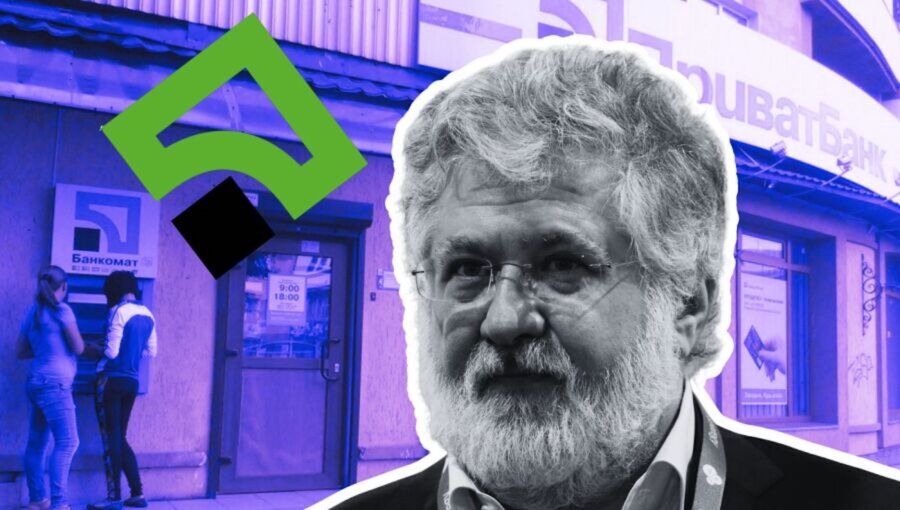
State-owned PrivatBank will start international enforcement proceedings to seize the assets of jailed oligarch and Ukrainian President Volodymyr Zelenskiy former business partner Ihor Kolomoisky, after he missed a court-imposed deadline to pay $3bn in damages.
Kolomoisky and his business partner Hennadiy Boholiubov were the former owners of Ukraine’s biggest commercial bank PrivatBank, that was nationalised in 2016 after a bne IntelliNews cover story “Privat Investigations” exposed a massive fake loan scheme that drained the bank of some $5bn – the biggest banking fraud in Ukraine’s history.
Now under government ownership, new management has been trying to recover what they have dubbed the “fraud loans” with legal cases in London and Cyprus, among other places, which were the jurisdictions used to launder most of the illegal loans.
A forensic investigation of the bank’s books by the National Bank of Ukraine (NBU) after the bank was nationalised found over 90% of the loans on the bank’s loan book were fake.
Return to Kyiv
Kolomoisky left the country for Israel after Petro Poroshenko became president but returned following Ukrainian President Volodymyr Zelenskiy election in 2019. Kolomoisky is a former business partner of Zelenskiy, introduced to him by Timur Mindich, who is now at the centre of the Energoatom corruption scandal, and bankrolled Zelenskiy's election campaign.
Relations between the president and the oligarch soured after Kolomoisky mounted a concerted campaign to regain control of PrivatBank or be paid $2bn in compensation for the bank’s nationalisation. He brought over 500 legal cases and threatened NBU staff in a “campaign of terror”, according to officials at the regulator.
Former NBU governor Valeria Gontareva, who was the head of the central bank at the time, told bne IntelliNews in an interview, Kolomoisky personally threatened her life. She quit her job and left the country after her dacha was burnt down by an unknown arsonist and a coffin containing a mannequin in her image was delivered to the doors of the NBU building.
The issue came to a head when Zelenskiy was forced to push the so-called anti-Kolomoisky law through parliament in May 2020 that made it impossible for the former owner of a bank that has been nationalised to retake control of it.
Zelenskiy followed up with his anti-oligarch speech in March 2021 and then an anti-oligarch law in September the same year. Eventually, Zelenskiy ordered the Ukrainian Security Service (SBU) to arrest Kolomoisky in September 2023 who was later charged with multiple counts of fraud. Zelenskiy also stripped him of his Ukrainian citizenship and the US imposed sanctions on Kolomoisky in March 2021 in connection with money laundering charges in the US.
Kolomoisky was even charged with murder for ordering a man's death over 20 years ago. Kolomoisky faces life in prison if convicted, but currently remains in pre-trial detention.
Court cases
The UK court case started in 2017 when the UK High Court judge immediately froze some $2bn of Kolomoisky and his partner’s assets. According to PrivatBank, the deadline for voluntary payment expired on November 24 without any funds received.
Kolomoisky failed to meet a UK court-ordered payment deadline of over $3bn, Interfax-Ukraine reported on November 24. The High Court ruled on November 10 that the businessmen must pay approximately $1.8bn in damages, $1.2bn in interest, and a further £76mn ($100mn) to cover the bank’s legal costs.
A July judgment concluded that Kolomoisky and Bogolyubov had orchestrated “a highly complex loan recycling scheme” that siphoned funds from PrivatBank prior to its 2016 nationalisation.
Sham loans and falsified trade documents were used to funnel money to companies secretly owned by them in the United Kingdom and the British Virgin Islands between 2013 and 2014.
Kolomoisky and Bogolyubov, who have long denied wrongdoing, said the case was politically motivated.
"The defendants failed to make any payments to recover damages to PrivatBank awarded by the judgment," the bank stated.
Kolomoisky and Boholiubov had previously sought a general stay of execution on the judgment, but their applications were dismissed, leaving the court's decision subject to immediate enforcement, according to the bank, Interfax reports.
PrivatBank said it is preparing to enforce the judgment not only in the UK but also in multiple other jurisdictions, including Ukraine, where the defendants are believed to hold assets. The bank emphasised that such enforcement will be legally complex and time-consuming but remains committed to full recovery.
"Enforcement will be a lengthy and complex process. Nevertheless, PrivatBank will continue to take all necessary steps to secure full execution of the Court’s judgment, including through cross-border recovery tools," the bank said, reports Interfax.
The bank also noted it has the "experience and resources required to pursue all available legal enforcement mechanisms, irrespective of the complexity of the ownership structures involved."
As bne IntelliNews reported, the High Court’s decision is regarded as a landmark ruling in the long-running legal dispute between PrivatBank and its former shareholders.
PrivatBank is still Ukraine’s largest commercial bank by assets. But just under half of the loans in its loan book remain non-performing loans (NPLs) as the new management work to recover or write off the bad debt.

No comments:
Post a Comment