Ukraine Solidarity Network (US): Oppose Trump’s surrender plan for Ukraine
First published at Ukraine Solidarity Network (US).
Imperialist bullying is rarely so open and brazen. Donald Trump demanded last week that Ukraine accept his surrender plan for Ukraine by Thanksgiving Day, November 27, or lose what little remains of U.S. support for Ukraine, which is the sharing of satellite intelligence about Russian military positions and the sale of arms to Ukraine via European buyers. Trump stopped all other military and economic aid to Ukraine when he returned to office in January.
Trump Always Chickens Out when it comes to threatened pressure on Russia. All the pressure has been on Ukraine to capitulate. Trump’s so-called “peace” plan gave him the excuse to not enact the secondary sanctions on countries buying oil from the Russian oil companies Lukoil and Rosneft that were scheduled to go into effect on November 21.
Trump’s new plan is the fourth iteration of basically the same so-called peace plan that Trump has proposed this year. The plan supports Russian war aims and withdraws all U.S. support from Ukraine. This version was negotiated between U.S. and Russian representatives without Ukrainians present. It is being presented to Ukraine as a take-it-or-leave-it done deal. Among the provisions in its 28 points are:
- Ukraine disarms. Its military forces are cut back to 600,000, or 40% of its current forces. Russian forces in the Russia-occupied territories of Ukraine have no limits.
- Ukraine can have no foreign troops on Ukrainian land. Russia’s deployment of North Korean and foreign mercenary forces in Russian-occupied Ukrainian lands is not restricted.
- Ukraine can receive no arms and military assistance from outside Ukraine. Russia’s continuing receipt of arms from Iran and North Korea and essential components for military equipment from China is not restricted.
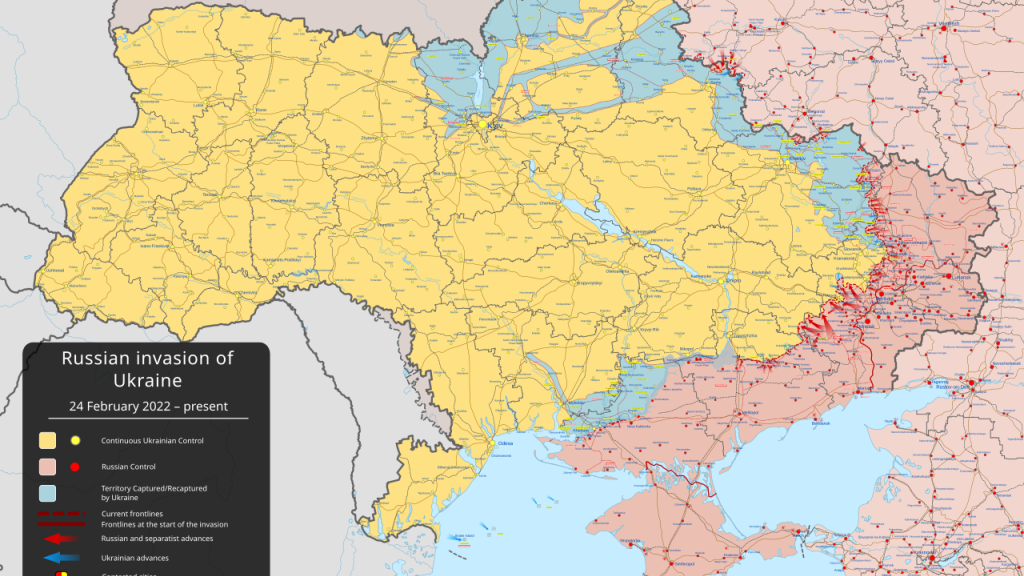
- Russia’s war of aggression is rewarded with recognition by Ukraine and the United States as Russian territory of lands taken by force, plus a bonus reward of 2,500 square miles of Donbas lands that are now under Ukrainian control. Unacknowledged in the “peace” plan is that this land transfer will put an additional 250,000 Ukrainians under Russian occupation on top of the more than 3 million Ukrainians already under Russia’s repressive rule in the currently occupied territories.
- Russia gets amnesty for its war crimes, starting with the supreme war crime of aggression from which flows all other war crimes, as the Nuremberg Military Tribunal proclaimed in 1946 and became enshrined in international law, from the United Nations Charter of 1946 to the 1998 Rome Statute establishing the International Criminal Court. The International Criminal Court currently has arrest warrants out for Russian President Vladimir Putin and his Children’s Rights Commissioner for the war crime of abducting of tens of thousands of Ukrainian children to Russia and for four top Russian military commanders for the war crimes of deliberately targeting bombs at civilians and civilian infrastructure far from the frontlines and for the detention, torture, rape, and execution of Ukrainian POWs and civilians loyal to Ukraine living in the occupied territories. The amnesty would cover the Russian FPV (First Person View) drone operators who conduct “human safaris” to murder Ukrainian civilians in cities and villages near the frontlines and boast about it in the snuff films they post in social media online.
- Rather than saying “Russia will not invade neighboring countries,” the plan says “Russia is expected not to invade neighboring countries, and NATO will not expand further.” The so-called peace plan is full of such ambiguities and loopholes favorable to Russia.
- “A dialogue between Russia and NATO, mediated by the United States, will be held to address all security issues.” The supreme commander of NATO is American and the US is now allied with Russia. This “dialogue” would be one-sided with Ukraine excluded.
- Sanctions on Russia will be lifted and the U.S. and Russian oligarchs will resume business with each other.
- “US$100 billion of frozen Russian assets will be invested in U.S.-led efforts for Ukraine’s reconstruction and investment. The United States will receive 50% of the profits from this initiative.” It is all about the money with Trump, not social justice, human rights, or international law.
- “A joint U.S.-Russia security working group will be established to facilitate and ensure implementation of all provisions of this agreement.” Ukraine is again excluded, as are its European allies.
- “Ukraine will hold elections in 100 days.” This appeals to Russia’s rhetoric about “denazification,” i.e. regime change to a Russian puppet. Free and fair elections in Russia are not part of the deal.
- No ceasefire until this final agreement is signed by Russia and Ukraine. Ukraine has been calling for a ceasefire to set the conditions for productive negotiations toward a sustainable peace settlement. Russia insists on a final settlement before a ceasefire. This peace plan affirms Russia’s position.
- The agreement’s “implementation will be monitored and guaranteed by a Peace Council chaired by President Donald J. Trump.” This provision is like the Board of Peace chaired by Trump for his Gaza “peace” plan.
Trump’s 28-point plan for Ukraine is much like his 20-point plan for Gaza. Neither enforces international law, protects the victims, or holds the perpetrators of colonial aggression and occupation accountable. Both punish the victims and reward the aggressors. Both exclude the colonized from governance in the occupied territories. With their failure to exercise their veto when the UN Security Council adopted the Gaza foreign occupation plan, Russia and China became complicit in the colonial occupation of Gaza. Now Russia, its silent partner China, and the US are carving up Ukraine among themselves for imperialist plunder. Both deals have characteristically Trumpian pre-occupations with real estate development and business deals. Palestine is slated to be developed as a new Riviera for affluent foreign tourists, not indigenous Palestinians. Ukraine is slated to become a source of cheap and ultra-exploited labor, minerals and fossil fuels extraction, and fuels pipeline transit while the US and Russian oligarchs make money in Russia in, as the Trump plans says, “the spheres of energy, natural resources, infrastructure, artificial intelligence, data centers, Arctic rare-earth mining projects, and other mutually beneficial corporate opportunities.”
The Ukraine Solidarity Network (USN) denounces this attempt to impose a settlement that is not acceptable to the Ukrainian people. USN continues to support the right of the Ukrainian people to self-determination and to decide for themselves what are acceptable terms for a peace deal.
USN will continue to build moral, political, and material support for the people of Ukraine in their resistance to Russia’s invasion, to its occupation of Ukrainian lands, and to its brutal rule over people in the Russian-occupied territories. USN will continue to support Ukraine’s war of resistance, its right to determine the means and objectives of its own struggle, and its right to obtain the weapons it needs from any available source.
- We demand the full and complete withdrawal of Russian troops from all of Ukraine.
- We support the armed and unarmed resistance of Ukrainians against the Russian invasion.
- We support economic sanctions against Russia’s war machinery, including its political, military, and economic elite, its access to the international financial system, its imports of weapons-related technology, and its exports of fossil fuels that fund and fuel Russia’s war machine.*
- We demand that all Russians incarcerated for war resistance and political dissent be freed.
- We demand that the tens of thousands of Ukrainian children kidnapped to Russia and Belarus be returned to Ukraine.
- We demand that the tens of thousands of Ukrainian civilians from Russian-occupied territories incarcerated for opposition to the occupation be released and returned to Ukraine.
- We support asylum in the United States for Ukrainians, Russians, Belorussians, Palestinians, Sudanese, Haitians, Venezuelans, Afghans, and all people seeking refuge from political repression and war.
- We oppose amnesty for Russian war criminals. We demand the cancellation of all of Ukraine’s illegitimate and unjust foreign debts.
- We demand the confiscation of Russian assets abroad to be used to support Ukraine’s military self-defense, social services, and post-war reconstruction.
- We demand that Russia pay reparations to fund a full post-war reconstruction of Ukraine.
- We oppose the U.S. policy of imposing a neoliberal economic agenda on Ukraine today and for its post-war reconstruction. The Ukrainians’ struggle for self-determination, democracy and social justice will continue. We support the political struggles of Ukrainian trade unions, women’s organizations, environmental initiatives, and progressive political organizations to reverse the neoliberal anti-labor and anti-social policies of the Ukrainian government, to expand social, labor, and democratic rights, to clean up public corruption, and to implement a just and ecological reconstruction of Ukraine.
We will continue to build material aid and public education campaigns linking trade unions, civic organizations, and progressive political organizations in the US with their counterparts in Ukraine.
We urge all opponents of imperialism to join us.
- *
The question of sanctions is complicated and controversial among activists committed to Ukraine’s struggle. It’s especially important in the US that we do not accommodate to the predatory politics of the imperialist US state. The Ukraine Solidarity Network will be discussing these issues as the betrayal of Ukraine unfolds in collaboration with our Ukrainian comrades whose lives and national freedom are on the line.
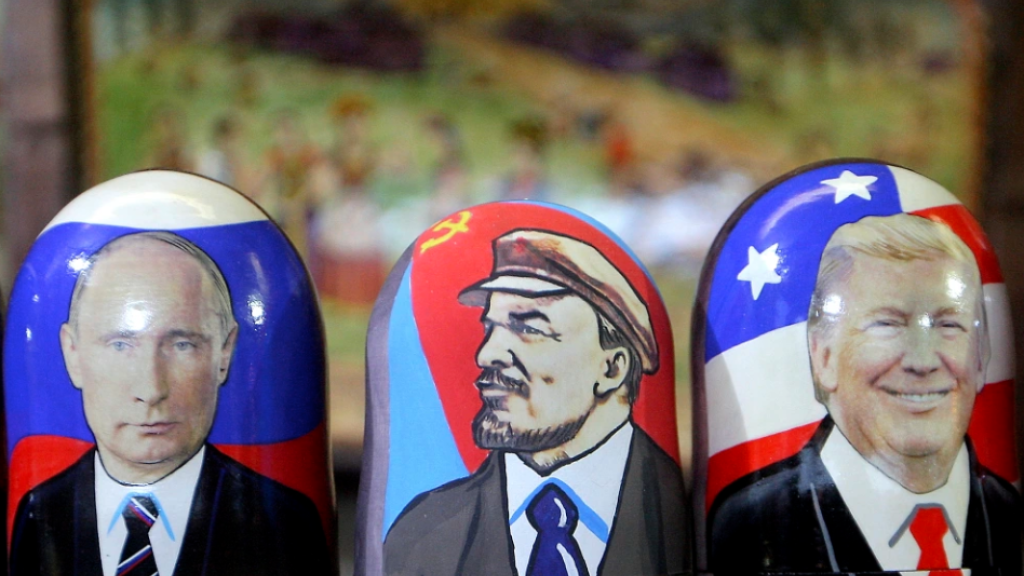
Trump’s peace, Lenin’s test: Class, empire and the price of a deal
In late November, the world woke up to a sudden and, for many, unwelcome “peace initiative” from United States President Donald Trump: a leaked 28-point draft circulating between US, Ukrainian and Russian interlocutors, as a framework to end the war. The document is not an official text and may change substantially, but its core logic is clear enough to analyse.
At its heart, the draft proposal would freeze the front roughly where it stands and entrench Russian control over Crimea and large parts of Donbas; neutralise Ukraine by constitutionalising a NATO renunciation and extracting parallel pledges that NATO never admit Ukraine; replace alliance membership with a US-style security guarantee subject to conditions; pair a phased sanctions rollback for Russia with economic cooperation (energy, mining, high tech) and channel frozen Russian assets into reconstruction; and wrap the whole package in a bespoke oversight body chaired by Trump. Everything else hangs off those pillars: troop caps, quick elections and broad amnesties, IAEA management at the Zaporizhzhia nuclear plant, and implementation timelines.
Reactions have been all over the map. European Union leaders publicly treated the draft as a starting point that “will require work,” signalling red lines on borders, force limits and any clauses that would bind EU or NATO processes. Ukrainian President Volodymyr Zelenskyy called it an unprecedented challenge to Ukraine’s dignity, even while indicating a willingness to engage with Washington.
Russian President Vladimir Putin, by contrast, said it could serve as a basis “in principle” for settlement. Russian Marxist Boris Kagarlitsky noted from prison that the draft is vague on most points yet painstaking on the money. In its current form it reads like a template where Ukraine looks the loser, Russia not quite the winner, and the US the only clear beneficiary. Even so, any step that stops the killing would be a step worth taking.
Why Lenin? Why now?
Invoking Vladimir Lenin is not nostalgia; it is a way to keep analysis from collapsing into moral binaries or great-power fandom. His wartime polemics, succinctly distilled in the relatively little-known 1916 essay A Caricature of Marxism and Imperialist Economism, supply a compact toolkit for thinking about modern conflicts.
He forces us to focus on two disciplines that contemporary debate keeps evading: first, to read war as the continuation of class policy, not as a sudden meteor; and second, to hold together two planes at once, the inter-imperialist struggle for redivision and the national liberation struggle of oppressed peoples. That dual focus is exactly what the Ukraine war scrambles and what any externally brokered “peace” threatens to flatten.
Lenin is also relevant because he treated wars inside the stage of imperialism, and not as isolated clashes of flags. That premise is largely airbrushed out by mainstream commentary and openly debated within the left, which recognises the imperial dimension even as it disagrees over how much weight to give it against Ukraine’s national liberation struggle (see, for example, the exchange between Alex Callinicos and Gilbert Achcar).
Finally, Lenin links analysis to strategy: judge each belligerent by what its victory or defeat means for workers, and fight opportunism inside the labour movement while opposing imperialist war.
Lenin’s four tests for modern wars
1. War as the continuation of class policy
Clausewitz called war “the continuation of policy by other means.” Lenin keeps the sentence and changes the subject of the policy: not an abstract “state,” but a ruling class pursuing its accumulation strategy. So, the task is to reconstruct each side’s pre-war class policy — its profit model, external dependencies, regional ambitions, and domestic crises — and then read the outbreak of war as the switch from peaceful to violent instruments in pursuit of those same aims. Official slogans about defence, civilisation or democracy are evidence, not explanations.
2. Two planes in one war
On one plane, rival capitalist states (or blocs) fight to redraw hierarchies of extraction and control: an inter-imperialist war for redivision. On the other, a dominated people fights to secure or preserve sovereignty: a national liberation war. Lenin’s test is to identify which relation holds between which actors, and then refuse to collapse the two planes into a neutral “clash of states.” Supporting an oppressed nation’s right to resist does not require political endorsement of its bourgeois leadership, and recognising an inter-imperialist struggle does not erase the agency or rights of the dominated.
3. Judge each belligerent by class outcomes, not camp loyalties
Socialists do not pick sides the way chancelleries do. They ask, for each belligerent separately: What is the position of its ruling class in the world system? What would its victory or defeat mean for the capacity of workers and oppressed people — locally, regionally, internationally — to organise, win rights, break dependencies, etc? A predatory victory that consolidates chauvinism and repression is to be opposed; a defeat that opens space for democratic and labour struggles can be welcomed, even if it benefits no government you like. Conversely, a “friendly” victory that locks a country into new dependency or debt servitude is not a socialist gain. The metric is strategic empowerment of the working class, not diplomatic score keeping.
4. Fight opportunism inside the labour movement as part of fighting the war
Anti-imperialism is not real if it stops at criticising the enemy’s propaganda. Lenin’s last test turns inward: break with social-chauvinism (backing “our” bourgeoisie’s war under progressive pretexts) and with centrist evasions (condemning war in words while tailing ruling-class policy in practice). Apply the same discipline everywhere: in aggressor states, oppose annexations and chauvinism; in invaded states, defend the right to resist while resisting wartime assaults on labour and minority rights; in core states, reject both crusader liberalism and apologias for rival imperialisms, and fight the militarisation and austerity imposed at home. There is no durable anti-war politics without an internal struggle over the line of the movement itself.
Taken together, these four tests form a method, not a mantra. They compel analysis of prior class policies, insist on keeping two planes in view, replace campism with outcome-based judgment, and weld anti-war work to a fight against opportunism. That is why they remain usable for evaluating any “peace plan” offered by great powers today.
Trump’s peace through Lenin’s lens
Lenin’s third test — judge each belligerent by class outcomes — sharpens the agenda. Looking at the current “peace initiative”, Lenin would immediately note that the principal beneficiaries are the US and Russian imperialists, carving up Ukraine’s natural wealth and territory over the heads of the population. He would also read the draft’s call for US–Russia “cooperation” in energy and mining as the signature of subordinated imperialism on the Russian side, a return to the pre-2014 pattern in which Western majors were invited into hydrocarbons and extractives on privileged terms (Rosneft–Exxon tie-ups, BP’s equity in Rosneft, Sakhalin consortia).
At the same time, he would also see through European imperialism: prolonging the war without a clear, credible victory plan simply bleeds Ukrainian workers, while Ukrainian elites position themselves to profit from flows of aid, contracts and energy-sector rents, as the high-profile Energoatom ‘Operation Midas’ kickback probe suggests.
He would not chalk Ukraine’s mobilisation crisis up to some alleged lack of national identity, still less to the fiction that Ukrainians are an “artificial nation” as Putin claims; he would point to class suspicion — the reasonable fear among workers that their sacrifices will be appropriated by Ukrainian capital. Pressed to rank the imperialisms at play, he would refuse the game.
To adapt Josef Stalin’s famous quip from the 1925 XIV Party Congress on “right” and “left” deviations, “both are worse”, in this triangle all three are worse: the US and Russian imperialisms that bargain over Ukraine’s resources and territory, and a European strategy anchored in “support to Ukraine as long as it takes,” with a maximalist end-state (full withdrawal, reparations, prosecutions) but no credible route to get there and financed by Ukrainian blood and deepening EU dependency.
Lenin would also read the frozen-assets plank as open inter-imperialist rivalry: about €210 billion in Russian state funds are immobilised in the EU, yet the leaked draft channels $100 billion of those assets into US-led reconstruction vehicles, with the US taking a profit share and a further tranche parked in a joint US–Russia investment instrument, overseen within a bespoke “Peace Council” chaired by Trump. In Lenin’s terms, that is the core muscling the core: Brussels carries the legal risk of immobilisation while Washington positions itself to manage and monetise the pot.
Read strictly through Lenin’s tests, the draft “peace initiative” functions as an inter-imperialist bargain that subordinates Ukraine’s sovereignty to the interests of the core. A Russian-imposed partition would mark a defeat of an oppressed nation’s right to exist; yet a “victory” under the present Ukrainian leadership, on these terms, would likely be cashed out as deeper NATO tutelage and debt-driven restructuring. A tolerable outcome, in Lenin’s terms, would be a compelled halt to the killing that neither recognises annexations nor launders occupation plebiscites, and that avoids converting Ukraine’s dependence into a permanent settlement. Anything else reads as peace that sanctifies defeat.
Ukraine’s national question, without hagiography
A Leninist reading starts by naming the structure without mythmaking: vis-à-vis Russia, Ukraine is an oppressed nation whose right to exist has been denied, in word and deed, and whose territory has been seized under the alibi of “historical unity.” That diagnosis does not require airbrushing the past or canonising the present. It simply restores the basic asymmetry that any serious analysis must keep in view.
The Soviet layer complicates but does not erase that asymmetry. Ukraine was one of the principal centres of Soviet development: it received huge industrial investment, became home to advanced sectors (aerospace, armaments, research institutes), fostered a rich national culture, and even held a formal seat at the United Nations.
Economically, the picture is mixed in precisely the way ideologues hate: by contribution to all-Union Gross National Product Ukraine functioned as a net donor (as did Russia), while in narrow fiscal flows it was a modest net recipient; it also benefited from targeted investment and cheap energy. Politically, however, decisive power was centralised in Moscow, real statehood was off the table, and the Ukrainian language was subordinated in high administration and all-Union communication. Both truths sit together: material advance within a framework of national subordination.
Post-1991, Russia operates as a semi-peripheral empire: dependent on the core in finance and technology yet exercising regional domination over its “near abroad.” Toward Ukraine that has meant leverage through energy, currency and security ties, periodic territorial grabs, and now a full-scale war framed by open denial of Ukrainian nationhood. Semi-peripheral status does not mitigate the relation; vis-à-vis Ukraine, Russia is the oppressor.
None of this implies that internal relations inside Ukraine are harmonious. In Crimea and Donbas, genuine grievances about Kyiv’s policies, language laws and post-Maidan orientation pre-dated 2014, and should have been addressed as a minority/national question within Ukraine. Ukrainian language and education rules grant protections to EU-official languages that do not extend equivalently to Russian, and wartime cultural bans have deepened that divide; the result is a de facto narrowing of the public sphere for Russian language and identity.
But referenda under occupation and pseudo-republics organised by Moscow are imperial instruments built on those grievances. By an ironic twist of history, the Bolsheviks made exactly this point about Ukraine at Brest-Litovsk in 1918: “self-determination” staged under foreign bayonets by puppet authorities is annexation in costume. Acknowledging internal injustices does not convert Ukraine from oppressed to oppressor when a larger power is carving it up.
Today, the national question clarifies stakes rather than dictating tactics. Vis-à-vis Russia, Ukraine remains the oppressed side of an asymmetric relationship; acknowledging internal injustices and regional grievances does not invert that fact, nor does it legitimise partitions engineered under occupation. The analytical bottom line is simple: keep the asymmetry clear and the history honest; treat annexations and staged plebiscites as imperial instruments; and read any prospective settlement through what it means for the political equality of citizens and the durability of a common state.
The practical implications of that frame follow only after the guns fall silent.
After the deal: Anti-opportunism in practice
A brokered ceasefire will not end class struggle; it will simply change the field on which it is fought. Lenin’s last test makes the next steps into organisational questions rather than rhetorical ones.
Ukraine
From a Leninist angle, near-term priorities often identified by Ukrainian socialists include rebuilding independent unions and workplace organisation; rolling back wartime carve-outs that weakened collective bargaining; designing reconstruction to favour open contracting, public or worker control in strategic sectors, and local value added; resisting debt conditionality by pressing for grants, write-downs and ring-fenced social budgets; providing legal support for labour rights, demobilised soldiers and IDPs; and sustaining independent media and cross-regional organising.
It would also mean confronting neo-Nazism and ethnonationalist gatekeeping wherever it surfaces, defending minority and language rights as a condition for class unity, and systematically exposing the neo-colonial character of US deals over Ukraine’s minerals (see the Ukrainian socialist critique of the US–Ukraine minerals agreement), while developing practical ties with Russian workers and anti-war activists (joint union statements, prisoner support, safety funds, sector-to-sector links) on the simple premise that chauvinism on either side weakens workers on both.
Russia
From a Leninist angle, breaking social-chauvinism in practice would mean opposing annexations and Great-Russian chauvinism, sustaining anti-war organising, and offering legal support to conscripts, refuseniks and political prisoners. Proletarian solidarity here implies shedding the “Big Brother” reflex and engaging Ukrainian workers as equals; practical links with Ukrainian unions can be sector-to-sector and problem-focused rather than paternalist, as recently argued by Russian socialists Alexey Sakhnin and Liza Smirnova.
Any talk of demobilisation or a “peace dividend” is more credible if paired with releases of political prisoners, as urged in the July 4, 2025 open letter from 11 jailed Russian dissidents (including Kagarlitsky), visible withdrawal steps and protections for minorities, while conversion of the war economy under worker oversight could shift the post-war agenda toward social gains rather than imperial restoration.
Core states
In the core states, a Leninist emphasis falls on demilitarisation and de-rentierisation at home, rather than a generic “progressive support” package. In practice, that could mean treating war-time profits and lock-ins as the core problem and favouring measures that redirect capacity from arms to civil uses, keep procurement transparent, and keep financing grant-heavy rather than debt-heavy. Assistance to Ukraine would come with labour and open-contracting clauses rather than investor privileges, and with technology sharing/public options that reduce long-run dependency instead of vendor lock-ins.
On the domestic side, a peace settlement would be a moment to wind down emergency powers and surveillance, and to pair any residual security spending with matching social outlays so the “jobs from militarisation” logic does not quietly harden. None of this claims to be a master plan; it simply draws a line between “support” that feeds the security-industrial complex and support that preserves democratic space, labour strength, and fiscal room for the majority.
Common discipline
Across contexts, a few guardrails seem basic: no de jure recognition of annexations; no recognition of plebiscites conducted under occupation; no secret clauses on bases, minerals or debt; no convenient amnesia about war crimes. Wherever possible, translate policy stances into organisational capacity — membership growth, sectoral networks, cross-border union links — so that, after any deal, workers are more able to act independently of all ruling classes involved, not less.
Conclusion: Complexity against propaganda
Reading a Trump-style peace through Lenin’s method resists the flattening that propaganda demands. It keeps two planes in view at once: an inter-imperialist bargain over hierarchy and access, and a national liberation struggle against a regional oppressor. It replaces camp loyalties with a class test: what outcome enlarges the capacity of workers and oppressed people to act tomorrow? And it ties every anti-war stance to an internal fight against opportunism, so the labour movement is not dragged behind any ruling class’s settlement.
The result is unglamorous but usable: oppose annexations and the laundering of plebiscites held under occupation; refuse a “peace” that swaps aid for resources, contracts, and debt servitude; tolerate only a compelled truce that halts the killing without sanctifying the map; and use any respite to rebuild independent organisation, restore labour rights, protect minorities, and block new dependencies. If this position will not fit on a placard, that is the point. Analysis worthy of its subject should protect complexity from being sacrificed to someone else’s storyline.
In today’s Russia, Lenin’s legacy is officially inconvenient. The ruling narrative rehabilitates imperial cohesion and derides his nationalities policy as a “time bomb” under the state. Putin has repeatedly blamed Lenin for “inventing” or “artificially” creating Ukraine. Yet public opinion tells a different story. Elite hostility to Lenin’s nationalities policy helps explain his official unpopularity, but among the public a 2024 Levada poll shows 67% rating his role positively and a record 45% supporting leaving his body in the Mausoleum, with support highest among 18–24-year-olds.
The gap between elite vilification and popular memory is not a program, but it is a resource, a reminder that the materials for a principled, anti-imperialist politics still exist beneath the state’s storyline.
Witkoff To Moscow, Zelenskyy Is Wary, A Phone Call Leaks: A Ukraine Peace Plan Coalesces – Analysis
By Mike Eckel
The White House’s lead envoy is heading to Russia for a sixth time. Ukraine fears a peace that heavily favors Moscow. A leaked phone call shows the US envoy advising a Kremlin official on how to sweet talk the White House.
And Russia’s invasion — now in its 46th month — has pushed Ukraine’s beleaguered armed forces closer to the breaking point.
There’s a lot that happened in the six days since a US-drafted peace proposal first leaked – not to mention the circumstances under which it was drafted.
The 28-point plan jolted what until recently had been sputtering efforts to halt the Russian war, something that Trump had pledged to do within 24 hours of taking office in January.
Here’s what you need to know as of November 26, as diplomats and negotiators from Washington, Moscow, Kyiv, and many other European capitals wrangle over details over a concrete, and controversial plan.
The Main Sticking Points?
After the US plan leaked, and then was given to Ukrainian President Volodymyr Zelenskyy, the Ukrainian leader sent his chief of staff and other officials to Geneva for urgent talks with US officials, including Secretary of State Marco Rubio.
Zelenskyy reportedly was blindsided by the plan, which echoed most of the hard-line positions that Russia has held before the invasion.
The Geneva talks, however, produced an “updated and refined” framework – a reworked 19-point plan — that would deliver a “sustainable and just peace,” both the White House and Zelenskyy’s office said.
But Zelenskyy’s comments suggested the thorniest issues might still be on the table. That includes the fate of a chunk of the Donetsk region that the Kremlin has been hellbent on seizing.
Moscow has repeatedly said it must control all of Donetsk, one of five Ukrainian regions Putin baselessly claims are Russian. Ceding land that Ukraine’s forces have kept out of Russia’s clutches, at great cost, would be a massive concession by Kyiv and could have political repercussions for Zelenskyy.
Other pitfalls include the Kremlin’s insistence that Ukraine be forever barred from joining NATO and a potential cap on the size of Kyiv’s military.
The US draft would require Ukraine to “enshrine in its constitution that it will not join NATO” and the alliance to formalize a pledge that Ukraine will never be admitted.
That approach may be unpalatable for Ukraine, which wants freedom to choose its geopolitical partners – and currently has its NATO aspirations codified in its constitution.
Ukraine also wants to be able to defend itself from any potential future Russian attack.
In previous negotiations, Russia called for Ukraine’s military to be under 100,000 personnel. The initial US draft would cap it at 600,000. A European counterproposal would raise that to 800,000 “in peacetime.”
Several top Republican senators have criticized the initial US plan, including former Majority Leader Mitch McConnell.
“A deal that rewards aggression wouldn’t be worth the paper it’s written on. America isn’t a neutral arbiter, and we shouldn’t act like one,” he said in a post to X.
White House spokeswoman Karoline Leavitt claimed there had been tangible progress, saying there were only “a few delicate, but not insurmountable, details that must be sorted out.”
Sixth Time’s A Charm?
A real estate developer with no diplomatic background, Steve Witkoff is the man tapped by Trump to lead efforts to find an end to Russia’s war. He’s met with Putin five times already, traveling to Moscow on his private jet.
Some of Witkoff’s prior actions have raised alarm bells to outside observers,who fear he is being manipulated or that he misunderstands the war’s deeply intractable historical contours.
Witkoff has relied on translators provided by the Kremlin for his conversations with Putin and other officials, rather than using translators authorized by the US Embassy.
After Witkoff’s last meeting with Putin in August, US and European officials said the envoy misunderstood the geography of Ukrainian territory Putin was claiming.
Representative Don Bacon, a Republican who has criticized the Trump administration’s engagement with Russia, called for Witkoff to be fired.
Sending Witkoff back to Moscow, a visit Kremlin foreign policy aide Yury Ushakov confirmed would happen next week, is a sign that the White House is eager to cement some or all of the points that were set in Geneva and Abu Dhabi.
Another wild-card: Trump mentioned his son-in-law, Jared Kushner, might accompany Witkoff, something neither Ushakov nor Kremlin spokesman Dmitry Peskov commented on.
Kushner was reportedly present for previously undisclosed US meeting involving Witkoff and Russian who is also not a diplomat but who has played a starring, unconventional role in negotiations with the Americans: Kirill Dmitriev.
Wait, A Leaked Phone Call?
In late October, Dmitriev, a sharp-tongued, Harvard-trained businessman who heads Russia’s sovereign wealth fund, traveled to Miami, Florida. He met with Republican Representative Anna Luna, giving her what he said were undisclosed Russian files on the assassination of President John F. Kennedy. He also gave her a box of chocolates and a book of Putin quotes.
Dmitriev had been blacklisted in 2022, along with other Russian officials, in punishment for the Russian invasion of Ukraine. Trump’s Treasury secretary has called him a “Kremlin propagandist.”
It later emerged that Dmitriev, who was given an exemption by US authorities to travel, had secret meetings with Witkoff and Kushner while in Miami— reportedly leaving some White House and State Department officials in the dark.
After news of the US proposal emerged last week, several US senators said that Rubio told them the draft was Russian in nature, influenced by a Russian, though Dmitriev was not named.
Rubio, who was in Geneva, insisted it was a US draft.
On November 25, not long before Trump announced Witkoff would travel to Moscow, Bloomberg News published a transcript of what it said was telephone call between Witkoff and Ushakov.
The call took place on October 14, two days before Trump and Putin held their own call, on October 16 — and about two weeks before Witkoff met Dmitriev in Miami.
According to the transcript, Witkoff advised Ushakov on how to charm Trump on a possible peace deal.
“I would make the call and just reiterate that you congratulate the president on this achievement, that you supported it, you supported it, that you respect that he is a man of peace and you’re just, you’re really glad to have seen it happen. So I would say that,” Witkoff was quoted as saying.
“I know what it’s going to take to get a peace deal done: Donetsk and maybe a land swap somewhere,” Witkoff reportedly said.
Bloomberg did not say how it obtained the recording, which was likely made by US intelligence agencies who routinely monitor and eavesdrop on foreign officials’ conversations. RFE/RL could not independently verify the transcript.
Trump partially confirmed the fact of the call, though not its content: “He’s got to sell this to Ukraine. He’s going to sell Ukraine to Russia. That’s what a dealmaker does.”
Ushakov also appeared to confirm the fact of the call, telling a Russian state TV reporter that it was leaked to undermine the backchannel negotiations. He later told the newspaper Kommersant that his conversation with Witkoff had occurred via the WhatsApp messaging app.
“It is unlikely that such a leak could have come from the participants in the conversation,” he was quoted as saying.
RFE/RL Russia/Ukraine editor Steven Gutterman contributed to this report.Mike Eckel is a senior international correspondent reporting on political and economic developments in Russia, Ukraine, and around the former Soviet Union, as well as news involving cybercrime and espionage. He’s reported on the ground on Russia’s invasion of Ukraine, the wars in Chechnya and Georgia, and the 2004 Beslan hostage crisis, as well as the annexation of Crimea in 2014.
RFE RL
RFE/RL journalists report the news in 21 countries where a free press is banned by the government or not fully established.
Putin backs US peace plan as basis for Ukraine talks, demands recognition of Russian territorial gains
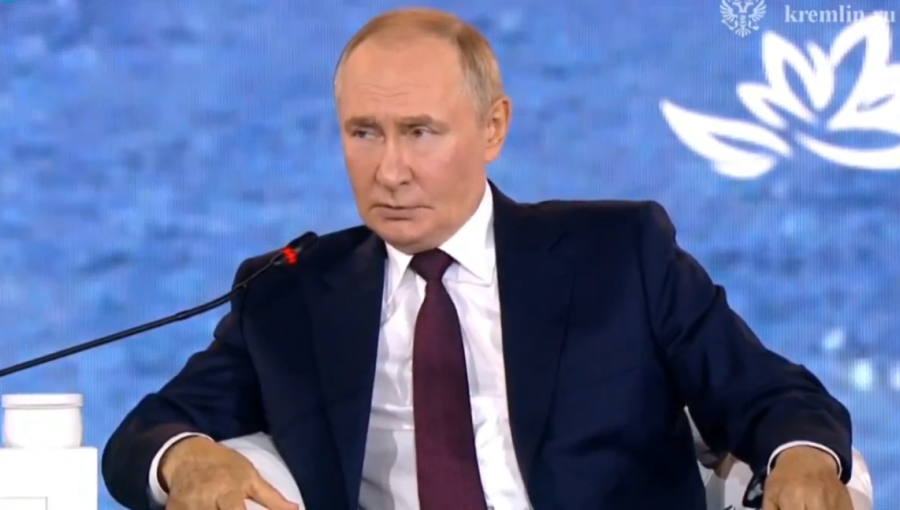
As the information frenzy surrounding the ongoing Ukraine peace deal talks intensifies, Russian President Vladimir Putin made a series of comments on November 27 designed to cut through some of the haze and lay Russia’s demands a bit more clearly.
Putin said that the US-backed 28-point peace plan (28PPP) for Ukraine could serve as a “foundation for future negotiations,” once again highlighting the Kremlin’s strong preference for this version – currently one of at least five other versions promoted variously by Europe and Trump among others. The most recent addition was a hard line principled European Parliament’s resolution on November 27.
Getting an agreement will be hard. While the EU resolution says that Europe will never recognise Russia’s occupation of Ukraine’s territory, Putin expressly said any agreement must include international recognition of Russia’s sovereignty over Crimea and the four Ukrainian annexed regions.
Speaking at a press conference in Bishkek following the Collective Security Treaty Organisation (CSTO) summit, Putin repeatedly outlined the conditions under which Moscow would consider ending hostilities, while casting doubt on the legitimacy of Ukraine's leadership.
“You are right, this is one of the key points,” Putin said, when asked whether recognition of Russia’s new regions should be addressed in peace talks. “This matters because it’s one thing when decisions are recognised, and, say, certain territories are under Russian sovereignty. If the agreement is violated, it will be considered an attack on the Russian Federation, with all the ensuing retaliatory measures.”
According to TASS, Putin confirmed that Russia had received the US proposal following a visit to Alaska, after which “negotiations took place in Geneva between the American delegation and the Ukrainian delegation.”
This confirms the information on the lead up to the appearance of the US plan revealed in leaked phone conversations between Yuri Ushakov, Putin’s top foreign policy advisor and separately Special Envoy to the Middle East Steve Witkoff and head of Russia’s sovereign wealth fund, Kirill Dmitriev published by Bloomberg, as well as the timeline of events until the plan went public on November 18.
Putin dismissed the phone conversations as potentially fake, warning that unauthorised publication constitutes a criminal offence under Russian law.
Putin said the 28 points were later divided into four thematic blocks and conveyed to the Kremlin.
“In general, we agree that this can be the basis for future agreements,” Putin said. However, he added that a legal agreement with Ukraine remains “practically impossible” because of the Zelensky government’s decision to postpone presidential elections, which, according to Putin, rendered the Ukrainian president illegitimate. Putin has questioned Zelenskiy’s legitimacy on several occasions, arguing that after his presidential term expired in May, the Speaker of the Rada should have taken over as the interim war-time president. The Ukrainian constitution bars elections while the country is under martial law.
“Signing documents with the Ukrainian leadership is pointless,” Putin said, taking a hardline again after previously suggesting he was willing to negotiate directly with the Ukrainian president. “We need our decisions to be recognised by the major international players. This matters.”
The Russian leader also dismissed European concerns about further military escalation, while offering to codify Moscow’s intentions. Last week, the German intelligence service warned that Russia might attack Nato in 2029.
“We were never going to [attack Europe], but if they want to hear it from us — well, come on, we’ll put it on the record. No questions asked,” Putin said. “Nevertheless, if this is promoted in the public consciousness, if they have frightened their citizens and want to hear that we have no aggressive plans for Europe, please, we are ready to record this in any way.”
Putin claimed Moscow frequently receives informal offers of a ceasefire, but said that any pause would require Ukrainian withdrawal from occupied territories first. According to the latest EU resolution, Brussels has returned to its position that negotiations can only begin after a ceasefire is imposed. The Kremlin, reluctant to give up its momentum and allow the Armed Forces of Ukraine (AFU) to regroup and resupply, insists the fighting must continue and a ceasefire will come at the end of negotiations, not the beginning.
“If [Ukraine’s forces] don’t leave, we’ll achieve it militarily,” Putin said, citing what he described as positive momentum on the front lines for Russian forces and the recent capture of several more towns in eastern Ukraine.
He also rejected the offer of rejoining the G8 contained in Trump’s 28-point plan under current circumstances, saying, “I can’t even imagine how we’d attend a G8 summit now.”
Russia was ejected from the G8 following its invasion of Ukraine, but since then Russian Foreign Minister Sergei Lavrov has called the body “irrelevant” and scoffed at the idea that Russia would like to return to it. The invasion of Ukraine means a permanent break with the Global North and Putin’s big beat on a Global South Century. Russia is now fully focused on building up new Global Emerging Markets Institutions (GEMIs), and the BRICS+ and G20 in particular.
Moscow expects a US delegation in Moscow in the first half of next week to continue talks. The Russian side will be represented by presidential aide Vladimir Medinsky, who led the talks that began in Riyadh in February.
“We are ready to work with the American administration to address all issues related to strategic stability,” Putin said, pointedly failing to include Europe in that comment.
BACKGROUND
1. Ukraine's sovereignty will be confirmed.
2. A comprehensive non-aggression agreement will be concluded between Russia, Ukraine and Europe. All ambiguities of the last 30 years will be considered settled.
3. It is expected that Russia will not invade neighbouring countries and NATO will not expand further.
4. A dialogue will be held between Russia and NATO, mediated by the United States, to resolve all security issues and create conditions for de-escalation.
5. Ukraine will receive reliable security guarantees.
6. The size of the Ukrainian Armed Forces will be limited to 600,000 personnel.
7. Ukraine agrees to enshrine in its constitution that it will not join NATO, and NATO agrees to include in its statutes a provision that Ukraine will not be admitted in the future.
8. NATO agrees not to station troops in Ukraine.
9. European fighter jets will be stationed in Poland.
10. The US will receive compensation for the security guarantees it provides. If Ukraine invades Russia, it will lose the guarantee. If Russia invades Ukraine, in addition to a decisive coordinated military response, all global sanctions will be reinstated and recognition of its new territories and all other benefits of this deal will be revoked. If Ukraine launches a missile at Moscow or St. Petersburg without cause, the security guarantee will also be deemed invalid.
11. Ukraine is eligible for EU membership and will receive short-term preferential access to the European market while this issue is being considered.
12. A powerful global package of measures to rebuild Ukraine will be established, including the creation of a Ukraine Development Fund, the rebuilding of Ukraine's gas infrastructure, the rehabilitation of war-affected areas, the development of new infrastructure and a resumption of the extraction of minerals and natural resources, all with a special finance package developed by the World Bank.
13. Russia will be reintegrated into the global economy, with discussions on lifting sanctions, rejoining the G8 group and entering a long-term economic cooperation agreement with the United States.
14. Some $100 billion in frozen Russian assets will be invested in US-led efforts to rebuild and invest in Ukraine, with the US receiving 50 percent of the profits from the venture. Europe will add $100 billion to increase the amount of investment available for Ukraine's reconstruction. Frozen European funds will be unfrozen, and the remainder of the frozen Russian funds will be invested in a separate US-Russian investment vehicle.
15. A joint American-Russian working group on security issues will be established to promote and ensure compliance with all provisions of this agreement.
16. Russia will enshrine in law its policy of non-aggression towards Europe and Ukraine.
17. The United States and Russia will agree to extend the validity of treaties on the non-proliferation and control of nuclear weapons, including the START I Treaty.
18. Ukraine agrees to be a non-nuclear state in accordance with the Treaty on the Non-Proliferation of Nuclear Weapons.
19. The Zaporizhzhia Nuclear Power Plant will be launched under the supervision of the UN's International Atomic Energy Agency (IAEA), and the electricity produced will be distributed equally between Russia and Ukraine.
20. Both countries undertake to implement educational programmes in schools and society aimed at promoting understanding and tolerance.
21. Crimea, Luhansk and Donetsk will be recognised as de facto Russian, including by the United States. Kherson and Zaporizhzhia will be frozen along the line of contact, which will mean de-facto recognition along the line of contact. Russia will relinquish other agreed territories it controls outside the five regions. Ukrainian forces will withdraw from the part of Donetsk Oblast that they currently control, which will then be used to create a buffer zone.
22. After agreeing on future territorial arrangements, both the Russian Federation and Ukraine undertake not to change these arrangements by force. Any security guarantees will not apply in the event of a breach of this commitment.
23. Russia will not prevent Ukraine from using the Dnieper River for commercial activities, and agreements will be reached on the free transport of grain across the Black Sea.
24. A humanitarian committee will be established to resolve prisoner exchanges and the return of remains, hostages and civilian detainees, and a family reunification programme will be implemented.
25. Ukraine will hold elections in 100 days.
26. All parties involved in this conflict will receive full amnesty for their actions during the war and agree not to make any claims or consider any complaints in the future.
27. This agreement will be legally binding. Its implementation will be monitored and guaranteed by the Peace Council, headed by US President Donald Trump. Sanctions will be imposed for violations.
28. Once all parties agree to this memorandum, the ceasefire will take effect immediately after both sides retreat to the agreed points to begin implementation of the agreement.
(FRANCE 24 with AFP)


No comments:
Post a Comment