Algeria jails pro-democracy Hirak poet for five years on terrorism charges
Algeria on Tuesday jailed pro-democracy activist Mohamed Tadjadit for five years on terrorism charges, in what human right groups have called an "alarming signal' for human rights in the country. Known for his public poetry readings during Algeria's 2019 Hirak movement, Tadjadit has been imprisoned multiple times by the Algerian authorities.
Issued on: 12/11/2025 -
By: FRANCE 24
Algeria on Tuesday jailed pro-democracy activist Mohamed Tadjadit for five years on terrorism charges, in what human right groups have called an "alarming signal' for human rights in the country. Known for his public poetry readings during Algeria's 2019 Hirak movement, Tadjadit has been imprisoned multiple times by the Algerian authorities.
Issued on: 12/11/2025 -
By: FRANCE 24
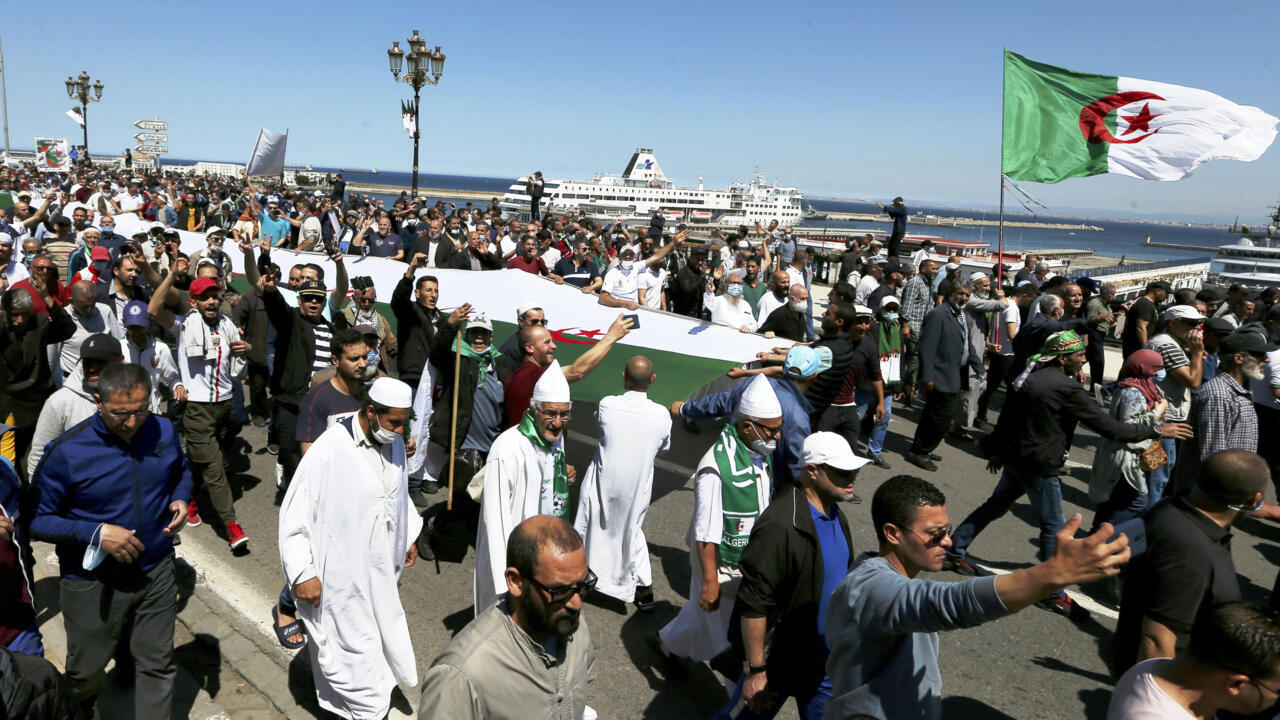
Algerians demonstrate in the streets of Algiers in support for the Hirak pro-democracy movement on May 7, 2021. © Anis Belghoul, AP
Algerian activist Mohamed Tadjadit, dubbed "the poet of the Hirak" during Algeria's 2019 mass pro-democracy protests, was jailed for five years Tuesday on charges including "condoning terrorism", his lawyer said.
Tadjadit became prominent for his public recitations during protests by the Hirak movement, which erupted in February 2019 and helped force the resignation of longtime president Abdelaziz Bouteflika.
Tadjadit's lawyer, Fetta Sadat, said in a post on Facebook that her client was convicted of "condoning terrorism", "supporting terrorist organisations" and "spreading extremist ideas", among other charges.
The prosecution had sought a 10-year sentence.
In a joint statement on Monday, some 20 NGOs including Amnesty International and writers' rights group PEN America said the allegations against Tadjadit were "baseless" and called for his release.
"The persecution of Tadjadit is based on his poetry and peaceful activism, making his continued imprisonment a violation of his fundamental rights," the statement added.
"His prosecution sends an alarming signal to others who raise their voices for human rights and the rule of law in Algeria," it said.
"The authorities imprisoned Tadjadit at least six times between 2019 and 2025, for his artistic expression and political activism," it added.
Tadjadit's last release from prison came in November last year under a presidential pardon.
But in January, he was arrested again and sentenced to five years in a separate case before an appeal reduced that term to one year.
Upon his election in December 2019, President Abdelmadjid Tebboune oversaw a crackdown on the protests with ramped-up policing and the imprisonment of demonstrators.
(FRANCE 24 with AFP)
Algerian activist Mohamed Tadjadit, dubbed "the poet of the Hirak" during Algeria's 2019 mass pro-democracy protests, was jailed for five years Tuesday on charges including "condoning terrorism", his lawyer said.
Tadjadit became prominent for his public recitations during protests by the Hirak movement, which erupted in February 2019 and helped force the resignation of longtime president Abdelaziz Bouteflika.
Tadjadit's lawyer, Fetta Sadat, said in a post on Facebook that her client was convicted of "condoning terrorism", "supporting terrorist organisations" and "spreading extremist ideas", among other charges.
The prosecution had sought a 10-year sentence.
In a joint statement on Monday, some 20 NGOs including Amnesty International and writers' rights group PEN America said the allegations against Tadjadit were "baseless" and called for his release.
"The persecution of Tadjadit is based on his poetry and peaceful activism, making his continued imprisonment a violation of his fundamental rights," the statement added.
"His prosecution sends an alarming signal to others who raise their voices for human rights and the rule of law in Algeria," it said.
"The authorities imprisoned Tadjadit at least six times between 2019 and 2025, for his artistic expression and political activism," it added.
Tadjadit's last release from prison came in November last year under a presidential pardon.
But in January, he was arrested again and sentenced to five years in a separate case before an appeal reduced that term to one year.
Upon his election in December 2019, President Abdelmadjid Tebboune oversaw a crackdown on the protests with ramped-up policing and the imprisonment of demonstrators.
(FRANCE 24 with AFP)
Google denies removing Maps border between Western Sahara and Morocco
Google on Tuesday denied removing the borderline between the Western Sahara and Morocco on its Maps application, saying that the line had never been visible for Moroccan users. The Western Sahara is a disputed, mineral-rich territory largely controlled by Morocco but claimed by the pro-independence Polisario Front.
Issued on: 12/11/2025
By: FRANCE 24
"These labels follow our longstanding policies for disputed regions. People using Maps outside of Morocco see Western Sahara and a dotted line to represent its disputed border; people using Maps in Morocco do not see Western Sahara."
Western Sahara is a vast mineral-rich former Spanish colony that is largely controlled by Morocco but has been claimed for decades by the pro-independence Polisario Front, which is supported by Algeria.
The United Nations Security Council had previously urged Morocco, the Polisario Front, Algeria and Mauritania to resume talks to reach a broad agreement.
But, at the initiative of US President Donald Trump's administration, the council's resolution supported a plan, initially presented by Rabat in 2007, in which Western Sahara would enjoy autonomy under Morocco's sole sovereignty.
(FRANCE 24 with AFP)
Google on Tuesday denied removing the borderline between the Western Sahara and Morocco on its Maps application, saying that the line had never been visible for Moroccan users. The Western Sahara is a disputed, mineral-rich territory largely controlled by Morocco but claimed by the pro-independence Polisario Front.
Issued on: 12/11/2025
By: FRANCE 24
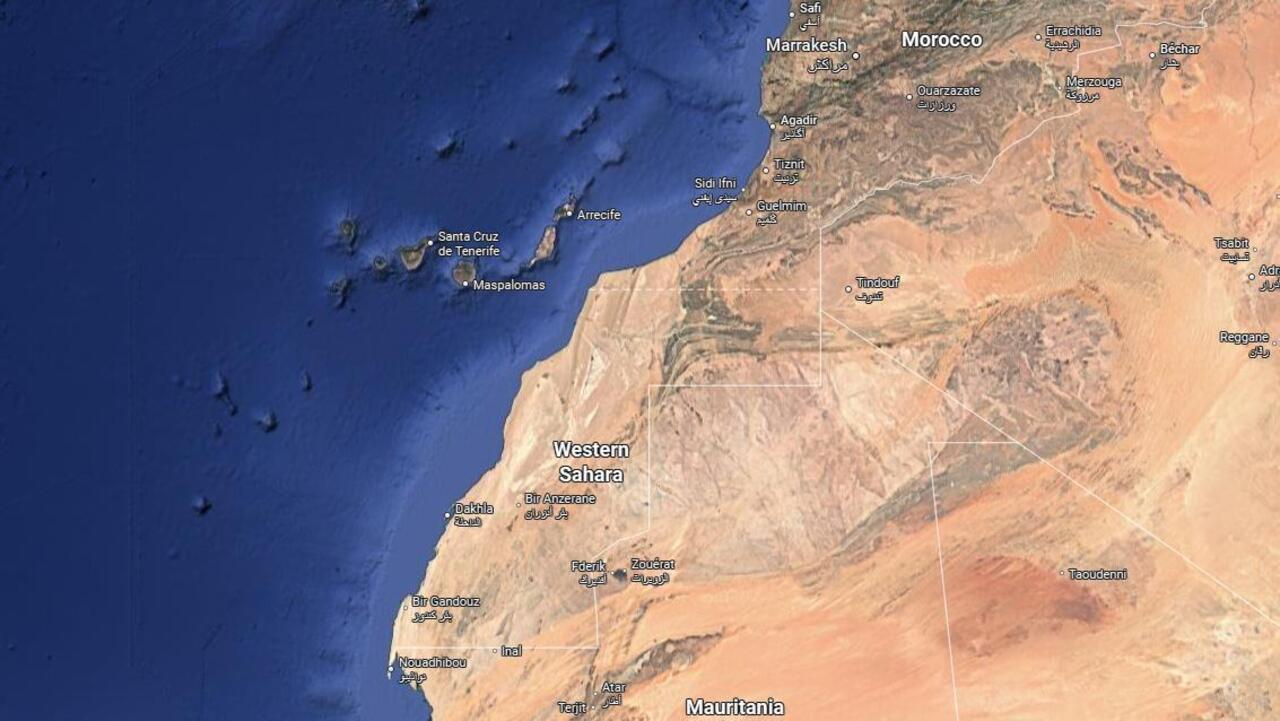
A screenshot of Google Maps' depiction of the border between Morocco and Western Sahara, as seen in Paris on November 12, 2025. © Google Maps
The dotted lines illustrating the border between Western Sahara and Morocco, indicating the former's disputed territory status, have never been visible to people using Google Maps in the latter, the company told AFP on Tuesday.
After media reports last week highlighted the discrepancy, tying it to the UN Security Council endorsing the Moroccan autonomy plan for Western Sahara, the tech giant has released a statement saying the different border displays have always been the case.
"We have not made changes to Morocco or Western Sahara on Google Maps," a Google spokesperson said in a statement to AFP.
The dotted lines illustrating the border between Western Sahara and Morocco, indicating the former's disputed territory status, have never been visible to people using Google Maps in the latter, the company told AFP on Tuesday.
After media reports last week highlighted the discrepancy, tying it to the UN Security Council endorsing the Moroccan autonomy plan for Western Sahara, the tech giant has released a statement saying the different border displays have always been the case.
"We have not made changes to Morocco or Western Sahara on Google Maps," a Google spokesperson said in a statement to AFP.
UN Security Council backs Moroccan plan for disputed Western Sahara
"These labels follow our longstanding policies for disputed regions. People using Maps outside of Morocco see Western Sahara and a dotted line to represent its disputed border; people using Maps in Morocco do not see Western Sahara."
Western Sahara is a vast mineral-rich former Spanish colony that is largely controlled by Morocco but has been claimed for decades by the pro-independence Polisario Front, which is supported by Algeria.
The United Nations Security Council had previously urged Morocco, the Polisario Front, Algeria and Mauritania to resume talks to reach a broad agreement.
But, at the initiative of US President Donald Trump's administration, the council's resolution supported a plan, initially presented by Rabat in 2007, in which Western Sahara would enjoy autonomy under Morocco's sole sovereignty.
(FRANCE 24 with AFP)

No comments:
Post a Comment