Tainã Mansani in Belem, Brazil
DW
November 11, 2025
Young African activists at COP30 in Brazil are calling for climate funding, political inclusion, and justice for communities hit hardest by the climate crisis.
Young African activists at COP30 in Brazil are calling for climate funding, political inclusion, and justice for communities hit hardest by the climate crisis.

Hilda Nakabuye told DW that she expects leaders at COP30 to put people's voices at the center of their decisions
Image: Tainã Mansani/DW
Anita Soina is a climate activist from Kenya with over 100,000 Instagram followers. She is widely seen as one of Africa's most promising voices in the environmental movement.
The 26-year-old, who is a member of Kenya's Maasai community, traveled to the city of Belem in northern Brazil for COP30, the UN climate conference.
Soina said she has witnessed how deforestation fuels drought, hunger, and water scarcity in her native Kenya. For her, COP30 carries special meaning.
"I think this event will be one of the biggest wins for the Global South," she told DW. "When we are here, listening to the COP president or Brazil's president, you can feel that something truly promising is happening."
But Soina's optimism is cautious.
"We have had many promises before, and at the end of the day, the crisis continues getting worse," she said. "The biggest barrier in Africa is the lack of political will. That is why most resources are not used for the purposes they were intended."
Demands for transparency and action
Representing Zambia, Maurice K. Nyambe, executive director of the graft monitor Transparency International, also traveled to the Amazon for COP30. He hopes this year's summit will deliver not only new pledges but mechanisms to ensure accountability.
"Whether we talk about climate finance or carbon trading, it is important to include transparency [and] accountability in all those discussions," he told DW. "We have high expectations for COP30."
Anita Soina is a climate activist from Kenya with over 100,000 Instagram followers. She is widely seen as one of Africa's most promising voices in the environmental movement.
The 26-year-old, who is a member of Kenya's Maasai community, traveled to the city of Belem in northern Brazil for COP30, the UN climate conference.
Soina said she has witnessed how deforestation fuels drought, hunger, and water scarcity in her native Kenya. For her, COP30 carries special meaning.
"I think this event will be one of the biggest wins for the Global South," she told DW. "When we are here, listening to the COP president or Brazil's president, you can feel that something truly promising is happening."
But Soina's optimism is cautious.
"We have had many promises before, and at the end of the day, the crisis continues getting worse," she said. "The biggest barrier in Africa is the lack of political will. That is why most resources are not used for the purposes they were intended."
Demands for transparency and action
Representing Zambia, Maurice K. Nyambe, executive director of the graft monitor Transparency International, also traveled to the Amazon for COP30. He hopes this year's summit will deliver not only new pledges but mechanisms to ensure accountability.
"Whether we talk about climate finance or carbon trading, it is important to include transparency [and] accountability in all those discussions," he told DW. "We have high expectations for COP30."
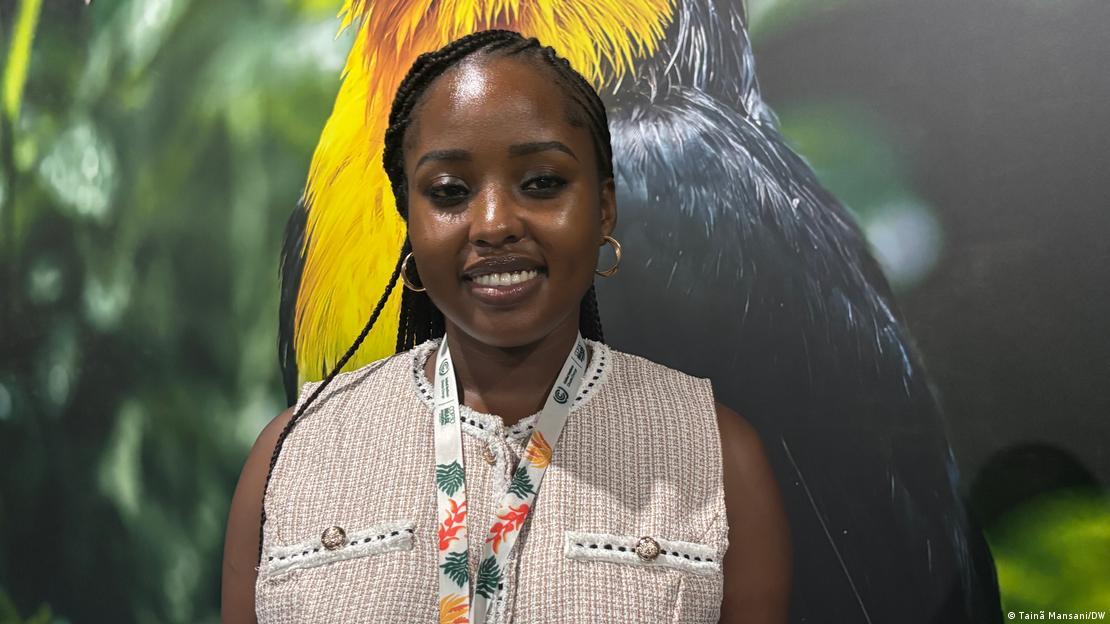
Anita Soina founded a Kenyan group to raise awareness of climate change, organizing tree planting and cleanup campaigns
Image: Tainã Mansani/DW
What's at stake at COP30?
The annual climate change conference is known as COP, which stands for the "Conference of the Parties" that signed the 1992 UN climate treaty. The agreement, called the UN Framework on Climate Change Convention (UNFCCC), committed nations to work together to fight climate change.
This year's conference, COP30 Brazil, is expected to be historic: for the first time, the global gathering is being held on the edge of the Amazon rainforest.
It will serve as a review of the 2015 Paris Agreement to curb climate change, assessing progress on emission targets and climate finance for Global South countries — commitments that remain largely unfulfilled, especially in Africa.
The continent is among the most vulnerable to climate change. Droughts, floods and the loss of farmland already threaten millions of livelihoods and food security.
This is why, in recent years, young African activists have become increasingly vocal in international climate debates, demanding climate justice and tangible actions from wealthy nations.
The Paris Agreement united nearly 200 countries in a pledge to limit global warming to well below 2 degrees Celsius (3.6 degrees Fahrenheit), and to pursue efforts to cap the rise at 1.5 C.
Voices from the frontlines
The opening session of this year's COP30 saw Brazilian President Luiz Inacio Lula da Silva call for a firm stand against climate change deniers.
"Climate change is no longer a threat looming in the future — it is a tragedy unfolding in the present," he said, as ministers discussed how the crisis is already devastating the world's most vulnerable populations.
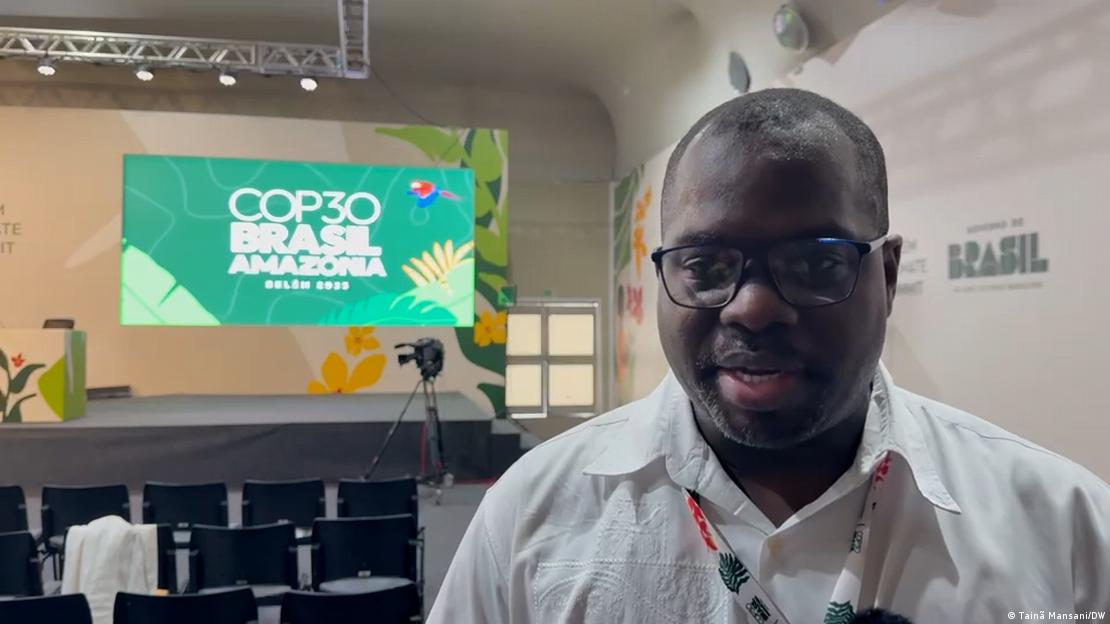
Maurice K. Nyambe hopes this year's COP30 will deliver not only new pledges but mechanisms to ensure accountability
Image: Tainã Mansani/DW
Helping her community is what drives Hilda Nakabuye, a prominent Ugandan activist and member of Fridays for Future Uganda, now attending her fifth COP. "To me, COP30 is a special moment because it marks 10 years of the Paris Agreement," she said.
Her work focuses on youth and women in Uganda, and on opposing the controversial East African Crude Oil Pipeline (EACOP), a planned 1,400-kilometer (870-mile) heated pipeline backed by TotalEnergies and China National Offshore Oil Corporation.
It cuts through sensitive areas like Murchison Falls National Park and skirts Lake Victoria, Africa's largest freshwater lake. Environmentalists have warned of irreversible damage to biodiversity and water sources relied on by over 40 million people.
"As a young … woman from Africa, I am here to raise my voice and represent the communities affected by a crisis they did not create," she said.
"We ask for a fair and just energy transition. I expect leaders here at COP30 to put people's voices — especially those of marginalized communities — at the center of their decisions."
Helping her community is what drives Hilda Nakabuye, a prominent Ugandan activist and member of Fridays for Future Uganda, now attending her fifth COP. "To me, COP30 is a special moment because it marks 10 years of the Paris Agreement," she said.
Her work focuses on youth and women in Uganda, and on opposing the controversial East African Crude Oil Pipeline (EACOP), a planned 1,400-kilometer (870-mile) heated pipeline backed by TotalEnergies and China National Offshore Oil Corporation.
It cuts through sensitive areas like Murchison Falls National Park and skirts Lake Victoria, Africa's largest freshwater lake. Environmentalists have warned of irreversible damage to biodiversity and water sources relied on by over 40 million people.
"As a young … woman from Africa, I am here to raise my voice and represent the communities affected by a crisis they did not create," she said.
"We ask for a fair and just energy transition. I expect leaders here at COP30 to put people's voices — especially those of marginalized communities — at the center of their decisions."
Engaging communities
Both Soina and Nakabuye agree that empowering local communities to understand their rights is essential. There is so much more to be done to involve communities. The best strategy is to engage them not only in addressing climate change but also in community development, Soina explained.
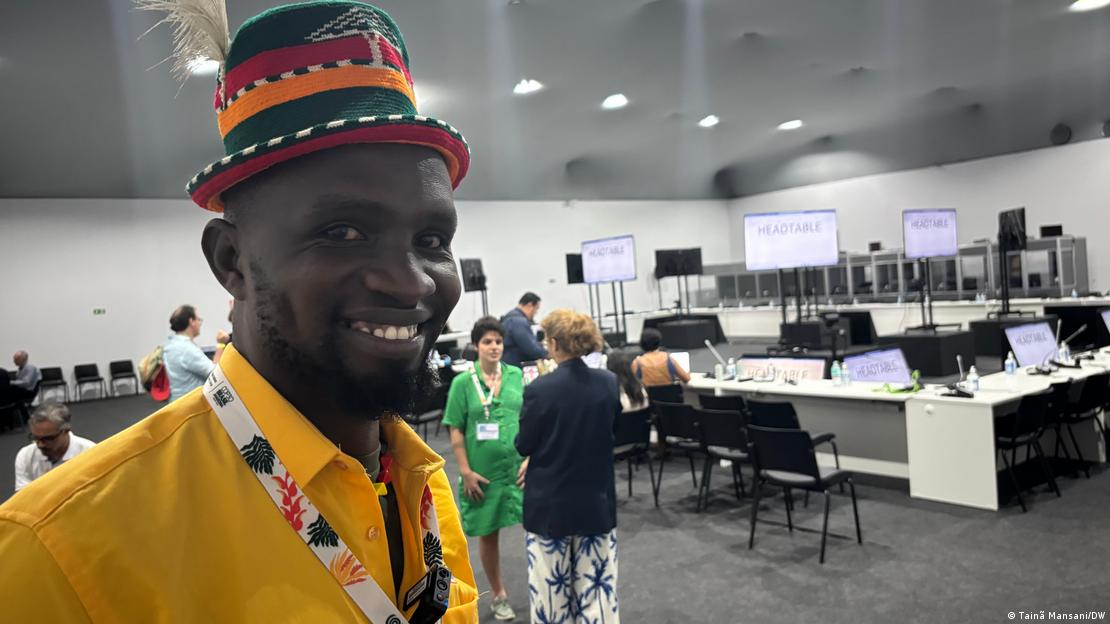
Simon Peter Longoli says thousands of herders have been devastated by recurring droughts
Image: Tainã Mansani/DW
Simon Peter Longoli, who traveled from Uganda, took part in an event on the opening day of COP30 focused on how local communities can engage more effectively in the UNFCCC process.
For him, COP30 brings high expectations, as pastoralists are now formally recognized within the UN framework as part of the so-called "local communities."
For the first time, he believes that recognition may come.
"What we have achieved here today is another milestone," Longoli said. "We expect that tomorrow it can be formalized — that indigenous people called 'caucus', as their local communities, can participate in the process related to climate change in the UNFCCC."
"Time is running out on climate change. For pastoralists, we may be able to adapt. But COP needs to deliver results that can be implemented," he added.
Global South solidarity
African youth say they hope to see real climate finance commitments and genuine participation in decision-making at COP30. A common message echoes through their voices: Climate justice must move beyond rhetoric and translate into resources for those living on the frontlines.
They also call for deeper cooperation among Global South nations — from the Amazon to Africa — to confront the global crisis together.
These young activists consider their presence in Belem as more than symbolic. It's a demand for action.
Uganda's activists defy crackdown on oil pipeline protests 05:59
Edited by: Keith Walker
Simon Peter Longoli, who traveled from Uganda, took part in an event on the opening day of COP30 focused on how local communities can engage more effectively in the UNFCCC process.
For him, COP30 brings high expectations, as pastoralists are now formally recognized within the UN framework as part of the so-called "local communities."
For the first time, he believes that recognition may come.
"What we have achieved here today is another milestone," Longoli said. "We expect that tomorrow it can be formalized — that indigenous people called 'caucus', as their local communities, can participate in the process related to climate change in the UNFCCC."
"Time is running out on climate change. For pastoralists, we may be able to adapt. But COP needs to deliver results that can be implemented," he added.
Global South solidarity
African youth say they hope to see real climate finance commitments and genuine participation in decision-making at COP30. A common message echoes through their voices: Climate justice must move beyond rhetoric and translate into resources for those living on the frontlines.
They also call for deeper cooperation among Global South nations — from the Amazon to Africa — to confront the global crisis together.
These young activists consider their presence in Belem as more than symbolic. It's a demand for action.
Uganda's activists defy crackdown on oil pipeline protests 05:59
Edited by: Keith Walker

No comments:
Post a Comment