AI-generated reconstructions of ancient Rome turn out to be full of errors
A number of videos and images created by artificial intelligence that claim to accurately depict ancient Rome have been circulating online. However, these images are far from historically accurate, says one historian.
Issued on: 16/12/2025
By: The FRANCE 24 Observers/Quang Pham
This video generated by artificial intelligence claims to show an accurate depiction of ancient Rome but is, in actuality, full of errors. It was posted on YouTube on November 9, 2024. © YouTube
"A Journey Through Time with Artificial Intelligence,” reads the caption on a video posted on YouTube on November 9, 2024. The video, called "Ancient Rome | AI generated video", promises viewers "a dive into the fascinating world of the Roman Empire". The author further claims that AI can help transform our understanding of the past by uncovering “incredible details about Roman society, architecture, warfare and daily life".
In recent months, there have been an increasing number of AI-generated videos and images posted online that purport to offer historically accurate glimpses into the past, especially of the Roman Empire. However, while they may appear spectacular, these reconstructions don’t correspond to historical reality.
Our team spoke to Sarah Kourdy, a professor in Art History and Archaeology at the University of Bordeaux Montaigne, who specialises in ancient Greek and Roman culture. She demonstrated to us just how inaccurate some of these images are.
An ancient Roman landscape, complete with a 20th-century building
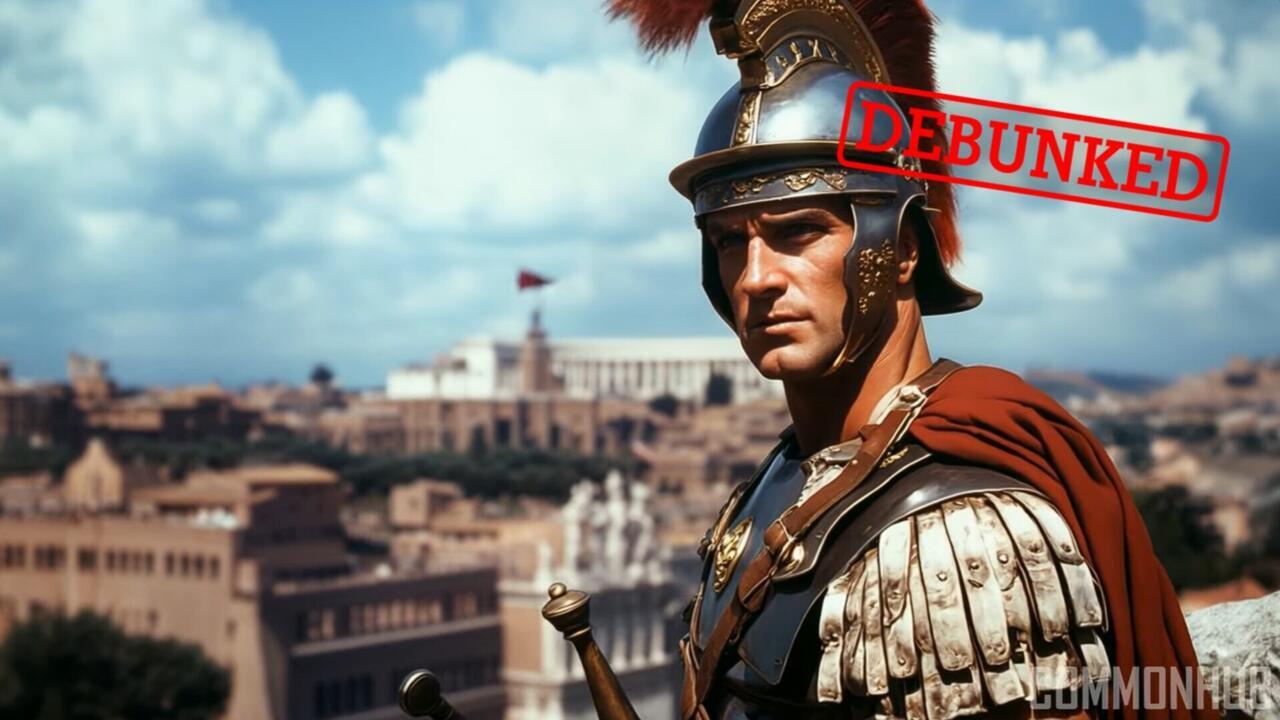
It turns out that the "Ancient Rome” video is far from an accurate reconstruction; it actually contains some major errors. At 0'47, for example, you can see a Roman soldier standing in front of what is meant to be a backdrop of ancient Rome.
"A Journey Through Time with Artificial Intelligence,” reads the caption on a video posted on YouTube on November 9, 2024. The video, called "Ancient Rome | AI generated video", promises viewers "a dive into the fascinating world of the Roman Empire". The author further claims that AI can help transform our understanding of the past by uncovering “incredible details about Roman society, architecture, warfare and daily life".
In recent months, there have been an increasing number of AI-generated videos and images posted online that purport to offer historically accurate glimpses into the past, especially of the Roman Empire. However, while they may appear spectacular, these reconstructions don’t correspond to historical reality.
Our team spoke to Sarah Kourdy, a professor in Art History and Archaeology at the University of Bordeaux Montaigne, who specialises in ancient Greek and Roman culture. She demonstrated to us just how inaccurate some of these images are.
An ancient Roman landscape, complete with a 20th-century building
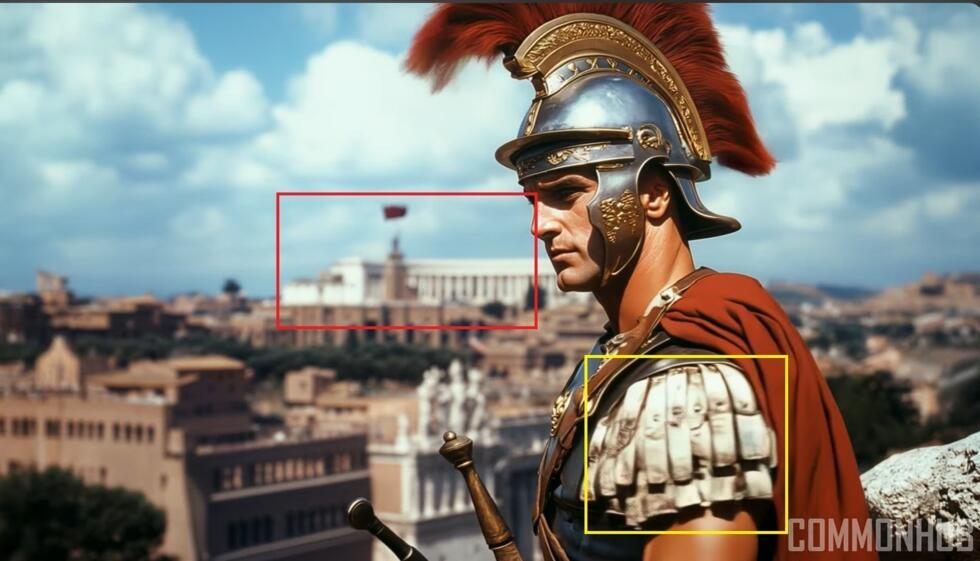
It turns out that the "Ancient Rome” video is far from an accurate reconstruction; it actually contains some major errors. At 0'47, for example, you can see a Roman soldier standing in front of what is meant to be a backdrop of ancient Rome.
There is a 20th-century building in this scene meant to show ancient Rome in the YouTube video "Ancient Rome". © YouTube
However, one of the buildings in the image is from another era entirely.
"The building in the background looks a lot like the monument to Victor Emmanuel II, [Editor’s note: built in 1911 to honour the first king of a united Italy], which is clearly anachronous.”
The soldier is wearing what’s called a lorica segmentata, a jointed breastplate worn by Roman legionnaires. However, Kourdy says that there are also issues with this uniform:
"The metal bands are too thin and are arranged vertically. Usually, they are of a decreasing size and arranged parallel and horizontally to better protect the soldier.”
However, one of the buildings in the image is from another era entirely.
"The building in the background looks a lot like the monument to Victor Emmanuel II, [Editor’s note: built in 1911 to honour the first king of a united Italy], which is clearly anachronous.”
The soldier is wearing what’s called a lorica segmentata, a jointed breastplate worn by Roman legionnaires. However, Kourdy says that there are also issues with this uniform:
"The metal bands are too thin and are arranged vertically. Usually, they are of a decreasing size and arranged parallel and horizontally to better protect the soldier.”
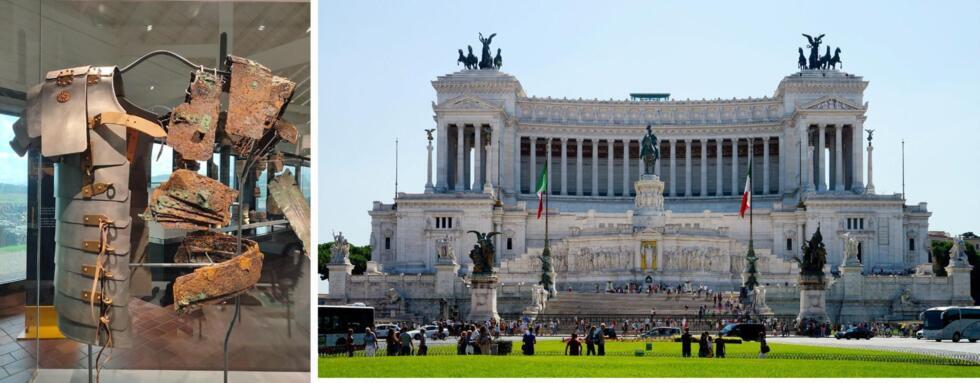
At left is a lorica segmentata, where you can see that the metal bands are horizontally placed. At right is the monument honouring Victor Emmanuel II, which was inaugurated in 1911. Corbridge Museum; Wikipedia / Alvesgaspar
The hippodrome with erroneous architecture
There is also a chariot race in the YouTube video: a scene firmly planted in our imaginings of the Roman Empire since the film Ben-Hur. The race, in this case, seems to take place in Circus Maximus, the biggest hippodrome in the eternal city.
The hippodrome with erroneous architecture
There is also a chariot race in the YouTube video: a scene firmly planted in our imaginings of the Roman Empire since the film Ben-Hur. The race, in this case, seems to take place in Circus Maximus, the biggest hippodrome in the eternal city.
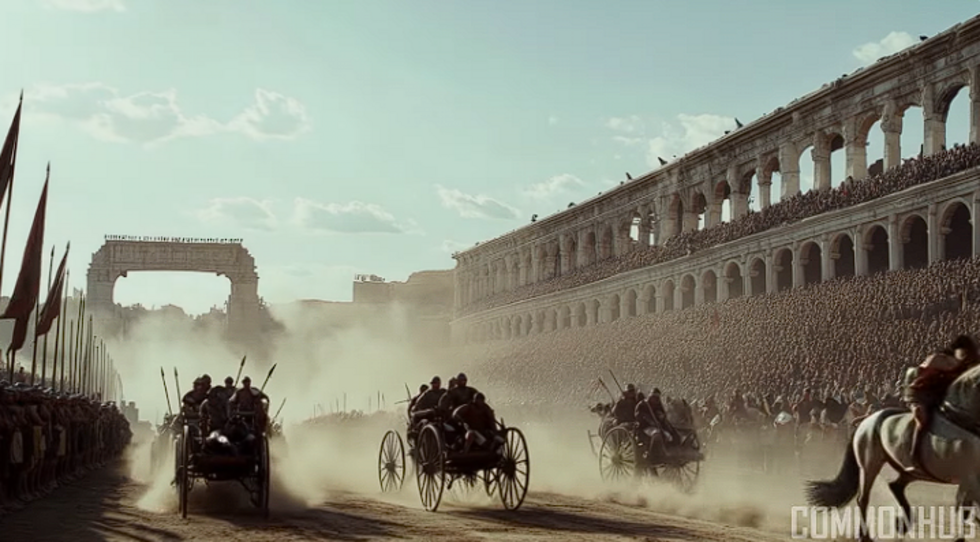
This pretend chariot race features in the AI-generated “Ancient Rome” video posted on YouTube. The video has a number of errors. © YouTube
However, once again, the architecture doesn’t correspond with the historical reality, Kourdy says:
"The tiers seem particularly high and weren’t topped with a double row of arches. While the image is undoubtedly based on Circus Maximus, the largest edifice of its kind in Rome, the architecture in the background looks like an aqueduct. Moreover, real Roman chariots had two wheels while, in this image, they have four.”
However, once again, the architecture doesn’t correspond with the historical reality, Kourdy says:
"The tiers seem particularly high and weren’t topped with a double row of arches. While the image is undoubtedly based on Circus Maximus, the largest edifice of its kind in Rome, the architecture in the background looks like an aqueduct. Moreover, real Roman chariots had two wheels while, in this image, they have four.”
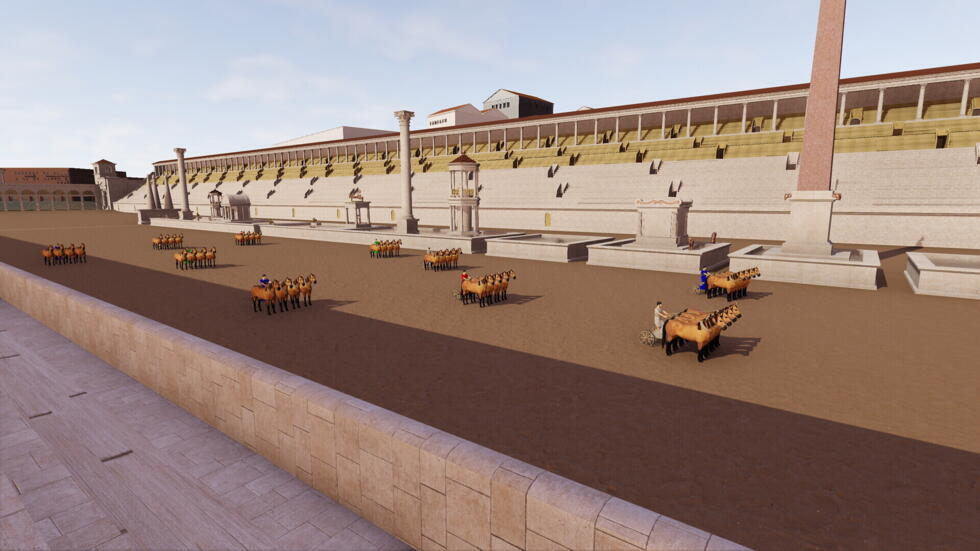
A scientific reconstruction of the Circus Maximus created by the University of Caen. © Authors: Archéovision - 3D modelling: Archéovision - Interactivity: Plan de Rome, 2013.
Baroque touches to the Baths of Caracalla
An image said to represent the Baths of Caracalla has garnered 592,000 views on X. It was also shared on a number of Facebook groups dedicated to ancient history. These baths, which were some of the most luxurious and grand in the history of the Roman Empire, were constructed by the Emperor Caracalla in 216 AD. The image shows what seems to be the natatio – or swimming pool – set beneath a decadently ornate ceiling of white marble and gold.
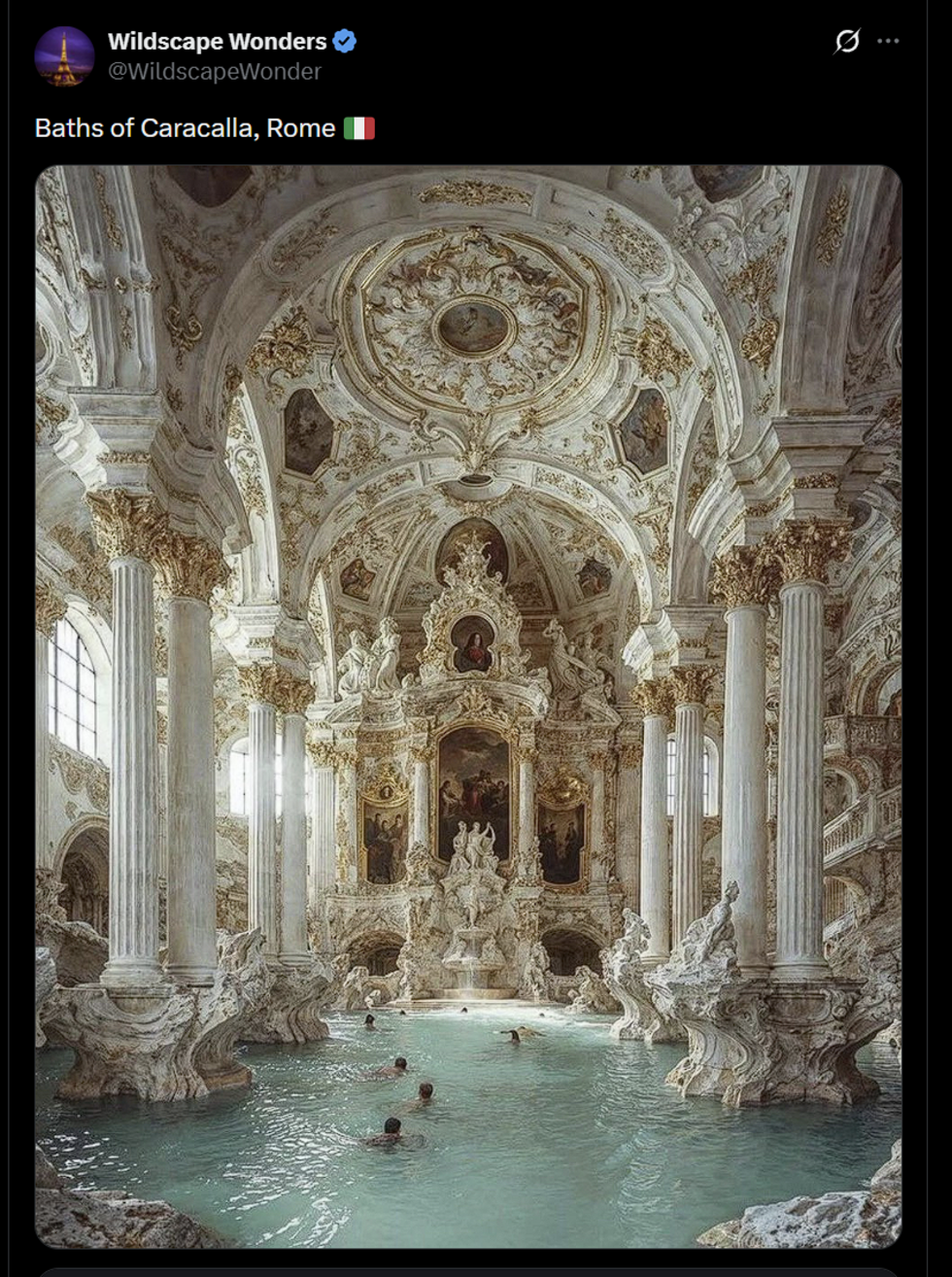
This AI-generated image of the Baths of Caracalla, shared online on November 19, 2025, is completely historically inaccurate. © X
Kourdy says that this image of the Baths of Caracalla is also historically inaccurate.
First, the AI-generated image depicts the Roman baths in a Baroque style. The baroque artistic movement didn’t begin until the 16th century.
Moreover, the baths weren’t made out of white marble but “out of bricks held together by a mortar similar to cement". The historian also added that the baths were, of course, “humid” spaces, and the gilding that appears abundantly in the illustration wouldn’t be compatible with this kind of atmosphere. Only salons and libraries – rooms dedicated to rest, reading or gatherings – would have been decorated this luxuriously.
Finally, the image simply doesn’t match the real dimensions of the baths:
"The archaeological digs at the Baths of Caracalla have revealed that the imperial baths did have imposing dimensions. But the image created by artificial intelligence goes beyond that: depicting an immense swimming pool filled with giant columns whose bases sit in the water, which just wasn’t the case."
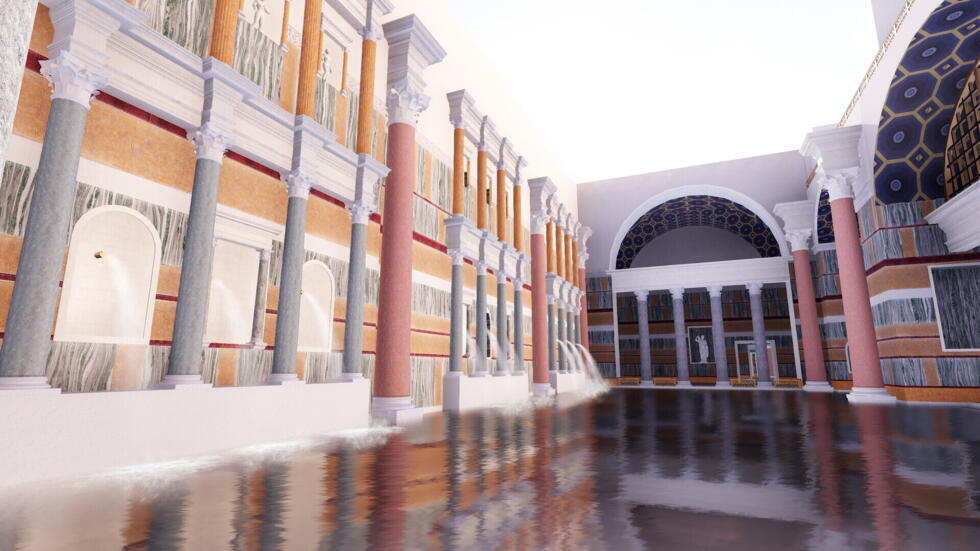
Kourdy says that this image of the Baths of Caracalla is also historically inaccurate.
First, the AI-generated image depicts the Roman baths in a Baroque style. The baroque artistic movement didn’t begin until the 16th century.
Moreover, the baths weren’t made out of white marble but “out of bricks held together by a mortar similar to cement". The historian also added that the baths were, of course, “humid” spaces, and the gilding that appears abundantly in the illustration wouldn’t be compatible with this kind of atmosphere. Only salons and libraries – rooms dedicated to rest, reading or gatherings – would have been decorated this luxuriously.
Finally, the image simply doesn’t match the real dimensions of the baths:
"The archaeological digs at the Baths of Caracalla have revealed that the imperial baths did have imposing dimensions. But the image created by artificial intelligence goes beyond that: depicting an immense swimming pool filled with giant columns whose bases sit in the water, which just wasn’t the case."
This is an exact scientific reconstitution of the Baths of Caracalla created by the University of Caen. © Authors: Ph. Fleury, S. Madeleine, M. Bizet - Infographics: N. Lefèvre, C. Morineau, A. Tillier, R. Rolland, A. Gillet, S. Maréchal, 2013.
In summary, Kourdy laments the historical inaccuracies in these AI-generated images:
"Anachronism, accuracy and misleading proportions are the main themes in these AI-generated images.”
This article has been translated from the original in French by Brenna Daldorph.
In summary, Kourdy laments the historical inaccuracies in these AI-generated images:
"Anachronism, accuracy and misleading proportions are the main themes in these AI-generated images.”
This article has been translated from the original in French by Brenna Daldorph.

No comments:
Post a Comment