WHITES ONLY
.png)
US President Donald Trump on Tuesday added Burkina Faso, Laos, Mali, Niger, Sierra Leone, South Sudan, and Syria as well as Palestinian Authority passport holders to a full travel ban. The decision to include Syria, a country Trump has moved to rehabilitate internationally, came days after three US nationals were killed in an attack in the central town of Palmyra.
Issued on: 16/12/2025
By: FRANCE 24
President Donald Trump on Tuesday expanded a US travel ban by barring nationals of seven more countries including Syria, as well as Palestinian Authority passport holders, from entering the United States.
Trump, who has long campaigned to restrict immigration and has spoken in increasingly strident terms, moved to ban foreigners who "intend to threaten" Americans, the White House said.
He also wants to prevent foreigners in the United States who would "undermine or destabilize its culture, government, institutions or founding principles," a White House proclamation said.
Trump's move comes days after two US troops and a civilian were killed in Syria, which Trump has moved to rehabilitate internationally since the fall of longtime ruler Bashar al-Assad.
Syrian authorities said the perpetrator was a member of the security forces who was due to be dismissed for "extremist Islamist ideas."
The Trump administration had already informally barred travel from Palestinian Authority passport holders as it acts in solidarity with Israel against the recognition of a Palestinian state by other leading Western countries including France and Britain.
Other countries newly subjected to the full travel ban came from some of Africa's poorest countries – Burkina Faso, Mali, Niger, Sierra Leone and South Sudan – as well as Laos in southeast Asia.
In a series of new actions, the White House said that Trump was also imposing partial travel restrictions on citizens of other African countries including the most populous, Nigeria, as well as Black-majority Caribbean nations.
Ramping up anti-immigrant tone
Trump in recent weeks has used increasingly loaded languages in denouncing African-origin immigrants.
At a rally last week he said that the United States was only taking people from "shithole countries" and instead should seek immigrants from Norway and Sweden.
READ MORETrump ramps up hard-line rhetoric against immigrants from 'sh*thole' countries
He also recently described Somalis as "garbage" following a scandal in which Somali Americans allegedly bilked the government out of money for fictitious contracts in Minnesota.
READ MORETrump launches tirade against ‘garbage’ Somali immigrants in US
Trump had already banned the entry of Somalis. Other countries remaining on the full travel ban are Afghanistan, Chad, Democratic Republic of the Congo, Equatorial Guinea, Eritrea, Haiti, Iran, Libya, Myanmar, Sudan, and Yemen.
Trump last month made the ban even more sweeping against Afghans, severing a program that helped bring in Afghans who had fought alongside the United States against the Taliban, after an Afghan veteran who appeared to have post-traumatic stress shot two National Guards troops deployed by Trump in Washington.
The countries newly subject to partial restrictions, besides Nigeria, are Angola, Antigua and Barbuda, Benin, Dominica, Gabon, The Gambia, Ivory Coast, Malawi, Mauritania, Senegal, Tanzania, Tonga, Zambia and Zimbabwe.
Angola, Senegal and Zambia have all been prominent US partners in Africa, with former president Joe Biden hailing the three for their commitment to democracy.
In the proclamation, the White House alleged high crime rates from some countries on the blacklist and problems with routine record-keeping for passports.
The White House acknowledged "significant progress" by one initially targeted country, Turkmenistan.
The Central Asian country's nations will once again be able to secure US visas, but only as non-immigrants.
(FRANCE 24 with AFP)
US Congress ends Assad-era Syria sanctions, opening door to investment
The US Congress has voted to permanently repeal sweeping sanctions imposed on Syria under former leader Bashar al Assad, clearing the way for foreign investment and marking a significant shift in Washington’s policy towards the war-ravaged country following the rise of a new government.
Issued on: 18/12/2025
By: FRANCE 24
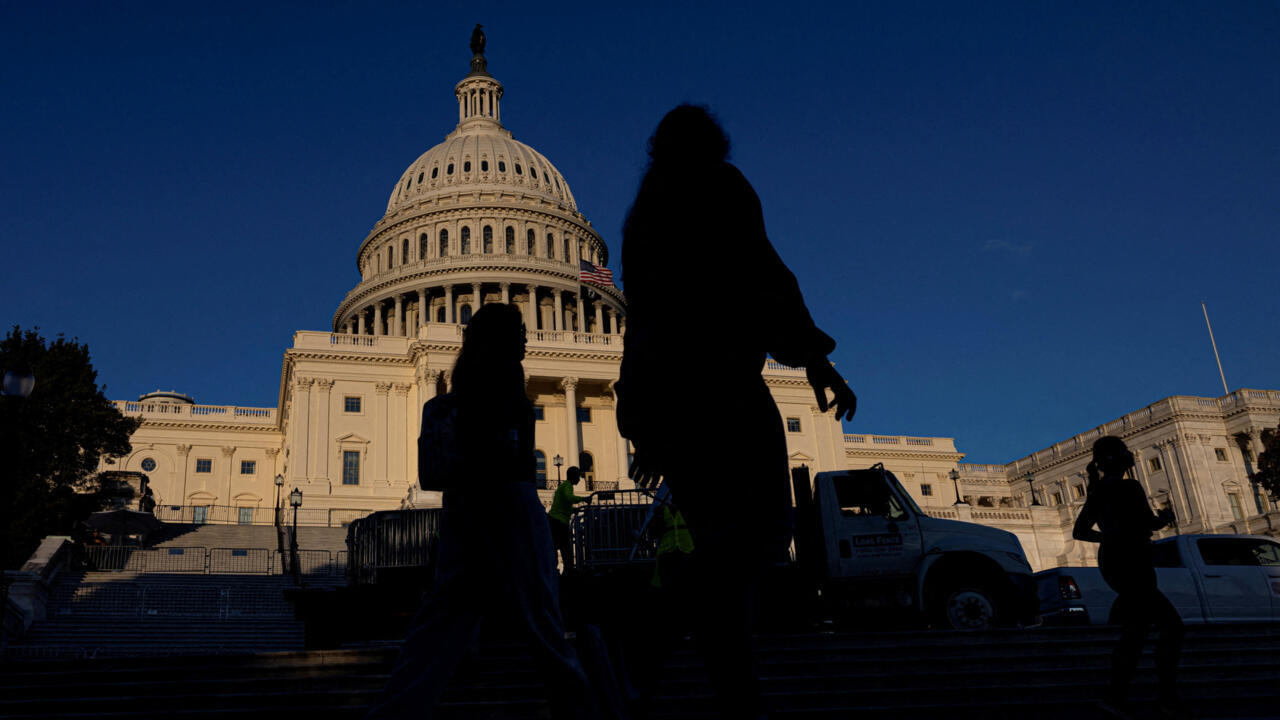
FILE PHOTO: A view of the U.S. Capitol in Washington. © Kevin Mohatt, Reuters
The US Congress on Wednesday permanently ended sanctions imposed on Syria under ousted leader Bashar al Assad, paving the way for the return of investment to the war-ravaged nation.
US President Donald Trump had already twice suspended the implementation of the sanctions in response to pleas from Saudi Arabia and Turkey, allies of the new government headed by former jihadist Ahmed al Sharaa.
However, Sharaa had sought a permanent end to the measures, fearing that as long as they remained on the books they would deter businesses wary of legal risks in the world’s largest economy.
The Senate passed the repeal of the 2019 Caesar Act as part of a sweeping annual defence package, voting 77 to 20 in favour of the legislation. The bill had already been approved by the House of Representatives and is expected to be signed by Trump.
The repeal, broadly backed by lawmakers from both parties, “is a decisive step towards giving the Syrian people a real chance to rebuild after decades of unimaginable suffering,” said Senator Jeanne Shaheen, the top Democrat on the Senate Foreign Relations Committee.
The Caesar Act, named after an anonymous photographer who documented atrocities in Assad’s prisons, severely restricted investment and cut Syria off from the international banking system.
The law was intended to prevent an influx of foreign businesses rebuilding Syria at a time when it appeared Assad had prevailed after more than a decade of brutal civil war. The conflict triggered a massive flow of refugees towards Europe and helped fuel the rise of the Islamic State extremist movement.
Sharaa’s fighters seized Damascus a year ago in a lightning offensive.
Sharaa – now dressed in a business suit and seeking improved relations with the West – has impressed Trump, including during their first meeting on the US leader’s May trip to Riyadh.
(FRANCE 24 with AFP)
The US Congress on Wednesday permanently ended sanctions imposed on Syria under ousted leader Bashar al Assad, paving the way for the return of investment to the war-ravaged nation.
US President Donald Trump had already twice suspended the implementation of the sanctions in response to pleas from Saudi Arabia and Turkey, allies of the new government headed by former jihadist Ahmed al Sharaa.
However, Sharaa had sought a permanent end to the measures, fearing that as long as they remained on the books they would deter businesses wary of legal risks in the world’s largest economy.
The Senate passed the repeal of the 2019 Caesar Act as part of a sweeping annual defence package, voting 77 to 20 in favour of the legislation. The bill had already been approved by the House of Representatives and is expected to be signed by Trump.
The repeal, broadly backed by lawmakers from both parties, “is a decisive step towards giving the Syrian people a real chance to rebuild after decades of unimaginable suffering,” said Senator Jeanne Shaheen, the top Democrat on the Senate Foreign Relations Committee.
The Caesar Act, named after an anonymous photographer who documented atrocities in Assad’s prisons, severely restricted investment and cut Syria off from the international banking system.
The law was intended to prevent an influx of foreign businesses rebuilding Syria at a time when it appeared Assad had prevailed after more than a decade of brutal civil war. The conflict triggered a massive flow of refugees towards Europe and helped fuel the rise of the Islamic State extremist movement.
Sharaa’s fighters seized Damascus a year ago in a lightning offensive.
Sharaa – now dressed in a business suit and seeking improved relations with the West – has impressed Trump, including during their first meeting on the US leader’s May trip to Riyadh.
(FRANCE 24 with AFP)

No comments:
Post a Comment