U.K. Sets Stage for a Nuclear Rebuild With Ambitious 2026 Expansion Plans
- The U.K. is advancing large-scale projects at Hinkley Point C and Sizewell C while selecting Rolls-Royce to deliver the first domestic SMRs.
- A sweeping regulatory overhaul and new planning rules aim to cut costs, accelerate siting, and improve investor confidence as the government targets 25 percent nuclear power by 2050.
- New partnerships with the United States and a forthcoming strategic plan position Britain to reenter the top tier of global nuclear developers.
The United Kingdom has big plans for its nuclear sector, with the construction of two conventional nuclear plants underway and plans to develop small modular reactor (SMR) technology. France’s EDF Energy is managing the development of the Hinkley Point C power plant in Somerset and Sizewell C in Suffolk, while Rolls-Royce was recently selected as the preferred bidder to construct the U.K.’s first SMRs. However, the plans do not stop there.
In December, the country’s Energy Secretary Ed Miliband stated the government has “only just begun when it comes to our ambitions for new nuclear in the U.K,” at the Nuclear Industry Association's Nuclear 2025 conference in London.“The work we are doing to drive forward Hinkley Point C, Sizewell C and our SMR programme will together bring more nuclear capacity onto the grid than in the last half century combined,” said Miliband. “When you think about the demands of electricity, there is so much more this industry can do.”
Miliband said the government will deliver on promises to develop SMRs and advanced modular reactors (AMRs) and will soon publish a framework on privately funded advanced nuclear projects. Great British Energy - Nuclear (GBE-N) will be in charge of assessing proposals. The government is also reforming planning rules to expand the areas in which new nuclear projects can be developed beyond the eight existing sites, which will expand the reach of SMRs and AMRs. GBE-N will conduct research between now and autumn 2026 to identify a suitable site for another large-scale nuclear plant to be developed, according to Miliband.
At the conference, GBE-N’s Chair, Simon Bowen, stated that developing more large-scale nuclear capacity is “a critical part of the mix. And the identification of which sites could be used is a really important piece of work.” Bowen added, “Of course, we’ve got an established technology at Hinkley and Sizewell, and that must be a very credible frontrunner or a credible technology for us to continue to develop, but we have to market-test that to see whether or not there are better value-for-money options for the taxpayer, and that is a natural thing for us to do.”
Miliband emphasised that the GBE-N assessment will align with the Strategic Spatial Energy Plan, which will also be published next year to inform the U.K.’s future nuclear building programme to 2030 and beyond.
The Nuclear Regulatory Taskforce recently published recommendations on the U.K.’s nuclear power development. The Taskforce called for urgent reforms, saying there were “systemic failures” in the U.K.’s nuclear framework. It said that fragmented regulation, flawed legislation, and weak incentives had led the country to fall behind as a nuclear powerhouse. The government is expected to produce a full implementation plan within three months, to be supported by new, streamlined regulations.
Developing a new nuclear fleet is no easy feat. Despite being the birthplace of commercial nuclear power, the U.K. now produces just 15 percent of its electricity from about 6.5 GW of nuclear capacity at present, compared to neighbouring France, which produces around 65 percent of its electricity from nuclear power. However, the government now aims for nuclear energy to contribute a quarter of the U.K.’s power by 2050.
Despite the significant progress in the development of the U.K.’s nuclear energy industry, several challenges stand in the way of the country’s nuclear renaissance. The Nuclear Regulatory Taskforce found that the U.K. had become the “most expensive place in the world” to construct nuclear power plants, citing “overly complex” bureaucracy as a major hurdle. It suggested that an overhaul of the country’s nuclear regulations could save it “tens of billions” in costs.
The U.K. is looking outwards to improve its chances for an accelerated deployment of nuclear power. In September, the U.K. and the United States signed an agreement to develop their nuclear power capabilities in the areas of advanced nuclear reactors, advanced nuclear fuels, and fusion energy, to ensure that the two countries remain at the forefront of fission and fusion innovation, according to the White House.
As part of the deal, the U.K. government increased access to the market for both U.K. and U.S. companies, which led to the announcement of several commercial deals. Prime Minister Kier Starmer said,” These major commitments set us well on course to a golden age of nuclear that will drive down household bills in the long run, while delivering thousands of good jobs in the short term.”
The U.K. is well on its way to reestablishing itself as a major global nuclear energy power, following years of underinvestment in the sector. New large- and small-scale projects will be supported by favourable policies, streamlined regulations, and greater public funding, which are expected to drive private investment in the sector. Meanwhile, agreements with foreign nuclear powers could help the U.K. advance the development of innovative new technologies.
By Felicity Bradstock for Oilprice.com
Historic Bill Opens India's $214 Billion Nuclear Sector to Private Firms
India’s government on Friday approved the landmark Atomic Energy Bill, which would allow private companies to invest in its nuclear energy industry for the first time, as the country looks to boost its nuclear power capacity tenfold within two decades.
The so-called SHANTI (Sustainable Harnessing of Advancement of Nuclear Energy for Transforming India) bill passed the federal government approval on Friday. Later this month, the bill is expected to be submitted to Parliament for discussion and vote in the winter session.
The landmark legislation, if adopted by Parliament, could drive huge investments from private companies in India’s nuclear energy sector.
Earlier this year, a panel set up by India’s power ministry said in a report that India’s goal to boost its installed nuclear power capacity to 100 gigawatts (GW) by 2047, up from just 8.8 GW now, would require as much as 19.28 trillion Indian rupees, or $214 billion at current exchange rates, of cumulative capital.
“With the country’s proven research, engineering and execution capabilities, the goal is achievable,” the panel said but noted several challenges, top of which was the current lack of private capital participation.
The Atomic Energy Act, 1962 currently does not allow participation of private sector or even state governments.
“Substantial technical and financial resources will be required for accelerated deployment of 100 GW of nuclear capacity by 2047,” the panel said.
“The private sector has abundant capital, and inherent efficiency in timely construction and innovation adaption.”
India has been considering various steps to open the sector to private firms.
The government is considering allowing foreign companies to own up to a 49% stake in Indian nuclear power plants.
India’s government could also accelerate the construction of nuclear power plants by attracting foreign firms if it changes the liability laws. India plans to remove an unlimited liability clause in its nuclear energy laws in a bid to attract foreign firms to the sector.
By Charles Kennedy for Oilprice.com
Flamanville EPR given permission to reach full power

This is the latest stage of commissioning the 1650 MWe (gross) pressurised water reactor. The Autorité de Sûreté Nucléaire et de Radioprotection (ASNR) authorised the start of commissioning in May last year. That authorisation was followed by fuel loading, with the start-up process beginning in September 2024.
Starting up a nuclear reactor takes place over several months. Gradually, the circuits are brought up to temperature and pressure, power tests are carried out, and then the production unit is connected to the electrical grid - which happened with Flamanville 3 in December 2024.
The power is then increased in a series of stages, with numerous tests carried out at each level before the unit is cleared to move to the next stage. In January this year the French regulator gave permission for the reactor to go beyond 25% of its capacity, with tests and checks carried out through the year.
ASNR said: "During this phase, the physical testing of the core continued at different power levels and were supplemented by tests such as islanding (isolation from the electricity grid while maintaining energy production for the plant's own needs) or manual shutdown of the reactor.
"The ASNR carried out several inspections of the reactor from the 25% power level. It also analysed the significant events declared by EDF and checked the corrective actions implemented. The ASNR has not identified any element that could call into question the possibility of continuing to ramp up the reactor beyond 80% of its nominal power.
"ASNR will continue to monitor the subsequent stages of the reactor ramp-up until the end of the start-up tests."
It said its new approval "allows EDF to continue ramping up the reactor until it reaches its nominal power, and then to complete the start-up test programme".
Construction work began in December 2007 on the third unit at the Flamanville site in Normandy in northern France - where two reactors have been operating since 1986 and 1987. The dome of the reactor building was put in place in July 2013 and the reactor vessel was installed in January 2014. The reactor was originally expected to start commercial operation in 2013 but has faced a series of delays.
The first EPR units came online at Taishan in China, where unit 1 became the first EPR to enter commercial operation in 2018 followed by Taishan 2 in September 2019. In Europe, Olkiluoto 3 in Finland entered commercial operation in 2023, and two units are currently under construction at Hinkley Point C in the UK.
State of New York invests in nuclear workforce development
_85489.jpg)
The New York Power Authority (NYPA) funding, which has been approved by the authority's trustees, will "directly support" Hochul's call to develop and construct advanced nuclear capacity, the governor's office said. The authority will partner with qualified workforce development providers, including technical high schools, community colleges, universities, labour unions, and others to use the funding to develop nuclear energy technical training, retraining, coursework and apprenticeship programmes to prepare workers for employment in the advanced nuclear energy field.
"New York is leading the clean energy revolution, and NYPA is powering that progress with bold investments in workforce development," said Hochul. "By investing in the advanced nuclear workforce and expanding access to affordable, hands-on training in AI and advanced energy systems, we're preparing New Yorkers for the high-quality, high-demand jobs of tomorrow - and ensuring every community can share in the benefits of a cleaner, more equitable energy future."
Hochul's direction to NYPA - the state's public electric utility - to develop at least 1 GWe of advanced nuclear capacity in Upstate New York was issued in June, and builds on her State of the State address, delivered in January, in which she outlined plans to develop a Master Plan for Responsible Advanced Nuclear Development in New York as part of a USD1 billion proposal to achieve a more sustainable and affordable future for the state. The NYPA issued its first two solicitations in relation to the initiative in November.
In addition to the USD40 million, the NYPA Board has awarded USD4 million to universities and organisations to develop and expand programmes that prepare New Yorkers for high-demand careers in artificial intelligence, electromechanical trades, and advanced power systems to meet the evolving needs of the renewable energy sector.
"New York's clean-energy transition only works if it comes with real career opportunities for the people who live in our communities," NYPA President and CEO Justin Driscoll said. The authority already invests up to USD25 million annually for clean energy training to support the renewable energy sector: under 2023-24 budget legislation, NYPA is also directed to advance renewable energy projects as part of a portfolio of diversified energy resources.
Three nuclear power plants - all in Upstate New York, and all operated by Constellation Energy - currently provide some 21.4% of the state's electricity, and 41.6% of its carbon-free electricity, according to information from the Nuclear Energy Institute. The state has already supported the continued operation of the two-unit plant at Nine Mile Point and the single-unit Ginna and Fitzpatrick plants by explicitly recognising the zero-carbon contribution of the plants in its 2016 Clean Energy Standard as critical in enabling it to meet its climate change targets.
Norway asks 22 municipalities about hosting nuclear waste facilities
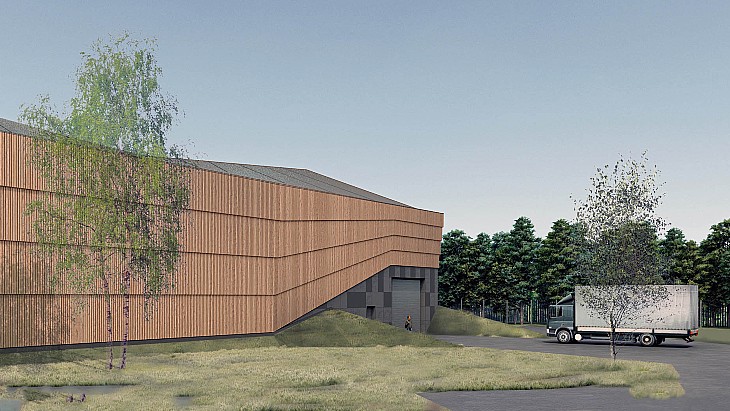
The country has not had nuclear power plants but has operated research reactors in the past - the nuclear fuel and materials testing reactor at Halden and the JEEP-II neutron scattering facility at Kjeller were declared permanently shut down in June 2018 and April 2019, respectively.
Norwegian Nuclear Decommissioning (NND) stresses that "based on international experience, social acceptance and participation are important for successful localisation of nuclear waste facilities".
The letters sent to the municipalities are not to decide on a specific site yet, but to gauge their interest in participating in "further investigation, dialogue and any planning processes related to the location of facilities for Norwegian radioactive waste".
The areas invited - which were selected "after a comprehensive assessment based on 18 different criteria" are: Aremark, Aurskog-Høland, Eidsvoll, Enebakk, Fredrikstad, Frogn, Gran, Halden, Inner Østfold, Lillestrøm, Marker, Nes, Nesodden, Nordre Follo, Rakkestad, Sarpsborg, Stange, Sør-Odal, Ullensaker, Vestby, Våler, Ås.
Director of Communications at NND, Martin Andreasson, said: "If we do not receive signals that the municipality wishes to enter into a further process, we will assume that the municipality does not wish to be considered as a possible host municipality."
NND plans to build a range of different facilities: Storage for low- and intermediate-level radioactive waste; storage for used nuclear fuel; a treatment plant where waste can be sorted, processed and treated; and final disposal landfills, "including deep disposal for used fuel/high-level radioactive waste".
It says the location process will be "open, evidence-based and verifiable. The process shall ensure that alternative locations can be compared in a systematic manner". Examples of criteria to be used include "geology, natural hazards, land use and biodiversity, transportation and energy access, socio-economic consequences, how quickly the solution can be realised, and more".
Background
Although Norway does not currently operate any nuclear power plants, in June 2024 the government appointed a committee to conduct a broad review and assessment of various aspects of a possible future establishment of nuclear power in the country. It must deliver its report by 1 April 2026.
Last month the Norwegian Environment Agency said it was sending a proposal for a study programme for a nuclear power plant in Aure and Heim municipalities for consultation to neighbouring countries.
In May US-based engineering company Amentum and its joint venture partner Multiconsult Norge AS were selected selected by NND to deliver safety case management and training for Norway's nuclear clean-up programme.
This contract is focused on delivering a new methodology for robust and well-documented safety cases for new design and existing legacy nuclear facilities, including reactors in shut down conditions, post-operational clean-out and decommissioning, as well as facilities for storage and management of used fuel and radioactive waste. It covers work at KLDRA - a combined storage and disposal facility for low and intermediate-level radioactive waste in Himdalen in Aurskog/Høland - and the two research reactor sites.
WIPP contract extension for Bechtel
_84084.jpg)
The Bechtel-led Salado Isolation Mining Contractors (SIMCO) has managed the USA's deep geologic repository for defence-related transuranic (TRU) waste since 2022, delivering major infrastructure upgrades and ensuring uninterrupted waste processing. The site has surpassed its waste-shipment targets every year since the start of the contract, reaching its 1,000th shipment earlier this year, Bechtel said.
Mark Bollinger, manager of the Department of Energy (DOE) Carlsbad Field Office, said SIMCO has been an "exceptional partner, safely emplacing waste from across the nation while completing critical infrastructure projects ahead of schedule and under budget, all without disrupting WIPP’s (Waste Isolation Pilot Plant's) mission or compromising safety".
"Bechtel's close partnership with DOE, our strong safety culture, and delivery focus has enabled us to lay the groundwork for safe, compliant and effective operations at WIPP for decades to come," said Ben Souther, Bechtel's General Manager of Environmental and Security.
TRU waste includes clothing, tools, rags, residues, debris, soil and other items contaminated with small amounts of plutonium and other man-made radioactive elements from the US military programme. The WIPP repository is a network of underground disposal rooms carved from an ancient salt formation: over time, the salt naturally encapsulates the waste emplaced in disposal rooms, isolating it from the environment for thousands of years.
The repository has been in operation since 1999 - but Bechtel's involvement with the project goes back even further, as part of the team that designed, engineered, and constructed he Waste Isolation Pilot Plant.
More recent milestones for the company have included capital infrastructure projects such as delivery - ahead of time and under budget - of the Underground Ventilation System, the largest containment ventilation system in the DOE complex; completion of construction and start of operations for the new utility shaft; and completion of a USD15 million refurbishment of the salt pocket and salt hoist, the sole channel for transporting mined salt to the surface, which will enable underground mining activities to continue for Panel 11, the next waste emplacement panel.
Podcast: What happened with nuclear energy at COP30?
Also in this episode - you can listen using the link above - Thomas Lamb from Myriad Uranium talks about the Copper Mountain project, the general outlook for future uranium demand and supply, and the potential benefits of artificial intelligence.
Here's an edited transcript of Jonathan Cobb's COP30 interview:
What was agreed at COP30 - and what wasn't?
The new text calls for efforts to triple adaptation finance. This has been a focus of COPs in recent years, where countries are focusing on receiving finance to adapt to the impacts of climate change, rather than actually taking action to mitigate climate change. But even on this, there's been some stepping back. In the new agreement, deadlines have been pushed back from 2030 to 2035. One of the major absences in the presidency agreement was any statement on fossil fuels. A large group of countries had pushed very forcefully for there to be some text on pushing forward the agenda on fossil fuels, on phasing down, reducing, the amount of fossil fuels used. This has been a sticking point for COPs for some time. This was a COP held in the Amazon and while a fund for future forests was announced early on in the COP process, this was a voluntary measure and it didn't attract all the funding that it might have. There was also controversy over the final process of gavelling through the many sub-agreements that had been negotiated over the two weeks. All that said, there was an overall positive attitude, defending and celebrating the Paris Agreement. This is an agreement that's now 10 years old which aims to keep the global increase in temperatures well below 2 degrees Celsius. At the same time, many countries were late in their submissions of nationally determined contribution documents, NDCs, which set out national policies aimed at tackling climate change. Overall, I think there is a question of how much more COPs can agree in the current format, and seeing how that's going to work going forward will be one of the main questions for the COP process.
What did the COP talks have to say about nuclear energy?
With the focus on adaptation and greater efforts on protecting forests, and the failure to get any substantive texts on roadmaps away from fossil fuels, there was little in the decision documents themselves emerging from COP30 that had much impact on energy, let alone nuclear energy in particular. But to an extent, nuclear energy is now embedded into the COP process, following its inclusion in the Global Stocktake Outcome document that was agreed at COP28. That document did recognise the need for deep, rapid and sustained reductions in greenhouse gas emissions, and critically, it acknowledged nuclear energy as one of the technologies that countries could accelerate to achieve that goal. That decision was recognised in a number of the nationally determined contribution submissions.
How significant are nationally determined contributions - NDCs?
These are submissions made by governments setting out how they plan to take action, in this case through to 2035, to tackle climate change so that their national policies and ambitions are in line with the goals set in the Paris Agreement. While the proposals within the NDCs submitted for COP30 would reduce greenhouse gas emissions, they wouldn't be sufficient to achieve the Paris Agreement goals, so further action is necessary. It's estimated that the actions that have been proposed would help limit temperatures to a rise of around 2.6 degrees Celsius instead of that 2 degree or 1.5 degree target set out in the Paris Agreements. Overall, despite the fact that a third of countries have yet to submit their latest NDCs, the number of submissions including nuclear as part of their plans has increased in this NDC cycle, with 12 individual nations and the collective NDC of the European Union - representing 27 nations - making positive reference to nuclear energy. And we can expect that number to grow when countries that have previously supported nuclear but have yet to make their submissions, for example India, do make their final submissions.
What else was achieved at COP 30 for nuclear?
One very welcome development was that both Rwanda and Senegal announced that they were joining the declaration to triple nuclear capacity, bringing the number of nations endorsing the goal of at least a global tripling of nuclear energy by 2050 to 33. The joining of the two countries was announced at a joint World Nuclear Association-UK government event at the UK's own National Pavilion. Rwanda and Senegal joining is important, not just to build the tripling declaration coalition itself, but also to strengthen the coalition of countries at COP when energy issues are being discussed, to ensure that nuclear-supporting countries are present in all the different regional groups debating climate action. We also saw two new financial institutions, Stifel and CIBC, sign up to the financial statement of support. And Equinix, Fermi America and Circularity joined the large energy users pledge. On top of that, Kazatomprom, which is the world's largest uranium producer, and Nuclearia Energy signed up to the nuclear industry tripling pledge. World Nuclear Association had its own pavilion at COP, representing the global nuclear industry. We held events there, as well as engaging with the many delegates that visited the pavilion. But we also participated in a number of events at the International Atomic Energy Agency's pavilion, as well as events at the Nuclear for Climate and the International Youth Nuclear Congress stands. And as we mentioned, we had a special event at the UK pavilion, as well as holding our own side events.
How did COP30 feel compared with COP29 and COP28?
A lot depends on where we are in the COP process. So governments are at the stage of proposing their NDCs and there's now a process over a couple of years of assessing them, and then there will be a similar global stocktake to that which took place at COP28 in Dubai. And that will be of particular interest to us because that global stocktake was where nuclear was first mentioned in an official UNFCCC document in a positive way. But more generally, it will be making an assessment, a more detailed assessment of the strength of the NDCs that have been proposed and what more needs to be done. I think also that something which changed the tone of the event was the fact that the high-level segment at the very beginning, where prime ministers and other senior members of government attend the COP, was shifted to the week before. So there was much coverage of visits by prime ministers, but also the Prince of Wales was presenting events at Sao Paulo and there were events taking place in Rio de Janeiro. To an extent, that took some of the focus off the COP itself, because previously what's happened at COPs is that that high-level segment forms part of the first three days of the COP. And with that additional high-level representation, it brings more media focus to what's taking place at the COP itself. It'll be interesting to see whether, going ahead towards COP31, they decide to keep that model or whether that high-level segment is brought back into the main body of the COP negotiations itself.
What can we look forward to at next year's COP?
COP31 is going to be held in Turkey, a really interesting location for nuclear energy, with Turkey's first nuclear reactor nearing completion and plans in place to expand nuclear generation capacity further. So when we arrive in Turkey, I think there's going to be a lot to focus on in terms of the role of nuclear energy in new nuclear countries, like Turkey, and how it can also play a role elsewhere. As for the negotiations overall, I think there's a lot of pressure building for the COP meetings to demonstrate that they can make tangible process, not just on adapting to the impacts of climate change, but also returning to the fundamentals of accelerating progress on reducing greenhouse gas emissions themselves.
Is there a particular deadline for NDCs or is it a moveable feast?
It certainly has been a moveable feast in terms of submitting the NDC documents. They were actually meant to be submitted much earlier this year, so the UNFCCC Secretariat would have time to assess them and come out with a fuller and comprehensive assessment of what kind of impact on climate change the proposed NDCs would have. They've had to make a partial assessment based on only around two-thirds of the NDCs being submitted. So all those countries yet to submit NDCs have got to do so. And then that will then lead into the process, culminating at COP33 to be held in 2028, where those NDCs will be assessed and the global stocktake document will be agreed, the second global stocktake, setting out agreed actions that should be taken to address climate change.
Do we know where COP33 is going to be held?
We know it's going to be held somewhere in the Southeast Asia region - the COPs move around from region to region. I think it's a good thing they do as it gives them different perspectives, different focuses of different regions. India has indicated that they would like to host the COP. That's not confirmed yet, but that is an initial offer. Another interesting location will be the one that has been agreed already for COP32, which is to be held in Addis Ababa in Ethiopia. And that's the first time that a least developed country, as termed by the COP process, will have been the host of a COP.
Key links to find out more:
World Nuclear News Podcast
COP30
Myriad Uranium
Email newsletter:
Sign up to the World Nuclear News daily or weekly news round-ups
Contact info:
alex.hunt@world-nuclear.org
Episode credit: Presenter Alex Hunt. Co-produced and mixed by Pixelkisser Production
Cover Picture Credit: COP30
GE Vernova Hitachi SMR design clears key UK regulatory stage
_18570.jpg)
Generic Design Assessment (GDA) is a process carried out by the Office for Nuclear Regulation (ONR), the Environment Agency and Natural Resources Wales to assess the safety, security, and environmental protection aspects of a nuclear power plant design that is intended to be deployed in Great Britain. The GDA process is a voluntary, non-mandatory process. Successful completion of the three-step GDA culminates in the issue of a Design Acceptance Confirmation from the ONR and a Statement of Design Acceptability from the Environment Agency. In May 2021, the UK's Department for Business, Energy and Industrial Strategy opened the GDA process to advanced nuclear technologies, including small modular reactors (SMRs).
GE Vernova Hitachi submitted a GDA entry application for its BWRX-300 SMR to the UK Department for Business, Energy and Industrial Strategy in December 2022. The BWRX-300 is a 300 MWe water-cooled, natural circulation SMR with passive safety systems that leverages the design and licensing basis of GEH's ESBWR boiling water reactor.
Step 1 of the GDA of the BWRX-300 began in January 2024 and focused on agreeing the scope and schedule for Step 2. Step 1 was completed on 12 December 2024, when it then entered Step 2, which focused on evaluating the fundamental adequacy of the design and its safety, security, safeguards and environmental protection documentation. The regulators have now completed Step 2 of the GDA and issued their Step 2 statements and assessment reports on the GE Vernova Hitachi design.
There are currently no plans to deploy the GE Vernova Hitachi BWRX-300 design in Great Britain, and no sites have been identified for its deployment. Should an organisation decide to progress plans to deploy the BWRX-300 design, the regulators would need to undertake a further period of detailed design assessment before safety-significant construction could begin and environmental permits could be issued. This assessment could be conducted on a generic basis with GE Vernova Hitachi, should the company choose to return to the GDA process to complete Step 3. Alternatively, it could be undertaken with a licensee or constructor as part of a site-specific development.
"GE Vernova Hitachi opted for a shorter two-step GDA, making it the first requesting party to take advantage of the flexibility we introduced in our modernised GDA process," said Rob Exley, ONR's Head of the BWRX-300 GDA. "This means it is the quickest GDA engagement completed to date, facilitated by GE Vernova Hitachi's responsiveness, the quality and maturity of its submissions, learning from previous GDAs, and our active collaboration with regulatory colleagues in the US and Canada who have been evaluating the BWRX-300 in parallel to our assessment."
Saffron Price-Finnerty, the Environment Agency's New Reactors Programme Manager, added: "The accelerated pace of this first two-Step GDA was enabled by the delivery of a complete set of documentation by GE Vernova Hitachi at the start of Step 2. This helped our assessment team to plan their work effectively and efficiently. Their assessments were targeted and proportionate in ensuring that there were no fundamental shortfalls in environmental protection. It has been a considerable effort from both the Requesting Party and regulators, resulting in a quality outcome in such a short timeframe. As the environmental regulator of nuclear sites and radioactive substances in England, the Environment Agency ensures that nuclear companies and the sites they operate meet high standards of environmental protection throughout the stages of design, construction, operation and decommissioning."
"Throughout Step 2 we have worked closely with the Environment Agency and Office for Nuclear Regulation towards the fundamental assessment of the GE Vernova Hitachi SMR, resulting in the successful delivery of this first two-step GDA," said Paul Gibson, Natural Resources Wales Nuclear Team Leader.
GDAs have previously been completed for the EDF/Areva UK EPR, the Westinghouse AP1000, the Hitachi-GE UK ABWR and the CGN/EDF/GNI UK HPR1000 designs. A GDA Step 3 assessment is currently ongoing for Rolls-Royce SMR Limited's small modular reactor design. In August 2024 a Step 2 assessment began for Holtec International's SMR-300. In August 2024, Westinghouse's AP300 was accepted for a GDA review. Last month, TerraPower submitted its Natrium sodium-cooled fast reactor and energy storage system into the GDA process in the company's first regulatory step to deploying the technology in an international market.
Report outlines economic benefits from US plant completion
_15316.jpg)
The report - The Economic Impact of a Two-Unit Westinghouse AP1000 Project at VC Summer - has been prepared for Westinghouse and its owners, Brookfield and Cameco, by PricewaterhouseCoopers LLP (PwC).
It estimates that completing the two-unit project would support an economic footprint in South Carolina of USD7.3 billion over the seven-year manufacturing, engineering and installation phase, and 51,400 person-years of employment over this period, equating, on average, to some 7,300 jobs. The installation would also have "significant impacts elsewhere in the United States", the report notes, adding an estimated USD13.8 billion to national GDP over seven years when direct, indirect and induced effects are taken into account.
Once completed, the 2,300 MWe of nuclear capacity from the two AP1000 units would be enough to power at least 1.5 million homes in South Carolina. In operation, the report estimates the plant would add USD1.6 billion per year to South Carolina's GDP and support 2,700 jobs annually, with the state-level economic impact supported by plans to manufacture nuclear fuel within South Carolina and to use its existing supply chain and shipping ports. Over an operating lifetime expected to last at least 80 years, the report estimates the plant would add a cumulative total of some USD130 billion to South Carolina's GDP.
Work on the VC Summer units was suspended in 2017, when its joint owners, Scana subsidiary South Carolina Electric & Gas Company (SCE&G) and Santee Cooper, decided to abandon the project when vendor Westinghouse filed for bankrupty. SCE&G (now Dominion Energy South Carolina) transferred its interest in the assets to Santee Cooper in 2018.
Earlier this year, Santee Cooper started looking for proposals from parties interested in acquiring and completing the two units, and in October, announced that it had selected Brookfield Asset Management for further negotiations.
"South Carolina is poised to become a national leader in the deployment of advanced new nuclear generation," Westinghouse Interim CEO Dan Sumner said. "This report highlights that the two AP1000 units at VC Summer would generate lasting economic benefits for the state, creating thousands of high-paying, highly skilled jobs while supporting the future expansion of South Carolina's industrial base."
There are currently six AP1000 reactors in operation around the world, including two units at the Vogtle plant in Georgia, which were at a similar stage of construction to Summer at the time the South Carolina project was abandoned. Vogtle's owners - Southern Company's Georgia Power, Oglethorpe Power, MEAG Power and Dalton Utilities - opted to continue with the project, which saw Vogtle 3 and 4 become the first new nuclear units to be constructed in the USA in more than 30 years, entering commercial operation in 2023 and 2024 respectively.

No comments:
Post a Comment