Tuesday 10 February 2026, by Jorge Costa
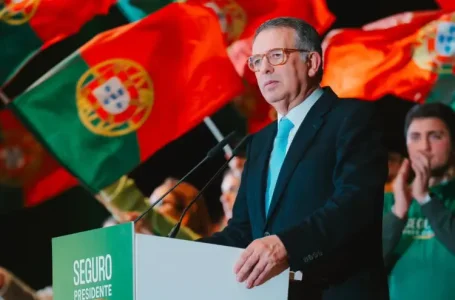
António José Seguro was elected President of the Republic of Portugal on Sunday 8 February with 67% of the vote, comfortably beating the neo-fascist candidate he faced in the second round, André Ventura (33%). [1]
Seguro led the Socialist Party between 2011 and 2014. During those years, outside of government, the PS collaborated in the implementation of the troika’s austerity programme. Despite this profile – which the press has called ‘moderate’ – Seguro was not officially supported by the right-wing Prime Minister, who preferred to remain neutral in the second round.
Despite Ventura’s defeat, the far right has emerged stronger from this election. After becoming the second largest national party in the May 2025 legislative elections, it has now managed to equal, in the second round, the number of votes obtained in May by the ruling parties, thanks to the votes of voters who had never voted for the Chega party and who had supported the presidential candidates of the government (PSD) and the Iniciativa Liberal party. According to exit polls, one in three voters who supported the ultra-liberal candidate in the first round (third with 16% of the vote) have now opted for Ventura. As the French experience shows, a government based on a right-wing programme is the best breeding ground for the electoral growth of neo-fascism. Despite the differences in politics and regime, it should be remembered that in 2017, facing Macron, Marine Le Pen finished the second round with 34% of the vote; in 2022, she has already reached 41%, preparing to contest the majority in 2027.
What does this victory mean?
Essentially, it is a significant mobilisation of the people who reject the neo-fascist proposal. It should be noted that the elections took place while Portugal was in a ‘state of calamity’, declared since early February, under devastating storms that killed a dozen people and left part of the country flooded and without essential supplies (electricity, water, telecommunications). Despite this, turnout remained stable between the first and second rounds.
As for the left, support for Seguro was not fuelled by political misunderstandings. The new president did not represent a ‘left-wing camp’: his political career has been marked by the adaptation of social democracy to neoliberalism and, in the middle of the campaign, after announcing his veto of the package of labour measures put forward by the government, the candidate washed his hands of the matter, delegating the enactment of the new law to a possible agreement between the government and the UGT trade union (aligned with the centre). Seguro does not even represent a supposed ‘constitutional camp’: Seguro himself failed when, as head of the PS and under the troika, he accepted an unconstitutional reduction in pensions and opposed left-wing MPs who took the matter to the Constitutional Court and had the reduction overturned. He has just been elected thanks to the votes of many supporters of a regressive revision of the Constitution, from the same right wing that concludes agreements with Chega in parliament (on labour and immigration) or in local authorities such as the capital. As in France, many of those who have now declared their tactical support for Seguro would have voted for Ventura if the alternative had been on the left.
Given Seguro’s track record, this will not be an obstacle to the government’s liberal reforms, which will make their way between the ambiguity of the socialists and the intermittent support of the neo-fascists. The response from the left will have to come from social resistance and dialogue that avoids political marginalisation. The general strike in December showed the way forward: more protagonism for struggles and extra-parliamentary action, more convergence in solidarity against fascism.
9 February 2026
Footnotes
[1] Photo António José Seguro, from campaign social media.
Portugal
New neofascist advance in presidential elections
Portugal ‘doesn’t need to wait for Europe’ to condemn attack on Venezuela
Big success for general strike in Portugal
The general strike demonstrates that struggle can open up paths for the left
Towards the General Strike in Portugal - Only the strength of those who work can halt the labour package
Jorge Costa is a member of the full-time leadership of the Bloco de Esquerda and of the Executive Bureau of the Fourth International. He is co-author of The Owners of Portugal - One hundred years of economic power (1910-2010) and The Bourgeoisie – who they are, how they live and how they rule (2014) with Francisco Louçã and João Teixeira Lopes.


No comments:
Post a Comment