Monday, February 27, 2023

Symbiotic fungi transform terpenes from spruce resin into attractants for bark beetles

When metabolizing spruce bark, the insect’s fungal partners release volatile compounds that bark beetles recognize through specialized olfactory sensory neurons

Peer-Reviewed Publication

MAX PLANCK INSTITUTE FOR CHEMICAL ECOLOGY

Young beetle surrounded by fungal spores 

IMAGE: EUROPEAN SPRUCE BARK BEETLE IPS TYPOGRAPHUS: THE NEWLY HATCHED YOUNG ADULT IS STILL IN THE SO-CALLED PUPAL CHAMBER AT THE END OF THE TUNNEL IT CREATED AS A LARVA. IT IS SURROUNDED BY SPORES OF A SYMBIOTIC FUNGUS. view more 

CREDIT: DINESHKUMAR KANDASAMY AND VEIT GRABE, MAX PLANCK INSTITUTE FOR CHEMICAL ECOLOGY

The mass outbreaks of bark beetles observed in recent years have caused shocking amounts of forest damage throughout Germany. As reported by the Federal Statistical Office in July 2022, more than 80% of the trees that had to be felled in the previous year were damaged by insects. The damaged timber felled due to insect damage amounted to more than 40 million cubic meters. One of the main pests is the European spruce beetle Ips typographus. In the Thuringian Forest and the Harz Mountains, for example, the beetle, which is only a few millimeters long, encountered spruce monocultures that had already been weakened by high temperatures and extended periods of drought, which facilitated the spread of the pest and led to the death of huge forest stands within a short period of time.

Researchers have already known that chemical communication plays an important role in bark beetle mass attacks. Beetles first choose a suitable tree and then emit so-called aggregation pheromones. These pheromones attract conspecifics in the vicinity to join a mass attack that overcomes the tree’s defenses. Spruce trees whose defenses are already weakened by stresses are more readily overcome.

Bark beetles like the odor of their symbiotic fungi

Spruce bark beetles need fungal allies to successfully reproduce in the trees. The fungi are ectosymbionts, symbiotic partners that live outside the beetles. Each new generation of beetles must find their symbiotic fungi and carry them to a new host tree.

In a new study, an international research team led by Dineshkumar Kandasamy (now at Lund University, Sweden) and Jonathan Gershenzon of the Max Planck Institute for Chemical Ecology in Jena, Germany, reports that the European spruce bark beetle can find its fungal partners based on the volatile chemical compounds the fungi release when they degrade spruce resin components. “We had already been able to show that bark beetles are attracted to their fungal associates when these are cultured on standard fungal growth medium. Now we wanted to know what would happen if we grew fungi on a more natural medium with spruce bark powder added. Would beetles be attracted to fungi now? If so, which chemical compounds would be responsible for the attraction and what is the origin of these chemicals?” says first author Dineshkumar Kandasamy, explaining the study's initial questions.

Fungi convert the chemical defenses of spruce into attractants for the beetles

European spruce bark beetles are associated with fungal partners of different genera. The fungus Grosmannia penicillata grew particularly well on the spruce bark medium and produced more volatile compounds than most of the other fungi tested. Therefore the researchers focused their investigations on this fungus. The researchers set up special experimental arenas where they could test whether the beetles were attracted to volatile compounds emitted by the fungi.

“We first found that European spruce bark beetles are attracted to the volatiles emitted by their associated fungi when fungi were growing on medium with spruce bark powder. However, we also showed that fungi can transform terpene compounds from spruce resin into their oxygenated derivatives and that some of these metabolites produced by fungi are particularly attractive to bark beetles. The overall conclusion is that these volatiles serve as chemical signals that keep the symbiosis between bark beetles and their associated fungi going," says Dineshkumar Kandasamy. 

The researchers found that pathogenic fungi, which are harmful to the beetles, can also metabolize spruce resin compounds. However, unlike the metabolites of the symbiotic fungi, the resulting derivatives are not attractive to bark beetles. Bark beetles can therefore use their sense of smell to distinguish whether the fungi present in the tree are good or bad for them. The scientists were particularly surprised when the behavioral observations revealed that fungal partners not only attracted the beetles but also stimulated them to tunnel. 

Bark beetles have olfactory sensory cells in their antennae tuned to detect volatile compounds of fungal metabolism

Further evidence that fungal metabolites make spruce trees already infested by fungi even more attractive to bark beetles was provided by electrophysiological studies of the beetles' perception of these odors. This involved testing the response of individual olfactory sensilla on the beetle antennae to different odors. The researchers were able to show that the bark beetles possess certain olfactory sensory neurons housed in sensilla that are specialized in detecting oxygenated monoterpenes emitted by the fungi.

“By enhancing bark beetle attraction to particular trees, volatiles from the fungus could increase the intensity and success of mass attacks. Fungi may help kill the host tree, overcome its defenses, provide beetles with nutrients or protect them from pathogens. The ability of the fungus to metabolize resin components that are originally produced by the tree as a defense could indicate which fungi are virulent and could serve as good partners for the beetle," says Jonathan Gershenzon. 

The results of this new study may help improve the control of bark beetle outbreaks. One of the most widely used strategy in the fight against these pests are pheromone traps, but these have not been effective in preventing recent outbreaks. Therefore, the researchers are now testing whether these odor traps can be optimized by adding oxygenated monoterpenes from fungal metabolism. An important goal for the research team is to learn more about the metabolism of the spruce resin compounds in the fungi and to find out whether this can be a detoxification reaction for the fungus or for the beetle.

Dineshkumar Kandasamy is currently supported by the Max Planck Center next Generation Insect Chemical Ecology research network, a Max Planck Society-funded collaboration of the Max Planck Institute for Chemical Ecology with Lund University and the Swedish University of Agricultural Sciences. The Max Planck Center aims to study the impact of anthropogenic global warming and air pollution on insect chemical communication. The focus is not only on pests, but also on pollinators and their ecosystem services, as well as insects that carry and transmit pathogens.

Influence of US weather conditions on tornado trends since 1980 explored by new model

Peer-Reviewed Publication

PLOS

Long term temporal trends in synoptic-scale weather conditions favoring significant tornado occurrence over the central United States 

IMAGE: A LONG-TRACK EF2 TORNADO PASSES THROUGH WESTERN SOUTH DAKOTA HORSE RANGELAND SOUTH OF FAITH ON MAY 24, 2010. THE VIRGINIA TECH HOKIE STORM CHASE TEAM FOLLOWED THE STORM FOR APPROXIMATELY 20 MILES. view more 

CREDIT: WILLIAM CHONG, CC-BY 4.0 (HTTPS://CREATIVECOMMONS.ORG/LICENSES/BY/4.0/)

Influence of US weather conditions on tornado trends since 1980 explored by new model

###

Article URL:  https://journals.plos.org/plosone/article?id=10.1371/journal.pone.0281312

Article Title: Long term temporal trends in synoptic-scale weather conditions favoring significant tornado occurrence over the central United States

Author Countries: USA

Funding: The authors received no specific funding for this work.

Voluntary UK initiatives to phase out toxic lead shot for pheasant hunting have had little impact

Peer-Reviewed Publication

UNIVERSITY OF CAMBRIDGE

Pheasant 

IMAGE: PHEASANT view more 

CREDIT: ANDY HAY, RSPB

Three years into a five-year pledge to completely phase out lead shot in UK game hunting, a Cambridge study finds that 94% of pheasants on sale for human consumption were killed using lead.

The pledge, made in 2020 by nine major UK game shooting and rural organisations, aims to protect the natural environment and ensure a safer supply of game meat for consumers. Lead is toxic even in very small concentrations, and discarded shot from hunting poisons and kills tens of thousands of the UK’s wild birds each year.

A Cambridge-led team of 17 volunteers bought whole pheasants from butchers, game dealers and supermarkets across the UK in 2022-23. They dissected the birds at home and recovered embedded shotgun pellets from 235 of the 356 pheasant carcasses.

The main metal present in each shotgun pellet was revealed through laboratory analysis - conducted at the Environmental Research Institute, University of the Highlands and Islands, UK. Lead was the main element in 94% of the recovered shot pellets; the remaining 6% were predominantly composed of steel or a metal called bismuth.

The results are published today in the Conservation Evidence Journal.

At the request of the Defra Secretary of State, the UK Health & Safety Executive assessed the risks to the environment and human health posed by lead in shots and bullets. Their report proposes that the use of lead ammunition be banned, and this is currently under review. While remaining committed to phasing out lead shot voluntarily, many shooting organisations do not support the proposed regulatory restrictions.

“If UK game hunters are going to phase out lead shot voluntarily, they’re not doing very well so far,” said Professor Rhys Green in the University of Cambridge’s Department of Zoology, first author of the study.

He added: “The small decrease in the proportion of birds shot with lead in the latest UK shooting season is nowhere near on track to achieve a complete transition to non-toxic ammunition in the next two years.”

This is the third consecutive year the team has conducted the analysis. Their latest study shows a small improvement on the 2021/22 and 2021/20 shooting seasons, when over 99% of the pheasants studied were shot using lead ammunition.

In separate initiatives, some suppliers of game meat for human consumption - including Waitrose & Partners - have voluntarily announced their intention to stop selling game killed using lead shot. An assurance scheme has also been launched to encourage suppliers and retailers to facilitate the transition.

The team did not find any pheasant on sale in Waitrose in 2022/23 despite repeated visits to 15 different stores. Waitrose staff reported that the company had not been sufficiently assured by any supplier in 2022/23 that all pheasants had been killed using non-lead ammunition.

“Waitrose is the only retailer we know of fully complying with the pledge not to supply pheasant killed using lead, but it’s only managing this by not selling any pheasant at all,” said Green.

Steel shotgun pellets are a practical alternative to lead, and the vast majority of shotguns can use them or other safe lead-free alternatives. Shooting magazines and UK shooting organisations have communicated positive messages for three years about the effectiveness and practicality of non-lead shotgun ammunition.

Shooting and rural organisations - including the British Association for Shooting and Conservation and the Game and Wildlife Conservation Trust - have consistently provided information and detailed guidance to encourage the transition from lead to non-lead ammunition since 2020.

“Denmark banned lead shotgun ammunition in 1996, and a successful transition was made to steel and bismuth. It’s safer for the environment and gives game shooting a better image,” said Green.

previous study led by Green found that pheasants killed by lead shot contain many fragments of lead too small to detect by eye or touch, and too distant from the shot to be removed without throwing away a large proportion of otherwise useable meat. This means that eating pheasant killed using lead shot is likely to expose consumers to raised levels of lead in their diet, even if the meat is carefully prepared to remove whole shotgun pellets and the most damaged tissue.

Lead has been banned from use in paint and petrol for decades. It is toxic to humans when absorbed by the body and there is no known safe level of exposure. Lead accumulates in the body over time and can cause long-term harm, including increased risk of cardiovascular disease and kidney disease in adults. Lead is known to lower IQ in young children, and affect the neurological development of unborn babies.

Pellet recovered from dissected pheasant carcass


CREDIT

University of Cambridge

Capturing nanoplastics in tap water with light

Electro-photonic tweezer captures and detects trace amount of nanoplastics through surface-enhanced Raman scattering, Application in safe water resource management technology

Peer-Reviewed Publication

NATIONAL RESEARCH COUNCIL OF SCIENCE & TECHNOLOGY

Figure 1 

IMAGE: ACS NANO FRONT COVER SELECTION view more 

CREDIT: KOREA INSTITUTE OF SCIENCE AND TECHNOLOGY

Nanoplastics are plastics that have been discarded from our daily lives and that enter ecosystems in the size scale below 1 micro-metter after their physical and chemical disintegration. Recent research has shown that the concentration of microplastics in the major rivers in South Korea is the highest worldwide; it is not unusual to find news reports about the detection of microplastics in simple tea bags or drinking water and nanoplastic is the worse. The impact of micro/nanoplastics on human health and the environment in general is considered to be significant. However, the detection of nanoplastic is limited because their concentration is low and their size is extremely small. In addition, the detection process requires a few hours to days, and incurs significant costs during the pre-processing step of concentrating the plastic sample.

The research team of Dr. Yong-sang Ryu at the Brain Research Institute of the Korea Institute of Science and Technology (KIST) used an electro-photonic tweezer along with metal nanoparticles to concentrate ultrafine nanoplastics within a short period, and they reported the development of a real-time detection system using light.

The research team supplied electricity to a large-area vertically-aligned metals sandwiched by nanofilm insulator. They conducted Raman spectroscopy, which analyzes the energy difference between the incident and scattered light according to the frequency of the molecule. By combination of two technique: electrical nanoparticle capture together with real-time Raman spectroscoy, the research team achive in-situ the detection of a 30-nm 10 μg L-1 polystyrene particle with the help of gold nanoplarticles via Surface-enhanced Raman spectroscopy.

Moreover, the research team easily separated the particle from the sample through the dielectrophoresis phenomenon. Thus, the entire process including the collection, separation, and analysis for nanoplastics analysis, , which previously required at least one day, was drastically reduced to several seconds by employing an original technology that separates and detects plastics using one platform.

Researchers Euitae Jeong and Dr. Eui-Sang Yu (common lead author) at KIST, who performed this research, reported that "the findings of this research are meaningful in that ultrahigh-sensitivity detection of microplastics in real-time has become possible, and the proposed approach can be extended to the measurement of the microplastic concentration in various water resources and applied as a water resource securement technology.“

Raman-spectroscopy-based nanoplastic detection using the electric-optical tweezer and via surface-enhanced Raman scattering and the subsequent amplification of optical signals as well as the reduction of the accumulation time. Top right: Mimetic diagram of subsequent accumulation time reduction (blue: existing, red: current research) Bottom right: Mimetic diagram of subsequent amplification of optical signal accordingly (blue: existing, red: current research)

CREDIT

Korea Institute of Science and Technology

USAGE RESTRICTIONS

KIST was established in 1966 as the first government-funded research institute in Korea. KIST now strives to solve national and social challenges and secure growth engines through leading and innovative research. For more information, please visit KIST’s website at https://eng.kist.re.kr/

This research was carried out as a major project of KIST with the support of the Ministry of Science and ICT (Minister Jongho Lee); the results have been reported as a cover paper in the latest international journal 「ACS Nano」 (IF: 18.027).

London falcons ate fewer pigeons during lockdown

Peer-Reviewed Publication

BRITISH ECOLOGICAL SOCIETY

VIDEO: GREAT SPOTTED WOODPECKER PREY FROM CHICHESTER CATHEDRAL view more 

Changes in peregrine falcon diets during COVID-19 lockdowns highlight the impact of human behaviour on urban predators. The findings are from a new study published in the British Ecological Society journal, People and Nature.

In the study, researchers from King’s College London and University of Bristol found that during lockdown, peregrine falcons in London were forced to change their diet away from pigeons, with fewer of these birds being drawn in by human food supplies such as discarded food waste or direct feeding.

In the study, citizen scientists used online live streams to monitor 31 peregrine falcon nests in 27 UK cities over the course of three breeding seasons, the first of which took place during pandemic restrictions.

In London, peregrines took a lower proportion of pigeons as prey (-15%) and replaced them with starlings (+7%) and parakeets (+3%). However, in other cities, pigeons remained the dominant prey.

The study was written by Brandon Mak – a King’s College London PhD alongside Ed Drewitt – a University of Bristol ornithologist (a scientist who studies birds.) Brandon Mak – said: “Our results indicate that peregrines in larger, highly urbanised cities like London may be more dependent on, and hence more vulnerable to changes in, human activities which support their prey populations, particularly feral pigeons.”

The changes to peregrine diets during the study raises questions surrounding how pest control may affect falcons and other predators that depend on ‘pest’ species. For example, northern goshawk populations in Poland almost halved when farmers stopped rearing domestic pigeons and other poultry that would otherwise have been prey for them.

The management of pest species and their food sources are usually human driven. Therefore reductions in pest species, like pigeons, can force raptors to switch prey or forage further away from their nests, which can result in poorer nutrition from less ideal prey, or a decrease in energy for fitness or reproduction due to the effort spent on hunting.

Brandon Mak explained: “The world is still learning about the consequences of lockdowns on wildlife, which promises to shed light on how human and animal lives are linked in our shared environments.”

In the future, the authors of the study hope to contribute towards the Global Anthropause Raptor Research Network (GARRN) which brings together similarly conducted research from the pandemic.

“How did UK peregrines fare compared to elsewhere, and how did other raptors experience the lockdowns? We hope these questions will be answered in the coming years.” added Mak.

-ENDS-

Corporate 'greenwashing' can satisfy stakeholders without environmental results, study finds
Extinction Rebellion activists take part in a demonstration against 'Greenwashing' (an attempt to make people believe that your company or government is doing more to protect the environment than it really is) near the COP26 UN Climate Summit in Glasgow, Scotland, Nov. 3, 2021. 
(AP Photo/Alastair Grant)

Mitchell Consky
CTVNews.ca Writer
Updated Feb. 26, 2023 2:55 p.m. MST

New research suggests that while higher levels of greenhouse gasses produced by businesses initiate negative associations from stakeholders, a company’s market value remains positively linked if they promise climate change initiatives.

However, the actual outcome of those sustainability measures is less important than the optics they create, blurring the line between environmental improvements and corporate greenwashing. Climate Barometer newsletter: Sign up to keep your finger on the climate pulse

This is according to an analysis published in the British Journal of Management, which reviewed 592 firms from 35 countries that have operated between 2002 and 2019 – 17 years that saw a drastic transformation in public perception toward climate change.

“Despite the steadily growing research within the climate change literature, limited attention has so far been paid to process-based corporate climate change initiatives aimed at improving corporate carbon performance by actual emissions and financial outcomes,” the study reads.

The research attempted to investigate the effects of carbon reduction measures and the actual outcome of these measures amidst companies operating in various national economies. The data also considered the effects of carbon-reduction measures being moderated by company sustainability boards.

The findings determined that carbon emissions rose along with climate change initiatives, and that low results from those initiatives did not weaken company value.

“The presence of a board sustainability committee — which plays a crucial role in designing environmental initiatives and introducing best sustainability management practices — was also associated with higher greenhouse gas emissions,” read a press release.

The authors of this study suggest that companies are likely to deploy greenwashing strategies to “create positive impressions among stakeholders and protect legitimacy.”

Although carbon-reduction boards throughout companies are working to promote sustainability and satisfy stakeholders, researchers suggest that deeper investigations should be conducted on the results of such efforts to ensure that measures are actually achieving what they set out to do, rather than just appearing to do so.

“We suggest that examining the moderating role of [sustainability boards] in this context may provide useful insights into corporate climate change strategies/practices across countries with different institutional frameworks and regulatory systems,” the study says.

Battleground Calgary: Alberta NDP move election campaign HQ to city's core

Expert says the party needs at least 20 out of Calgary's 26

 seats to win

Alberta NDP Leader Rachel Notley confirmed Sunday that her party's campaign headquarters for the 2023 provincial election will be in downtown Calgary. (NDP)

The Alberta New Democrat Party has a new home ahead of the 2023 provincial election — the expected battleground of Calgary.

On Sunday, Opposition leader Rachel Notley confirmed her party will be moving its campaign headquarters to the city's downtown core. It's a strategic move, one expert says, and reflects a narrative political watchers have speculated on for months.

Mount Royal University political scientist Duane Bratt says Notley and the NDP need to win big in Calgary to overcome the United Conservative Party's projected rural stronghold.

"Even if they sweep northeast Calgary, and a couple of the others that are close to downtown, that puts them at 11, 10, 12," he said in an interview Sunday.

"That's not good enough…with the exception of the real deep south and maybe Calgary-West, they're going to have to win everything else."

MRU Political Science Professor Duane Bratt says matching the number of seats they won in 2019 is not good enough for the NDP this election. (Bryan Labby/CBC)

In their 2015 election-winning year, the NDP won a record total of 15 seats in Calgary. That number dwindled down to only 3 seats during the 2019 election.

Bratt said without the Wildrose Party around to split votes this time, the stakes are even higher. 

'Community-specific campaign'

The campaign office shift allows candidates to get to know voters and tackle issues pertaining to them specifically, Notley said.

"We're going to see a very focused, community-specific campaign," Notley said. 

"Our path to victory … is about focusing on the kinds of issues that are going to make life better for Albertans here in Calgary and all across the province."

The move to Calgary will allow candidates to speak specifically to voters issues, Notley said. (NDP)

Notley cited issues like the provincial police force in the communities surrounding Edmonton and healthcare, education and affordability in Calgary as points of concern for Albertans.

Speaking to reporters at a party conference on Sunday, Notely acknowledged the importance of securing seats in Calgary.

"We're doing a lot of work here, right across the city," she said.

"No question, there's lots of seats in Calgary and you can bet I will be spending at least a third of my time here."

Despite the shift away from an Edmonton-based campaign centre, Notley said she would not neglect the city her party is expected to win seats in.

"I'm proud that Edmontonians have had a chance to become familiar with what it's like to have an NDP MLA and that we have a high level of trust there," Notley said. 

"I also know that it is something one never takes for granted. We earned that trust initially, and we have to work very hard to keep that trust."

ENGINEERED WOOD GETS STRONGER WHILE TRAPPING CO2

FEBRUARY 23RD, 2023
POSTED BY SILVIA CERNEA

Wood pieces at different stages of modification, from natural (far right) to delignified (second from right) to dried, bleached and delignified (second from left) and MOF-infused functional wood (first on the left).
 (Credit: Gustavo Raskosky/Rice)

A new engineered wood traps carbon dioxide through a potentially scalable, energy-efficient process that also makes the material stronger for use in construction.

Structural materials like steel or cement come at a high cost both in dollars and carbon dioxide emissions; building construction and use accounts for an estimated 40% of emissions. Developing sustainable alternatives to existing materials could help mitigate climate change and reduce carbon dioxide emissions.

Working to address both issues at once, researchers found a way to incorporate molecules of a carbon dioxide-trapping crystalline porous material into wood.

“Wood is a sustainable, renewable structural material that we already use extensively,” says Muhammad Rahman, assistant research professor in materials science and nanoengineering at Rice University. “Our engineered wood did exhibit greater strength than normal, untreated wood.”

To achieve the feat, the network of cellulose fibers that gives wood its strength is first cleared out through a process known as delignification.

“Wood is made up of three essential components: cellulose, hemicellulose, and lignin,” Rahman says. “Lignin is what gives wood its color, so when you take lignin out, the wood becomes colorless. Removing the lignin is a fairly simple process that involves a two-step chemical treatment using environmentally benign substances. After removing the lignin, we use bleach or hydrogen peroxide to remove the hemicellulose.”

Next, the delignified wood is soaked in a solution containing microparticles of a metal-organic framework, or MOF, known as Calgary framework 20 (CALF-20). MOFs are high-surface-area sorbent materials used for their ability to adsorb carbon dioxide molecules into their pores.

“The MOF particles easily fit into the cellulose channels and get attached to them through favorable surface interactions,” says Soumyabrata Roy, a research scientist and lead author of the study in Cell Reports Physical Science.

MOFs are among several nascent carbon capture technologies developed to address anthropogenic climate change.

“Right now, there is no biodegradable, sustainable substrate for deploying carbon dioxide-sorbent materials,” Rahman says. “Our MOF-enhanced wood is an adaptable support platform for deploying sorbent in different carbon dioxide applications.”

“Many of the existing MOFs are not very stable in varying environmental conditions,” Roy says. “Some are very susceptible to moisture, and you don’t want that in a structural material.”

CALF-20, however, developed by George Shimizu, a professor at the University of Calgary, and his collaborators, stands out in terms of both performance level and versatility under a variety of environmental conditions, Roy says.

“The manufacturing of structural materials such as metals or cement represents a significant source of industrial carbon emissions,” Rahman says. “Our process is simpler and ‘greener’ in terms of both substances used and processing byproducts.

“The next step would be to determine sequestration processes as well as a detailed economic analysis to understand the scalability and commercial viability of this material,” he adds.

Shell Technologies and the UES-Air Force Research Laboratory supported the research.

Source: Rice University

Original Study DOI: 10.1016/j.xcrp.2023.101269
VISUAL CAPITALIST
Mapped: The Price of Starbucks Coffee, by Country

Published 2 days ago
on February 24, 2023
By NeoMam Studios 
Featured Creator
Article/Editing:
Pallavi Rao

Click to view this graphic in a higher-resolution.


Mapped: The Price of Starbucks by Country

In 1971, three former students from the University of San Francisco set up the first Starbucks at Seattle’s Pike Place Market, selling fresh roasted coffee beans, teas, and spices from around the world. This was a relatively humble beginning for what is now the largest coffeehouse chain in the world.

Today, Starbucks boasts 32,000 stores across 80 countries, second only to McDonald’s in the fast-food chain business. And like McDonald’s, the price of a coffee at Starbucks varies wildly depending on the country you’re in.

This map made by SavingSpot has the answer to which country has the most and least expensive Starbucks coffee, for those connoisseurs who want to get the most bang for their (Star)buck—or for those who want to examine relative cost and purchasing power.
Which Country Has the Most Expensive Starbucks Coffee?

The underlying data for this map uses a combination of sources, including delivery apps, Google Reviews, menu images, and desk research, all cross-checked to come up with the price of a Tall Latte per country (converted to USD).

Per their findings, the most expensive Tall Latte (12 oz) in the world can be found in Switzerland for $7.17. On the other hand, the same drink can be bought for a little over a dollar in Türkiye.

Here’s the full rankings of the “Tall Latte Index”:
Search:
CountryTall Latte PriceTürkiye $1.31
Brazil $1.96
Aruba $2.22
Egypt $2.23
Peru $2.49
Colombia $2.50
South Africa $2.64
Bulgaria $2.69
Morocco $2.81
Italy $2.84
Showing 1 to 10 of 72 entries

The U.S. has the 21st-least expensive coffee in the world at $3.26 for a Tall Latte, making it an unusual combination of a high-income country with a low price. Usually, it’s more common to see countries with a “developing” or “low-to-middle income” status have cheaper Starbucks prices than higher-income countries.

The Price of a Tall Latte Relative to Income

However, simply converting local prices to USD doesn’t give the most accurate picture of how expensive Starbucks is in a country. Taking purchasing power into consideration, here’s how the price of a Tall Latte measures as a percentage of a country’s median daily income.


In Cambodia and India, it would take more than 70% of the median daily wage to buy a Starbucks coffee. Other countries with relatively cheaper Tall Lattes in U.S. dollar terms include Indonesia, Morocco, and Bolivia—but these are still not the most affordable for local customers.

For a more broad-based view of Starbucks affordability, SavingSpot has also charted the price of a Tall Latte against each country’s per capita GDP. Countries placing higher than the trendline get relatively bad value at Starbucks, while those below the line can get more lattes with their average local paycheck.

Switzerland, Denmark and Luxembourg all have expensive Tall Lattes, even relative to their high-earning populations.

But countries like Chile, Panama, and Argentina have the worst of both worlds. Not only do they have more expensive lattes than higher GDP per capita countries like Canada, the U.S., and Australia, they do so at a fraction of the income.

What’s the Most Expensive Starbucks Item?

Based on SavingSpot’s findings, the Iced Caramel Macchiato in Switzerland is the most expensive Starbucks menu item in the world, coming in at a whopping $9.31 for a coffee with vanilla-flavored syrup and a caramel drizzle.


Denmark, Luxembourg, and France also have items well above the $7 USD price tag.

Whether those prices justify the quality of Starbucks coffee is a question best left up to the coffee aficionados, but for Starbucks, it’s a strategy that’s certainly helping the company’s earnings.

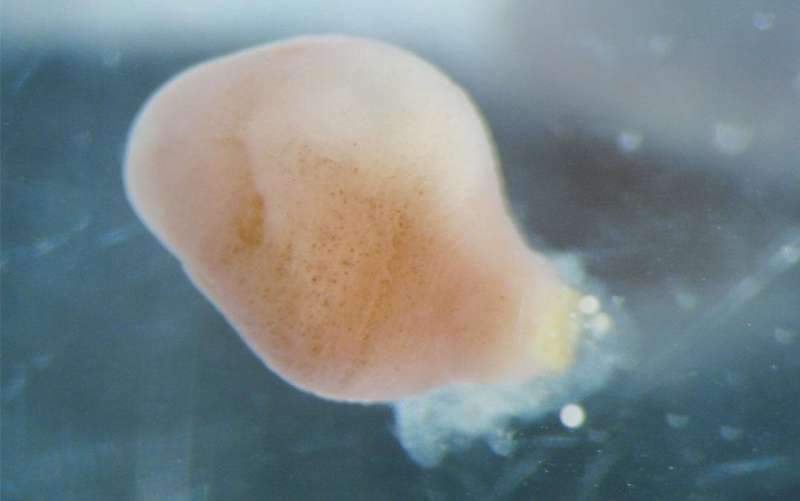
Reproductive strategy of deep-sea worms provides clues to evolutionary mystery

Reproduction of deep-sea worms provides clues to evolutionary mystery
Researchers led by the University of Tsukuba discover a unique reproductive strategy in
 deep-sea worm-like creatures that could help solve a long-standing puzzle. 
Credit: University of Tsukuba

Deep on the ocean floor, strange worm-like creatures can be found, the evolution of which has long perplexed scientists. Now, in a recently published study, researchers from Japan have observed an interesting mode of reproduction, which could shed light on the life history of these species.

In the recent study, researchers led by the University of Tsukuba reported that Xenoturbella bocki releases gametes () through ruptures in its body wall. The findings are published in the journal Communications Biology.

Until recently, little was known about Xenoturbella, a genus of simple marine animals that live on muddy sea bottoms. The six  of Xenoturbella identified to date live deep in the ocean, generally below 200 m. An interesting feature of all of these species is the simplicity of their body plan; they have mouths but no eyes, brains, stomachs, or anuses. They also have bilateral symmetry, meaning the right and left sides are, more or less, symmetrical. This body plan has led to confusion about where exactly these creatures fit in the tree of life.

"The phylogenetic position () of these species is still unclear," says lead author of the study, Associate Professor Hiroaki Nakano. "Because the development of a species can often provide clues to how that species evolved, we wanted to investigate the reproduction and development of these species in the lab."

The challenge the researchers faced is keeping adult Xenoturbella alive in a laboratory setting. Xenoturbella bocki inhabit shallower waters than the other species belonging to this genus, which makes them slightly more robust; so, the researchers were able to keep adult worms alive.

Adult Xenoturbella were collected from the Gullmarsfjord, Sweden, and back in the laboratory, they were induced to spawn once a month. These experiments not only showed that the  for this species is winter, but also revealed an interesting mode of reproduction.

"When the animals spawned, we noticed that the eggs and sperm were released from new openings in the body wall. These openings appeared to be ruptures in the body that only appeared for spawning," explains Associate Professor Nakano. "Based on our observations, we think that gametes likely begin to mature on the surface of the gut, are released into the  when mature, and are then released into the water through these ruptures."

Understanding the reproductive features of Xenoturbella will ultimately help clarify the phylogeny of these unusual marine worms. Successful reproduction in the laboratory provides the basis for studying  and, hopefully, will help uncover additional clues to this evolutionary mystery.

More information: Hiroaki Nakano et al, Induced spawning with gamete release from body ruptures during reproduction of Xenoturbella bocki, Communications Biology (2023). DOI: 10.1038/s42003-023-04549-z