Monday, September 25, 2023

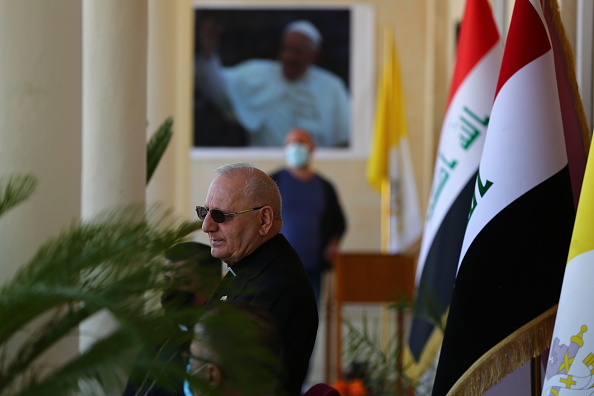
Iraq's Christians facing 'systematic displacement' since US-led invasion, says patriarch

The head of Iraq's Chaldean Catholic church has painted a bleak image of the community's current situation in Iraq, plagued by decades of instability.


The New Arab Staff
25 September, 2023

Sako said Christians accounted for less than 1% of Iraq's population today

The head of Iraq's Chaldean Catholic Church says the country's Christian community has been systematically displaced and their rights violated since the 2003 US-led invasion, pointing to an alarming population decrease.

In a message posted on the church's official website on Saturday evening, Cardinal Louis Raphael Sako accused the Iraqi state of marginalising the country's Christian minority.

Most of Iraq's Christians have fled the country since the 2003 US-led invasion, in part due to a proliferation in extremist groups.

"Christians have their legitimate human and national rights violated, and are being excluded from their jobs, and their capabilities and properties are being seized, in addition to the systematic demographic change of their towns in the Nineveh Plain before the eyes of the Iraqi state," the patriarch said.

"One million Christians left Iraq after 2003, and after IS [Islamic State group] members displaced the Christians of Mosul and the towns of the Nineveh Plain in 2014, for security, political, economic, and social reasons."

IS seized large swathes of territory in northern and western Iraq, proclaiming an unrecognised Islamic caliphate which included parts of Syria, before its defeat in 2017.

Although these regions have been liberated, Iraqi Christians still face major hurdles including the dominance of militias and the failure of successive governments to rebuild their towns.

Christians today account for less than one percent of Iraq's roughly 44 million population, the patriarch said. Chaldeans - alongside Assyrians and Syriacs - make up the biggest Christian denominations in the country.

Before the US-led invasion and the fall of dictator Saddam Hussein, Christians were believed to number between 1.5 and 2 million. Many fled to Lebanon and Jordan, or abroad to Europe, North America, and Australia.

"About 1,200 Christians were killed in multiple violent incidents throughout Iraq in the period between 2003 and 2018, including 700 people who were killed based on their identity, and a number of clerics were kidnapped in Mosul and Baghdad, and a number of them were killed, most notably Bishop Boulos Faraj Rahho, the Chaldean Archbishop of Mosul," Sako said, according to the message published on the website.

He added that 85 churches and monasteries in Baghdad, Mosul, and Basra were bombed by extremists including IS, as well as the seizure of 23,000 Christian homes and other private properties, while many were forced out of their jobs.

"The Christian quota was hijacked in the parliamentary elections, Christians have lost confidence in the improvement of their situation, due to these violations and the consequences of the Personal Status Law," he said.

Since 2003, Iraq has by convention been governed by a sectarian power-sharing system where the president (whose position is largely ceremonial) is a Kurd and the prime minister and parliament speaker are Shia and Sunni Arabs respectively.

In this confessional-based system, Christians and other minorities have had little representation.

UN: Iraq Christians were victims of Islamic State war crimes
The New Arab Staff & Agencies

"The percentage of Christians decreased from 4 percent to about 1 percent," Patriarch Sako said, suggesting that "the migration trend and the departure of young people will continue due to their exclusion from jobs for flimsy reasons".

He said equality in law is the key to tackling the exodus of Christians from Iraq.

In early July, Iraqi President Abdul Latif Rashid cancelled a 2013 decree officially recognising Sako as head of the Chaldean Church, which was essential for administering the community's endowment.

In response, Sako said he would withdraw from the seat of the patriarchate in Baghdad and instead settle at one of the monasteries in the autonomous Kurdistan region in northern Iraq.

The Chaldean patriarch has also been embroiled in a war of words with Christian lawmaker Rayan Al-Kildani for months.

Kildani heads the Babylon Movement, whose armed wing is part of Al-Hashd Al-Shaabi - a network of largely Iranian-backed paramilitaries which have official recognition from the Iraqi state.

In a country ravaged by repeated conflicts and plagued by endemic corruption, Sako and Kildani have accused each other of illegally seizing Christian-owned properties.

Kildani, who has been under US sanctions since 2019, accuses the cardinal of assuming a political role beyond his religious mandate.
WOMEN, LIFE, FREEDOM
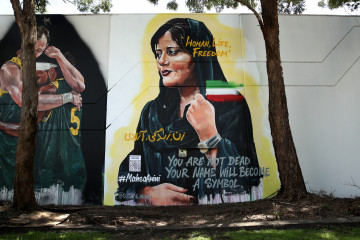
How Mahsa Amini's death permanently changed Iran

Analysis: Mass protests last year changed Iran in significant ways. One year on, the Islamic Republic still faces a legitimacy crisis, as a cultural revolution continues to challenge the balance of power between state and society.


Analysis
Giorgio Cafiero
19 September, 2023

The 16th of September marked one year since the death in police custody of Mahsa Jina Amini, a 22-year-old Kurdish-Iranian woman from Saqqez.

When Amini was in Tehran just over a year ago, the Iranian “morality police” arrested her for allegedly not properly wearing the hijab in compliance with the laws of the Islamic Republic.

Although Iranian officials claim that she died from a heart attack unrelated to her situation in the “re-education” centre, Amini’s parents and Iranian protesters have rejected this official line, maintaining that she died from blows to her body while in custody.

What immediately followed Amini’s death in custody was a wave of protests that erupted all over Iran. In contrast to previous protests, the ones triggered by this young woman’s death took place in all provinces. Iranians came out in large urban areas, as well as in more rural and conservative parts of the country.

Although over time the protests lost steam, which was largely due to the government’s heavy-handed crackdown, the grievances that drove so many Iranians to the street remain unaddressed.

"The protests marked an inflection point, where the majority of the Iranian people gave up trying to find a modus vivendi with a regime that only cares about its own narrow core constituents"

A cultural revolution

The protests that broke out in September 2022 changed Iran in significant ways. Although the Islamic Republic has remained in power, which means that there was no successful political revolution, Iran has been, and still is, undergoing a cultural revolution.

“Today, the Iranian society, especially women, are moving the boundaries of [civil] disobedience and I believe that the balance of power between state and society will change, when more and more segments of society engage in [civil] disobedience, and that is when significant changes in governance structures will emerge in Iran,” said Dr Bijan Khajehpour, the managing partner at Vienna-based Eurasian Nexus, in an interview with The New Arab.

“How Iran changed since the death of Mahsa Amini is that Iranian women and girls essentially came to the street to fight mandatory hijab and said, ‘Enough is enough…You can’t kill a woman or girl because of how she’s dressed,’” Negar Mortazavi, a Washington-based Iranian journalist, host of The Iran Podcast, and senior fellow at the Center for International Policy, told TNA.

In-depth  Sophia Akram

“The protests marked an inflection point, where the majority of the Iranian people gave up trying to find a modus vivendi with a regime that only cares about its own narrow core constituents,” explained Dr Ali Vaez, director of the International Crisis Group’s Iran Project, in a TNA interview.

“It was significant that women across the country showed up for [Amini]…it was also significant because this is a continuation of the daily fight of women that has been going on for four decades,” said Mortazavi.

“Since the beginning of the Islamic Republic, a specific group of women first protested the law of the mandatory hijab. Then it kept growing and growing with new generations joining. My own mother and aunt, then my own generation, and now the newer, younger generation [has] essentially [been] saying, ‘We want our bodily autonomy, we want to be able to dress how we want, and you can’t base it on one reading of the religion.’”


Women protest over the death of 22-year-old Iranian Mahsa Jina Amini in front of the Iranian Consulate on 26 September 2022 in Istanbul, Turkey. 

Challenges to the Islamic Republic's legitimacy

One year after Amini’s death in custody, Iran’s government is still facing its most serious legitimacy crisis since 1979. Segments of the country are fed up with the Islamic Republic’s economic, political, and social policies at a time when Iran’s middle class continues shrinking with more citizens living in poverty.

Of course, this is not entirely the fault of Iran’s government. The US is not an innocent or blameless actor. At least according to the architects of US sanctions on Iran, such policies have been designed to worsen these economic conditions in Iran, which exacerbate the regime’s legitimacy crisis. Regardless of Western motivations, the sanctions appear to have their desired effects when it comes to fuelling more opposition to the Islamic Republic on the part of wider segments of Iran’s population, particularly the youth.

A question worth asking is, could Iran’s worsening legitimacy crisis lead to the Islamic Republic facing an existential crisis? Considering the state’s monopoly on arms, power, and violence plus the fact that the protest movement lacks any leader, some experts are doubtful.

"It's not a matter of whether the system will be faced with another uprising, it's a matter of when, what sparks it, and whether the regime has anything to offer in response beyond internet blackouts, batons, and bullets"

“We don’t see the ingredients for an actual full-on revolution. Yes, it’s mass dissent, mass protests, but it’s also leaderless,” commented Mortazavi. “There are no serious political parties behind the street protests. It’s just very hard to imagine, at this stage, that the legitimacy crisis will translate into an immediate existential crisis, meaning that the state or regime is about to fall.”

Yet, the Iranian journalist explained that “if these cries for change, transformation, or revolution as the society wants are not heard by the state, and if policies stay rigid…I think the legitimacy crisis will just grow, run deeper, and get worse.”

Analysis  Stasa Salacanin

Oppression, not reforms, is Iran's expected short-term future


Although Iran joining the Shanghai Cooperation Organisation, receiving an invitation to enter BRICS, and renormalising relations with Saudi Arabia in a Chinese-brokered diplomatic deal underscore how Iran is less isolated on the international stage compared to one year ago, it is unlikely that these developments in Tehran’s foreign policy will help the Islamic Republic overcome this legitimacy crisis at home.

Authorities in Tehran understand the magnitude of this crisis, and this is why the government has been relentless in terms of repressing dissent.

“There is grievance upon grievance that has been piling on and not addressed by the state. This poses a serious legitimacy crisis. The state understands that’s why they have to mobilise security forces to crackdown…on such protests and essentially react with such violence and brutality. Around 500 protests were killed, thousands were arrested, and a few were executed,” Mortazavi told TNA.

“The protests and government reaction have confirmed that the Iranian government has no intention of building back legitimacy or accommodating popular grievances,” Dr Sanam Vakil, director of the Middle East and North Africa programme at Chatham House, said in a TNA interview.


One year after Amini's death in custody, Iran's government is still facing a serious legitimacy crisis. 

“What is popular legitimacy worth to the powers that be and how much of it do they actually possess? Not much,” said Dr Rouzbeh Parsi, the head of the Swedish Institute of International Affairs' Middle East and North Africa programme, told TNA.

“Effectively, meaningful reform from within is not on the horizon,” explained Dr Vakil. “To manage internal dissent, economic challenges, massive climate change pressure, and future Supreme Leader succession, Iran will be governed by a narrow exclusive group of loyalists and believers.”

During and after the Amini protests there were some voices optimistic enough to believe that the government in Tehran would agree to certain concessions along with specific political and social reforms in order to regain some lost legitimacy with reformist figures, such as former president Mohammad Khatami and former prime minister Mir-Hossein Mousavi.

"[The Islamic Republic] lost the battle of ideas because it's stopped offering any. It's all but given up on the battle for popular legitimacy"

“Instead, the government is doubling down on reinforcing veiling and social repression,” observed Dr Vakil. “Despite the hope that next year’s parliamentary elections would be more inclusive, the bureaucracy and academia are both being purged,” she added.

The Iranian government’s ability to weather the mass protest movement that began a year ago is merely “a pyrrhic victory in a much bigger contest that began before September last year, continues today, and will continue in the future,” Dr Vaez told TNA.

“[The Islamic Republic] lost the battle of ideas because it’s stopped offering any. It’s all but given up on the battle for popular legitimacy, which was already the case over the past few parliamentary and presidential elections.”

In-depth Alessandra Bajec

More sparks

Within this context of Iran’s authorities oppressing and cracking down on activists, lawyers, artists, journalists, academics, and entrepreneurs whom they see as contributing to the Islamic Republic’s legitimacy crisis, there is every reason to expect more uprisings to erupt in the future.

“It’s not a matter of whether the system will be faced with another uprising, it’s a matter of when, what sparks it, and whether the regime has anything to offer in response beyond internet blackouts, batons, and bullets,” according to Dr Vaez.

Mortazavi concurs. She believes that more mass protests will break out in Iran, “probably in shorter intervals, in shorter periods in between as the state continues to ignore the grievances and provide these sparks for the population.” Past sparks have included the Islamic Revolutionary Guard Corps’ shooting down of the Ukrainian passenger plane with 176 civilians on board in January 2020, soon after the 50 percent petrol price increase which triggered protests in response to the overnight hike of gas prices.

“This time [the spark] was the death in custody of a young woman for how she was dressed…This woman wasn’t a criminal. She wasn’t in a jail. She was just picked up on the street because of her attire. The state has essentially created these sparks. We’ve seen the society light up and now we’re seeing it light up in shorter intervals because of the situation with the economy and the social and political grievances that haven’t been addressed,” said Mortazavi.

With no signs of serious reforms being around the corner, Iran’s government will probably continue dealing with its legitimacy crisis through authoritarian methods. “The Islamic Republic is now a securitised Islamic state: the institution of elections and the system's republican institutions have become empty shells, and the men with guns have infiltrated all institutions of power,” Dr Vaez told TNA. “A minority rule regime can survive with brute force for a long time, but not forever.”

Dr Parsi believes that in the long run the Iranian system has to change. What remains to be seen is the tempo and scope of such change, how it is managed, and how orderly the change will be. “The more unwilling [Iran’s government] changes, the higher the cost for everyone,” he warned.

“There are of course those within the nezam (system) who believe themselves to be sufficiently impervious to societal pressure that they can continue without much change. There is a generational aspect here in that both the population and those who man the state apparatus will no longer belong to the founding generation nor the one who experienced the war with Iraq,” added Dr Parsi.

Giorgio Cafiero is the CEO of Gulf State Analytics.
Follow him on Twitter: @GiorgioCafiero


Grief to action: The Woman Life Freedom movement one year on

Yousra Samir Imran
16 September, 2023

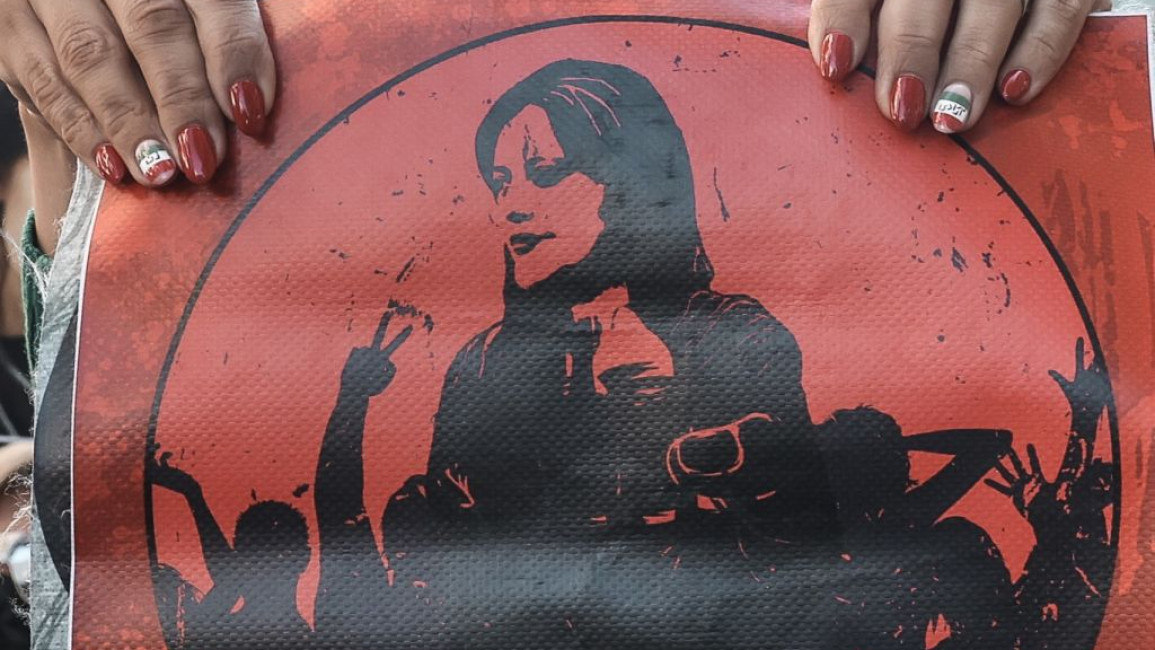
It's been a year since Iranian authorities oversaw the brutal murder of 22-year-old Mahsa Amini. Her death and others like her have spawned the Woman Life Freedom movement that demands systemic change in Iran. One year on, how has the movement fared?


When 22-year-old Kurdish-Iranian Jina “Mahsa” Amini died a year ago while under custody after having been arrested by Iran’s Guidance Patrol for “improper hijab” it was the straw that broke the camel’s back.

Against the background of totalitarian rule with stringent laws that forced all women to wear the hijab, along with a collapsing economy and a government failing to tackle climate change and mismanaging natural resources, the Iranian people rose up in protests that spread across 21 provinces.

The initial protest began in Amini’s home province of Saqqez. Women attending her funeral removed their headscarves in protest and chanted “Jin Jîyan Azadî” meaning “Woman, Life, Freedom.”

These three words had long been part of Kurdish-Iranian history as part of the feminist women’s resistance movement in the Kurdish Workers’ Party (KPK), inspired by the words of imprisoned PKK founder Abdullah Ocalan who said a country could not be free unless all women were free. These three words spread like quickfire and were chanted by women and men alike across Iran, becoming the slogan of a female-led mass movement.

"Over 20,000 people have been arrested since the protests began in September 2022, over 500 have been killed by the IRGC and scores executed to “make an example” of them"

The past year’s major act of defiance has been the public removal of hijab by girls and women as young as twelve years old. Schoolgirls waving their hijabs in the air, writing “death to the dictator” on classroom blackboards and stamping on pictures of Iran’s Supreme Leader Khamenei.

One cannot ignore the symbolism: girls and women of all ages taking back their agency, refusing to have their bodies policed and removing a garment that in many ways is an emblem of the Islamic Republic of Iran.

The response from the Islamic Republic of Iran, primarily through its Islamic Revolutionary Guard Corps (IRGC), was expected. Just like other authoritarian regimes in the SWANA region such as Egypt, mass protests were responded to with military violence, the use of live ammunition, arbitrary arrests, forced disappearances, trials in kangaroo courts and executions.

Over 20,000 people have been arrested since the protests began in September 2022, over 500 have been killed by the IRGC and scores executed to “make an example” of them. They were charged with working for foreign bodies against Iran or for “enmity against God” (moharebeh). Even the schoolgirls were not safe. Female students from 91 schools across Iran suffered from poisoning which the United Nations described in March 2023 as targeted chemical attacks.


A year ago, The New Arab spoke to Iranian activist Elnaz Sarbar. Despite the violent crackdown by the Iranian state, she says that poll figures prove that opposition against the Islamic Republic is increasing.

“In January 2023, there was a poll that was done [by the Netherlands-based Gamaan Institute] that was over 200,000 people; 150 thousand were inside Iran. The poll asked how many people support the Islamic Republic. The results were that 15% of people support it and 81% oppose it. I think what the Mahsa or Jina Revolution did for the Iranian people was bring this opposition to the forefront of the society. You know, hearing people chant “Bring down the dictator,” now it's a chant that is heard across the country. It was a chant that people even months later still repeat. People go to their rooftops at night when you can't see anybody and they shout ‘Bring down the dictator.’”

One of the effects of the Woman, Life, Freedom movement has been the reawakening, mobilisation and activism of Iranians in the diaspora. This month London-based publishers Saqi release Woman, Life, Freedom: Voices and Art from the Women’s Protests in Iran, edited by Malu Halasa. The anthology captures first-hand accounts and artwork by Iranian and Kurdish-Iranian women and the LGBTQ+ community who were part of the movement, and it exhibits different forms of creative resistance.

UK-based sound artist Fari Bradley is one of the contributors to the anthology. She is at the forefront of protests in London, supporting major actions such as a now-renowned performance on International Women’s Day in March 2023.

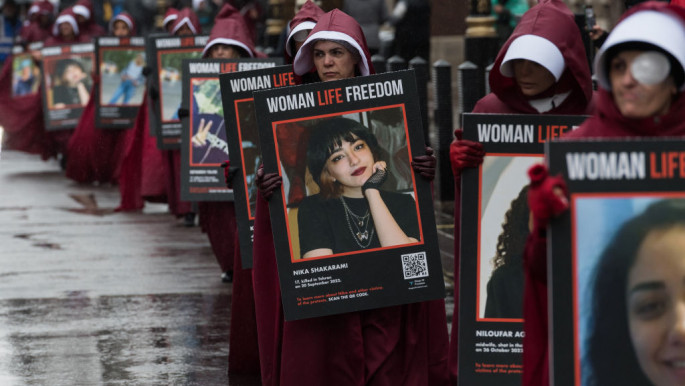
British-Iranian women marched silently across London dressed in the red cloaks and white bonnets of The Handmaid’s Tale, holding posters of female protestors' faces who were killed by the IRGC since the movement began. It was a powerful form of protest that made the news internationally. What it symbolised was that while The Handmaid’s Tale is fiction for most, it is a lived reality for women in Iran.

Women's freedom is a key theme of Margaret Attwood's bestseller "The Handmaiden's Tale"

“So, it was young people, mostly on social media, just crying out for support and for people to notice, because even though injustice has always been happening in Iran, they've never said anything like that before. They've never asked us specifically to get political. We'd never seen the stories covered with such tenacity, and you know, you'd hear one bad story and then it would sort of die down because this now has become a wave of continual attacks from the regime, and then resistance against the regime. It was as if a veil was lifted from our eyes as if we had been just toeing the line for injustice for so long and trying not to rock the boat, and suddenly everyone was like ‘rock the boat!’” Bradley tells The New Arab.

In the past year, one of the things many people across the world have failed to recognise is the Kurdish heart of this movement. It was the death of a Kurdish-Iranian woman that sparked it and the protests began in a Kurdish province.

Many believe that the IRGC crackdown was harder in Kurdish-Iranian provinces. Award-winning Kurdish-Iranian journalist and author of The Cypress Tree, Kamin Mohammadi, wrote an essay included in Saqi’s Woman, Life, Freedom anthology that was nominated for two journalism awards.

In it, she delves into the Kurdish origins of the Woman, Life, Freedom movement and the disproportionate use of violence used on Kurdish-Iranians and other ethnic minorities over the past year.

Voices  Kourosh Ziabari

“I think there's something to be said as to why the regime responds like that,” says Mohammadi. “The vast number of people who've been taken and imprisoned are Kurdish, not just Kurdish, but also Baluchi. So, these are ethnic minorities. They’re also not Shia Muslims, they are Sunni. And I think a lot of the discrimination from this regime comes from that. More than their actual ethnicity. Sadly, I'm looking right now and rounding up the amount of people who've been imprisoned, killed, and sentenced to death. They've executed I think five people to do with the protest. But they've executed many more people who've been in prison from before the protest and they are vast majority Kurdish and Baluchi minorities. There's a real socioeconomic class issue here as well, because, you know, these are not the upper or middle wealthier classes that are on the streets, right?”

"There is serious talk of the regime installing AI surveillance systems to catch women in public who aren’t wearing a hijab... Many activists are saying this is a form of gender apartheid"

Over the past twelve months, people of all genders and ages in Iran have risked their lives in protest against the mandatory hijab. A year on, there seems no end in sight for the Islamic Republic’s compulsory hijab rules, in fact, things are about to become harder.

In July the BBC reported the reinstatement of Iran’s morality police’s hijab patrols. In the past, Article 638 of Iran’s Penal Code criminalised those who violate any religious taboo in public, without explicit mention of the word “hijab.”

The new Hijab and Chastity Bill is very explicit, criminalising the wearing of no hijab or improper hijab; the punishments are larger fines of up to 360 million Iranian rials (over 8 thousand dollars) and prison sentences between five and ten years. The government is trying to pass this bill through the use of Article 85 of the Iranian constitution, which allows them to pass laws without public debate.

There is serious talk of the regime installing AI surveillance systems to catch women in public who aren’t wearing a hijab or a hijab according to their guidelines. Many activists are saying this is a form of gender apartheid.

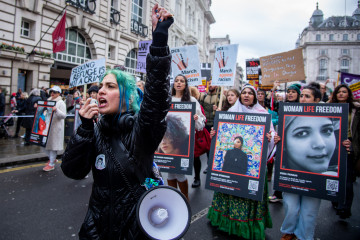
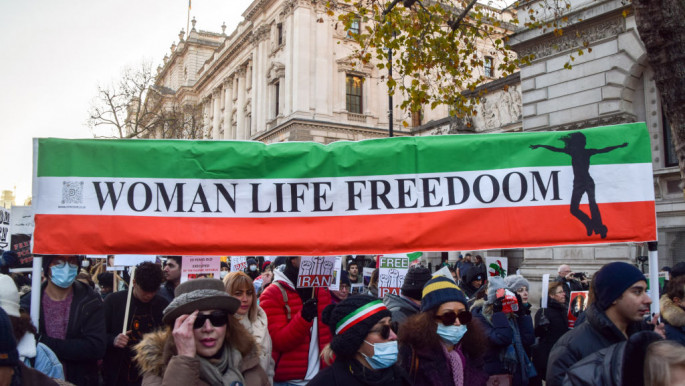
The Woman Life Freedom movement demands freedom for Iran, regime change, and justice for Mahsa Amini and other Iranians killed for not wearing the hijab 

“They have introduced a new legislation with 70 items to push back against hijab and it includes punishing businesses who provide services to women without a headscarf, including taxis and coffee shops and shops, so they are not going after only women but also business owners,” says Elnaz Sarbar.

Things may have not changed legislatively – in fact, they may have gotten worse. Yet, if there is one positive change that has come about over the past year as a result of the Woman, Life, Freedom movement, it has been a societal shift.

Fari Bradley and other Iranian women noticed that the uprisings in Iran had brought men out, marching shoulder to shoulder with women, a growing allyship that was being outwardly exhibited. Men and women, boys and girls were marching for the same thing – liberty from authoritarian rule, an end to regime violence and better economic conditions, particularly for workers.

“We're receiving videos of men, of elderly strangers, supporting them against the Revolutionary Guard, who are also sometimes women as well, you know, they go around and harass people and oppress people. They try to film them and you can just see everybody retaliating and saying, no, leave these people alone,” explains Bradley.

“Sometimes it's a tacit support, but the main thing is just men not blocking women. You know, this is a country where women can't travel without permission, so, it's been amazing. Older generations might not be coming out as much as the youth, but they are the ones who taught their kids to be curious and to think freely, they are supporting those who go out, with their hearts in their mouths, waiting for their loved ones protesting to come home safely. A lot of the workers have been amazing, striking and organising.”

“The biggest thing I heard from friends in Iran was that it used to be quite common for women to be cat-called in the streets. But that’s almost completely gone. Respect for women has increased and people talk about respect more. Another thing that's happened is many mental health charities have popped up which support people online and, you know, mental health was stigmatised and you can see society has changed in that regard. And that's really positive. It's a feminist revolution, but men of all ages are feminists too now.”

Perspectives  Katy Shahandeh

Kamin Mohammadi believes that another thing to come out of the movement has been the erosion of ethnic, social and class divides and greater unity.

“For ordinary women in Iran, particularly Kurdish women, I don't think that this has moved the dial. It's definitely not made them any safer. So probably for everyone, it's kind of made things worse.

In terms of the bravery of the people of Iran, particularly the Kurdish people, what we saw during these protests that hastened me, and I hope they go on, was that they kept chanting at the heart ‘unity.’ And it was about unity. It was about the Kurds, the Baluchis, the Aphasias, the Persians, the men, the women, and the LGBTQ community. Everyone together united and that has been one of the more beautiful things that we've seen emerge from this.”

The Islamic Republic has tried its best to quash the movement, end the protests and make examples of people, but what it has failed to do is quash the fearless and resilient spirit of its women, who continue to carry out acts of defiance, and who are still hopeful that one-day things will change.

“There's something one of my friends told me when all this started and I wrote it down,” says Elnaz. “She told me ‘I see confidence in women and I think this is confidence you can't take back’. We did it, we came to the streets with the dress we wanted to wear and so we're going to keep doing this - especially the younger generation, they're like, ‘we don't care about the price.’ There was a political activist, who was sentenced to four years in prison. She came out on her first day out of prison, took her headscarf off and chanted in front of the prison. She was arrested again and sentenced to another two years. The women really are fearless.”

Woman, Life, Freedom: Voices and Art from the Women’s Protests in Iran, edited by Malu Halasa, is published by Saqi and is out now

Yousra Samir Imran is a British Egyptian writer and author who is based in Yorkshire. She is the author of Hijab and Red Lipstick, being published by Hashtag Press in the UK in October 2020

Follow her on Twitter: @UNDERYOURABAYA

KDP/PUK IRAQI KURDISTAN

Iraq's highest court dissolves Kurdistan region's provincial councils due to 'constitutional violations'


Dana Taib Menmy
Iraq
25 September, 2023

The last time the Kurdistan region held provincial councils was in 2014. New elections were scheduled for 23 July 2018 but were postponed due to disagreements among Kurdish political parties on when to hold them. 


Iraq's Supreme Federal Court on Sunday, 24 September, dissolved the Kurdistan region's provincial councils, indicating that extending the councils' terms was "unconstitutional". [Getty]

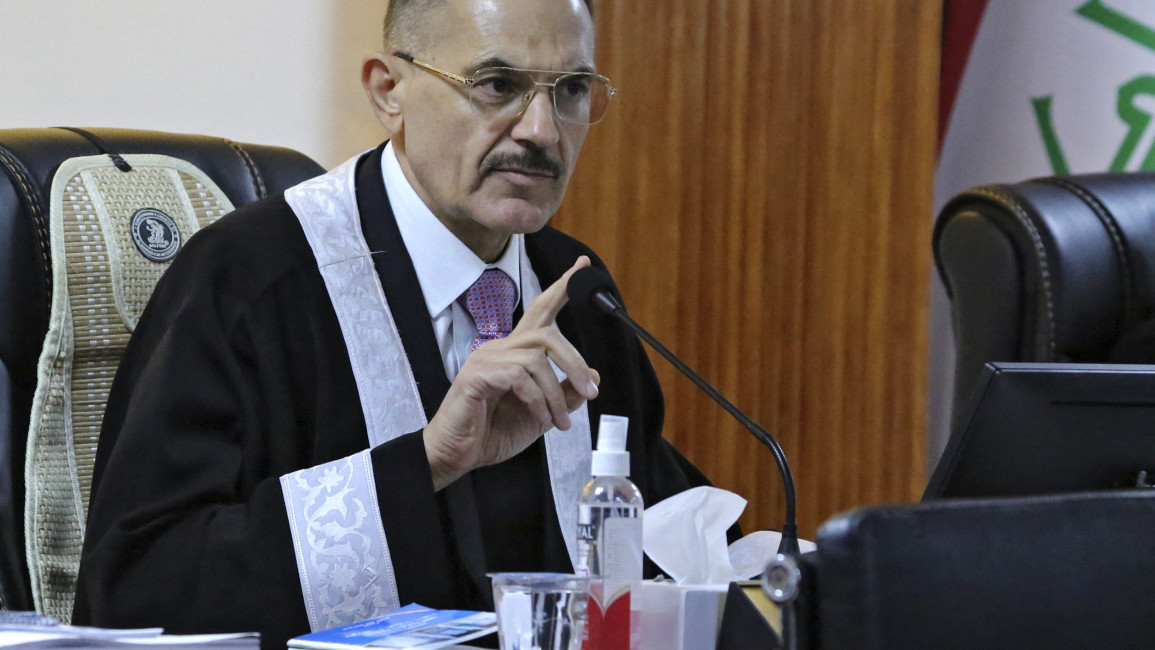
Iraq's Supreme Federal Court on Sunday, 24 September, dissolved the Kurdistan region's provincial councils, indicating that extending the councils' terms was "unconstitutional".

"The Supreme Federal Court has ruled the unconstitutionality of Article (2) of Law number (2) of 2019, which is the first amendment to the law for the provincial councils in the Iraqi Kurdistan region number (3) of 2009, for its violation of the provisions of Articles (2 / first / b and c) and (6) of the Constitution of the Republic of Iraq for the year 2005," the court said in a statement.

The last time the Kurdistan region held provincial councils was in 2014. New elections were scheduled for 23 July 2018 but were postponed due to disagreements among Kurdish political parties on when to hold them.

In 2019, the Iraqi Kurdistan parliament amended the law for the region's provincial elections, extending the councils' mandate beyond its four-year legal term.

"Based on the lawsuit we filed, the federal court has decided the unconstitutionality of extending the terms of the regional provincial councils," Srwa Abdulwahid, head of the New Generation opposition party in the Iraqi parliament, wrote on X, previously known as Twitter.

"These councils have been unlawfully receiving salaries for the past five years, so they must reimburse every penny they took from the people's resources without justification. We will not stop and will continue to expose the legal and constitutional violations of the ruling parties in the region," he added.


The New Generation, an opposition party in the Kurdistan region and Iraq was established by former businessman Shaswar Abdulwahid in the wake of the failed Kurdish referendum for independence from Iraq held on 25 September 2017.

"The ruling by Iraq's top court is consistent with the Iraqi constitution and laws, as the terms of the councils were identified for only four years as per law number (3) of 2009. Iraq's constitution stipulates that the right to vote is guaranteed for the Iraqis. Extending the councils without the will of voters is contrary to the principles of the constitution," Farman Hassan, a Kurdish lawyer and writer, told The New Arab.

He ruled out the Kurdish ruling parties from holding fresh provincial elections and stressed that council members should retire as per the court's ruling. He indicated that the councils' dissolution "is not in the interests of locals" but instead in the interests of the Kurdistan Regional Government (KRG), arguing that the councils were regarded as some decentralization from the KRG.

The two main ruling parties in the KRG, Barzani family's the Kurdistan Democratic Party (KDP) and Talabani's family the Patriotic Union of Kurdistan (PUK), had already made the region's municipality councils as an illegal alternative for the region's provincial councils.


The terms of the region's municipality councils had already expired and the last election for the municipality councils was held in early 2000.

Iraq's Federal Supreme Court late in May ruled against extending the term of the Kurdistan region's parliament as contrary to the country's constitution, declaring the Kurdish legislature as terminated.

Iraqi Kurdistan elections were scheduled for late 2022, but disputes between the KDP and the PUK forced the assembly to extend its mandate for another year. Fresh general elections are expected to be held in February 2024.

Iraq is set to hold provincial elections on 18 December across 15 provinces, excluding four provinces in the northern Kurdish region. The regional councils are tasked with providing public services to locals. However, they have often been accused of corruption.

For the first time since 2005, the elections will also be held in Kirkuk's multi-ethnic and oil-rich province, in a constitutionally disputed area between the Kurdistan region and the federal government in Baghdad.


Israeli forces arrest leader of Palestinian Lions' Den group in West Bank raid

The New Arab Staff
22 September, 2023

Israeli forces arrest a leader in the Palestinian armed group "Lions' Den" (Areen al-Ossud), Khaled Tabila, also known as "Al-Baladi", in a raid in Nablus.


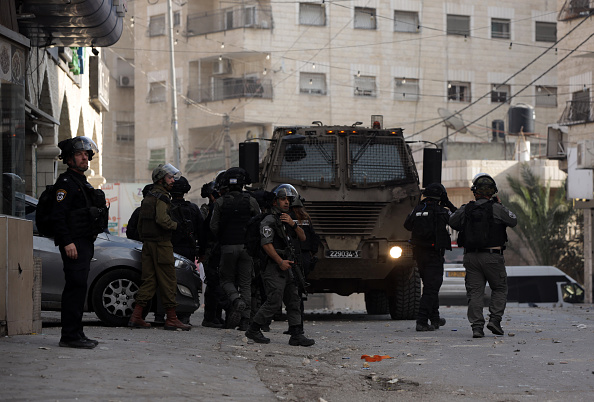
The Israeli military raid began with the infiltration of undercover agents backed by military reinforcements [Getty]

Israeli forces have arrested one of the leaders of the Palestinian armed group the Lions' Den (or Areen al-Ossud in Arabic), Khaled Tabila, according to a report by The New Arab's Arabic language sister site Al-Araby Al-Jadeed on Friday.

Before his arrest, Tabila - also known as "Al-Baladi", was besieged in his home in Rafidia area west of Nablus city, northern West Bank, during an early morning raid, Al-Araby Al-Jadeed reported.

The Israeli military raid began with the infiltration of undercover agents backed by military reinforcements, who invaded Nablus, setting up several military checkpoints until they reached Tabila's house, the report said.

Tabila, in his 30s, is one of the founders of the the Lions' Den. He was a member of the Palestinian Presidential Guard before joining armed Palestinian groups two years ago.

Israeli forces have escalated raids into Palestinian cities since late 2021 as confrontations with Palestinians spiked.

In March 2022, the Israeli army launched operation 'Break the Wave' with the aim of crushing growing armed resistance, particularly in Nablus and Jenin, by carrying out near-daily raids, killings and arrests in the two northern West Bank cities.

In July, Israeli forces raided Jenin for 48 hours, destroying most of its infrastructure, killing ten Palestinians and forcing around 3,000 Palestinians to leave their homes.

Separately, a Palestinian teenager was killed by Israeli forces early on Friday in the town of Kafr Dan in the Jenin, northern West Bank.

The boy was identified as 16-year-old Abdullah Imad Abu al-Hassan from the town of Yamoun, west of Jenin, local sources told Al-Araby Al-Jadeed.

Since the beginning of 2023, Israeli forces have killed more than 200 Palestinians during deadly raids into occupied West Bank cities and refugee camps and have arrested more than 3,600.
Can we give plants advance warning of dangers by ‘talking’ to them?

Using light as a messenger, the researchers are developing tools that enable plants to communicate with humans, and humans to communicate with plants


Research has shown that a plant’s natural defence mechanism can be activated by using light
 (John Walton/PA)

FRI, 22 SEP, 2023 - 09:28
NINA MASSEY, PA SCIENCE CORRESPONDENT

It may be possible to “talk” to plants and warn them of impending attacks or extreme weather, new research suggests

A team of plant scientists at the Sainsbury Laboratory Cambridge University (SLCU) would like to turn this science “fiction” into reality by using light-based messaging to communicate with plants.


Early laboratory experiments with tobacco demonstrated that a plant’s natural defence mechanism (immune response) can be activated by using light as a stimulus (messenger).

Using light as a messenger, the researchers are developing tools that enable plants to communicate with humans, and humans to communicate with plants.

If we could warn plants of an impending disease outbreak or pest attack, plants could then activate their natural defence mechanisms to prevent widespread damage

In everyday human life, light is used for communication such as traffic lights and pedestrian crossings.

Lead researcher Dr Alexander Jones said: “If we could warn plants of an impending disease outbreak or pest attack, plants could then activate their natural defence mechanisms to prevent widespread damage.

“We could also inform plants about approaching extreme weather events, such as heatwaves or drought, allowing them to adjust their growth patterns or conserve water.

“This could lead to more efficient and sustainable farming practices and reduce the need for chemicals.”

Previously, the Cambridge researchers engineered a series of biosensors – devices that measure biological or chemical reactions – using fluorescent light to visually communicate in real time what is happening at the cellular level in plants.

These biosensors reveal how plants react to environmental stresses – plants communicating with humans.

The new study describes a tool called Highlighter, which uses specific light conditions to activate a specific gene in plants, for example to trigger their defence mechanisms – humans talking to plants.

Bo Larsen, who engineered Highlighter while at SLCU, has taken scientists a step closer to this goal of talking to plants by engineering a light-controlled gene expression system (optogenetics system) that is tailored for plants.

Optogenetics is a scientific technique that uses a light to activate or deactivate a specific process.

“Light stimuli are cheap, reversible, non-toxic and can be delivered with high-resolution,” Dr Jones said.

According to the study, when deployed in plants Highlighter uses minimally invasive light signals for activation and inactivation.

Dr Jones said: “Highlighter is an important step forward in the development of optogenetics tools in plants and its high-resolution gene control could be applied to study a large range of fundamental plant biology questions.

“A growing toolbox for plants, with diverse optical properties, also opens exciting opportunities for crop improvement.

“For example, in the future we could use one light condition to trigger an immune response, and then a different light condition to precisely time a particular trait, such as flowering or ripening.”

The research is published in the Plos Biology journal.

Archive.org

https://archive.org/details/supernature00lyal

Dec 8, 2011 ... 14 day loan required to access EPUB and PDF files. IN COLLECTIONS. Texts to Borrow Books for People with Print Disabilities Internet Archive ...

ITALY
Man arrested for threatening to kill gay son

Foggia man, 57, told son and wife 'I'll cut off your head'


Redazione ANSA ROME
25 September 2023

(ANSA) - ROME, SEP 25 - A 57-year-old Foggia man threatened to kill his 20-year-old son after the young man came out as gay, and threatened the life of his wife too after she supported his new life, sources said Monday.

"You're gay, I'll publish all your cross-dressing photos on Facebook, I'll make your life impossible, I'll kill you, I'll cut off your heard," said the man, according to the arrest warrant.

When his wife intervened to defend the young man, he reportedly told her too: "You're worthless, I'll kill you, I'll cut off your head," according to the police document.

 (ANSA).

HE TOLD HIS SON BETTER TO DIE A JIHADI 


ITALY
Students camp out to protest at astronomical rents
Protests all week in 25 cities


Redazione ANSAROME
25 September 2023

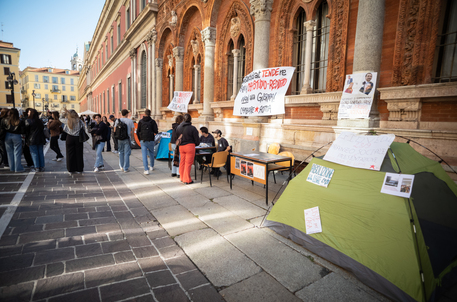
(ANSA) - ROME, SEP 25 - Students were pitching tents outside university buildings all over Italy on Monday to protest at the astronomical rents they face when studying away from their home towns.

It is the latest in a series of camp protest students have staged to highlight the problem.
This one will last all week in 25 Italian cities.

"We are pitching tents at La Sapienza (University on Rome) again," said the Union of University Students (UDU).

"We decided to protest as the government continues to ignore the high cost of studying and the accommodation crisis, without implementing any concrete solutions".

 (ANSA).


Researchers say world’s mountain treelines are rising due to climate change

The closed-loop mountain treelines encircle a mountain and are less likely to have been influenced by human activities and land usage.

SEP 22, 2023,

BEIJING – Chinese researchers have shed light on the factors that drove the world’s mountain treelines to move upwards, providing new evidence for the impact of climate change on global ecosystems, according to a study published in the journal Global Change Biology.

Mountain treelines are sensitive to climate change. However, the way that climate impacts mountain treelines is not fully understood, as they may also be affected by human activities.

A research group led by Dr Zeng Zhenzhong from the School of Environmental Science and Engineering, China’s Southern University of Science and Technology, established a global mountain treeline database by collecting high-resolution remote-sensing images of some 916,000km of closed-loop mountain treelines across 243 mountains around the world.

The closed-loop mountain treelines encircle a mountain and are less likely to have been influenced by human activities and land usage.

After analysing the database, the group found that temperature is the main climatic driver of treeline elevation in boreal and tropical regions, whereas precipitation is the main factor in temperate zones.

About 70 per cent of closed-loop mountain treelines have moved upward, with an average shift rate of 1.2 metres per year over the first decade of the 21st century, according to the study published in July this year and reported by China Science Daily on Thursday.

The study also found that treelines are shifting fastest in the tropical regions, with an average shift rate of 3.1 metres per year. For example, in Malawi, Papua New Guinea and Indonesia, some treelines are moving upward at a rate of 10 metres per year.

While the upward movement of treelines means more trees can absorb more carbon from the atmosphere and expand the habitat of some forest species, it also poses challenges for fragile ecosystems at high altitudes, according to Dr He Xinyue, the first author of the paper.

Plants and animals at high altitudes are often very sensitive to environmental changes. As treelines moved up, they began to compete for space and nutrition, which could seriously threaten some endemic species, He added. 

XINHUA
South Korea's Yoon lambasts critics, calling them ‘communists’


BY HYUNSU YIM
REUTERS
Sep 22, 2023

SEOUL –

South Korean President Yoon Suk-yeol's branding of critics as "communist totalitarian and anti-state forces" may rally his conservative base and distract from unease about some of his policies, but it risks fueling division and alienating some voters.

In South Korea, the label of communist carries higher stakes than in many Western democracies with the ongoing threat from ostensibly communist North Korea and Cold War-era laws that effectively ban activities deemed related to communism.

Yoon's remarks and the renewed public debate over communism come with his approval ratings slipping and political tensions rising ahead of a general election in April.

They also come at a time of a noticeable shift in Seoul's foreign policy as Yoon pushes for trilateral cooperation with the U.S. and Japan despite lingering public unease with Tokyo over historical issues, said Kevin Gray, a professor at University of Sussex.

"There is a legitimacy problem for Yoon in the sense that the gap between popular opinion in South Korea and what is being pursued internationally is increasing," Gray said.

"He has decided to take an approach not of trying to convince people but to label the opposition as being somehow an anti-state, communist totalitarian force."

In a speech earlier this month, Yoon said South Korea's freedom is "under constant threat" from "communist totalitarian and anti-state forces" who are critical of South Korea's deepening ties with the U.S. and Japan.

"The forces of communist totalitarianism have disguised themselves as democracy activists, human rights advocates and progressive activists," Yoon said in another speech for Liberation Day last month.

The liberal opposition party, which controls the National Assembly but is in disarray amid corruption charges against its leader, has criticized Yoon for wasting his term on an "ideological war” that deepens political divides and does nothing to address real problems.

"The president keeps emphasizing the threat from communist forces which don't exist," a spokesperson for the Democratic Party said at a briefing recently.

The presidential office declined to comment on Yoon's description of critics of his policies as "communists."

Sinking approval ratings


Yoon's disapproval ratings stood at 59%, according to a Gallup poll released on Friday, up from 37% when elected last year. Foreign policy, the government's economic management and stance on Japan's Fukushima wastewater release were the leading issues.

Given his low approval ratings, analysts say labeling his opponents as communists may still be useful for Yoon to hold onto his party's conservative base.

Andrew Yeo, a senior fellow at the Brookings Institution, said the legacy of the Korean War and North Korean infiltration into the South means "red-baiting" is still effective in demonizing opponents.

Earlier this year, four former officials at the Korean Confederation of Trade Unions, the biggest umbrella union in the country, were charged over links to North Korean spies and violating the National Security Act.

"Unfortunately, such tactics only deepen political divides, contributing to nationalist polarization," Yeo said.

Benjamin Engel, a research professor at Seoul National University, said Yoon's approach risks alienating some more moderate voters.

"During his campaign, Yoon often used the phrase 'uniting the people.' But his recent policies, rhetoric, and appointments suggest he is moving away from uniting the people. The result will be some people who may have voted for him last year now feel alienated," Engel said.

The 'new right' movement

Yoon has aligned himself with the "New Right" movement which offers a more "charitable" view of the country's authoritarian past and its link to the Japanese colonial period, Yeo said.


Rhee Jong-hoon, a Seoul-based political commentator, sees Yoon's more right wing approach as being influenced in part by his late father who studied in Japan and once took part in a signature campaign linked to the New Right movement.

"Yoon has perhaps always warmed to and sympathized with the figures who his father had hung out with and are associated with the New Right movement," Rhee said.

"It would be difficult to imagine (his move) being driven without his own deeply rooted conviction," Rhee said.


UK
The National Trust, which has more than 250,000 hectares (almost 620,000 acres) of farmland in its stewardship, is a thorn in the side to the government and its masters in the oil-money funded Tufton Street thinktanks

Stewart Lee
THE GUARDIAN
Sun, 24 September 2023 


I love British traditions. Whose heart soars not upon seeing some drunk men chasing a cheese down a fatally steep Gloucestershire hill, or some drunk men burning their faces off carrying flaming tar barrels on their heads in a Devonshire village, or some drunk men dropping an enormous effigy of David Jason into a giant burning boozer made of straw in a Hertfordshire hamlet at midnight? In Spanish fire bull festivals, cruel peasants set fire to animals. Here, outside the EU, we merely set fire to ourselves.

But the nights are drawing in and soon it will be time for one of the oldest, and most enjoyable, British traditions of all. Because it’s that time of year when, in the run-up to the National Trust’s AGM on 11 November, the opaquely funded “anti-woke” pressure group Restore Trust, backed by Neil Record of the Tufton Street climate crisis denial bodies Global Warming Policy Foundation and Net Zero Watch, tries to have its own pod people planted on the board. Sing ye wassail! It’s that time again!!

The National Trust, which has more than 250,000 hectares (almost 620,000 acres) of farmland in its stewardship, is a thorn in the side to the government and its masters in the oil-money funded Tufton Street thinktanks. National Trust members actually vote for board members themselves, while cultural and environmental organisations that take public funding, such as the British Museum, the V&A, the Natural History Museum and Kew Gardens, use a supposedly unbiased public appointments process to nobble their nabobs. This unbiased public appointments process has recently seen GB News social affairs editor Inaya Folarin Iman and Boris Johnson’s Mustique holiday facilitator David Ross parachuted on to the board of the National Portrait Gallery, whose trustees have included the spectral courgette Jacob Rees-Mogg, and where doubtless they spend a lot of time wondering how the invention of photography impacted on representational art.

A bird in the hand isn’t worth any in the bush at all if all the bushes have burned down in the climate crisis

But does this apparent covert jerrymandering actually jeopardise the future of all life on Earth? The answer is, sadly, yes. For example, much as we all love birds, it’s simply not possible for our feathered friends to survive without an environment to fly around in, so it makes perfect sense for a charity that likes birds to be concerned about preserving the places they live. A bird in the hand isn’t worth any in the bush at all if all the bushes have burned down in a massive brush fire due to the climate crisis and there were no birds in them anyway because they were all dead. So it’s obvious that the RSPB should be interested in environmental issues, because to ignore them would be the equivalent of spending 10 hours making a luxurious soup, having previously smashed every bowl in your house into smithereens and melted all the spoons down into tiny effigies of Wycombe MP Steve Baker.

But, in August, when the RSPB called Rishi Sunak, Michael Gove and Thérèse Coffey “liars” for abandoning their environmental commitments, the RSPB’s own trustee Ben Caldecott helped to force a climbdown. Caldecott is, insanely, a senior fellow of the ExxonMobil-funded thinktank Policy Exchange, one of the Tufton Street gang of organisations, whose 2019 suggestion that the government should pass legislation to crackdown on Extinction Rebellion reportedly shaped Priti Patel’s draconian 2022 police bill. So last week, 68-year-old Trudi Warner was prosecuted for holding up a sign outside the Inner London crown court that said: “Jurors: you have an absolute right to acquit a defendant according to your conscience.” It’s acts of environmental terrorism like this that must be clamped down on. No one wants to live in a world where old women hold up signs.

In the hallowed hall behind Warner, Judge Silas Reid had ruled that, during the trial of three environmentalists, environmental issues were not to be mentioned, presumably fearful that if the jury understood why the defendants had blocked the road, they’d let them off, and then we’d be in a nightmare dystopia that pitched morality against law and saw a load of old men who enjoy a few swift ones before the afternoon session out of a job for life.

The point being that the oil-smeared ghouls of Tufton Street and the Tory party have already gelded street protest with the police bill, and prevented public bodies from speaking out by stuffing them with their cronies, but the National Trust can only be infiltrated by Tufton Street should the members vote for the infiltrators. It’s a harder 18th-century walnut dresser to crack. So, every year, the ghostly astroturfed group Restore Trust emerges from the netherlands on social media and, in a campaign that appears coordinated with opinion piece writers at papers like the Times and the Daily Telegraph, attempts to get National Trust members to vote for its own plants, the usual mix of libertarians, cranks and arseholes.

This year’s star Restore Trust stooge is the historian and judge Lord Sumption, who, despite sounding like a character in a William Makepeace Thackeray novel who liked to either assume things or consume things or both, is a step up from Restore Trust’s star 2021 candidate, Stephen Green of Christian Voice, who, it would seem, once supported overseas laws proposing the execution of some gay people, though not necessarily on National Trust property, at least unless the events are properly stewarded.

On Wednesday, Rishi Sunak ripped up another raft of environmental commitments in a move so sudden that even the chair of Ford UK found herself suffering a moral whiplash injury as she veered suddenly away from the ban on new petrol and diesel vehicles she’d been steering towards. Street protest is now under threat to the point where the punk rock naturalist Chris Packham is wondering whether it’s morally just to ignore the law and protest anyway. And the government’s gagging of even the relatively innocuous RSPB means birdwatchers no longer have a voice. That’s why it’s important to join the National Trust, of all things, now and vote in its AGM before 11 November, for the candidates the council recommends. Save the National Trust. And the environment! Here today! Scone tomorrow!

  • Basic Lee tour dates are here